Showing posts with label Italy. Show all posts

Wednesday, February 8, 2023

Seven Wonders of the World


There have been a few versions of the "seven wonders of the world."  The oldest list, known as the "classic" seven wonders were located around the Mediterranean and the Middle East.  Of the classic wonders, only one, the Great Pyramid of Giza, still exists.
1.  Great Pyramid of Giza in El Giza, Egypt.
2.  Colossus of Rhodes, was located in Rhodes, Greece.
3.  Hanging Gardens of Babylon, in Babylon, Iraq.
4.  Lighthouse of Alexandria, in Alexandria, Egypt.
5.  Mausoleum at Halicarnassus in present-day Turkey.
6.  Statue of Zeus in Olympia, Greece.
7.   Temple of Artemis in Ephesus, Turkey.   

Next month, we're off to Kuşadasi for a week and will visit Ephesus.  I'll get to see what's left of the Temple of Artemis and will be the only item on the classic list I'll have seen.

The Seven Wonders of the Middle Ages include:
1.  Catacombs of Kom el Shoqafa in Alexandria, Egypt.
2.  Colosseum in Rome, Italy.   
3.  Great Wall of China, in China.
4.  Hagia Sophia in Istanbul, Turkey.
5.  Leaning Tower of Pisa in Pisa, Italy.
6.  Porcelain Tower of Nanjing, in Nanjing, China.
7.  Stonehenge in Wiltshire, England, UK.

So far I've managed to see four of seven from this list.  I missed out on going to Nanjing during my Shanghai trip due to rain.

In 1994, the American Society of Civil Engineers paid tribute to the what they thought were the greatest civil engineering achievements of the 20th century by releasing their list of Seven Wonders to the Modern World.
1.  Channel Tunnel, between the UK and France.
2.  CN Tower in Toronto, Canada.
3.  Empire State Building in New York City, USA.
4.  Golden Gate Bridge in San Francisco, California, USA.
5.  Itaipú Dam between Brazil and Paraguay.
6.  Delta and Zuiderzee Works in the Netherlands.
7.  Panama Canal in Panama.

From this list I've been to the Empire State Building and the Golden Gate Bridge.  Toronto's been on my list of places to visit for years but who knows when I'll get a chance to visit Canada.

In 2001, a New Seven Wonders of the World was released.  The Great Pyramid of Giza didn't make the list but was added later as an honorary mention.
1.  Great Wall of China.
2.  Petra in Jordan.
3.  Christ the Redeemer in Rio de Janeiro, Brazil.
4.  Machu Picchu in Peru.
5.  Chichén Itzá in Mexico.
6.  Colosseum in Italy.
7.  Taj Mahal in India.  

From this list I've been to the Great Wall, Petra, Christ the Redeemer, and the Colosseum.  Back in 2007, Steven and I were getting our MBAs from Georgia State University.  We did a two-week study abroad programme in Argentina and Brazil.  One of my favourite memories is of us in a helicopter flying around Jesus's head in Rio.

Ephesus for sure will be the next place from all of these lists that I'll see.  Beyond that, who knows?  The Taj Mahal and the Great Pyramid are both on my bucket list.  Stonehenge would probably be the easiest to visit.

Sunday, January 22, 2023

Brno City Break in 2023

Last year, Time Out magazine published their list of the 16 best city breaks in Europe for 2022.  Brno came in second place.  

This year Brno made the list again but fell to seventh place.  A few spots lower but still in the top ten.

The write up for Brno was pretty much exactly the same as last year.  

Here are the top 18 places.  Several of these are still on my list of places to visit.

  1. Marseille, France
  2. Sheffield, UK
  3. Buhać, Bosnia and Herzegovina
  4. Milan, Italy
  5. Bilbao, Spain
  6. Arles, France
  7. Brno, Czech Republic
  8. Liverpool, UK
  9. Kaunas, Lithuania
  10. Oslo, Norway
  11. Hamburg, Germany
  12. Dublin, Ireland
  13. Inverness, UK
  14. Trikala, Greece
  15. Rotterdam, Netherlands
  16. Freiburg, Germany
  17. Turku, Finland
  18. Valencia, Spain


Monday, September 12, 2022

Eurocorps

My 2000th blog post.  I can't believe that I've been at this for over 13 years or that people still seem interested in my Czechland adventure.  Thank you to everyone who continues to follow along.

Eurocorps is a European army, of about 60.000 troops, that can be deployed on very short notice.  It was founded in 1992 by France and Germany and it went operational in 1995.  This month it celebrates its 30th anniversary.  Eurocorps' headquarters are in Strasbourg, France.
Eurocorps is at the service of the EU and NATO and in 2002, it was certified as one of NATO's nine High Readiness Land Headquarters.  Eurocorps considers requests for support from the UN and OSCE.  It can also be deployed at the request of the framework nations.

There are six framework nations - France, Germany, Belgium, Luxembourg, Spain, and Poland.  

Any EU country can join with the unanimous approval of the framework countries.  There are also five associated nations - Austria, Greece, Türkiye, Italy, and Romania

Finland was an associated member from 2002 - 2006 and Canada was from 2003 - 2007.  Czech Republic isn't a member but I believe that they have participated is some military exercises with Eurocorps in the past.  I'm not aware of Czechland having any plans to join. 

Eurocorps has participated in peacekeeping missions in the Balkans as part of SFOR in Bosnia and Herzegovina and KFOR in Kosovo.  It was deployed to Afghanistan as part of the UN's International Security Assistance Force (ISAF).  It's even been deployed to Africa as part of EU training missions in Mali and the Central African Republic.

Poland became the newest framework member this year in January.  From 2023-2025, a Polish general will take command of Eurocorps.  With all of the support Poland has given Ukraine during the Russian invasion, I'm sure that Russia isn't thrilled with Poland soon to lead Eurocorps.

What's interesting to me Austria and Türkiye being associate members.  Türkiye is a member of NATO but not the EU so until it actually becomes an EU member, if ever, then it can't be one of the framework nations.  Austria's constitution prohibits it form entering into military alliances.  So I guess that by being an associate member it can participate in Eurocorps without violating its constitution, in the same way that it is a member of NATO's Partnership for Peace programme without being a NATO member.

Here's a France24 video I found on YouTube from 2009 that talks about Eurocorps.

©France24

Saturday, August 27, 2022

English in Czechland

English is the most common spoken language across the EU.  About 44% of people in the EU can speak English.  And that's post-Brexit, as now only 1% of the EU are native English speakers.  However, Czechs rank among the worst in Europe at foreign languages.

Czechs are among the least likely Europeans to know a foreign language.  While about 45% can communicate at some level of English, only one in 10 Czechs have minimal English-language skills.  Just 7% speak English proficiently.

The only countries worse at English than Czechia are France, Italy, and Spain.  The top five countries with the best English foreign language skills are the Netherlands, Austria, Norway, Denmark, and Belgium.

One of the primary staffing agencies here has confirmed that English is required for four of to 10 job offers here.  English is demanded five times more than all other foreign languages combined.  After English, the top requested languages by employers are German, French, Italian, and Dutch.

The Czech Statistical Office, ČSÚ,  states that only a minimum of Czechs speak English at a professional level.  30% can't speak a foreign language.  

English is most frequently taught foreign language in EU secondary schools, followed by Spanish, French, German, and Italian.  

In Czechland, by law, students are taught two foreign languages.  English is the most popular, followed by German.  

There has been some controversy in the press about the new government's ability to speak English.  Five of 18 cabinet ministers have admitted to only being able to speak "tourist level" English only.  This is a big deal now that Czechland currently holds the rotating presidency of the EU.  

The new prime minister, Petr Fiala, speaks both English and German fluently.

Jana Černochová, the defence minister, and Zbyněk Stanjura, the finance minister have admitted to having weak English skills but both have at least passive Russian and Polish.

Wednesday, January 19, 2022

2022 Passport Power

The Henley Passport Index is out and once again, Japan has the world's most powerful passport.  Since 2018, it has held the #1 spot.  Having a Japanese passport allows one to travel to 193 countries either visa-free or visa on arrival.  Only 34 destinations require a visa or an e-visa.  Last year, a Japanese passport "only" got you to 191 countries and 35 countries required a visa.  

There's no such thing as an EU passport.  There are just passports issued by EU member countries and they tend to dominate the rankings.  22 EU countries rank amongst the 11 most powerful passports.  

  1. Japan (193)
  2. Singapore, South Korea (192)
  3. Germany, Spain (190)
  4. Finland, Italy, Luxembourg (189)
  5. Austria, Denmark, NetherlandsSweden (188)
  6. France, Ireland, Portugal, UK (187)
  7. Belgium, New Zealand, Norway, Switzerland, USA (186)
  8. Australia, Canada, Czechia, Greece, Malta (185)
  9. Hungary (183)
  10. Lithuania, Poland, Slovakia (182)
  11. Estonia, Latvia, Slovenia (181)

The three weakest EU member passports belong to the three most recent joiners.  Romania ranks at #16 with 174 countries while Bulgaria and Croatia both come in at #17 with 173 countries.

My American passport is still ranked in 7th place with only 41 countries requiring a visa to visit.  In 2006 and 2014, the U.S. passport was ranked #1.
A U.S. passport gets you in to Australia, Central African Republic, Equatorial Guinea, Guyana, Mongolia, and Pakistan.  Czechs need a visa to visit these countries.  Americans are still eligible for a 3-year visa for Russia which isn't available to Czechs.

A Czech passport will still ranked in 8th place with only 42 countries requiring a visa to visit.  In 2006, a Czech passport was ranked #21.  In 2014, it cracked the top 10 and has stayed there since.  Czechs are able to visit Belarus, Iran, Turkey, Myanmar, and Venezuela while Americans need a visa to visit them.

I need to get on the ball and submit my paperwork for Czech citizenship so that I can get my Czech passport.

Update:  Here's a 10½ minute video from Faultline that I found out on YouTube that talks about passports, visas, and travel.

©Faultline

Update: 2023 passport power rankings.

Thursday, December 16, 2021

Brno City Break in 2022

A couple of weeks ago, Time Out magazine published their list of "The 16 best city breaks in Europe for 2022."  Brno came in second place.  While it's great for Brno to get the recognition I kind of hope that it retains its status as a hidden gem.  They even mentioned my favourite cafe for breakfast.


Here's what the article said about Brno.

Although sandwiched between Prague and Vienna, self-confident Brno is no middle Child.  Once a powerhouse dubbed the "Moravian Manchester", the laidback Czech second city has repositioned itself as a post-industrial science and tech hub.  But you'll find plenty of clues to Brno's layered past at a clutch of offbeat underground attractions, including the mysterious brick cisterns at. Žlutý Kopec, communist-era nuclear bunker 10-Z, and the "Denis" bomb shelter under the cathedral.  The food and drink scene is reinventing itself to, from contemporary international at Element to Výčep na Stojáka, a modern take on a trad pub.

The perfect day:  After breakfast at Café Momenta, head up to Špilberk Castle and grab lunch at Cafe Placzek.  Explore the historical centre before dinner at Atelier Bar &Bistro and a nightcap at Rotor Bar.

Plan your trip:  The Industrial project celebrates Brno's manufacturing tradition, with several former industrial buildings opening to the public for the first time in 2022.  Káznice, a Habsburg-era prison, is also being redeveloped and will host events in the summer. --David Creighton

Here are the rankings.

  1. Arles, France
  2. Brno, Czech Republic
  3. Kaunas, Lithuania
  4. Odense, Denmark
  5. Bihać, Bosnia and Herzegovina
  6. Ljubljana, Slovenia
  7. Turku, Finland
  8. Inverness, Scotland
  9. Valencia, Spain
  10. Sheffield, England
  11. Trikala, Greece
  12. Oslo, Norway
  13. Rotterdam, Netherlands
  14. Liverpool, England
  15. Milan, Italy
  16. Freiburg, Germany

A few of these spots have already been on my list of places to visit.  Hopefully I'll get a chance to do a bit more travel in 2022.

Update: 2023 rankings.

Tuesday, November 23, 2021

Nutri-Score

When I first moved here I made a comment at work that I was going to get so fat here with this being the land of beer and potatoes.  A friend sniped back with, "but I thought that all Americans were already fat."  Well not quite right but not wrong either.

In 2016, the World Health Organisation put the USA's obesity rate at 33,8%.  Czech Republic was 24,2%.  Czechs have been getting bigger.

In 2019, the five EU countries with the highest percentage of obesity were Croatia, Malta, Czechland, Hungary, and Slovakia.  France has the lowest obesity levels in the EU, followed by the Netherlands, Italy, Belgium, and Sweden.  Czechs were had the 3rd highest levels of obscenity in the EU.

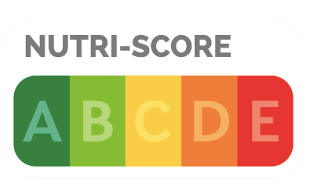
Here's where I think that Nutri-Score would be a good thing.  Nutri-Score is a "traffic light system" that ranks food products on a scale from A to E, where A is the best and E is the worst, and it is clearly visible of the front of the food's packaging.  

Food products get a lower rating if there is:

  • high energy density per 100 g or per 100 ml
  • high sugar content
  • high content of saturated fatty acids
  • high salt content.
There's a higher rating when:
  • contains fruits, vegetables, nuts and legumes
  • contains fiber
  • contains protein
  • contains rapeseed, walnut and olive oil
Nutri-Score was founded in France in 2013 and in 2017 the French Health Ministry officially recommended it.  Since then it has rolled out in Belgium, Spain, Germany, Switzerland, the Netherlands, and Luxembourg.  The system has been recommended by the European Commission and the World Health Organization.

So far it's not mandatory across the EU but I'm sure that it will be eventually.  Some companies such as Nestlé and Danone have announced that they will start using Nutri-Score in Portugal, Slovenia, and Austria even though it's not required in those countries.  

Not all countries are onboard with the system.  Poland, Czechland, Cyprus, Greece, Hungary, Latvia, and Romania all oppose it.  Italy believes that the system puts the traditional Mediterranean diet at a disadvantage.  

The Czech Ministry of Agriculture isn't in favour of the system but it will tolerate international labels with Nutri-Score.  The ministry is not in favour of a mandatory front-of-package label and believes that the Nutri-Score formula is too simplistic because it doesn't consider the size of a portion or how food is prepared. 

Nestlé will start using Nutri-Score in Czechland in 2023.  

Here's an interesting video I found out on YouTube where CNN talks about some of the differences between the US and Czech health care systems.  Not exactly Nutri-Score or Obesity related but still kind of fitting.  While the video is at least 12 years old already it's still pretty accurate.

©CNN

Update:  August 2022.  Here's a short TV commercial for Nestle that shows the Nutri-Score label.

©Nestlé Cereálie CZ

Tuesday, April 20, 2021

ECHR Ruling on Mandatory Childhood Vaccinations

In Czechland, there are obligatory vaccinations for nine diseases - whooping cough, polio, tetanus, diphtheria, hepatitis B, haemophilus influenzae type b (Hip), measles, mumps, and rubella.  This is laid down in Act no. 258/2000 Coll., on Public Health Protection.  Those that don't comply with the vaccine schedule may be fined up to 10.000 Kč ($464).  

No one here can be forcibly vaccinated against their will.  But there are other implications.  Children under five years of age can not attend public kindergarten (preschool) if they have not been fully vaccinated.  A kindergarten that admits an unvaccinated child can be fined up to 500.000 Kč ($23,200).  

From age five, unvaccinated children can attend kindergarten because this preschool year is part of the country's compulsory education.  While unvaccinated children can attend school they are not allowed to take part in school trips, camps, etc.  If an unvaccinated child participates in a school trip or camp then the organiser can be fined up to 30.000 Kč ($1,392).   

Vaccines are free as they are covered by the state.

The European Court of Human Rights, in Strasbourg, France, is connected with the Council of Europe with 47 member countries.  The court rules on complaints filed against member counties with regards to their obligations under the 1953 European Convention on Human Rights.  

A couple of weeks ago the European Court of Human Rights ruled on the case of Vavřička and Others v. the Czech Republic.  The primary case was a Czech who refused to have his son and daughter vaccinated against polio, hepatitis B, and tetanus.  The father was fined.  Then there were four other cases where children were not allowed to enter kindergarten because they were not vaccinated.  All of these cases were submitted before the pandemic so this has nothing to do with Covid-19.    

The court ruled 16-1 that the Czech Republic is within its rights to require compulsory vaccination of preschool children and that it did not violate and human rights rules.  The judgement is final and can not be appealed.  This is the first time that the court has ever ruled on this issue.

Here's a 15-minute video I found out on YouTube that talks about the court and what it does.

©European Court of Human Rights

Other countries have vaccinate rules as well.  Italy saw a surge of measles cases so in 2019 a law was passed that without proof of vaccination children up to the age of six are excluded from preschool and kindergarten.  Parents who send their unvaccinated children to school can be fined up to €500 ($593).

Germany passed a law in 2020 that requires parents to vaccinate their children against the measles.  Parents can be fined up to €2500 ($2,970) for failing to comply.  

Sunday, April 4, 2021

Erasmus

Brno is a student city and, under more normal times, there are many foreign students here under the Erasmus Programme.  Erasmus is the EU student exchange programme that was established in 1987.  It provides educational exchanges across the EU.  Some non-EU countries like Turkey, Iceland, Serbia, Norway, and Macedonia pay to participate in the programme as well.  Erasmus is the acronym for the EuRopean Community Action Scheme for the Mobility of University Students.  

In 2014, all of the EU's programmes for education, training, youth and sport were combined under Erasmus Plus.

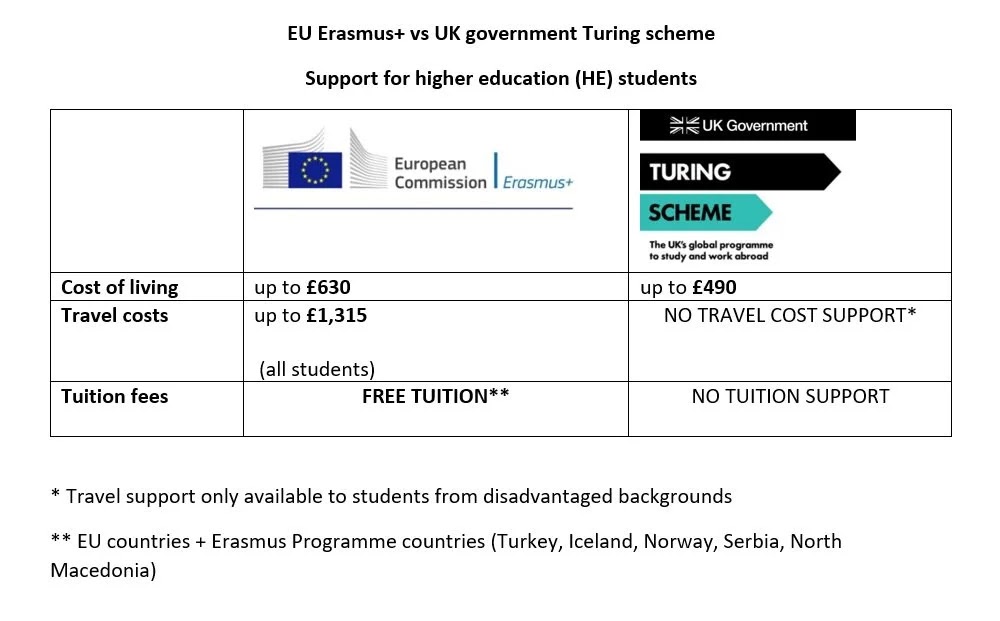
Under Erasmus Plus students don't pay any more tuition than what they pay at their home institution.  Students receive grants to help cover living expenses to study abroad and for work placements/internships.  Teachers and educational staff are also able to attend training courses across Europe.  

Every year around 300.000 students participate in the programme at over 4.000 institutions in 37 countries.  Spain sends the most participants followed by France, Germany, and Italy.  The most popular receiving countries are Spain, Germany, Italy, and France.

I don't know how true it is but I've heard that some 25% of Erasmus participants meet their future spouse/partner while on the programme.

After Brexit the United Kingdom decided to no longer participate in Erasmus.  So UK students can no longer study in the EU and EU students aren't able to study at UK institutions.  The UK has rolled out the Turing Scheme, named after Alan Turing, as its replacement for Erasmus.  It will allow up to 35.000 UK students to study and work worldwide.   

Erasmus provides more money to students than Turing to subsidise their foreign placements.  

Ireland has announced that it will fund students from Northern Ireland to continue to participate in Erasmus even though the UK pulled out of the programme.

Wednesday, January 27, 2021

New Integration Course Requirement

There's now a new requirement in Czechland for foreigners who have been issued long-term residence permits, since 1 January 2021, to complete a four-hour integration course.  

The course covers the rights and obligations that come with residency here as well as Czech culture and values.  The class is conducted in Czech, with interpretation into English, French, Spanish, Arabic, Mongolian, Russian, Serbian, Ukrainian or Vietnamese.  There's no exam but participants receive a certificate when they complete the entire course.  It costs 1500 Kč ($70) and is available at 18 centres across the country.  You have up to one year from receiving your residency permit to complete the course.  The fine for not completing it in time is up to 10.000 Kč ($467).

This is only for third-country nationals as EU citizens are exempt.  It's not required if you are under 15 or over 61 years of age.  Those here on study or investment visas are also exempt.

Aside from this, the education minister has submitted draft legislation that will increase the Czech language requirement for permanent residency from A1 to A2.  When I received my permanent residency back in 2015 I only had to prove A1 level Czech.  This isn't official yet but I think it's for sure coming as there's been talk of raising the level of Czech required for at least the past eight years.  I don't know if they will raise it this year with COVID-19 but for sure by next year.

I was surprised to find out that Czechland and France are the only two EU countries that only require A1 for permanent residency.  I would have thought that the level of language proficiency would have been more unified across Europe but each has its own requirements.

In Czechland, A2 will be required for permanent residency while B1 is required for citizenship.

Germany requires B1 level for either permanent residency or citizenship.

Austria requires B1 for permanent residency and B2 for citizenship.  This means that for Austrian citizenship you need to speak better German than a German citizen.  Albeit Austrian German.

France requires A1 for permanent residency and B1 for citizenship.

Poland requires B1 for both permanent residency and citizenship.

I don't know about permanent residency but Italy requires B1 for citizenship.  The Netherlands, Portugal, and Spain only require A2 for citizenship in Dutch, Portuguese, or Spanish respectively.  Denmark requires B2 for citizenship.

For countries with multiple official langues the rules seem to vary more.  For citizenship in Finland, B1 is required but it can be in either Finnish or Swedish since both are official languages.

Belgium has three official languages so for citizenship you only have to prove A2 in either French, Dutch, or German.

Luxembourg has three official languages - French, German, and Luxembourgish.  But if you want citizenship than only Luxembourgish counts.  You need A2 level speaking and B1 level listening.

Switzerland has four official languages - German, French, Italian, and Romansh.  For permanent residency you need A1 writing and A2 speaking in any one of the four languages.  For citizenship, A2 writing and B1 speaking are required.

I'm still waiting to find out when I get to take my B1 Czech exam.

Sunday, November 10, 2019

Meeting My Cousin

Who does't fly to Italy for lunch?  Well that's what I did this weekend.  So what had happened was...

My aunt wrote me a message that her granddaughter, so my 2nd cousin, whom I've never met, is studying in Florence.  We got in contact on Facebook and planned to meet yesterday in Milan.  

I had a 7:15 flight from Vienna to Bergamo and then an hour bus ride to Milan.  I booked a B&B so I dropped off my backpack, had a short nap and then headed out to meet Azalea.

I took her to lunch and we traded some family stories.  Afterwards we walked around the city a bit before she had to catch her train back.  I don't have any contact with that side of the family so I wasn't quite sure how this would end up.  I'm glad that I did it for my aunt and Azalea really is a sweet girl.  She's only got a couple of weeks left in Italy before she goes back home to California so I'm glad that I did this.

Although I wasn't so happy this morning.  I had to leave before 3 am to catch a bus to the main station, then another bus back to Bergamo for my 6:40 Ryanair flight.  I hate Ryanair, and the middle of night travelling wasn't ideal, but at least it was a direct flight to the Brno Airport and I was back home in my flat by 9:30 this morning.

Monday, January 21, 2019

Record Low Unemployment

Back in  September 2016 Czechland had the lowest unemployment in the EU at 5,2%.  Well it has continued to fall.  The unemployment rate here is now 1,9%.  It's the first time in EU history that a country has been under 2%.  Way to go Czechland!

Germany comes in second at 3,3%, followed by the Netherlands at 3,5%, and Hungary at 3,7%.

The EU-wide average is 6,7% and the average for the Eurozone countries is 7,9%.

The most unemployment is in Italy at 10,5%, Spain at 14,7%, and Greece at 18,6%.

More and more foreigners are coming to Czechland for work.  While foreigners only make up 5% of the population, we account for 11% of the workforce.

Sunday, September 30, 2018

Drug Use and Laws

According to a report by the European Centre for Drugs and Drug Addiction, Czech youth are the biggest pot heads in Europe.  Roughly 37% of 15-16 year olds have smoked marijuana at least once - the highest for the age group in Europe.  For 15-34 year olds, 19,4% have smoked marijuana at least once in the past 12 months - 3rd place behind Italy and France.

The laws here are pretty liberal.  Recreational use of marijuana is illegal but personal possession of small amounts is a non-criminal offence (misdemeanour).  Since personal possession is a misdemeanour anyone charged with this doesn't get his or her name on a criminal record.

Medical marijuana has been legal in Czechland since 1 April 2013.  It's imported from the Netherlands which means the prices are high because it is not covered by health insurance.  Few pharmacies even have a supply on hand.

It is a misdemeanour to posses the following:
Up to 15 grams, or 5 plants, of marijuana
Up to 5 grams of hashish
Up to 40 pieces of magic mushrooms
Up to 5 tablets of LSD
Up to 4 tablets of ecstasy
Up to 2 grams of amphetamine
Up to 2 grams of methamphetamine
Up to 1,5 grams of heroin
Up to 1 gram of cocaine

Selling more than a small amount of marijuana is punishable by up to one year in jail and/or a fine up to 15.000 Kč (€550).  For other drugs it is up to two years in jail plus a fine.  There are stiffer sentences for production or trafficking.

After marijuana the most widespread drug is pervitin (meth).  Apparently it is regularly smuggled from Czechland into Germany and Austria.

Tuesday, November 21, 2017

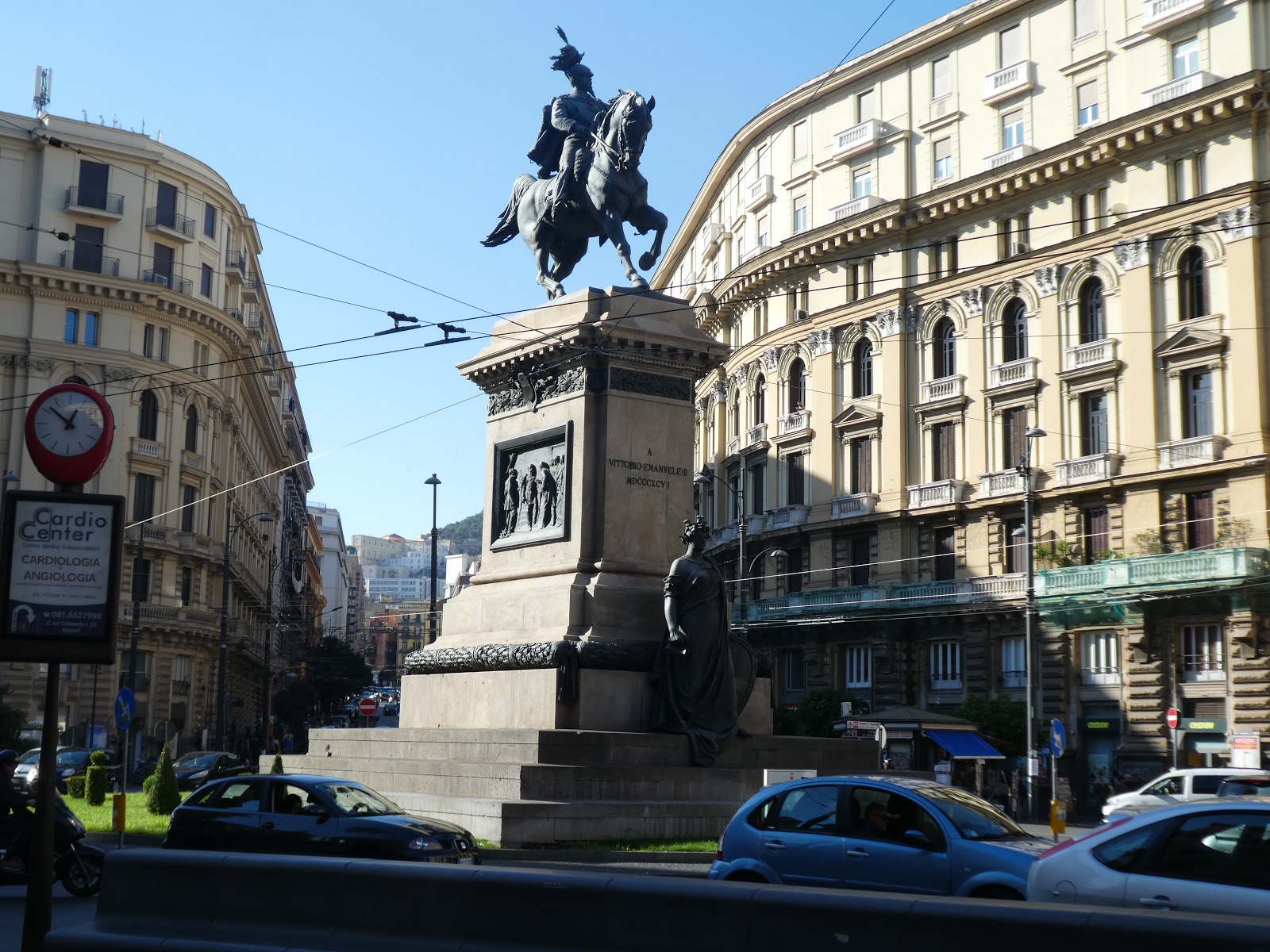
Naples, Italy

Naples is the third-largest municipality in Italy.  It is home to over 975,000 people, but with more than 4,4 million people in the larger metro area, it is the 9th most populous area in the EU.  Napoli is one of the world's oldest continuously inhabited cities.

The Greeks established settlements here in the second millennium BC.  After the fall of the Roman Empire it was the capital of the Duchy of Naples, then as the capital of the Kingdom of Naples, finally as the capital of the Two Sicilies until 1861 when Italy was unified.

The city's historic centre is the largest in Europe and in 1995 it was listed as a UNESCO World Heritage Site.  The city centre spans 1,700 hectares (4,200 acres) and covers 28 centuries of history.


Piazza Dante is one of the largest public squares and features a 19th-century statue of Dante Alighieri.


Piazza del Plebiscito is the main city square.


The San Francesco di Paola is a neoclassical church and serves as a minor basilica.


The Royal Palace was one of four residencies used by the Bourbon Kings and today it is a museum.


The Teatro di San Carlo was built in 1737.  It is the country's oldest opera house.


The National Archaeological Museum, formerly the Royal Bourbon Museum, is housed in a building constructed in 1585 originally to serve as calvary barracks.

The Galleria Principe di Napoli is a commercial gallery that was completed in 1883.

Castle Nuovo, also known as Maschio Angioino, is one of the city's landmarks.  The medieval castle was built in 1282.

The Teatro del Fondo opened in 1779.  It was renamed the Teatro Mercadante in 1871.  It was one of the city's two royal opera houses in the 18th and 19th centuries.


There are hundreds of Roman Catholic churches in the city.

The Church of Santa Maria di Caravaggio is a Baroque Catholic church.  Construction began in 1627.

The Basilica di Santa Chiara is another minor basilica.  The complex, completed in 1340, contains a church, a monastery,  tombs and a museum.

La chiesa di Santa Maria la Nova was completed in 1599.


La chiesa San Ferdinando was completed in 1759.

The Naples Cathedral is the city's main church.  It was consecrated in the 13th century.

Santa Caterina a Chiala was originally built as a small family chapel and then given to the Franciscan order which expanded it in 1600.

The church of St. Nicholas the Charitable was completed in 1682.

The Castle dell'Ovo is on the peninsula and is Naples' oldest standing fortification.  The castle was the Royal Chamber and the State Treasury.  It also served as a prison.

The Charterhouse of St. Martin was a monastery complex established in 1368.  Today it is a museum and there's a great view of the city.

The Gulf of Naples opens into the Mediterranean Sea and the port is one of the most important in Europe.  On the east is Mount Vesuvius, the volcano that erupted in 79 AD destroying Pompeii and Herculaneum.


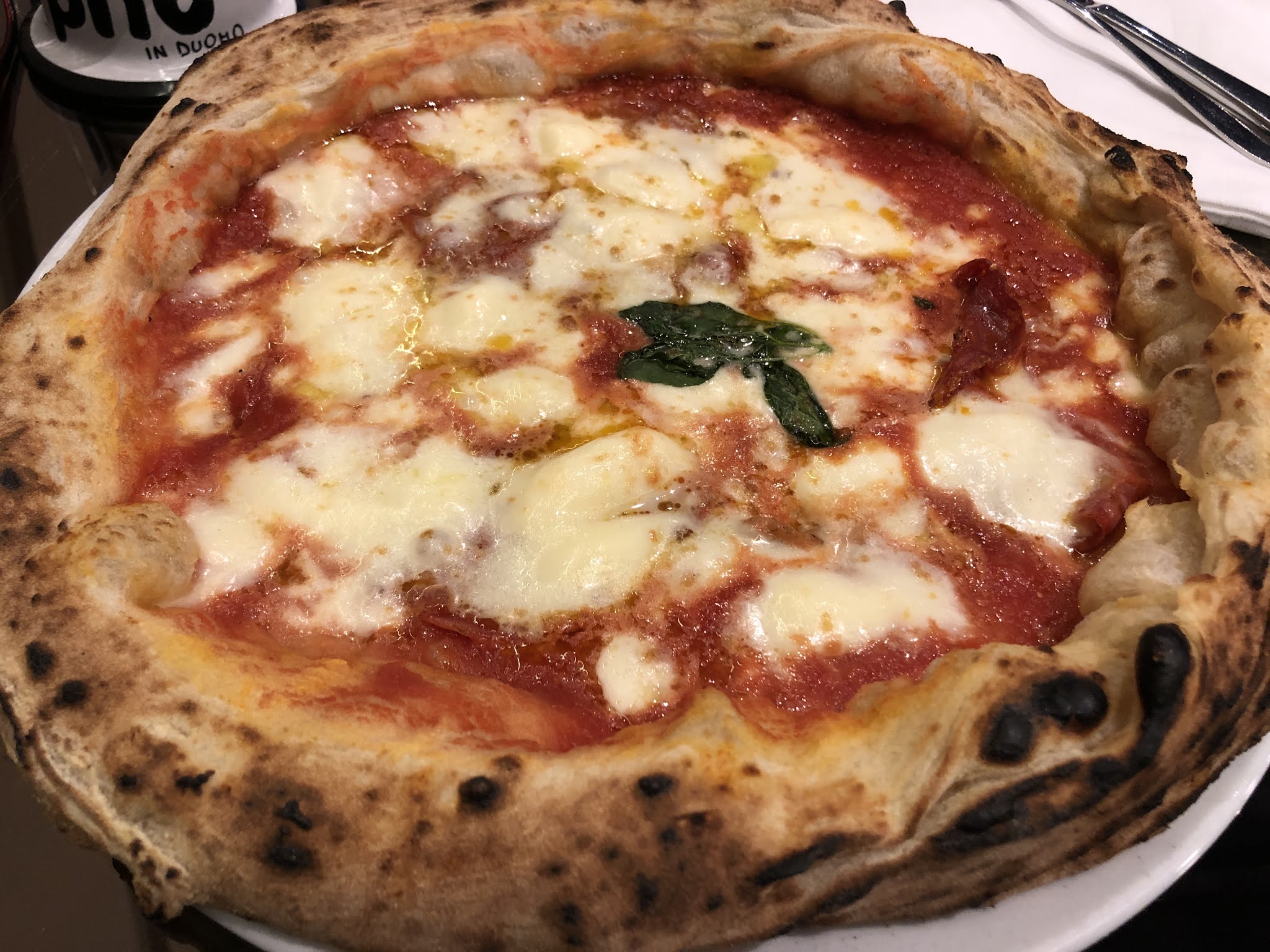
Naples is where pizza was invented so you have to try an authentic Neapolitan pizza.

Here's a Rick Steves video I found out on YouTube.

©Rick Steves


Naples makes for a nice weekend city break.  Next time I would visit Mt Vesuvius, the ruins of Pompeii and the island of Capri.