Showing posts with label Croatia. Show all posts

Tuesday, January 3, 2023

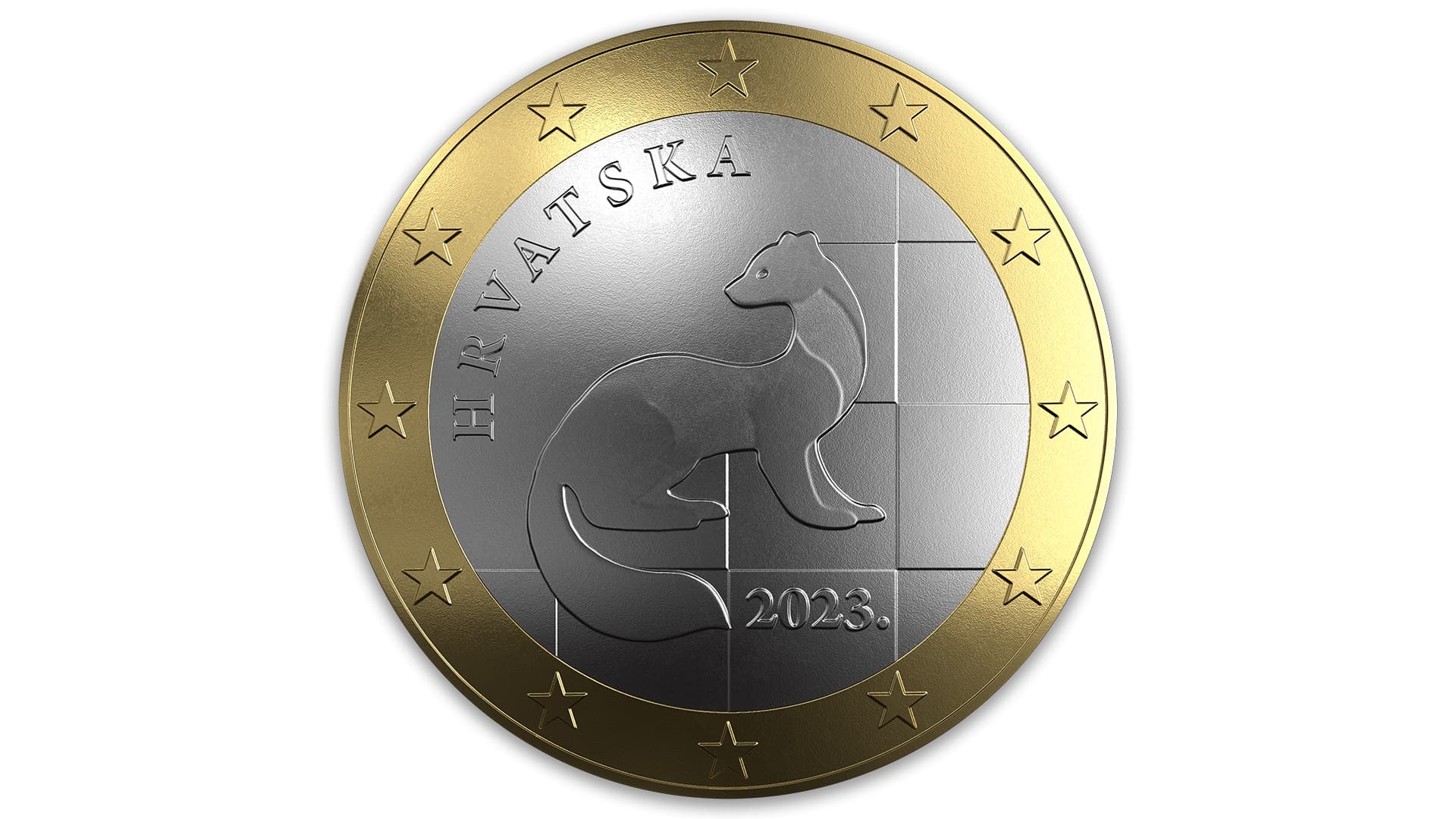
Croatia Joins Eurozone & Schengen

New Year's Day was a big day for Croatia.  It officially joined both the Eurozone and Schengen.

When the country joined the EU back in 2013, it had to commit to eventually replacing its currency, the kuna, with the Euro.  But then again, Czechland joined the EU in 2004 and still hasn't switched.

Croatia is now the 20th member of the Eurozone and the first country to join since Lithuania back in 2015.

Here are a couple of short YouTube videos out there about Croatia adopting the Euro.

©EuroNews
©The EU Made Simple

Croatia also joined Schengen becoming a member of the world's largest visa free zone.  The thing about joining Schengen, or the EU, or NATO, is that every single member has to agree.  Heck, it's hard enough trying to get four friends to agree on a particular restaurant.  Much less trying to get 26 different countries to agree on something.  Yet, back in December, every member country agreed to let Croatia join.

However, the Netherlands blocked Bulgaria, while Austria blocked both Bulgaria and Romania.

©France24

With Croatia in the Schengen club, there are now 27 members.  So whenever it comes time for Bulgaria and Romania to try again, they will also need Croatia to agree as well.

Wednesday, January 19, 2022

2022 Passport Power

The Henley Passport Index is out and once again, Japan has the world's most powerful passport.  Since 2018, it has held the #1 spot.  Having a Japanese passport allows one to travel to 193 countries either visa-free or visa on arrival.  Only 34 destinations require a visa or an e-visa.  Last year, a Japanese passport "only" got you to 191 countries and 35 countries required a visa.  

There's no such thing as an EU passport.  There are just passports issued by EU member countries and they tend to dominate the rankings.  22 EU countries rank amongst the 11 most powerful passports.  

  1. Japan (193)
  2. Singapore, South Korea (192)
  3. Germany, Spain (190)
  4. Finland, Italy, Luxembourg (189)
  5. Austria, Denmark, NetherlandsSweden (188)
  6. France, Ireland, Portugal, UK (187)
  7. Belgium, New Zealand, Norway, Switzerland, USA (186)
  8. Australia, Canada, Czechia, Greece, Malta (185)
  9. Hungary (183)
  10. Lithuania, Poland, Slovakia (182)
  11. Estonia, Latvia, Slovenia (181)

The three weakest EU member passports belong to the three most recent joiners.  Romania ranks at #16 with 174 countries while Bulgaria and Croatia both come in at #17 with 173 countries.

My American passport is still ranked in 7th place with only 41 countries requiring a visa to visit.  In 2006 and 2014, the U.S. passport was ranked #1.

A U.S. passport gets you in to Australia, Central African Republic, Equatorial Guinea, Guyana, Mongolia, and Pakistan.  Czechs need a visa to visit these countries.  Americans are still eligible for a 3-year visa for Russia which isn't available to Czechs.

A Czech passport will still ranked in 8th place with only 42 countries requiring a visa to visit.  In 2006, a Czech passport was ranked #21.  In 2014, it cracked the top 10 and has stayed there since.  Czechs are able to visit Belarus, Iran, Turkey, Myanmar, and Venezuela while Americans need a visa to visit them.

I need to get on the ball and submit my paperwork for Czech citizenship so that I can get my Czech passport.

Update:  Here's a 10½ minute video from Faultline that I found out on YouTube that talks about passports, visas, and travel.

©Faultline

Update: 2023 passport power rankings.

Tuesday, November 23, 2021

Nutri-Score

When I first moved here I made a comment at work that I was going to get so fat here with this being the land of beer and potatoes.  A friend sniped back with, "but I thought that all Americans were already fat."  Well not quite right but not wrong either.

In 2016, the World Health Organisation put the USA's obesity rate at 33,8%.  Czech Republic was 24,2%.  Czechs have been getting bigger.
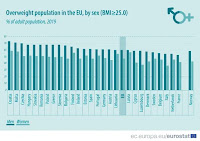
In 2019, the five EU countries with the highest percentage of obesity were Croatia, Malta, Czechland, Hungary, and Slovakia.  France has the lowest obesity levels in the EU, followed by the Netherlands, Italy, Belgium, and Sweden.  Czechs were had the 3rd highest levels of obscenity in the EU.
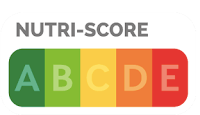
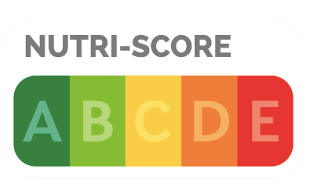
Here's where I think that Nutri-Score would be a good thing.  Nutri-Score is a "traffic light system" that ranks food products on a scale from A to E, where A is the best and E is the worst, and it is clearly visible of the front of the food's packaging.  

Food products get a lower rating if there is:

  • high energy density per 100 g or per 100 ml
  • high sugar content
  • high content of saturated fatty acids
  • high salt content.
There's a higher rating when:
  • contains fruits, vegetables, nuts and legumes
  • contains fiber
  • contains protein
  • contains rapeseed, walnut and olive oil
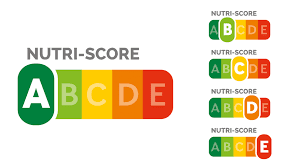
Nutri-Score was founded in France in 2013 and in 2017 the French Health Ministry officially recommended it.  Since then it has rolled out in Belgium, Spain, Germany, Switzerland, the Netherlands, and Luxembourg.  The system has been recommended by the European Commission and the World Health Organization.

So far it's not mandatory across the EU but I'm sure that it will be eventually.  Some companies such as Nestlé and Danone have announced that they will start using Nutri-Score in Portugal, Slovenia, and Austria even though it's not required in those countries.  

Not all countries are onboard with the system.  Poland, Czechland, Cyprus, Greece, Hungary, Latvia, and Romania all oppose it.  Italy believes that the system puts the traditional Mediterranean diet at a disadvantage.  

The Czech Ministry of Agriculture isn't in favour of the system but it will tolerate international labels with Nutri-Score.  The ministry is not in favour of a mandatory front-of-package label and believes that the Nutri-Score formula is too simplistic because it doesn't consider the size of a portion or how food is prepared. 

Nestlé will start using Nutri-Score in Czechland in 2023.  

Here's an interesting video I found out on YouTube where CNN talks about some of the differences between the US and Czech health care systems.  Not exactly Nutri-Score or Obesity related but still kind of fitting.  While the video is at least 12 years old already it's still pretty accurate.

©CNN

Update:  August 2022.  Here's a short TV commercial for Nestle that shows the Nutri-Score label.

©Nestlé Cereálie CZ

Friday, August 16, 2019

CEFTA

The Central European Free Trade Agreement, or CEFTA, was formed in 1992 by the Visegrád countries - Czechoslovakia, Poland, and Hungary.  After the Velvet Divorce both Czech Republic and Slovakia became independent members.  The purpose was to work together towards integrating political, economic, security, and legal systems with western free-market economies.

Over the years, other countries have joined CEFTA.  However, once a country joins the European Union it must leave CEFTA.  Former members include Bulgaria, Croatia, Romania, and Slovenia.  Basically being a CEFTA member servers as good preparation for eventually joining the EU.

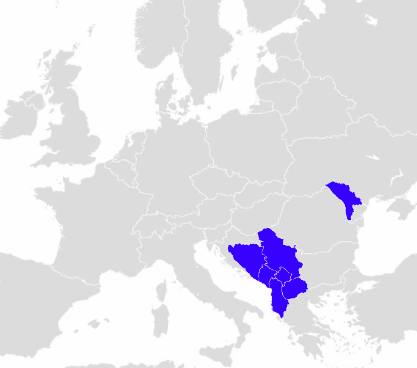
Current CEFTA members
CEFTA seems less "Central Europe" and more "Balkans" to me.  The seven current members are Albania, Bosnia and Herzegovina, Kosovo, Moldova, Montenegro, Macedonia, and Serbia.  Combined the CEFTA countries have a combined population of about 21,5 million people and a GDP over $290 billion.

Wednesday, October 12, 2016

Low Unemployment in Czechland

Unemployment is low in Czechland.  It has been falling since January and as of September is is 5,2%.

The last several quarters have seen steady growth.  Exporters see a solid demand for Czech goods and there's a growing services demand.  There's also been an increase in self employment and entrepreneurship.

This is all good news.  On the flip side, it's getting more and more difficult for employers to find workers.  Even for low qualified positions.  It's creating wage pressure as well.  Difficulty finding people and at higher wages will become a major obstacle for continued economic growth.

Czechland currently has the lowest unemployment rate in the EU.  Followed by Germany, Hungary, Malta and the UK.

At around 23%, Greece has the highest unemployment rate in the EU.  Ahead of Spain, Cyprus, Italy and Croatia.

Update:  New record-low unemployment in Czechland.

Wednesday, June 1, 2016

Internet Speed

Of the 28 EU countries, the top five with the fastest internet speeds are Romania, Netherlands, Sweden, Lithuania, and Latvia.

The five with the slowest internet speeds are Ireland, Cyprus, Greece, Italy, and Croatia.

Czech Republic Czechia came in at #13 with 30,58 Mbps.

It's a little surprising that Czehia beat the UK, Finland, and Germany but that's good for me here in Brno. 

Sunday, July 7, 2013

Dubrovnik, Croatia

Dubrovník is one of the most popular Mediterranean destinations.  It is known as the "Pearl of the Adriatic".  While not the largest city in Croatia (#13), it is home to around 43,000 people.

After WWI, and the fall of the Austro-Hungarian Empire in 1918, Dubrovnik became part of the Kingdom of Serbs, Croats and Slovenes.  After WWII, it became part of Yugoslavia.

In 1979, it became a UNESCO World Heritage Site.  During the early 1970s the Old Town demilitarized so that it would never become a casualty of war.  That didn't go as planned.  When Croatia declared independence from Yugoslavia, in 1991, Serbia and Montenegro demanded that the city be handed over.

Once the war broke out many Croats went to Durbrovnik's Old Town thinking it would be safe.  Who in the world would bomb a UNESCO World Heritage Site?  Serb and Montenegrin forces laid siege on Dubrovnik for seven months.  More than half of the city was damaged and hundreds of people were killed.

The city is surrounded by a series of defensive stone walls.  The limestone walls were mainly built during the 12th to 17th centuries.  The walls run about 1,940 meters (6,360 feet) long and reach up to 25 meters (82 feet) high. 


Onofrio's Fountain was built upon completion of the city's water supply in 1438.  It is a popular meeting point in the city.


The St. Savior Church is a Catholic church in old town.  It was built in 1528.


Construction of St. Blaise's church was completed in 1715.  The Baroque church is dedicated to St. Blaise, the city's patron saint.

The Old Synagogue was established in 1352 and gained legal status in the city in 1408.  It is the second oldest synagogue in Europe and the oldest Sefardic synagogue still used in the world today.  It is primarily a museum but the main floor is still used for worship on hold days and special occasions.  It is located on a tiny side street so it's difficult to get a decent photo of it.

The Assumption Cathedral was built in the 12th century and today is the seat of the Catholic Diocese of Dubrovnik.  The story goes that it was financed by Richard the Lion-Heart.  On his return from the Third Crusade he was shipwrecked off a local island and saved by the people of Dubrovnik.  To show his gratitude he gave a substantial amount of money to build the church.  Unfortunately it was destroyed by an earthquake in 1667 but completely rebuilt in 1713.

Outside of the city walls is Fort Lovrijenac which sits on a 37 meter (121 foot) high sea cliff.  It was built in order to protect the city's western sea access.  While construction began in 1018 it wasn't completed until the 16th century.

View from Mt. Srđ
The best view of the city is from the top of nearby Mount Srđ.  A cable car ride to the top only takes a few minutes.

On top of Mount Srđ is Fort Imperial which was built, from 1806 to 1816, during the Napoleonic Wars.  There is the Homeland War Museum which shows how the city was affected during the 90s siege.   I've been to Croatia many times but prior to visiting Dubrovnik I had never heard of the fighting in Croatia referred to as the "Homeland War".

Here's a Rick Steves video on Dubrovnik that I found out on YouTube.

 
©Rick Steves

Saturday, June 29, 2013

Croatia Joins the EU

On Monday, July 1st, Croatia will join the European Union as its 28th member.  It has taken 10 years for Croatia to meet the requirements for entry.  I wonder if they will still be celebrating when I go to Dubrovnik at the end of the week.

Among the many things required, Croatia had to reform its judicial system in terms of independence, accountability, impartiality, and efficiency.  There was a crackdown on corruption and organized crime.  Human rights had to be improved, along with the protection of minorities and settling outstanding refugee return issues.

The country had to extradite several Croatian citizens to the International Criminal Tribunal for the Former Yugoslavia (ICTY) due to the Balkan War.  Croatia also had to stop subsidizing its shipbuilding industry.

There was also a long-running border dispute with Slovenia that needed to be addressed.  Once it officially joins the EU, it will have to exit the Central European Free Trade Agreement (CEFTA).   

There will be increased ease of movement in and out of Croatia.  As an EU member, Croatians will be able to enter any EU state with only a Croatian ID card.  No more passports required.  Croatia will have to eventually join the Schengen area by 2015.  This requires Croatia to change its current policies and start requiring visas for travelers from Russia, Turkey and Ukraine.

Croatia will keep the Kuna as its currency.  However, it must eventually adopt the Euro once it fulfills further requirements.

There are a lot of good reasons to join the EU.  However, things are not all sunshine and roses.  There are concerns on both sides right now about expanding the EU roster given the current financial situation.  Here's a video I found out on YouTube that has a few more details.
 
© European Parliament

Update 2023:  Croatia joined both the Eurozone and Schengen area.

Wednesday, July 11, 2012

Rovinj, Croatia

Rovinj is a seaside resort town on Croatia's Istrian peninsula.  Originally, the city was on an island.  In 1763, the channel separating the island from the mainland was filled in.  The Rovinj Archipelago has 22 islets that you can get to by tour boats.

Rovinj is only 36 km (22 miles) from Pula.  Its history is pretty much the same as Pula's.  It too was an Illyrian settlement before becoming a part of the Holy Roman Empire.  Later it was a part of the Austro-Hungarian Empire, then a part of Italy, before finally become a part of Yugoslavia in 1947.


Rovinj is one of Croatia's most popular tourist spots.  The town's population is around 15,000.


The Old Fisherman's gate was built from 1678-1679.  It marks the entrance to the old town.


St. Euphemia is the town's patron saint.  The St. Euphemia basilica is in the center of the old town.  The Baroque church was built in 1736 and the façade dates back to 1883.

The bell tower was built from 1654-1680.  A statue of St. Euphemia serves as a wind vane on top of the 60 meter (197 feet) high tower.  The tower can be seen from almost everywhere in town.


The "Memorial for Freedom" was unveiled in 1956.  It honors the partisans who died during WWII.


Tuesday, July 10, 2012

Pula, Croatia

Pula is a town on the southern tip of the Istrian peninsula in Croatia.  It was founded around 3,000 years ago by the Illyrians.  It became part of the Holy Roman Empire in 177 BC.  From about the 7th century onward, ownership of the town changed hands quite a bit.  Eventually, it became part of the Austro-Hungarian Empire.  After WWI, the area became a part of Italy.  After WWII, Pula was controlled by the Allies until 1947, when the region became part of Croatia within Yugoslavia.


Today, Pula has a population of ~57,000 people.  It is best known for its many ancient Roman buildings.

The Arena is a 1st century BC amphitheater.  It is the 6th largest surviving Roman arena in the world.  Back in the day it could seat around 20,000 people.


Once home to gladiator fights, the city now uses it for summer film festivals.  During WWII, the Italians tried to disassemble it so that they could move it to Italy.  Fortunately, that plan was scrapped due to the cost.

The Gemini Gates date back to the mid-2nd century.  It is one of the few gates that remain after the city walls were brought down at the start of the 19th century.


Hercules is Pula's town patron.  The Gate of Hercules dates back to the 1st century.  In the center of the arch is a bust of Hercules.
Remnants of a 1st century mausoleum
The Arch of Sergii, also known as the Golden Gate, is a Roman triumphal arch that commemorates three brothers of the Sergii family.  It was built between 29 – 27 BC.  It was originally a city gate.


Near the arch is a statue of author James Joyce.  The writer lived in Pula in 1904-1905.  The statue, at a local cafe, was unveiled in 2003.

The Augustan Forum is the main square in the city center.  It was built in the 1st century BC.  Here the Temple of Augustus was built from 2 BC to 14 AD.  The temple is co-dedicated to the goddess Roma and Emperor Augustus.  Inside is a collection of stone and bronze sculptures.


The Temple of Hercules and the Temple of Diana were merged together to form the town hall.


The Cathedral of the Assumption of the Blessed Virgin Mary was built in the 6th century.  Over the centuries the church as been enlarged and rebuilt.  I'm not sure when the bell tower was built.


The Church of St. Francis was built in 1314.  There is an adjoining 14th century monastery.


The belfry of the Franciscan church is the highest in Pula.


The castle, and its four bastions, is on top of the central hill in the old town.  It dates back to the 17th century. 


The Historical Museum of Istria has been located inside the castle since 1961.