Showing posts with label EU Made Simple. Show all posts

Tuesday, January 3, 2023

Croatia Joins Eurozone & Schengen

New Year's Day was a big day for Croatia.  It officially joined both the Eurozone and Schengen.

When the country joined the EU back in 2013, it had to commit to eventually replacing its currency, the kuna, with the Euro.  But then again, Czechland joined the EU in 2004 and still hasn't switched.
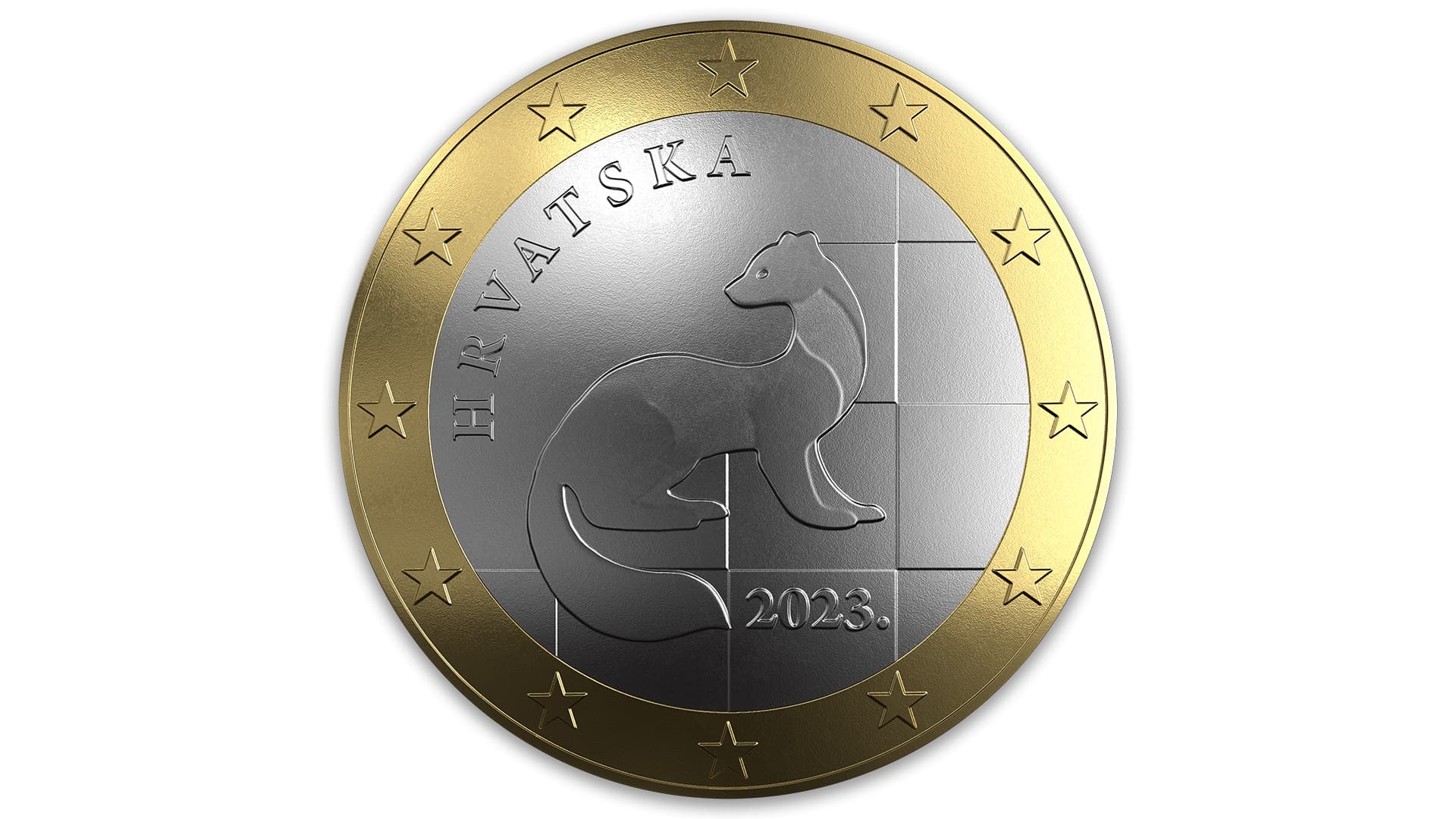
Croatia is now the 20th member of the Eurozone and the first country to join since Lithuania back in 2015.

Here are a couple of short YouTube videos out there about Croatia adopting the Euro.

©EuroNews
©The EU Made Simple

Croatia also joined Schengen becoming a member of the world's largest visa free zone.  The thing about joining Schengen, or the EU, or NATO, is that every single member has to agree.  Heck, it's hard enough trying to get four friends to agree on a particular restaurant.  Much less trying to get 26 different countries to agree on something.  Yet, back in December, every member country agreed to let Croatia join.

However, the Netherlands blocked Bulgaria, while Austria blocked both Bulgaria and Romania.

©France24

With Croatia in the Schengen club, there are now 27 members.  So whenever it comes time for Bulgaria and Romania to try again, they will also need Croatia to agree as well.

Sunday, January 1, 2023

Happy 2023

Happy New Year!!  Šťastný nový rok!!

In Czechland, it is also Czech Independence Day!


Last night was another Silvestr karaoke party at the cottage.  Lots of fun but we stayed out way too late. 

The Czech presidency of the Council of the European Union ended as well.  As of today, Sweden now holds the presidency.

Update 2023:  Here's a short YouTube video about the change of the EU presidency.

©The EU Made Simple

Tuesday, April 5, 2022

Europol

Europol is the European Union Agency for Law Enforcement Cooperation.  It was formed in 1998 to handle criminal intelligence and combat serious crime through cooperation with the authorities in each of the EU member countries.  Like Interpol, the agency doesn't have any executive powers so it can't arrest suspects but rather it provides the member country's police force with the intelligence required for local arrests.

In Czechland, Europol works with the Czech Police and the Czech Customs Administration.

While Interpol and Europol have similar names, and work together, they unrelated, independent agencies. Europol falls under the authority of the European Union and has its headquarters in The Hague, Netherlands.

Here's a 6,5 minute video I found out on YouTube which has some interesting information on the history of Europol. 

©Singularitas

Update 2023:  Here's 3-minute video about Europol.

©The EU Made SIMPLE

Thursday, July 16, 2020

The Council of the European Union

The Council of the European Union is one of the EU's three legislative bodies.  It is also known as the Council or as the Council of Ministers, but the Council of the European Union isn't the same thing as the European Council.  And it's definitely not the same thing Council of Europe

The job of the Council of the European Union is to work with the European Parliament to amend, approve, or reject legislation proposed by the European Commission.  

So the European Parliament represents the EU citizens are are directly elected by people in each country.

The Council of the European Union represents the governments and national interests of each EU country while the European Commission represents the interests of the EU as a whole.

The Council of the European Union has 10 different configurations and the national ministers from each member country participate.  For example, the environmental ministers from each of the EU countries get together and sort out things in Environment configuration.  The ten configurations are:

  • Agriculture and Fisheries
  • Competitiveness (which covers the internal EU market, industry, research & innovation, and space policy)
  • Economic and Financial Affairs
  • Education, Youth, Culture and Sport
  • Employment, Social Policy, Health and Consumer Affairs
  • Environment
  • Foreign Affairs
  • General Affairs (cross-cutting policy areas like EU enlargement, the EU 7 year budget plan, and COVID-19)
  • Justice and Home Affairs
  • Transport, Telecommunications and Energy
The Presidency of the Council rotates every six months.  On 1 July, Germany took over the presidency from Croatia.  In January 2021 the presidency moves to Portugal, followed by Slovenia and France.  In July 2022, Czechland gets the presidency again.  

The last time Czech Republic held the presidency was in 2009.

Here's a 5-minute video I found on YouTube that gives more information about the Council.

©Ciceroni

Update:  December 2020, the Czech Republic has a countdown clock until they take over the EU Presidency. 

Update 2025:  Here's a short video I found on YouTube about the EU Council.

©EU Made Simple

Tuesday, July 14, 2020

The European Parliament

The European Parliament is one of the EU's three legislative branches.   Together with the Council of the European Union, it adopts the laws proposed by the European Commission.  So the European Parliament can vote on legislation but it can not propose new legislation.

The European Parliament, after India, is the world's second-largest democratically elected body. 

There are 705 MEPs (Members of the European Parliament) as determined by each country's population.  The minimum number of MEPs is six per country.  Germany has the Most MEPs with 96, followed by France with 79, Italy with 76, Spain with 59, and Poland with 52.  

Czech Republic, Greece, Hungary, Portugal, and Sweden, all have 21 MEPs each.

MEPs serve five-year terms and there are no term limits.

Here's a short 5,5 minute video I found out on YouTube that provides more information about the European Parliament.

©Ciceroni

Update 2025:  Here's another short video I found on YouTube about the EU Parliament.

©EU Made Simple

Sunday, July 12, 2020

The European Commission

The European Commission, the EC, is the executive branch of the European Union.  The EC sits in Brussels and it is responsible for the day-to-day running of the EU.  The EC initiates new legislation as it alone has the power to propose laws for debate.  Another responsibility of the EC is to maintain that treaties are running efficiently and to police them.  Basically, the EC acts as the cabinet government for the EU.  The working languages of the EC are English, French, and German.

The commissioners are to think European as each must pledge to be independent of their home countries while acting in the general interest of the EU and not be subservient to their home countries.  There are 27 commissioners, one from each of the EU member countries.  It was 28 until the UK left the EU following Brexit.  

The path to become a commissioner seems kind of complicated.  Candidates are proposed by the Council of the European Union, based on suggestions coming from the various national governments.  Once approved by the European Parliament then they are appointed by the European Council, which isn't the same thing as the Council of the European Union. 

Here's a five minute video I found on YouTube that explains the how the European Commission works.

©Ciceroni

In December 2019, Ursula von der Leyen became the first woman to hold the presidency of the EC.  She used to be the German Defence Minister and her term is for five years.  Here's a bit about her.

                                   ©France 24


The Czech member of the European Commission is Věra Jourová.  

She is one of seven vice-presidents and she is responsible for Values and Transparency.

Update 2025:  Here's short video I found on YouTube about the European Commission.

©EU Made Simple

Wednesday, January 7, 2015

European Economic Area

Not every country in Europe is a member of the European Union.  However, just because a country isn't a member of the EU doesn't mean that it is off on its own.  There's also the European Free Trade Association and the European Economic Area (EEA).

The European Free Trade Association is made up of Iceland, Liechtenstein, Norway, and Switzerland.  For one reason or another these four countries do not want to be a member of the EU.  Remember, any new country that joins the EU must eventually adopt the Euro as its official currency. 

The European Economic Area brings the EU countries and the EFTA countries together so that they participate in a single market.  The EEA allows for the EFTA countries to remain independent of the EU but still reap most of the benefits.  So even though Norway isn't an EU member, Norwegian citizens can work anywhere in the EU, just like EU citizens can. 

The EEA countries adopt a majority of EU legislation except for laws on agriculture, fisheries, taxation, common foreign or security policy. 

While Switzerland is a member of the EFTA, it is not part of the EEA.  Although Switzerland has signed a number of bilateral agreements, including a free trade agreement with the EU.

Update 2025:  Here's a short video I found on YouTube about Iceland, Norway, and Switzerland refusing to join the European Union.

©EU Made Simple

Thursday, May 1, 2014

10 Years in the EU

Today is 1 May and it's a public holiday.  Today is also the 10th anniversary of Czech Republic joining the European Union.

In 1952, six countries (Belgium, Italy, Luxembourg, France, Netherlands, and West Germany) formed the European Coal and Steel Community.  In 1953, Denmark, Ireland and the UK also joined.  This eventually developed in to a European common market.

Greece joined in 1981 and Portugal and Spain both joined in 1986.  After German reunification in 1990, the EU picked up what used to be East GermanySweden, Finland, and Austria all joined in 1995.

2004 was a big year for the EU.  The single largest EU expansion (number of countries, territory, and population) occurred in 2004.  The EU welcomed Cyprus, Czech Republic, Estonia, Hungary, Latvia, Lithuania, Malta, Poland, Slovakia, and Slovenia.

In 2007, Bulgaria and Romania joined.  Last year, Croatia became the newest member.  Today, the EU contains 28 countries and more than 500 million people.

Still, not every country in Europe is an EU member.  Norway, Andorra, Monaco, San Marino, Vatican City, Liechtenstein, and Switzerland are not members.  Iceland, Macedonia, Montenegro, Serbia, and Turkey are all candidates to join the EU.  Albania, Bosnia and Herzegovina, Kosovo, and Ukraine are not yet even candidates to join. 

Czechs have gained economically from joining the EU.  Plus it's a heck of a lot easier for Czechs to travel now.  However, many Czech people consider EU legislation as a negative and only around 20% or so of the people want to give up the Crown for the Euro.

Update:  Here's a video I found out on YouTube about the European Union.
©CGP Grey

Update:  15 years in the EU.
Update:  The UK officially left the EU on 31 January 2020.

Update:  Here's a short 5½-minute video on how the EU works.
©CNBC International

Update 2025:  Here's a short video about the EU.

©EU Made Simple