Showing posts with label Norway. Show all posts

Sunday, January 22, 2023

Brno City Break in 2023

Last year, Time Out magazine published their list of the 16 best city breaks in Europe for 2022.  Brno came in second place.  

This year Brno made the list again but fell to seventh place.  A few spots lower but still in the top ten.

The write up for Brno was pretty much exactly the same as last year.  

Here are the top 18 places.  Several of these are still on my list of places to visit.

  1. Marseille, France
  2. Sheffield, UK
  3. Buhać, Bosnia and Herzegovina
  4. Milan, Italy
  5. Bilbao, Spain
  6. Arles, France
  7. Brno, Czech Republic
  8. Liverpool, UK
  9. Kaunas, Lithuania
  10. Oslo, Norway
  11. Hamburg, Germany
  12. Dublin, Ireland
  13. Inverness, UK
  14. Trikala, Greece
  15. Rotterdam, Netherlands
  16. Freiburg, Germany
  17. Turku, Finland
  18. Valencia, Spain


Tuesday, November 29, 2022

2022 World Happiness Report

This year is the 10th anniversary of the World Happiness Report. by the Sustainable Development Solutions Network of the United Nations.  The report factors in things like gross domestic product per capita, healthy life expectancy, freedom to make choices, perceived corruption and social support from friends and family. 


For the fifth year in a row, Finland came in first place.

Scandinavia did well as usual with the five countries all placing in the top eight places.  Finland #1, Denmark #2, Iceland #3, Sweden #7 and Norway #8.

Switzerland placed #4.

The BeNeLux countries did well too with the Netherlands #5, Luxembourg #6, and Belgium #19.

Europe is the happiest region with the eight of the top ten spots.  The only non-European countries to crack the top ten are Israel #9 and New Zealand #10.

The USA placed #16 and Czechland placed #18.

Czechland continues to be the happiest of the Visegrád Four with Slovakia #35, Poland #48, and Hungary #51.

Last place goes to Afghanistan, behind Botswana, Rwanda, Zimbabwe, and Lebanon.

Saturday, August 27, 2022

English in Czechland

English is the most common spoken language across the EU.  About 44% of people in the EU can speak English.  And that's post-Brexit, as now only 1% of the EU are native English speakers.  However, Czechs rank among the worst in Europe at foreign languages.

Czechs are among the least likely Europeans to know a foreign language.  While about 45% can communicate at some level of English, only one in 10 Czechs have minimal English-language skills.  Just 7% speak English proficiently.

The only countries worse at English than Czechia are France, Italy, and Spain.  The top five countries with the best English foreign language skills are the Netherlands, Austria, Norway, Denmark, and Belgium.

One of the primary staffing agencies here has confirmed that English is required for four of to 10 job offers here.  English is demanded five times more than all other foreign languages combined.  After English, the top requested languages by employers are German, French, Italian, and Dutch.
The Czech Statistical Office, ČSÚ,  states that only a minimum of Czechs speak English at a professional level.  30% can't speak a foreign language.  

English is most frequently taught foreign language in EU secondary schools, followed by Spanish, French, German, and Italian.  

In Czechland, by law, students are taught two foreign languages.  English is the most popular, followed by German.  

There has been some controversy in the press about the new government's ability to speak English.  Five of 18 cabinet ministers have admitted to only being able to speak "tourist level" English only.  This is a big deal now that Czechland currently holds the rotating presidency of the EU.  
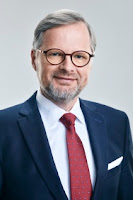
The new prime minister, Petr Fiala, speaks both English and German fluently.

Jana Černochová, the defence minister, and Zbyněk Stanjura, the finance minister have admitted to having weak English skills but both have at least passive Russian and Polish.

Thursday, January 27, 2022

2021 Social Risk Index

Euler Hermes is an insurance company that in 2020 created the Social Risk Index.  This was to measure business climates across the globe, at the beginning of the Covid-19 pandemic, during one of the worst recessions since WWII. 

There are 12 factors and each country gets a score from 1-100 for each of the 12, the scores are combined for an overall score.  The 12 factors that are evaluated include trends in real GDP per capita growth, labour force participation, income inequality, public social spending on education, health and social protection, political stability, government effectiveness, corruption perception, trust in government levels of vulnerable employment, imports as a percentage of GDP, currency depreciation, and fiscal revenue as a percentage of GDP.  

All of this boils down to ranking countries according to potential economic and political instability during rapid change.

Last year, the USA came in at #23 and Czechland ranked #28. This year, Czechia came in at #19, while the USA is at #35.  The reason that Czechia jumped up nine places was the countries response to the Covid-19 pandemic and the stability of the labour market here despite Covid. 

Scandinavia topped the rankings as the countries usually do when it comes to any type of social score.  Europe did well with 16 countries in the top 20, and 13 of them are EU member countries.  New Zealand was the top placed country outside of Europe.  Most advanced economies saw improvements from last year but the USA, France, Portugal, and Greece all saw large declines.

Here are the 2021 rankings...

  1. Denmark
  2. Norway
  3. Sweden
  4. Switzerland
  5. Finland
  6. New Zealand
  7. Germany
  8. Austria
  9. Luxembourg
  10. Iceland
  11. Canada
  12. Ireland
  13. Japan
  14. Australia
  15. Netherlands
  16. Estonia
  17. France
  18. Portugal
  19. Czechia
  20. Slovenia
26. Slovakia

35. USA

The five lowest rankings belong to #181 Zimbabwe, #182 Nigeria, #183 Afghanistan, #184 Sudan, and #185 Democratic Republic of the Congo.

Friday, December 31, 2021

Dinner For One

Dinner for One, or Der 90. Gerburtstag (The 90th Birthday), is a black-and-white television comedy sketch that was released in 1963.  It was adapted from a British stage skit that was performed by Freddie Frinton and May Warden.

It enjoys cult status in Germany and is shown every year for New Year's.  Since 1995, it is the most frequently repeated television programme in Germany ever.  It is also very popular in Austria and Switzerland, plus in Scandinavia - Denmark, Sweden, Norway, and Finland.  Despite coming from the UK, it wasn't broadcast there until 2018.  

What's remarkable about the show is that despite it being broadcast in English, and without subtitles, it is still tremendously popular.  Even Germans who can't speak English will still usually be able to quote lines from the comedy in English. 

The basic premise is that Miss Sophie is celebrating her 90th birthday and, as in every other year, invited her four closest friends.  Unfortunately, she has outlived everyone so her butler, Mr. Winterbottom, gives a toast by proxy.  He gets tipsy and there's a bit of physical comedy.  All in good fun.

Here's a short Meet the Germans video that talks about this cult classic.

©DW Euromaxx

Here's the show which is out on YouTube.

Retro TV

Thursday, December 16, 2021

Brno City Break in 2022

A couple of weeks ago, Time Out magazine published their list of "The 16 best city breaks in Europe for 2022."  Brno came in second place.  While it's great for Brno to get the recognition I kind of hope that it retains its status as a hidden gem.  They even mentioned my favourite cafe for breakfast.


Here's what the article said about Brno.

Although sandwiched between Prague and Vienna, self-confident Brno is no middle Child.  Once a powerhouse dubbed the "Moravian Manchester", the laidback Czech second city has repositioned itself as a post-industrial science and tech hub.  But you'll find plenty of clues to Brno's layered past at a clutch of offbeat underground attractions, including the mysterious brick cisterns at. Žlutý Kopec, communist-era nuclear bunker 10-Z, and the "Denis" bomb shelter under the cathedral.  The food and drink scene is reinventing itself to, from contemporary international at Element to Výčep na Stojáka, a modern take on a trad pub.

The perfect day:  After breakfast at Café Momenta, head up to Špilberk Castle and grab lunch at Cafe Placzek.  Explore the historical centre before dinner at Atelier Bar &Bistro and a nightcap at Rotor Bar.

Plan your trip:  The Industrial project celebrates Brno's manufacturing tradition, with several former industrial buildings opening to the public for the first time in 2022.  Káznice, a Habsburg-era prison, is also being redeveloped and will host events in the summer. --David Creighton

Here are the rankings.

  1. Arles, France
  2. Brno, Czech Republic
  3. Kaunas, Lithuania
  4. Odense, Denmark
  5. Bihać, Bosnia and Herzegovina
  6. Ljubljana, Slovenia
  7. Turku, Finland
  8. Inverness, Scotland
  9. Valencia, Spain
  10. Sheffield, England
  11. Trikala, Greece
  12. Oslo, Norway
  13. Rotterdam, Netherlands
  14. Liverpool, England
  15. Milan, Italy
  16. Freiburg, Germany

A few of these spots have already been on my list of places to visit.  Hopefully I'll get a chance to do a bit more travel in 2022.

Update: 2023 rankings.

Sunday, April 4, 2021

Erasmus

Brno is a student city and, under more normal times, there are many foreign students here under the Erasmus Programme.  Erasmus is the EU student exchange programme that was established in 1987.  It provides educational exchanges across the EU.  Some non-EU countries like Turkey, Iceland, Serbia, Norway, and Macedonia pay to participate in the programme as well.  Erasmus is the acronym for the EuRopean Community Action Scheme for the Mobility of University Students.  

In 2014, all of the EU's programmes for education, training, youth and sport were combined under Erasmus Plus.

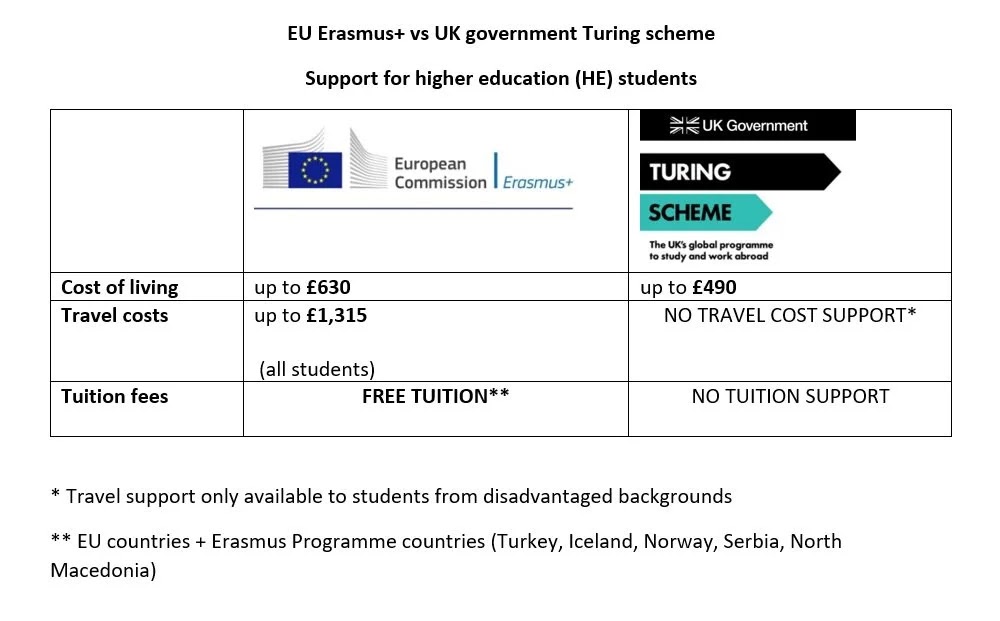
Under Erasmus Plus students don't pay any more tuition than what they pay at their home institution.  Students receive grants to help cover living expenses to study abroad and for work placements/internships.  Teachers and educational staff are also able to attend training courses across Europe.  

Every year around 300.000 students participate in the programme at over 4.000 institutions in 37 countries.  Spain sends the most participants followed by France, Germany, and Italy.  The most popular receiving countries are Spain, Germany, Italy, and France.

I don't know how true it is but I've heard that some 25% of Erasmus participants meet their future spouse/partner while on the programme.

After Brexit the United Kingdom decided to no longer participate in Erasmus.  So UK students can no longer study in the EU and EU students aren't able to study at UK institutions.  The UK has rolled out the Turing Scheme, named after Alan Turing, as its replacement for Erasmus.  It will allow up to 35.000 UK students to study and work worldwide.   

Erasmus provides more money to students than Turing to subsidise their foreign placements.  

Ireland has announced that it will fund students from Northern Ireland to continue to participate in Erasmus even though the UK pulled out of the programme.

Sunday, March 24, 2019

2019 World Happiness Report

The 7th World Happiness Report was released by the Sustainable Development Solutions Network of the United Nations and Czechland was ranked at the 20th happiest out of 156 countries.

The report factors in things like gross domestic product per capita, healthy life expectancy, freedom to make choices, perceived corruption and social support from friends and family.

No surprise that the Scandinavian countries ranked so high.  For the second year in a row, Finland come in 1st, followed by Denmark, Norway, and Iceland.  The Netherlands came in 5th place.  Of the 20 happiest countries in the world, 14 of them are in Europe.

The USA came in 19th.  At 20th, Czechland scored the best of the Visegrád Group with Slovakia at 38th, Poland at 40th, and Hungary at 62nd.

Czechs continue to rank higher each year.  In 2015 they were 31st, in 2016 they were 27th, in 2017 they were 23rd, and last year they were 21st.

The most unhappiest countries are South Sudan, the Central African Republic, Afghanistan, Tanzania, Rwanda, and Yemen.


2019 Top 30 Happiest Countries

Saturday, January 26, 2019

2018 Good Country Index

The Good Country Index is a United Nations measure of "what country on earth contributes to the good of humanity."  The index is made up of 35 different data points which gives a ranking in seven categories and an overall ranking.

The seven categories are: Science and Technology, Culture, International Peace and Security, World Order, Planet and Climate, Prosperity and Equality, and Health and Well-being.

For 2018, the top 10 countries were...

  1.  Finland 
  2.  Netherlands
  3.  Ireland
  4.  Sweden
  5.  Germany
  6.  Denmark
  7.   Switzerland
  8.  Norway
  9.  France
  10.  Spain

Scandinavia scored really well.  It's interesting that all of the top 10 countries are in the European Union or the European Economic Area.

Czech Republic moved up two spots this year to #32.
Czechland was actually #2 for Science and Technology.  Wow!
The USA fell 15 spots from #25 in 2017 to #40 in 2018.

The bottom three countries were #161 Mauritania, #162 Libya, and #163 Iraq. 

Tuesday, January 17, 2017

The Northern Lights

The main reason for our trip to Tromsø was to see the Northern Lights.  Due to bad weather I didn't get to see them in Iceland back in 2013.  So on Saturday night we went on a seven hour tour.

The Northern Lights, or the Aurora Borealis, is a light phenomenon when electrically charged particles from the sun enter the earth's atmosphere.  The bright, colourful dancing lights can be seen above the magnetic poles in the both the northern and southern hemispheres.  In the southern hemisphere it is called Aurora Australis.

We were driven to Sommaroy, about an hour away from the city where there wasn't any light pollution.

The thing to remember about chasing the lights is that you can't control the weather.  Sometimes the lights are visible around midnight and sometimes there's nothing to see.

The guides built a fire at our site and we were given tea and mushroom soup.  Followed by Norwegian cake, reindeer treats, a local brown cheese and marshmallows.

Unfortunately the tour was pretty much a bust.  A few people got pictures with their cameras but you couldn't see the lights with your eyes.  To me, that just doesn't count so chasing the Northern Lights remains on my list of things to do here in Euroland.  For try #3 perhaps I'll try Finland.  If that doesn't pan out then maybe I should just try the Southern Lights.

Monday, January 16, 2017

Tromsø, Norway

Tromsø is the largest urban area in Northern Norway, about 350 km (217 miles) north of the Arctic Circle.

The city is named after Tromsøya which is the island that it sits.  It is home to 73,500 people which includes more than 85,000 students who attend the world's northernmost university.


The city was issued its city charter in 1794.  However, the Tromsø area has been inhabited since the end of the ice age.  Archaeologists has discovered artefacts estimated to be 9,000 to 10,000 years old.

Around 11 AM
From around 26 November to 15 January the sun remains below the horizon which means that durning the polar night there is only a few hours of, often, bluish light.  Basically the opposite of the midnight sun that runs from around 18 May to 26 July where there's no real darkness.

The Tromsø Cathedral was built in 1861 and is in the middle of the city.  The Lutheran cathedral is the country's only wooden cathedral.

The Polar Museum opened in 1978.  It sits in an 1837 wharf house and highlights the city's history of Arctic hunting and exploration.

The Tromsø Bridge opened in 1960.  At 1.036 metres (3,399 feet) in length it was the longest bridge in Northern Europe when it opened.

The Cathedral of our Lady is the Catholic cathedral.  The small wooden church sits about 150 people and was consecrated in 1861. It is the most northern Catholic cathedral in the world.

The Arctic Cathedral isn't really a cathedral.  It is a Luthern parish church that was built in 1965.


Skansen is the oldest house in Tromsø.  It began as a customs station in 1789.  It has also served as housing, schools, a retirement home and as a city museum.


Polaria opened in 1998 and it is the world's most northernly aquarium.  The show with the bearded seals is well worth seeing.

The Polstjerna was one of the country's most famous, and most successful seal hunting ships.  Between 1949 and 1981 it killed almost 100,000 seals.

The Perspective Museum is in a house dating back to 1831.  It houses a permanent photo exhibition and various temporary displays about the city.


The music pavilion was built in 1891.

The Monument to the victims of the Holocaust from Tromsø was unveiled in 1951.

The public library was completed in 2005.  It shares space with the city archives.


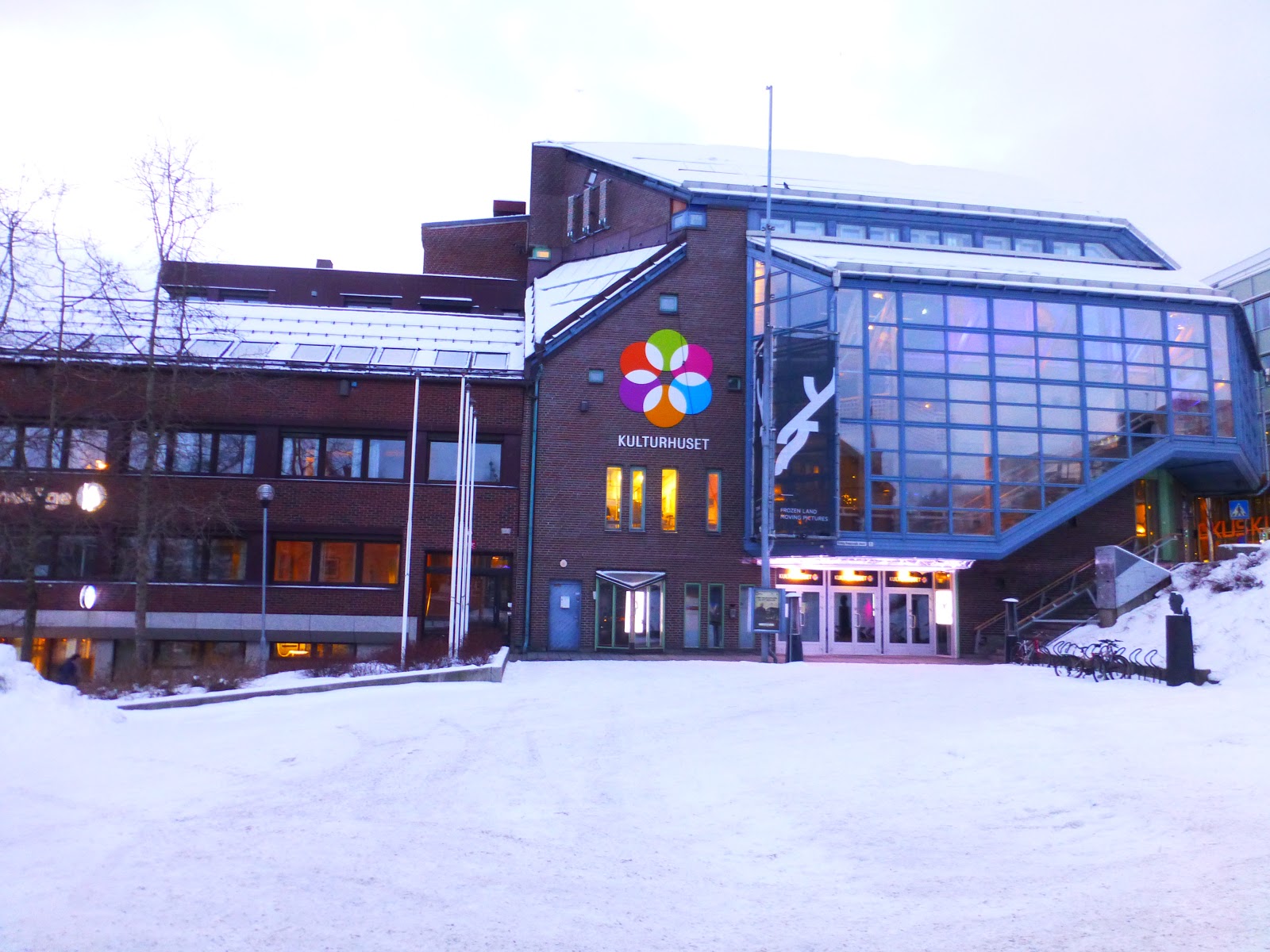
The Kulturhuset is the city's primary performing arts centre.  The main stage hosts the Tromsø International Film Festival.