

The centre is located in the first-Republic villa where he lived from 1935 until he passed away in 1939.


The centre is located in the first-Republic villa where he lived from 1935 until he passed away in 1939.
 A while ago I found a map for a self-guided walk of Žabovřesky at the Tourist Information Office. Since yesterday was Labour Day so decided to get some fresh air and go for a walk.

 Kounicovy koleje are student dormitories that were built in 1922. Following the Nazi occupation of Czechoslovakia, on 17 November 1939, about 200 students were taken from the dormitory and sent to Sachsenhausen Concentration Camp. From 1940, the Gestapo used the facilities for interrogations and as a prison. Tens of thousands of prisoners passed through the prison and at least 800 people died here.
 After Brno was liberated, it became a prison for Nazis and collaborators from May to September 1945. During this time at least 300 people died there from torture and were buried in mass graves at the Central Cemetery.
 In 1978, the dorms were declared a national cultural monument and in the garden is a memorial for the victims and to victory over Fascism.
Since 1999, the dorms belong to the Brno University of Veterinary and Pharmaceutical Sciences.

 Bohuslav Fuchs House was built in 1928, by the renowned architect who worked from a private studio in his villa.


 Sono Centrum is a multi-purpose facility that opened in 2016. The "Death Star" is a nine-story building that combines a hotel, a music club, a conference hall and a restaurant.

 In 2010, a monument of former President Edvard Beneš was unveiled in front of the faculty. The statue cost 1,6 million Kč (~$77K) and ame at the request of members of the Czechoslovak Legionnaires' Association and the Association of Czechoslovak Foreign Pilots 1939-1945. Although not at some controversy as the Beneš Decrees played a significant role in relocating ethnic Germans from Czechoslovakia after the war. This is locally know as the Brno Death March. Later this year it will be 75 years since he passed away.
 The Chapel of St. Wenceslas was built in 1906 and is dedicated to the patron saint of Czechland. The chapel facade is a protected cultural monument and the the building was renovated in 2018.

Wilsonův les, Wilson's Forest, is a 34,4 hectare (85 acre) forest park on the southern edge of the Žabovřesky. In 1888 it was called Kaiserwald, the Imperial Forest, to honour Emperor Franz Joseph I who was celebrating the 40th anniversary of his reign. In 1918, it was renamed in honour of American President Woodrow Wilson who supported the establishment of an independent Czechoslovakia. During WWII it was called Kaiserwald again and from 1953 to 1991 it was known as Jirásek's Forest after writer Alois Jirásek. I guess having a forest named after an American President isn't something that would have been something favoured by the Communist regime.

 There's quite a bit to see just walking around Žabovřwsky. Of course I supposed it couldn't be called "Frog Screams" if there wasn't some kind of frog motif.

The art nouveau building, built in 1908, has a golden frog at the entrance.


 Strážnice is home to 5.400 people and is 65 km (40 miles) from Brno, close to the Slovak border. While Neolithic pottery has been found here, the it was first written mention of the town was in 1302. It was one of the most populated towns in Moravia at the start of the 17th century.
 The old city gate bastions date back to the 16th century. They were used to protect the town from Turkish invasions.


February isn't the time of year to see storks but here's a stork nest for when the season comes. I'm told that nearby is one of the last places in Central Europe where a forest colony of White Storks can still be seen.
 The shrine at Radějovská street dates back to the first half of the 19th century.

The town hall is a protected cultural monument that dates back to the 17th century.
 The Strážnice Castle, is less castle and more chateau, is from the mid-19th century. The castle is home to the National Institute of Folk Culture and a library with over 13.000 books.


 Next to the synagogue is the Jewish cemetery which was founded in the mid-17th century. It is 5000m² (1.2 acres) with around 1500 gravestones.


 Of course no Czech town is complete without a statue of Tomáš Garrigue Masaryk, the first president of Czechoslovakia. Apparently he had studied here.
 Strážnice is also the home of really good potato chips (crisps).
 I hear that the factory is the town's biggest employer.
Here's a short video I found on YouTube showing the factory and how the crisps are made.
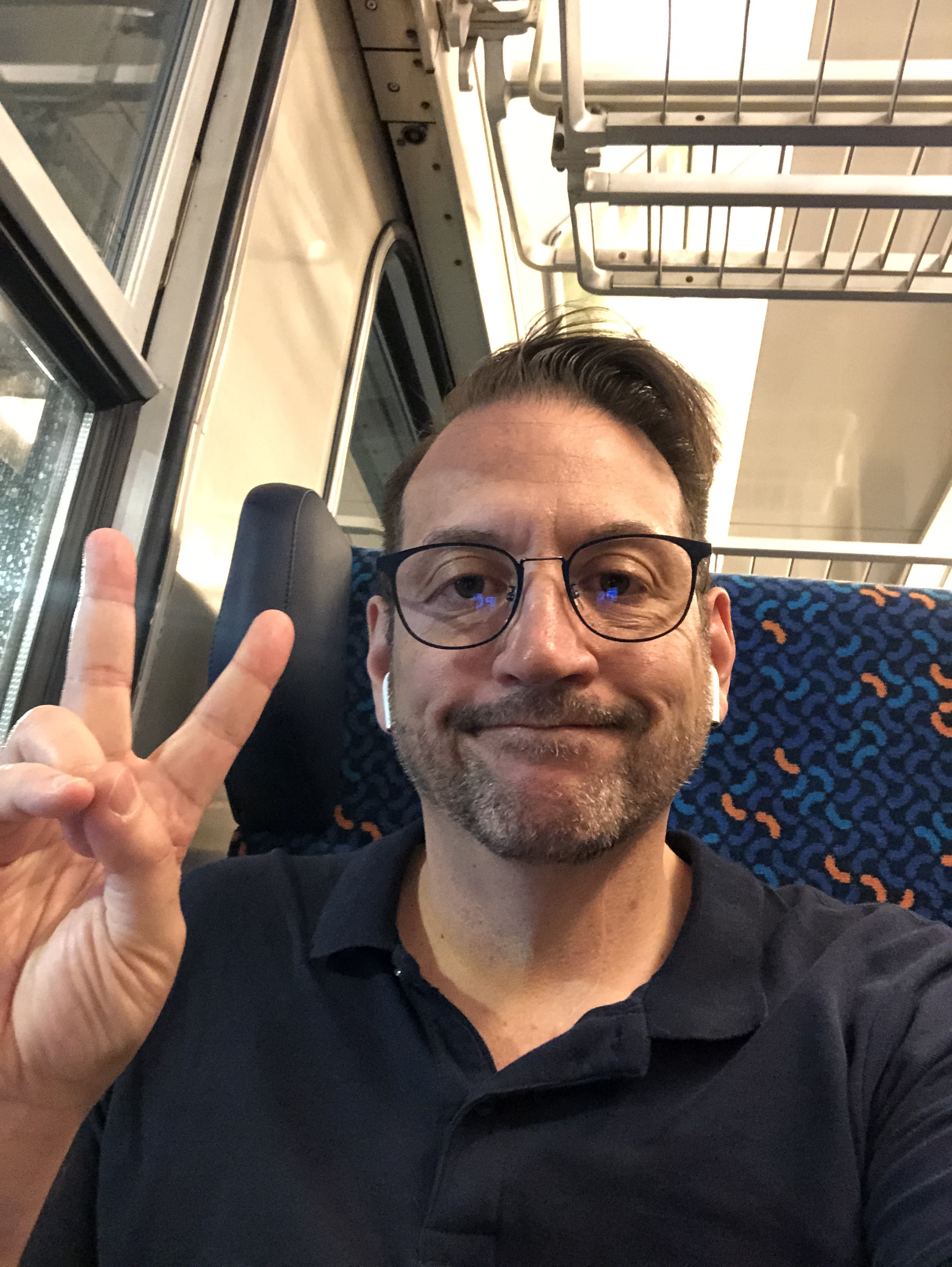
 Natalie booked sleeper train ticket from Budapest to Frankfurt Oder. She booked two sleeper berths so that when the train stopped in Břeclav, I could jump on and then we would arrive in Germany together and we would then go to Erkner where Claudia would pick us up. Easy enough. Except, in my experience, nothing coming out of Hungary is ever on time.
 |
| Headed to Břeclav |
Nat's train was supposed to leave Budapest at 19:29 but it left 28 minutes late. The train was supposed to arrive in Břeclav at 23:04 and depart again at 23:50. I made it home from Frankfurt am Main, Unpacked, showered, repacked and hopped on a local train to Břeclav where I found out that Nat's train was delayed. There's not a whole lot to do at the Břeclav train station after 23:00 while you're waiting for a delayed train.
 I did discover that there's a train museum inside the Břeclav train station. It was closed but maybe I'll have a chance to check it out some other time.
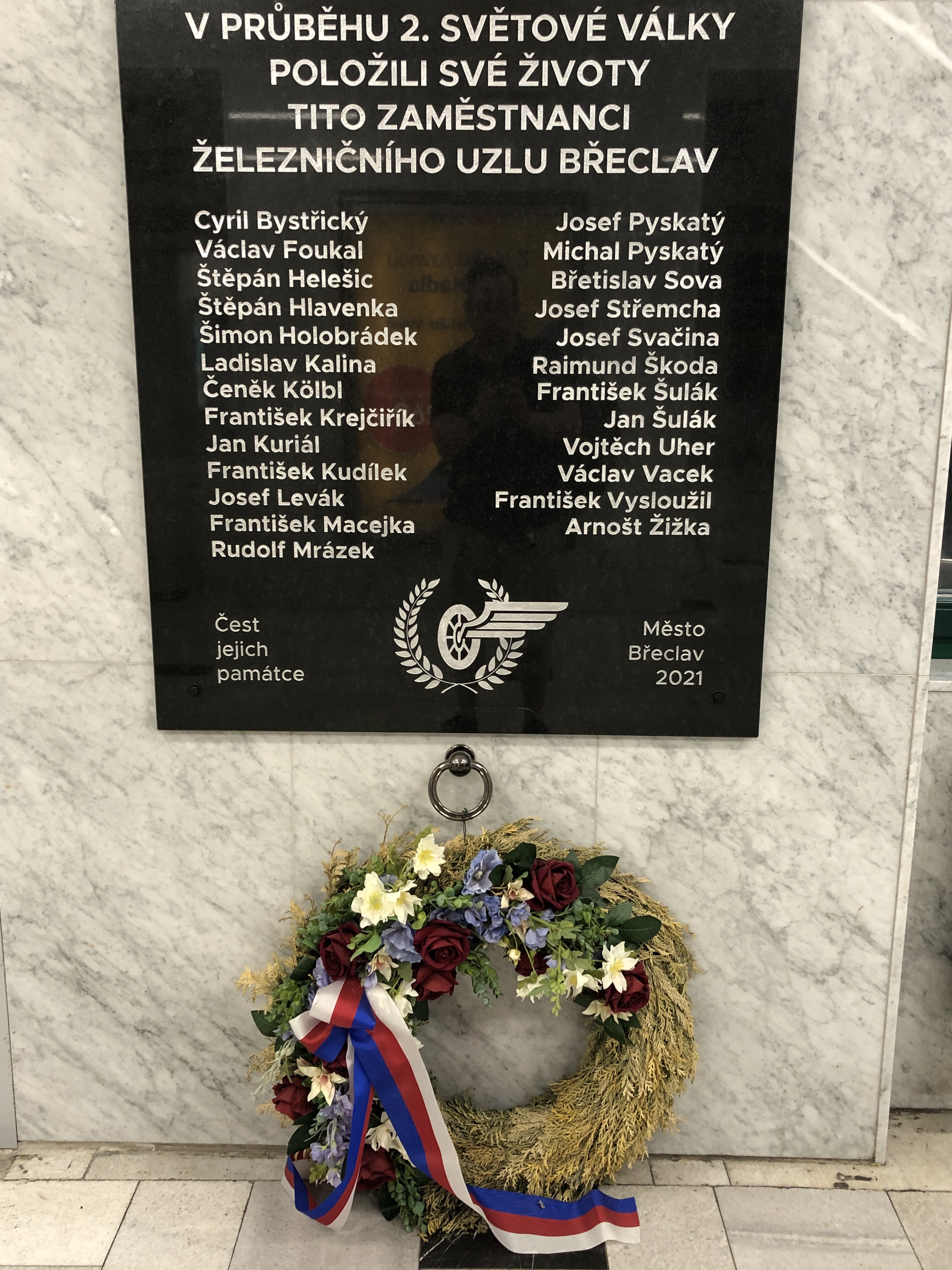 Inside the station there's also a monument to the locals to fought and died in WW2.
 The train finally arrived a little after 2:30 and I jumped on. I was so ready for that sleeper berth.
 |
| Headed to Erkner |
The train then continued on through Poland before finally getting to Frankfurt Oder. From there we jumped on a regional train to Erkner, which I got to use for free thanks to the €9 ticket that I bought before last weekend's concert.
Claudia and Tünde picked us up at the Erkner. Claudia's parents were away for the weekend so we headed over to their place to use the swimming pool.







 Posts
All Comments
Posts
All Comments


 Czech Koruna Exchange Rate


