Showing posts with label Belgium. Show all posts

Tuesday, November 29, 2022

2022 World Happiness Report

This year is the 10th anniversary of the World Happiness Report. by the Sustainable Development Solutions Network of the United Nations.  The report factors in things like gross domestic product per capita, healthy life expectancy, freedom to make choices, perceived corruption and social support from friends and family. 


For the fifth year in a row, Finland came in first place.

Scandinavia did well as usual with the five countries all placing in the top eight places.  Finland #1, Denmark #2, Iceland #3, Sweden #7 and Norway #8.

Switzerland placed #4.

The BeNeLux countries did well too with the Netherlands #5, Luxembourg #6, and Belgium #19.

Europe is the happiest region with the eight of the top ten spots.  The only non-European countries to crack the top ten are Israel #9 and New Zealand #10.

The USA placed #16 and Czechland placed #18.

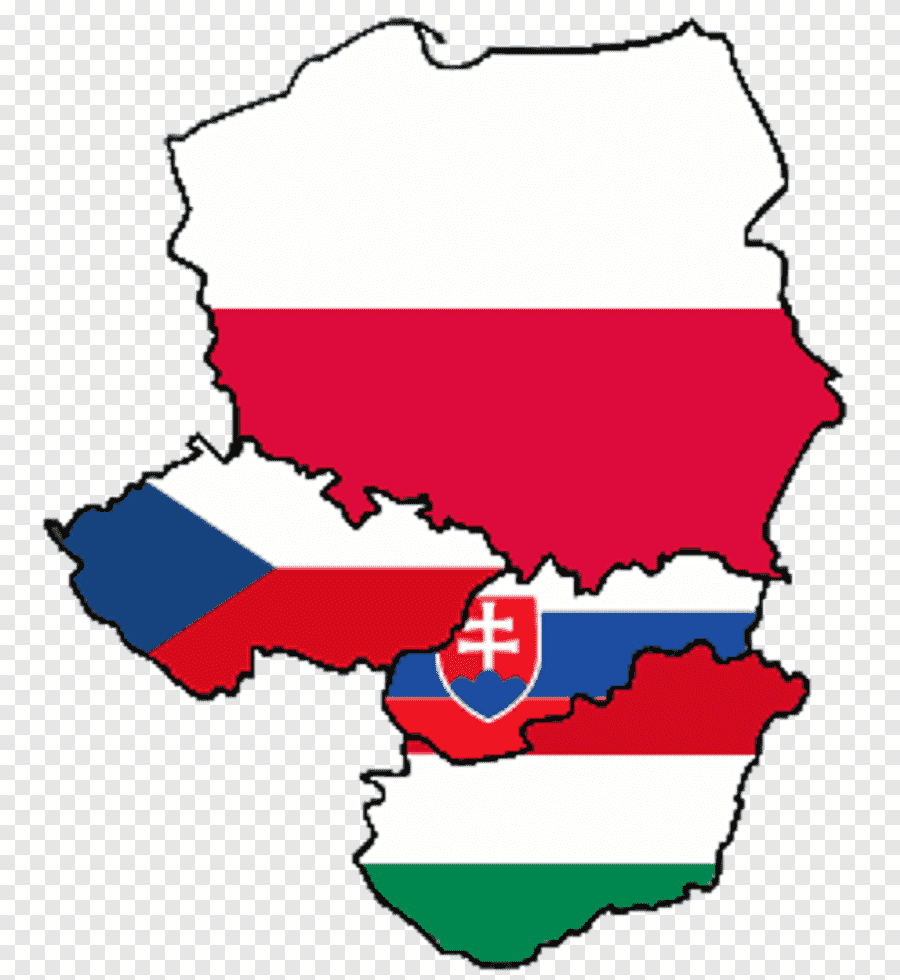
Czechland continues to be the happiest of the Visegrád Four with Slovakia #35, Poland #48, and Hungary #51.

Last place goes to Afghanistan, behind Botswana, Rwanda, Zimbabwe, and Lebanon.

Monday, September 12, 2022

Eurocorps

My 2000th blog post.  I can't believe that I've been at this for over 13 years or that people still seem interested in my Czechland adventure.  Thank you to everyone who continues to follow along.

Eurocorps is a European army, of about 60.000 troops, that can be deployed on very short notice.  It was founded in 1992 by France and Germany and it went operational in 1995.  This month it celebrates its 30th anniversary.  Eurocorps' headquarters are in Strasbourg, France.
Eurocorps is at the service of the EU and NATO and in 2002, it was certified as one of NATO's nine High Readiness Land Headquarters.  Eurocorps considers requests for support from the UN and OSCE.  It can also be deployed at the request of the framework nations.

There are six framework nations - France, Germany, Belgium, Luxembourg, Spain, and Poland.  

Any EU country can join with the unanimous approval of the framework countries.  There are also five associated nations - Austria, Greece, Türkiye, Italy, and Romania

Finland was an associated member from 2002 - 2006 and Canada was from 2003 - 2007.  Czech Republic isn't a member but I believe that they have participated is some military exercises with Eurocorps in the past.  I'm not aware of Czechland having any plans to join. 

Eurocorps has participated in peacekeeping missions in the Balkans as part of SFOR in Bosnia and Herzegovina and KFOR in Kosovo.  It was deployed to Afghanistan as part of the UN's International Security Assistance Force (ISAF).  It's even been deployed to Africa as part of EU training missions in Mali and the Central African Republic.

Poland became the newest framework member this year in January.  From 2023-2025, a Polish general will take command of Eurocorps.  With all of the support Poland has given Ukraine during the Russian invasion, I'm sure that Russia isn't thrilled with Poland soon to lead Eurocorps.

What's interesting to me Austria and Türkiye being associate members.  Türkiye is a member of NATO but not the EU so until it actually becomes an EU member, if ever, then it can't be one of the framework nations.  Austria's constitution prohibits it form entering into military alliances.  So I guess that by being an associate member it can participate in Eurocorps without violating its constitution, in the same way that it is a member of NATO's Partnership for Peace programme without being a NATO member.

Here's a France24 video I found on YouTube from 2009 that talks about Eurocorps.

©France24

Saturday, August 27, 2022

English in Czechland

English is the most common spoken language across the EU.  About 44% of people in the EU can speak English.  And that's post-Brexit, as now only 1% of the EU are native English speakers.  However, Czechs rank among the worst in Europe at foreign languages.

Czechs are among the least likely Europeans to know a foreign language.  While about 45% can communicate at some level of English, only one in 10 Czechs have minimal English-language skills.  Just 7% speak English proficiently.

The only countries worse at English than Czechia are France, Italy, and Spain.  The top five countries with the best English foreign language skills are the Netherlands, Austria, Norway, Denmark, and Belgium.

One of the primary staffing agencies here has confirmed that English is required for four of to 10 job offers here.  English is demanded five times more than all other foreign languages combined.  After English, the top requested languages by employers are German, French, Italian, and Dutch.

The Czech Statistical Office, ČSÚ,  states that only a minimum of Czechs speak English at a professional level.  30% can't speak a foreign language.  

English is most frequently taught foreign language in EU secondary schools, followed by Spanish, French, German, and Italian.  

In Czechland, by law, students are taught two foreign languages.  English is the most popular, followed by German.  

There has been some controversy in the press about the new government's ability to speak English.  Five of 18 cabinet ministers have admitted to only being able to speak "tourist level" English only.  This is a big deal now that Czechland currently holds the rotating presidency of the EU.  

The new prime minister, Petr Fiala, speaks both English and German fluently.

Jana Černochová, the defence minister, and Zbyněk Stanjura, the finance minister have admitted to having weak English skills but both have at least passive Russian and Polish.

Tuesday, November 23, 2021

Nutri-Score

When I first moved here I made a comment at work that I was going to get so fat here with this being the land of beer and potatoes.  A friend sniped back with, "but I thought that all Americans were already fat."  Well not quite right but not wrong either.

In 2016, the World Health Organisation put the USA's obesity rate at 33,8%.  Czech Republic was 24,2%.  Czechs have been getting bigger.

In 2019, the five EU countries with the highest percentage of obesity were Croatia, Malta, Czechland, Hungary, and Slovakia.  France has the lowest obesity levels in the EU, followed by the Netherlands, Italy, Belgium, and Sweden.  Czechs were had the 3rd highest levels of obscenity in the EU.

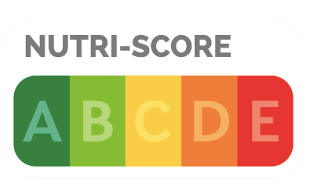
Here's where I think that Nutri-Score would be a good thing.  Nutri-Score is a "traffic light system" that ranks food products on a scale from A to E, where A is the best and E is the worst, and it is clearly visible of the front of the food's packaging.  

Food products get a lower rating if there is:

  • high energy density per 100 g or per 100 ml
  • high sugar content
  • high content of saturated fatty acids
  • high salt content.
There's a higher rating when:
  • contains fruits, vegetables, nuts and legumes
  • contains fiber
  • contains protein
  • contains rapeseed, walnut and olive oil
Nutri-Score was founded in France in 2013 and in 2017 the French Health Ministry officially recommended it.  Since then it has rolled out in Belgium, Spain, Germany, Switzerland, the Netherlands, and Luxembourg.  The system has been recommended by the European Commission and the World Health Organization.

So far it's not mandatory across the EU but I'm sure that it will be eventually.  Some companies such as Nestlé and Danone have announced that they will start using Nutri-Score in Portugal, Slovenia, and Austria even though it's not required in those countries.  

Not all countries are onboard with the system.  Poland, Czechland, Cyprus, Greece, Hungary, Latvia, and Romania all oppose it.  Italy believes that the system puts the traditional Mediterranean diet at a disadvantage.  

The Czech Ministry of Agriculture isn't in favour of the system but it will tolerate international labels with Nutri-Score.  The ministry is not in favour of a mandatory front-of-package label and believes that the Nutri-Score formula is too simplistic because it doesn't consider the size of a portion or how food is prepared. 

Nestlé will start using Nutri-Score in Czechland in 2023.  

Here's an interesting video I found out on YouTube where CNN talks about some of the differences between the US and Czech health care systems.  Not exactly Nutri-Score or Obesity related but still kind of fitting.  While the video is at least 12 years old already it's still pretty accurate.

©CNN

Update:  August 2022.  Here's a short TV commercial for Nestle that shows the Nutri-Score label.

©Nestlé Cereálie CZ

Saturday, March 20, 2021

2020 World Happiness Report

Today is the International Day of Happiness.  The United Nations started this back in 2013 to promote the idea that feeling happy is a global human right.  Clearly 2020 was a challenging year due to COVID-19 so this year's theme is "Keep Calm.  Stay Wise.  Be Kind."

The 2020 World Happiness Report was released today.  Czechland came in at #18 and the USA came in at #19.  This is the first time that Czechland outranked the USA.  

Like last year, Finland came in #1 again and 14 of the 20 world's happiest countries are in Europe.  At #9, New Zealand is the only non-European country to crack the top 10.

Scandinavia is the happiest region in Europe with #1 Finland, #2 Denmark, #4 Iceland, #6 Norway, and #7 Sweden.

BeNeLux did well with #5 Netherlands, #8 Luxembourg, and #20 Belgium.

The only Middle Eastern country to make the top 20 was #12 Israel.  Even with Brexit the UK came in at #17.

At #18 Czechland was the clear happiness leader of the Visegrad countries with #34 Slovakia, #44 Poland, and #53 Hungary.

Many of the most unhappiest counties are in East and Southern Africa including #137 Zambia, #140 Burundi, #142 Tanzania, #144 Malawi, #145 Lesotho, #146 Botswana, #147 Rwanda, and #148 Zimbabwe.

The world's most unhappiest country is #149 Afghanistan.  

The rankings are based on the combined scores for the last three years.  

Not much changes overall if you only go by the 2020 scores instead of the three year average.  Although then the USA would have been #14 and Czechland #16.

Wednesday, January 27, 2021

New Integration Course Requirement

There's now a new requirement in Czechland for foreigners who have been issued long-term residence permits, since 1 January 2021, to complete a four-hour integration course.  

The course covers the rights and obligations that come with residency here as well as Czech culture and values.  The class is conducted in Czech, with interpretation into English, French, Spanish, Arabic, Mongolian, Russian, Serbian, Ukrainian or Vietnamese.  There's no exam but participants receive a certificate when they complete the entire course.  It costs 1500 Kč ($70) and is available at 18 centres across the country.  You have up to one year from receiving your residency permit to complete the course.  The fine for not completing it in time is up to 10.000 Kč ($467).

This is only for third-country nationals as EU citizens are exempt.  It's not required if you are under 15 or over 61 years of age.  Those here on study or investment visas are also exempt.

Aside from this, the education minister has submitted draft legislation that will increase the Czech language requirement for permanent residency from A1 to A2.  When I received my permanent residency back in 2015 I only had to prove A1 level Czech.  This isn't official yet but I think it's for sure coming as there's been talk of raising the level of Czech required for at least the past eight years.  I don't know if they will raise it this year with COVID-19 but for sure by next year.

I was surprised to find out that Czechland and France are the only two EU countries that only require A1 for permanent residency.  I would have thought that the level of language proficiency would have been more unified across Europe but each has its own requirements.

In Czechland, A2 will be required for permanent residency while B1 is required for citizenship.

Germany requires B1 level for either permanent residency or citizenship.

Austria requires B1 for permanent residency and B2 for citizenship.  This means that for Austrian citizenship you need to speak better German than a German citizen.  Albeit Austrian German.

France requires A1 for permanent residency and B1 for citizenship.

Poland requires B1 for both permanent residency and citizenship.

I don't know about permanent residency but Italy requires B1 for citizenship.  The Netherlands, Portugal, and Spain only require A2 for citizenship in Dutch, Portuguese, or Spanish respectively.  Denmark requires B2 for citizenship.

For countries with multiple official langues the rules seem to vary more.  For citizenship in Finland, B1 is required but it can be in either Finnish or Swedish since both are official languages.

Belgium has three official languages so for citizenship you only have to prove A2 in either French, Dutch, or German.

Luxembourg has three official languages - French, German, and Luxembourgish.  But if you want citizenship than only Luxembourgish counts.  You need A2 level speaking and B1 level listening.

Switzerland has four official languages - German, French, Italian, and Romansh.  For permanent residency you need A1 writing and A2 speaking in any one of the four languages.  For citizenship, A2 writing and B1 speaking are required.

I'm still waiting to find out when I get to take my B1 Czech exam.

Monday, October 5, 2015

BeNeLux

BeNeLux is the geographic area made up of Belgium, Netherlands, and Luxembourg.  

The combined area is just a bit smaller than South Carolina and has a population of 28.5 million people.

BeNeLux flag


The first union was signed in 1944 and was a precursor of the European Union.

Brussels serves as the capital and the official languages are French and Dutch.

Here's an interesting video I found out on YouTube that describes the alliance.

©TestTube News

Sunday, October 4, 2015

Mini-Europe

Bratislava's Blue Church
Mini-Europe opened in 1989 in Brussels near the Atomium.  It showcases 350 buildings in about 80 cities of EU member countries.

The reproductions are scaled at 1:25 and are quite detailed.  At each stop along the way are interesting country facts.  About 350,000 tourists visit the park each year.


I was amazed by the number of places that I've already visited.  And I for sure got some ideas for some future travels.

Wednesday, September 30, 2015

Weekend in Brussels, Belgium

After my little travel delay I managed to get to Belgium and had a great weekend in Brussels.  It's such a great city to visit.


I haven't been to Brussels since 2010 so it was fun to visit the medieval Grand Place, Royal Palace, Parc du Cinquantenaire and few of the local churches.

No visit to the city is complete without seeing Mannekin Pis.  This time he was sporting a national uniform.

There's also girl version called Jeanneke Pis.  People throw coins in to the fountain the loyalty of loved ones.  I believe there's also a peeing dog version but we didn't see it.  Maybe next time.

EU Commission HQ
If I ever manage to make it during the week then I for sure want to take the tour of the EU headquarters.


On Sunday we went to see the Atomium and to spend the day at Mini-Europe.

Saturday night at the Grand Place there was a concert for La Fête de la Fédération.  Here's a short video I took of the DJ spinning.

Wednesday, October 22, 2014

Air Kiss

In Europe it is common to greet people with a kiss on the cheek - the air kiss.  At times it can be a bit confusing.  Especially if you are from the USA where it is not such an everyday thing.  What can really make things complicated is that the standard air kiss is different depending on where you go. 

First a few general rules... 
1.  Don't kiss people you don't know.  Unless you are introduced to them in a social environment.
2.  Shake hands prior to the kiss.  It is also common to put your left arm on the other person's arm or shoulder as you go in for the kiss.
3.  Move your head to the left so that you kiss the right cheek first, then the left cheek.  Most of the time, sometimes it is the left cheek first.
4.  You don't actually kiss.  Your cheeks may touch but your lips should never actually touch the other person's cheek.  Hence the term "air kiss."  Otherwise you could mess up a lady's makeup or her lipstick could leave evidence of a kiss on your cheek. 
5.  Play it safe and always follow the other person's lead!

It is very common for women to kiss women and for men to kiss women.  Depending on the country, and the context, you may see two men kiss but it is less common.  When two men do kiss it isn't a gay thing.

The number of kisses by region in France
Normally it is two kisses.  Sometimes three.  Sometimes more.  I go for the traditional two kisses.  Once, on my birthday, a colleague from Romania said that three kisses are traditional for birthday wishes.    

In France it is called la bise.  You can tell what part of France someone is from by how many kisses you receive and it is very common for men to kiss each other. 

In Czechland and most of Europe two kisses are the standard.  In Serbia, Russia, Netherlands, Belgium and Switzerland you generally exchange three kisses.

The air kiss is a standard greeting between friends and acquaintances.  The only time I still get a bit uneasy about it is when it is at the office.  Then it seems a bit odd.  But I just go with rule #5 and follow the other person's lead.

Here's a video I found out on YouTube.  It is a Good Morning America segment trying to explain things to Americans.
 
©ABC

Thursday, May 1, 2014

10 Years in the EU

Today is 1 May and it's a public holiday.  Today is also the 10th anniversary of Czech Republic joining the European Union.

In 1952, six countries (Belgium, Italy, Luxembourg, France, Netherlands, and West Germany) formed the European Coal and Steel Community.  In 1953, Denmark, Ireland and the UK also joined.  This eventually developed in to a European common market.

Greece joined in 1981 and Portugal and Spain both joined in 1986.  After German reunification in 1990, the EU picked up what used to be East GermanySweden, Finland, and Austria all joined in 1995.

2004 was a big year for the EU.  The single largest EU expansion (number of countries, territory, and population) occurred in 2004.  The EU welcomed Cyprus, Czech Republic, Estonia, Hungary, Latvia, Lithuania, Malta, Poland, Slovakia, and Slovenia.

In 2007, Bulgaria and Romania joined.  Last year, Croatia became the newest member.  Today, the EU contains 28 countries and more than 500 million people.

Still, not every country in Europe is an EU member.  Norway, Andorra, Monaco, San Marino, Vatican City, Liechtenstein, and Switzerland are not members.  Iceland, Macedonia, Montenegro, Serbia, and Turkey are all candidates to join the EU.  Albania, Bosnia and Herzegovina, Kosovo, and Ukraine are not yet even candidates to join. 

Czechs have gained economically from joining the EU.  Plus it's a heck of a lot easier for Czechs to travel now.  However, many Czech people consider EU legislation as a negative and only around 20% or so of the people want to give up the Crown for the Euro.

Update:  Here's a video I found out on YouTube about the European Union.
©CGP Grey

Update:  15 years in the EU.
Update:  The UK officially left the EU on 31 January 2020.

Update:  Here's a short 5½-minute video on how the EU works.
©CNBC International

Update 2025:  Here's a short video about the EU.

©EU Made Simple

Wednesday, March 12, 2014

15 Years in NATO

Today was the 15th anniversary since Czech Republic joined NATO. 


NATO is the North Atlantic Treaty Organization.  The organization came about after WWII.  It is a military alliance where all members agree to mutual defense.  An attack on one NATO member is considered an attack on all members.

The alliance is headquartered in Brussels.  

Back in 1949, the alliance began with 12 members - Belgium, Canada, Denmark, France, Iceland, Italy, Luxembourg, Netherlands, Norway, Portugal, the United Kingdom and the USA.  

Greece, Turkey and West Germany joined in the 1950s and Spain joined in 1982.

Czech Republic, Hungary and Poland joined in 1999 becoming the first former Warsaw Pact members to join the alliance.

Seven new members joined in 2004 - Bulgaria, Estonia, Latvia, Lithuania, Romania, Slovakia and SloveniaAlbania and Croatia both joined in 2009.

Today there are 28 members.  Bosnia and Herzegovina, Montenegro and Macedonia are all in the process of joining as well.  Georgia is another aspiring member.  Given the problems in Crimea, I'm sure that Ukraine wishes it was currently a member.

Macedonia fulfilled the requirements to join at the same time as Albania and Croatia, but its membership was blocked by Greece over the country name of Macedonia.    

Here's a NATO video timeline I found out on YouTube.
©NATO
 
I also found a video from 2011 showing Czech NATO troops training police recruits in Afghanistan.

©NATO 

Update: Montenegro joined in 2017.
Update: 2019 is the 20th anniversary of joining NATO.

Update: 2019 - Here's the Czechia is NATO - We Are NATO video.

©NATO 

Update: North Macedonia joined in 2020 becoming the 30th NATO member.

Update:  September 2022 - Here's a short video I found on YouTube about how a country joins NATO.

©NATO

Update: 4 April 2023 - Finland became the 31st member of NATO.

Tuesday, October 29, 2013

Plzeň, Czech Republic

Plzeň, in western Bohemia and with 170,000 people, is the 4th largest city in Czechland.  It is 90 km (56 miles) west of Prague.

It is most well known as the home of Pilsner beer.  It is also the home of Škoda.   

The town was established in 1295 and went on to become part of an important trade route between Bohemia and Bavaria.

Plzeň, along with Mons in Belgium, has been selected to be a European Capital of Culture in 2015.

The main site at Republic Square is the St. Bartholomew Cathedral.  The original church was completed around 1340.  It was renovated following a fire in 1507 and being struck by lightning in 1837.  The church was given cathedral status by Pope John Paul II in 1993.

The spire is 102.6 meters (336.6 feet) and is the highest in ČR.  The views make it worth a climb up to the top.

The St. Mary's plague column was built in 1681 to commemorate those lost to the "black death".

The Renaissance town hall is over 500 years old.


In front of a bank is a socialist memorial.  As well as a memorial to the communist terror from 1948 to 1989.


The brewery museum is located in a 15th-century building with an original license to brew beer. 


The historical underground is an interesting sight.  It's a network of three story cellars built in the Middle Ages.  It's necessary to wear a protective hat in order to keep from hitting your head on the low ceilings.

The Great Synagogue was completed in 1892.  It is the second largest synagogue in Europe and the third largest in the world.  It was used as a storage facility by the Nazis during the war and was closed down by the communists.  It was reopened in 1998 after three years of restoration.

General Patton's 16th Armored Division of the 3rd Army liberated Plzeň from the Nazis on May 6th, 1945.  After the communists seized power in 1948, they went to great lengths to suppress knowledge of the U.S. Army's part in liberating Western Bohemia.

WWII Monument for Czech solders
Until 1989, it was taught that the Red Army alone liberated Czechoslovakia.  There's now a memorial that says "Thanks America".

There is now an annual Liberation Festival that takes place every May 6th and many American veterans return each year.  I need to check it out next year.


The Plzeňský Prazdroj brewery has produced Pilsner Urquell since 1842.  It has also produced Gambrinus since 1869.  


The brewery tour is among the most popular things to do in town.  It's pretty interesting to see the bottling plant and the vats where the beer is produced.

Enjoying the good stuff!!


However, the best part is getting to taste the unfiltered, unpasteurized beer.