Showing posts with label Cyprus. Show all posts

Tuesday, September 26, 2023

European Day of Languages 2023


Today is the European Day of Languages again.  The EU promote linguistic diversity and encourages everyone to speak multiple foreign languages.  There are 27 EU member countries and the EU has 24 official languages.   

The official EU languages are Bulgarian, Croatian, Czech, Danish, Dutch, English, Estonian, Finnish, French, German, Greek, Hungarian, Irish (Gaelic), Italian, Latvian, Lithuanian, Maltese, Polish, Portuguese, Romanian, Slovak, Slovenian, Spanish, and Swedish.

This means that EU legislation must be published in all 24 languages.  All EU citizens have the right to communicate with EU institutions in any of the official languages.

Within the EU, the European Parliament is the most linguistically diverse institution.  All 24 EU languages are used as MEPs may speak any official language.  Very diverse but it's expensive to have interpreters and translators to handle all 24 languages.  

The European Commission values efficiency over linguistic diversity.  While legally bound to all 24 languages of the EU, in practice the three main working languages are English, French and German.

Adding or removing a language to the official list requires the approval of all 27 EU members.  This is normally a part of the ascension process when a country joins the EU.  For example, Croatian became an official language when Croatia joined the EU in 2013.

When Luxembourg joined the EU in 1957, back when it was originally the European Economic Community (EEC), the national languages were French and German.  Both of which were official languages.  In 1984, Luxembourg made Luxembourgish an official national language.  However, it is not an official EU language because (a) Luxembourg didn't submit it as a language when it joined, and (b) to add it now would require all 27 countries to agree.

In Cyprus, both Greek and Turkish are official languages but only Greek is an official EU language.  More or less, kind of for the same reason as in Luxembourg.  

Last month, Spain formally requested that Catalan, Basque, and Galician all become official EU languages.  I don't think that this will happen anytime soon because all 27 countries have to agree, plus the associated administrative cost of adding three new languages.

English is an official language in Ireland and Malta, which is why English stayed an official EU language even after the UK left the EU

Saturday, November 5, 2022

Commonwealth of Nations

Today is the 5th of November which is Guy Fawkes night.  So Happy Bonfire night to all of my Commonwealth peeps.  

Here's a bit about the Commonwealth of Nations.

The Commonwealth of Nations is a political association of 56 countries, most of which, 52 of them, were once part of the British Empire either as colonies or dependencies.

With the passing of Queen Elizabeth II's passing, Charles III immediately succeeded his mother as monarch of the Commonwealth realm even though he has not yet be crowned king.

Once Charles III will be king, he will be both monarch and head of state, of the 15 countries of the Commonwealth realm.

These 15 countries are the United Kingdom, Antigua and Barbuda, Australia, the Bahamas, Belize, Canada, Grenada, Jamaica, New Zealand, Papua New Guinea, Saint Kitts and Nevis, Saint Lucia, Saint Vincent and the Grenadines, the Solomon Islands, and Tuvalu.

There are five countries that have other monarchs but are still a part of the Commonwealth.  These five are Brunei, Eswatini, Lesotho, Malaysia, and Tonga.

The remaining 36 members of the Commonwealth are all republics.  They include Bangladesh, Barbados,  Botswana, Cameroon, Cyprus, Dominica, Fiji, Gabon, The Gambia, Ghana, Guyana, India, Kenya, Kiribati, Malawi, Maldives, Malta, Mauritius, Mozambique, Namibia, Nauru, Nigeria, Pakistan, Rwanda, Samoa, Seychelles, Sierra Leone, Singapore, South Africa, Sri Lanka, Tanzania, Togo, Trinidad and Tobago, Uganda, Vanuatu, and Zambia.

The Commonwealth consists of 31,5 million km² (12.2 million square miles) which is about 21% of the world's total land area.  The Commonwealth countries are home to 2,4 billion people which is about ⅓ of the world's population with 94% living in Asia and Africa.

There's no requirement that a member has to have been a British colony.  Mozambique, Rwanda, and Gabon never were.  The Commonwealth Charter states that members have shared values of democracy, human rights and the rule of law.

The human rights thing is a bit funny to me.  The UK left a legacy of anti-homosexuality laws, particularly during the 19th century, at the height of the British Empire.  Being gay is still a criminal offence in more than 30 Commonwealth countries.  There's a direct link between anti-gay law and increased rates of HIV.  While the Commonwealth accounts for about a ⅓ of the world's population it has more than 60% of the world's HIV cases.    

Membership in the Commonwealth isn't forever.  Ireland was the first country to leave.  It left when the country became a republic.  Prior to India becoming a republic the rules were changed so that India could remain a member.  Zimbabwe left in 2003 but it is now trying to rejoin.  Other potential members currently include Somaliland, South Sudan, Suriname, and Burundi.

The three Crown dependencies of Jersey, Guernsey, and the Isle of Man aren't happy with only being represented by the UK.  All three want to have direct representation with the Commonwealth.

The Commonwealth Games are held every four years.  They began in 1930 as the Empire Games.  They contain the usual Summer Olympic events plus "British" sports like bowls, netball and rugby sevens.  The next games take place in 2026 in Victoria, Australia.

Update August 2023:  Looks like it's getting too expensive for cities to host the Commonwealth Games.  Two cities have withdrawn their bids for upcoming games.  Here's a BBC report about it.

©BBC News

Monday, April 25, 2022

Partnership for Peace

NATO has something something called Partnership for Peace (PfP).  It's a bilateral cooperation programme between NATO and Euro-Atlantic partner countries that lets partners build up an individual relationship with NATO.  PfP started in 1994 as a way to build security relationships between NATO and non-NATO countries.  Participating countries choose their own priorities for cooperation and the both the level and pace of progress.

The programme allowed NATO to reach out to former Warsaw Pact and Soviet Republics following the end of the Cold War.  The programme allows countries to build closer relationships with NATO without actually becoming a NATO member.  It's important to remember that the PfP programme has nothing to do with NATO's article 5 which says that an attack on one NATO country is an attack on all.  So while Ukraine is a PfP member it is not a member of NATO.  

Here's the list of when countries joined the PfP programme.  Many went on to officially join NATO later on.  

Romania - 26.01.1994
Lithuania - 27.01.1994
Poland - 02.02.1994
Estonia - 03.02.1994
Hungary - 08.02.1994
Ukraine - 08.02.1994
Slovakia - 09.02.1994
Bulgaria - 14.02.1994
Latvia - 14.02.1994
Albania - 23.02.1994
Czechia - 10.03.1994
Moldova - 16.03.1994
Georgia - 23.03.1994
Slovenia - 30.03.1994
Finland - 09.05.1994
Sweden - 09.05.1994
Azerbaijan - 04.05.1994
Turkmenistan - 10.05.1994
Kazakhstan - 27.05.1994
Russia - 22.06.1994
Armenia  05.10.1994
Uzbekistan - 13.07.1994

Belarus - 11.01.1995
Austria - 10.02.1995
Malta - 26.04.1995
Macedonia - 15.11.1995

Switzerland - 11.12.1996

Ireland - 01.12.1999

Croatia - 25.05.2000

Tajikistan - 20.02.2002

Montenegro - 14.12.2006
Serbia - 14.12.2006

In 1999, Czechland, Hungary, and Poland became the first three PfP countries to join NATO.

In 2004, NATO saw its largest expansion when seven PfP countries joined - Bulgaria, Estonia, Latvia, Lithuania, Romania, Slovakia, and Slovenia.

Malta joined the programme in 1995 but left in 1996 and rejoined in 2008.

In 2009 - Albania and Croatia joined NATO.  Montenegro joined NATO in 2017 and North Macedonia joined in 2020 as the 30th NATO member.

In 2014, when Russia first invaded Ukraine, NATO suspended practical cooperation with Russia.  It's hard to picture Russia as a Partnership for Peace member considering it invaded Ukraine to keep it from joining NATO in the future.  But by doing do, I don't think it will be long until Finland and Sweden decide to join NATO.

Traditionally neutral countries such as Austria, Finland, Sweden, and Switzerland are all PfP members.  For Austria, the programme allows for cooperation with NATO without joining because under the country's constitution, Austria is prohibited from entering into military alliances and no foreign military bases may be on Austrian territory.  

Andorra, Liechtenstein, Monaco, San Marino, and Vatican City are all neutral micro states that are surrounded by NATO members.  They are all a part of the OSCE but they do not participate the PfP programme.

Cyprus is the only EU member that isn't a member of either NATO or the PfP programme. Kyrgyzstan is the only former Soviet republic that didn't join the PfP programme.  It did join the CSTA with Armenia, Belarus, Kazakhstan, Russia, and Tajikistan.

Update: 4 April 2023 - Finland became the 31st member of NATO.

Tuesday, November 23, 2021

Nutri-Score

When I first moved here I made a comment at work that I was going to get so fat here with this being the land of beer and potatoes.  A friend sniped back with, "but I thought that all Americans were already fat."  Well not quite right but not wrong either.

In 2016, the World Health Organisation put the USA's obesity rate at 33,8%.  Czech Republic was 24,2%.  Czechs have been getting bigger.

In 2019, the five EU countries with the highest percentage of obesity were Croatia, Malta, Czechland, Hungary, and Slovakia.  France has the lowest obesity levels in the EU, followed by the Netherlands, Italy, Belgium, and Sweden.  Czechs were had the 3rd highest levels of obscenity in the EU.

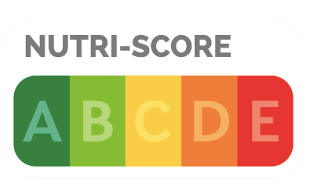
Here's where I think that Nutri-Score would be a good thing.  Nutri-Score is a "traffic light system" that ranks food products on a scale from A to E, where A is the best and E is the worst, and it is clearly visible of the front of the food's packaging.  

Food products get a lower rating if there is:

  • high energy density per 100 g or per 100 ml
  • high sugar content
  • high content of saturated fatty acids
  • high salt content.
There's a higher rating when:
  • contains fruits, vegetables, nuts and legumes
  • contains fiber
  • contains protein
  • contains rapeseed, walnut and olive oil
Nutri-Score was founded in France in 2013 and in 2017 the French Health Ministry officially recommended it.  Since then it has rolled out in Belgium, Spain, Germany, Switzerland, the Netherlands, and Luxembourg.  The system has been recommended by the European Commission and the World Health Organization.

So far it's not mandatory across the EU but I'm sure that it will be eventually.  Some companies such as Nestlé and Danone have announced that they will start using Nutri-Score in Portugal, Slovenia, and Austria even though it's not required in those countries.  

Not all countries are onboard with the system.  Poland, Czechland, Cyprus, Greece, Hungary, Latvia, and Romania all oppose it.  Italy believes that the system puts the traditional Mediterranean diet at a disadvantage.  

The Czech Ministry of Agriculture isn't in favour of the system but it will tolerate international labels with Nutri-Score.  The ministry is not in favour of a mandatory front-of-package label and believes that the Nutri-Score formula is too simplistic because it doesn't consider the size of a portion or how food is prepared. 

Nestlé will start using Nutri-Score in Czechland in 2023.  

Here's an interesting video I found out on YouTube where CNN talks about some of the differences between the US and Czech health care systems.  Not exactly Nutri-Score or Obesity related but still kind of fitting.  While the video is at least 12 years old already it's still pretty accurate.

©CNN

Update:  August 2022.  Here's a short TV commercial for Nestle that shows the Nutri-Score label.

©Nestlé Cereálie CZ

Thursday, January 11, 2018

The Middle East

There are no hard rules about where exactly the Middle East is.  Some consider it to be a geographical term and others consider it a political one.  The term "Middle East" began as a Eurocentric term for the area separating Europe from the Far East.  Most agree that the area consists of the transcontinental region from Turkey to Central Asia, plus the Gulf Area.  Many also include Egypt due to its territory in the Sinai Peninsula.  Others consider North Africa to be part of the Middle East as well.

Definite Middle East countries include: Bahrain, Cyprus, Egypt, Iran, Iraq, Israel, Jordan, Kuwait, Lebanon, Oman, Palestine, Qatar, Saudi Arabia, Syria, Turkey, United Arab Emirates, and Yemen.

North African countries that often get lumped in are Libya, Tunisia, Algeria, Morocco, Mauritania, and Sudan.

Middle East history goes all the way back to ancient times.  It is the birthplace of Judaism, Christianity, and Islam.  Many other ancient belief systems such as Zoroastrianism were also established here.

Islam is the largest religion in the area.  Almost every country, except Cyprus and Israel, have Muslim majorities.  Iran, Iraq, and Bahrain are mostly Shia while most of the other countries are predominately Sunni.  Islam plays a huge role here as the legal systems in most of these countries are influenced by Islamic law.

©Test Tube News

It's a scary place for gays.  Being gay is illegal and punishable by imprisonment in Egypt, Kuwait, Oman, Qatar, and the U.A.E.  In Iran, Iraq, Saudi Arabia, Syria, and Yemen, it is punishable by death.   Most of these places aren't high on my travel bucket list anyway.

Arabs are the largest ethnic group in the Middle East.  The five most spoken languages are Arabic, Farsi, Turkish, Kurdish, and Hebrew.

With such a large region there are of course many problems.  One of the biggest problems is the Israeli-Palestinian conflict.  One of the biggest mistakes lately was President Trump, going against years of U.S. prescient and recognising Jerusalem as the Israeli capital.  Almost every other country in the world recognises Israeli occupation of East Jerusalem as illegal which is why all of the foreign embassies are in Tel Aviv.  Here's an NBC video I found out on YouTube showing some of the reaction to the U.S. action.

©NBC

There's currently a big regional power struggle in the Middle East between Iran and Saudi Arabia.  Each wants to be calling the shots in the region.

©Test Tube News

Update 2025:  Here's a short YouTube video about why didn't the Arab world unite.

©History Matters

Wednesday, October 12, 2016

Low Unemployment in Czechland

Unemployment is low in Czechland.  It has been falling since January and as of September is is 5,2%.

The last several quarters have seen steady growth.  Exporters see a solid demand for Czech goods and there's a growing services demand.  There's also been an increase in self employment and entrepreneurship.

This is all good news.  On the flip side, it's getting more and more difficult for employers to find workers.  Even for low qualified positions.  It's creating wage pressure as well.  Difficulty finding people and at higher wages will become a major obstacle for continued economic growth.

Czechland currently has the lowest unemployment rate in the EU.  Followed by Germany, Hungary, Malta and the UK.

At around 23%, Greece has the highest unemployment rate in the EU.  Ahead of Spain, Cyprus, Italy and Croatia.

Update:  New record-low unemployment in Czechland.

Wednesday, June 1, 2016

Internet Speed

Of the 28 EU countries, the top five with the fastest internet speeds are Romania, Netherlands, Sweden, Lithuania, and Latvia.

The five with the slowest internet speeds are Ireland, Cyprus, Greece, Italy, and Croatia.

Czech Republic Czechia came in at #13 with 30,58 Mbps.

It's a little surprising that Czehia beat the UK, Finland, and Germany but that's good for me here in Brno. 

Sunday, November 1, 2015

Crete and Cyprus Holiday

The last two weeks in Crete and Cyprus were great.  The first stop was Heraklion, Crete.

What's left of the operations station

The last time I was in Crete was during my last assignment in the U.S. Air Force back in 1993.  Iraklion Air Station closed closed in 1994 so it was surreal seeing the remains.  Walking around what was left of the base felt like a scene from home zombie apocalypse movie.

This was the very end of the tourist season so it wasn't too crowded and it felt like we had the island to ourselves.  The weather was still nice which made for some well needed beach time.


When I lived in Greece before, I was able to get by with basic survival Greek.  A couple of times my Czech messed with me here.  In Czech, ne means "no" but in Greek nαί means "yes".  So a few times I told a local "yes" when I wanted to say "no".

After a relaxing time in Crete it was off to Cyprus.  My 55th country in just over 6 years.  Again, a nice relaxing time.  The biggest challenge was striking a balance between sightseeing and just laying out at the beach.  First world problems.

We enjoyed our time in Larnaca and visiting Nicosia, Pafos, Famagusta and the Kykkos Monastery.
The last divided capital in Europe

It was quite interesting visiting Northern Cyprus as well.  It seemed odd crossing between Turkish North Nicosia and the Greek southern side.


Things are so divided by ethnic lines but it seems to me that Greece and Turkey just keep fanning the flames.

At a North Cyprus police station
One thing that bothered me was the display of flags.  I mean it makes perfect sense in Cyprus, in the south, to fly the Cypriot flag.  And it makes sense in the north to fly the northern flag.  But no where on the island did I ever see a flag flown on its own.  In the south, the Cypriot flag is always flown next to a Greek flag.  And in the north, the flag is always flown next to a Turkish flag.

Larnaca Town Hall
For example, the Larnaca town hall displayed the Cypriot and EU flags but also the Greek flag.  What sense does it make for a town hall in one country to fly the flag of another country?  Continual divide along ethnic lines isn't going to bring about a united Cyprus any time soon.

Overall a great two-week holiday.  I wasn't ready to leave the sun and beach but it was time to get back to Czechland.  After visiting Cyprus I've now been to every country in Europe except for Belarus.  Hmmm...perhaps next year.

Saturday, October 31, 2015

Kykkos and Kakopetria Tour, Cyprus

©Lonely Planet
On Thursday we had an 8,5 hour bus tour to visit Kykkos and Kakopetria.  We rode through the Troodos Mountains which is the longest mountain range in Cyprus.

At Throni Hill is the tomb of Archbishop Makarios III who was the first president of Cyprus.  At the entrance there's a massive statue of him.  Apparently it used to be at the Archbishop's Palace in Nicosia but some felt it was too large for there so it was moved here in 2008.

The actual tomb is in a guarded cave at the top of the hill.


There are nice views of the mountains and pine forest.  

The Holy Monastery of the Virgin of Kykkos is 3 km (about 2 miles) east of the tomb.  The monastery was founded in 1092 by the Byzantines.  This is where Archbishop Makarios III began his ecclesiastical career as a monk in 1926.

The monastery is the richest on the island and possesses one of the three surviving icons from Saint Luke.


The orthodox church is very ornate and well worth a visit to see all of the icons.  The icon of the Virgin Mary is the main attraction.  There's no photography allowed inside but I managed to sneak a quick pic.

Our next visit was to the small town of Kakopetria which is about 55 km (34 miles) from Nicosia.  It is home to about 1200 people.

The Stone of the Couple is kind of an odd landmark.  According to local legend, newlyweds are supposed to walk around and then sit on the rock.  This is supposed to bring a happy marriage.  However, the stone actually crushed a couple who were performing the traditional ritual. 

Friday, October 30, 2015

Famagusta & Salamis Tour, Northern Cyprus


On Wednesday we had a bus tour to visit Salamis and Famagusta in Northern Cyprus.

Salamis is an ancient city that was founded after the Trojan War.  This was the first stop that St. Paul made on his first missionary journey.


It had been the capital of Cyprus back around 1100 BC.  Over time it had been ruled by the Persians, Egyptians, Assyrians and Romans.  It was partially destroyed by earthquakes and tidal waves.

It was completely lost during an Arab invasion in around 674 AD.  Salamis was looted over the next 600 years as basically a quarry.  Looting pretty much continued until 1952 when it became a proper archeological site.

Many of the pagan and Roman statues were defaced in 400 AD during the Christian period.

The ancient theatre has a seating capacity of 15,000.

Church of St. Barnabas
When Salamis was lost most of the residents moved 9 km (~5 miles) south to Famagusta.

On the way to Famagusta is the Church of Saint Barnabas which until 1976 was a working monastery.

The church is now an icon museum and there is also a small archaeological museum.

Saint Barnabas founded the Cypriot Orthodox Church and the country's patron saint.  He was martyred in 52 AD.  There is a small mausoleum built on the site where his remains were discovered. The tomb was renovated in 1953.

Famagusta was founded in 274 BC and has a population of about 41,000.  It was founded around 274 BC and I think it's the 4th largest city on Cyprus.  In Turkish it is called Gazimaǧusa and in Greek it is Αμμόχωστος (pronounced Ammochostos).
St. Francis Church

Legend has it that the city used to have one church for every day of the year which is why the old town is nicknamed "the city of 365 churches."
St. George's Church


However today most of them have fallen in to disrepair.


Sinan Pasha Mosque


The Cathedral of Saints Peter and Paul dates back to 1359.  In 1571 it was converted to the Sinan Pasha Mosque.

After Cyprus gained independence the Famagusta's Varosha suburb became one of the best known jet set vacation destinations.   

Varosha, (Βαρώσια in Greek and Maraş in Turkish), was an economic center and had more than 50% of the island's hotels until the 1974 Turkish invasion.

During the invasion Greek Cypriots evacuated.  Most probably believed that they would be able to return in a few days.

The Turks fenced off the quarter and entry is still forbidden to the public.  It's basically a ghost town now.  Photography is prohibited which is odd considering it sits on a beautiful beach.