Showing posts with label Liechtenstein. Show all posts

Monday, April 25, 2022

Partnership for Peace

NATO has something something called Partnership for Peace (PfP).  It's a bilateral cooperation programme between NATO and Euro-Atlantic partner countries that lets partners build up an individual relationship with NATO.  PfP started in 1994 as a way to build security relationships between NATO and non-NATO countries.  Participating countries choose their own priorities for cooperation and the both the level and pace of progress.

The programme allowed NATO to reach out to former Warsaw Pact and Soviet Republics following the end of the Cold War.  The programme allows countries to build closer relationships with NATO without actually becoming a NATO member.  It's important to remember that the PfP programme has nothing to do with NATO's article 5 which says that an attack on one NATO country is an attack on all.  So while Ukraine is a PfP member it is not a member of NATO.  

Here's the list of when countries joined the PfP programme.  Many went on to officially join NATO later on.  

Romania - 26.01.1994
Lithuania - 27.01.1994
Poland - 02.02.1994
Estonia - 03.02.1994
Hungary - 08.02.1994
Ukraine - 08.02.1994
Slovakia - 09.02.1994
Bulgaria - 14.02.1994
Latvia - 14.02.1994
Albania - 23.02.1994
Czechia - 10.03.1994
Moldova - 16.03.1994
Georgia - 23.03.1994
Slovenia - 30.03.1994
Finland - 09.05.1994
Sweden - 09.05.1994
Azerbaijan - 04.05.1994
Turkmenistan - 10.05.1994
Kazakhstan - 27.05.1994
Russia - 22.06.1994
Armenia  05.10.1994
Uzbekistan - 13.07.1994

Belarus - 11.01.1995
Austria - 10.02.1995
Malta - 26.04.1995
Macedonia - 15.11.1995

Switzerland - 11.12.1996

Ireland - 01.12.1999

Croatia - 25.05.2000

Tajikistan - 20.02.2002

Montenegro - 14.12.2006
Serbia - 14.12.2006

In 1999, Czechland, Hungary, and Poland became the first three PfP countries to join NATO.

In 2004, NATO saw its largest expansion when seven PfP countries joined - Bulgaria, Estonia, Latvia, Lithuania, Romania, Slovakia, and Slovenia.

Malta joined the programme in 1995 but left in 1996 and rejoined in 2008.

In 2009 - Albania and Croatia joined NATO.  Montenegro joined NATO in 2017 and North Macedonia joined in 2020 as the 30th NATO member.

In 2014, when Russia first invaded Ukraine, NATO suspended practical cooperation with Russia.  It's hard to picture Russia as a Partnership for Peace member considering it invaded Ukraine to keep it from joining NATO in the future.  But by doing do, I don't think it will be long until Finland and Sweden decide to join NATO.

Traditionally neutral countries such as Austria, Finland, Sweden, and Switzerland are all PfP members.  For Austria, the programme allows for cooperation with NATO without joining because under the country's constitution, Austria is prohibited from entering into military alliances and no foreign military bases may be on Austrian territory.  

Andorra, Liechtenstein, Monaco, San Marino, and Vatican City are all neutral micro states that are surrounded by NATO members.  They are all a part of the OSCE but they do not participate the PfP programme.

Cyprus is the only EU member that isn't a member of either NATO or the PfP programme. Kyrgyzstan is the only former Soviet republic that didn't join the PfP programme.  It did join the CSTA with Armenia, Belarus, Kazakhstan, Russia, and Tajikistan.

Update: 4 April 2023 - Finland became the 31st member of NATO.

Saturday, February 9, 2019

Republic of Uzbekistan

I've wanted to visit Uzbekistan since I was 16 years old.  I read a magazine article about the Soviet Union and it talked about how Uzbekistan was home to camels and pineapples.  It sounded like such an exotic part of the USSR that it's been on my bucket list ever since.  The problem has been getting a visa.  All kinds of paperwork, two days off work to apply and pick up the visa from the Uzbek embassy in Prague or Vienna, plus a $160 fee for Americans.  Well there is now an e-visa and a 30 day visa is only $20 so I'm finally going to Uzbekistan.

The Republic of Uzbekistan is in Central Asia.  It is the only country that borders all of the other "Stans" - Kazakhstan, Kyrgyzstan, Tajikistan, and Turkmenistan.  It also shares a border with Afghanistan.  Along with Liechtenstein, it is one of only two double landlocked countries in the world.  It is a little bigger than California.

O'zbekiston is home to more than 32,7 million people.  A very young population.  In 2008, about 34% of the population was younger than 14.  The capital, and largest city is Tashkent.

The area was famous for the Silk Route that connected the Middle East with Europe, India, and China.  During the 19th century the area was conquered and incorporated in to the Russian Empire.  Following the Bolshevik Revolution it became the Uzbek Soviet Socialist Republic in 1924.  Following the break up of the USSR, it declared independence in 1991.

Uzbekistan is a presidential republic but a highly authoritarian one.  The first president held office from independence in 1991 until his death in 2016.  The former prime minister then took over.  Things are starting to open up a bit but it's hard to image that in 28 years there have only been two presidents.

Uzbek is the official language but Russian is commonly spoken as well.  In 1940, Soviet authorities mandated that Uzbek be written using the Cyrillic alphabet.  In 1993, the country switched back to using Latin script.  Apparently there is no language requirement to apply for Uzbek citizenship.  You hear that Czechland?!

Although a secular state, 88% of the population is Muslim, mostly Sunni.  About 9% are Eastern Orthodox.  As with most Muslim countries this is not a place to be gay.  Sex between two men is illegal and punishment ranges from a fine to up to three years in prison.


The currency is the Uzbek Som.  Currently 10.000 Som equals $1.05 or €0,95.  All of the guest houses that I've booked for my trip in September don't take cards and want to be paid in U.S. Dollars.  

The Czechs and Uzbeks are continuing to improve cooperation between the two countries.  There are currently about 13 Uzbek-Czech joint ventures in Uzbekistan.  More Czech companies are also opening offices in Uzbekistan particularly those in the food and and textile industries, the oil and gas sector and tourism.

Here's a short video I found out on YouTube talking about the country's geography challenges.

©Stratfor.com

Sunday, April 19, 2015

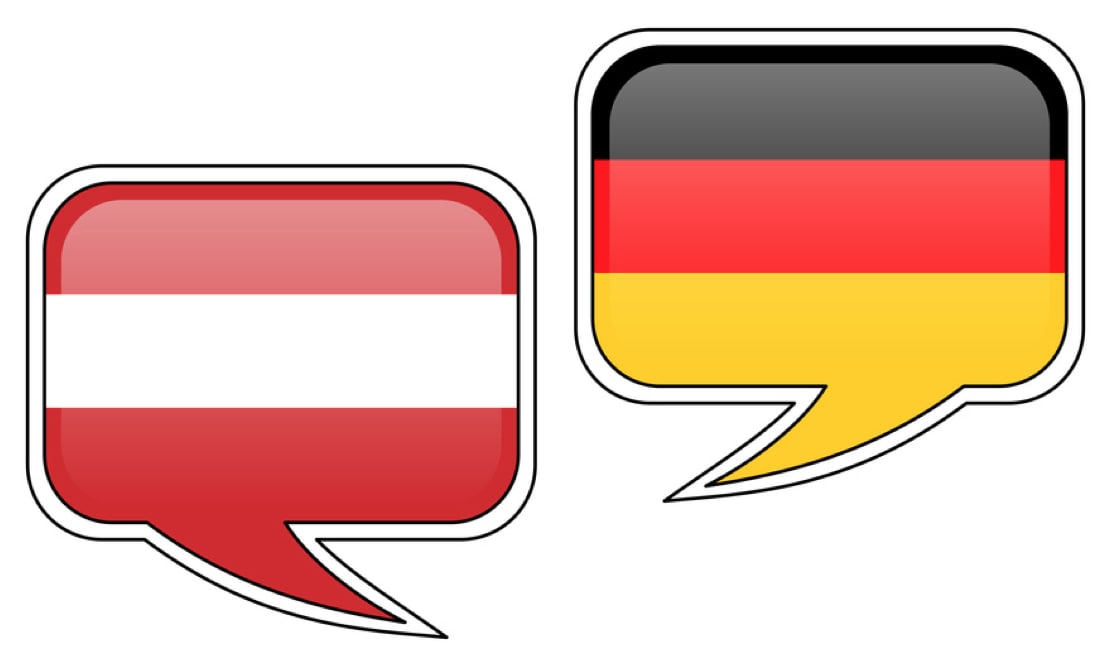
Austrian German


On the differences between the USA and the UK, Oscar Wilde once said "We have really everything in common with America nowadays except, of course, language."  Well the same thing applies to German.

Standard German, Hochdeutsch, is what people learn in school.  This is High German and it is understood throughout Europe.  However within Germany there are lots of very distinct dialects most notably Berlinerisch, Bayerisch, Hamburgerisch, Hessisch, Pfälzisch, Saarländisch, Sächisch, Schwäbisch.  There are more but these are the big ones.  Most are mutually intelligible with the differences occurring in pronunciation, spelling, word usage, and grammar.  

In Switzerland, and in Liechtenstein, there is Swiss German - Schwyzerdütsch.  Most Germans can't understand Swiss German.  On German television, it's normal to show German subtitles during interviews with Swiss German speakers. 

Living near the Austrian border I hear Austrian German which is another dialect.  Austria too has a few different dialects but the one I mostly run in to is Wienerisch, the German spoken in Vienna.  To me Viennese accent sounds "stretched out" and spoken from the back of the throat.  Vowels are lengthened a bit, especially at the end of a sentence, while word endings get "clipped".  It sounds nice but I can't fake a Vienna accent. 

Plus there's some vocabulary differences...

For "Good day" Germans say Guten Tag.  In Austria it is Grüß Gott.
"Hello" in German is Hallo.  In Wien it is Servus.
Germans say Ich liebe dich for "I love you".  In Vienna it is I steh auf di.
"In the morning" is am morgen except in Austria where it is in der Früh.
A German bread roll is das Brötchen but an Austrian one is die Semmel.
Ein bißchen is "a little bit" in Germany.  In Wien it is a bissl.
In Germany you can get an Aprikose, Kartoffel or Pilz ("apricot, potato or mushroom").  In Wien you will get Marille, Erdapfel or Schwammerl.

Here's a short video I found out on YouTube that gives some examples of the differences between German German and Austrian German.

©Easy Languages

Wednesday, January 7, 2015

European Economic Area

Not every country in Europe is a member of the European Union.  However, just because a country isn't a member of the EU doesn't mean that it is off on its own.  There's also the European Free Trade Association and the European Economic Area (EEA).

The European Free Trade Association is made up of Iceland, Liechtenstein, Norway, and Switzerland.  For one reason or another these four countries do not want to be a member of the EU.  Remember, any new country that joins the EU must eventually adopt the Euro as its official currency. 

The European Economic Area brings the EU countries and the EFTA countries together so that they participate in a single market.  The EEA allows for the EFTA countries to remain independent of the EU but still reap most of the benefits.  So even though Norway isn't an EU member, Norwegian citizens can work anywhere in the EU, just like EU citizens can. 

The EEA countries adopt a majority of EU legislation except for laws on agriculture, fisheries, taxation, common foreign or security policy. 

While Switzerland is a member of the EFTA, it is not part of the EEA.  Although Switzerland has signed a number of bilateral agreements, including a free trade agreement with the EU.

Update 2025:  Here's a short video I found on YouTube about Iceland, Norway, and Switzerland refusing to join the European Union.

©EU Made Simple

Monday, August 4, 2014

Emergency Numbers

In the USA, if you need to make an emergency call for the police, fire department or an ambulance you dial 911.  In Europe, each country has their own emergency numbers.  For example, in Czechland you call:

150 for fires, natural disasters, accidents and emergencies
155 for health problems, injuries or accidents requiring medical attention
156 for the municipal police
158 for disturbances of public order and safety, traffic accidents or to report a crime

And that's just for Czechland.  To get an ambulance in Spain you dial 061, in Austria it is 144, in Italy it is 118, in Croatia it is 94, in Hungary the number is 104, while both the UK and Ireland use 999.  The list of numbers goes on and on. 

It can be a real problem if you don't know the emergency number in the country you're visiting.  So the European Union came up with the 112 number.  Aside from the local numbers, anyone in any EU country can dial 112 for any emergency - police, fire, ambulance.  112 even works in some non-EU countries such as Andorra, San Marino, Liechtenstein, Monaco, Vatican City, Iceland, Macedonia, and Serbia.

112 is a free call from either land line or mobile phones and can be used even without a SIM card.  The 112 number is awesome because the operators are prepared to dispatch calls in foreign languages.  So no need to speak Czech if you need the police.

Here's short video I found out on YouTube about the 112 emergency number.
 

Thursday, January 24, 2013

New Consulate in Brno

Philippine Consulate in Brno
Last week, the Philippines opened a new consulate in Brno.  The new consulate's role is to support the Philippine embassy's promotion of trade, investment and tourism to Moravia.

There are official consulates here for Russia, Ukraine and Slovakia.  Brno also has honorary consulates representing Angola, Belarus, El Salvador, Estonia, Lithuania, Poland, Morocco, Moldova, Georgia, Laos, Liechtenstein, Slovenia, Tanzania, Turkey, and Austria.

An embassy is a permanent diplomatic mission and the person in charge is the ambassador.  Embassies are normally located in a foreign country's capital city.

Russian Consulate in Brno
A consulate is kind of like a junior embassy.  Consulates are located outside of capital cities and the person in charge is the consul-general.  Consulates handle things such as fostering regional trade relationships, issuing of visas and take care of tourists and expats.

American Embassy in Prague
There is no American consulate in Brno.  The US Embassy in Prague is 116 miles away.  However the American embassies in Austria and Slovakia are actually closer.  The embassy in Vienna is only 69 miles away while the embassy in Bratislava is just 76 miles away.  There is a consulate in Krakow and another embassy in Budapest (161 and 162 miles away respectively).

EDIT:  February 11, 2014 - an honorary Finnish consulate opens in Brno.

EDIT:  July 2017 - Italy opened an official consulate in Brno.

Update 2022:  The Russian consulate was closed due to the Russian invasion of Ukraine.  

Update 2022:  Back in 2020, the Centre for Experimental Theatre opened an Embassy of Independent Belarusian Culture


Update April 2023:  
I came across the consulates of Liechtenstein, Morocco, and Austria.


Update 2023:  
At Dům U Tří knížat, "House of the Three Princes", in the city centre is the honorary Polish consulate.

Friday, April 13, 2012

Alps Road Trip Summary

Our four-day road trip through the Alps came to an end.  Here's the recap of our little adventure. 

On Friday, at 11 AM, Nat and I caught a train from Brno to Vienna and then another train on to Graz, Austria.  After work Miran drove up from Slovenia, picked us up at the train station and drove on to Innsbruck, where we spent the night.

After a Saturday morning wander through Innsbruck it was on to Vaduz, Liechtenstein.  After a short side trip to Malbun it was then time to take on SwitzerlandSwitzerland was the 30th country I've visited since moving to Euroland in July 2009!  First a stop in Stein am Rhein followed by a visit to see the Rheinfalls.  We spent the night in Winterthur but it was dark once we got settled in, and since we left early Sunday morning for Bern, so we kind off missed out on seeing it.  Bern was really nice but I could have done without the freak snow storm we had on the way to Lucerne.

On (Easter) Monday morning we made our way to Zürich where we met up with a couple of Nat's friends from New Zealand.  Ray (she) and Kelly (he) both live in Zürich now and met us for coffee and a walk around the old town.  We had to leave at noon because everyone had to work bright and early on Tuesday morning so we headed made our way to Schaan and Balzers in Liechtenstein.  Then back to Innsbruck where we spent an hour in the mountains enjoying the view of the entire city.

Miran dropped Nat and I off at the train station in Salzburg.  I really need to go back to Salzburg because the only thing I got to see is glimpse of a castle from the main train platform.  Kind of a tease, right?  However, I've been told that I should not be allowed in Salzburg until I've actually watched The Sound of MusicI know, I know...but I just haven't ever had the time to see the movie but I promise I will soon.

From Salzburg we changed trains in Vienna and made it back to Brno at 1 AM.  Yes, it was a lot of traveling in a short period of time but it was a great way to see a heck of a lot.  There are over 1,300 photos out on Flickr now.  From Graz to Salzburg we drove 1,612 km (1,001 miles) in four days.

In the USA we equate driving to miles per gallon.  With the metric system, here gas efficiency is measured in the number of liters per 100 km.  I don't remember the exact amount but we ended up paying around €250 (~$300) for gasoline.

Wednesday, April 11, 2012

Balzers, Liechtenstein

Balzers is a small village in the southernmost part of Liechtenstein


The whole town only has a population of ~4,500 people.

The main part of the village sits on the east bank of the Rhine River.  Switzerland is on the other side.


The main attraction is the Gutenberg Castle.  It sits above the town on a 70 meter  (230 feet) high hill.


The castle has likely been around since the Bronze Age but its first mention was in 1263.

Schaan, Liechtenstein

Schaan is the largest town in Liechtenstein with ~5,800 people.  It is only 3 km (2.3 miles) north of Vaduz.


Schaan sits near the Swiss border and it's only 80 km (50 miles) from Zürich.

It was originally founded as a Roman port.  Today, it is the country's main industrial area with over 4,000 businesses.


The St. Laurentius New Parish Church is the town's main site.  It was consecrated in 1893.

Tuesday, April 10, 2012

Malbun, Liechtenstein

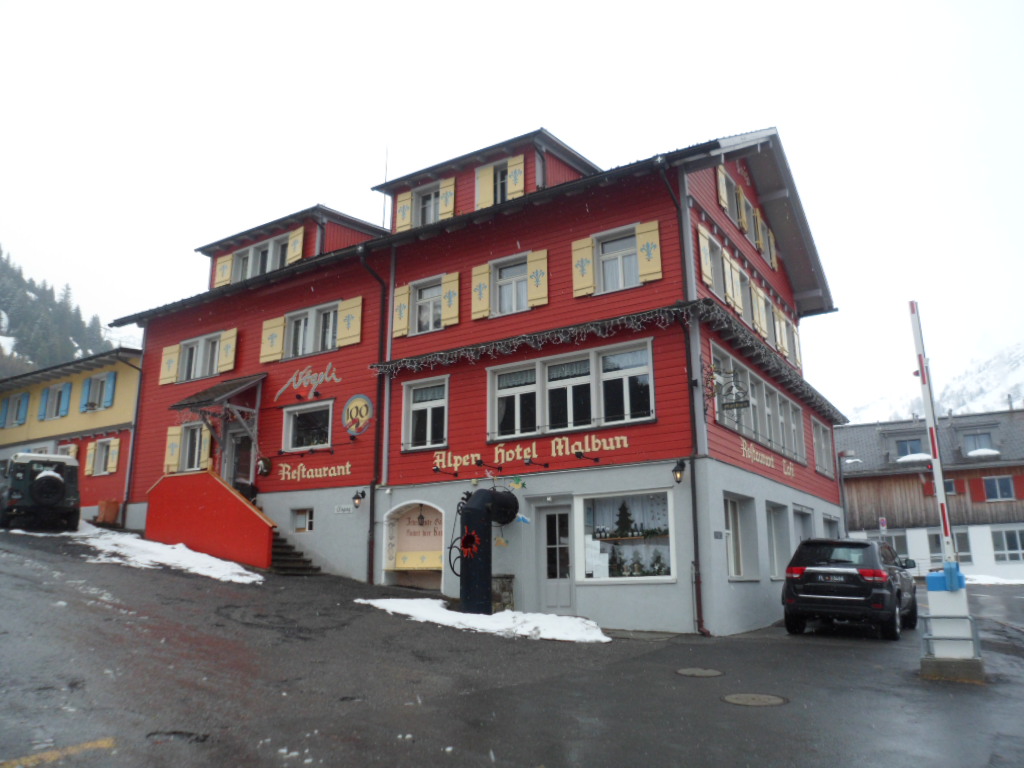
About 15 km (~9 miles) from Vaduz is the small resort village of Malbun, near the Austrian border.

Malbun, with only about 1,025 people, is located in the municipality of Triesenberg.


The village is surrounded by steep slopes and it is home to the only ski resort in Liechtenstein.

Malbun is high up in the Alps, at 1,600 meters (5,200 feet), which means that it can be great fun getting thereby car, in the snow, with the winding road.


Vaduz, Liechtenstein

Vaduz is the capital city of LiechtensteinOr more realistically, the capital town.  It sits on the Rhine river and was founded ~1322.  The population is less than 5,300 people and nearby Schaan is larger.

It's kind of remarkable that for such a small place, there is a healthy tourist industry even though this is one of the few capital cities in the world that doesn't have an airport or train station.

There is only one pedestrian street in the city and pretty much everything worth seeing is here.


The new parliament building was completed in 2008.  It is home to the country's 25 people's representatives.

The National Art Gallery is a museum of modern art.  There is also lots of contemporary sculptures along the street.

The Cathedral of St. Florin was built in 1874.  It was originally a parish church but was given cathedral status in 1997.

Above the city is the town's most impressive feature – the Vaduz Castle.  It was built 700 years ago and can be seen from almost everywhere in town.  Since 1938 it has been the residence of the prince's family which means that it is closed to the public.   

Thursday, April 5, 2012

Switzerland

Switzerland is known for the Alps, fine watches, delicious chocolates and its banks.  Switzerland, actually the Swiss Confederation, is a federal republic of 26 cantons.  It is almost twice the size of New Jersey.  Bern is the country's capital.

The Swiss flag is actually square
The Swiss Confederation, Confoederatio Helvetica, was established in 1291 among three cantons for defense.  In 1499 it was able to gain independence from the Holy Roman Empire.  A centralized federal government was implemented in 1874.


The Swiss Federal Council is a seven-member executive council which serves as the collective head of state.  Each member heads one of seven federal executive departments.  Each year one of the councilors is also elected President of the Confederation.    Each member is elected for a four-year term by both chambers of the Federal Assembly.  This all sounds really complicated to me but if it works for the Swiss then good for them.

Switzerland has had a long policy of armed neutrality.  The country has not been in a state of war since 1815 and was not involved in either world war.  All Swiss males from the age of 19 must serve at least 260 days in the military.  After 18 weeks of basic training, there are seven 3-week training deployments over a ten-year period.  People are excused from work during their mandatory service and the employers pay the normal salary.  Soldiers keep all of their army-issued equipment at home.

Switzerland is so neutral that it didn't even join the United Nations until 2002.  In 2011 it did join the Schengen zone but it is not part of the European Union.  It is in a customs and monetary union with Liechtenstein.

There are four official languages – German, French, Italian and Romansch.  Switzerland has about 8 million people and about ⅔ speak German.  Roughly 20% speak French, 6.5% speak Italian and only 65,000 people speak Romansch.  Students are required to know at least two of the four national languages and then normally must choose between learning either a third national language or English.  Now here's the thing about German here.  While the schools teach standard high-German (Hochdeutsch) that's not what the people actually speak.  Here it's all Swiss German (Schwyzerdütsch).  And it's about damn difficult to understand.  To me it sounds like someone speaking German with a mouth full of marbles.  No offense intended...just sayin'.

Switzerland is not a cheap place to visit.  Swiss salaries are quite high so there is a high cost of living which means that everything is expensive.  In 2012, Geneva, Zürich and Bern were ranked as the 5th, 6th and 14th most expensive cities in the world.

With all of the madness in the Eurozone the Swiss Franc kept getting stronger because investors were looking for a safe haven currency.  This caused major problems for countries like Hungary and Poland where homeowners took out mortgages based in Swiss Francs and suddenly found their monthly payments to be way more expensive.  This also meant that Swiss exports became too expensive and demand dropped so the government put in measures to weaken the currency.  The current exchange rate to the $ and the has stabilized but things are still super expensive.  It will be interesting to find out how much this little road trip through Austria, Liechtenstein and Switzerland ends up costing us.

Update 2025:  Here's a short video I found on YouTube about Swiss neutrality.

©History Matters

Wednesday, April 4, 2012

Principality of Liechtenstein

The Principality  of Liechtenstein is the 4th smallest country in Europe.  Only Vatican City, Monaco and San Marino are smaller.  The entire country is 160 sq km (62 sq miles) and it is nestled in the Alps between Austria and Switzerland.  It is about 1/10th the size of Washington DC.  The country only has a population of 35,000 people.  Half of the work force commutes daily from Switzerland and Austria.

Liechtenstein and Uzbekistan are the only double-landlocked countries in the world, meaning they are surrounded completely by other landlocked countries.

Liechtenstein was established in 1719 as part of the Holy Roman Empire.  In 1806, it became an independent state.  The country had close ties to the Austro-Hungarian Empire but after WWI it entered in to a customs and monetary union with Switzerland.  Swiss Francs are the official currency.

Vaduz is the capital city.  The prime minister is the head of the government and is appointed by the crown prince.  Parliament elects a cabinet which is confirmed by the prince.  In 1984, Liechtenstein was the last country in Europe to give women the right to vote.  There is a national police force but there has not been an army since it was disbanded in 1868 for financial reasons.

Despite its small size, Liechtenstein is pretty well off.  It's a tax haven for banks, has the lowest business tax rates in Europe and because of easy rules of incorporation there are lots of mail box companies.  Almost 74,000 companies are registered here (that's more then twice the number of people).

In 2011, Liechtenstein joined the Schengen area but it still isn't a member of the European Union.  There is no American or Czech embassy.  In fact there are no embassies at all because the country is just too small.  Most embassies in Switzerland are accredited to Liechtenstein.

After WWII, Czechoslovakia seized what they considered to be German possessions.  This included Liechtenstein family castles and land in Bohemia and Moravia including the Lednice-Valtice area.  The total land taken is about 10 times larger than the whole country of Liechtenstein.  During the Cold War, Liechtenstein citizens were forbidden to enter Czechoslovakia.  Liechtenstein and the Czech Republic didn't establish diplomatic relations until July 13, 2009.  As a reference point, I moved to Brno on July 1, 2009.
Here's a Rick Steves video I found out on YouTube about Liechtenstein.

©Rick Steves