Showing posts with label Czech Police. Show all posts

Friday, June 9, 2023

Police Day

Today was Czech Police Day was held at náměstí Svobody.   


There were a number of vehicles and a few exhibitions showing off the Czech police.

There were members of the speciální pořádková jednotka (SPJ), the special riot unit.


The SPJ focuses on protecting public order and falls under the jurisdiction of the regional police headquarters.


I thought that the SPJ was the equivalent of S.W.A.T. (Special Weapons and Tactics) but not so.  

Slovak police car


That would be the Útvar rychlého nasazení (ÚRNA), the Rapid Deployment Unit, that deals with armed interventions against terrorists, kidnappings and dangerous offenders.

Austrian police car


There were even police from Austria and Slovakia.


There were even a few vintage vehicles.  


Tuesday, April 5, 2022

Europol

Europol is the European Union Agency for Law Enforcement Cooperation.  It was formed in 1998 to handle criminal intelligence and combat serious crime through cooperation with the authorities in each of the EU member countries.  Like Interpol, the agency doesn't have any executive powers so it can't arrest suspects but rather it provides the member country's police force with the intelligence required for local arrests.

In Czechland, Europol works with the Czech Police and the Czech Customs Administration.

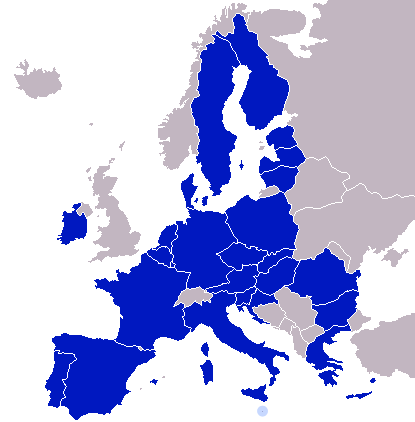
While Interpol and Europol have similar names, and work together, they unrelated, independent agencies. Europol falls under the authority of the European Union and has its headquarters in The Hague, Netherlands.

Here's a 6,5 minute video I found out on YouTube which has some interesting information on the history of Europol. 

©Singularitas

Update 2023:  Here's 3-minute video about Europol.

©The EU Made SIMPLE

Sunday, April 3, 2022

Interpol

Interpol is the International Criminal Police Organisation and it is the world's largest police organisation.  It's not actually a law enforcement agency.  Rather facilitates police cooperation worldwide.  Its headquarters are in Lyon, France.  It has seven regional bureaus and a National Central Bureau in all 195 member countries.  The four operating languages are English, French, Spanish, and Arabic.

The only countries that aren't a member of Interpol are Micronesia, North Korea, Palau, and Tuvalu.


Interpol focuses on three major areas which are terrorism, cybercrime, and organised crime.  Under these three areas every possible crime is covered including crimes against humanity, child pornography, drug production and trafficking, political corruption, intellectual property infringement, and white-collar crime.

Its charter mandates that Interpol remain politically neutral so it doesn't get involved with activities that are political, military, religious, or racial in nature.  I wonder how involved it will be with the Russian invasion of Ukraine if Putin gets charged with crimes against humanity.  

The National Central Bureau for Czechia is in Prague.  In 2019, the Czech Police provided Interpol with a new, high-tech database called "Relief".  Relief runs a comparative analysis of the tool-marks, logos, and chemical compositions of drug packages which enables law enforcement to identify the origin and routes of compressed drug deliveries and shipments.  It helps to identify previously unknown links and disrupt the organised criminal networks trafficking illegal drugs.

There's also a Europol but I'm not sure if it is a part of Interpol or something completely different.  Guess I need to look in to it.

Here's a short video I found out on YouTube about Interpol.

©TestTubeNews

Sunday, March 27, 2022

Czech Police

Policie České republiky is Czechland's national law enforcement agency.  It was established in 1991 and it falls under the jurisdiction of the Ministry of the Interior.  PČR has the task of protecting the safety of people, property, and public order.  

PČR is the state police and it's different from obecní policie or městská policie, the municipal or city police. Municipal police supervises public order and road safety while only having jurisdiction over misdemeanours.  The state police is responsible for criminal investigations.  Municipal police can't investigate crimes.  The municipal police secure suspects on the scene or take suspects to the nearest state police station where they hand the case to the state police for investigation.

The state police cooperate with intelligence agencies like BIS or ÚZSI on specific crimes such as terrorism.

All police officers in Czechland are armed.  Municipal police officers have civilian status so they all need to obtain the D category gun license in order to openly carry their weapon.


The motto is pomáhat a chránit "to help and to protect".  Occasionally, the police even have to help Santa deliver Christmas presents.

Back in the days of communism there was the Sbor národní bezpečnosti (SNB), the National Security Corps, which was the national police in Czechoslovakia from 1945 to 1991.  In Slovakia it was the ZNB.

The SNB had two parts.  There was Vařejná bezpečnost (VB) which handled public security as the uniformed police force that took care of normal police work.  The other part was the StB which was the undercover secret police that functioned as an investigative agency, an intelligence agency, and a counterintelligence agency.  The StB was responsible for anything that could be considered anti-state.

The PČR took over from the the SNB in 1991.  After the Velvet Revolution, employees had to pass a vetting process by a commission which was used to purge communist ideologues and agents of the StB from the police force.  Former StB agents aren't allowed to be police officers.  

I hear that Prague has a Czech police museum.  I guess I need to check it out the next time I'm there.

Tuesday, January 25, 2022

Security Information Service (BIS)

Bezpečnostní informační služba (BIS), is the Czech Security Information Service. 

The BIS has its headquarters in Prague and, with about 1.000 employees, it reports directly to the Prime Minister and the President and it is overseen by a permanent commission of the Chamber of Deputies.

It is the country's domestic intelligence agency and is responsible for Czech Republic's national security both here and abroad.  The primary focus is on terrorism, counter-intelligence, cybersecurity, organised crime and proliferation.

Its motto is Audi, Vide, Tace, which means "Hear, See, Be silent."

The BIS is not the direct successor of the StB, the Czechoslovak secret police, which was dissolved in 1990.  The service has no police powers so it can't detain, arrest or interrogate suspects.

Here's a short video I found out on YouTube about the BIS.  It's in Czech so at least you'll get to hear what Czech sounds like. 

Saturday, December 25, 2021

Czechs vs Santa Claus

Again, 24 December in Central Europe is Christmas.  In the USA, and the UK, the 24th is Christmas Eve and the 25th is Christmas Day.  In the UK, the 26th is Boxing Day which isn't a thing in the U.S.

In Czechland, and Germany, the 24th, the 25th and the 26th of December are public holidays.  Like all public holidays you hope that they don't fall on the weekend because then you lose the free day off.

In Germany, the 25th and 26th are Erster Weihnachtstag and Zweiter Weihnachtstag, respectively the First and Second Christmas Day.  The 26th is also Stephanstag (St. Stephen's Day).

In Czechland, the 24th is Štědrý den.  The 25th is první vánoční svátek and the 26th is druhý vánoční svátek, the First and Second Christmas Day with the 25th also called Boží hod vánoční (the Christmas Feast) and the 26th also being Svátek svatého Štěpána (St. Stephen's Day).

Today we started out with Oma's typical German breakfast.  This is coffee with fresh bread rolls, meats, cheeses, butter, home made jams, and hard-boiled eggs.

We went for a walk around town for a couple of hours and then just relaxed for the rest of the day.  There are always fairly tales on German TV and of course we had to watch Drei Haselnüsse für Aschenbrödel which is the German version of Popelka.  It's always on TV in what used to be East Germany.  It's not as popular in Western Germans.  Also for some reason, in the east, Cinderella is "Aschenbrödel" but in the west they say "Aschenputtel".

This afternoon Oma put out another Christmas feast.  

We had duck and goose, with potatoes and gravy, dumplings, red and green cabbage.  It was delicious!  

Dinner was way better with everyone here in Berlin than it was during last year's Covid Christmas where I joined them for dinner on Skype.

While we were celebrating Christmas last night with the Weihachtsmann it seems that the Czechs were fighting with Santa Claus.


On 24 December, NORAD (the North American Aerospace Defence Command) tracks Santa Claus' trip around the globe.  They've been doing this since 1955.

Řízení letového provozu ČŘ, Air Traffic Control of the Czech Republic, is responsible for the airspace above Czech territory.  They put out a video on Twitter that Supersonic Ježíček submitted his flight plan and was doing Mach 9 (11.113 km/hr or 6905 mph) through Czech airspace.

©ŘLP ČŘ

Remember that Santa doesn't bring the presents.  Ježíček does.  In the following video I found out on YouTube, the Czech military shoots Santa out of the sky and then tanks surround him.  At the end of the video there is a disclaimer that neither Santa or any reindeer were injured in the making of this video.  You'e got to love the dark Czech sense of humour.

©tvarmycz

The Czech police went even darker.  They put out a public service video to illustrate the dangers of driving while SMSing (texting).  In the video, Santa gets distracted while driving and has an accident.  The Czech police come to the rescue by taking over his delivery route.

©Policie ČR

Sunday, April 11, 2021

My Exams

I finally took my exams today after they'd been cancelled twice due to Covid-19.  I've gotta' say that I'm not feeling great about it.  So here's how things went.


The exams were given by ÚJOP UK which is the Institute of Language and Vocational Training of Charles University.  I got there a bit early and waited for them to call my name.  I had to show my passport, my negative Covid test and they took my temperature.

I was in a group of seven people.  There was me (American), two Russian girls, a Romanian woman, a Ukrainian guy, an Arab guy, and a chap who I think may have been either Serbian or Bosian.  We all went upstairs and one by one we had to show our passports and permanent residency ID to the Czech Police who marked our names off of a list.  After I the police check, I had to take two steps and show my passport to a girl who marked my name off of another list.  I was given a red wrist band and a piece of paper with bar code stickers.  I then went to the testing room.

In the room I sat at the assigned desk.  Pencils and erasers were provided.  We were allowed to have a bottle of water and that was it.  We had to remove our watches and definitely no mobile phones.  Before we began the exams, a police officer came in check our passports.  Then the test administrator checked our bar codes.  The first test given was the Czech Citizenship test.  The exam was 30 questions in 30 minutes.  I know that I aced it.  I finished the exam in about 10 minutes.  Definitely a good start.  

There was one room where we were allowed to go to in between exams.  No one was allowed to leave the building.  Smokers were not allowed to go outside for a cigarette.  After a short break it was then time to take the B1 language test.

First up was the reading comprehension test which lasted 50 minutes.  This didn't go so well.  Or at least I don't think that I did very well.  After the exam we had a short break in the one room we could go relax in and then it was back to the room for the next test.

A police office came in and checked our passports.  The administrator then checked our bar codes.  Next up was the listening comprehension test.  We had to listen to recordings and then answer questions for 30 minutes.  It sucked!  This part of the exam really did not go well.     

Then a short break followed by another passport check and another bar code check.  Next was the written exam which lasted for an hour.  I think that I did ok on this part but we'll see.

After this we were released and could leave the building.  I had 90 minutes before I had to be back for the speaking test.  I went back to my hotel for a break.  I was feeling thoroughly defeated.  I'd waited for a year to take this exam and I had bombed it.  I went back for the speaking test which was the final section.  I was paired with the Romanian woman.  We had entered the testing room and had our IDs checked again. The speaking test lasted for about 15 minutes.  Each of us had to introduce ourselves and give a bit of background information.  I was given the choice of taking about either shopping or employment.  I chose shopping and they showed me a photograph and I had to talk about it.

Then we were given the topic to plan a trip so we had to do a role play.  After 15 minutes we were told that the test is over.  We can check our results online in 30 days.  I know that I bombed the reading and listening parts of the test.  The speaking could have gone better but we'll see.  I have friends who have passed this test and everyone has told me that they were sure they had failed but ended up passing in the end.  I hope that this is the case but I'm pretty sure that I failed it.  Now all I can do is wait a month for the results and let's see when I will be able to schedule a do-over.  At least I got a trip to Prague out of this.

Update: Exam results.

Update:  I received my certificate for passing the citizenship test.

Saturday, February 27, 2021

Increased Lockdown

The COVID-19 situation in Czechland continues to get worse and now the South African variant has shown up here.  From 26.2. until 11.4., all Czech citizens and residents are prohibited from travelling to Botswana, Brazil, Eswanti, Kenya, Lesotho, Malawi, Mozambique, South Africa, Tanzania, Zambia or Zimbabwe.

From 1 March, all schools including kindergartens will be closed.  So far only first and second grade classes have been open but now they will all close again.  There's an exception for child groups at healthcare facilities for the children of first responders.

The government will also restrict the free movement of people for three weeks.  People must remain in their district.  If you do need to travel outside of your district for work, to go to a doctor or public authority or to an airport, then you need to have written confirmation from your employer or a sworn affidavit.

Brno-City and Brno-Outskirts are considered a single district for the restriction of movement.  Some 26.000 police officers will be deployed to enforce the restriction.   About 5.000 soldiers will be used to reinforce the police.  

It's a good thing that I didn't choose to take my exams in March because with the new restrictions I won't be allowed to travel to Prague.

Saturday, February 20, 2021

Czech Gun Rights

Czech law permits gun ownership to those who can pass a gun proficiency test, a medical exam, and who have a clean criminal record.  The majority of gun owners here report having a weapon for self-defence and not for just sport or hunting.  This is one of the safest countries so I don't quite understand the self-defence reason but to each their own.

There are five different types of gun licenses here.

Type A = Firearm collection
Type B = Sport shooting
Type C = Hunting
Type D = Exercise of a profession
Type E = Self-defence 

A application for a gun license is made with the police.  A application fee is 700 Kč ($30) and the license is issued in 30 days.  It is good for 10 years before needing to be renewed.  

For sport and hunting, types B or C, the applicant must be at least 18 years old.  There are special exceptions if the applicant is a member of a sporting club or if hunting is taught as part of a school curriculum then 15 or 16 year olds can get a license.  The minimum age for A, D, or E license types is 21.

Anyone who excessively drinks alcohol, uses illegal drugs, or those found guilty of misdemeanours related to firearms, DUI, or public order in the previous 3 years don't qualify for a gun license.

Ex-convicts who served more than 12 years in prison are not allowed a gun permit.  Convictions for public endangerment, murder, treason, or participation in organised crime are not allowed a permit.

Those who serve less than 2 years in jail are eligible to apply after a 5 years.
Those who serve sentences for 2 to 5 years can apply after 10 years.
Those who serve sentences for 5 to 12 years can apply after 20 years.
For those who server sentences more than 12 years are ineligible from ever getting a gun permit.

There's no limit on the number of guns a person can own.  There are safe storage requirements of owning more than 2 weapons or having more than 500 rounds of ammunition.  There are additional requirements if a person has more than 10 guns and further requirements for having more than 20 guns.

Possessing a firearm without a license carries a penalty of up to 2 years in jail.  In some cases this goes up to 8 years.  Carrying a gun while intoxicated is illegal.  There are heavy fines and forfeiture of one's gun license.  

Across most of the EU, the concealed carry of firearms is not allowed.  Here though it is allowed provided the owner has a concealed carry permit.  I've heard that around 80% of gun owners here also have a concealed carry permit.  It is against Czech law to carry any weapon during a public demonstration.  It is also illegal to carry a weapon with a silencer installed.

During the German Nazi occupation it was illegal to posses firearms.  During communism only those seen as loyal to Communist regime were allowed to possess guns.  Given these historical restrictions the right to posses firearms is viewed as an essential liberty.  But it's not like everyone here owns a gun.  There's something like 12 or 13 guns for every 100 people.  In contrast to the USA where there are about 120 guns for every 100 people.  The USA can't even pass common sense gun legislation.  I feel much safer here in Czechland than I do in the USA.

From 1 January to 31 July 2021, there is an amnesty running where any illegally-held weapons can be turned over to the Czech police, no questions asked.  Or if you have a valid gun license and proof that the weapons wasn't stolen or used to commit a crime then you can legally register the gun.  

The last time this was done was five years ago and most of the weapons turned in dated back to WWII and the Soviet occupation.  The Czech police released a video on YouTube and with typical Czech humour it shows a guy turning over a Soviet tank.  

©Policie ČR

Tuesday, March 31, 2020

Rouška

The Czech word for "mask" is rouška.  Masks are mandatory when you leave your home.  If you don't have a mask then you can use a scarf or whatever as long as your mouth and nose are covered.

Czechland is the first country to mandate roušky nationwide.  Police are able to fine you 10.000 Kč ($458) on the spot for not wearing a mask.  The problem is that there aren't any masks available in the pharmacies.

No postage required

Across the country people are making masks.  I actually ordered some 3 cloth masks on line.  


I was surprised when they arrived in my mail box a few days later.  They were mailed in a sheet protector and if you are distributing masks then no postage is required. 

A few weeks ago was the 170th birthday of Tomáš Garrigue Masaryk and people laid flowers at his statue at Masaryk University.  Now even Masaryk is wearing a mask.

Yesterday the government extended the state of emergency until 11 April.

Over the last two weeks healthcare workers were banned from taking vacation time.  People are not allowed to gather in groups of more than 2 people unless they live together.  People are doing their best to social distance.

Since you have to wear a mask outside it means that people can't smoke in public places.  So taking your mask off to smoke outside means the 10.000 Kč.  

I haven't really seen any shortages here.  True you can't find masks and hand sanitiser but everything else is available.  My family and friends have told me toilet paper and paper towels are pretty much sold out everywhere.  There isn't a shortage here.  Or at least I haven't experienced any shortages.

Tuesday, December 17, 2019

Czech Citizenship Exam: Judicial Power and Protection of Citizens

Here are the 10 study questions for the Czech Citizenship exam from section 7: Judicial Power and Protection of Citizens.

1.  Mr. Novotný determines the amount of punishment for criminal offences.  What function does he perform?

The function of a judge.

2.  Mrs. Svobodová caused an accident.  Who can defend her in court?

A lawyer.

3.  Which court decides to repeal laws that do not comply with the Constitution of the Czech Republic?

The Constitutional Court.

4.  Which institution has the task of protecting the safety of people, property, and public order?

Police of the Czech Republic.

5.  Mr. Novotný works as a lawyer.  Which of these activities can he do?

Provide paid legal services.

6.  To what institution is a criminal report filed?

The police.

7.  What is the role fo the public prosecutor?

Filing charges against the accused.

8.  What is the role of the ombudsman?

To resolve citizens' complaints to state administration authorities.

9.  Mrs. Svobodová wants a divorce.  Which institution decides on divorce?

The court.

10.  The Supreme Administrative Court deals with, for example,  complains about the course and results of presidential and parliamentary elections.  Where is this court located?

In Brno.

Thursday, December 12, 2019

Czech Citizenship Exam: Health and Rescue System

Here are the 10 study questions for the Czech Citizenship exam from section 3: health and rescue system. 

1.  Mrs. Novotná sees a fire.  She wants to call the fire department.  Which of these phone numbers will she call?

150

2.  Which telephone number is for an ambulance?

155

3.  Mrs. Svobodová is not satisfied with her health insurance company.  How often can she change the health insurance company?

Once every 12 months.

4.  Mr. Svoboda is a citizen of the Czech Republic and goes to see a doctor.  Which document must he show at the doctor's office?

His insurance card - průkas pojištěnce  

5.  Which institution does not belong to the integrated rescue system?

The government of the Czech Republic is not part of the integrated rescue system.  The ambulance service, fire and rescue service, and police of the Czech Republic are part of the system.

6.  Which telephone number has a uniform rescue system (fire brigade, police, emergency medical service) throughout Europe?

112

7.  Which part of the rescue system has a telephone number of 150?

Fire and Rescue Service

8.  Mr. Novák saw a car accident.  He wants to call the Police of the Czech Republic.  Which phone number will he use?

158

9.  Mr. Novotný is a citizen of the Czech Republic, is unemployed and is registered at the employment office as a job seeker.  Who pays for his compulsory health insurance?

The state.

10.  Mr. Svoboda lost his health insurance company's insurance card.  How many days until he must report the loss to the health insurance company?

Within 8 days.

Wednesday, February 22, 2017

Customs Inspection

Here's another first.  On the train today, while on my way back from Wrocław, I had to be checked by Czech customs police.  It was quite odd.

The Polish train I was on ended in Lichov in Czechland.  The connecting train onward was to arrive about 20 minutes later.  While waiting I was approached by two Czech police officers who wanted to inspect my bags.  They asked me how much alcohol, cigarettes, and medicine I brought back from Poland.  Again, odd because I thought there was supposed to be free movement of goods in the EU.  I've been through random Schengen ID checks before but never for goods.

I was cleared in only a few minutes.  They were satisfied with the gift bag I had containing one bottle of Żubrówka.  The police were more fascinated with my ID card because it says I was born in California.

They must have been looking for something specific.  There were a couple of Czech girls having the contents of their bags searched quite thoroughly and they never made it on to the next train.

Sunday, January 29, 2017

Crime Falls Again

Here's another great reason to live in Czechland.  The crime rate has fallen for the third year in a row. In 2016, crime in Czechia fell 12%.

In 2016 there were 217,927 registered crimes.  Police solved 53,3% of them.    The most common crime was property crime which accounted for 118,000 total incidents.  But this number fell by more than 21,000.

As for violent crime, there were 136 murders.  For comparison, in 2016 there were 111 murders in Atlanta.  But this is comparing a country of 10,2 million people with a city of 5,4 million people.  I feel much safer over here.

Saturday, January 9, 2016

New Road Rules

There are some new road rules that take effect in Czechland on 20 February 2016.

A reflector on my backpack
Pedestrians must wear reflective elements that are visible to other road users when on a roadside or shoulder outside an urban area where there is reduced visibility or no street lighting.  So everyone is buying reflector bands and putting them on their backpacks or purses.

You can't drive a vehicle that has dirt, frost, or snow on it that obstructs the driver's view either to the front, side or behind the driver.  You also can't drive a vehicle that has ice on it or on its cargo that could endanger traffic on the road if released.

A driver can not endanger a cyclist crossing a road on a crossing for cyclists.  Cyclists now have a similar "right of way" on crossings for cyclists to pedestrians on pedestrian crossings.

Cyclists are allowed to use the entire width of the road in a cycle zone.  Cyclists must allow motor vehicles to drive in a cycle zone and drivers may not go faster than 30 km per hour.

When pulled over by a police officer, if a dangerous defect is found on the vehicle, (or a trailer being pulled), that threatens public safety then then police officer will confiscate the vehicle's certificate of registration.  The police officer will issue a confiscation document to the driver.

If a driver fails to stop when directed by an authorised person regulating traffic or supervising road safety, then the driver will lose his or her license from one to six months.

Monday, August 4, 2014

Emergency Numbers

In the USA, if you need to make an emergency call for the police, fire department or an ambulance you dial 911.  In Europe, each country has their own emergency numbers.  For example, in Czechland you call:

150 for fires, natural disasters, accidents and emergencies
155 for health problems, injuries or accidents requiring medical attention
156 for the municipal police
158 for disturbances of public order and safety, traffic accidents or to report a crime

And that's just for Czechland.  To get an ambulance in Spain you dial 061, in Austria it is 144, in Italy it is 118, in Croatia it is 94, in Hungary the number is 104, while both the UK and Ireland use 999.  The list of numbers goes on and on. 

It can be a real problem if you don't know the emergency number in the country you're visiting.  So the European Union came up with the 112 number.  Aside from the local numbers, anyone in any EU country can dial 112 for any emergency - police, fire, ambulance.  112 even works in some non-EU countries such as Andorra, San Marino, Liechtenstein, Monaco, Vatican City, Iceland, Macedonia, and Serbia.

112 is a free call from either land line or mobile phones and can be used even without a SIM card.  The 112 number is awesome because the operators are prepared to dispatch calls in foreign languages.  So no need to speak Czech if you need the police.

Here's short video I found out on YouTube about the 112 emergency number.