Showing posts with label EU. Show all posts

Tuesday, September 26, 2023

European Day of Languages 2023


Today is the European Day of Languages again.  The EU promote linguistic diversity and encourages everyone to speak multiple foreign languages.  There are 27 EU member countries and the EU has 24 official languages.   

The official EU languages are Bulgarian, Croatian, Czech, Danish, Dutch, English, Estonian, Finnish, French, German, Greek, Hungarian, Irish (Gaelic), Italian, Latvian, Lithuanian, Maltese, Polish, Portuguese, Romanian, Slovak, Slovenian, Spanish, and Swedish.

This means that EU legislation must be published in all 24 languages.  All EU citizens have the right to communicate with EU institutions in any of the official languages.

Within the EU, the European Parliament is the most linguistically diverse institution.  All 24 EU languages are used as MEPs may speak any official language.  Very diverse but it's expensive to have interpreters and translators to handle all 24 languages.  

The European Commission values efficiency over linguistic diversity.  While legally bound to all 24 languages of the EU, in practice the three main working languages are English, French and German.

Adding or removing a language to the official list requires the approval of all 27 EU members.  This is normally a part of the ascension process when a country joins the EU.  For example, Croatian became an official language when Croatia joined the EU in 2013.

When Luxembourg joined the EU in 1957, back when it was originally the European Economic Community (EEC), the national languages were French and German.  Both of which were official languages.  In 1984, Luxembourg made Luxembourgish an official national language.  However, it is not an official EU language because (a) Luxembourg didn't submit it as a language when it joined, and (b) to add it now would require all 27 countries to agree.

In Cyprus, both Greek and Turkish are official languages but only Greek is an official EU language.  More or less, kind of for the same reason as in Luxembourg.  

Last month, Spain formally requested that Catalan, Basque, and Galician all become official EU languages.  I don't think that this will happen anytime soon because all 27 countries have to agree, plus the associated administrative cost of adding three new languages.

English is an official language in Ireland and Malta, which is why English stayed an official EU language even after the UK left the EU

Wednesday, April 5, 2023

Finland Joined NATO

As of yesterday, Finland abandoned decades of neutrality and officially became NATO's 31st member. 

Following WWII, and throughout the Cold War, Finland acted as a buffer zone between NATO and the Warsaw Pact.  

In 1994, the country joined the Partnership for Peace programme to cooperate with NATO in peacekeeping and joint exercises without being a NATO member.  In 1995, Finland joined the EU.


When a country joins the EU, there is an obligation to aid any fellow member country that gets invaded.  It's legally binding that all EU members must assist but it allows each country to decide on how to help.  The aid a country provides could be military, political, humanitarian, etc.  This isn't the same thing as NATO Article 5, that says an attack on one is an attack on all.

Due to Article 5, every NATO member must approve any new member.  The USA approved Finland's accession in less than three months.  Czechland was also quick and gave approval in just over three months.

Hungary and Türkiye were the holdouts.  Hungary took 10 months, 1 week, and Türkiye approved after 10,5 months.

Putin didn't want NATO enlargement, but after Russia invaded Ukraine, it got the opposite.  Finland and Sweden both ditch neutrality and applied to join NATO.  Now Russia's direct border with NATO has doubled due to the 1.340 km (830 mile) border that Finland has with Russia.

The Finish military brings a lot to NATO.  While there are only about 24.000 active-duty personnel, it's wartime mobilisation is about 280.000 and they have a reserve pool of 870.000.  They spend about 2,3% of GDP on defence and they have one of the largest artillery forces in Europe.  The Finns are experts in cold weather and arctic operations, and the Gulf of Finland now became NATO territory.

Let's see how long it takes for Sweden to join.  Here's a short video I found out on YouTube.

©WSJ

Я за Україну. Я за Україною. Слава Україні  Stojím za Ukrajinou!  I stand with Ukraine. 🇺🇦

Friday, February 17, 2023

Consumer Protection Changes

Within the EU, there has been a greater push for consumer protection, especially between member countries whose own consumer protection laws may differ.  

Here's a short, English-language video from the European Commission that talks about five important consumer rights.  However, the video is at least nine years old.

©European Commission

On 6 January 2023, a new amendment to the Consumer Protection Act and the Civil Code came into effect.  The Czech law was updated to be in synch with EU laws.

  • Exercising the right to withdraw from a contract will be more precise.
  • Unless the consumer and the business mutually agree to different terms, the goods must be delivered to the consumer no later than 30 days after concluding the contract.
  • Information that a business must provide to the consumer before concluding the contract is now specified.
  • Consumers are not protected from fake reviews and less-than transparent online transactions.
  • Consumers have the right to withdraw from a contract made online within 30 days.
  • Consumers will be protected from prices being artificially raised prior to discount events as the seller must inform the consumer about the lowest prices the goods were sold for during the last 30 days.  So a company can't raise the price of something 20% only to then immediately offer it on sale at a 20% discount.
  • Sellers online are not allowed to use "pre-ticked" boxes which would require a consumer to make additional or future payments.
  • If a consumer has been the victim of unfair business practices then they have the right to withdraw from the contract within 90 days.
  • Consumers have the right to claim for defective products within two years.
  • Dual quality goods are now forbidden.  If a retailer sells goods in Czechland, as identical to goods in other countries, but with ingredients, parts or features which are significantly different then the seller can be fined.
The amendment to the Czech consumer protection act falls under the jurisdiction of the Ministry of Industry and Trade and is policed by the Czech Trade Inspection Authority.  I believe that the failing to comply with the law will result in fines up to 5 million Kč (€200.000; ~$231,000).

A few weeks ago I ordered a new router online from Datart but when it arrived I realised that I ordered the wrong thing.  I immediately ordered the correct item but needed to take the wrong item back to the store.  I thought that I needed to do this within 14 days but now that the law has changed I could have waited an extra two weeks before returning it.  This was my first product return I've had since living in Czechland.  It was simple enough.  I took the router and the receipt to the store.  They inspected the product and issued me a refund.  I assumed that they would have just credited the credit card I used to make the purchase online but they gave me cash.

Thursday, February 9, 2023

The Ottoman Empire

In a few weeks we're headed to Kuşadasi, Turkey.  Or rather, I should get used to saying Türkiye.  Either way I am so ready for a week away.

I know that modern Türkiye came about after the end of WWI and the fall of the Ottoman Empire.  What I didn't know was just how vast the Ottoman Empire was.


The Ottoman Empire was actually one of the world's most powerful states during the 15th and 16th centuries.  It was an Islamic superpower founded by Osman I around 1299 and it lasted more than 600 years, only coming to an end back in 1922.  


Covering about 2 million square miles with 15 million people, it was huge!  At its height, the Ottoman Empire stretched all the way to the gates of Vienna.  Today, it would be made up of Türkiye, Greece, Cyprus, Bulgaria, Egypt, Hungary, North Macedonia, MontenegroBosnia and Herzegovina, AlbaniaSerbia, KosovoRomaniaMoldova Jordan, Israel, Palestine, Lebanon, Syria, Qatar, plus parts of Saudi Arabia, Libya, Algeria, Armenia, Azerbaijan, Ukraine, and Russia.  

Here's a short YouTube video about the rise of the Ottoman Empire.

©Seeker


The Ottoman Empire is known for its achievements in art, architecture, science, and medicine.  

But nothing lasts forever.  Here's another short video but this one is about the decline of the empire.

©Seeker

The darkest legacy of the Ottoman Empire is the Armenian genocide where up to approximately 1,5 million Armenian Christians living in the empire were killed from spring 1915 through autumn 1916 .  It is often called the first genocide of the 20th century and I still remember visiting the Armenian Genocide memorial in Yerevan.

Türkiye still denies that genocide occurred.  However, the Catholic Church, the United Nations, the European Parliament, and the Council of Europe have all recognised it as genocide.

In 2017, the Czech Parliament approved a resolution condemning the Armenian genocide and in 2020 the Czech Senate unanimously adopted a resolution recognising the Armenian genocide.

In 2019, the U.S. Congress affirmed the Armenian genocide and the Senate unanimously recognised the genocide.  Of course then-President Trump did not support the resolution but in 2021 President Biden officially recognised the Armenian genocide.

The Ottoman Empire made the fatal decision to side with the Central Powers in WWI.  Here's a short four-minute video about why they chose to fight alongside Germany.

©History Matters

Following the end of the war, Mustafa Kemal Atatürk became the first president of the Republic of Turkey.  Here's a bit about how the empire was carved up.

©History Matters

Considering that the Ottoman Empire contained parts of the Middle East, North Africa, the Caucasus and the Balkans, it's not a big surprise that there have been multiple conflicts between countries there since the breakup of the empire.  This map shows the borders of the Ottoman Empire in 1801in green.  The red lines show wars that have been fought between countries.  

Fortunately, I'm not expecting any drama whilst on holiday in Kuşadasi.  Fingers crossed.

Tuesday, January 3, 2023

Croatia Joins Eurozone & Schengen

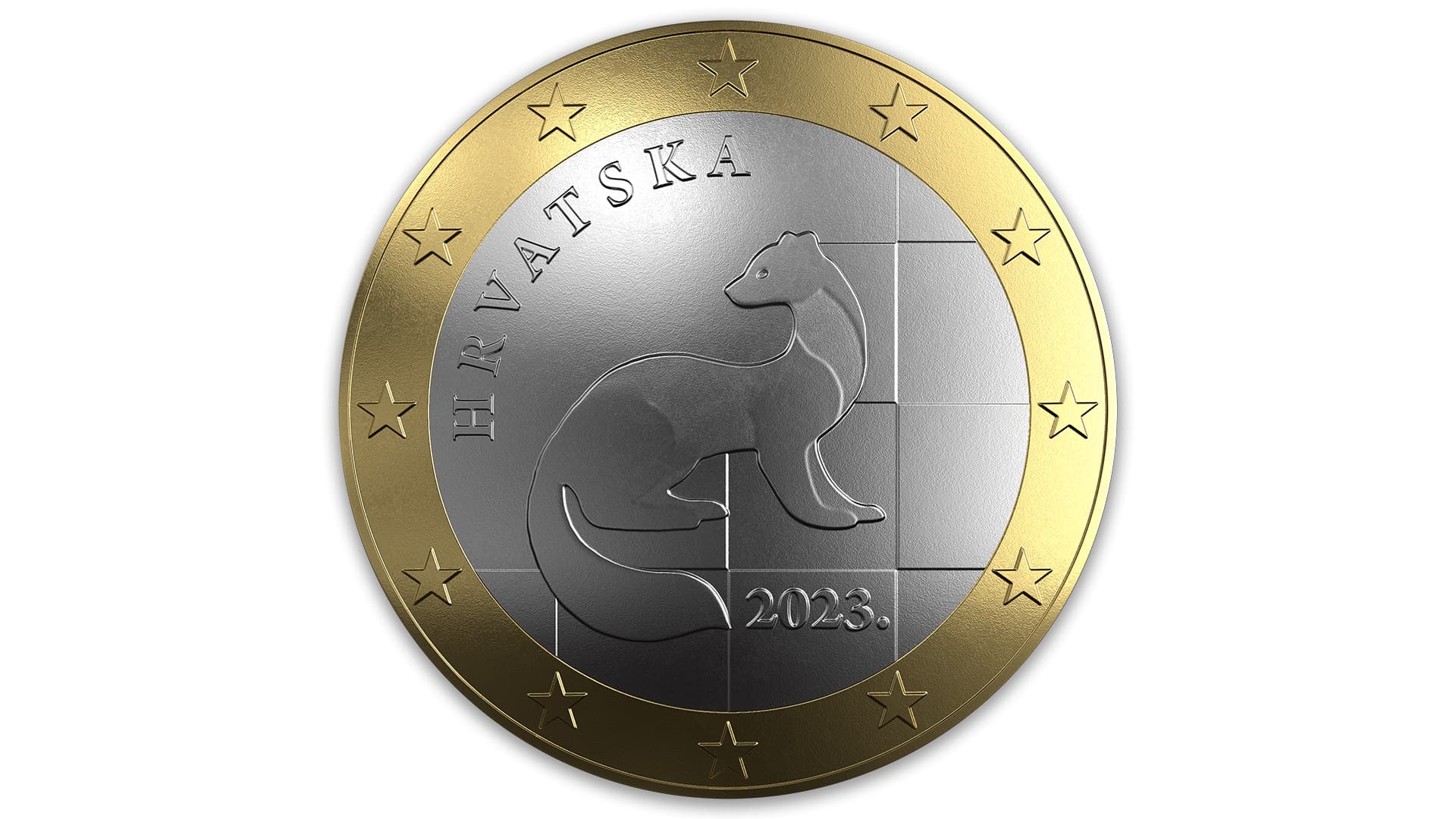
New Year's Day was a big day for Croatia.  It officially joined both the Eurozone and Schengen.

When the country joined the EU back in 2013, it had to commit to eventually replacing its currency, the kuna, with the Euro.  But then again, Czechland joined the EU in 2004 and still hasn't switched.

Croatia is now the 20th member of the Eurozone and the first country to join since Lithuania back in 2015.

Here are a couple of short YouTube videos out there about Croatia adopting the Euro.

©EuroNews
©The EU Made Simple

Croatia also joined Schengen becoming a member of the world's largest visa free zone.  The thing about joining Schengen, or the EU, or NATO, is that every single member has to agree.  Heck, it's hard enough trying to get four friends to agree on a particular restaurant.  Much less trying to get 26 different countries to agree on something.  Yet, back in December, every member country agreed to let Croatia join.

However, the Netherlands blocked Bulgaria, while Austria blocked both Bulgaria and Romania.

©France24

With Croatia in the Schengen club, there are now 27 members.  So whenever it comes time for Bulgaria and Romania to try again, they will also need Croatia to agree as well.

Sunday, January 1, 2023

Happy 2023

Happy New Year!!  Šťastný nový rok!!

In Czechland, it is also Czech Independence Day!


Last night was another Silvestr karaoke party at the cottage.  Lots of fun but we stayed out way too late. 

The Czech presidency of the Council of the European Union ended as well.  As of today, Sweden now holds the presidency.

Update 2023:  Here's a short YouTube video about the change of the EU presidency.

©The EU Made Simple

Sunday, November 6, 2022

Crown Dependencies

The Crown Dependencies are the Isle of Man, the Bailiwick of Guernsey, and the Bailiwick of Jersey.  The Bailiwicks of Guernsey and Jersey make up the Channel Islands.  

Like the UK, sovereignty over the Crown Dependencies are vested in the Crown and Charles III is now sovereign following the passing of Queen Elizabeth II.  

Each of them have wide powers of self-government but they aren't independent countries, and they aren't British Overseas Territories either.  The United Kingdom is responsible for them in terms of defence and foreign relations, and each dependency pays an annual fee to the UK for this.

They aren't members of the Commonwealth of Nations.  However, they do get to send their own athletes every four years to the Commonwealth Games. 

As these three island territories are not part of the UK, Brexit didn't impact them because they were never a part of the EU.  

The Crown Dependencies were part of the EU customs territory there they participated in the free movement of goods but they did not have the free movement of people, services or capital.  While they were still European citizens they never took part in the European Parliament.  

They were not part of the Schengen area but they are a part of the Common Travel Agreement with the UK and Ireland.  After Brexit, the passports changed from the Red EU colour to the new British Blue.

In ten days I'm headed to Saint Helier, the capital of Jersey, which will be my first visit to the Channel Islands.

Saturday, October 22, 2022

Czechs Ban Russian Tourists

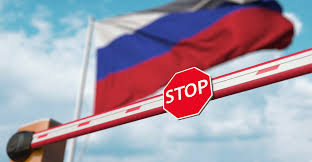
Following Russia's invasion of Ukraine, Czech Republic was the first EU country to stop issuing visas to Russian citizens except for humanitarian cases.  Czechland is now stepping things up and as of 25 October, that even with a valid Schengen visa, Russian citizens will not be allowed in the country for tourism, sport or culture.  It's not clear if Russian citizens, with a valid visa, will be granted entry for business purposes.

Citizens of Russian that have a valid Czech residency visa will still be granted entry.

Vladimir Putin's announcement of partial mobilisation has caused many people to try to leave Russia before they are drafted to fight in Ukraine.  People fighting the Russian government or human rights activists are among the exceptional cases that qualify for a humanitarian visa.  The Czech Foreign Minister, Jan Lipavský, has said that Russians who fear mobilisation don't fulfil the conditions for a humanitarian visa in Czechland.  

The European Commission says that it is up to each EU country to decide if they will accept Russian citizens in to their country.  Finland, Poland, and the Baltic countries
- Estonia, Latvia, and Lithuania, like Czechland, don't grant asylum to people fleeing Russian military mobilisation.  However, Germany will allow Russians fleeing military conscription. 

Here's a short video that I found on YouTube about Estonia not issuing visas to Russians.

©France24

Here's a Voice of America interview with the Czech Foreign Minister on the subject.

©Radio Free Europe/Radio Liberty

Я за Україну. Я за Україною. Слава Україні  Stojím za Ukrajinou!  I stand with Ukraine. 🇺🇦

Sunday, October 2, 2022

No More Plastic Straws

Back in 2020, the EU agreed to enact restrictions on single use plastics and last year the Czech government put forth legislation banning specific disposable plastic products that was supposed to take effect July 2021.  There were changes to the bill which meant another 18 months in the parliament before the Senate approved it this past August.

As of yesterday, the law went into effect.  It is now illegal to produce or sale single-use plastic items including straws, cups, plates, cutlery, drink stirrers, plastic sticks used to hold balloons, polystyrene food containers, and cotton swabs made from plastics.  

Items made with plastics now require packaging labels to notify consumers about reusable alternatives.  The labels on wet wipes, filtered cigarettes, sanitary napkins, etc., must now indicate that they contain plastics and must include special instructions for disposal.

The maximum fine is 5 million Kč (~$234K) for breaking the new law. 

Manufacturers of plastic products now require participation in cleanup activities across Czechland.  The government will collect money from manufacturers and within three years, most cities, towns, and villages will get reimbursed for cleaning up plastic litter.

Czechland recycles around 80% of the PET bottles sold in the country which is amongst the highest in the EU.  Under the new law, it will be 90% by 2029.

Monday, September 26, 2022

European Day of Languages 2022

Today was the 21st anniversary of the European Day of Languages.  

It was an initiative of the Council of Europe, and together with the European Commission, it has been celebrated every year since 2001. 


Here are the top ten most spoken native languages in Europe.

  1. Russian with 160 million native speakers.  It's the official language in four countries and commonly spoken in former Soviet republics.
  2. German has around 97 million native speakers.  While it's the second most spoken language in Europe it is the most spoken language in the European Union.
  3. French has around 71,5 million native speakers with almost 20% of people in the EU able to speak it as a 1st or 2nd language.  French is the second most-taught language in the world after English.
  4. Italian has about 65 million native speakers in Europe.
  5. English as only about 63 million native speakers but once you leave Euroland that number jumps up to more than 1 billion making in the most spoken native language in the world.  
  6. Spanish has only 47 million native speakers in Europe but worldwide there are almost 493 million native speakers making the world's second most spoken native language after English.
  7. Polish has about 38,5 million native speakers.
  8. Ukrainian has about 32,6 million native speakers.  While the majority are located in Ukraine, you can hear Ukrainian spoken across all of Europe with so many refugees from Russia's invasion of the country.
  9. Romanian has about 24 million native speakers if you include Moldovan which is pretty much the same thing.
  10. Dutch comes in 10th place with 22 million native speakers.
Czech comes in 15th place after Turkish, Greek, Hungarian, and Swedish.  Czech only has 10,6 million native speakers and it's only an official language here in Czechland.  Czech is however the most spoken foreign language in Slovakia.  

Я за Україну. Я за Україною. Слава Україні  Stojím za Ukrajinou!  I stand with Ukraine. 🇺🇦

Saturday, September 24, 2022

2022 Municipal and Senate Elections

Czechs voted in the 2022 municipal and Senate elections.  Voting in Czechland is held over two days.  On Friday from 14:00 to 22:00 and on Saturday from 8:00 to 14:00.

For the Senate, and presidential, elections there is a two-round plurality voting system in place.  This means that the top two candidates from the first round face off again in a second round of voting.  Czech senators are elected for six-year terms and there are elections every two years.  So every elections ⅓ of all Senate seats are up for grabs.

For municipal elections there's an open party-list proportional representation system.  Municipal councillors are elected for four-year terms.  There are from 5 to 55 councillors for each municipality.  Voters can vote for as many seats are available for the particular municipal council and the votes can be distributed to candidates across all political parties.  Councillors are then selected proportionally based on the number of votes won by each party.

Today I went with Kája to a local elementary school so that he could cast his vote.  He checked in, they gave him an envelope that he took to a voting area.  After making his choices, placed his votes in a sealed envelope and placed it in the voting bin.  It seemed pretty easy and he was done in just over 10 minutes.

EU-citizens are allowed to vote in the Czech municipal elections.  Here's a short PSA video in English, with Prague mayor Zdeněk Hřib, telling people about voting in municipal elections.

©Piráti

I not an EU-citizen so I don't get to vote.  I still need to sort out a notarised copy of my birth certificate so that I can finally submit my application for Czech citizenship.  Once I become a Czech citizen then I'll finally be able to vote.

The second round of voting for the Senát will take place on 30 September and 1 October 2022.

Thursday, September 15, 2022

EUFOR

The European Union Force Bosnia and Herzegovina (EUFOR) is a military deployment to help keep the peace in Bosnia and Herzegovina (BiH).  At least it used to be called EUFOR.  Now it is Operation ALTHEA.


The United Nations put a peacekeeping force called UNPROFOR in BiH  back in 1992.  As part of the 1995 Dayton Peace Accords between BiH, Croatia, and Serbia (with Serbia also representing Srbska Republika), there was a one-year mandate for a multinational peace enforcement force.  The Implementation Force (IFOR), which replaced UNPROFOR, was led by NATO under the codename Operation Joint Endeavour.  

After the one year, IFOR was replaced by the Stabilisation Force in Bosnia and Herzegovina (SFOR).  SFOR was another NATO-led peacekeeping force, with several non-NATO countries contributing troops.  IFOR was replaced by EUFOR in December 2004.


NATO handed over its peacekeeping mission to the EU which is how EUFOR took over in 2004.  Operation ALTHEA ensures compliance with the Dayton Peace Agreement and contributes to safe and secure environment in BiH.

There are about 1000 troops currently stationed in BiH from 19 different countries, including Czechland.  The countries are all EU and/or NATO member states with the exception of Chile which isn't either.  In December 2020, the UK withdrew its troops from EUFOR after 16 years due to Brexit

The EU also has an Intermediate Reserve Force based in Europe that can be deployed on short notice to reinforce EUFOR in BiH if needed.

The first five years each saw a commanding general from a different country.  For some reason, since December 2009, each year the commanding general comes from Austria.

Here are a couple of short videos I found on YouTube.

©EUFOR Althea
©EUFOR Althea

Update March 2023:  Here's the new EUFOR video.

©EUFOR Althea

Monday, September 12, 2022

Eurocorps

My 2000th blog post.  I can't believe that I've been at this for over 13 years or that people still seem interested in my Czechland adventure.  Thank you to everyone who continues to follow along.

Eurocorps is a European army, of about 60.000 troops, that can be deployed on very short notice.  It was founded in 1992 by France and Germany and it went operational in 1995.  This month it celebrates its 30th anniversary.  Eurocorps' headquarters are in Strasbourg, France.
Eurocorps is at the service of the EU and NATO and in 2002, it was certified as one of NATO's nine High Readiness Land Headquarters.  Eurocorps considers requests for support from the UN and OSCE.  It can also be deployed at the request of the framework nations.

There are six framework nations - France, Germany, Belgium, Luxembourg, Spain, and Poland.  

Any EU country can join with the unanimous approval of the framework countries.  There are also five associated nations - Austria, Greece, Türkiye, Italy, and Romania

Finland was an associated member from 2002 - 2006 and Canada was from 2003 - 2007.  Czech Republic isn't a member but I believe that they have participated is some military exercises with Eurocorps in the past.  I'm not aware of Czechland having any plans to join. 

Eurocorps has participated in peacekeeping missions in the Balkans as part of SFOR in Bosnia and Herzegovina and KFOR in Kosovo.  It was deployed to Afghanistan as part of the UN's International Security Assistance Force (ISAF).  It's even been deployed to Africa as part of EU training missions in Mali and the Central African Republic.

Poland became the newest framework member this year in January.  From 2023-2025, a Polish general will take command of Eurocorps.  With all of the support Poland has given Ukraine during the Russian invasion, I'm sure that Russia isn't thrilled with Poland soon to lead Eurocorps.

What's interesting to me Austria and Türkiye being associate members.  Türkiye is a member of NATO but not the EU so until it actually becomes an EU member, if ever, then it can't be one of the framework nations.  Austria's constitution prohibits it form entering into military alliances.  So I guess that by being an associate member it can participate in Eurocorps without violating its constitution, in the same way that it is a member of NATO's Partnership for Peace programme without being a NATO member.

Here's a France24 video I found on YouTube from 2009 that talks about Eurocorps.

©France24

Wednesday, September 7, 2022

New Electric Trains

About two weeks ago the South Moravian Region unveiled the first of 37 new electric trains at Hlavní nádráží.  South Moravia is the first region to purchase its own trains which will replace the older fleet, some of which are more than 50 years old.  These will also be Czechland's first electric trains.

There will be 31 four-car trains with 333 seats and six two-car trains with 146 seats.  The trains will be able to go up to 160 km/h (almost 100 mph).

Production of the Škoda trains began two years ago and the first trains will leave Brno sometime this fall.  The entire project cost 6,65 billion Kč ($310 million) but 85% was covered by an EU subsidy of 5,5 billion Kč (+$310 million).

The trains will run on the S2 and S3 lines, both of which are regional backbone line.  

The S2 line runs Křenovice - Sokolnice - Brno - Blansko - Skalice nad Svitavou - Letovice.  The S3 line runs Níhov - Tišnov - Brno hl.n. - Vranovice - Šakvice - Hustopeče / Tišnov - Brno hl.n. - Židlochovice.

The trains will be initially operated by České dráhy until 2025.  One of the requirements in order to get that 85% EU subsidy was that the carrier will be decided by tender procedure.  The tender process should be decided in 2024.  

Below is a video I found out on YouTube showing the trains.  They look like they are going to be pretty comfortable.  In keeping with the region's wine producing heritage, all of the trains will be named after varieties of grapes.

©IDS JMK

Friday, September 2, 2022

Sanctions Against Russia

When Russia annexed Crimea from Ukraine, it triggered a show of support from Czechs for two reasons.  One because the annexation was very similar to Hitler's annexation of the Sudetenland, and two because Czechs, and Slovaks, still remember the Soviet-ed, Warsaw Pact 1968 invasion of Czechoslovakia following the Prague Spring.

When Russia invaded Ukraine, the Czech government introduced a number of unilateral sanctions against Russia, plus the sanctions introduced by the EU.

Czechland was the first EU country to stop issuing visas to Russian citizens except for humanitarian cases.  Plus the government started to review already-issued residency permits for Russians living here.

The Ministry of Finance began inspecting Russian companies, and companies with Russian owners, to make sure none were receiving public funds.

The government sped up the process of withdrawing from two Russian banks - the International Bank for Economic Cooperation and the International Investment Bank.

In addition, the cabinet approved the potential deployment of up to 580 Czech troops to NATO's Rapid Reaction Force. The  government also earmarked 300 million Kč (~$13,8 million) for emergency humanitarian aid in Ukraine.

It's important to note that the EU has had sanctions against Russia going back to 2014 when it first illegally annexed Crimea.  But with the invasion, additional sanctions have been levied.

The first package of EU sanctions against Russia came on 23 February when Russia recognised the separatist regions of Donetsk and Luhansk as independent countries as an excuse to send in Russian troops.
  • There were targeted sanctions against the 351 members of Russia's Duma, plus another 27 individuals
  • The restriction of economic relations with the separatist regions of Donetsk and Luhansk
  • The restriction of Russia's access to the EU's capital and financial markets
When Russia invaded the rest of Ukraine on 24 February, the EU stepped up its sanctions to include:

  • the financial sector
  • the energy and transport sectors
  • dual-use goods
  • export control and export financing
  • visa policy
  • additional sanctions against Russian individuals
  • new listing criteria
The second package of sanctions were initiated on 25 February.
  • Vladimir Putin's assets were frozen
  • Sergey Lavrov, the Russian Minister for Foreign Affairs, had his assets frozen
  • restrictive measures were imposed on members of Russia's National Security Council and members of the Duma who supported recognition of Donetsk and Luhansk as independent countries
  • an additional package of individual and economic measures were introduced covering finance, energy, transport and technology sectors plus visa policy
The third package of sanctions came on 28 February.
  • a ban on transactions with the Russian Central Bank
  • €500 million support package to finance military equipment and supplies for Ukraine's armed forces
  • closure of EU airspace and no access to EU airports by Russian carriers
  • new sanctions on another 26 people and one entity
On 2 March, the EU excluded seven Russian banks from SWIFT preventing them to operate globally.
The second package of sanctions were initiated on 25 February.  The EU also banned:
  • investing, participating, or continuing to future projects co-financed by the Russian Direct Investment Fund
  • selling, supplying, transferring or exporting Euros to Russia or to any person or entity in Russia
  • broadcasting of Russia Today and Sputnik
Here's an Al Jazeera video I found on YouTube that talks about some of the sanctions and explains more about SWIFT.

©Al Jazeera

On 3 March, the existing asset freezes of those people identified as responsible for the misappropriation of Ukrainian state funds was extended for another year.

On 9 March, restrictions were put in place halting the export of maritime navigation goods and radio communication technology to Russia.  Plus restrictions on an additional 160 people including:
  • 14 Russian oligarchs
  • 146 members of the Russian Federation Council
In total, at this point the EU had measures in place on 862 individuals and 53 entities.  

Also on 9 March, the EU put sanctions in place against Belarus to include:
  • restrict three Belarusian banks from SWIFT
  • prohibit transactions with the Central Bank of Belarus
  • prohibit transactions by Belarusian state-owned entities in EU trading venues
  • significantly limit the financial inflows from Belarus to the EU
  • prohibit the provision of Euros to Belarus
The fourth package of sanctions were initiated on 15 March on an additional 15 people and 9 entities plus a ban on:
  • all transactions with certain state-owned enterprises
  • the provision of credit rating services to any Russian person or entity
  • new investments in the Russian energy sector
  • trade involving iron, steel or luxury goods
The fifth package of sanctions were initiated on 8 April.  This package included a ban on:
  • imports from Russia of coal and other solid fossil fuels
  • all Russian vessels from accessing EU ports
  • Russian and Belarusian road transport operators from entering the EU
  • imports of other goods such as wood, cement, seafood and liquor
  • exports to Russia of jet fuel and other goods
  • deposits to crypto-wallets
On 21 April, the EU sanctioned two more businesspeople.

The sixth package of sanctions were initiated on 3 June.  The sixth package includes:
  • a ban on imports from Russia of crude oil and refined petroleum products, with limited exceptions
  • a SWIFT ban for another three Russian banks and one Belarusian bank
  • suspension of broadcasting in the EU by three more Russian state-owned outlets
  • sanctions against an additional 65 people and 18 entities including those responsible for atrocities committed in Bucha and Mariupol
On 21 July, the seventh package of sanctions were put in place to prohibit the purchase, import or transfer of Russian-origin gold, including jewellery.  The ban on port access was extended to include locks, with sanctions against another 54 individuals and 10 entities including Sberbank.

On 4 August, sanctions were placed on Viktor Yanukovych, the former pro-Russian President of Ukraine, and his son Oleksandr.

It probably won't be that long until an eighth package of sanctions is announced by the EU.

Я за Україну. Я за Україною. Слава Україні  Stojím za Ukrajinou!  I stand with Ukraine. 🇺🇦

Update:  On 6 October, came the EU's eighth package of sanctions which included:
  • a price cap related to the maritime transport of Russian oil for third countries
  • additions to the list of restricted items prohibited for Russia's military and technological enhancement
  • additional restrictions on trade and services with Russia
  • sanctions on an additional 30 individuals and 7 entities.