Showing posts with label NATO. Show all posts

Wednesday, June 21, 2023

United States of America

In ten days Kája and I are going to the USA for three weeks.  I haven't been back since 2017.  I was supposed to go in 2020 but Covid prevented that one.  Kája hasn't been there before and he'll get to use his ESTA.  The plan is to fly to Atlanta to visit Steven and Michael for a week before flying to Arizona for another week.  Then it's a 7-ish hour drive with my parents to visit my sister in California.  So here's a bit about the USA.

The United States of America is a federal republic of 50 states, plus the capital, Washing, D.C., which is the federal capital district.  In North America, there are 48 contiguous states, bordering Canada and Mexico, plus Alaska and Hawaii.  After Russia and Canada, the U.S. is the 3rd largest country by size, and with more than 340 million people it is also the 3rd largest by population after China and India.  

The USA is huge!!  Over 9 million km² (+3.5 million sq mi) kind of huge.  A direct flight from the east coast to the west coast is six hours.  A flight from Los Angeles to Hawaii, in the Pacific Ocean, is almost another six hours.  In comparison, a six hour flight from Portugal, on one side of Europe, would put you all the way over in the Caucasus.

About 12.000 years ago Paleo-Indians migrated from North Asia to North America and became the first inhabitants.  There were up to 1000 different native civilisations, in the area that would become the USA, before the Europeans arrive.  

The Spanish established a colony in South Florida in 1513, and the British established a the first of the 13 Colonies in Virginia in 1607.  The economy of the American Colonies was built on slave labour from Africa.  The Declaration of Independence was signed on 4 July 1776, and the American Revolution lasted from 1775 to 1783 which led to international recognition.  France was the first country to recognise an U.S. independence in 1778.  

Following a westward expansion, and the genocide of native peoples, more states joined the union.  

The North and South fought the American Civil War, from 1861 - 1865, over slavery when the Confederate States tried to secede from the Union.

The USA was a major world power by 1900.  During WWII, it became the world's first nuclear power and was one of two superpowers during the Cold War.  The U.S., with 42% of the world's nuclear weapons, has the 2nd largest stockpile after Russia.  A very short, abbreviated summary of U.S. history.  

The United States has the 3rd largest military and is made of of 5 branches of service - the Army, Navy, Air Force, Marine Corps, and Coast Guard.    


The military has about 800 bases and facilities overseas, in roughly 85 different countries.  

The USA is a founding member of NATO, and holds a permanent seat on the U.N. Security Council.


The USA is a presidential constitutional federal republic made up of three branches of government - legislative, executive and judicial.  The legislature is made of the House of Representatives, based on population, and the Senate, with 2 members per state.


I think the big problem with the two-party system is that no one, Republicans or Democrats, is willing to compromise on anything.  When there are only two parties, you're either a winner or a loser.  At least with parliamentary democracies, it is easier for multiple parties to find middle ground.

©One Minute Economics

The USA is a major economic power.  Of the 500 largest revenue companies, 136 have their headquarters in the U.S.  The U.S. dollar is the most used currency in international transactions and the world's largest reserve currency.

It is the world's largest importer and second-largest exporter.  It's also the world's largest exporter of services.  The largest trading partners are the European Union, Mexico, Canada, China, Japan, South Korea, the UK, Vietnam, India, and Taiwan.

California is the country's economic powerhouse.  If California was independent it alone would be the 4th largest economy in the world.  California ends up subsidising other states because it pays more in to the U.S. federal system than it receives back.  As a Californian, it was always funny to listen to other states complain about California but while at the same time taking its money.

What's amazing to me is that the USA is the only advanced economy in the world that doesn't provide for paid vacation.  Also no federally mandated paid maternity or paternity leave.  l

California is the most populous state but New York City, in New York, is the biggest city.  

The metric system isn't used.  Except for in healthcare and you can buy 1 and 2 litre bottles of soda.  That's it.

©History Matters

The USA still has five territories.  In the Caribbean, there is Puerto Rico and the U.S. Virgin Islands.  In the North Pacific Ocean, there is Guam and the Northern Mariana Islands, and American Samoa in the South Pacific Ocean.  Plus several uninhabited islands in Oceania and the Caribbean.

People from Puerto Rico, the U.S. Virgin Islands, Guam, and the Northern Mariana Islands get U.S. citizenship at birth.  People born in American Samoa have U.S. nationality but not U.S. citizenship.  Each of these are self-governing territories.  They only get to elect a non-voting member to House of Representatives.  The can propose legislation but can't vote on it.

English is the de facto official language but some individual states have English as an official language.  There are many regional accents.  Here's a short video highlighting how each state's accent sounds.  Plus the usual greeting in each state.

©Condé Nast Traveler

©Condé Nast Traveler

I'm looking forward to introducing Kája to my family and showing him the USA.  I'm not sure who will experience more culture shock, him or me.  But we'll see.  There are a lot of good things about the USA but there are still many problems and most Americans are so filled with blind patriotism about being the "greatest country on earth" that they end up being pretty obnoxious.  Here's a clip from The Newsroom that hits home.

©HBO

Wednesday, April 5, 2023

Finland Joined NATO

As of yesterday, Finland abandoned decades of neutrality and officially became NATO's 31st member. 

Following WWII, and throughout the Cold War, Finland acted as a buffer zone between NATO and the Warsaw Pact.  

In 1994, the country joined the Partnership for Peace programme to cooperate with NATO in peacekeeping and joint exercises without being a NATO member.  In 1995, Finland joined the EU.


When a country joins the EU, there is an obligation to aid any fellow member country that gets invaded.  It's legally binding that all EU members must assist but it allows each country to decide on how to help.  The aid a country provides could be military, political, humanitarian, etc.  This isn't the same thing as NATO Article 5, that says an attack on one is an attack on all.

Due to Article 5, every NATO member must approve any new member.  The USA approved Finland's accession in less than three months.  Czechland was also quick and gave approval in just over three months.

Hungary and Türkiye were the holdouts.  Hungary took 10 months, 1 week, and Türkiye approved after 10,5 months.

Putin didn't want NATO enlargement, but after Russia invaded Ukraine, it got the opposite.  Finland and Sweden both ditch neutrality and applied to join NATO.  Now Russia's direct border with NATO has doubled due to the 1.340 km (830 mile) border that Finland has with Russia.

The Finish military brings a lot to NATO.  While there are only about 24.000 active-duty personnel, it's wartime mobilisation is about 280.000 and they have a reserve pool of 870.000.  They spend about 2,3% of GDP on defence and they have one of the largest artillery forces in Europe.  The Finns are experts in cold weather and arctic operations, and the Gulf of Finland now became NATO territory.

Let's see how long it takes for Sweden to join.  Here's a short video I found out on YouTube.

©WSJ

Я за Україну. Я за Україною. Слава Україні  Stojím za Ukrajinou!  I stand with Ukraine. 🇺🇦

Thursday, September 15, 2022

EUFOR

The European Union Force Bosnia and Herzegovina (EUFOR) is a military deployment to help keep the peace in Bosnia and Herzegovina (BiH).  At least it used to be called EUFOR.  Now it is Operation ALTHEA.


The United Nations put a peacekeeping force called UNPROFOR in BiH  back in 1992.  As part of the 1995 Dayton Peace Accords between BiH, Croatia, and Serbia (with Serbia also representing Srbska Republika), there was a one-year mandate for a multinational peace enforcement force.  The Implementation Force (IFOR), which replaced UNPROFOR, was led by NATO under the codename Operation Joint Endeavour.  

After the one year, IFOR was replaced by the Stabilisation Force in Bosnia and Herzegovina (SFOR).  SFOR was another NATO-led peacekeeping force, with several non-NATO countries contributing troops.  IFOR was replaced by EUFOR in December 2004.


NATO handed over its peacekeeping mission to the EU which is how EUFOR took over in 2004.  Operation ALTHEA ensures compliance with the Dayton Peace Agreement and contributes to safe and secure environment in BiH.

There are about 1000 troops currently stationed in BiH from 19 different countries, including Czechland.  The countries are all EU and/or NATO member states with the exception of Chile which isn't either.  In December 2020, the UK withdrew its troops from EUFOR after 16 years due to Brexit

The EU also has an Intermediate Reserve Force based in Europe that can be deployed on short notice to reinforce EUFOR in BiH if needed.

The first five years each saw a commanding general from a different country.  For some reason, since December 2009, each year the commanding general comes from Austria.

Here are a couple of short videos I found on YouTube.

©EUFOR Althea
©EUFOR Althea

Update March 2023:  Here's the new EUFOR video.

©EUFOR Althea

Tuesday, September 13, 2022

KFOR

KFOR, Kosovo Force, is a NATO-led international peacekeeping force in Kosovo.  Following the breakup of Yugoslavia and the wars in the Balkans, the UN Security Council passed a resolution in 1999 which among other things authorised an international with substantial NATO participation in Kosovo.  Two days after the resolution, on 11 June 1999, KFOR entered the country.

The main tasks of KFOR are to ensure a safe and secure environment and the freedom of movement for all communities in the country.  

At its height, KFOR was made up of 50.000 troops from 30 NATO and non-NATO countries.  Today are are just over 3700 troops from 27 countries in Kosovo.

The Czech Armed Forces have participated as part of KFOR since 1999.  In 2011, they ended their deployment and left its base in Sajkovac.  However, there are currently eight Czech soldiers serving at KFRO Headquarters in Prishtina.

The USA has just over 560 soldiers currently deployed to KFOR.

KFOR is gradually transferring responsibilities over to Kosovo's Security Force.

Here's a six-minute video I found on YouTube about KFOR.

©NATO

Update March 2023:  Here's a 9½-minute video about the evolution of KFOR.

©NATO

Monday, September 12, 2022

Eurocorps

My 2000th blog post.  I can't believe that I've been at this for over 13 years or that people still seem interested in my Czechland adventure.  Thank you to everyone who continues to follow along.

Eurocorps is a European army, of about 60.000 troops, that can be deployed on very short notice.  It was founded in 1992 by France and Germany and it went operational in 1995.  This month it celebrates its 30th anniversary.  Eurocorps' headquarters are in Strasbourg, France.
Eurocorps is at the service of the EU and NATO and in 2002, it was certified as one of NATO's nine High Readiness Land Headquarters.  Eurocorps considers requests for support from the UN and OSCE.  It can also be deployed at the request of the framework nations.

There are six framework nations - France, Germany, Belgium, Luxembourg, Spain, and Poland.  

Any EU country can join with the unanimous approval of the framework countries.  There are also five associated nations - Austria, Greece, Türkiye, Italy, and Romania

Finland was an associated member from 2002 - 2006 and Canada was from 2003 - 2007.  Czech Republic isn't a member but I believe that they have participated is some military exercises with Eurocorps in the past.  I'm not aware of Czechland having any plans to join. 

Eurocorps has participated in peacekeeping missions in the Balkans as part of SFOR in Bosnia and Herzegovina and KFOR in Kosovo.  It was deployed to Afghanistan as part of the UN's International Security Assistance Force (ISAF).  It's even been deployed to Africa as part of EU training missions in Mali and the Central African Republic.

Poland became the newest framework member this year in January.  From 2023-2025, a Polish general will take command of Eurocorps.  With all of the support Poland has given Ukraine during the Russian invasion, I'm sure that Russia isn't thrilled with Poland soon to lead Eurocorps.

What's interesting to me Austria and Türkiye being associate members.  Türkiye is a member of NATO but not the EU so until it actually becomes an EU member, if ever, then it can't be one of the framework nations.  Austria's constitution prohibits it form entering into military alliances.  So I guess that by being an associate member it can participate in Eurocorps without violating its constitution, in the same way that it is a member of NATO's Partnership for Peace programme without being a NATO member.

Here's a France24 video I found on YouTube from 2009 that talks about Eurocorps.

©France24

Friday, September 2, 2022

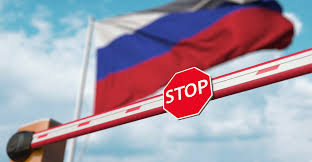
Sanctions Against Russia

When Russia annexed Crimea from Ukraine, it triggered a show of support from Czechs for two reasons.  One because the annexation was very similar to Hitler's annexation of the Sudetenland, and two because Czechs, and Slovaks, still remember the Soviet-ed, Warsaw Pact 1968 invasion of Czechoslovakia following the Prague Spring.

When Russia invaded Ukraine, the Czech government introduced a number of unilateral sanctions against Russia, plus the sanctions introduced by the EU.

Czechland was the first EU country to stop issuing visas to Russian citizens except for humanitarian cases.  Plus the government started to review already-issued residency permits for Russians living here.

The Ministry of Finance began inspecting Russian companies, and companies with Russian owners, to make sure none were receiving public funds.

The government sped up the process of withdrawing from two Russian banks - the International Bank for Economic Cooperation and the International Investment Bank.

In addition, the cabinet approved the potential deployment of up to 580 Czech troops to NATO's Rapid Reaction Force. The  government also earmarked 300 million Kč (~$13,8 million) for emergency humanitarian aid in Ukraine.

It's important to note that the EU has had sanctions against Russia going back to 2014 when it first illegally annexed Crimea.  But with the invasion, additional sanctions have been levied.

The first package of EU sanctions against Russia came on 23 February when Russia recognised the separatist regions of Donetsk and Luhansk as independent countries as an excuse to send in Russian troops.
  • There were targeted sanctions against the 351 members of Russia's Duma, plus another 27 individuals
  • The restriction of economic relations with the separatist regions of Donetsk and Luhansk
  • The restriction of Russia's access to the EU's capital and financial markets
When Russia invaded the rest of Ukraine on 24 February, the EU stepped up its sanctions to include:

  • the financial sector
  • the energy and transport sectors
  • dual-use goods
  • export control and export financing
  • visa policy
  • additional sanctions against Russian individuals
  • new listing criteria
The second package of sanctions were initiated on 25 February.
  • Vladimir Putin's assets were frozen
  • Sergey Lavrov, the Russian Minister for Foreign Affairs, had his assets frozen
  • restrictive measures were imposed on members of Russia's National Security Council and members of the Duma who supported recognition of Donetsk and Luhansk as independent countries
  • an additional package of individual and economic measures were introduced covering finance, energy, transport and technology sectors plus visa policy
The third package of sanctions came on 28 February.
  • a ban on transactions with the Russian Central Bank
  • €500 million support package to finance military equipment and supplies for Ukraine's armed forces
  • closure of EU airspace and no access to EU airports by Russian carriers
  • new sanctions on another 26 people and one entity
On 2 March, the EU excluded seven Russian banks from SWIFT preventing them to operate globally.
The second package of sanctions were initiated on 25 February.  The EU also banned:
  • investing, participating, or continuing to future projects co-financed by the Russian Direct Investment Fund
  • selling, supplying, transferring or exporting Euros to Russia or to any person or entity in Russia
  • broadcasting of Russia Today and Sputnik
Here's an Al Jazeera video I found on YouTube that talks about some of the sanctions and explains more about SWIFT.

©Al Jazeera

On 3 March, the existing asset freezes of those people identified as responsible for the misappropriation of Ukrainian state funds was extended for another year.

On 9 March, restrictions were put in place halting the export of maritime navigation goods and radio communication technology to Russia.  Plus restrictions on an additional 160 people including:
  • 14 Russian oligarchs
  • 146 members of the Russian Federation Council
In total, at this point the EU had measures in place on 862 individuals and 53 entities.  

Also on 9 March, the EU put sanctions in place against Belarus to include:
  • restrict three Belarusian banks from SWIFT
  • prohibit transactions with the Central Bank of Belarus
  • prohibit transactions by Belarusian state-owned entities in EU trading venues
  • significantly limit the financial inflows from Belarus to the EU
  • prohibit the provision of Euros to Belarus
The fourth package of sanctions were initiated on 15 March on an additional 15 people and 9 entities plus a ban on:
  • all transactions with certain state-owned enterprises
  • the provision of credit rating services to any Russian person or entity
  • new investments in the Russian energy sector
  • trade involving iron, steel or luxury goods
The fifth package of sanctions were initiated on 8 April.  This package included a ban on:
  • imports from Russia of coal and other solid fossil fuels
  • all Russian vessels from accessing EU ports
  • Russian and Belarusian road transport operators from entering the EU
  • imports of other goods such as wood, cement, seafood and liquor
  • exports to Russia of jet fuel and other goods
  • deposits to crypto-wallets
On 21 April, the EU sanctioned two more businesspeople.

The sixth package of sanctions were initiated on 3 June.  The sixth package includes:
  • a ban on imports from Russia of crude oil and refined petroleum products, with limited exceptions
  • a SWIFT ban for another three Russian banks and one Belarusian bank
  • suspension of broadcasting in the EU by three more Russian state-owned outlets
  • sanctions against an additional 65 people and 18 entities including those responsible for atrocities committed in Bucha and Mariupol
On 21 July, the seventh package of sanctions were put in place to prohibit the purchase, import or transfer of Russian-origin gold, including jewellery.  The ban on port access was extended to include locks, with sanctions against another 54 individuals and 10 entities including Sberbank.

On 4 August, sanctions were placed on Viktor Yanukovych, the former pro-Russian President of Ukraine, and his son Oleksandr.

It probably won't be that long until an eighth package of sanctions is announced by the EU.

Я за Україну. Я за Україною. Слава Україні  Stojím za Ukrajinou!  I stand with Ukraine. 🇺🇦

Update:  On 6 October, came the EU's eighth package of sanctions which included:
  • a price cap related to the maritime transport of Russian oil for third countries
  • additions to the list of restricted items prohibited for Russia's military and technological enhancement
  • additional restrictions on trade and services with Russia
  • sanctions on an additional 30 individuals and 7 entities.

Monday, June 27, 2022

EU and NATO Enlargement

When Russia invaded Ukraine, Putin wanted to prevent EU and NATO expansion in the east.  Well four months into the war and he's accomplished the opposite of what he wanted.  
Ukraine and Moldova have formally applied to join the EU and both are now official candidate countries.  Georgia has also applied and is now a potential candidate member.

Ukraine and Georgia were on track to apply in 2024 but the war has fast tracked their applications.

Joining the EU is not an easy thing to do and it takes years.  Türkiye applied in 1999, North Macedonia in 2005, Montenegro in 2010, Serbia in 2012, and Albania in 2014.  

Slovakia applied on 27 June 1995 and Czechland appleid on 17 January 1996.  Both joined on 1 May 2004.  So over eight years and neither country had Russian troops occupying part of their territories.

©The EU made SIMPLE

What's really significant is that Finland and Sweden have now both officially applied to join NATO.  While both countries are part of the the Partnership for Peace programme, both countries have long histories of neutrality.  Russia's invasion of Ukraine has really changed things.

©CNBC

©WSJ

Russia really can't be surprised that countries want to join NATO.  Take a look at the countries that the Soviet Union or Russia has invaded in the last 100 years.

Я за Україну. Я за Україною. Слава Україні  Stojím za Ukrajinou!  I stand with Ukraine. 🇺🇦

Update:
 The USA approved both Finland's and Sweden's NATO applications on 3 August 2022.  Czechland approved both on 27 August 2022.

Update:  December 2022 - Bosnia and Herzegovina is now an official candidate member for EU membership.

Update: 4 April 2023 - Finland became the 31st member of NATO.

Monday, April 25, 2022

Partnership for Peace

NATO has something something called Partnership for Peace (PfP).  It's a bilateral cooperation programme between NATO and Euro-Atlantic partner countries that lets partners build up an individual relationship with NATO.  PfP started in 1994 as a way to build security relationships between NATO and non-NATO countries.  Participating countries choose their own priorities for cooperation and the both the level and pace of progress.

The programme allowed NATO to reach out to former Warsaw Pact and Soviet Republics following the end of the Cold War.  The programme allows countries to build closer relationships with NATO without actually becoming a NATO member.  It's important to remember that the PfP programme has nothing to do with NATO's article 5 which says that an attack on one NATO country is an attack on all.  So while Ukraine is a PfP member it is not a member of NATO.  

Here's the list of when countries joined the PfP programme.  Many went on to officially join NATO later on.  

Romania - 26.01.1994
Lithuania - 27.01.1994
Poland - 02.02.1994
Estonia - 03.02.1994
Hungary - 08.02.1994
Ukraine - 08.02.1994
Slovakia - 09.02.1994
Bulgaria - 14.02.1994
Latvia - 14.02.1994
Albania - 23.02.1994
Czechia - 10.03.1994
Moldova - 16.03.1994
Georgia - 23.03.1994
Slovenia - 30.03.1994
Finland - 09.05.1994
Sweden - 09.05.1994
Azerbaijan - 04.05.1994
Turkmenistan - 10.05.1994
Kazakhstan - 27.05.1994
Russia - 22.06.1994
Armenia  05.10.1994
Uzbekistan - 13.07.1994

Belarus - 11.01.1995
Austria - 10.02.1995
Malta - 26.04.1995
Macedonia - 15.11.1995

Switzerland - 11.12.1996

Ireland - 01.12.1999

Croatia - 25.05.2000

Tajikistan - 20.02.2002

Montenegro - 14.12.2006
Serbia - 14.12.2006

In 1999, Czechland, Hungary, and Poland became the first three PfP countries to join NATO.

In 2004, NATO saw its largest expansion when seven PfP countries joined - Bulgaria, Estonia, Latvia, Lithuania, Romania, Slovakia, and Slovenia.

Malta joined the programme in 1995 but left in 1996 and rejoined in 2008.

In 2009 - Albania and Croatia joined NATO.  Montenegro joined NATO in 2017 and North Macedonia joined in 2020 as the 30th NATO member.

In 2014, when Russia first invaded Ukraine, NATO suspended practical cooperation with Russia.  It's hard to picture Russia as a Partnership for Peace member considering it invaded Ukraine to keep it from joining NATO in the future.  But by doing do, I don't think it will be long until Finland and Sweden decide to join NATO.

Traditionally neutral countries such as Austria, Finland, Sweden, and Switzerland are all PfP members.  For Austria, the programme allows for cooperation with NATO without joining because under the country's constitution, Austria is prohibited from entering into military alliances and no foreign military bases may be on Austrian territory.  

Andorra, Liechtenstein, Monaco, San Marino, and Vatican City are all neutral micro states that are surrounded by NATO members.  They are all a part of the OSCE but they do not participate the PfP programme.

Cyprus is the only EU member that isn't a member of either NATO or the PfP programme. Kyrgyzstan is the only former Soviet republic that didn't join the PfP programme.  It did join the CSTA with Armenia, Belarus, Kazakhstan, Russia, and Tajikistan.

Update: 4 April 2023 - Finland became the 31st member of NATO.

Saturday, April 23, 2022

Bosnia, Serbia, Russia, and Z

So while in Banja Luka, I wasn't really thrilled about the Russian Z's I saw throughout the city.  They weren't everywhere but they were visible.

First of all, what's the Z?  The letter Z doesn't even exit in the Cyrillic alphabet. 

©BBC

I had to do a double-take when I saw people standing in a queue to use the ATM at a Sberbank.  That's because Sberbank, which is Russia's largest state-owned bank, is shut down in Czechland due to EU sanctions.  

My housekeeper mentioned that she had an account with Sberbank but she received a letter that her account would be closed because Sberbank is no longer allowed to operate in the EU and that she would could transfer all of her money to a new bank.  

So why hasn't Bosnia and Herzegovina sanctioned Russia like most every other country over its invasion of Ukraine?  Well, that's because of Republika Srpska and Serbia.  

Serbia and Russia are allies.  For example, because Serbia claims Kosovo as part of Serbia, Russia keeps blocking recognition of Kosovo in the United Nations.    

©DW News

Serbia hasn't closed its airspace to Russia.  Russian flights still can't get to Serbia because the planes would have to cross EU airspace to get to Serbia.  But, AirSerbia is still flying to Russia which means that many Russians are flying to Serbia and then flying onward from there.  Serbia was bombed by NATO in the 1990s and there's distrust for NATO which is good for Putin.  It's funny that Serbia isn't following EU sanctions when it is trying to join the EU.

Bosnia isn't able to pass sanctions on Russia because Republika Srpska vetos the resolutions in support of Serbia.  

©EuroNews

I still don't see how anything gets done in Bosia when everything needs to be done by consensus between three parties that were all fighting each other for years only a short time ago.  I wonder how long before this breaks up Bosnia and Herzegovina.

©BBC


Germany looks like it will ban the Z.  It seems that under German law this falls under forbidding public approval of illegal acts, or something along those lines.


In Prague, the local officials are changing the name of the street in front of the Russian Embassy.  Its new name will be "Ukrainian Heroes" street.  I bet the Russian embassy loves that one.  

Я за Україну. Я за Україною. Слава Україні  Stojím za Ukrajinou!  I stand with Ukraine. 🇺🇦