Showing posts with label Banking. Show all posts

Tuesday, April 4, 2023

Czech National Bank

Česká národní banka, (ČNB), is Czechland's central bank it supervises the country's financial market.  It's primary objective is price stability by setting monetary policy, it issues the koruna, manages the payments and transfers between banks, and oversees the banking sector, capital markets, pension funds, the insurance industry, and foreign exchanges.  It holds reserves of more than $62,5 million and tries to stabilise inflation to around 2% per year.  The headquarters are in Prague.

The Austro-Hungarian Bank was the central bank of the Habsburg Empire in the 19th and 20th centuries.  Czechoslovakia didn't have a central bank for the first six years of independence.  The country's ministry of finance was responsible for all central banking functions.

Národní banka Československa was the central bank from 1926 to 1939 during the First Republic.  From 1939 to 1945, during the Protectorate of Bohemia and Moravia, there was the Národní banka pro Čechy a Moravu v Praze.


The national bank was re-established after WWII and in 1950 it was renamed to Státní banka Československá.

Following the Velvet Divorce, the State Bank of Czechoslovakia was replaced on 1 January 1993 by the Czech National Bank.

Slovakia has the National Bank of Slovakia (NBS).

Here's a short video, in Czech, about the ČNB that I found on YouTube.

©Česká národní banka


So this January was the 30th anniversary of the Czech National Bank (and Slovakia's too).  

To commemorate both the 30th anniversary of the ČNB and the Czech currency, the bank is issuing a special 1000 Kč banknote.  


Here's a short video about the commemorative bank note.

©Česká národní banka

Tuesday, October 4, 2022

Expired Banknotes

Czech currency banknotes have changed.  Not a lot but they are now slightly different.  The new notes look almost identical to the old notes except that the old banknotes have a thin silver security strip and it doesn't change colour under light.  The new banknotes have a thicker strip that changes from purple to green when tilted under light.

Good note on top; bad note below

This goes for the 100, 200, 500, 1000, 2000, and 5000 Kč banknotes.

The old banknotes were from 1995 to 1999 and at the end of June they became no longer valid.  I learned this the hard way when I went to pay for something in the shop and the cashier told me that the money wasn't any good.  Ugh!

The old banknotes can be exchanged at financial institutions and at offices of the Czech National Bank until 30 June 2024.  From 1 July 2024, you can only exchange the bills at offices of the Czech National Bank but I don't know how long they will allow old bills to be exchanged for new ones.

Update:  Apparently the 5000 Kč banknote is the exception.  For now, both versions of the banknote are still valid.  I've been here over 13 years and I have yet to see a 5000 Kč banknote.

Saturday, April 23, 2022

Bosnia, Serbia, Russia, and Z

So while in Banja Luka, I wasn't really thrilled about the Russian Z's I saw throughout the city.  They weren't everywhere but they were visible.

First of all, what's the Z?  The letter Z doesn't even exit in the Cyrillic alphabet. 

©BBC

I had to do a double-take when I saw people standing in a queue to use the ATM at a Sberbank.  That's because Sberbank, which is Russia's largest state-owned bank, is shut down in Czechland due to EU sanctions.  

My housekeeper mentioned that she had an account with Sberbank but she received a letter that her account would be closed because Sberbank is no longer allowed to operate in the EU and that she would could transfer all of her money to a new bank.  

So why hasn't Bosnia and Herzegovina sanctioned Russia like most every other country over its invasion of Ukraine?  Well, that's because of Republika Srpska and Serbia.  

Serbia and Russia are allies.  For example, because Serbia claims Kosovo as part of Serbia, Russia keeps blocking recognition of Kosovo in the United Nations.    

©DW News

Serbia hasn't closed its airspace to Russia.  Russian flights still can't get to Serbia because the planes would have to cross EU airspace to get to Serbia.  But, AirSerbia is still flying to Russia which means that many Russians are flying to Serbia and then flying onward from there.  Serbia was bombed by NATO in the 1990s and there's distrust for NATO which is good for Putin.  It's funny that Serbia isn't following EU sanctions when it is trying to join the EU.

Bosnia isn't able to pass sanctions on Russia because Republika Srpska vetos the resolutions in support of Serbia.  

©EuroNews

I still don't see how anything gets done in Bosia when everything needs to be done by consensus between three parties that were all fighting each other for years only a short time ago.  I wonder how long before this breaks up Bosnia and Herzegovina.

©BBC


Germany looks like it will ban the Z.  It seems that under German law this falls under forbidding public approval of illegal acts, or something along those lines.


In Prague, the local officials are changing the name of the street in front of the Russian Embassy.  Its new name will be "Ukrainian Heroes" street.  I bet the Russian embassy loves that one.  

Я за Україну. Я за Україною. Слава Україні  Stojím za Ukrajinou!  I stand with Ukraine. 🇺🇦

Monday, October 4, 2021

EC Cards

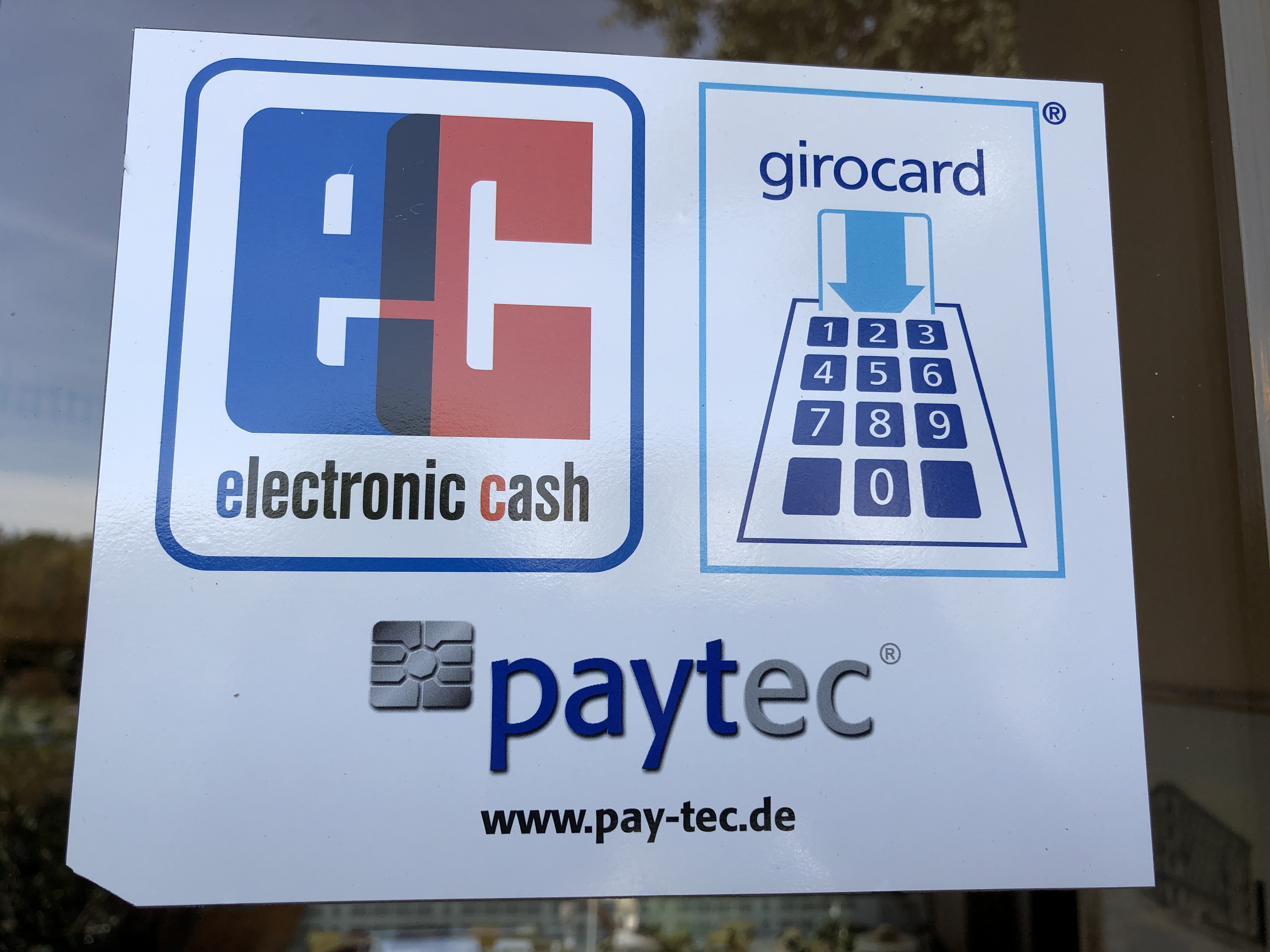
EC Cards are a German thing and they absolutely drive me crazy.  An EC (electronic cash) card is basically a debit card that is linked up to a German bank account.  An EC card gets swiped, just like a debit or credit card would, and the money is deducted from your current account.  A "current account" is the same thing as an American checking account but just like Czechs, Germans don't write checks.

Most EC cards are also Maestro cards which means that they are accepted as debit cards in most places abroad.  

What drives me mental is that when you go someplace and try to pay with a foreign debit or credit card and your card doesn't work.  That's because the the business only accepts either cash or EC cards.  This has happened to me so many times over the years.  Your card doesn't work so you have to either have cash or go to the ATM and pull out cash.  This is because businesses don't want to pay the higher fees that are associated with Visa, MasterCard or American Express.  

What annoys me is that I'm not trying to pay by credit card.  I want to use my Czech debit card but it doesn't work in a shop that only takes EC cards because EC cards only work if you have have German bank account.  

Germans, in general, are frugal and usually prefer to pay with cash or debit card.  Buying things on credit is uncomfortable for most people in Germany.  

I don't know what the going rate is today but about 15 years ago, Visa and Mastercard used to charge businesses about 1,5% for transactions while Amex charged around 3%.  This is often why more shops in the the USA accept Visa and Mastercard than they accept American Express.  In the USA, this is just viewed as the cost of doing business.  

When I'm in Germany I just make sure to carry extra Euros on me.  When I go to the register and ask if I can pay by card, I always ask if they take all cards or only EC cards.

One thing I did notice this past week is that some shops which I know only used to accept EC cards are now accepting credit cards.  I asked Claudia about this and our theory is that Covid really changed things.  Many people had to put things on credit during the toughest times and so more places started accepting credit cards.  

Here's a short video I found out on YouTube that takes about Germans and their reluctance to use cards.

©Deutsche Welle

Monday, April 26, 2021

My First Money Order

My energy provider is Bohemia Energy.  I switched to them about three plus years ago and they've been fine.  Every three months they send me a bill notification to my mobile.

Apparently I overpaid and I received a rebate.  Czech Post delivered a money order to me for 351 Kč ($16).  The money order is only valid until 18.5.  

Many people use the Czech post office for financial services to the money order wasn't that weird to me. 

I don't understand why Bohemia Energy just didn't give me a credit on my next bill.  That would have been more convenient for me.  Or if they wanted to pay me back the money then they could have asked for my banking details so that they could have transferred the 351 Kč to me.  Instead, they paid the post office to deliver me a money order which gives me a limited period of time to collect.  I don't know what would happen if I didn't cash it in time.  Does the money go back to Bohemia Energy?  Or does Česká Pošta keep the money?  

Update:  It took me a few minutes to figure out where in the post office to cash it.  Once I found the correct window I had my money in about five minutes.

This was my first Czech money order.  It's incredible to me that after almost 12 years here in Czechland I'm still having new experiences.  

Thursday, April 1, 2021

Postage Price Increases

Česká pošta increased prices for some services today.  The price changes are mainly for registered letters, insured letters, and for money orders.  Prices didn't change for regular domestic letters or packages.

Doporučené psaní (registered letters) and cenné psaní (insured letters) up to 50 grams both increase 5 Kč (23¢).  Registered economy now costs 52 Kč ($2.40) and priority is 59 Kč ($2.73).  Insured letters are now 57 Kč ($2.64).

Normal domestic letters and post cards remain 19 Kč (88¢) for economy and 26 Kč ($1.20) for priority.  

A small package, up to 35 cm, is 89 Kč ($4.12) for economy and 99 Kč ($4.58) for priority.

There are four different types of postal money orders and they all increased 5 Kč for money orders up to 5.000 Kč ($231.19).  There are higher fees for higher value money orders.

Type A lets someone transfer the amount to a Czech bank account.  This costs 44 Kč ($2.03).

Type B lets someone send money from an account to be delivered in cash.  This costs 35 Kč ($1.62).

Type C lets someone pay in cash and have cash delivered.  This costs 53 Kč ($2.45).

Type D is a cash transfer in one working day and it costs 112 Kč ($5.18).

I don't know if it's due to Brexit but economy class is no longer available for packages going to the UK.

Friday, January 15, 2021

Bankovní Identita

Bankovní Identita is a new banking identification system that is getting rolled out in Q1 of this year.   

The system will allow you to use your bank's electronic banking security methods to verify your identity.  Just use your Internet banking login details and you will be able to access more than 125 services on-line.

The system will allow people to electronically sign documents and automatically pre-fill forms which will reduce the amount of time people need to actually visit government offices.

People will be able to file taxes, deal with driver's licenses and vehicle registrations, get an extract from the criminal registry and deal with health insurance companies.  The census will be online and available in March.  I swear that anything that helps reduce Czech bureaucracy is a good and welcome thing.  

The Czech Banking Association has a commercial about it that I found on YouTube.  The commercial is a bit abstract in my opinion. 

Sunday, February 9, 2020

Bank Symbols

Czech banks have these things called symbols over here.  There are variabilní, konstantní, and specifický, variable, constant, and specific, symbols.  It must have been a Czechoslovakia thing because these symbols only exist here in Czechland and Slovakia.    

Example account number and bank code

First a bit about account numbers.  When you want to make a postal, online, or mobile payment the first things you will need to know is the account number and bank code of where the money needs to go.  Most account numbers are ten digits long.  Then every bank has a four-digit number to identify it.  

In Czechland no one thinks twice about giving out their account number.  In the USA, people would freak the heck out if you asked them for their account number.  People would assume that it would be used for identity theft and that they would loose all of their money.  Over here, the only thing you can do with an account number is deposit money in to the account.  You can't take money out of someone else's account.  It did take me a while to get comfortable with this but now it's no deal at all.

A variable symbol is an optional ten-digit number.  This is used when the payee needs to differentiate the incoming payment.  If I buy something online and opt to pay with a bank transfer, then the company will tell you to put the invoice number as the variable symbol.  That way they can identify the money I transferred to them from the all of the transfers other people made.  

When I pay my yearly waste fees, the city authorities have you use your birth number, with the slash, to identify exactly who the payment is from.  If a friend picks something up for me at the store and I transfer money, then there's no need for any variable symbol.

However, if the sender doesn't put in a variable symbol when they were given one then the receiver may not be able to correctly assign the payment.  This caused me a problem when I first moved here.  It was time to pay my Czech credit card bill.  I paid it online with the bank's website.  I put in the bank's account number and bank code, and paid the amount in full.  Later I received a telephone call from the bank reminding me to pay my bill.  I said that I already paid it, they said thanks and that was the end of it.  The next month the same thing happened again.  I finally figured out that because I had not put in the variable number the bank could not match up my payment to my account.  I had no clue what a "variable number was".  When I asked I was told that a "variable number is a variable number".  Just because the bank's customer service agent and I both spoke English it didn't mean that we were speaking the same language.  Lesson learned.  But since this only exists in Czechland and Slovakia, I surely couldn't have been the only expat to make this mistake before.  Why didn't someone explain what it was?    

So a variable symbol is optional but in reality, you need to use it frequently.  Of the three symbols, the variable symbol is the most often used.

My mobile payment screen


A constant symbol is an optional four digit number that is also used for bank payments.  It used to be mandatory but was made optional when Czechia joined the EU.  It seems to be used more when paying taxes.  If it's provided then I use it, if not then no worries.

The specific symbol is also used to uniquely identify the payer and it is a maximum of ten digits.  Again, if it's provided then I use it, if not then no worries.

In addition to the variable, constant, and specific numbers, I can also add an optional text message for the recipient and one for me when I make a mobile payment.  With all of these fields there should be no question about about who the money came from and for what.  And yes my Czech mobile banking is in English.  

Saturday, December 21, 2019

Czech Citizenship Exam: Currency and Banking System


Here are the 10 study questions for the Czech Citizenship exam from section 12: Currency and Banking System.

1.  Which institution issues banknotes and coins in the Czech Republic?

Czech National Bank


2.  On this banknote is a well-known Czech writer - the author of the book Babička.  What is this woman's name?

Božena Němcová


3.  What is the currency of the Czech Republic called?

The Czech Crown.

4.  Mr. Svoboda wants to exchange Czech crowns for euros.  How many crowns will he pay for 1 euro at the current exchange rate?

Approximately CZK 26.

5.  What is the highest value of a valid Czech banknote?

5.000 Czech crowns.


6.  What is the lowest value of a valid Czech banknote?

100 Czech crowns.

7.  Mrs. Svobodová is buying a new car for 650,000 crowns.  She wants to pay in cash, but the seller cannot legally accept such a large sum of money.  What is the maximum amount of cash the seller can accept?

CZK 270.000

8.  Mrs. Nováková does not have a bank account and pays the rent to the landlord's account every month.  Which method of payment will she use to pay the rent?

A postal order.

9.  Mr. Svoboda wants to exchange Czech crowns for euros.  In the exchange office there is this board.

How many crowns will Mr. Svoboda pay for 100 euros?

2 600 Kč

10.  Which of the following situations describes a loan?

Mrs. Svobodová took out a mortgage at the bank.

Saturday, January 12, 2019

Another New EU Rule

As of two days ago, there's a new EU rule in place that I'm very happy about.

Banks can now only charge as much for cross-border payments as they charge for domestic payments.  Yeah lower fees!


If your bank charges you €1 every time you withdraw money in your home country (outside of your bank's network), then they can't charge you any more than that when you make a withdrawal in any other EU country.  This includes transfers between bank accounts in different EU countries.

Brexit still hasn't happened so this applies to the UK as well.  Once, if ever, the Brexit does happen then here's another thing that will need to be worked out.

Friday, June 8, 2018

New Bank Account

It was time to switch to a new bank.  So here's the story...

When I moved here I opened a bank account with Raiffeisen Bank.  Raiffeisen is the 3rd-largest bank in Austria.  It has subsidiaries in Czechland, Slovakia, Hungary, Romania, Kosovo, Albania, Bulgaria, Serbia, Bosnia-Herzegovina, Croatia, Switzerland, Russia, and Ukraine.

A couple of years ago I went in to my local branch because I needed to sign a U.S. tax form that all international banks require for American citizens.  When the receptionist looked me up on the computer she asked me if I went to university because they didn't have my title in the system.  I told her that I have an M.B.A.  I understand that the Central Europeans love their academic degree titles so I wasn't surprised by the question.  I thought that was the end of it.

About a month later I had to go in to the branch to pick up my new credit card because the current card was about to expire.  My previous card had my first, middle, and last name printed on it.  The new card had "M.B.A." printed before my name and only the first two letters of my last name.  When I questioned why my complete last name wasn't on the card, the clerk looked at me like I had three eyeballs.  She said that if I really wanted to, that I could make a special request to have my complete name printed on the card.  WTF!  Why the hell is it a "special request" to have my last name printed on my credit card?

They ordered me a new card which arrived the next week.  The new card had my title, first name and last name.  They left off my middle name.  Fine, but the card didn't work so they had to order a new card.  Another week passed and I finally received my new card.

A few months later, I had to go pick up my new debit card.  The new card had left off my middle name again but it had my title, first and last name.  Anyway...

I did a little shopping around and found a nice deal with Česká spořitelna.  I went in to Raiffeisen to see if they would match the deal.  I was told that the account I had was the best one possible.  There was nothing they could do to upgrade my account.  Fine.  If they don't want to make me feel special then I'll take my business elsewhere.

Česka spořitelna is the most popular bank in Czechland with 4,7 million clients.  It was founded in 1825 and, in 2000, it was acquired by Erste Group.

Erste Group Bank is another Austrian bank holding company that was founded in 2008.  It originally opened in 1819 as an Austrian savings bank.  Erste Group is one of the biggest banks in Central and Eastern Europe with branches in Austria, Czechland, Slovakia, Hungary, Montenegro, Croatia, Serbia, Romania, and Slovenia.

I opened an Erste Premier account.  I was a big fool to have not done this before.  I now have a personal banker.  I feel so grown up.  I have a multi-currency account set up in Czech Crowns, U.S. Dollars, Euros and British Pounds.  My account comes with investment advisory and it even provides concierge services.  Plus, the online banking app is great!

As a frequent traveller I'm very excited about the travel benefits that I now receive.  First, I get premium travel insurance so I no longer need to buy it each year.   Secondly, I get free access to the priority Erste lounges at the Prague and Vienna airports.  I also received a Priority Pass which grants me access to more than 1000 airport lounges worldwide.

I'm already impressed with the customer service.  My banker called me yesterday to let me know that my new credit card had arrived.  Since he would be in the area, he offered to bring me my card at work so that I wouldn't have to make a trip to the branch.  I so should have switched before.  Highly recommended.

Saturday, January 13, 2018

No More Surcharging

Effective today new EU regulations go in to effect and I'm very happy about it.

Now when you pay for something in the EU with either your credit or debit card, the seller is no longer allowed to charge an extra fee.  Yes!  No more surcharging.

Ryanair used to do this and it always pissed me off.  Now they aren't allowed to charge me a fee for paying with my card.  It's about bloody time.

The rule applies to all card purchases, in shops or online, made in any EU country.

American Express or Diners Club cards, or corporate credit cards where the employer is billed can still be charged an extra fee.

Another new rule has to do with direct debits to your bank account.  If you cancel a service but your account is still auto-debited, then you now have the right to have the payment refunded within 8 weeks.

Saturday, February 4, 2012

Hungary

I've been to Hungary twice so far. In 2010 I spent a weekend in the capital Budapest and last year I visited Győr. Next week I'm off to spend a weekend in Székesfehérvár so here's a bit about the country.

Hungary has almost 10 million people and is located in Central Europe. The landlocked country borders Austria, Croatia, Romania, Serbia, Slovakia, Slovenia, and Ukraine. Hungary is slightly smaller than Indiana.

In 1000 A.D., Hungary became a Christian kingdom and served as a buffer against Turkish expansion in to Europe. Eventually it became part of the Hapsburg Empire. As part of the Austro-Hungarian Empire, it was a superpower before it was defeated in WWI. Hungary joined the Axis Powers and found itself on the losing side of WWII. After the war, the communists took control and Hungary joined the Warsaw Pact.

In 1956, there was a revolt against communist rule which was put down by Russian tanks. During the mid-1980's Hungary's economy began to open up, in what was called "Goulash Communism". The first free elections were held in 1990 and today it is a parliamentary democracy. In 1999, Hungary joined NATO and it joined the EU in 2004.

It seems that other countries always have a problem with Hungarians. After WWI, the borders changed and many ethnic Hungarians found themselves living in other countries. The same thing happened after WWII. Today there are tensions in Slovakia between Slovaks and its nearly 10% ethnic Hungarian minority. Romania also has issues with its large ethnically-Hungarian population. Vojvodina, is the northern province in Serbia and it too has a large Hungarian presence. I suppose this is what happens when you end up on the losing side of two world wars. It probably doesn't help that the Hungarian language is distinctive and not comprehensible to anyone else. To me, Hungarian just sounds like Klingon. Of course, the Hungarian government tends to instigate trouble such as now offering Hungarian passports to all ethnic Hungarians living outside of the country, like to Slovaks, Romanians and Serbians living just over the borders.

However, right now the biggest problem is its economy. Only about 50% of the working age population is currently employed. Then last year, the government basically re-nationalized the private pension system by redirecting funds from the required private pension scheme to the state in order to pay off government debt. Now the government is in trouble with the European Central Bank over how it's handling its Swiss mortgage crisis.

Back in 2005, mortgages written in Swiss Francs were around 4% while interest rates in Hungarian Forints were in double digits. At the time, one Franc got you 160 Forint so roughly 2/3rds of Hungarian mortgages (~$22 billion) were taken out in Francs. That was fine when the Franc was weaker but after the global financial crisis and the problems in the Eurozone, the Franc has gotten stronger and the Forint has dropped 40% in value. One Franc is now about 243 Forint.

Monthly mortgage payments increased 40% and people owed more than they had originally borrowed. So the government began offering fixed rate loans (at 180 Forint to the Franc) to people in order to keep them from defaulting on their mortgages. But this scheme forces banks (mostly Austrian banks - like mine) to assume the losses from this artificial exchange rate.

Well, I've had fun the last two times I was in Hungary so I'm sure I will enjoy next week's visit. Maybe my little bit of tourist money will help out the local economy.

Update 2025:  Here's a short video I found on YouTube about why was Hungary punished so badly after WWII.

©History Matters