Showing posts with label Money. Show all posts

Tuesday, April 4, 2023

Czech National Bank

Česká národní banka, (ČNB), is Czechland's central bank it supervises the country's financial market.  It's primary objective is price stability by setting monetary policy, it issues the koruna, manages the payments and transfers between banks, and oversees the banking sector, capital markets, pension funds, the insurance industry, and foreign exchanges.  It holds reserves of more than $62,5 million and tries to stabilise inflation to around 2% per year.  The headquarters are in Prague.

The Austro-Hungarian Bank was the central bank of the Habsburg Empire in the 19th and 20th centuries.  Czechoslovakia didn't have a central bank for the first six years of independence.  The country's ministry of finance was responsible for all central banking functions.

Národní banka Československa was the central bank from 1926 to 1939 during the First Republic.  From 1939 to 1945, during the Protectorate of Bohemia and Moravia, there was the Národní banka pro Čechy a Moravu v Praze.


The national bank was re-established after WWII and in 1950 it was renamed to Státní banka Československá.

Following the Velvet Divorce, the State Bank of Czechoslovakia was replaced on 1 January 1993 by the Czech National Bank.

Slovakia has the National Bank of Slovakia (NBS).

Here's a short video, in Czech, about the ČNB that I found on YouTube.

©Česká národní banka


So this January was the 30th anniversary of the Czech National Bank (and Slovakia's too).  

To commemorate both the 30th anniversary of the ČNB and the Czech currency, the bank is issuing a special 1000 Kč banknote.  


Here's a short video about the commemorative bank note.

©Česká národní banka

Tuesday, January 3, 2023

Croatia Joins Eurozone & Schengen

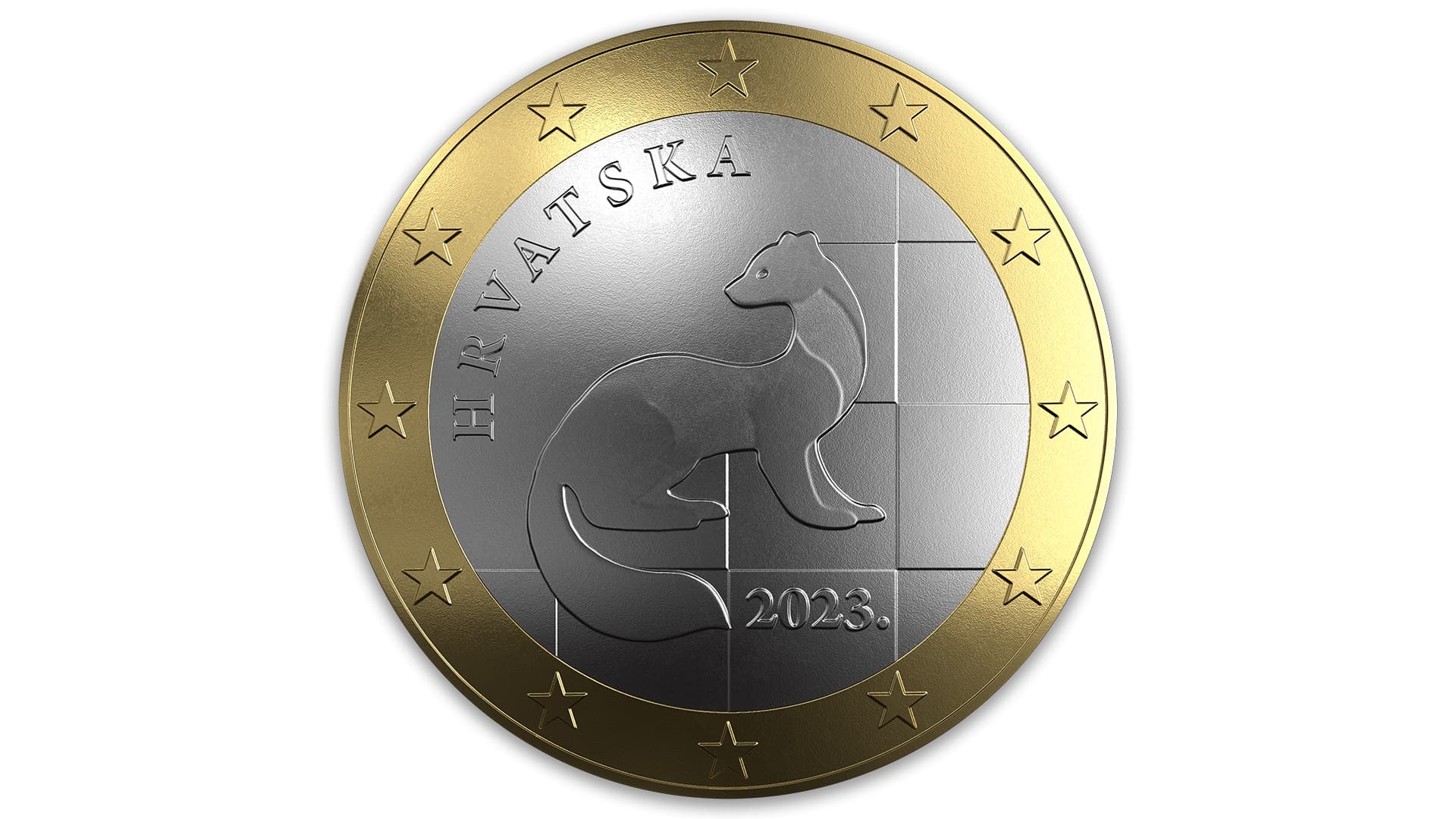
New Year's Day was a big day for Croatia.  It officially joined both the Eurozone and Schengen.

When the country joined the EU back in 2013, it had to commit to eventually replacing its currency, the kuna, with the Euro.  But then again, Czechland joined the EU in 2004 and still hasn't switched.

Croatia is now the 20th member of the Eurozone and the first country to join since Lithuania back in 2015.

Here are a couple of short YouTube videos out there about Croatia adopting the Euro.

©EuroNews
©The EU Made Simple

Croatia also joined Schengen becoming a member of the world's largest visa free zone.  The thing about joining Schengen, or the EU, or NATO, is that every single member has to agree.  Heck, it's hard enough trying to get four friends to agree on a particular restaurant.  Much less trying to get 26 different countries to agree on something.  Yet, back in December, every member country agreed to let Croatia join.

However, the Netherlands blocked Bulgaria, while Austria blocked both Bulgaria and Romania.

©France24

With Croatia in the Schengen club, there are now 27 members.  So whenever it comes time for Bulgaria and Romania to try again, they will also need Croatia to agree as well.

Tuesday, November 22, 2022

More New Quid

Due to Covid-19, the last time I was in the UK was in 2019 for a weekend in Glasgow.  I'd come across the new fiver and the tenner but I haven't come across the new polymer £20 or £50 polymer banknotes.

The new £20 went in to circulation on 20 February 2020.
 

©Bank of England

The new £50 went in to circulation on 23 June 2021.

The back of the £50 banknote features Alan Turing, the "father of modern computing" whose code breaking is believed to have shortened the war in Europe by at least two years.  In 1952 he was prosecuted for being gay and in 2021 he's featured on the back of the new £50.


Like in Czechland, the British are also retiring their old banknotes.  Here's a short video about it that I found on YouTube.

©Bloomberg Quicktake

Monday, November 7, 2022

The Channel Islands

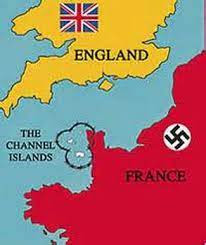
The Channel Islands consist of the Bailiwick of Guernsey and the Bailiwick of Jersey.  They are two of the three Crown Dependencies and they are located in the English Channel, off the coast of France

Each of the two bailiwicks have their own money, legal and healthcare systems, as well as, their own individual immigration policies.  Since 1290, they have been Crown Dependencies which means that they are not part of the United Kingdom, but the UK is responsible to represent them internationally and to provide for their defence.  Together the two bailiwicks have a population of almost 172.000 people.

The Bailiwick of Jersey consists of the island of Jersey plus the uninhabited islets Écréhous and Minquiers, with Jersey being a single jurisdiction.  Jersey the is largest and southernmost island with 118 km² (46 square miles).  It is 23 km (14 miles) from the coast of Normandy and 160 km (100 miles) south of England.  There are almost 108.000 people living in Jersey.  About a third of the population lives in the capital Saint Helier.

People have been living on Jersey since at least 12.000 BC.  The island has Bronze and Iron Age settlements and the islands have controlled by the Romans, Vikings, and Normans.

The official languages are English, French, and Jèrriais which is a Norman French dialect.

The Bailiwick of Guernsey consists of the islands of Alderney, Brecqhou, Guernsey, Herm, Jethou, Lihou, and Sark.  Guernsey is the second-largest and westernmost island with 78 km² (30 square miles).  It is roughly 48 km (30 miles) off the coast of Normandy.  Guernsey is home to about 64.000 people with roughly 20.000 living in the capital St. Peter Port.

There are actually three different jurisdictions.  Guernsey, Alderney and Sark, each have their own parliaments but they do work closely together.

History on Guernsey goes back to at least 6000 BC.  There's evidence that Neolithic farmers lived here, plus the Romans, Vikings, and Normans.

Flag of Guernsey.svgGuernsey has jurisdiction over the islands of Herm, Jethou, Limo, and a few other small uninhabited islands.

Flag of Alderney.svgAlderney is a small island that is only 7,7 km² (3 square miles) and home to over 2000 people.  It is the northernmost Channel Island and the closest to France which is only 13 km (8 miles) west of La Hague.  Saint Anne is the capital.  English is the only official language.  Auregnais was a Norman French language spoken here but it is now extinct.

Flag of Sark.svgSark is an even smaller island that is just 5,4 km² (2,1 square miles) and home to about 500 people.  It is about 32 km (20 miles) from France.  Sark also has jurisdiction over the island Breqhou which is almost uninhabited, plus some other smaller uninhabited islands.  There's no official capital city but the de facto capital is La Seigneurie.  English is the only official language but a few people still speak Sercquiais which is another Norman French dialect.

Sark became a democracy in 2008 and until then it was Europe's last feudal political entity.

The official currency in the Channel Islands is the pound sterling.  However, both Jersey and Guernsey issue their own pounds which are pegged one-to-one to the UK pound.  British £ are valid in the Channel Islands but the Jersey and Guernsey pounds aren't accepted in the UK.

Guernsey £ on top and Jersey £ below

The Channel Islands were occupied by Nazi Germany during WWII.  The only part of the British Islands to be occupied by Germany.

Here's a short video I found on YouTube that talks about how the Channel Islands came to be.

©History HQ

And here's another short video specifically about the German occupation during the war.

©Smithsonian Channel

There was a 2017 film, takes place in Jersey during the occupation that was based on a true story.  Here's the movie trailer for Another Mother's Son

©Vertigo Releasing

On Netflix I saw the 2018 film, The Guernsey Literary and Potato Peel Pie Society that also takes place during the occupation. 

©Netflix

Update 2025:  Here's a short YouTube video about why France doesn't have the Channel Islands.

©History Matters

Wednesday, October 5, 2022

Ema Destinová

Ema Destinová  is considered to be one of the greatest soprano opera singers of all time.  She was born Emilie Pavlina Věnceslava Kittlová on 26 February 1878, in Prague when it was still part of the Austro-Hungarian Empire

She grew up in Milešov, about 50 km (31 miles) south of Prague.  At 14, she was sent to a German boarding school in Prague to learn German.  From the age of 13, her voice teacher had been Marie von Dreger Löwe-Destinn, and Ema eventually took her surname, Destinová, as an homage.

She had a short engagement at the Dresden Opera and in 1897 she was rejected by the Prague National Theatre.  However, in 1898 she debuted at the Berlin Court Opera where she won over the public.  She remained in Berlin until 1909 where she sang in 54 operas, including 12 premieres. 

In 1904, she debuted in London and appeared in several operas over the following two seasons.  In 1908, she debuted in New York at the Metropolitan.  In 1914, she returned to home after the start of WWI.  Due to her links with the Czech resistance, Austria-Hungary revoked her passport and she was under house arrest until the end of the war.  She returned to New York in 1919 but her voice had become rusty but she continued singing at the Met until 1921.

After returning to Czechoslovakia, which was now a new country, she married Joseph Halsbach, an officer in the Czechoslovak Air Force in 1923.  She retired in 1926 but her final concert performance was in London in 1928.  She passed away from a stroke in České Budějovice on 28 January 1930, a month before her 52nd birthday.

There's no doubt that she was talented.  She could play both the piano and the violin.  She was also fluent in Czech, German, Italian, French, and English which allowed her to sing in multiple languages.  She sang the first Carmen to be recorded.  

Here's a short video I found on YouTube so you can hear her voice.

©Trisolde

A film, Božská Ema, "The Divine Emma" was released in 1979.  Although it was submitted as an entry for the Best Foreign Language Film at the 54th Academy Awards it wasn't nominated.

Ema Destinová is featured on the 2000 Kč banknote.

Tuesday, October 4, 2022

Expired Banknotes

Czech currency banknotes have changed.  Not a lot but they are now slightly different.  The new notes look almost identical to the old notes except that the old banknotes have a thin silver security strip and it doesn't change colour under light.  The new banknotes have a thicker strip that changes from purple to green when tilted under light.

Good note on top; bad note below

This goes for the 100, 200, 500, 1000, 2000, and 5000 Kč banknotes.

The old banknotes were from 1995 to 1999 and at the end of June they became no longer valid.  I learned this the hard way when I went to pay for something in the shop and the cashier told me that the money wasn't any good.  Ugh!

The old banknotes can be exchanged at financial institutions and at offices of the Czech National Bank until 30 June 2024.  From 1 July 2024, you can only exchange the bills at offices of the Czech National Bank but I don't know how long they will allow old bills to be exchanged for new ones.

Update:  Apparently the 5000 Kč banknote is the exception.  For now, both versions of the banknote are still valid.  I've been here over 13 years and I have yet to see a 5000 Kč banknote.

Saturday, September 10, 2022

Inflation in Czechland

The average gross monthly wage here in Czechland is 40.086 Kč ($1,860) which in the USA would be $22,320 per year.  By comparison the average monthly salary in the USA is $6,228 (134.248 Kč).

The 40.086 Kč is 4,4% higher that it was a year ago but once you factor in inflation, Czech wages have decreased in real terms by 9,8%.  Basically, people in Czechland are able to buy one-tenth less with the same wages that we earned a year ago.

Saturday, September 3, 2022

Protectorate of Bohemia and Moravia

The Protectorate of Bohemia and Moravia, Protektorát Čechy a Morava, was established on 16 March 1939 and lasted until the surrender of Nazi Germany on 8 May 1945.

From 1933, Czechoslovakia was Central Europe's only functioning democracy.  The First Republic ended following the 1938 Munich Agreement, where the UK and France sold out the country in hopes of preserving peace in Europe, which enabled Nazi Germany to occupy the Sudetenland.

What was left of Czechoslovakia become the Second Czechoslovak Republic.  This lasted from 30 September 1938 to 15 March 1939.  On 14 March 1939, Slovakia broke off as an "independent" Nazi puppet state.  What was left became the Protectorate of Bohemia and Moravia.

There were about 7,38 million people and 3,3% of them were ethnic Germans who were given German citizenship.  

Emil Hácha


There was a dual system of government with Prague as the capital.  German law applied to ethnic Germans.  Everyone else was a Protectorate subject governed by a Czech puppet administration, led by Státní Prezident Emil Hácha, who had been the President of the Second Czechoslovak Republic since November 1938.

The Protectorate of Bohemia and Moravia within the Third Reich

The common languages were Germany and Czech.  The Czechoslovak crown was replaced by the Protectorate crown at a rate of 1 German Reichsmark to 10 crowns.  

The workforce was well-trained so people living in the protectorate were used as labour for the German war effort.  Czechs were drafted to work in coal mines, in the iron and steel industries, and to produce armaments.  It became a major production hub for manufacturing aircraft, tanks, and artillery.  This was good for the Nazis because the Protectorate was just beyond the reach of Allied bombers. 

Perhaps because of the need to keep the population nourished enough to carry out the vital arms production work in the factories, but the Nazis had a plan to Germanise the area.  It was believed that about 50% of the population was capable of being Aryanisation.  The other 50% were too Slavic, too intellectual, or too Jewish.  


While there was a Czech President, the ultimate authority was the Reich Protector who was the senior Nazi administrator who represented the interests of the German state. 

On 29 September 1941, Reinhard Heydrich took over as acting Reichsprotektor.  In 1942, the Czechoslovak government-in-exile, led by Edvard Beneš, from the UK, initiated Operation Anthropoid - the assassination of Reinhard Heydrich.  One Czech, Jan Kubiš, and one Slovak, Jozef Gabčík, went to Prague to carry out the assassination.  On 27 May 1942, Heydrich was wounded in the attack and he later died of his wounds on 4 June 1942.  Operation Anthropoid was the only verified government-sponsored assassination of a senior Nazi leader during WWII.

Here's the movie trailer for the 2016 film Anthropoid.

Following his death, Hitler was so enraged that he ordered his troops to "wade through blood" to find the killers.  What proceeded was martial law, mass arrests, and the exceptions and obliterations of the the villages of Lidice and Ležáky.

Here's an eight-minute video I found on YouTube about the execution of Reinhard Heydrich - "the Butcher of Prague."

©World History

Next to the Reich Protector, was the State Minister who was in charge of most of the internal security.  From 1939 to 1945, it was Karl Hermann Frank who ran the Gestapo, security service and the police for the Protectorate.  He was involved in the massacres at Lidice and Ležáky and after the war he was executed.

©World History

It's estimated that of the 92,199 Jews living in the Protectorate in 1939, 85% were murdered.

Here's a short, interesting YouTube video on how Czechoslovakia went from an independent, functioning democracy to being carved up during WW2.  

©History Matters

Most Czechs sympathise with Ukraine because they see Hitler's annexation of the Sudetenland as the same as Russia's annexation of Crimea.  

Я за Україну. Я за Україною. Слава Україні  Stojím za Ukrajinou!  I stand with Ukraine. 🇺🇦

Tuesday, October 12, 2021

Czech Economic Update

Here's a few updates on what's going on lately with the Czech economy.

  • In August, inflation rose 4,1% compared to last year.  This was the biggest jump since November 2008.  The record inflation level was driven by higher prices for goods, services and housing.
  • In 2022 the average pension will increase by 800 Kč (~$33) to more than 16.000 Kč ($652)
  • Over the past 10 years, the minimum hourly wage has risen 54% and is now 139 Kč ($6.30).  
  • Over the past 10 years, the cost of living has rose by 20,2%.

Saturday, December 12, 2020

No Euro Yet

When I was deciding to make the move to Czechland many years ago, it looked like the country would change its currency from the Koruna to the Euro around 2015.  This was a selling point for me because I thought it would be a once in a lifetime experience to go through a currency switch.  Well I've been here 11,5 years and there's no outlook in sight for ever actually making the move.

When Czech Republic joined the EU in 2004 it became legally obligated to adopt the Euro once it fulfilled the necessary requirements for joining the Eurozone.  There's a lot to be gained by adopting the Euro.  Three of the four countries bordering Czechland all use the Euro.  More than 57% of the country's foreign trade is with countries using the Euro, almost one-third just with Germany.  If Czechia was on the Euro then it would be easier for businesses to conduct trade because no one would have to factor in foreign exchange rates.  

Czechs are reluctant to give up the Czech Crown because they know that while it would be better for the country overall, it means that things will become more expensive as prices get rounded up but salaries won't.  The country could join the Eurozone whenever it wanted to but every time it gets close to meeting all of the requirements it seems to purposefully flub things up so that can just keep kicking the can down the road.

The government has just said that due to economic conditions resulting from COVID-19 and this year's budget deficit that the country will not set a date yet to adopt the Euro because the prerequisites for joining will not be met.

There are 19 countries on the Euro.  When it was first introduced Denmark and the UK opted out.  Now that the UK has left the EU after Brexit, only Denmark doesn't have to make the switch.  Besides Czechland, Bulgaria, Croatia, Hungary, Poland, Romania, and Sweden all still need to give up their national currencies for the Euro.

Here's a short video I found on YouTube about Slovakia, from 2008, right before it was to adopt the Euro. in 2009.  It could be about Czechia today.     

©DW News

Sunday, February 9, 2020

Bank Symbols

Czech banks have these things called symbols over here.  There are variabilní, konstantní, and specifický, variable, constant, and specific, symbols.  It must have been a Czechoslovakia thing because these symbols only exist here in Czechland and Slovakia.    

Example account number and bank code

First a bit about account numbers.  When you want to make a postal, online, or mobile payment the first things you will need to know is the account number and bank code of where the money needs to go.  Most account numbers are ten digits long.  Then every bank has a four-digit number to identify it.  

In Czechland no one thinks twice about giving out their account number.  In the USA, people would freak the heck out if you asked them for their account number.  People would assume that it would be used for identity theft and that they would loose all of their money.  Over here, the only thing you can do with an account number is deposit money in to the account.  You can't take money out of someone else's account.  It did take me a while to get comfortable with this but now it's no deal at all.

A variable symbol is an optional ten-digit number.  This is used when the payee needs to differentiate the incoming payment.  If I buy something online and opt to pay with a bank transfer, then the company will tell you to put the invoice number as the variable symbol.  That way they can identify the money I transferred to them from the all of the transfers other people made.  

When I pay my yearly waste fees, the city authorities have you use your birth number, with the slash, to identify exactly who the payment is from.  If a friend picks something up for me at the store and I transfer money, then there's no need for any variable symbol.

However, if the sender doesn't put in a variable symbol when they were given one then the receiver may not be able to correctly assign the payment.  This caused me a problem when I first moved here.  It was time to pay my Czech credit card bill.  I paid it online with the bank's website.  I put in the bank's account number and bank code, and paid the amount in full.  Later I received a telephone call from the bank reminding me to pay my bill.  I said that I already paid it, they said thanks and that was the end of it.  The next month the same thing happened again.  I finally figured out that because I had not put in the variable number the bank could not match up my payment to my account.  I had no clue what a "variable number was".  When I asked I was told that a "variable number is a variable number".  Just because the bank's customer service agent and I both spoke English it didn't mean that we were speaking the same language.  Lesson learned.  But since this only exists in Czechland and Slovakia, I surely couldn't have been the only expat to make this mistake before.  Why didn't someone explain what it was?    

So a variable symbol is optional but in reality, you need to use it frequently.  Of the three symbols, the variable symbol is the most often used.

My mobile payment screen


A constant symbol is an optional four digit number that is also used for bank payments.  It used to be mandatory but was made optional when Czechia joined the EU.  It seems to be used more when paying taxes.  If it's provided then I use it, if not then no worries.

The specific symbol is also used to uniquely identify the payer and it is a maximum of ten digits.  Again, if it's provided then I use it, if not then no worries.

In addition to the variable, constant, and specific numbers, I can also add an optional text message for the recipient and one for me when I make a mobile payment.  With all of these fields there should be no question about about who the money came from and for what.  And yes my Czech mobile banking is in English.  

Saturday, December 21, 2019

Czech Citizenship Exam: Currency and Banking System


Here are the 10 study questions for the Czech Citizenship exam from section 12: Currency and Banking System.

1.  Which institution issues banknotes and coins in the Czech Republic?

Czech National Bank


2.  On this banknote is a well-known Czech writer - the author of the book Babička.  What is this woman's name?

Božena Němcová


3.  What is the currency of the Czech Republic called?

The Czech Crown.

4.  Mr. Svoboda wants to exchange Czech crowns for euros.  How many crowns will he pay for 1 euro at the current exchange rate?

Approximately CZK 26.

5.  What is the highest value of a valid Czech banknote?

5.000 Czech crowns.


6.  What is the lowest value of a valid Czech banknote?

100 Czech crowns.

7.  Mrs. Svobodová is buying a new car for 650,000 crowns.  She wants to pay in cash, but the seller cannot legally accept such a large sum of money.  What is the maximum amount of cash the seller can accept?

CZK 270.000

8.  Mrs. Nováková does not have a bank account and pays the rent to the landlord's account every month.  Which method of payment will she use to pay the rent?

A postal order.

9.  Mr. Svoboda wants to exchange Czech crowns for euros.  In the exchange office there is this board.

How many crowns will Mr. Svoboda pay for 100 euros?

2 600 Kč

10.  Which of the following situations describes a loan?

Mrs. Svobodová took out a mortgage at the bank.