Showing posts with label Romania. Show all posts

Monday, October 2, 2023

Saxon Heritage in Transylvania Tour

On Sunday we did a Saxon Heritage in Transylvania tour.  The Transylvanian Saxons were German-speaking settlers who lived in Transylvania for about 800 years.  They were invited by Hungarian kings in the 12-13th centuries.  The Saxons were trades and crafts people who helped strengthen Christianity and defended the eastern border of the Kingdom of Hungary.

Siebel was our first stop.  It's a rural village, off about 400 people, in the foothills of the Transylvania Alps.  


The Holy Trinity Church is an Orthodox church built in 1765 and it's a registered historic landmark.  There's a small cemetery adjacent to the courtyard.

Next to the church is the Museum of Icons on Glass.  It opened in the 1960s and has one of the largest collections of glass painted icons in Romania.


Fântânele is a nearby small village of about 250 people.  It's small but it's a nice place for a walk.


The Saint Nicholas Church was built in 1771 and is a registered historic monument.  


The hill next to the church is a cemetery and there's a nice view of the local area from the top.


Sibiu is about 170 km (105 miles) from Cluj.  The city is home to about 134.000 people.  It used to be known as Hermanstadt and it's the capital of the historic region of Transylvania. 


The Lutheran Cathedral of Our Lady in Sibiu was built in the 14th -16th centuries.


The Roman Catholic Church of the Holy Trinity was built in the 18th century and is considered one of the most important Baroque churches in Transylvania.


The Thalia Hall opened in 1788 and it is home to the Sibiu State Philharmonic Orchestra. 


Carpenter's Tower is part of the city's historic fortifications.

Sibiu was a lovely city but unfortunately we only had a couple of hours to visit after lunch.  I'm definitely up for a weekend trip to Sibiu to properly explore.

Sunday, October 1, 2023

Salt Mine and Hiking Tour, Romania

On Saturday we took an all-day tour to see some of the sights near Cluj.  It was a full day, with just us, another couple, and our guide Tudor.

We started off at the Turda Salt Mine about 35 km (21 miles) from Cluj.


Table salt was continuously produced here from the Middle Ages until 1932.  It reopened in 1992 as a salt therapy centre.  It was renovated in 2008 and opened for tourists in 2010.

There's an underground layyrinth carved out of salt, numerous chambers with historic mining equipment, and an underground lake to explore.  


Less of a salt mine and more of an underground theme park.  There's a Ferris wheel, miniature golf, table tennis, bowling, and boats to keep people entertained. 


After the salt mine we headed to Cheile Turzii, the Turda Gorge about 30 minutes away.  


The Turda Gorge is a 3 kilometre limestone canyon that's home to 1000 plant and animal species.  There are caves here that were inhabited since Neolithic times.

We spend about two hours doing a 9 kilometre (5.5 mile) hike.  The views were lovely and it felt good to do some hiking.

After our hike we visited a small village called Rimetea which used to be an important mining town. 

Rimetea has been inhabited since Roman times and is now home to about 1000 people.  

Although a Romanian village, the population is about 85% ethnic Hungarian.  In Hungarian, the village is called Torockó.


The former local administrative budding was built in 1889.  In 1952 it became an ethnographical museum.


The Orthodox Monastery of the Holy Archangels Michael, Gabriel, and Raphael was built in 1933.


The interior was absolutely stunning.  Well worth a visit.

Saturday, September 30, 2023

Cluj-Napoca, Romania

Cluj-Napoca is located in northwest Romania.  It's about equidistant from BucharestBudapest, and Belgrade.  The city is home to about 287.000 people with over 410.000 in the greater metro area.  It's the country's second-largest city and the largest in Transylvania.  


While the city is officially Cluj-Napoca everyone just calls it "Cluj."  The city dates back to 1213, and is located on the site of a pre-Roman settlement named Napoca.  In 1974, the communist government hyphenated the name to emphasise its Roman history.

In 2021, it was named a UNESCO City of Film and joined the UNESCO Creative Cities Network.

St. Michael's Church was completed in 1487 and it is named after the city's patron saint, the Archangel Michael.  It is the second-largest church in Transylvania.


The opera housed was completed in 1906.  Since 1919 the building has been home to both the local Romanian National Theatre and the Romanian Opera.  In 1920, the first two concerts were conducted by the Czech conductor Oskar Nebdal.

The Dormition of the Theotokos Cathedral is the Orthodox cathedral.  It was was consecrated in 1933.


The State Hungarian Theatre is also home to the Hungarian Opera.  The building was completed in 1910, and renovated in 1961, and is listed as a national historic monument.

The Palace of Justice was completed in 1902.


The Franciscan Church was consecrated in 1290.  It is a mix of Romanesque and Gothic styles with a Baroque tower.


The Matthias Corvinus House was built in 1443 and it's one of the oldest buildings in the city.  Over the years it has been a jail, a hospital and a museum.  Since 1950, it has been a visual arts institute of the local Art and Design University.

The Transfiguration Cathedral was consecrated in 1803.  It is known as the Minorites' Church and in 1924, the Vatican donated it to the Romanian Greek-Catholic Church.


The Evangelical Church was consecrated in 1829.  It also serves the local German-speaking Lutheran community.

The Cathedral of the Martyrs and Confessors of the 20th Century is still under construction.  Work began in the early 1990s and there is no timeline on when it should be completed by.  It is financed by private donations and is expected to cost over €270M.


The House of the Army is functionalist building that serves as a cultural and social centre for both military personnel and the public.


The Central Park was founded in the 19th century.


The Jewish History Museum opened in 2020.


The Neolog Synagogue was completed in 1887.  It is also known as the Temple of the Deportees because Jews were sent from here to Auschwitz during WWII.


We also took a couple of local day trips to Sibiu, to a salt mine, as well as some hiking at the Turda Gorge.

Thursday, September 28, 2023

Next Stop Transylvania

We're headed to Cluj-Napoca this weekend, the largest city in Transylvania.  #Draculaland 🧛‍♂️ Here's a bit about the region.


Transylvania is located in Romania.  On the region's east and south are the Carpathian Mountains and the Apuseni Mountains on the west.

The area was conquered by the Roman Empire in the 2nd century and it became part of the province of Dacia.  After the Romans, between the 3rd to 9th centuries came the Goths, Huns, Gepids, Avars and Slavs.  During the 9th century, it was conquered by Hungarian tribes.

From 1000 - 1526, Transylvania was part of the Kingdom of Hungary.  During this time, the elites were the Hungarian nobility, Székelys, and Saxons (Germans) while the Romanian majority were largely excluded from political representation. 

In 1526, it became the Principality of Transylvania which was an autonomous state under the Ottoman Empire.  After the Ottomans were defeated in 1699, it became part of the Habsburg Monarchy.  
After WWI, the fall of the Austro-Hungarian Empire and the Treaty of Trianon, and the fall of the Austro-Hungarian Empire, it became part of Romania.  Romanians see it as a moment of national unity.  Hungarians consider it a national loss since it was part of Hungary for centuries.

There are a little over 1 million ethic Hungarians living in Romania today.  While some nationalist Hungarian politicians may talk about "Historical Hungary", and the need to protect Hungarians living abroad, Hungary does not officially lay claim to Transylvania.  

Romania and Hungary are both members of the EU and NATO, and both countries recognise each other's borders.

A fun historical twist:  Béla Lugosi, the start who made Dracula famous in the 1931 film, was an ethnic Hungarian born in what is no Romaia.

For Americans, the classic "Dracula accent" is actually English spoken with a Hungarian accent, not a Romanian one - a cultural legacy of Lugosi's performance.

Tuesday, January 3, 2023

Croatia Joins Eurozone & Schengen

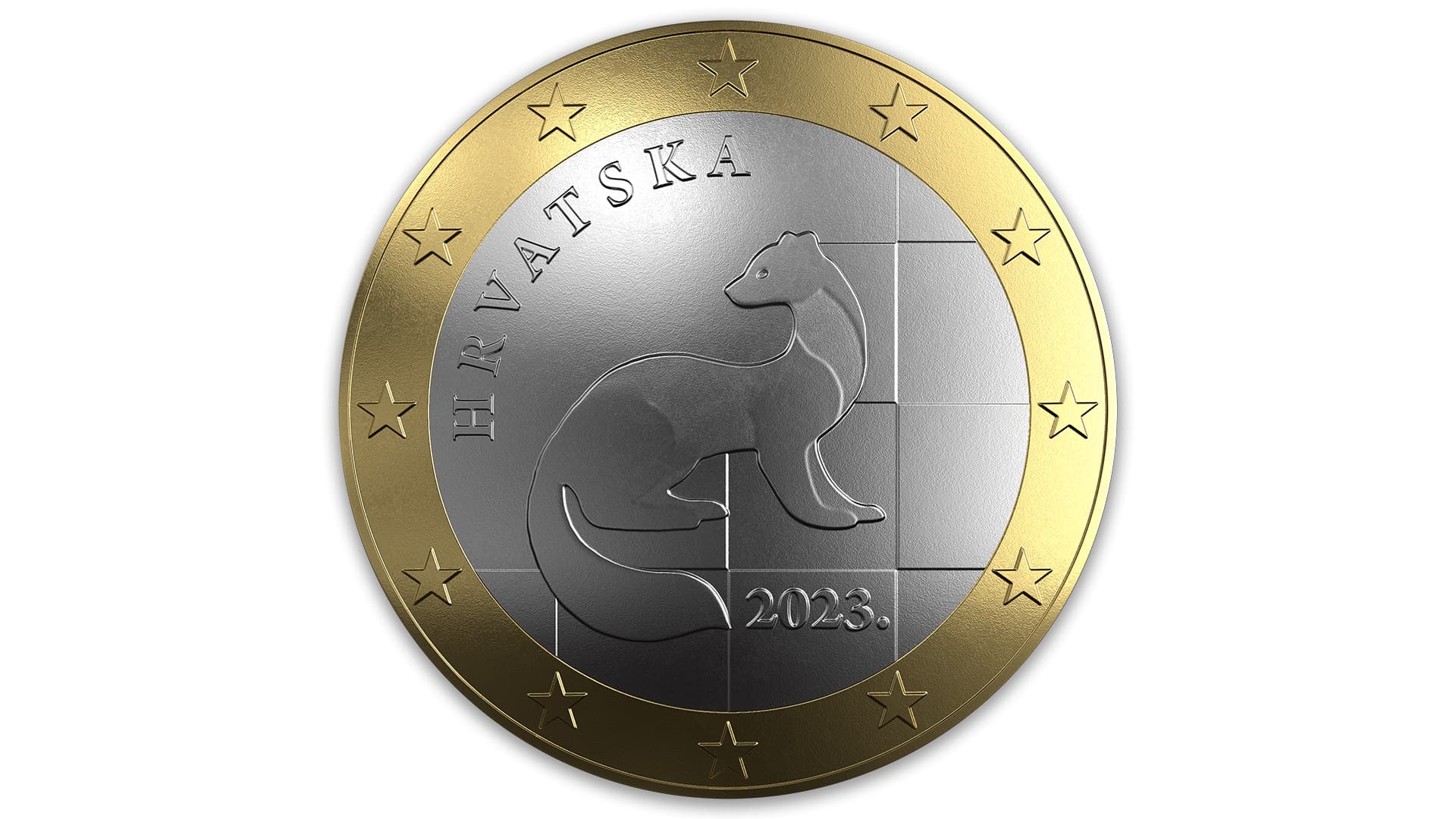
New Year's Day was a big day for Croatia.  It officially joined both the Eurozone and Schengen.

When the country joined the EU back in 2013, it had to commit to eventually replacing its currency, the kuna, with the Euro.  But then again, Czechland joined the EU in 2004 and still hasn't switched.

Croatia is now the 20th member of the Eurozone and the first country to join since Lithuania back in 2015.

Here are a couple of short YouTube videos out there about Croatia adopting the Euro.

©EuroNews
©The EU Made Simple

Croatia also joined Schengen becoming a member of the world's largest visa free zone.  The thing about joining Schengen, or the EU, or NATO, is that every single member has to agree.  Heck, it's hard enough trying to get four friends to agree on a particular restaurant.  Much less trying to get 26 different countries to agree on something.  Yet, back in December, every member country agreed to let Croatia join.

However, the Netherlands blocked Bulgaria, while Austria blocked both Bulgaria and Romania.

©France24

With Croatia in the Schengen club, there are now 27 members.  So whenever it comes time for Bulgaria and Romania to try again, they will also need Croatia to agree as well.