Showing posts with label Czech Films. Show all posts

Monday, October 23, 2023

Dědictví aneb Kurvahošigutntag

Dědictví aneb Kurvahošigutntag is a dark Czech comedy.  It was released in 1992 Czechoslovakia and it is a cult classic here in Czechland.  Probably in Slovakia too.   

In English, the title translates to The Inheritance of Fuckoffguysgoodday.  

Just based off the title I should have know I was going to be in trouble.

The movie is about Bohuš, a lazy village guy who loves to drink and doesn't do much else.  He then inherits a large estate and fortune.  The film satirises post-communist Czechoslovakia.  

The movie has some rough edges and there's a lot of vulgar humour.  I watched the film without, English or Czech, subtitles and I really struggled.  There's a lot of dated slang and cultural references that just went over my head.  I watched the whole thing but I doubt I'll be watching it again any time soon.

Here's the movie trailer that I found on YouTube.

©Dvdpremierycz

Monday, March 13, 2023

2023 Academy Awards

At this year's 95th Academy Awards, All Quiet on the Western Front had nine nominations for an Oscar.  The 2022 German film, Im Westen nights Neues, cost $20 million dollars to make but it wasn't made in Germany.

It was filmed in 2021 in Czechland.  All of the movie's extras, stunt people and technical crew were all Czech.  Their hard work paid off because it won the Oscar for Best International Feature Film.

Four Czechs received nominations but unfortunately none of them won.  However, what an honour to be nominated for an Oscar.

Linda Eisenhamerová - Best Makeup and Hairstyling

Viktor Prášil - Best Sound

Kamil Jafar and Viktor Müller - Best Visual Effects

From the top left corner to the right: Viktor Müller, Viktor Prášil, Linda Eisenhamerová, Kamil Jafar

Here's the film's trailer.

©Netflix

The first Czech (/Slovak) film ever to win an Oscar was Obchod na korze, (The Shop on Main Street).  The 1965 film won Best Foreign Film for Czechoslovakia.  I haven't seen the film yet but I think I need to be on the look out for it.  

Here's the film's trailer that I found out on YouTube.

©POVCineclub

Monday, January 16, 2023

Jan Palach Remembrance Day

Today is the first "significant day" of the year.  It's Jan Palach Remembrance Day and it commemorates his self-immolation in 1969 in protest of the Soviet-led invasion the year prior.  

It's a day worth paying attention to especially when you think of the similarities to what's going on today in Ukraine.  Alexander Dubček's liberal reforms caused the Soviet Union and most of the Warsaw Pact to invade Czechoslovakia

When Ukraine wanted to join the EU and NATO, Russia invaded.

I've heard the story of Jan Palach for years.  What I didn't know about was what happened afterwards.

The communist government didn't want him to be a martyr so it went after his family following his death.  A young lawyer, Dagmar Burešová, defended his family.  She spend most of her career representing dissident opposition leaders.  Following the Velvet Revolution, she became the country's first Minister of Justice.

In 2013, HBO Europe released a three-part miniseries called Hořící keř "Burning Bush" that tells the story  of Dagmar Burešová defending Palach's family.  The series was directed by Polish director Agnieszka Holland.

Following the success of the miniseries, Burning Bush was edited into a film.  It was selected as the Czech entry for the Best Foreign Language Film at the 86th Academy awards.  However, because it aired on Czech TV prior to the edited version appearing in the cinema, the movie was disqualified from the Oscars.

In 2013, it did win the Czech Lion for Best Film and for the Film Fans Award.

Here's the trailer, with English subtitles, that I found out on YouTube.

©HBO

Wednesday, October 5, 2022

Ema Destinová

Ema Destinová  is considered to be one of the greatest soprano opera singers of all time.  She was born Emilie Pavlina Věnceslava Kittlová on 26 February 1878, in Prague when it was still part of the Austro-Hungarian Empire

She grew up in Milešov, about 50 km (31 miles) south of Prague.  At 14, she was sent to a German boarding school in Prague to learn German.  From the age of 13, her voice teacher had been Marie von Dreger Löwe-Destinn, and Ema eventually took her surname, Destinová, as an homage.

She had a short engagement at the Dresden Opera and in 1897 she was rejected by the Prague National Theatre.  However, in 1898 she debuted at the Berlin Court Opera where she won over the public.  She remained in Berlin until 1909 where she sang in 54 operas, including 12 premieres. 

In 1904, she debuted in London and appeared in several operas over the following two seasons.  In 1908, she debuted in New York at the Metropolitan.  In 1914, she returned to home after the start of WWI.  Due to her links with the Czech resistance, Austria-Hungary revoked her passport and she was under house arrest until the end of the war.  She returned to New York in 1919 but her voice had become rusty but she continued singing at the Met until 1921.

After returning to Czechoslovakia, which was now a new country, she married Joseph Halsbach, an officer in the Czechoslovak Air Force in 1923.  She retired in 1926 but her final concert performance was in London in 1928.  She passed away from a stroke in České Budějovice on 28 January 1930, a month before her 52nd birthday.

There's no doubt that she was talented.  She could play both the piano and the violin.  She was also fluent in Czech, German, Italian, French, and English which allowed her to sing in multiple languages.  She sang the first Carmen to be recorded.  

Here's a short video I found on YouTube so you can hear her voice.

©Trisolde

A film, Božská Ema, "The Divine Emma" was released in 1979.  Although it was submitted as an entry for the Best Foreign Language Film at the 54th Academy Awards it wasn't nominated.

Ema Destinová is featured on the 2000 Kč banknote.

Tuesday, September 20, 2022

Emil Zátopek and Dana Zátopková

Yesterday, 19 September, was 100 years since Czech athletes Emil Zátopek and Dana Zátopková were born.  

No, they weren't twins.  They were husband and wife.  They just happened to have been born on the same day in 1922.


They were the track and field power couple of Czechoslovakia.

Dana Ingrová was a college handball player who led the Czechoslovak handball team to a national title.  Later she became the first Czech woman to throw a javelin over 40 metres which qualified her for the 1948 London Olympics.

Emil Zátopek worked at the Baťa shoe factory in Zlín.  He served in the army as a runner.  He gained fame for riding a bicycle from Prague to Berlin a won a 5000-metre race in an Allied Occupation meet.

The two met when Emil congratulated Dana on qualifying for the Olympics and they discovered that they had the same birthday.  At the 1948 Olympics, Emil won the gold medal in the 10.000 metre race and the silver medal in the 5.000 metre race while Dana placed 7th in the javelin throw.  They got married shortly after the Olympics.  


At the 1952 Helsinki Olympics, Dana set an Olympic record for the javelin and became the first Czech woman to win an Olympic gold medal.  

©Olympics

Emil won three gold medals for the 5.000 metres, 10.000 metres, and the marathon.  He decided at the last minute to compete in the marathon, the first marathon of his life, and he won.  To this date he is still the only person to win all three races at the same Olympics.  He gained the nickname of the "Czech Locomotive".

Emil retired after placing 6th at the 1956 Olympics in Melbourne.  Dana placed 4th in Melbourne but won the silver medal at the 1960 Olympics in Rome.

The Communist party promoted him as a national hero.  However, he supported the Prague Spring and vocally opposed the 1968 Soviet-led invasion.  As a consequence he was expelled from the Communist Party, stripped of his rank and kicked out of the army.  He was not allowed to hold any important position and was forced to perform manual labour including work in a mine.  After the Velvet Revolution he was removed from the "bad list" and fully welcomed back to Czechoslovak society.

In 1998, he was awarded the Medal of Merit, First Grade.

Between Dana and Emil they broke 35 world records.  Dana received the Olympic Order for distinguished contributions to the Olympic movement.  In 2012, Emil was one of the first 12 athletes to be inducted into the IAAF Hall of Hame and in 2013, the editors at Runner's World Magazine named him as the Greatest Runner of All Time.

In 1995 he appeared in an Adidas commercial.

Emil and Dana were married for 52 years.  He passed away in 2000 at the age of 78 while she passed away in 2020 at the age of 97.

In 2021, the movie Zátopek was released.  I still need to see it but it won 8 Czech Lions.  Here's the movie trailer that I found on YouTube.

©Falcon filmové novinky

Here's a 4-minute CNN piece they did in 2012 to commemorate the 60th anniversary of Emil's win in Helsinki.  It includes an interview with Dana.

©CNN

Yesterday's animated Google Doodle honoured the Zátopeks but it could only be seen in Czechland, Slovakia, Greece, Bulgaria, and Iceland.  Not sure why only these five countries, and not even Finland, but I'm sure that Google had a reason.

Happy 100th birthday to Emil Zátopek and Dana Zátopková!!

Sunday, June 26, 2022

Moritzburg, Germany

Good morning Dresden

Claudia and I arrived in Dresden on Thursday evening.  On Friday morning we explored the city a bit and found a café for breakfast before we headed over to Moritzburg.  It's about a 30 minute bus ride from the main station but it was free thanks to my €9 ticket.  

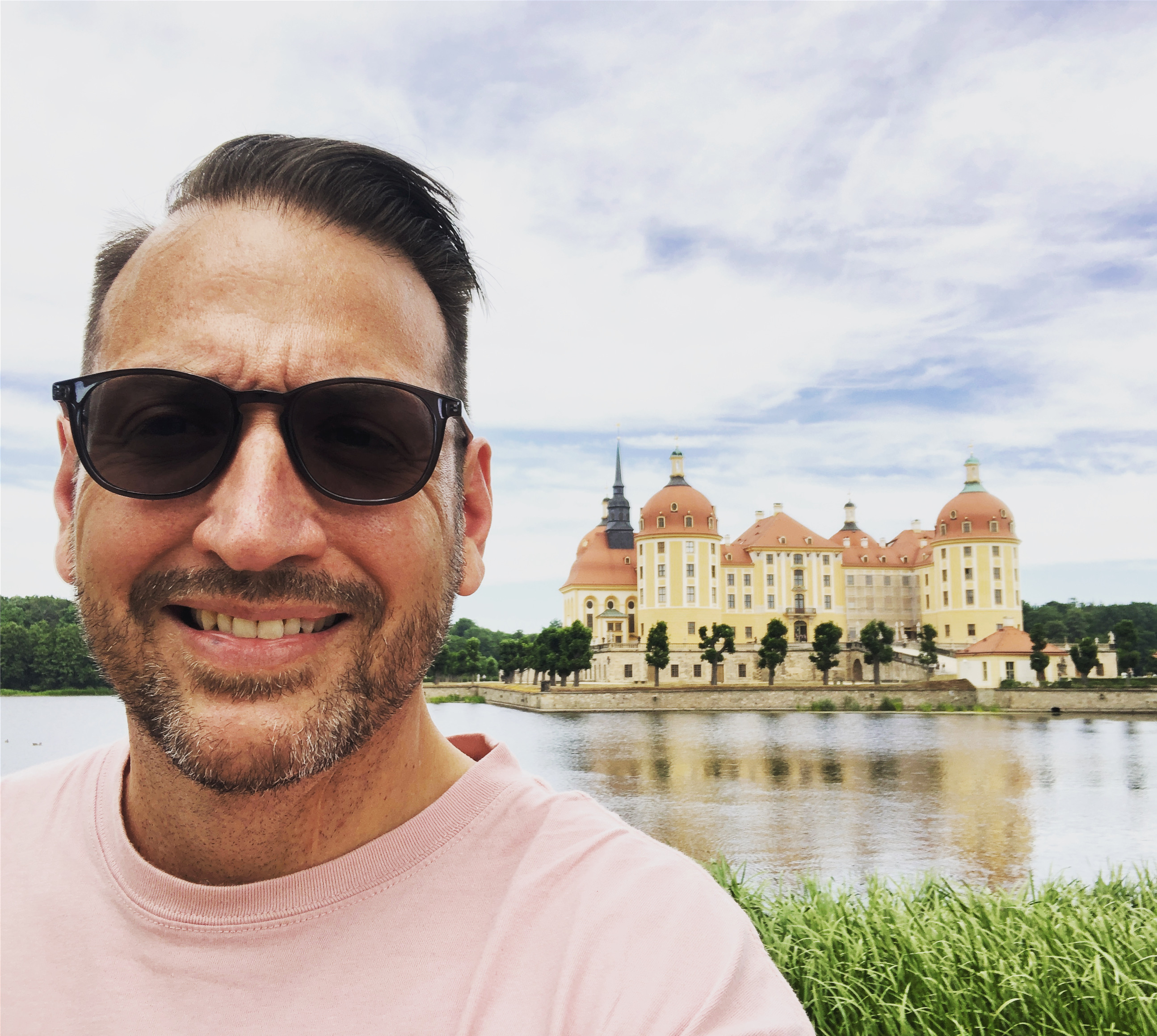
Moritzburg is home to Prince Charming's castle from the film Popelka.  A Friday afternoon and how many people can say that they were at Prince Charming's castle?  I love living in Euroland. 

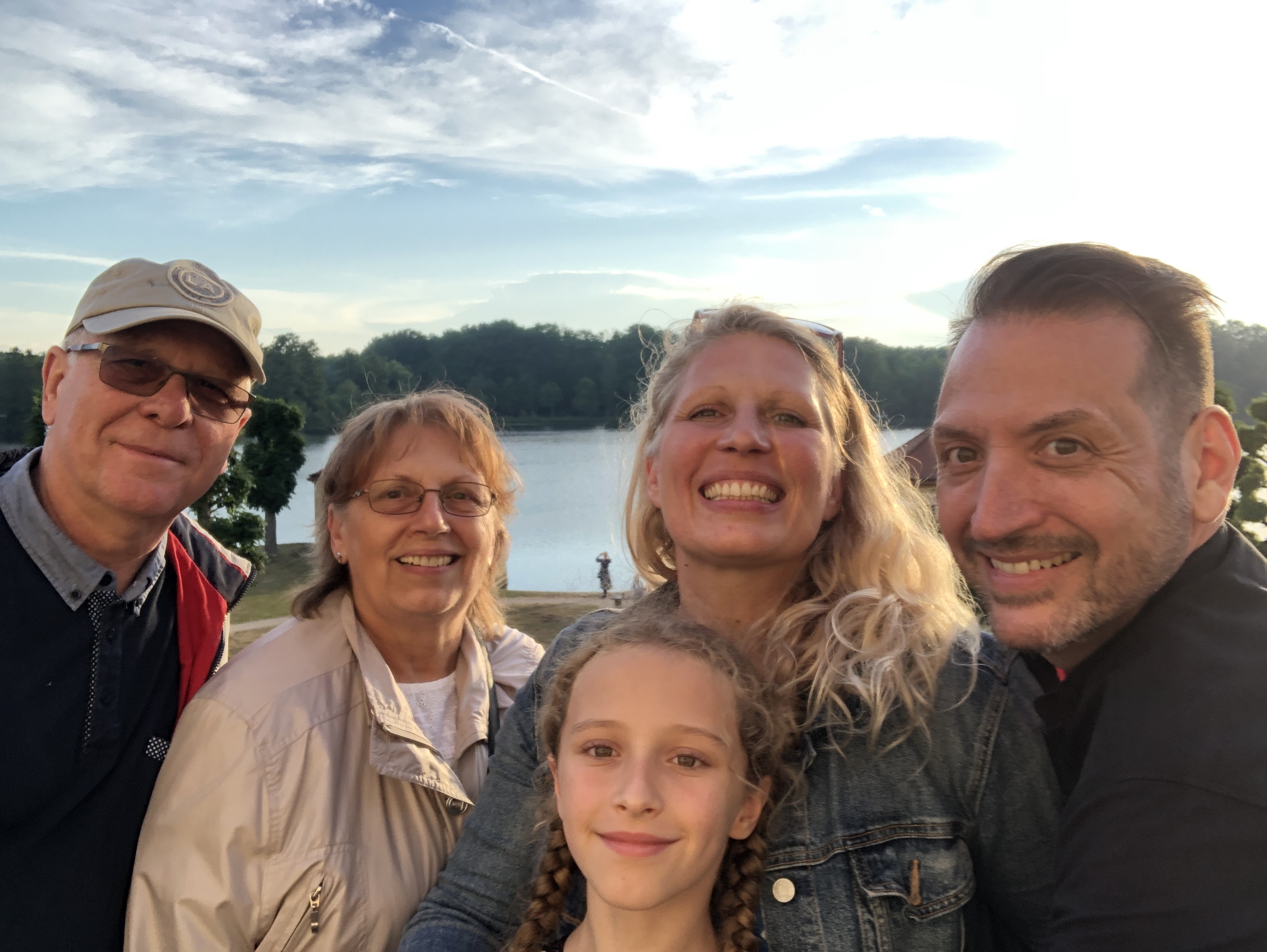
Claudia's parents brought Tünde down from Berlin after she got out of school.  The pension that Claudia booked us all at was the same place where her parents spent their honeymoon 45 years ago.  


At the castle, we had tickets to a performance of Popelka.  The start of the play was delayed due to a bit of rain but fortunately it cleared up enough for the show to go on.
After the show we went to dinner to celebrate Oma and Opa's anniversary.

On Sunday morning, they dropped me off at the train station for my trip back to Brno.  


This was my fourth trip to Germany in three weeks and my third weekend in a row.  I had to let Tünde know that I wasn't coming back next week.  Uncle Christopher wants to sleep in his own bed.

Saturday, May 28, 2022

Velorex

Velorex was a company that produced a three-wheeled car in Czechoslovakia from the 1950s to 1971.

After WWII, the Czechoslovak auto industry couldn't keep up with demand so there were quotas and long waiting periods.

It was like a reverse tricycle, so two wheels in the front and one in the back.  The frame was welded steel tubing with vinyl stretched over the cage and attached with turn button fasteners and the whole thing basically ran on a motorcycle engine.

It had a maximum speed of 30 km/h (18,5 MPH) and in Czechland you only needed an A license which is a motorcycle license.  Since 2000, you need a B1 license but I heard that you can drive them at 17 instead of 18.

A little over 15.000 units per produced.  I don't know how much they cost but about half of them were exported to Hungary, Poland, Bulgaria and East Germany.

Veolorex has kind of a cult status and there are a few clubs throughout the country.  I've never seen one.  At least not yet.

Here's a television commercial which was filmed in 1961 but it never aired.

The 1981 Czech comedic film Vrchní, Prchni! featured the main character driving his Velorex and show how awkward the vehicle was.  Here are a few scenes that I found out on YouTube.

Thursday, December 5, 2019

CSFD.cz

CSFD.cz is the Česko-Slovenská filmová database - the Czech-Slovak film database.  It's basically the IMDb for Czech and Slovak speakers. 

ČSFD is an Internet database of films and television shows.  There is a social network aspect to it where fans contribute ratings and reviews.  There are more than 845.000 films in the database.

While there is more content on IMDb, I'm starting to use ČSFD a bit more.  Or at least I start off with ČSFD and use IMDb if I couldn't find what I was originally looking for.  There are some films on ČSFD that are not on IMDb and vice verse.  

ČSFD obviously has way more info on Czech and Slovak films and series.  It gives me the chance to see the Czech language movie trailers.  If it a trailer isn't in Czech then it's usually in English with Czech, or Slovak, subtitles.  

While IMDb went online in 1993, ČSFD began in 2002.

Sometimes the hardest bit is simply finding the name of a movie in another language because titles aren't always a direct translation.  Titles can differ due to specific cultural references or on how something may get marketed.

Taken in Czech is called 96 Hodin which translates to "96 hours".


The movie Bad Santa over here in Czechland is Santa je úchyl! which translates to "Santa is a pervert!"

Coming from Atlanta, where Margaret Mitchell wrote Gone With the Wind, I was surprised to find out that here it is known as Jih proti Severu which is "The South Against the North."

Sometimes the titles make more sense over here.  For example, the 2014 film about Alan Turing was called The Imitation Game in the USA.  Over here it was Kód Enigmy, "The Enigma Code" which to me made way more sense as the movie title. 

The translations aren't just a Czech thing.  I remember this one time that Claudia was telling me something about a movie in German called Schokolade zum Frühstück, "Chocolate for Breakfast."  

I had no idea what the hell movie she was talking about.  That's because in English it is known as Bridget Jones's Diary.

At least in Czech it is Deník Bridget Jonesové.

Thursday, February 28, 2019

Jan Janský

Prof. MUDr. Jan Janský (3 April 1873 - 8 September 1921) discovered blood types.  He was born in Černošice and studied medicine in Prague at Charles University.  During WWI he served as a doctor on the front.  After the war he worked at a military hospital as a neuropsychiatrist.


As a researcher he tried to find a connection between mental diseases and blood diseases but he couldn't find any correlation between the two.  He published a study where he classified blood into four types (I, II, III. IV).  His work went more or less unnoticed but it went on to become the ABO Blood Group System.

In 1930, American Karl Landsteiner won the Nobel Prize for classifying blood into three groups.  But in 1921, the American Medical Commission acknowledged Janský's four-group classification over Landsteiner's.  I don't know why Landsteiner won the Nobel Prize but Janský's classification is still in use today except that now the groups are A, B, AB, and O.

Bronze, Silver, and Gold Janský Medals
Dr. Janský was a proponent of voluntary blood donation.  The Janský Medal is awarded to people for donating blood.  In Czechland, the Bronze medal is awarded for 10 donations, the Silver medal for 20 donations and the Gold medal for 40 donations.  Higher numbers of donations are awarded with eh Golden Cross of the Czech Red Cross (ČČK).

In Slovakia, the Slovak Red Cross awards plaques.  Women earn a Gold Plaque after 30 donations.  Nothing for men.  The Diamond Plaque is awarded to women after 60 donations and to men after 80 donations.

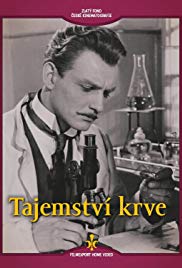
Tajemství krve, The Secret of Blood, is a 1953 Czechoslovak film about Janský's discovery.  Here's the movie trailer that I found out on YouTube.

©ČeskoslovenskoHD

Sunday, February 10, 2019

Skleněný pokoj

It's finally happened.  The Glass Room, the awesome book by Simon Mawer, has been made in to a movie and it comes out in a few weeks.

Skleněný pokoj has an international cast and the move will be released in English.

Yesterday at Vila Tugendhut, there was a small exhibition showing some of the movie costumes.  The whole exhibition could be done in only 30 minutes but it was still interesting.

Here's the movie trailer that I found out on YouTube.  I really can't wait to see the movie.


Update:  I finally got around to seeing the movie.  Natalie was in town so it was only fitting to go see the film with her since she had loaded me the book.  Well, the cinematography and costuming were great.  The movie itself...meh.  It was OK but I left disappointed overall.  There were some significant liberties taken between the book and the film.  The book is way better.  

Wednesday, January 16, 2019

Jan Palach

Today was the 50th anniversary of the day that Jan Palach set himself on fire.

Jan Palach was a history and political economy student in Prague.  He lit himself on fire to protest the 1968 Soviet-led invasion of Czechoslovakia which put down Alesander which put down Alexander Dubček's liberal reforms known as the Prague Spring.  He died a few days later in hospital.

His funeral turned into a huge political protest against the occupation.

In 1989, there were anticommunist demonstrations in Prague from 15 - 21 January.  As this was the 20th anniversary of Palach's death it was referred to as "Palach Week".  The police suppressed the protests by beating the demonstrators and using water cannons.  This is considered one of the key events leading up to the Velvet Revolution that brought down the communist government ten months later.

Every 16 January is Jan Palach Remembrance Day.

Last year a Czech film was released but I still haven't seen it.  Here's the movie trailer for Jan Palach that I found out on YouTube.


Here's a news clip from AFP with footage from tonight's 50th anniversary in Prague.

©AFP News Agency

Thursday, June 28, 2018

Remembrance/Protest

Yesterday at náměstí Svobody (Freedom Square) there was a remembrance for the victims of communism.  Two victims in particular were Milada Horáková and Jan Palach.


Milada Horáková was a sociologist, lawyer, and a politician.  She was arrested by the StB in 1949 and accused of leading a plot to overthrow the Communist regime.  Following a political show trial she was executed in 1950.

Jan Palach was a history and political economy student in Prague.  In 1968 the Soviet Union and other Warsaw Pact countries invaded Czechoslovakia to put down the liberal reforms known as the Prague Spring.  In protest of the occupation he lit himself on fire in 1969 and died of his burns a few days later.

The event was also a protest against the Communist party.  The current Czech Prime Minister is Andrej Babiš.  He's the 2nd richest man in the country and he was elected back in October 2017.  It's been reported that he was once an StB agent.  The protest against the Communists is because they will likely help form a minority cabinet.


Update:  In 2017 the film Milada was released.  Here's the English-language movie trailer.  

©Loaded Vision Entertainment

Saturday, March 10, 2018

Český lev

Tonight is the 25th annual Český lev, Czech Lion, film awards.  The award is given by the Czech Film and Television Academy (ČFTA) and it is the local equivalent of the Oscar or a BAFTA award.  The first awards were in 1993.

A new version of the award was created to celebrate the 25th anniversary.  Each glass statue took about three days to create.

The award categories are:  Best Film, Best Documentary Feature, Best Director, Best Actress in a Leading Role, Best Actor in a Leading Role, Best Actress in a Supporting Role, Best Actor in a Supporting Role, Best Screenplay, Best Cinematography, Best Film Editing, Best Sound, Best Music, Best Stage Design, Best Costume Design, and Best Makeup and Hairstyling.

There are two television awards presented for Best Television Film or Miniseries and Best Television Drama Series.

There are also non-statutory awards for Best Film Poster, Award of Film Fans, and the Magnesia Award for the Best Student Film.

This year the films with the most nominations are Bába z ledu (Ice Mother) with 15 nominations, Po strništi bos (Barefoot) with 13 nominations, and Milada with 10 nominations.

Very much like the Academy Awards, I haven't seen any of the films that are nominated for awards.