Showing posts with label CNN. Show all posts

Tuesday, September 20, 2022

Emil Zátopek and Dana Zátopková

Yesterday, 19 September, was 100 years since Czech athletes Emil Zátopek and Dana Zátopková were born.  

No, they weren't twins.  They were husband and wife.  They just happened to have been born on the same day in 1922.


They were the track and field power couple of Czechoslovakia.

Dana Ingrová was a college handball player who led the Czechoslovak handball team to a national title.  Later she became the first Czech woman to throw a javelin over 40 metres which qualified her for the 1948 London Olympics.

Emil Zátopek worked at the Baťa shoe factory in Zlín.  He served in the army as a runner.  He gained fame for riding a bicycle from Prague to Berlin a won a 5000-metre race in an Allied Occupation meet.

The two met when Emil congratulated Dana on qualifying for the Olympics and they discovered that they had the same birthday.  At the 1948 Olympics, Emil won the gold medal in the 10.000 metre race and the silver medal in the 5.000 metre race while Dana placed 7th in the javelin throw.  They got married shortly after the Olympics.  


At the 1952 Helsinki Olympics, Dana set an Olympic record for the javelin and became the first Czech woman to win an Olympic gold medal.  

©Olympics

Emil won three gold medals for the 5.000 metres, 10.000 metres, and the marathon.  He decided at the last minute to compete in the marathon, the first marathon of his life, and he won.  To this date he is still the only person to win all three races at the same Olympics.  He gained the nickname of the "Czech Locomotive".

Emil retired after placing 6th at the 1956 Olympics in Melbourne.  Dana placed 4th in Melbourne but won the silver medal at the 1960 Olympics in Rome.

The Communist party promoted him as a national hero.  However, he supported the Prague Spring and vocally opposed the 1968 Soviet-led invasion.  As a consequence he was expelled from the Communist Party, stripped of his rank and kicked out of the army.  He was not allowed to hold any important position and was forced to perform manual labour including work in a mine.  After the Velvet Revolution he was removed from the "bad list" and fully welcomed back to Czechoslovak society.

In 1998, he was awarded the Medal of Merit, First Grade.

Between Dana and Emil they broke 35 world records.  Dana received the Olympic Order for distinguished contributions to the Olympic movement.  In 2012, Emil was one of the first 12 athletes to be inducted into the IAAF Hall of Hame and in 2013, the editors at Runner's World Magazine named him as the Greatest Runner of All Time.

In 1995 he appeared in an Adidas commercial.

Emil and Dana were married for 52 years.  He passed away in 2000 at the age of 78 while she passed away in 2020 at the age of 97.

In 2021, the movie Zátopek was released.  I still need to see it but it won 8 Czech Lions.  Here's the movie trailer that I found on YouTube.

©Falcon filmové novinky

Here's a 4-minute CNN piece they did in 2012 to commemorate the 60th anniversary of Emil's win in Helsinki.  It includes an interview with Dana.

©CNN

Yesterday's animated Google Doodle honoured the Zátopeks but it could only be seen in Czechland, Slovakia, Greece, Bulgaria, and Iceland.  Not sure why only these five countries, and not even Finland, but I'm sure that Google had a reason.

Happy 100th birthday to Emil Zátopek and Dana Zátopková!!

Saturday, March 26, 2022

Madeline Albright, R.I.P.

On Wednesday, 23 March, Madeline Albright passed away.  As the first female U.S. Secretary of State, she was, at the time, the highest ranking woman in government in American history.

She did not suffer fools and was well respected internationally, especially in Czechland as she was born in Czechoslovakia and could speak Czech.

Following the end of the Cold War, she was a leading voice in expanding NATO to Central Europe.  In 2012 she received the Presidential Medal of Freedom and in 2018 she received the Czech Medal of Merit Award for Diplomacy.

Here are a few short clips I found on YouTube that talks about her legacy.

©CNN

©ABC

I didn't know the story behind her pins.  I found it to be pretty fascinating.

  
©CBS

Never one to slow down, even last month she was sharing her opinion on Putin's invasion of Ukraine.

Я за Україну. Я за Україною. Слава Україні  Stojím za Ukrajinou!  I stand with Ukraine. 🇺🇦

Tuesday, November 23, 2021

Nutri-Score

When I first moved here I made a comment at work that I was going to get so fat here with this being the land of beer and potatoes.  A friend sniped back with, "but I thought that all Americans were already fat."  Well not quite right but not wrong either.

In 2016, the World Health Organisation put the USA's obesity rate at 33,8%.  Czech Republic was 24,2%.  Czechs have been getting bigger.

In 2019, the five EU countries with the highest percentage of obesity were Croatia, Malta, Czechland, Hungary, and Slovakia.  France has the lowest obesity levels in the EU, followed by the Netherlands, Italy, Belgium, and Sweden.  Czechs were had the 3rd highest levels of obscenity in the EU.

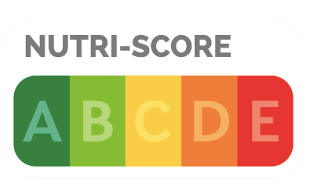
Here's where I think that Nutri-Score would be a good thing.  Nutri-Score is a "traffic light system" that ranks food products on a scale from A to E, where A is the best and E is the worst, and it is clearly visible of the front of the food's packaging.  

Food products get a lower rating if there is:

  • high energy density per 100 g or per 100 ml
  • high sugar content
  • high content of saturated fatty acids
  • high salt content.
There's a higher rating when:
  • contains fruits, vegetables, nuts and legumes
  • contains fiber
  • contains protein
  • contains rapeseed, walnut and olive oil
Nutri-Score was founded in France in 2013 and in 2017 the French Health Ministry officially recommended it.  Since then it has rolled out in Belgium, Spain, Germany, Switzerland, the Netherlands, and Luxembourg.  The system has been recommended by the European Commission and the World Health Organization.

So far it's not mandatory across the EU but I'm sure that it will be eventually.  Some companies such as Nestlé and Danone have announced that they will start using Nutri-Score in Portugal, Slovenia, and Austria even though it's not required in those countries.  

Not all countries are onboard with the system.  Poland, Czechland, Cyprus, Greece, Hungary, Latvia, and Romania all oppose it.  Italy believes that the system puts the traditional Mediterranean diet at a disadvantage.  

The Czech Ministry of Agriculture isn't in favour of the system but it will tolerate international labels with Nutri-Score.  The ministry is not in favour of a mandatory front-of-package label and believes that the Nutri-Score formula is too simplistic because it doesn't consider the size of a portion or how food is prepared. 

Nestlé will start using Nutri-Score in Czechland in 2023.  

Here's an interesting video I found out on YouTube where CNN talks about some of the differences between the US and Czech health care systems.  Not exactly Nutri-Score or Obesity related but still kind of fitting.  While the video is at least 12 years old already it's still pretty accurate.

©CNN

Update:  August 2022.  Here's a short TV commercial for Nestle that shows the Nutri-Score label.

©Nestlé Cereálie CZ

Saturday, July 11, 2020

East Germany

Old DDR postcards

While at the local flea market in Friedrichshagen I came across some old East German postcards.  Here's a little about East Germany.


Officially it was the Deutsche Demokratische Republik, the German Democratic Republic, or DDR for short.

Following WWII, the Soviet occupation zone in the east became eventually became a communist satellite state.  The DDR existed from 1949 until German reunification in 1990.

The DDR was bigger than Kentucky but a bit smaller than Tennessee.  It bordered the Baltic Sea, West Germany, Czechoslovakia, and Poland.  East Berlin was the country's capital and the largest city followed by Leipzig and Dresden.  At the end, East Germany was home to over 16 million people. 

The DDR started out rough.  After the war, the Stalin demanded huge war reparations be paid from the occupation zone which further crippled the economy before it could even try to rebuild.  Over ⅓ of the area's industry was confiscated and sent back to the Soviet Union.  About $10 billion worth of agriculture and industrial products were paid out.

The communist government was ruled by the Socialist Unity Party of Germany (SED).  The economy was centrally planned and everything was owned by the state.

The government heavily subsidised the price of housing, food, and other basic goods so things were affordable when you could get them.  There were often shortages of basic goods.  A Trabant cost a year's salary and you usually had to wait about 15 years.  The incredible thing was that East Germany had the strongest economy of the Iron Curtain countries.

Another challenge for the economy was the "brain drain" the country experienced as professionals and skilled workers fled to the west.  By 1961, about 20% of the population, some 3,5 million people, crossed over to West Germany.  This is why the government built the Berlin Wall, what they called the "Anti-Fascist Protection Wall" that split the city in two and preventing people from escaping. 

The Stasi was the secret police and they were ruthless.  Some 90.000 worked for the Stasi and roughly every one in seven people were informers.  After reunification people can see their Stasi file.  Claudia's dad never requested to see his file because he doesn't want to know which colleagues, friends or family members informed on him.  

  
©CNN

The DDR was a member of the Warsaw Pact.  There were 500 000 Soviet soldiers permanently stationed in the country.  Even after Germany reunified in 1990, the last Russian soldiers didn't leave until 1994 because there weren't enough facilities in Russia to house all of the returning troops.  So for the first part of the 90s, Germany had both NATO and Russian soldiers stationed there.

Sport was seen as a means of international legitimacy and validation of the communist system.  During the 70s and 80s the DDR was a powerhouse at European, world, and Olympic championships.  This was due in part to the state-sponsored doping programme that was later revealed.  Here's an interesting PBS programme that I found on YouTube that sheds light on what was going on.

©PBS

The Iron Curtain started to crack in 1989.  Hungary removed the electrified fence at the border with Austria which led to many East Germans going to Hungary in order to try to make their way on to West Germany.  Others went to the West German embassy in Prague in hopes of defecting to the west.

©JHEBox

The Berlin Wall fell on 9 November 1989.  On 3 October 1990, the DDR was gone and it was reunified with Germany.  Berlin was reunified too and became the new capital.

Reunification hasn't always gone smoothly and there are still some challenges.  Eastern Germany is still the poorer part of the country.  Germans in the western part of the country are still paying a solidarity tax to the east.  

There does exist some Ostalgie which is nostalgia for the eastern times.  

©Berlin Project

At least the DDR gave us Ampelmännchen.  One of my favourite movies is the 2003 file Goodbye Lenin! which is a comedy about the fall of the DDR.

Here's a Deutsche Welle story on a Berlin restaurant that serves typical DDR food.  

©DW News

I definitely want to give it a shot the next time I'm back.  Hopefully for Christmas but I'll just have to wait to see what the COVID-19 situation will be like then.

Update 2022:  Here's a 14-minute video that talks about how German reunification worked.

©DW News

Update 2022:  Here's a short video I found about who decided how Germany would be divided up after WWII.

©History Matters

Saturday, November 17, 2018

Great Barrier Reef Cruise, Australia

On Thursday, I checked off another bucket list item - visit the Great Barrier Reef.

The Great Barrier Reef, located in the Coral Sea, is off the east coast of Australia.  It's made up of more than 2900 individual reefs, and 900 islands, stretching over 2300 km (1400 miles) covering about 344,400 square kilometres (133,000 square miles).

The Great Barrier Reef is home to more than 1500 species of fish.  CNN lists it as one of the seven natural wonders of the world and in 1981 it was listed as a UNESCO World Heritage site.


Our ship went out to Hastings Reef which is about 30 nautical miles (55,5 km) from Cairns.  Hastings Reef is about a 10 square km (about 4 square mile) area that's perfect for scuba diving and snorkelling.


Climate change and coral bleaching are a big problem.  More than half of the coral has been lost since 1985.

Wednesday, May 16, 2018

GDPR

GDPR is on its way.  The General Data Protection Regulation, GDPR, was passed by in April 2016 and it gets implemented on 25 May 2018.  There's a lot to it and but the bottom line is that Europe will now have the world's strongest data protection rules.

The GDPR directive gives control to European citizens, and residents, of their personal data.  The personal data can be anything that helps identify you including a person's name, a photo, an e-mail address, medical information, bank details, social media posts, and even computer data to include location data, an IP address, cookie data, and RFID tags.

Companies need to obtain informed consent from a person before collecting, storing, or using any personal data.  Any data collected must be minimised, accurate, portable, and secure.  An individual has the right to be forgotten which means that a company must delete personal data upon request and provide proof of deletion without any undue delay.  And in the case of a data breach, consumers must be notified within 72 hours.

This pertains to all EU and EEA countries.  It also pertains to companies outside of Europe if the personal data leaves Europe.  So for example, although I am an American citizen, I am a European resident so my personal data falls under GDPR protection when I sign up for a random mailing list in the USA.

And it's not like business can just ignore the law.  Fines for not complying with GDPR can reach up to €20 million or 4% of a company's global annual turnover.  For every time they violate the directive.  Ouch!!

Here are a couple of short videos I found out on YouTube that talk about GDPR.

©CNN Money

©Wall Street Journal

Update:  If I don't use a VPN then I often get notifications on U.S. sites that their material isn't available to me in Europe.

Monday, October 16, 2017

DMZ Tour, South Korea

On Thursday we took a guided tour to the DMZ (demilitarised zone).  The DMZ divides the Korean Peninsula almost in half and separates North Korea and South Korea.    The DMZ was established in 1953 by the Armistice Agreement at the end of the Korean War.

The DMZ is 250 km (160 miles) long and 4 km (2,5 miles) wide.  While the zone itself is demilitarised, both sides of the divide are heavily militarised.  It's safe to say that this is the world's most dangerous border.

Our first stop was at Imjingak Park at Paju, about an hour's drive north of Seoul.  Imjimgak is 7 km (4,25 miles) south of the DMZ and this is the closest that a person can get to the DMZ without clearance.


The Bridge of Freedom used to be a railroad bridge across the Imjin river which was used for repatriating POWs and soldiers from North Korea.

The Peace Bell weighs 21 tons.  It was dedicated on 1 January 2000 in hopes of welcoming the 21st century as when reunification will finally take place.


Mangbaeddan was declared a UNESCO Memory of the World in 1983.  Every year, especially on New Year's and Chuseok (Korean Thanksgiving) people come here to pay respect for family members separated during the Korean War.

Our next stop was to the Dorasan Korail Station that used to connect Seoul and Pyongyang.  It opened in 2002 and is 2 km (1,25 miles) from the border.  The station has been renovated but it is strictly for show as no train as run to North Korea since 2008.

Then it was on to the the Dora Observatory for our glimpse in to North Korea.  Each Korea maintains a peace village on their respective side of the border.  Gaeseong is in South Korea and in the 1980s the government built a 98,4 metre (323 feet) tall flagpole.

The North Koreans responded by putting up a 160 metre (525 feet) tall flagpole, the fourth tallest in the world, in Kijeongdong which is the village just north of the border.


The bright blue buildings in Kijeongdong were built in the 1950s.  It seems that the village is just for propaganda.


Here are some photos of soldiers out on patrol.  

Since 1974 there have been four North Korean infiltration tunnels discovered by South Korea.  The third tunnel was found in 1978 following a statement from a North Korean defector.

The tunnel is about 1600 metres (5,200 feet) long and 73 metres (240 feet) below ground.  The tunnel slopes down and would have allowed up to 30,000 soldiers and light weaponry per hour in the event of a sneak attack on the south.  There's no photography allowed in the tunnel.

After lunch, we headed to the War Memorial of Korea.  It's a museum that used to be the South Korean Infantry Headquarters.  It's rather large with over 10,000 items on display.


There are a number of indoor and outdoor exhibition halls.  Outside are several monuments and military vehicles on display.

The original plan was to visit the Joint Security Area (JSA) at Panmunjom which is controlled by the United Nations.  Due to the recent tensions between North Korea and the USA, there are military drills so all visits were cancelled for the week.  Too bad because that's the visit that I was most excited about.  Oh well, now I have another excuse to come back to South Korea.  Here's a short CNN video I found on YouTube that talks about the JSA.

©CNN