






 Czech Koruna Exchange Rate



1 week ago
Showing posts with label Observatory. Show all posts
Showing posts with label Observatory. Show all posts
Tuesday, August 8, 2023
Monday, July 31, 2023
Tatranská Lomnica, Slovakia

 Tatranská Lomnica is a small tourist town in northern Slovakia. The town was founded in 1892 and is home to less than 1000 people. It's about 345 km (215 miles) from Bratislava.

 People come to Tatranská Lomnica to go hiking in the summer and skiing in the winter.


TANAP Museum, the Tatra National Park Museum, opened in 1957 in Poprad before moving to Tatranská Lomnica in 1959. The museum moved to its current building in 1969. Most of the exhibitions are about the local animals, flora and fauna found in the Tatras.

We also checked out nearby Štrbské Pleso.
Wednesday, July 19, 2023
Griffith Observatory, California


When it opened in 1935, it was only the third planetarium in the country.
From 2002 to 2006, it underwent a major $93 million renovation.
So many movies have been filmed here. Here's a short video I found on YouTube.
©Fandor

 |
| Us and Manuel |
There were some German tourists taking selfies next to us and I took a photo for them. They were quite surprised when I spoke to them in German.

Seeing as we went to the Griffith Observatory, we decided to watch La La Land on Netflix with the entire family.
Sunday, August 14, 2022
Munchkin Visit
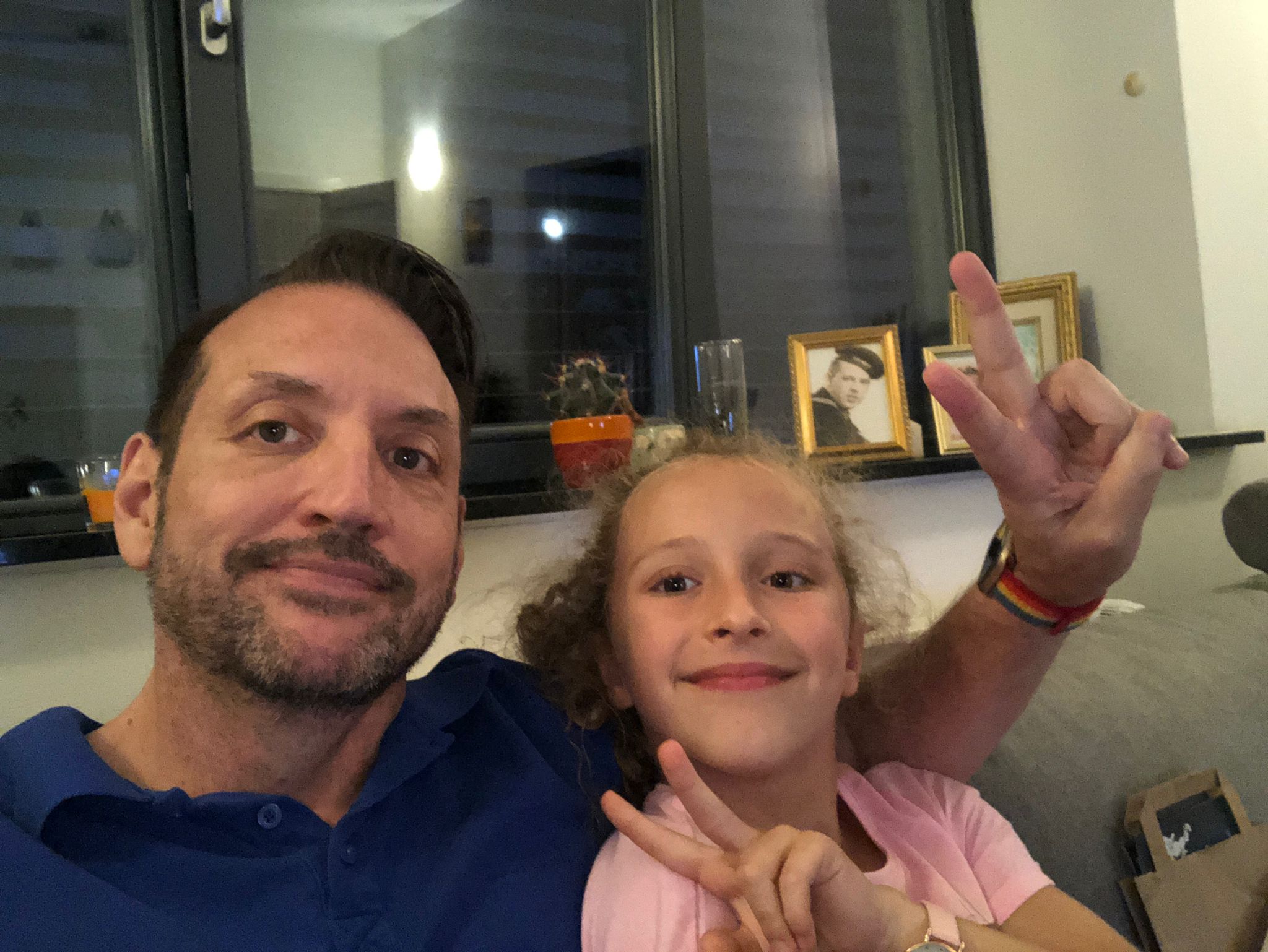 Claudia and Tünde came for a visit so I got to spend some godfather time with the munchkin.
We had a few movie nights including a Harry Potter & sushi night.

 Another night we headed out to Ikea for a bit of shopping and some Swedish meatballs.
  It was fun getting to spend some time with the chicas. On Thursday night, we headed over to the park at the observatory to see the planets. The Moon is back on display with the Earth, Mars, and this time with Venus.
 It's still new but I recently started seeing someone. We're just starting to introduce each other to our friends. Karel joined us for an hour at the park and Tünde was very excited that she, and Claudia, got to be the first people who've met him. They seemed to approve so that's a plus. Let's see how things go but on Friday we headed to Prague for the weekend and had a good time.
Thursday, August 13, 2020
Terralona
 This week the Brno Observatory and Planetarium has a programme called "Z Měsíce na Zemi" which means "From the Moon to the Earth." At the park at Kraví hora is a 10-metre (33 feet) diameter of the Earth along with Europe's largest model of the moon.


Update: - In 2023, the planets are back as part of the Planet Festival.
Thursday, October 10, 2019
Samarkand, Uzbekistan

 It is believed that the city was founded between the 8th and 7th centuries with evidence of human activity from the late Palaeolithic Era. With about 520.000 residents, and 950.000 in the greater metro area, Samarkand is one of the biggest cities in the country.
 Samarkand was conquered by Alexander the Great in 329 BC. It was then ruled by numerous Iranian and Turkic rulers until Genghis Khan and the Mongols conquered it in 1220. In 1868 the city was annexed by the Russian Empire. From 1925 to 1930 it was the capital of the Uzbek Soviet Socialist Republic before the capital was moved to Tashkent.
 Due to its position on the Silk Route the city has been a crossroads of cultures and in 2001 Samarkand was listed as a World Heritage Site.
 Registan was the heart of the old city. The architecture of the public square and its three madrasahs is simply stunning. Especially at night.

 The Amir Temur Mausoleum was completed in 1404. Inscribed in the tomb is a warning that reads "Whosoever disturbs my tomb will unleash an invader more terrible than I." The tomb was opened in 1941, two days before Nazi Germany invaded the Soviet Union. The story goes that Stalin believed the curse and ordered that Amir Temur be reburied.
 The Ulugh Beg Observatory was built in the 1420s. It was destroyed in 1449 and rediscovered in 1908. It's said to have been one of the finest observatories in the Islamic world. It became a museum in 1970.
 Islom Karimov was President of the Uzbek SSR in 1990 until he declared independence in 1991. He then became the first President and remained so until his death in 2016. Another former Soviet leader that remained in power for more than 25 years.

 Legend has it that a cousin of the Prophet Muhammad is buried here. The complex is enormous and you could spend half a day here checking everything out and taking photos.
 The Bibi-Khanym Mosque was completed in 1404. During the 15th century it was one of the world's largest mosques.
 Across from the mosque is the Bibi-Khanym mausoleum. The 14th century mausoleum is home to five tombs.
 The Gumbaz Synagogue was built in 1891. This is a working temple for the city's approximate 50 Jews.

 During the day I came across Orthodox, Muslim, and Jewish cemeteries.


 He rests in an 18 metre (59 foot) sarcophagus. Legend has it that it is because his remains continue to grow. The more likely version is that this made it harder for grave robbers to disturb his remains.
Subscribe to:
Posts (Atom)


 Posts
Posts


