Showing posts with label Landmark. Show all posts

Wednesday, July 19, 2023

Griffith Observatory, California

Yesterday we got in a bit of sightseeing.  My brother-in-law, Manuel, drove us out to LA so that Kája could see a few of the city's iconic sights.

The first stop was a visit to the Griffith Observatory.  

When it opened in 1935, it was only the third planetarium in the country.


The land was donated to the city in 1896 along with funds to be an observatory and planetarium that would be free to the public.  Since the day it opened, the observatory has been free.

From 2002 to 2006, it underwent a major $93 million renovation.  

So many movies have been filmed here.  Here's a short video I found on YouTube.


©Fandor

Of course being so close the the Griffith Observatory, we had to go check out the Hollywood Sign.  First built in 1923 has part of a temporary real estate advertisement, it is not a California landmark.  The sign was replaced in 1978 and the steel letters are 13,7 metres (45-feet) tall. 

Us and Manuel

There were some German tourists taking selfies next to us and I took a photo for them.  They were quite surprised when I spoke to them in German.  

While in Hollywood, we hit a few of the typical touristy sites such as the Hollywood Walk of Fame and Grauman's Chinese Theatre.

Seeing as we went to the Griffith Observatory, we decided to watch La La Land on Netflix with the entire family.

Sunday, September 26, 2021

TV Tower Breakfast and the New Castle

One of Tünde's favourite things is the Berlin TV tower.  It's near Alexanderplatz, one of my favourite areas in Berlin, and it was built from 1965 to 1969 by the East German government.  You can't miss the tower.  It is 368 metres (1207 feet) tall making it the tallest structure in Germany and the third-tallest in the EU.

This morning we went for breakfast.  Reservations are required and it was a bit pricey but it's not something that you would do all of the time.  

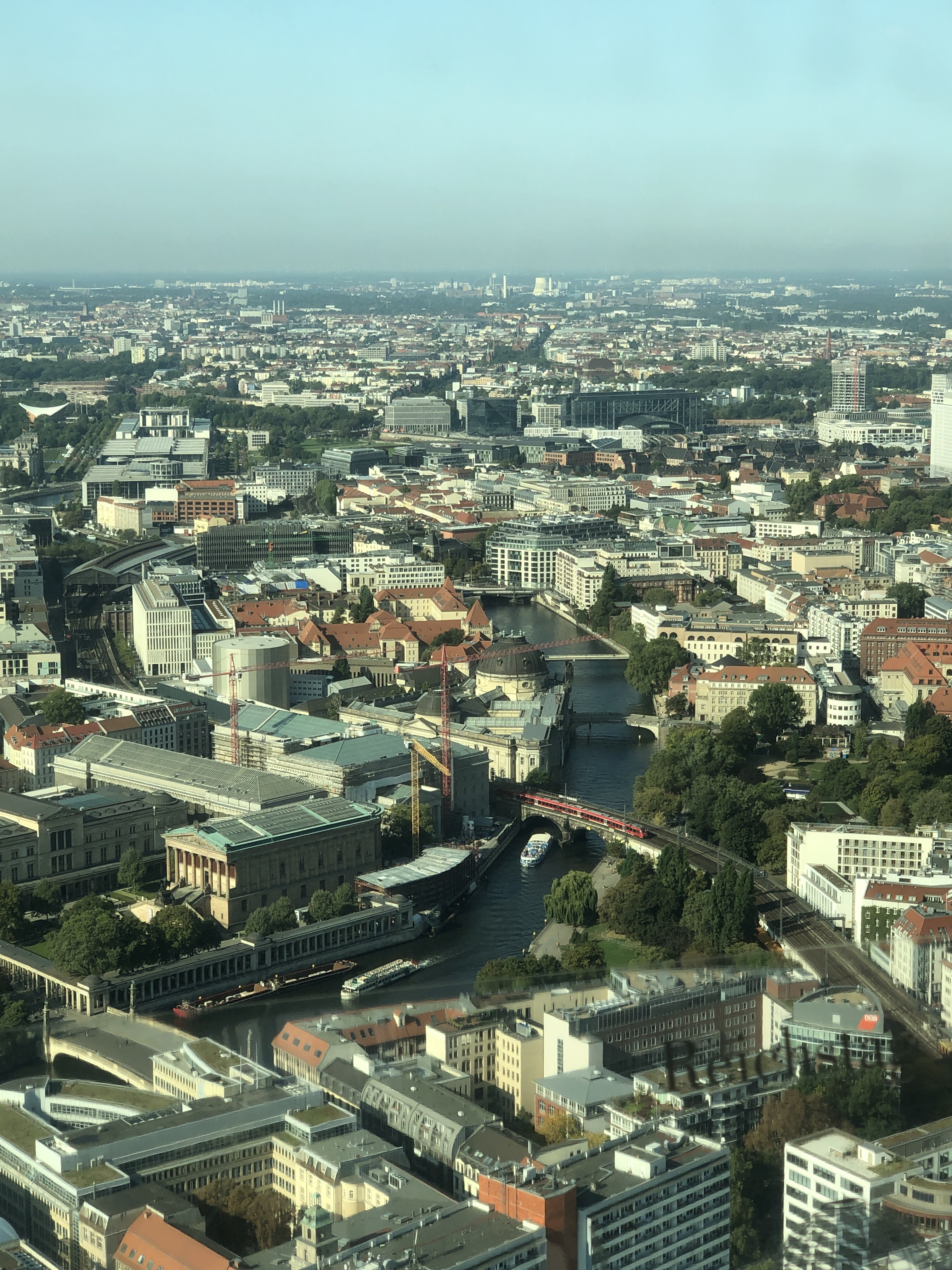
We had a table at the window and as the restaurant revolved we got to enjoy breakfast as we looked out across the entire city.

It was pretty cool.  Though again, not something that I would do again soon.  The munchkin loved it and that was the point.

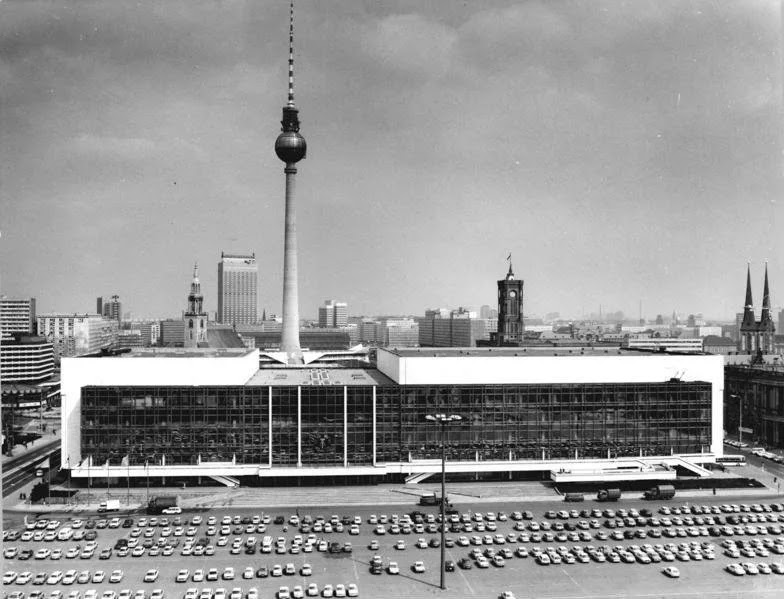
Later we visited the new Berlin Palace.  The Berliner Scholß, also called the Humboldt Forum, is the new, old palace.  Construction of the original palace began in 1443 and was completed in 1894.  It used to be one of the city's biggest buildings.  Allied bombings in 1945 damaged the palace.  In 1950, the East Germany government demolished what was left of the palace and in its place, in 1976, built the Palest der Republik, the Palace of the Republic, which was the DDR's central government building.

After German reunification, the Palace of the Republic was torn down in 2009.  Mostly due to the 5000 tonnes of asbestos within the building.  Germans were torn over what to do with the land.  Some wanted the original palace back while others wanted to see a rebuilt Palest der Republik, some wanted a park, etc.  Eventually it was decided that the original palace would make a return and reconstruction began in 2013.  The construction was completed in 2020 but with Covid I believe that the grand opening was delayed.  

Here's what the old Palest der Republik looked like.  I found a short video on YouTube that talked about its grand opening back in the 1970's.

©Footage Berlin - RBB Media

Here's a 43 minute documentary I found on YouTube that talks about the bringing the the new, old castle back.

©DW News

Monday, September 9, 2019

Taipei, Taiwan

Taipei台北is located in northern Taiwan and is the capital.  Officially it is Taipei City and it was was first settled in 1709.  Taipei has a population of +2,65 million people while the greater metro area is home to more than 7 million people.


The area had been inhabited by aborigines until the early 18th century when Han Chinese immigrants began arriving.  The Qing Dynasty made Taipei-fu the provincial capital in 1894.  When Japan annexed all of Taiwan in 1895 the city was renamed Taihoku.  The Japanese embarked on an extensive urban planning programme and a railroad network that laid the groundwork for the city today.

In 1949, Taipei was declared the provisional capital of the Republic of China when Chiang Kai-shek and the Kuomintang fled mainland China at the end of the Chinese Civil War.  Today Taipei is Taiwan's business and financial Bub and the city is a global player in technology and electronics.

The city's landmark is Taipei 101 which was formerly known as the Taipei World Financial Centre.  The skyscraper is 101 floors and is 508 metres (1,667 feet) tall.  From 2004 to 2010 it was the world's tallest building.  Now it number 11.

However, it has next level energy efficiency and recycling making it the world's tallest green building.  The skyscraper is designed to withstand earthquakes and typhoon winds of 216 km/h (134 mph).

The North Gate was built in 1884 as part of the Taipei City Wall.  It was originally built following an attempted Japanese invasion.  It was renovated in 2017.


Lungshan Temple was built in 1738 by Chinese immigrants from Fujian during the Qing Dynasty.  The Buddhist temple has alters for several Chinese deities.

The Fa Zhu Gong Temple was built in 1869.  The temple's main god is believed to have once protected the local immigrant population from a terrible disease.  The current location was completed in 1988.

The 228 Peace Memorial Park was originally established in 1900 as Taihoku New Park.  It was the first European-style urban park in Taiwan.  In 1947, Taiwanese protestors took over the radio station that was here to protest the brutal police action of the Kuomintang (Chinese Nationalist) government.  From February 28, 1947, an estimated 5 000 to 28 000 Taiwanese died and began what was known as the White Terror where tens of thousands of other Taiwanese were killed, imprisoned or went missing.  In 1998 the former radio station became the the 228 Memorial Museum and the park was renamed.


Liberty Square was completed in the late 1970s.  The plaza is huge at more than 240,000 square meters (59 acres).


It was a gathering place in the 1990s when Taiwan transitioned from one-party rule by the Kuomintang to a modern democracy.


At the east end of the square is the National Chiang Kai-shek Memorial Hall.  The hall dedicated to the former president was completed in 1980.

National Theatre


Liberty Square is also home to two performing arts halls that were both completed in 1987.

National Concert Hall


These were two of Asia's first major modern performing arts facilities.


The Presidential Office Building was completed in 1919.  It was originally used by the Governor-General of Taiwan during the Japanese Colonisation.  The building was restored in 1950 and became the Presidential Office.

The Xiao Hai City God Temple was built in 1859.  It is only 152 square metres (1,615 square feet) but it is home to more than 600 deities.  I believe this is a popular temple to pray to the Chinese cupid for a mate.

The Ximen Red House was originally built as a public market.  There are lots of trendy local shops and bars that are popular amongst the city's LGBTQ community.


The Republic of China Armed Forces Museum opened in 1961.  Unfortunately, I didn't get a chance to go in because for some reason it's closed 10.8. - 18.10.2019.


The Taipei Dome is a multi-purpose stadium that is still under construction.  It will be primarily used for baseball but will include a shopping mall, movie theatre, a hotel and office space.  Originally construction was to begin in 2007 and be completed by 2011.  Work didn't begin until 2011 and the city ordered a halt in 2015.  There is still no date on when it will be completed.

The National Sun Yat-sen Memorial Hall was completed in 1972.  The museum covering his life is really interesting.

Every hour there is changing of the guards

Xiangshang is "Elephant Mountain" is worth a visit.  It is 183 metres (600 feet) tall with a few walking trails.  A hike up to the top provides a nice view of the city and of course another photo of Taipei 101.

The night markets are awesome.  I like the local markets but the Shilin Night Market is one of the largest and most famous.  Lots of shopping around but the food is the best part.

Scallion pancakes


The food court has over 500 different stalls and they stay open past midnight.
Oyster omelette 


Bubble Tea was invented in Taiwan.  My favourite is the brown sugar bubble tea.  Oh so good!

Soup Dumplings


All of the food in Taipei is just simply incredible.  I even did a food walking tour so that I didn't miss out on anything.

Sunday, July 7, 2019

Kuala Lumpur, Malaysia

Kuala Lumpur is officially the Federal Territory of Kuala Lumpur and it's the capital of Malaysia.  KL is in the west-central Peninsular part of the country.  It's the country's biggest city with around 1,7 million people.  The greater metro area is home to 7,2 million.

KL was established is 1859.  It received city status in 1972 and it became a federal territory in 1974.  It is among the top ten most visited cities in the world.  It might have something to do with also having three of the top ten biggest shopping malls in the world.

The Sultan Abdul Samad Jamek Mosque is at the confluence of the Klang and Gombak Rivers.  The mosque was built in 1909 and is one of the oldest in the city.

The Exchange 106 is the city's newest skyscraper.  Construction began in 2016 and finished this year.  The 95-floor building is topped with a 12-story crown making it come in at 445 metres (1460 feet) tall.

St. Andrew's Presbyterian Church was consecrated in 1902.  The "Scottish Church" was built during the British occupation.


Petaling Street is home to the main Chinatown.  Lots of restaurants and food stalls serving Chinese and Malay food.


Stadium Negara, built in 1962, was the country's first indoor stadium.  The 10.000 seat stadium was renovated in 2015.


The Central Market was founded in 1888 by the British.  The Art Deco building was completed in 1937.

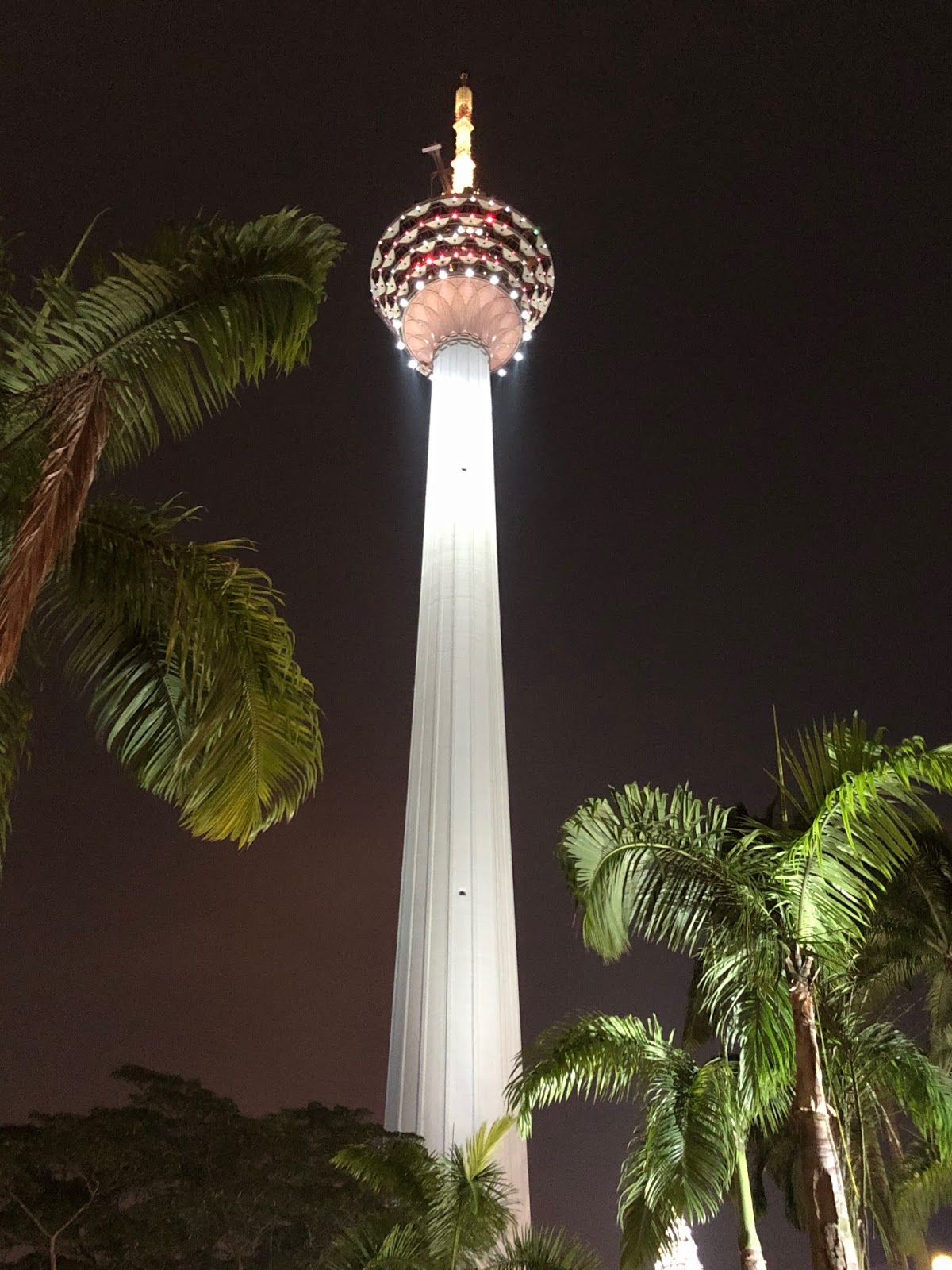
The KL Tower opened in 1996.  At 421 metres (1.381 feet) tall it is the world's seventh tallest telecommunications tower.  At night it is lit up in different colours.

The Kuala Lumpur Convention Centre was built in 2005 for the 11th ASEAN Summit.


The Upside Down House opened in 2016.  Everything in the 2-story house is upside down with the furniture arranged on the ceiling.


TV Al-Hijrah began operating in 2010.  It was the country's first free-to-air Islamic TV broadcast.


The National Textile Museum opened in 2010.  The building was completed in 1905 as the headquarters fo the Federal Malay States Railways.


The Telecommunications Museum opened in 2005.  The 1928 building used to be the old exchange building.


The National Museum opened in 1963.

The Petronas Towers is the city's main landmark.  The 88-floor towers were completed in 1996 at a cost of $1,6 billion.


At 451,9 metres (1.483 feet), it was the tallest building in the world until 2004 when Taipei 101 opened.
Today it's 19th tallest in the world but it is still the world's largest twin tower.

The National Palace opened in 2011.  It is the Malaysian monarch's official residence.


The National Mosque of Malaysia was completed in 1965.  It can accommodate  15.000 people.

Little India is cool little area with Hindu temples and delicious Indian food.

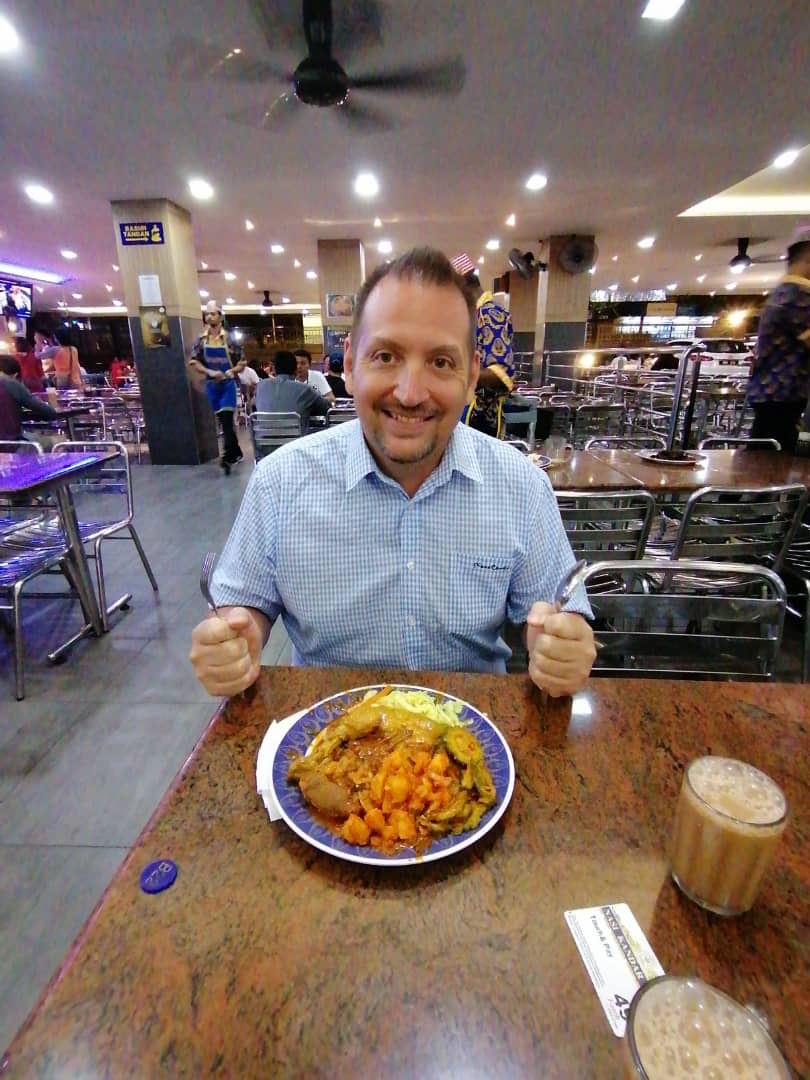
The food courts throughout the city are the best places to eat.  Delicious and cheap eats.

Putrajaya is the federal administrative centre of the capital.  The planned city was established in 1995 and is home to about 92.000 people.


The Batu Caves are about 13 km (8 miles) from the city.  It is one of the most popular Hindu shrines outside of India and is home to the world's tallest Murugan statue.