Showing posts with label Lake. Show all posts

Saturday, August 19, 2023

Lom Janičův Vrch

Lom Janičův vrch is a former limestone quarry that's located just outside of Mikulov.  It is 51 km (32 miles) from Brno and is part of the Pálava Protected Landscape Area.


Limestone mining at the Mariánský mlýn (Marian Mill) was intermittent throughout the 20th century but ceased around 2004.  


Once mining stopped, the quarry flooded and created a clear water lake which in 2014 became a protected natural monument.


After work yesterday we headed to the lake and the water felt great.  It was about 15℃ (59℉).   

There are strict controls about what you can take in.  No disposable plastic or glass bottles allowed.  


There's minimal infrastructure; just a few changing stalls.  There is a nude section if that's your thing.

Tuesday, August 1, 2023

Štrbské Pleso, Slovakia

Štrbské Pleso is 18 km (11.2 miles) from Tatranská Lomnica.  By train it's an hour away.

Štrbské Pleso is another popular tourist town in the Tatras.  

It was founded in 1872 and today it is home to about 200 residents.


Lots more hiking!

The town is located on the southern shore of Lake Štrbské pleso.


The lake is the second largest lake, in the Slovak side of the Tatras.  It is almost 20 hectares (almost 50 acres).


Nearby is the Veža snov (Tower of Dreams), which is also called Tatras Tower.

The tower is 53 metres (174 feet) tall and has a 15° incline.  We wanted to check out the top but it started to rain a bit.  

Monday, July 31, 2023

Tatranská Lomnica, Slovakia

After getting back from our USA trip we spent three days with Kája's oldest sister and their father in the Tatras.  We took a couple of trains and met up with them in Tatranská Lomnica.  

Tatranská Lomnica is a small tourist town in northern Slovakia.  The town was founded in 1892 and is home to less than 1000 people.  It's about 345 km (215 miles) from Bratislava.

People come to Tatranská Lomnica to go hiking in the summer and skiing in the winter.  


We took a cable car up to Skalnaté pleso, which is a glacial lake located at an altitude of 1751 metres (5,744 feet).


The lake lies at the lowest point of the Rocky Valley that sits under the southern cliffs of Lomnické štít.  The lake has a depth of 4,2 metres (138 feet).

The Skalnaté pleso Observatory was founded in 1943.  It has two telescopes and caries out research about comets and asteroids.


From here, it's another cable car up to Lomnické sedlo which is 2190 metres (7,185 feet) above sea level. 


Here you can visit Lomnický štít which is the second-highest peak in the High Tatras.  

It's 2634 metres (8,642 feet) tall and it is the only peak int he Tatras that's accessible by cable car which were first put in between 1937-1940.


There are some really nice views of the mountains from up here.


In town there's a ski museum that opened in 2013.  It focuses on the history of winter sports in the Tatras up until 1945.


TANAP Museum, the Tatra National Park Museum, opened in 1957 in Poprad before moving to Tatranská Lomnica in 1959.  The museum moved to its current building in 1969.  Most of the exhibitions are about the local animals, flora and fauna found in the Tatras.  

We really enjoyed our visit to Tatranská Lomnica.  The Tatras were worth the wait.  I'm looking forward to our next visit.  

We also checked out nearby Štrbské Pleso.

Friday, November 1, 2019

Friedrichshagen, Berlin, Germany

Friedrichshagen is a small southeast suburb of Berlin.  I believe the population is somewhere around 18.000 people.  It's only about a 30 minute ride on the S-Bahn from the Hauptbahnhof.  

It borders Köpenick and Rahnsdorf.  To the north is part of the Berlin city forest and on the west is the Müggelsee, Berlin's biggest lake.  There's a spot on the water where you can enjoy the beach in the summer and ice skate during the winter.

Friedrichshagen was founded in 1753 by King Frederick II of Prussia.  Until 1920 it was an autonomous Prussian municipality when it was merged with Berlin.  From 1949 to 1990 it was part of East Berlin.  


During the 19th century it was a popular destination because it was peaceful and close to nature.  Eventually it became a colony of villas popular with poets and artists.

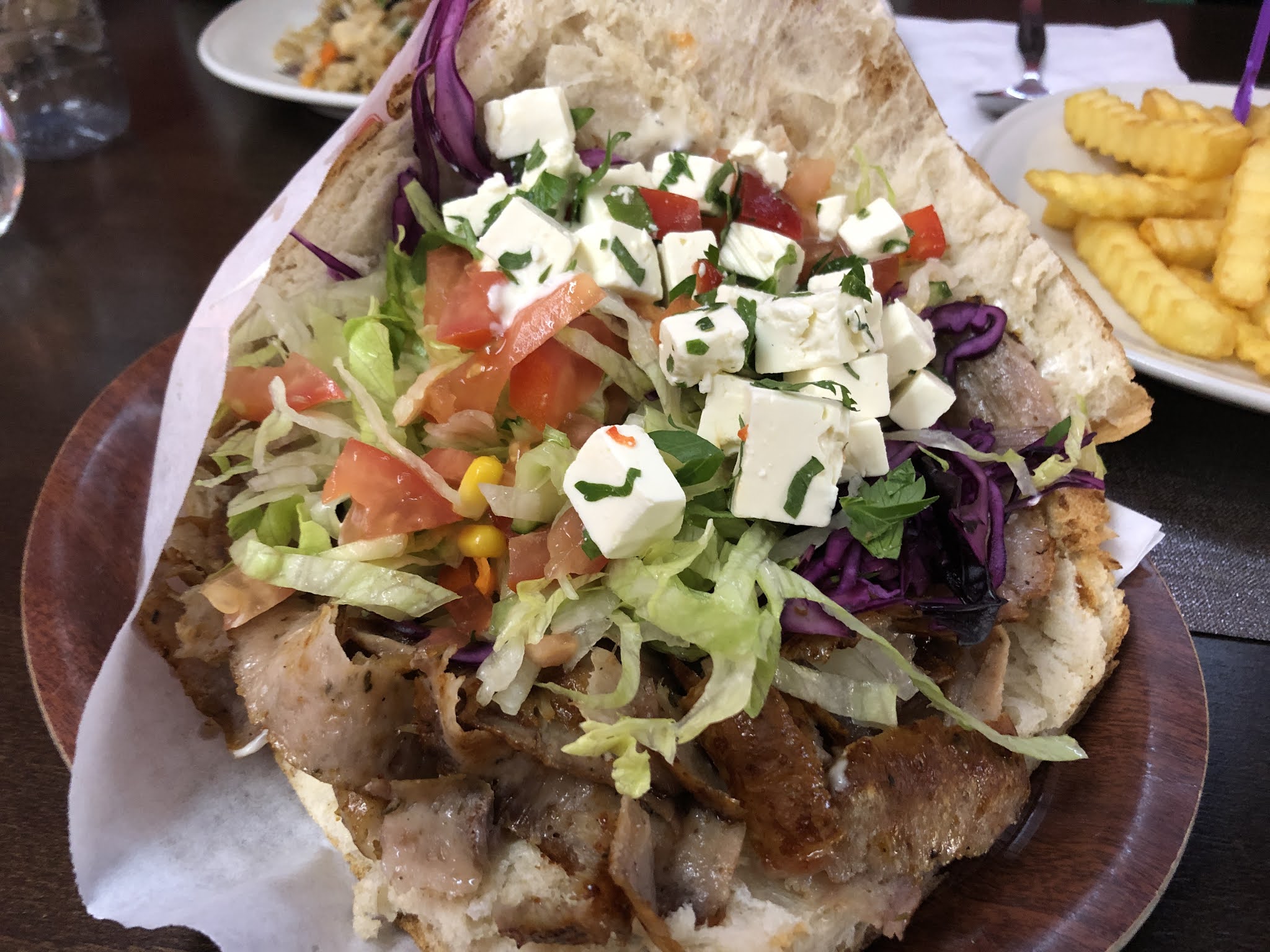
Bölcherstrasße is the main street with lots of shops and restaurants.  It's also home to my favourite spot in Berlin for Döner Kebab.


There are two things that always lets me know know when I'm in what used to be East Berlin.  

First are the trams.  For some reason, back when the city was divided, West Berlin didn't have trams and they still don't.  

Second, are the beloved Ampelmännchen.

Tuesday, October 8, 2019

Chimgan and Lake Charvak, Uzbekistan

There's really only one feasible day trip that's doable from Tashkent and that's to the Chimgan Mountains and Lake Charvak.  They just aren't easy to get to via public transportation.  

My hostel arranged for a private taxi for the four hour, 200 km (124 mile) trip for 609.000 Som (€50, $59).  The driver didn't speak English but we managed with my Czech and forgotten Russian.

We started off with a two-hour, 80 km (50 mile), drive to Chimgan in the Western Tien Shan Mountains.  


At Beldersay, about 5 km (3 miles) from Chimgan is a ski resort.  There is an old Soviet-built cableway that takes you up 3 km.  I still hate heights but it had to be done. 

Lake Charvak is an artificial lake.  The Soviets built the Charvak Hydro power station to provide cheap energy to Tashkent.  Construction on the dam began in 1964 and it was completed in 1970.  


I understand that something like 150 archaeological sites were submerged under water when the reservoir was filled up.


There are numerous resorts and children's summer camps near the lake that are popular with the locals and Russians.


The Chimgan mountains and the lake belong to the Ugam Chatkal National Park which is one of the country's largest park.

On the way back to Tashkent we stopped off at a local place for lunch.  It was delicious and, besides, meat is always way more fun on a skewer.

Saturday, September 14, 2019

Kaohsiung, Taiwan

Kaohsiung高雄, is located in the southwest of Taiwan about 362 km (225 miles) from Taipei.  It is home to 2,7 million people and is its second largest city.

The city's port is the world's 6th largest cargo-container seaport.


Kaohsiung, used to be known as Takao and it started off as a small fishing village in the 17th century.


The Daitian Temple was built in 1951.  There's a Taoist hall in the front and a Buddhist hall in the back.

The Qing Shui Temple was built in 1787.  When entering temples, it is auspicious to enter on the left and exiting on the right side provides an escape from danger.  Only the Gods may enter via the middle, unless you are holding holy statues.

The Chi Ming Palace was built to promote Confucianism 1899.  The palace was rebuilt in 1973.

The statue of the Xuantian Emperor is 22 metres (72 feet) tall.  It's the tallest god stature on water in Southeast Asia.

The Dragon and Tiger Pagodas were built in 1976.


The Pillar to Heaven and Protection of the Land at Lotus Lake is a memorial to the victims of a 7.3 earthquake that hit Taiwan on 21.9.1999.

The Wuli Pavilion is a symbol of good fortune.


Near Lotus Lake stands part of the Old Fongshan City Wall that dates back to the Qing Dynasty.


The Tianfu Palace was built in 1660, at about the end of the Ming Dynasty I think.


The Kaohsiung Confucius Temple was originally built in 1684.  At 167 square metres (1800 sq ft) it is the largest Confucian temple in Taiwan.  During the Japanese colonial period it fell into disrepair and the new temple was built in 1976.

Near the Lotus Pond is Shoushan National Park, also known as Monkey Mountain.  It is 356 metres (1168 feet) tall.


Kao Tong Tong is the city's agricultural mascot.  We needed to get a selfie together.


The Pier-2 Art Center used to be an old sugar warehouse during the Japanese era.  The area was rebuilt in the 1962 and today it is a contemporary art gallery with grass lawns between warehouses and old railway tracks.

The 85 Sky Tower was completed in 1997.  It is 347,5 metres (1140 feet) tall and it was tallest skyscraper in Taiwan until Taipei 101 was completed in 2004.

The former British Consulate was built in 1879.  It's currently a historic site with a popular cafe for the tourists.

The Kaohsiung Lighthouse was built in 1883 and was restored in 1918.  It actually sits on Cijin Island.

The port is the 15th biggest in the world.

The Dome of Light is a public artwork found at the Formosa Boulevard MRT station.  It is the world's largest stained glass installation made up of 4.500 glass panels.


The food here is simply incredible.  One of the local night markets had the best Xiao Long Bao - soup dumplings.  Delicious and super inexpensive.


Gua Bao is a "Taiwanese hamburger".  It's a steamed fluffy bun with pork and fatty pork belly that's topped with pickled mustard greens, crushed peanuts and coriander.  Tasty but I prefer it also with some hot chilli.

Kaohsiung is well worth a visit.  Especially when the high speed rail only takes around 90 minutes from Taipei.

One of the interesting things I saw was the musical garbage truck.  Not sure if this is only a Kaohsiung thing or a Taiwan thing.