Showing posts with label Netherlands. Show all posts

Wednesday, February 8, 2023

Seven Wonders of the World


There have been a few versions of the "seven wonders of the world."  The oldest list, known as the "classic" seven wonders were located around the Mediterranean and the Middle East.  Of the classic wonders, only one, the Great Pyramid of Giza, still exists.
1.  Great Pyramid of Giza in El Giza, Egypt.
2.  Colossus of Rhodes, was located in Rhodes, Greece.
3.  Hanging Gardens of Babylon, in Babylon, Iraq.
4.  Lighthouse of Alexandria, in Alexandria, Egypt.
5.  Mausoleum at Halicarnassus in present-day Turkey.
6.  Statue of Zeus in Olympia, Greece.
7.   Temple of Artemis in Ephesus, Turkey.   

Next month, we're off to Kuşadasi for a week and will visit Ephesus.  I'll get to see what's left of the Temple of Artemis and will be the only item on the classic list I'll have seen.

The Seven Wonders of the Middle Ages include:
1.  Catacombs of Kom el Shoqafa in Alexandria, Egypt.
2.  Colosseum in Rome, Italy.   
3.  Great Wall of China, in China.
4.  Hagia Sophia in Istanbul, Turkey.
5.  Leaning Tower of Pisa in Pisa, Italy.
6.  Porcelain Tower of Nanjing, in Nanjing, China.
7.  Stonehenge in Wiltshire, England, UK.

So far I've managed to see four of seven from this list.  I missed out on going to Nanjing during my Shanghai trip due to rain.

In 1994, the American Society of Civil Engineers paid tribute to the what they thought were the greatest civil engineering achievements of the 20th century by releasing their list of Seven Wonders to the Modern World.
1.  Channel Tunnel, between the UK and France.
2.  CN Tower in Toronto, Canada.
3.  Empire State Building in New York City, USA.
4.  Golden Gate Bridge in San Francisco, California, USA.
5.  Itaipú Dam between Brazil and Paraguay.
6.  Delta and Zuiderzee Works in the Netherlands.
7.  Panama Canal in Panama.

From this list I've been to the Empire State Building and the Golden Gate Bridge.  Toronto's been on my list of places to visit for years but who knows when I'll get a chance to visit Canada.

In 2001, a New Seven Wonders of the World was released.  The Great Pyramid of Giza didn't make the list but was added later as an honorary mention.
1.  Great Wall of China.
2.  Petra in Jordan.
3.  Christ the Redeemer in Rio de Janeiro, Brazil.
4.  Machu Picchu in Peru.
5.  Chichén Itzá in Mexico.
6.  Colosseum in Italy.
7.  Taj Mahal in India.  

From this list I've been to the Great Wall, Petra, Christ the Redeemer, and the Colosseum.  Back in 2007, Steven and I were getting our MBAs from Georgia State University.  We did a two-week study abroad programme in Argentina and Brazil.  One of my favourite memories is of us in a helicopter flying around Jesus's head in Rio.

Ephesus for sure will be the next place from all of these lists that I'll see.  Beyond that, who knows?  The Taj Mahal and the Great Pyramid are both on my bucket list.  Stonehenge would probably be the easiest to visit.

Sunday, January 22, 2023

Brno City Break in 2023

Last year, Time Out magazine published their list of the 16 best city breaks in Europe for 2022.  Brno came in second place.  

This year Brno made the list again but fell to seventh place.  A few spots lower but still in the top ten.

The write up for Brno was pretty much exactly the same as last year.  

Here are the top 18 places.  Several of these are still on my list of places to visit.

  1. Marseille, France
  2. Sheffield, UK
  3. Buhać, Bosnia and Herzegovina
  4. Milan, Italy
  5. Bilbao, Spain
  6. Arles, France
  7. Brno, Czech Republic
  8. Liverpool, UK
  9. Kaunas, Lithuania
  10. Oslo, Norway
  11. Hamburg, Germany
  12. Dublin, Ireland
  13. Inverness, UK
  14. Trikala, Greece
  15. Rotterdam, Netherlands
  16. Freiburg, Germany
  17. Turku, Finland
  18. Valencia, Spain


Tuesday, November 29, 2022

2022 World Happiness Report

This year is the 10th anniversary of the World Happiness Report. by the Sustainable Development Solutions Network of the United Nations.  The report factors in things like gross domestic product per capita, healthy life expectancy, freedom to make choices, perceived corruption and social support from friends and family. 


For the fifth year in a row, Finland came in first place.

Scandinavia did well as usual with the five countries all placing in the top eight places.  Finland #1, Denmark #2, Iceland #3, Sweden #7 and Norway #8.

Switzerland placed #4.

The BeNeLux countries did well too with the Netherlands #5, Luxembourg #6, and Belgium #19.

Europe is the happiest region with the eight of the top ten spots.  The only non-European countries to crack the top ten are Israel #9 and New Zealand #10.

The USA placed #16 and Czechland placed #18.

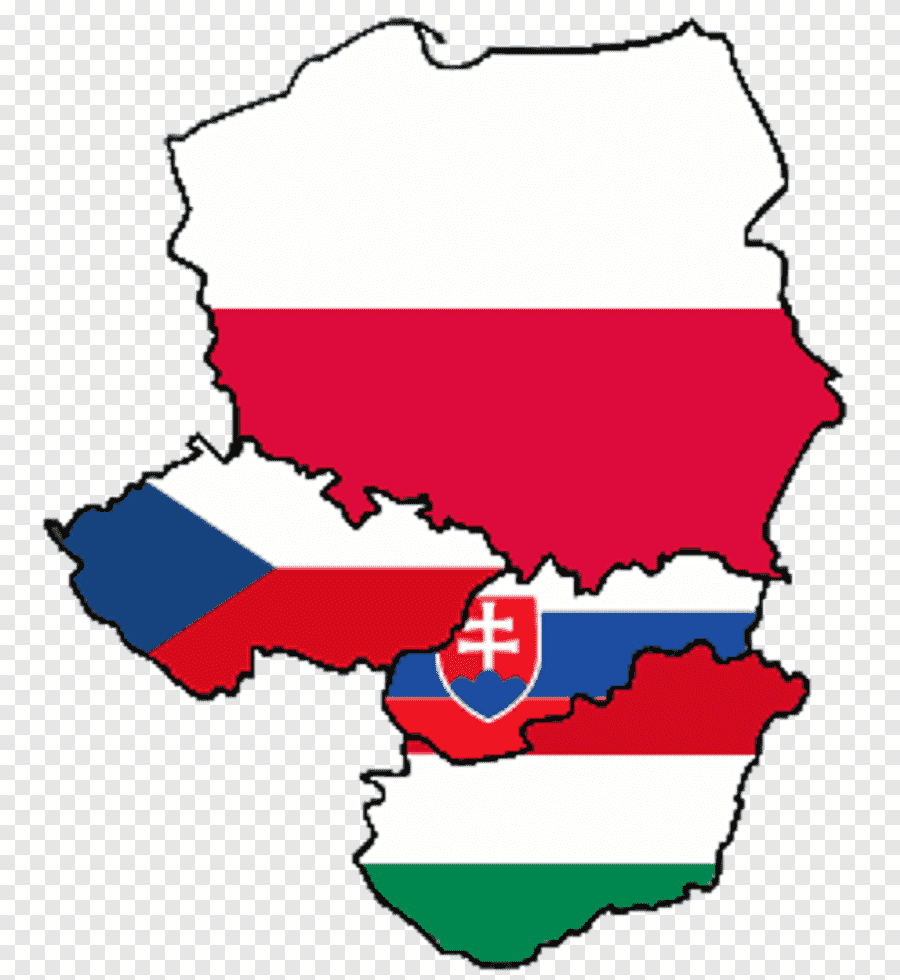
Czechland continues to be the happiest of the Visegrád Four with Slovakia #35, Poland #48, and Hungary #51.

Last place goes to Afghanistan, behind Botswana, Rwanda, Zimbabwe, and Lebanon.

Monday, August 29, 2022

Electricity in Czechland

Since the Russian invasion of Ukraine, prices have soared across Euroland.  

Looking at the cost of electricity in capital cities across Euroland, Prague comes in as having the 5th most expensive electricity at €0,41 per kilowatt-hour.  The top 4 are London, Copenhagen, Rome, and Amsterdam

However, when you account for purchasing power parity then Prague has the most expensive electricity in Europe.  Followed by Rome, Berlin, Dublin, and London.  One of the reasons for electricity being so expensive is that the Czech government taxes it at 24% while the average across Europe is 18%.


What's odd is that Czechland is one of Europe's biggest exporters of electricity.  This year, the country has exported more than 5 million megawatt-hours more than was consumed.  Only Sweden, Germany, France, and Spain have exported more electricity than Czechland.  I wasn't aware than in 2020, Czechland was the 9th-largest exporter of electricity in the world.

In order to cut the country's dependency on gas from Russia by one-third, the government and ČEZ, a Czech energy company, have secured storage capacity for LNG, liquefied natural gas, in the Netherlands.  Construction of the space is underway and it should be complete in September.  This is just for the storage space which should cost tens of millions of Czech Crowns per year.  The Czech government still needs to secure the LNG to be stored there.  

Here's a video I found on YouTube that talks about the high cost of energy right now in Europe, especially in neighbouring Germany.

©NBC

Я за Україну. Я за Україною. Слава Україні  Stojím za Ukrajinou!  I stand with Ukraine. 🇺🇦

Update: Here's an interesting Al Jazeera story I found on YouTube that talks about the high cost of electricity and its impact on the Czech glass industry.

©Al Jazeera

Saturday, August 27, 2022

English in Czechland

English is the most common spoken language across the EU.  About 44% of people in the EU can speak English.  And that's post-Brexit, as now only 1% of the EU are native English speakers.  However, Czechs rank among the worst in Europe at foreign languages.

Czechs are among the least likely Europeans to know a foreign language.  While about 45% can communicate at some level of English, only one in 10 Czechs have minimal English-language skills.  Just 7% speak English proficiently.

The only countries worse at English than Czechia are France, Italy, and Spain.  The top five countries with the best English foreign language skills are the Netherlands, Austria, Norway, Denmark, and Belgium.

One of the primary staffing agencies here has confirmed that English is required for four of to 10 job offers here.  English is demanded five times more than all other foreign languages combined.  After English, the top requested languages by employers are German, French, Italian, and Dutch.

The Czech Statistical Office, ČSÚ,  states that only a minimum of Czechs speak English at a professional level.  30% can't speak a foreign language.  

English is most frequently taught foreign language in EU secondary schools, followed by Spanish, French, German, and Italian.  

In Czechland, by law, students are taught two foreign languages.  English is the most popular, followed by German.  

There has been some controversy in the press about the new government's ability to speak English.  Five of 18 cabinet ministers have admitted to only being able to speak "tourist level" English only.  This is a big deal now that Czechland currently holds the rotating presidency of the EU.  

The new prime minister, Petr Fiala, speaks both English and German fluently.

Jana Černochová, the defence minister, and Zbyněk Stanjura, the finance minister have admitted to having weak English skills but both have at least passive Russian and Polish.

Thursday, December 16, 2021

Brno City Break in 2022

A couple of weeks ago, Time Out magazine published their list of "The 16 best city breaks in Europe for 2022."  Brno came in second place.  While it's great for Brno to get the recognition I kind of hope that it retains its status as a hidden gem.  They even mentioned my favourite cafe for breakfast.


Here's what the article said about Brno.

Although sandwiched between Prague and Vienna, self-confident Brno is no middle Child.  Once a powerhouse dubbed the "Moravian Manchester", the laidback Czech second city has repositioned itself as a post-industrial science and tech hub.  But you'll find plenty of clues to Brno's layered past at a clutch of offbeat underground attractions, including the mysterious brick cisterns at. Žlutý Kopec, communist-era nuclear bunker 10-Z, and the "Denis" bomb shelter under the cathedral.  The food and drink scene is reinventing itself to, from contemporary international at Element to Výčep na Stojáka, a modern take on a trad pub.

The perfect day:  After breakfast at Café Momenta, head up to Špilberk Castle and grab lunch at Cafe Placzek.  Explore the historical centre before dinner at Atelier Bar &Bistro and a nightcap at Rotor Bar.

Plan your trip:  The Industrial project celebrates Brno's manufacturing tradition, with several former industrial buildings opening to the public for the first time in 2022.  Káznice, a Habsburg-era prison, is also being redeveloped and will host events in the summer. --David Creighton

Here are the rankings.

  1. Arles, France
  2. Brno, Czech Republic
  3. Kaunas, Lithuania
  4. Odense, Denmark
  5. Bihać, Bosnia and Herzegovina
  6. Ljubljana, Slovenia
  7. Turku, Finland
  8. Inverness, Scotland
  9. Valencia, Spain
  10. Sheffield, England
  11. Trikala, Greece
  12. Oslo, Norway
  13. Rotterdam, Netherlands
  14. Liverpool, England
  15. Milan, Italy
  16. Freiburg, Germany

A few of these spots have already been on my list of places to visit.  Hopefully I'll get a chance to do a bit more travel in 2022.

Update: 2023 rankings.

Tuesday, November 23, 2021

Nutri-Score

When I first moved here I made a comment at work that I was going to get so fat here with this being the land of beer and potatoes.  A friend sniped back with, "but I thought that all Americans were already fat."  Well not quite right but not wrong either.

In 2016, the World Health Organisation put the USA's obesity rate at 33,8%.  Czech Republic was 24,2%.  Czechs have been getting bigger.

In 2019, the five EU countries with the highest percentage of obesity were Croatia, Malta, Czechland, Hungary, and Slovakia.  France has the lowest obesity levels in the EU, followed by the Netherlands, Italy, Belgium, and Sweden.  Czechs were had the 3rd highest levels of obscenity in the EU.

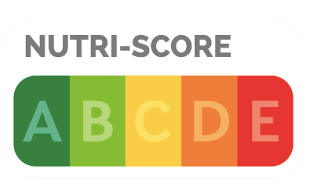
Here's where I think that Nutri-Score would be a good thing.  Nutri-Score is a "traffic light system" that ranks food products on a scale from A to E, where A is the best and E is the worst, and it is clearly visible of the front of the food's packaging.  

Food products get a lower rating if there is:

  • high energy density per 100 g or per 100 ml
  • high sugar content
  • high content of saturated fatty acids
  • high salt content.
There's a higher rating when:
  • contains fruits, vegetables, nuts and legumes
  • contains fiber
  • contains protein
  • contains rapeseed, walnut and olive oil
Nutri-Score was founded in France in 2013 and in 2017 the French Health Ministry officially recommended it.  Since then it has rolled out in Belgium, Spain, Germany, Switzerland, the Netherlands, and Luxembourg.  The system has been recommended by the European Commission and the World Health Organization.

So far it's not mandatory across the EU but I'm sure that it will be eventually.  Some companies such as Nestlé and Danone have announced that they will start using Nutri-Score in Portugal, Slovenia, and Austria even though it's not required in those countries.  

Not all countries are onboard with the system.  Poland, Czechland, Cyprus, Greece, Hungary, Latvia, and Romania all oppose it.  Italy believes that the system puts the traditional Mediterranean diet at a disadvantage.  

The Czech Ministry of Agriculture isn't in favour of the system but it will tolerate international labels with Nutri-Score.  The ministry is not in favour of a mandatory front-of-package label and believes that the Nutri-Score formula is too simplistic because it doesn't consider the size of a portion or how food is prepared. 

Nestlé will start using Nutri-Score in Czechland in 2023.  

Here's an interesting video I found out on YouTube where CNN talks about some of the differences between the US and Czech health care systems.  Not exactly Nutri-Score or Obesity related but still kind of fitting.  While the video is at least 12 years old already it's still pretty accurate.

©CNN

Update:  August 2022.  Here's a short TV commercial for Nestle that shows the Nutri-Score label.

©Nestlé Cereálie CZ

Saturday, March 20, 2021

2020 World Happiness Report

Today is the International Day of Happiness.  The United Nations started this back in 2013 to promote the idea that feeling happy is a global human right.  Clearly 2020 was a challenging year due to COVID-19 so this year's theme is "Keep Calm.  Stay Wise.  Be Kind."

The 2020 World Happiness Report was released today.  Czechland came in at #18 and the USA came in at #19.  This is the first time that Czechland outranked the USA.  

Like last year, Finland came in #1 again and 14 of the 20 world's happiest countries are in Europe.  At #9, New Zealand is the only non-European country to crack the top 10.

Scandinavia is the happiest region in Europe with #1 Finland, #2 Denmark, #4 Iceland, #6 Norway, and #7 Sweden.

BeNeLux did well with #5 Netherlands, #8 Luxembourg, and #20 Belgium.

The only Middle Eastern country to make the top 20 was #12 Israel.  Even with Brexit the UK came in at #17.

At #18 Czechland was the clear happiness leader of the Visegrad countries with #34 Slovakia, #44 Poland, and #53 Hungary.

Many of the most unhappiest counties are in East and Southern Africa including #137 Zambia, #140 Burundi, #142 Tanzania, #144 Malawi, #145 Lesotho, #146 Botswana, #147 Rwanda, and #148 Zimbabwe.

The world's most unhappiest country is #149 Afghanistan.  

The rankings are based on the combined scores for the last three years.  

Not much changes overall if you only go by the 2020 scores instead of the three year average.  Although then the USA would have been #14 and Czechland #16.

Wednesday, January 27, 2021

New Integration Course Requirement

There's now a new requirement in Czechland for foreigners who have been issued long-term residence permits, since 1 January 2021, to complete a four-hour integration course.  

The course covers the rights and obligations that come with residency here as well as Czech culture and values.  The class is conducted in Czech, with interpretation into English, French, Spanish, Arabic, Mongolian, Russian, Serbian, Ukrainian or Vietnamese.  There's no exam but participants receive a certificate when they complete the entire course.  It costs 1500 Kč ($70) and is available at 18 centres across the country.  You have up to one year from receiving your residency permit to complete the course.  The fine for not completing it in time is up to 10.000 Kč ($467).

This is only for third-country nationals as EU citizens are exempt.  It's not required if you are under 15 or over 61 years of age.  Those here on study or investment visas are also exempt.

Aside from this, the education minister has submitted draft legislation that will increase the Czech language requirement for permanent residency from A1 to A2.  When I received my permanent residency back in 2015 I only had to prove A1 level Czech.  This isn't official yet but I think it's for sure coming as there's been talk of raising the level of Czech required for at least the past eight years.  I don't know if they will raise it this year with COVID-19 but for sure by next year.

I was surprised to find out that Czechland and France are the only two EU countries that only require A1 for permanent residency.  I would have thought that the level of language proficiency would have been more unified across Europe but each has its own requirements.

In Czechland, A2 will be required for permanent residency while B1 is required for citizenship.

Germany requires B1 level for either permanent residency or citizenship.

Austria requires B1 for permanent residency and B2 for citizenship.  This means that for Austrian citizenship you need to speak better German than a German citizen.  Albeit Austrian German.

France requires A1 for permanent residency and B1 for citizenship.

Poland requires B1 for both permanent residency and citizenship.

I don't know about permanent residency but Italy requires B1 for citizenship.  The Netherlands, Portugal, and Spain only require A2 for citizenship in Dutch, Portuguese, or Spanish respectively.  Denmark requires B2 for citizenship.

For countries with multiple official langues the rules seem to vary more.  For citizenship in Finland, B1 is required but it can be in either Finnish or Swedish since both are official languages.

Belgium has three official languages so for citizenship you only have to prove A2 in either French, Dutch, or German.

Luxembourg has three official languages - French, German, and Luxembourgish.  But if you want citizenship than only Luxembourgish counts.  You need A2 level speaking and B1 level listening.

Switzerland has four official languages - German, French, Italian, and Romansh.  For permanent residency you need A1 writing and A2 speaking in any one of the four languages.  For citizenship, A2 writing and B1 speaking are required.

I'm still waiting to find out when I get to take my B1 Czech exam.

Wednesday, February 5, 2020

2020 Czech Eurovision Entry

Eurovision 2020 is coming up in a few months and this year it will be in The Netherlands.   Last year, Lake Malawi came in 11th place which is the country's second best finish.  Mikolas Josef finished in 6th place in 2018 which is Czechland's best finish to date.

2020 will be Czechia's ninth shot at the Eurovision title.  Česká televize had received 152 submissions to be the country's official entry.  Interestingly, of the 152 entries, only 72 were from Czech musicians.  Somehow the 152 was whittled down to seven.  The selection process was made up of combination of an international jury panel of ten former Eurovision entrants and a public vote made on the official Eurovision Song Contest app.

Here are the results...

In 7th place is Pam Rabbit with "Get Up".  Pam Rabbit was born in Armenia and came in 4th place during last year's selection process.  In 2018 she was a backup vocalist for Mikolas Josef during the Eurovision finals.

©PamRabbit Official

In 6th place was Olga Lounová with "Dark Water".  She started acting in TV and movies in 1998 and she released her first album in 2011.

©Olga Lounova

In 5th place was Karelll with "At Least We've Tried".  Karelll isn't well known on the Czech music scene. However he was the first Czech to take part in the Los Angeles MUSEXPO.

©Karelll

In 4th place was We All Poop and their song "All the Blood (Positive Song Actually)".  The group formed specifically to compete in this year's competition.

©WeAllPoop

In 3rd place was Barbora Mochowa with "White & Black Holes".  She also came in 3rd place during last year's selection.

©Barbora Mochowa

In 2nd place was Elis Mraz & Čis T with "Wanna Be Like".  Eliška Mrázová reached the 2014 semifinals of Nova Hlas Česko Slovenska (The Czech-Slovak version of The Voice).  Čis T is a hip-hop artist from Bratislava who's released 13 studio albums.

©Elis Mraz

And 1st place went to Benny Cristo with his song "Kemama".  Benny Cristo is a Czech of Angolan descent and since 2013 he's had 11 top ten hits here in Czechia.  He's also a professional jiu-jitsu competitor and in 2009 he made the finals of SuperStar (the Czech-Slovak version of Pop Idol).

Here's the official Eurovision bio about him that I found out on YouTube.
©Eurovision

Here's Czech Republic's official entry for the 2020 song contest.  "Kemama" is short of "Ok mama" and the song is entirely in English.

©Ben Cristovao

Benny will perform in the second semi-final round on 14 May.  Fingers crossed! 🤞

Update:  Eurovision was cancelled this year due to COVID-19.

Thursday, July 18, 2019

2019 Sustainable Development Report

The results of the 2019 Sustainable Development Report are in and Czechland is ranked as the world's 7th most developed country.

This is a UN initiative, in its fourth year, that looks at 17 key criteria for sustainable development.  Some of the criteria include eliminating poverty and hunger, establishing quality education, access to clean water and sanitation, and promoting responsible consumption and production.

The report ranked 162 countries and the top 10 are all in Europe, with Scandinavian countries ranked the highest.

  1. Denmark
  2. Sweden
  3. Finland
  4. France
  5. Austria
  6. Germany
  7. Czech Republic
  8. Norway
  9. Netherlands
  10. Estonia
New Zealand came in 11th and is the highest ranked non-European country.  The USA came in 35th.

Thursday, May 23, 2019

Republic of Indonesia

Indonesia, in Southeast Asia is an archipelago between the Indian and Pacific Oceans.  There are 17.000 islands and shares borders with Malaysia, Papua New Guinea, and Timor-Leste.  The capital and largest city is Jakarta which is located on Java, the world's most populous island.

It's huge!  Almost three times bigger than Texas and it's the world's largest island country.  Indonesia is home to more than 267 million people making it the fourth most populous country in the world.  It's also the most populous Muslim-majority country.

Archaeologists estimate that the islands were inhabited some two million to 500.000 years ago.  There were Buddhist and Hindu dynasties between the 8th and 13th centuries.  Islam came in the 8th century and became the dominant religion by the end of the 16th century.

Europeans came in 1512.  The Dutch were the dominant European power here for about 200 years which is why is used to be known as the Dutch East Indies and the Netherlands East Indies.

WWII and the Japanese invasion put an end to Dutch rule.  Following the war, Indonesia declared indolence in 1945 and it was recognised internationally in 1949.

In 1975 Indonesia invaded East Timor but in 1999 it successfully seceded from Indonesia.

Today the Republic of Indonesia is a presidential republic and it was a founding member of ASEAN.


The country is very diverse.  There are about 300 distinct ethnic groups with the largest being Javanese at 40% of the population.

There are six officially recognised religions - Islam, Protestantism, Roman Catholicism, Hinduism, Buddhism, and Confucianism.  There are 227 million Muslims mostly Sunnis.  Only about 10% of the population is Christian.  Like several Muslim countries, it does not have diplomatic relations with Israel.

The Rupiah (Rp) is the official currency.
The official language is Indonesian which is a standardised version of Malay.    Due to the country's population this makes it one of the world's most widely spoken languages.  But there are over 700 local languages.  700!


The flag is almost identical to that of Monaco.  The Indonesian flag is a bit larger and a slightly different shade of red.  I wonder how often this becomes a "thing".

In 2012 the Czech Export Bank and the Indonesia Exim Bank signed an agreement to support import/export activities between the two countries.  Czechland imports textiles, clothes, footwear, and rubber from Indonesia.  Indonesia imports machinery, chemicals, electrical and power generation and telecommunications equipment from Czechland.  It's about $500 million of bilateral trade.

Here's a 2016 video I found on YouTube about how powerful Indonesia is.

©Test Tube News

Sunday, May 19, 2019

2019 Eurovision Final Results

Another Eurovision has come and gone.  The finals of the 64th edition were held last night in Israel.

Things were looking good after Tuesday's semi-final 1.  Of the 17 countries participating on Tuesday, Czechland came in second place with 242 points.

There were 26 countries in last night's finals.  Lake Malawi ended up in 11th place with 157 points.  Here's the Czech performance from the finals that I found out on YouTube.

©Eurovision Song Contest

The 2019 winner was Duncan Laurence from the Netherlands.  His song Arcade won with 498 points.  Here's the winning performance.

©Eurovision Song Contest

Fair play to Czechland coming in 11th.  Not quite as good as last year's 6th place finish but still respectable.  I still say that Czechland would do better if Slovakia participated because they would always vote for each other. 

Sunday, March 24, 2019

2019 World Happiness Report

The 7th World Happiness Report was released by the Sustainable Development Solutions Network of the United Nations and Czechland was ranked at the 20th happiest out of 156 countries.

The report factors in things like gross domestic product per capita, healthy life expectancy, freedom to make choices, perceived corruption and social support from friends and family.

No surprise that the Scandinavian countries ranked so high.  For the second year in a row, Finland come in 1st, followed by Denmark, Norway, and Iceland.  The Netherlands came in 5th place.  Of the 20 happiest countries in the world, 14 of them are in Europe.

The USA came in 19th.  At 20th, Czechland scored the best of the Visegrád Group with Slovakia at 38th, Poland at 40th, and Hungary at 62nd.

Czechs continue to rank higher each year.  In 2015 they were 31st, in 2016 they were 27th, in 2017 they were 23rd, and last year they were 21st.

The most unhappiest countries are South Sudan, the Central African Republic, Afghanistan, Tanzania, Rwanda, and Yemen.


2019 Top 30 Happiest Countries