Showing posts with label Czech Taxes. Show all posts

Monday, August 29, 2022

Electricity in Czechland

Since the Russian invasion of Ukraine, prices have soared across Euroland.  

Looking at the cost of electricity in capital cities across Euroland, Prague comes in as having the 5th most expensive electricity at €0,41 per kilowatt-hour.  The top 4 are London, Copenhagen, Rome, and Amsterdam

However, when you account for purchasing power parity then Prague has the most expensive electricity in Europe.  Followed by Rome, Berlin, Dublin, and London.  One of the reasons for electricity being so expensive is that the Czech government taxes it at 24% while the average across Europe is 18%.


What's odd is that Czechland is one of Europe's biggest exporters of electricity.  This year, the country has exported more than 5 million megawatt-hours more than was consumed.  Only Sweden, Germany, France, and Spain have exported more electricity than Czechland.  I wasn't aware than in 2020, Czechland was the 9th-largest exporter of electricity in the world.

In order to cut the country's dependency on gas from Russia by one-third, the government and ČEZ, a Czech energy company, have secured storage capacity for LNG, liquefied natural gas, in the Netherlands.  Construction of the space is underway and it should be complete in September.  This is just for the storage space which should cost tens of millions of Czech Crowns per year.  The Czech government still needs to secure the LNG to be stored there.  

Here's a video I found on YouTube that talks about the high cost of energy right now in Europe, especially in neighbouring Germany.

©NBC

Я за Україну. Я за Україною. Слава Україні  Stojím za Ukrajinou!  I stand with Ukraine. 🇺🇦

Update: Here's an interesting Al Jazeera story I found on YouTube that talks about the high cost of electricity and its impact on the Czech glass industry.

©Al Jazeera

Wednesday, October 13, 2021

VAT on all Packages Now

Within the EU, the price of all goods that are shipped between EU-member states includes VAT.  VAT is value-added tax.  For Americans this is the sales tax.  By including the VAT, countries know that the correct amount of tax has been collected which allows goods to ship without having to go through customs.

This isn't the case for goods shipped in from outside the EU.  Things have to go through customs in order to calculate the VAT and usually some processing fees.  Prior to this month goods valued below 560 Kč (€22) were exempt from VAT.  Well as of 1 October 2021, that exemption is now gone.

This is a good news / bad news sort of thing.  The good news is that the Czech government has somewhat simplified the customs procedure.  The bad news is that now you have to pay the VAT on everything coming in from outside the EU and currently the VAT in Czechland is 21%.  Remember that due to Brexit, the UK is now out of the EU so this applies here too.

This was supposed to rollout across the EU on 1 January 2021 but it was pushed to 1 July to give EU countries time to get ready for it.  The Czechs needed a little longer so it didn't take effect until this month.

If you haven't paid VAT at the point-of-sale then you will need to deal with customs but you can always authorise the delivery provider to handle this for you for a fee.

So now all items under 3800 Kč (€150) are subject to VAT.  Items above 3800 Kč have to go through a separate customs procedure because you have to pay the VAT and you have to pay a separate duty tax which is dependent on the type of product.

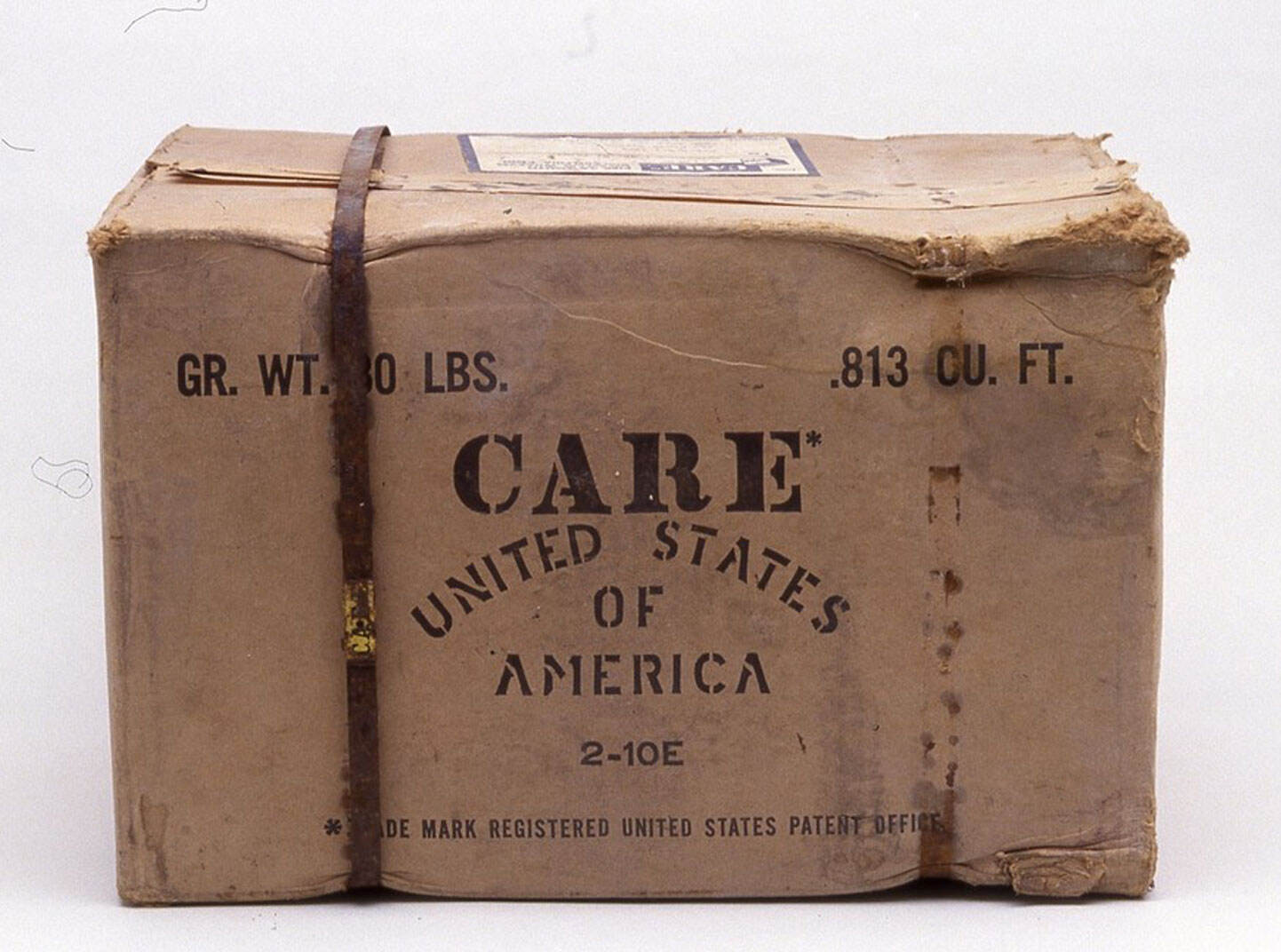
This will also impact care packages.  I believe that many people would receive things from outside the EU and no matter what was sent would just declare the value as less than €22 so that they would not have to pay any VAT.  This takes care of that and ensures that the government will get its share of tax revenue.  Česká pošta processed 28 million VAT-exempt packages from outside the EU in 2019 and the Czech government expects this change to generate an additional 182 billion Kč (€7 billion) of revenue each year.

It's been a while since I've even received a care package from back home.  Mainly because the cost of shipping increased so much in the USA.  In 2013, the cost jumped up from $55 to $77.  Who knows what it costs now in 2021?  Plus, I'd much rather receive hand-delivered care packages.

Update:  In November 2022, the postage cost of a 20 lb (9 kg) care package from the USA to Czechland is $115.70, from the USA.

Sunday, January 10, 2021

2021 Labour Code Changes

There are several changes to the Czech labour code which took effect on 1 January.

 An employee's vacation time is now determined by the number of hours worked during a week and not but the number of days worked.  This makes it fairer for employees who work part-time or work irregular shifts.  The law provides for a minimum of 4 weeks (160) hours of vacation time per year for a full-time employee.  While 4 weeks of vacation time is the minimum required under the labour code, many companies actually provide 5 weeks off in order to be competitive.

There's a new shared workplace law that allows an employer to hire two or more part-time employees to fulfil one full-time job.  The employer determines the schedule of working hours and the shared workplace has to be agreed upon will all the employees by a special written agreement.

The amount of worker's compensation benefits have been increased.  The circle of relatives eligible for survivor's benefits have also been extended.  There's now a new one-off compensation in place for non-pecuniary damage in the event of serious health damage to an employee.

Freelancers are now allowed to pay a flat tax instead of monthly contributions.  The 2021 flat tax is 5.469 Kč ($255) per month.  This includes the minimum health insurance contribution of 2.393 Kč and the  2.976 Kč minimum contribution for social security insurance.

The annual taxpayer allowance increases to 27.840 Kč ($1,297).  In 2022 it will increase to 30.840 Kč ($1,437).

The government has done away with the super-gross salary.  Previously, a person's tax base included the social and health insurance contributions made by one's employer.  

The solidarity tax has been eliminated.  This was an extra 7% on all income over 100.000 Kč ($4,660) per month.

Instead there's now a progressive income tax for people of 15% and 23%.  The 23% rate is for people whose income exceeds 48 times the average yearly salary.  For this year that's for people earning 1.701.168 Kč ($79,279).

Thursday, January 7, 2021

Current COVID-19 Situation

The number of COVID-19 cases is pretty much of control here in Czechland.  Last week the country had the world's worst numbers it's not surprising that the current state of emergency, which was supposed to end on 10 January, has now been extended to 22 January.

  • There's still a curfew from 9 pm to 5 am.  
  • Only up to 2 people can meet up in public.
  • Shops are closed.  
  • Grocery stores must limit the number of people inside at a time and they are closed on Sundays.
  • Restaurants are all still closed but take away windows can be open until 9 pm.  
  • Public consumption of alcohol is prohibited.
  • Hotels are closed.
  • On 4 January, first and second graders returned to school.  Other grades are still online.
There are plenty of exceptions though.  Gas stations, pharmacies, pet stores, opticians, dry cleaners, florists, locksmiths, hardware and home goods stores all remain open.

The South Moravian region is now having medical high school students who are in the final year to help out in healthcare facilities.   

From 15 January everyone over 80 can register for the vaccine.  Everyone else in the country can register from 1 February.  A point system based on age, health status, and employment will determine when you get the vaccine.

In February I'm also supposed to be able to register for my new date to take the language and citizenship test since my December test was cancelled.

I guess at this point it's a coin toss which date I'll get first, for my language test or for my COVID-19 vaccine.  We'll see.

Update: The Finance Ministry will now waive income tax for all of the students who are called up to work in hospitals and social facilities. 

Sunday, December 22, 2019

Czech Citizenship Exam: Business

Here are the 10 study questions for the Czech Citizenship exam from section 16: Business.  With the 10 questions from this section and the previous 14 sections, this is one-half of the 300 possible questions I could be asked.  I wonder how many Czechs could answer all of these?

1.  Mr Novák is a self-employed person (OSVČ).  What is his income called?

Příjmy ze samostatné činnosti - Revenue from independent activities.


2.  Which of these four jobs is not a trade?  

Police service, hairdressing services, guide services, private detective services.

Police service is not a trade.

3.  An entrepreneur founded a company.  What tax does he have to register with the tax office?

K dani z příjmů - Income tax.

4.  Which insurance must an employer pay for his employees in the Czech Republic?

Zdravotní pojištění - health insurance.

5.  Mr. Novák is the owner of a clothing store.  Which authority issued a business permit to Mr. Novák?

Živnostenský úřad - Trade Licensing Office.


6.  Mr. Malý decided to do business as a room painter.  He asked the authorities to issue him a trade license.  How much did he pay for registering a trade?

1.000 Kč.

7.  Mrs. Malá is a translator.  She obtained a trade license, registered with the tax office and with a health insurance company.  Where does Mrs. Malá still have to register?

Na správě sociálního zabezpečení - at the social security administration.

8.  What is the name of the profit tax paid by state entrepreneurs?

Daň z příjmů fyzických a právnických osob - Personal and corporate income tax.


9.  An entrepreneur applied for a concession in order to operate a travel agency.  At which authority will the entrepreneur register and be issued an extract?

Živnostenský úřad - Trade Licensing Office.


10.  What document does a citizen need to perform a free trade?

Výpis ze živnostenského rejstříku - an extract from the trade register.

Saturday, December 21, 2019

Czech Citizenship Exam: Tax System

Here are the 10 study questions for the Czech Citizenship exam from section 13: Tax System. 

1.  Mr. Novotný is an entrepreneur and is obliged by law to pay taxes.  Which authority controls how he pays taxes?

Finanční úřad - the tax office.

2.  Mr. Svoboda bought a garden from a neighbour and paid tax to the state on the acquisition of real estate.  What is the amount of the tax?

4% of the property price.

3.  Every month, an employee pays 15% of the salary to the state.  What is this payment called?

Daň z příjmů - income tax.

4. Mrs.  Svobodová bought a new television at home.  Which tax does she have to pay in the price of the television?

Daň z přidané hodnoty - value added tax.

5.  At which office does an entrepreneur fie a tax return?

Na finančním úřadu - at the tax office.

6.  An entrepreneur fills in his income tax return himself.  How long does the entrepreneur have to file an income tax return each year?

Until 1 April.


7.  A receipt for the sale of goods states:

Which tax is stated on the receipt?

Daň z přidané hodnoty - valued added tax.

8.  Mrs. Svobodová's payslip states:


How much will Mrs. Svobodová receive for payment?

15 850 Kč

9.  What kind of goods include excise duty?

Hard alcohol.   

10. Mr. Svoboda is to pay a debt of CZK 2.500 in income tax.  To which authority will he pay the debt?

Finančnímu úřadu - to the tax office.

Thursday, January 19, 2017

New 2017 Tax Allowances

Czech taxes change a bit in 2017.  Most of them don't really apply to me but here are the highlights.

The Czech minimum wage increases from 9.900 Kč ($452.60) to 11.000 Kč ($503) per month.  This 1.100 Kč increase is the biggest increase in Czech history.

For students and part-time jobs, the minimum hourly wage increases from 58,70 Kč ($2.68) to 66 Kč ($3.02).  As long as the work is completed in 300 hours and the salary doesn't go over 10.000 Kč then the employee is not required to fill out a tax declaration form.  The employee doesn't pay any social security or health insurance contributions.

As long as a kid qualifies as a dependent living with the taxpayer then the child tax credit increases.
For one child the allowance remains at 13.404 Kč per month.
For a second child the allowance increases from 15.804 Kč to 19.404 Kč.
For three or more children the allowance increases from 17.004 Kč to 24.204 Kc.

The Kindergarten tax allowance also increases to match the new minimum wage of 11.000 Kč.  One parent can deduct this with an attendance confirmation from the child's kindergarten.  Remember over here, Czech kindergarten is the equivalent of a U.S. pre-school.

The government has doubled the deduction limit for health insurance and pension contributions from the tax base.  The new limit is now 24.000 Kč.  For people who save 3.000 Kč per month then the state will provide a pension contribution up to 6.360 Kč.

Back under communism it was illegal to be unemployed.  Things are different now.  People who are unemployed and who are not officially registered at an agency, or for students over 26 years old, must pay 1.485 Kč ($68) per month for mandatory health insurance.

People who are recently unemployed may keep their jobseeker's allowance and work part-time so long as the monthly income doesn't exceed 5.500 Kč.

One thing that does impact me is that there will be a simplified two-page tax form.  People with more than one income will continue to submit the four-page form with attachments.

Friday, January 4, 2013

2013 VAT Increase

As of January 1, the VAT (Value Added Tax) has increased again.  It already went up last year but given the current state of the global economy it is increasing again.

The Czech government pushed through a few changes in order to bring public finance deficit to less than 3% of GDP.  Here's what has changed...

The tax on goods and services has been raised 1%.  The new tax on food, medicine, newspapers, books, heating, water and public transportation is now 15%.  There is now a 21% tax on everything else.

The price for electricity will increase, on average, by +2% and the price for natural gas will increase 4%.

For people who have had regulated rent, the 5-year deregulation process has ended, so the rent on around 700,000 flats throughout the country will increase.

People who are self-employed and claim flat tax deductions are no longer eligible for tax breaks for children or for spouses with low incomes.

People who earn more than 100.000 Kč (~$5,000) per month, which is almost 5 times the average salary, will now pay an extra 7% income tax on everything over 100.000 Kč.  I've heard this referred to as a "solidarity increase".

Update:  In 2021 the 7% solidarity tax was eliminated.

Thursday, January 19, 2012

2012 VAT Increase

V.A.T. (Value Added Tax) is what Americans would call sales tax. There are two different rates. Everyone used to pay 20% but there was a reduced rate of 10% on food, medicines, newspapers, books, heating, water and public transportation. Well, that was until the start of 2012. Now, everything costs more!

In order to reduce the debt, and given the current Eurozone crisis, the Czech government has made changes to the VAT. The goal is to have a standard flat rate of 17.5%. So this year, the reduced 10% rate increases to 14% and the 20% rate remains the same.

Then in 2013, the 14% rate will increase to 17.5% and the 20% rate will drop to 17.5% so that everything will be taxed the same. At least, that's the plan for now. Somehow I have a feeling that by 2013, everything will be taxed at 20%. Of course, I hope that I'm wrong.

So the bottom line is that now people are paying more taxes. The cost of groceries is now 4% higher than what it was a few weeks ago. And I just renewed my public transit pass and it cost me more this year than before. I wonder what kind of effect this will have on pensioners? I'm sure that they will really feel the pinch because it's not like their benefits have increased.

Note:  VAT increased in 2013 too.
Update: In 2021 the VAT is 21%.

Thursday, August 27, 2009

Wages, Taxes and VAT

When you refer to wages here, they are in monthly terms; not annually like in the U.S. The average gross Czech income is around 19.000 Kč per month (~$1,056 U.S). But about 2/3rd don’t reach the average gross wage. Like other places, the technical and financial fields earn the highest wages while agriculture and textile workers have the lowest.

The labor code sets the minimum wage here at 48,10 Kč (~$2.67) per hour or 8.000 Kč per month (~$444). How in the heck do people here make it on the minimum wage?
Income tax here is 15% but I’ve heard that this may go up, quite a lot, depending on how the upcoming elections turnout. Employees contribute 8% for social security and unemployment insurance while the employer contributes 26%. Health insurance is 4,5% for the employee and 9% for the employer. Basically, you give up 30% of your monthly paycheck to taxes. Oh yeah, you get paid once a month here. Not twice a month or every two weeks like back home.

We don’t have VAT (value added tax) in the U.S. but most other countries do. It is a consumption tax levied on any value that is added to a product. All this means to me is that the sales tax here is 19% on goods & services. A reduced rate of 9% is charged for food, medication, newspapers, books, heating & water.

Update:  In 2012, the VAT rate has increased.
Update:  In 2013, the VAT rate increased as well.
Update:  In 2019, the minimum wage increased again.