Showing posts with label Czech Law. Show all posts

Friday, February 17, 2023

Consumer Protection Changes

Within the EU, there has been a greater push for consumer protection, especially between member countries whose own consumer protection laws may differ.  

Here's a short, English-language video from the European Commission that talks about five important consumer rights.  However, the video is at least nine years old.

©European Commission

On 6 January 2023, a new amendment to the Consumer Protection Act and the Civil Code came into effect.  The Czech law was updated to be in synch with EU laws.

  • Exercising the right to withdraw from a contract will be more precise.
  • Unless the consumer and the business mutually agree to different terms, the goods must be delivered to the consumer no later than 30 days after concluding the contract.
  • Information that a business must provide to the consumer before concluding the contract is now specified.
  • Consumers are not protected from fake reviews and less-than transparent online transactions.
  • Consumers have the right to withdraw from a contract made online within 30 days.
  • Consumers will be protected from prices being artificially raised prior to discount events as the seller must inform the consumer about the lowest prices the goods were sold for during the last 30 days.  So a company can't raise the price of something 20% only to then immediately offer it on sale at a 20% discount.
  • Sellers online are not allowed to use "pre-ticked" boxes which would require a consumer to make additional or future payments.
  • If a consumer has been the victim of unfair business practices then they have the right to withdraw from the contract within 90 days.
  • Consumers have the right to claim for defective products within two years.
  • Dual quality goods are now forbidden.  If a retailer sells goods in Czechland, as identical to goods in other countries, but with ingredients, parts or features which are significantly different then the seller can be fined.
The amendment to the Czech consumer protection act falls under the jurisdiction of the Ministry of Industry and Trade and is policed by the Czech Trade Inspection Authority.  I believe that the failing to comply with the law will result in fines up to 5 million Kč (€200.000; ~$231,000).

A few weeks ago I ordered a new router online from Datart but when it arrived I realised that I ordered the wrong thing.  I immediately ordered the correct item but needed to take the wrong item back to the store.  I thought that I needed to do this within 14 days but now that the law has changed I could have waited an extra two weeks before returning it.  This was my first product return I've had since living in Czechland.  It was simple enough.  I took the router and the receipt to the store.  They inspected the product and issued me a refund.  I assumed that they would have just credited the credit card I used to make the purchase online but they gave me cash.

Sunday, February 12, 2023

Ministry of Industry and Trade

Ministerstvo průmyslu a obchodu is the Czech Ministry of Industry and Trade which was established in 1992.  In short, the ministry is in charge of industry, energy and trade policy, business and investment promotion, internal trade and consumer protection. 

That's a pretty big purview.  It also includes the use of European funds, the promotion of small and medium-sized companies, technical standardisation and quality control, industrial research, engineering and technology development, electronic communication and postal services, as well as being responsible for commodity exchange with the exception for issues under the Ministry of Agriculture.

Here's a short video, in English, that I found out on YouTube from the ministry highlighting Czechland.

©Ministerstvo průmyslu a obchodu ČR

Part of the ministry is housed at Petschek Palace, a neoclassicist building in Prague that dates back to 1929.  It was a very modern building for 1929 with air-conditioning, a tube post, and a paternoster lift.  During the war, the Nazis used it as Gestapo headquarters for the Protectorate of Bohemia and Moravia.  In 1989, the building became a National Cultural Monument.  Here's a short video about the building.  I think I'll have to try to check it out the next time that I go to Prague.

©Ministerstvo průmyslu a obchodu ČR

Sunday, October 2, 2022

No More Plastic Straws

Back in 2020, the EU agreed to enact restrictions on single use plastics and last year the Czech government put forth legislation banning specific disposable plastic products that was supposed to take effect July 2021.  There were changes to the bill which meant another 18 months in the parliament before the Senate approved it this past August.

As of yesterday, the law went into effect.  It is now illegal to produce or sale single-use plastic items including straws, cups, plates, cutlery, drink stirrers, plastic sticks used to hold balloons, polystyrene food containers, and cotton swabs made from plastics.  

Items made with plastics now require packaging labels to notify consumers about reusable alternatives.  The labels on wet wipes, filtered cigarettes, sanitary napkins, etc., must now indicate that they contain plastics and must include special instructions for disposal.

The maximum fine is 5 million Kč (~$234K) for breaking the new law. 

Manufacturers of plastic products now require participation in cleanup activities across Czechland.  The government will collect money from manufacturers and within three years, most cities, towns, and villages will get reimbursed for cleaning up plastic litter.

Czechland recycles around 80% of the PET bottles sold in the country which is amongst the highest in the EU.  Under the new law, it will be 90% by 2029.

Sunday, March 27, 2022

Czech Police

Policie České republiky is Czechland's national law enforcement agency.  It was established in 1991 and it falls under the jurisdiction of the Ministry of the Interior.  PČR has the task of protecting the safety of people, property, and public order.  

PČR is the state police and it's different from obecní policie or městská policie, the municipal or city police. Municipal police supervises public order and road safety while only having jurisdiction over misdemeanours.  The state police is responsible for criminal investigations.  Municipal police can't investigate crimes.  The municipal police secure suspects on the scene or take suspects to the nearest state police station where they hand the case to the state police for investigation.

The state police cooperate with intelligence agencies like BIS or ÚZSI on specific crimes such as terrorism.

All police officers in Czechland are armed.  Municipal police officers have civilian status so they all need to obtain the D category gun license in order to openly carry their weapon.


The motto is pomáhat a chránit "to help and to protect".  Occasionally, the police even have to help Santa deliver Christmas presents.

Back in the days of communism there was the Sbor národní bezpečnosti (SNB), the National Security Corps, which was the national police in Czechoslovakia from 1945 to 1991.  In Slovakia it was the ZNB.

The SNB had two parts.  There was Vařejná bezpečnost (VB) which handled public security as the uniformed police force that took care of normal police work.  The other part was the StB which was the undercover secret police that functioned as an investigative agency, an intelligence agency, and a counterintelligence agency.  The StB was responsible for anything that could be considered anti-state.

The PČR took over from the the SNB in 1991.  After the Velvet Revolution, employees had to pass a vetting process by a commission which was used to purge communist ideologues and agents of the StB from the police force.  Former StB agents aren't allowed to be police officers.  

I hear that Prague has a Czech police museum.  I guess I need to check it out the next time I'm there.

Tuesday, February 22, 2022

Positive

On Tuesday afternoon I started to feel like I was coming down with something.  On Wednesday, I had the flu.  Typical cold symptoms - fever, chills, runny nose, body aches.  On Friday morning, I just knew it was more than the flu so I went back to St. Anne's for another PCR test.

On Friday evening I received an SMS (text message) that my results came back positive.  The official results were sent to me via e-mail with instructions that I needed to contact my GP.

I spent the weekend on quarantine, taking cold medicine, drinking lots of fluids and trying to sleep as much as possible.  On Monday, I had a video call with my GP and I was put on sick leave.  I have a follow up appointment on Thursday but hopefully I'll be able to go back to work on Monday.  

I thought the flu symptoms were part of the Covid thing but this is the worst flu that I've had in 10-11 years.  At least I haven't lost my sense of smell.  Yesterday I walked to the nearest pharmacy which is only about 250 metres from my flat.  There and back and it felt like I had walked for an hour.

My friend David offered to bring me some "badger's fat."  I had to laugh.  Apparently badger's fat is a thing in Slovakia.  From his description, it sounded like the Slovak equivalent of Vicks VapoRub.  I declined his offer to drop it off to me as he has two small kids at home and they've just recovered from it so I don't want to pass this on to anyone else.  I honestly don't know if it is really made out of actual badger fat or if that's just what they call it.

While I was at the pharmacy I wanted VapoRub so I asked for something that I could spread on my chest to help with the congestion.  

The pharmacist gave me psí sádlo, which is "dog fat".  I guess it's badger fat in Slovakia and dog fat here in Czechland.

One thing that's nice is I didn't have to deal with whole 5 different copies  of the paper based sick note system.  As of 1 January 2020, an amendment went into effect to the Sickness Insurance Act which launched electronic sick notes.  eNeschopenka is e-sick leave.

When you're too sick to work, the Czech Labour Code says that the employees pays the salary compensation for the first 14 days and from the 15th day it is paid by the District Social Security Administration (OSSZ).  If you are self-employed then the OSSZ pays benefits from the 15th day that you are unable to work.

The old 5 copy thing was a mess where some copies were for the doctor, some for the patient, plus the employer and the Czech Social Security Administration (CSSZ).  Now it is all online which means it is faster to receive payment of sickness benefits.  Everything is done via a CSSZ ePortal.

Monday, November 29, 2021

A New Prime Minister

As of yesterday, Czech Republic has a new prime minister.  Petr Fiala, the chairman of the Civic Democratic Party and head of the SPOLU alliance, was appointed as the new prime minister by President Miloš Zeman.

The new prime minister is a Brňák meaning that he's from Brno.  The country's first prime minister from Brno.  He was born here.  He studied history and Czech language at Masaryk University and in 2002 he became the country's first professor of political science.  In 2004 he was the dean of Masaryk's Faculty of Social Studies and became head of the entire university.  

In 2012 he was the Minister of Education, Youth and Sports.  In 2013 he was elected to the Chamber of Deputies and in 2014 he became chairman of the Civic Democratic Party (ODS).

©EuroNews

SPOLU, the Together coalition, is made of the Civic Democratic Party, the Christian Democrats (KDU-ČSL) and TOP 09.  SPOLU won the recent general election with the ANO party coming in second followed in third place by an alliance between the Pirate party and the Mayors and Independents party (STAN).  In fourth place was the Freedom and Direct Democracy party (SPD) which is anti-EU.  SPOLU took 108 of the 200 seats in the Chamber of Deputies.  No other party gained enough votes to earn a seat which is why the Communist party is out.

SPOLU signed an agreement with the Pirate and STAN alliance to create a new majority government with Petr Fiala as the leader.  

©EuroNews

Premiér, or ministerský předseda, is the prime minister who is the head of the government of the Czech Republic.  The prime minister is the most powerful office as they lead the executive branch of government, chairs the cabinet and selects the cabinet ministers.  

The Czech President selects the prime minister whose term is four years and there are no terms limits.  Well, sort of.  Czechland is a parliamentary democracy so the prime minister and their government are accountable to the Chamber of Deputies.  The prime minister is usually the leader of the largest political party, or a coalition, in the Chamber of Deputies.  So it's pretty straight forward who the president will select as prime minister.    

The Czech Constitution states that the prime minister was gain and maintain the confidence of Parliament. As soon as the prime minister looses the the support of the majority of the Chamber of Deputies, the prime minister is forced to resign and the president must select a new prime minister.  So there's no guarantee that a prime minister's term will last the full four years.

The Czech president is the country's head of state, represents the country internationally and is commander-in-chief of the military.  As the prime minister runs the executive government, the president's role is mostly ceremonial.  The president is responsible for appointing the prime minister but it's pretty straight forward that the PM is the leader of the largest party, or the largest coalition, in the Chamber of Deputies.  However the president is responsible to appoint members of the Czech National Bank and to nominate justices to the Constitutional Court, but this is subject to Senate approval.  In Czechland, "professor" is the highest academic degree and the title is appointed by the president, but countersigned by the prime minister.

The Czech Statistical Office reported that more than 65% of eligible voters participated in the election about seven weeks ago.  This is the highest turnout in a legislative election since 1998.

The now former prime minister was Andrej Babiš and he held the role from 2017 to now.  Prior to that, from 2014 to 2017, he was the Deputy Prime Minister and the Minister of Finance.


He entered politics 2012 by forming his own political party - ANO 2011.  "ANO" stands for Akce nespokojených občanů, the Action of Dissatisfied Citizens.  "Ano" is also the Czech word for "yes".  

Andrej Babiš is from Slovakia.  He moved to Czech Republic after the Velvet Revolution.  He was a businessman prior to entering politics and is the second richest man in Czechland.

He is the oldest and wealthiest person to ever become prime minister.  He was the country's first prime minister to not be from the ODS or ČSSD parties.  He was the first prime minister who was born outside of the Czech Republic.  He is the first to hold dual citizenship and the first whose native language isn't Czech.

He has Czech and Slovak dual citizenship.  One of the things that came out of the Velvet Divorce was that anyone who was a citizen of the Czech and Slovak Federative Republic on 31 December 1992, could chose if they wanted to be a citizen of either the new Czech Republic or the new Slovak Republic.  This is called "declaration".  In 2000, he obtained Czech citizenship by declaration, but he maintained his Slovak citizenship by descent as his parents are Slovak citizens.

This is still something that's odd to me.  In the U.S., you can't be President unless you were born a citizen, and you can't hold dual citizenship either.  The best case of this is probably Madeline Albright when she was Secretary of State.  In the US, the order of succession for the President is (1) the Vice-President, then (2) the Speaker of the House, (3) the President pro tempore of the Senate, followed by (4) the Secretary of State.  Since Madeline Albright wasn't born a U.S. citizen she was not eligible to become a presidential successor.

Babiš is Slovak, with Czech citizenship.  In my head I just can't understand how you can be the leader of a country when you weren't born a citizen.  Or how do you ensure that the leader is working in the best interest of the country when he holds citizenship, and loyalty, to another country?  But that's just one of the differences between the Czech and American systems.

One of the many controversies about him was that during the 1980s, he was an StB agent.  Documents at the National Memory Institute in Slovakia show that Babiš collaborated with the StB under the code name agent Bureš.

He was accused of illegally obtaining €2 million of EU subsidies designed for small businesses by concealing his ownership of a company that received funds.

On 16 November 2019, the Million Moments for Democracy protest group held a protest demonstration against Babiš that was attended by over 250,000 people which was the largest protest since the Velvet Revolution.

The national debt in 2020 was 367,4 billion Kč (over $15 billion) which is the largest in the country's history.  In spite of all of the controversies around Babíš he's still leaving with a 30% approval rating.

The new prime minister has promised to reform and stabilise the growing national debt.

In July 2022, the Czech Republic will assume the 6-month Presidency of the Council of the European Union.

Wednesday, October 20, 2021

State Decorations

One of the responsibilities of the Czech President is to confer state decorations to those individuals who the state recognises as significantly contributing to building a free democratic society, professional accomplishments, distinguished service to defend the country, heroism or other exceptional deeds.

There are two different types of state decorations - orders and medals.  Orders are higher than medals and both may be awarded to both citizens or non-citizens of the country.  The rules governing the issuance, protocol, etc., are all codified in Czech law.

Řád Bílého lvl, the Order of the White Lion, is the highest decoration that may be bestowed upon individuals in recognition of superior accomplishments contributing to the welfare of the Czech Republic. There are five classes of this award.  There are slight differences in the appearance of the award depending on if it is award to a civilian or if it is a military award.


The fifth and fourth class are crosses.  


The third class is an order that is worn around the neck, the second class is an order that is worn around the neck with a chest star, while the first class is a grand cross, with a sash with the badge and a star.  


There's also a supreme grade which is the same as the first class but it is accompanied with a gold neck chain.  However, the supreme grade can only be awarded to heads of state.

Czech law says that the President is entitled to the supreme award after leaving office following a joint resolution by both the Chamber of Deputies and the Senate.  

On 28 October 2014, Present Zeman awarded the First Class honour to Sir Nicholas Winton who, at the onset of WW2, organised the rescue of 669 Jewish children from Czechoslovakia to England.  The British press dubbed him the "British Schindler".  Including the offspring of those 669 children, around 6,000 people owe him their lives.   

The Order of the White Lion isn't only state honour that he received.  In 1998, President Václav Havel awarded him the Order of Tomás Garrigue Masaryk, Fourth Class.  He had also been awarded the Cross of Merit of the Minister of Defence, First Class.  In 2008, the Czech government nominated him for the Nobel Peace Prize.

Řád Tomáše Garrigua Masaryka, the Order of Tomáš Garrigue Masaryk, is the second highest award after the Order of the White Lion.  It is named after the the first president of Czechoslovakia and recognises eminent contributions to the development of democracy, humanity and human rights.  The order was established in 1990 after the Velvet Revolution and re-established in 1994 following the Velvet Divorce.  There are five different classes and they may be awarded to both Czech citizens and foreigners.

Medaile Za hrdinství, the Medal of Heroism, is the country's third highest honour.  It recognises heroism in combat and deeds performed by individuals at the risk of their own lives with the view of saving other human lives or substantial material values.  It's mainly a military award but it has been occasionally awarded to civilians.  This is the only state honour that doesn't have different classes.

Five Czech soldiers were posthumously awarded the medal for their actions during the 2014 Bagram Airfield bombing in Afghanistan.

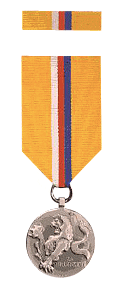
Medile Za zásluhy, the Medal of Merit, is Czechland's fourth highest honour.  It is awarded to those who have provided meritorious service to the state, or a territorial self-governing entity, in the fields of economy, science, technology, culture, arts, sports, enlightenment and education, defence and security of the state and the people.  There are three different grades of this award.

Some previous recipients of the the Medal of Merit include:

Friday, August 20, 2021

Increased Paternity Leave

Back in 2016 the Czech government gave new a week's paternity leave to new fathers.  The leave was to be taken within the first six weeks of birth at 70% of the father's base salary.

In 2019, the EU required that paternity leave be at least two weeks beginning no later than 1 August 2022.

In July the Chamber of Deputies approved the extension to two weeks and it was confirmed this week by the Senate.  Now President Zeman just needs to sign it and it will become effective 1 January 2022.  

It's a done deal that it will be signed since the EU will require it anyway.  Czechland will just be compliant seven months early.

One cool thing is that if the newborn child is hospitalised during the first six weeks since birth then the father can delay taking paternity leave until the child is released to go home.  Basically if the child has to be in an incubator then the father doesn't have contact with the child and the point of paternity leave is for the father to help care for the baby.

Friday, July 9, 2021

No More Mandatory -ová

I've written before that Czech names can be a complex thing.  One of the key differences is that surnames don't always match up.  Due to some patriarchal rules for names, and the lovely Czech grammar that treats surnames like adjectives, a husband will have a different last name than the wife.  A mother will not have the same last name as her son while a father and daughter will also have different names.  

Mr. Novotný and his sons will be called Novotný while his wife and daughters will be called Novotná.  That's because Novotný is the grammatically masculine version and Novotná is the grammatically feminine version. 

Most of the time, the feminine suffix is -ová.  So Mr. Novák and Mrs. Nováková.  The -ová is so common that the Czech press adds -ová to women's names automatically.  For example, German Chancellor Angela Merkel is written as Angela Merkelová.

Personally, I still see it as odd that a parent and child don't have the same last name.  Czechs aren't the only ones to do this.  It's the same in all of the Slavic countries, and I believe the Baltic countries, too.

Until 2004, every woman in Czechland was required to adopt the feminine version of her husband's last name.  There were few exceptions allowed in order to avoid the whole -ová thing.  Foreign women marrying foreign men in Czechland were exempt.  Czech women who married a foreigner whose name ended in a vowel were also off the hook.  Czech citizens with permanent residence abroad or women who had plans to live abroad could also request not to get the -ová.  I don't know how much but there was a fee for this.

A proposed amendment to the Registry Act made it past the Chamber of Deputies, 91-to-33, that would give women the right to utilise the masculine version of her husband's name.  The Senate had 30 days to debate the topic and if passed it would go to the President to be signed in to law.  Well, it passed.  So most likely in January 2022, women can choose to take her husband's masculine-form surname.  So both spouses will have the same last name.

Grammatically the -ová indicates ownership.  So a woman either belongs to her husband or a daughter belongs to her father.  Some view this as kind of sexist and archaic.  Others just view it is tradition and important for Czech grammar.

In Czech every noun is either masculine, feminine or neutral.  So a last name needs to be either masculine or feminine.  The argument is that if you can't decline a last name correctly then this could lead to miscommunication.  

I have a Czech colleague who took her Czech husband's (masculine) last name a couple of years ago.  I need to ask her how she did it.  I do believe that their daughter has the -ová form.  She's said that it really hasn't been a problem other than a few times on the telephone when people stumble a bit thinking the last name is an -ová when it isn't.

A few things that I found out...

  • The mandatory -ová thing is relatively new.  It only became mandatory in 1945.
  • Slovakia allowed women to decide on the -ová suffix several years ago.  The vast majority of women still go with the feminine form.
  • Poland also gave women the right to decide on the -ová suffix a few years.  It wasn't that disruptive.
  • Men can take their wive's name but they only get the masculine version.  There's no -ová for men.
  • If someone wants to change a surname then there is a 1000 Kč (~$47) fee.  The fee is waived following a divorce or a sex change.
  • A person can change their first name if the name is "derogatory, eccentric, ridiculous, distorted, or foreign".  The fee is 100 Kč (~$5).

I get how this all applies to women when they marry.  I don't know if the -ová thing will still apply when a child is born.  Can the parents now decide if their newborn daughter will take the -ová form or not?

Friday, May 7, 2021

New Driving Test Law

A new law was just passed here in Czechland that limits the number of times you can take a driving test.  Previously there was no limit.  Now, under the new law, if someone fails any part of their driver's test they are allowed to repeat it two more times.

If they don't pass it after the third time then they have to repeat the relevant training again.  The candidate then gets another three tries to pass the test.  If they fail all three times then they have to repeat the entire driving course again.

Another change is that the driving school instructor is no longer required to accompany the candidate and the examiner during the driving test.

It's been almost ten years since I received my Czech driver's license.  I need to see what I have to do to renew it.

Friday, April 30, 2021

Jsme fér

Jsme fér (We are fair) is a coalition of non-profit organisations that started in 2017 and campaigns for same-sex marriage here in Czechland.  It is made up of Amnesty International Czech Republic, Logos Czech Republic, Mezipatra, PROUD, Prague Pride, and Queer Geography.

The Equal Marriage Bill was introduced to the Parliament in November 2018 but it has continued to stall for years.  As of yesterday it was finally put to a vote that begins the legislative process.  This is great news but I doubt anything will happen before the next parliamentary elections in October 2021.

Czechland was the first post-Iron Curtain country to provide any sort of legislative protection for gays when it allowed for registered partnerships back in 2006.  While this was an important step it is not the same thing as marriage.  There are more than 100 legal differences that exist between marriage and registered partnerships.

The promising thing is that support for equal marriage has increased dramatically over the years with currently about 67% of the country in favour of it.

Personally I think it would be great for Czechland to become the first post-Communist country to have equal marriage.  Once behind the Iron Curtain, the nation can be the first to break from the "Rainbow Curtain" and join the 16 other European countries that have equal marriage.

Tuesday, April 20, 2021

ECHR Ruling on Mandatory Childhood Vaccinations

In Czechland, there are obligatory vaccinations for nine diseases - whooping cough, polio, tetanus, diphtheria, hepatitis B, haemophilus influenzae type b (Hip), measles, mumps, and rubella.  This is laid down in Act no. 258/2000 Coll., on Public Health Protection.  Those that don't comply with the vaccine schedule may be fined up to 10.000 Kč ($464).  

No one here can be forcibly vaccinated against their will.  But there are other implications.  Children under five years of age can not attend public kindergarten (preschool) if they have not been fully vaccinated.  A kindergarten that admits an unvaccinated child can be fined up to 500.000 Kč ($23,200).  

From age five, unvaccinated children can attend kindergarten because this preschool year is part of the country's compulsory education.  While unvaccinated children can attend school they are not allowed to take part in school trips, camps, etc.  If an unvaccinated child participates in a school trip or camp then the organiser can be fined up to 30.000 Kč ($1,392).   

Vaccines are free as they are covered by the state.

The European Court of Human Rights, in Strasbourg, France, is connected with the Council of Europe with 47 member countries.  The court rules on complaints filed against member counties with regards to their obligations under the 1953 European Convention on Human Rights.  

A couple of weeks ago the European Court of Human Rights ruled on the case of Vavřička and Others v. the Czech Republic.  The primary case was a Czech who refused to have his son and daughter vaccinated against polio, hepatitis B, and tetanus.  The father was fined.  Then there were four other cases where children were not allowed to enter kindergarten because they were not vaccinated.  All of these cases were submitted before the pandemic so this has nothing to do with Covid-19.    

The court ruled 16-1 that the Czech Republic is within its rights to require compulsory vaccination of preschool children and that it did not violate and human rights rules.  The judgement is final and can not be appealed.  This is the first time that the court has ever ruled on this issue.

Here's a 15-minute video I found out on YouTube that talks about the court and what it does.

©European Court of Human Rights

Other countries have vaccinate rules as well.  Italy saw a surge of measles cases so in 2019 a law was passed that without proof of vaccination children up to the age of six are excluded from preschool and kindergarten.  Parents who send their unvaccinated children to school can be fined up to €500 ($593).

Germany passed a law in 2020 that requires parents to vaccinate their children against the measles.  Parents can be fined up to €2500 ($2,970) for failing to comply.  

Saturday, March 27, 2021

Extended State of Emergency

The government has extended the state of emergency  through Sunday, 11 April.  My citizenship exam and language exam are scheduled for Saturday, 10 April.  

So I guess sometime next week I'll get notified again that my exams will be postponed.  Again. 

Update:  Wow!  I received an e-mail on 30 March that my exams on 10 April will still take place even though the state of emergency, including the ban on travel between regions, doesn't expire until 11 April.

In order to enter the building to take my exams I will have to present a negative Covid test no older than 48 hours.  

My temperature will be taken.  I will be turned away if it is above 37,5℃.

A respirator mask will have to be worn the entire time. 

I don't know if I'm more excited to finally take my exams or if it's that I actually get to travel.  My last time on a train was back in July.  In order to book a hotel I had to provide confirmation of official exams.  Fingers crossed that everything works out well.

Saturday, February 27, 2021

Increased Lockdown

The COVID-19 situation in Czechland continues to get worse and now the South African variant has shown up here.  From 26.2. until 11.4., all Czech citizens and residents are prohibited from travelling to Botswana, Brazil, Eswanti, Kenya, Lesotho, Malawi, Mozambique, South Africa, Tanzania, Zambia or Zimbabwe.

From 1 March, all schools including kindergartens will be closed.  So far only first and second grade classes have been open but now they will all close again.  There's an exception for child groups at healthcare facilities for the children of first responders.

The government will also restrict the free movement of people for three weeks.  People must remain in their district.  If you do need to travel outside of your district for work, to go to a doctor or public authority or to an airport, then you need to have written confirmation from your employer or a sworn affidavit.

Brno-City and Brno-Outskirts are considered a single district for the restriction of movement.  Some 26.000 police officers will be deployed to enforce the restriction.   About 5.000 soldiers will be used to reinforce the police.  

It's a good thing that I didn't choose to take my exams in March because with the new restrictions I won't be allowed to travel to Prague.

Thursday, February 25, 2021

New Mask Requirement

From today there's a new requirement to wear respirators or N95 masks instead of home-made roušky.  Respirators have to be worn in all shops, on public transit and at stops, at airports, in medical facilities, in cars if passengers aren't members of the same household, and in all buildings or outside when you are less than two metres (6 feet) apart.

There are a few exceptions but the big one is for children under 15.  I don't quite get this.  I can see an exception for small children.  But all kids under 15?

Sunday, February 21, 2021

Abortion

Abortion can be a divisive topic for some.  Some people argue that an embryo or foetus is human being so abortion equals murder.  Others view abortion as a cornerstone of a woman's right to make decisions about her own body.  Religion deepens the divide between the two sides.  Globally there are about 56 million abortions performed each year.  Roughly 45% of these are not performed safely which to me makes it a matter of public health.  

Abortion was legalised but with restrictions in Czechoslovakia in 1957.  In 1986 the restrictions were lifted.  The increased availability of contraception and sex education have contributed to decrease in the number of abortions performed in the country.

In Czechland it is legal to have a an abortion up to 12 weeks of pregnancy for any reason.  Abortions are allowed up to 24 weeks for some medical reasons and at any time due to a malformed foetus.  Abortions for non-medical reasons are not covered by the public health system.  The average price is around 4500 Kč ($205 or €170).  

EU citizens can legally come to the Czech Republic for an abortion.  This is good news for women in Poland.  Only around 1000 legal abortions were performed in Poland each year because the country already had some of the most restrictive abortion laws in Europe.  The Polish government now only allows abortion in cases of rape, incest, or when the pregnancy threatens the mother's life.  Abortions due to foetal abnormalities are no longer allowed.

This has led to mass protests against the Polish government.  A red lighting bolt has become the main symbol at Poland's pro-choice demonstrations.  It's estimated that 100.000 women each year travel to another country, usually Germany, Czech Republic, or Slovakia, for a safe and legal abortion.  The scary number is how many women have unsafe "back alley" procedures because it is illegal in Poland?  

Saturday, February 20, 2021

Czech Gun Rights

Czech law permits gun ownership to those who can pass a gun proficiency test, a medical exam, and who have a clean criminal record.  The majority of gun owners here report having a weapon for self-defence and not for just sport or hunting.  This is one of the safest countries so I don't quite understand the self-defence reason but to each their own.

There are five different types of gun licenses here.

Type A = Firearm collection
Type B = Sport shooting
Type C = Hunting
Type D = Exercise of a profession
Type E = Self-defence 

A application for a gun license is made with the police.  A application fee is 700 Kč ($30) and the license is issued in 30 days.  It is good for 10 years before needing to be renewed.  

For sport and hunting, types B or C, the applicant must be at least 18 years old.  There are special exceptions if the applicant is a member of a sporting club or if hunting is taught as part of a school curriculum then 15 or 16 year olds can get a license.  The minimum age for A, D, or E license types is 21.

Anyone who excessively drinks alcohol, uses illegal drugs, or those found guilty of misdemeanours related to firearms, DUI, or public order in the previous 3 years don't qualify for a gun license.

Ex-convicts who served more than 12 years in prison are not allowed a gun permit.  Convictions for public endangerment, murder, treason, or participation in organised crime are not allowed a permit.

Those who serve less than 2 years in jail are eligible to apply after a 5 years.
Those who serve sentences for 2 to 5 years can apply after 10 years.
Those who serve sentences for 5 to 12 years can apply after 20 years.
For those who server sentences more than 12 years are ineligible from ever getting a gun permit.

There's no limit on the number of guns a person can own.  There are safe storage requirements of owning more than 2 weapons or having more than 500 rounds of ammunition.  There are additional requirements if a person has more than 10 guns and further requirements for having more than 20 guns.

Possessing a firearm without a license carries a penalty of up to 2 years in jail.  In some cases this goes up to 8 years.  Carrying a gun while intoxicated is illegal.  There are heavy fines and forfeiture of one's gun license.  

Across most of the EU, the concealed carry of firearms is not allowed.  Here though it is allowed provided the owner has a concealed carry permit.  I've heard that around 80% of gun owners here also have a concealed carry permit.  It is against Czech law to carry any weapon during a public demonstration.  It is also illegal to carry a weapon with a silencer installed.

During the German Nazi occupation it was illegal to posses firearms.  During communism only those seen as loyal to Communist regime were allowed to possess guns.  Given these historical restrictions the right to posses firearms is viewed as an essential liberty.  But it's not like everyone here owns a gun.  There's something like 12 or 13 guns for every 100 people.  In contrast to the USA where there are about 120 guns for every 100 people.  The USA can't even pass common sense gun legislation.  I feel much safer here in Czechland than I do in the USA.

From 1 January to 31 July 2021, there is an amnesty running where any illegally-held weapons can be turned over to the Czech police, no questions asked.  Or if you have a valid gun license and proof that the weapons wasn't stolen or used to commit a crime then you can legally register the gun.  

The last time this was done was five years ago and most of the weapons turned in dated back to WWII and the Soviet occupation.  The Czech police released a video on YouTube and with typical Czech humour it shows a guy turning over a Soviet tank.  

©Policie ČR

Saturday, February 6, 2021

Plastics Ban

Last year the EU agreed on enacting new restrictions on single use plastics items like straws, cutlery, plastic plates, and cotton swabs that are polluting the oceans.  Czechland followed through and is banning specific disposable plastic products.


The Ministry of the Environment estimates that each year about 300 million plastic straws, 20 million plates, 60 million cutlery, 40 million food containers, and 40 million polystyrene cups are sold here.  That's a lot for a relatively small country.

Effective July 2024, beverage containers that have plastic lids and caps will be banned unless they remain attached to the container.

The EU has agreed that by 2025 all plastic bottles have to be made of at least 25% recycled content.  By 2029 that goes up to at least 90%.

The EU generates 25 million tonnes of plastic waste but only about 30% is recycled.

In 2018, before Brexit and leaving the EU, the UK was by far the biggest contributor of discarded straws.

Update October 2022:  The ban went into effect on 1 October.

Sunday, January 10, 2021

2021 Labour Code Changes

There are several changes to the Czech labour code which took effect on 1 January.

 An employee's vacation time is now determined by the number of hours worked during a week and not but the number of days worked.  This makes it fairer for employees who work part-time or work irregular shifts.  The law provides for a minimum of 4 weeks (160) hours of vacation time per year for a full-time employee.  While 4 weeks of vacation time is the minimum required under the labour code, many companies actually provide 5 weeks off in order to be competitive.

There's a new shared workplace law that allows an employer to hire two or more part-time employees to fulfil one full-time job.  The employer determines the schedule of working hours and the shared workplace has to be agreed upon will all the employees by a special written agreement.

The amount of worker's compensation benefits have been increased.  The circle of relatives eligible for survivor's benefits have also been extended.  There's now a new one-off compensation in place for non-pecuniary damage in the event of serious health damage to an employee.

Freelancers are now allowed to pay a flat tax instead of monthly contributions.  The 2021 flat tax is 5.469 Kč ($255) per month.  This includes the minimum health insurance contribution of 2.393 Kč and the  2.976 Kč minimum contribution for social security insurance.

The annual taxpayer allowance increases to 27.840 Kč ($1,297).  In 2022 it will increase to 30.840 Kč ($1,437).

The government has done away with the super-gross salary.  Previously, a person's tax base included the social and health insurance contributions made by one's employer.  

The solidarity tax has been eliminated.  This was an extra 7% on all income over 100.000 Kč ($4,660) per month.

Instead there's now a progressive income tax for people of 15% and 23%.  The 23% rate is for people whose income exceeds 48 times the average yearly salary.  For this year that's for people earning 1.701.168 Kč ($79,279).