Showing posts with label Czech Politicians. Show all posts

Wednesday, February 1, 2023

New Czech President

The results are in and Czechland is getting a new president.  Petr Pavel will replace incumbent president Miloš Zeman.  When he takes office in March he will be country's fourth president.

Here's what's gone over here.  Following the election in 2021,  Petr Fiala became prime minister and Andrej Babiš was out of a job.  For some reason he decided to run for president.

The first round of presidential elections took place on 13-14 January.  General Pavel ran as an independent candidate and won the first round of elections with 35,4% of the vote.  Babiš came in second with 34,99%.

Most of the other candidates put their support behind Pavel and he won the second round of voting with 58,33%.  He won by more than a million votes.  There was just over 70% voter turnout which was the highest turnout in any national election since 1998.   

President-elect Pavel enlisted in the Czechoslovak People's Army after graduating high school in 1983.  Following the Velvet Divorce, he served in the Czech Army and from 2012 to 2015 he was the Chief of the General Staff of the Czech Armed Forces. From 2015 to 2018 he was the Chairman of the NATO Military Committee; the first military officer from the former Warsaw Pact to hold the position.

While he doesn't have any political experience he does have a master's degree in international relations from King's College London and speaks English, French, and Russian. 

Pavel is a social progressive who supports gay marriage, euthanasia, and rejects the death penalty.  He is pro-Western, pro-EU, pro- NATO, and he supports Ukraine.  He was endorsed by Spolu, the centre-right governing alliance.

Following the Velvet Revolution, people chanted "Havel na Hrad" ("Havel to the Castle") for Václav Havel to become president (because Prague Castle is the official office of the president).

During the campaign, it became "Pavel na Hrad".

Babíš was endorsed by outgoing president Zeman and the Communist Party of Bohemia and Moravia.  Babiš tried to portray Pavel as a warmonger.  Babiš also caused additional controversy when he said that if Poland was attacked by Russia, then he would not comply with NATO's article 5, and would not go to Poland's defence.

Here's a short video I found on YouTube about the election.

©Al Jazeera

Sunday, September 25, 2022

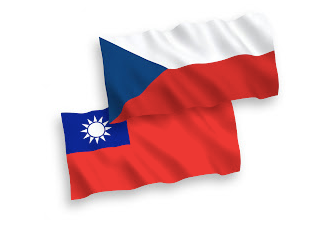
Cooperation With Taiwan

Last week, a memorandum of cooperation was signed in Taipei between Czechland and Taiwan.  This will increase the level of cooperation between the two countries in education, science, and culture.

Czechia wants to see direct flights between Prague airport and Taipei.  Recently, Czechland opened a development centre for research into semiconductors.

The national museum in Prague and the national museum in Taipei will now become sister institutions.

Cooperation between the two countries has been steadily growing.  Foxconn, a Taiwanese electronics manufacturer, runs a subsidiary company called Foxconn CZ, runs its largest European operations centre and EU hub, in Pardubice.  It is one of the most profitable companies in Czechia.  

In March 2020, the countries signed an official partnership to fight Covid-19.  During the Covid crisis, Taiwan provided Czechland with medical equipment.  

In 2021, Czechland supported Taiwan's bid to participate in the World Health Assembly.  

After the June 2021 tornado in South Moravia, Taiwan donated 6,5 million Kč (~$304K) to affected villages.

In August 2021, Czechland gave Taiwan 30.000 Moderna vaccines.

Obviously China isn't thrilled with this because it still considers Taiwan as part of China and views the Czech government as supporting Taiwanese independence.  Objections from Beijing aren't something new.

Back in January 2020, Prague mayor Zdeněk Hřib signed a sister city agreement with Taipei, just two months after cancelling the sister city agreement with Beijing.  It probably didn't hurt that Hřib is a doctor and did his medical internship training in Taiwan.

Unrelated to Taiwan, but another reason that I really like MUDr. Hřib is that in February 2020 he re-named the square in front of the Russian embassy to Náměstí Borise Němcova (Boris Nemcov Square) after the outspoken critic of Vladimir Putin who was assassinated in 2015.

In August 2020, RNDr. Miloš Vystrčil, the President of the Czech Senate, made headlines for  making an official trip to Taiwan.  This was a big deal because China's foreign minister Wang Yi, said that he would pay a "heavy price" for visiting Taiwan.  Not only did he not back down to China, he channeled U.S. President John F. Kennedy's 1963 speech and told Taiwanese lawmakers, in Mandarin Chinese, "I am Taiwanese."

©民視英語新聞 Formosa TV English News

I love that the Czech politicians stand up against authoritarian regimes.  Here's a short video I found on YouTube where Czech MEP Markéta Gregorová shares her thoughts on why the ties between the two countries are getting stronger.

©RTI English

Here's a video from May 2021, former Taiwanese Ambassador at Large Maysing Yang met with both Hřib and Vystrčil in Prague.

  
©民視英語新聞 Formosa TV English News

It's clear that Czechland and Taiwan maintain strong unofficial relations.  China won't have diplomatic relations with any country that officially recognises Taiwan as an independent country.  So there aren't any official embassies.  Instead, the Czech Republic is represented in Taipei by the Czech Economic and Cultural Office, 捷克經濟文化辦事處.  In Prague, Taiwan has the Taipei Economic and Cultural Representative Office.

In October, the Prague Philharmonic will travel to Taiwan.

©民視英語新聞 Formosa TV English News

Sunday, September 4, 2022

Czechoslovak Government-in-Exile

The second President of Czechoslovakia was Edvard Beneš.  Following the 1938 Munich Agreement, he resigned from office bringing an end to the First Republic.  He went to the USA and became a visiting professor at the University of Chicago.  After a few months he returned to Europe to organise a government-in-exile.


While in Paris he formed the Czechoslovak National Liberation Committee, Výbor Československého Národního Osvobození, in October 1939.  Since Slovakia split from Czechoslovakia to become a Nazi puppet state, France had a problem with the committee representing all of Czechoslovakia.  The impending Nazi occupation of France probably didn't help so the committee moved to London in 1940.

The committee gained British recognition as the Provisional Government of Czechoslovakia, Prozatímní vláda Československa, which was basically the Czechoslovak Government-in-Exile, and it gained international recognition by other Allied governments. 

While all of this was going on, following the annexation of the Sudetenland, Emil Hácha was President of the Second Czechoslovak Republic which what was left of Czechoslovakia after it was carved up.  This lasted until 15 March 1939 and then he became the state president of the Protectorate of Bohemia and Moravia.

Jan Šrámek

With Beneš as the President and Jan Šrámek as Prime Minister, the worked to return Czechoslovakia to its 1937 borders which was a big goal considering the country had been basically wiped from the map.  The. government-in-exile also tried to assist Czechoslovak Jews.

In 1941, there was pressure from the Allies for the Czechs to play a greater role in the resistance, especially in the Protectorate.  In late September 1941, Reinhard Heydrich launched a major crackdown on the resistance when he took over as Reichsprotektor.   

After almost six months of planning, Operation Anthropoid went into action.  Jan Kubiš and Jozef Gabčík went to Prague and assassinated Heydrich.

Jan Kubiš and Jozef Gabčík

At Porchester Gate in London, there's a plaque marking where the Czech government-in-exile was based in the UK, and this is where the assassination was planned.  I guess I need to go find the plaque the next time I'm back in London.

Monday, November 29, 2021

A New Prime Minister

As of yesterday, Czech Republic has a new prime minister.  Petr Fiala, the chairman of the Civic Democratic Party and head of the SPOLU alliance, was appointed as the new prime minister by President Miloš Zeman.

The new prime minister is a Brňák meaning that he's from Brno.  The country's first prime minister from Brno.  He was born here.  He studied history and Czech language at Masaryk University and in 2002 he became the country's first professor of political science.  In 2004 he was the dean of Masaryk's Faculty of Social Studies and became head of the entire university.  

In 2012 he was the Minister of Education, Youth and Sports.  In 2013 he was elected to the Chamber of Deputies and in 2014 he became chairman of the Civic Democratic Party (ODS).

©EuroNews

SPOLU, the Together coalition, is made of the Civic Democratic Party, the Christian Democrats (KDU-ČSL) and TOP 09.  SPOLU won the recent general election with the ANO party coming in second followed in third place by an alliance between the Pirate party and the Mayors and Independents party (STAN).  In fourth place was the Freedom and Direct Democracy party (SPD) which is anti-EU.  SPOLU took 108 of the 200 seats in the Chamber of Deputies.  No other party gained enough votes to earn a seat which is why the Communist party is out.

SPOLU signed an agreement with the Pirate and STAN alliance to create a new majority government with Petr Fiala as the leader.  

©EuroNews

Premiér, or ministerský předseda, is the prime minister who is the head of the government of the Czech Republic.  The prime minister is the most powerful office as they lead the executive branch of government, chairs the cabinet and selects the cabinet ministers.  

The Czech President selects the prime minister whose term is four years and there are no terms limits.  Well, sort of.  Czechland is a parliamentary democracy so the prime minister and their government are accountable to the Chamber of Deputies.  The prime minister is usually the leader of the largest political party, or a coalition, in the Chamber of Deputies.  So it's pretty straight forward who the president will select as prime minister.    

The Czech Constitution states that the prime minister was gain and maintain the confidence of Parliament. As soon as the prime minister looses the the support of the majority of the Chamber of Deputies, the prime minister is forced to resign and the president must select a new prime minister.  So there's no guarantee that a prime minister's term will last the full four years.

The Czech president is the country's head of state, represents the country internationally and is commander-in-chief of the military.  As the prime minister runs the executive government, the president's role is mostly ceremonial.  The president is responsible for appointing the prime minister but it's pretty straight forward that the PM is the leader of the largest party, or the largest coalition, in the Chamber of Deputies.  However the president is responsible to appoint members of the Czech National Bank and to nominate justices to the Constitutional Court, but this is subject to Senate approval.  In Czechland, "professor" is the highest academic degree and the title is appointed by the president, but countersigned by the prime minister.

The Czech Statistical Office reported that more than 65% of eligible voters participated in the election about seven weeks ago.  This is the highest turnout in a legislative election since 1998.

The now former prime minister was Andrej Babiš and he held the role from 2017 to now.  Prior to that, from 2014 to 2017, he was the Deputy Prime Minister and the Minister of Finance.


He entered politics 2012 by forming his own political party - ANO 2011.  "ANO" stands for Akce nespokojených občanů, the Action of Dissatisfied Citizens.  "Ano" is also the Czech word for "yes".  

Andrej Babiš is from Slovakia.  He moved to Czech Republic after the Velvet Revolution.  He was a businessman prior to entering politics and is the second richest man in Czechland.

He is the oldest and wealthiest person to ever become prime minister.  He was the country's first prime minister to not be from the ODS or ČSSD parties.  He was the first prime minister who was born outside of the Czech Republic.  He is the first to hold dual citizenship and the first whose native language isn't Czech.

He has Czech and Slovak dual citizenship.  One of the things that came out of the Velvet Divorce was that anyone who was a citizen of the Czech and Slovak Federative Republic on 31 December 1992, could chose if they wanted to be a citizen of either the new Czech Republic or the new Slovak Republic.  This is called "declaration".  In 2000, he obtained Czech citizenship by declaration, but he maintained his Slovak citizenship by descent as his parents are Slovak citizens.

This is still something that's odd to me.  In the U.S., you can't be President unless you were born a citizen, and you can't hold dual citizenship either.  The best case of this is probably Madeline Albright when she was Secretary of State.  In the US, the order of succession for the President is (1) the Vice-President, then (2) the Speaker of the House, (3) the President pro tempore of the Senate, followed by (4) the Secretary of State.  Since Madeline Albright wasn't born a U.S. citizen she was not eligible to become a presidential successor.

Babiš is Slovak, with Czech citizenship.  In my head I just can't understand how you can be the leader of a country when you weren't born a citizen.  Or how do you ensure that the leader is working in the best interest of the country when he holds citizenship, and loyalty, to another country?  But that's just one of the differences between the Czech and American systems.

One of the many controversies about him was that during the 1980s, he was an StB agent.  Documents at the National Memory Institute in Slovakia show that Babiš collaborated with the StB under the code name agent Bureš.

He was accused of illegally obtaining €2 million of EU subsidies designed for small businesses by concealing his ownership of a company that received funds.

On 16 November 2019, the Million Moments for Democracy protest group held a protest demonstration against Babiš that was attended by over 250,000 people which was the largest protest since the Velvet Revolution.

The national debt in 2020 was 367,4 billion Kč (over $15 billion) which is the largest in the country's history.  In spite of all of the controversies around Babíš he's still leaving with a 30% approval rating.

The new prime minister has promised to reform and stabilise the growing national debt.

In July 2022, the Czech Republic will assume the 6-month Presidency of the Council of the European Union.

Saturday, March 7, 2020

Masaryk's 170th Birthday

Today is the 170th birthday of Tomáš Garrigue Masaryk who is one of the most important figures in Czech history.  

He was the founder and first president of Czechoslovakia.

People laid flowers at his statue today at Masaryk University.

Wednesday, October 10, 2018

Alexander Dubček

Alexander Dubček (1921-1992) was a Slovak politician and was the leader of Czechoslovakia from January 1968 to April 1969.  His efforts to reform the communist government during the Prague Spring resulted in the Soviet-led invasion in August 1968.

He was born in Uhrovec, 157 km (98 miles) from Bratislava on 27 November 1921.  His father was a member of the Czechoslovak Communist Party and the family settled in Kyrgyzstan but returned in 1938.  Dubček was part of the resistance during the Nazi occupation.  Following the war he rose up the ranks of the party and in 1962 he became a full member of the Central Committee's Presidium.  In January 1968 he became First Secretary of the Communist Party.

Dubček's slogan of "socialism with a human face" ushered in the liberal reforms of the Prague Spring.  Although he remained loyal to communism he wanted Czechoslovakia to pursue its own path while maintaining a socialist government.  Censorship of the media was lifted which fuelled a new wave of Czechoslovak films.  Victims of the Stalin-era political purges were rehabilitated and strikes were legalised.  Equality in economic relations between Czechoslovakia and the Soviet Union was demanded along with a desire for Soviet advisors to be removed from the country.  He wanted real elections with secret ballots for party officials.  While his popularity soared with the people the loosening of control upset the communist hardliners.

The Soviets and leaders of other Warsaw Pact countries weren't happy about the reforms.  They didn't want a more westernised Czechoslovakia.  Dubček thought that as long as he reassured everyone that the country would remain loyal to Moscow then there wouldn't be any intervention like when Hungary was invaded in 1956.  He was wrong and on 20-21 August 1968 the country was invaded in the largest military operation in Europe since WWII.

Dubček and other five other reformers were arrested and taken to Moscow.  Brezhnev bullied him with threats of incorporating Slovakia into the Soviet Union while splitting Bohemia and Moravia into a new country under Soviet rule.  Dubček conceded and signed the 15 doctrines of the Moscow Protocol which ushered in a rigid era of normalisation that restored strict communist order in the country.

In March 1969 the Czechoslovak ice hockey team beat the Soviet Union at the World Cup.  Some fans went crazy and destroyed the offices of the Soviet airlines and some other institutions.  This came to be known as the Czechoslovak Hockey Riots and afterwards Dubček was forced to resign.  In 1970 he was expelled from the Communist Party.  He then worked in Slovakia for the Forestry Service.  He never got involved with any dissent groups.

Following the Velvet Revolution, he was elected Chairman of the Federal Assembly in 1989.  In 1992 he became leader of the Social Democratic Party of Slovakia and represented the party in the Czechoslovak Parliament.  On 1 September 1992 he was in a car crash.  As a result of his injuries he died on 7 November 1992.

Here's an interesting 10 minute video I found out on YouTube.

Saturday, January 3, 2015

Tomáš Garrigue Masaryk

Czechs feel the same way about Tomáš Garrigue Masaryk as Americans do about George Washington.  He was the founding father and first president of Czechoslovakia.

He was born in in 1850, in the Austro-Hungarian Empire.  Specifically in Hodonín, Moravia to a Czech mother and a Slovak father.  He went to grammar school in Brno and went on to earn his Ph.D. from the University of Vienna.

Masaryk wanted to reform the Austro-Hungarian Empire into a democratic federal state but eventually favored establishing an independent country for Czechs and Slovaks.

During World War I, he went into exile where he gave lectures and lobbied for an independent state.  He organized Czechoslovak Legions in Russia which fought for the Allies.

Masaryk statue in Praha
He obtained support from President Woodrow Wilson and when the Austro-Hungarian Empire fell in 1918, the Allied Powers recognized Masaryk as the head of the Provisional Czechoslovak government.  He was then elected as the first president of an independent Czechoslovakia.  He was reelected three times.  He resigned in 1935 due to old age and poor health and he passed away on 14 September 1937.

Masaryk University
Under his leadership Czechoslovakia was not only a functioning democracy but it was one of the world's 10 most industrialized states.

To this day, Masaryk is regarded as a symbol of democracy.  Almost every Czech town has either a Masaryk street or Masaryk Square dedicated to him.  Brno is home to Masaryk University, which is the second largest university in Czechland, and the country's best oncology centre.

He is on the 5000 Kč banknote.  I've never even seen a 5000 Kč banknote before.

Here's a short video I found out on YouTube.

Tuesday, January 21, 2014

#11

In January, the Czech President appointed Bohuslav Sobotka as the new prime minister. 

Sobotka is the former finance minister and chairman of the Czech Social Democratic Party (ČSSD).

He wants to raise pensions and the minimum wage while keeping the budget deficit below 3% of GNP.  He also favors closer links with the rest of Europe and potentially adopting the Euro around 2020.  But that's six years away and he's the 11th prime minister since 1993.   

Sunday, January 13, 2013

2013 Round One Election Results

Well the first direct elections for the Czech presidency have come and gone.  Since no one won with more than 50% of the vote, there will be a run-off election on January 25th and 26th for the top two finishers.

In the first round, former Prime Minister Miloš Zeman won 24.21% and Foreign Minister Karel Schwarzenberg won 23.4%.

Former Prime Minister Jan Fischer led the polls back in November but finished in third place, and out of the second round, with only 16.35% of the vote.  "Avatar" came in fifth place.

There were 8,435,522 registered voters and voter turn out was 61.31%.

The Czech President serves a five-year term and represents the country internationally and appoints candidates to the constitutional court and to the central bank.  However, there is not much day-to-day power.  That belongs to the prime minister.

Schwarzenburg is a 75-year old titled prince.  As a native German speaker his Czech is sometimes a bit rustic and he can't properly pronounce Ř.  However, he is very popular with young, urban voters.  I've already noticed these flyers out on Facebook to go vote for Karel in the next round.

Friday, January 11, 2013

1st Czech Presidential Election

Today, Czechs go to the polls to elect a new president.  This is the first time ever.  Previously, the president was chosen by the Chamber of Deputies and the Senate because it was thought that the popularly elected president might weaken a government led by the prime minister.  The Czech President serves for a 5-year term.  The current president is Václav Klaus and he has to step down because he is finishing his second term and a third term is not permitted.

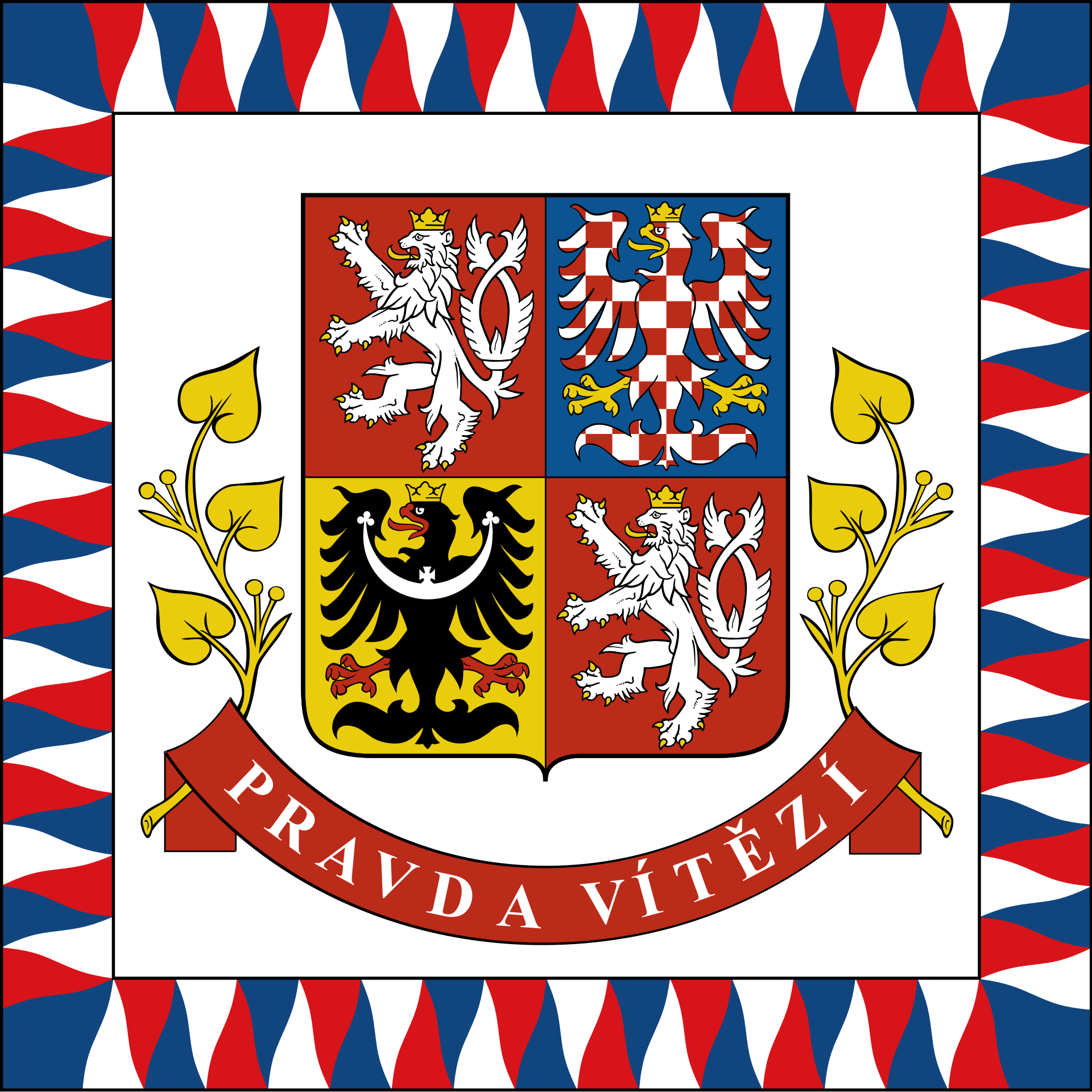
Czech President's Flag
Twenty people tried to get on the ballot but in order to become an official candidate a person needs to get 50,000 signatures or be nominate by 20 deputies or 10 senators.  Nine people qualified.  Czechs get two days to vote, this Friday and Saturday, but if no one gets more than 50% of the vote then there will be a run-off election on January 25-26 between the top two finishers.  Here are the candidates...

Jana Bobošíková is the leader of the Sovereignty party.  She used to be a journalist for Czech TV and was a member of the European parliament.  She is a Euro-skeptic and wants to restore border controls.

Jiří Dienstbier Jr., was born in the USA and holds dual citizenship.  His father was a well-known dissident.  He was a lawyer and is a senator.  He is the Deputy Chairman of the ČSSD, the Czech Social Democratic Party.  He is the youngest of all of the candidates.

Jan Fischer is an independent candidate and one of the favorites.  He was president of the Czech Statistical Office and was the Czech Prime Minister, from May 2009 to June 2010, where he led a caretaker government.  He is pretty much a moderate but is often criticized for being a member of the communist party from 1980 to 1989.  If elected, he would be the world's first popularly-elected Jewish president outside of Israel.

Táňa Fischerová is an independent candidate and a former dissident.  She is an actress, writer, television host and a civic activist.  She was a member of parliament from 2002 to 2006.  

Vladimír Franz graduated from law school but is a painter and opera composer.  He is a professor of dramatic arts in Prague and wants to bring education, culture and tolerance to politics.  He is an independent candidate and is very popular, especially with the youth.  The 53-year old is known for his extensive tattoos which cover 90% of his body, including his face.  His nickname is "Avatar" because in photos he often comes out dark blue.

Zuzana Roithová was a physician and represents the KDU-ČSL, the Christian and Democratic Union - Czechoslovak People's Party.  She was once the Minister of Health and is a former senator.  Currently she is a member of the European Parliament.

Karel Schwarzenberg is the leader of the TOP 09 party and is currently the Minister of Foreign Affairs.  He has served in the Chamber of Deputies and as a senator.  He is a prince.  I don't mean that he is a swell chap, I mean that he is a royal prince.  His full name is Karl Johannes Nepomuk Josef Borbert Friedrich Antonius Wratislaw Mena Fürst zu Schwarzenberg.  After the communists took over in 1948, his family fled the country.  He grew up in Austria but has dual citizenship with CZ and Switzerland.  He returned to Prague in 1990 after the Velvet Revolution.  He is extremely popular and always sports a bow tie.  He is the oldest candidate and, at 75, some people wonder, if elected, how long he would actually be able to serve as President.  He has been known to sleep during parliamentary sessions.  

Přemysl Sobotka was a physician before becoming a politician.  He is the candidate for ODS, the Civic Democratic Party.  ODS was founded by the outgoing president, Václav Klaus, and is the largest conservative political party in the country.

Miloš Zeman is among those with the most experience.  The hard drinking, chain smoking economist was the Prime Minister from 1998 to 2002 and led the Social Democratic Party.  He was the Speaker of the Chamber of Deputies from 1996 to 1998.  In October 2209, he founded Zemanovci, the Party of Civic Rights.  He is best known for his arrogance and his belligerent rhetoric with political opponents and journalists.

By law, the candidates can spend up to 40 million Kč (~$2.08M) during the first round of elections.  In the event of a run-off, the two top candidates may spend up to 10 million Kč during round two.  Here's a quick video I found out on YouTube about the upcoming elections.


©France24

Friday, December 23, 2011

Václav Havel, R.I.P.

On December 18th, Václav Havel passed away at the age of 75. This is a very sad time for many Czechs because he was the dissident writer who became the first president of a post-communist Czechoslovakia.

After the 1968 invasion, his plays were banned and he became more politically active. He was jailed multiple times and remained under constant surveillance by the secret police. He was put in prison from May 1979 to February 1983.

After the Velvet Revolution, he became the ninth and final president of Czechoslovakia, from 1989-1992, and the first president of the Czech Republic, from 1993-2003.

He was a long-time chain smoker and was diagnosed with lung cancer in December 1996.

He will long be remembered as a great man who stood up to tyranny and injustice. There have been three official days of morning from Wednesday to Friday and candlelight memorials took place throughout the Czech Republic. I wonder if there were also memorials taking place in Slovakia?

Here's a video I found out on YouTube.

©BBC

Note:  On Friday, October 5, 2012, the Prague airport was renamed Václav Havel Airport.