


Here's a Rick Steves video I found out on YouTube about Alphonse Mucha and The Slav Epic.
Here's a Rick Steves video I found out on YouTube about Alphonse Mucha and The Slav Epic.
 Today is the 675th anniversary since the founding of Charles University in Prague back in 1348.
Univerzita Karlova was founded by Emperor Charles IV, and it is the oldest, and largest, university in Czechland. It was modelled after the universities in Bologna and Paris. It was the 31st university in Europe and the first in Central Europe.
There were four faculties when the university opened: theology, law, medicine, and arts. Today there are more than 51.000 students studying in 17 different faculties.
While universities in Brno are well regarded, Charles University is the only Czech university to rank among the top 250 universities worldwide, amongst the top 1,5% of 17.000 universities worldwide.
Here's a short English-language video about Charles University that I found on YouTube.
 Česká národní banka, (ČNB), is Czechland's central bank it supervises the country's financial market. It's primary objective is price stability by setting monetary policy, it issues the koruna, manages the payments and transfers between banks, and oversees the banking sector, capital markets, pension funds, the insurance industry, and foreign exchanges. It holds reserves of more than $62,5 million and tries to stabilise inflation to around 2% per year. The headquarters are in Prague.
 The Austro-Hungarian Bank was the central bank of the Habsburg Empire in the 19th and 20th centuries. Czechoslovakia didn't have a central bank for the first six years of independence. The country's ministry of finance was responsible for all central banking functions.
 Národní banka Československa was the central bank from 1926 to 1939 during the First Republic. From 1939 to 1945, during the Protectorate of Bohemia and Moravia, there was the Národní banka pro Čechy a Moravu v Praze.

Following the Velvet Divorce, the State Bank of Czechoslovakia was replaced on 1 January 1993 by the Czech National Bank.
 Slovakia has the National Bank of Slovakia (NBS).
Here's a short video, in Czech, about the ČNB that I found on YouTube.
So this January was the 30th anniversary of the Czech National Bank (and Slovakia's too).
To commemorate both the 30th anniversary of the ČNB and the Czech currency, the bank is issuing a special 1000 Kč banknote.

 Igor, one of my former colleagues now works for Riganti which is a software development and design firm in Prague. Late last year he invited me to speak at a Meetup event about agile project management at Microsoft's Prague office.
I agreed to it provided that I would present in English. There was no way that I would try to do it in Czech.
Public speaking isn't my favourite thing to do. I can do it but it's not my idea of a good time. Most people never believe that I'm an introvert who merely pretends to be an extrovert.

 |
| Jakob, me, and Igor |
Overall it was a nice experience. Big thanks to Igor and Riganti for inviting me to participate. Apparently, my presentation will be online but I don't know when I'll get a chance to look at it.
My first assistant, Jakob, was in the area so he came by to catch the presentation. It was great to be able to catch up with the guys.
 Ministerstvo průmyslu a obchodu is the Czech Ministry of Industry and Trade which was established in 1992. In short, the ministry is in charge of industry, energy and trade policy, business and investment promotion, internal trade and consumer protection.
That's a pretty big purview. It also includes the use of European funds, the promotion of small and medium-sized companies, technical standardisation and quality control, industrial research, engineering and technology development, electronic communication and postal services, as well as being responsible for commodity exchange with the exception for issues under the Ministry of Agriculture.
Here's a short video, in English, that I found out on YouTube from the ministry highlighting Czechland.
 Last week, a memorandum of cooperation was signed in Taipei between Czechland and Taiwan. This will increase the level of cooperation between the two countries in education, science, and culture.
Czechia wants to see direct flights between Prague airport and Taipei. Recently, Czechland opened a development centre for research into semiconductors.
The national museum in Prague and the national museum in Taipei will now become sister institutions.
 Cooperation between the two countries has been steadily growing. Foxconn, a Taiwanese electronics manufacturer, runs a subsidiary company called Foxconn CZ, runs its largest European operations centre and EU hub, in Pardubice. It is one of the most profitable companies in Czechia.
In March 2020, the countries signed an official partnership to fight Covid-19. During the Covid crisis, Taiwan provided Czechland with medical equipment.
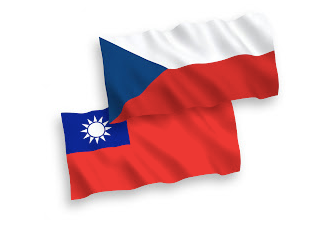 In 2021, Czechland supported Taiwan's bid to participate in the World Health Assembly.
After the June 2021 tornado in South Moravia, Taiwan donated 6,5 million Kč (~$304K) to affected villages.
In August 2021, Czechland gave Taiwan 30.000 Moderna vaccines.
Obviously China isn't thrilled with this because it still considers Taiwan as part of China and views the Czech government as supporting Taiwanese independence. Objections from Beijing aren't something new.
.jpg) Back in January 2020, Prague mayor Zdeněk Hřib signed a sister city agreement with Taipei, just two months after cancelling the sister city agreement with Beijing. It probably didn't hurt that Hřib is a doctor and did his medical internship training in Taiwan.
Back in January 2020, Prague mayor Zdeněk Hřib signed a sister city agreement with Taipei, just two months after cancelling the sister city agreement with Beijing. It probably didn't hurt that Hřib is a doctor and did his medical internship training in Taiwan.
 Unrelated to Taiwan, but another reason that I really like MUDr. Hřib is that in February 2020 he re-named the square in front of the Russian embassy to Náměstí Borise Němcova (Boris Nemcov Square) after the outspoken critic of Vladimir Putin who was assassinated in 2015.
 In August 2020, RNDr. Miloš Vystrčil, the President of the Czech Senate, made headlines for making an official trip to Taiwan. This was a big deal because China's foreign minister Wang Yi, said that he would pay a "heavy price" for visiting Taiwan. Not only did he not back down to China, he channeled U.S. President John F. Kennedy's 1963 speech and told Taiwanese lawmakers, in Mandarin Chinese, "I am Taiwanese."
I love that the Czech politicians stand up against authoritarian regimes. Here's a short video I found on YouTube where Czech MEP Markéta Gregorová shares her thoughts on why the ties between the two countries are getting stronger.
Here's a video from May 2021, former Taiwanese Ambassador at Large Maysing Yang met with both Hřib and Vystrčil in Prague.
 It's clear that Czechland and Taiwan maintain strong unofficial relations. China won't have diplomatic relations with any country that officially recognises Taiwan as an independent country. So there aren't any official embassies. Instead, the Czech Republic is represented in Taipei by the Czech Economic and Cultural Office, 捷克經濟文化辦事處. In Prague, Taiwan has the Taipei Economic and Cultural Representative Office.
 The Protectorate of Bohemia and Moravia, Protektorát Čechy a Morava, was established on 16 March 1939 and lasted until the surrender of Nazi Germany on 8 May 1945.
From 1933, Czechoslovakia was Central Europe's only functioning democracy. The First Republic ended following the 1938 Munich Agreement, where the UK and France sold out the country in hopes of preserving peace in Europe, which enabled Nazi Germany to occupy the Sudetenland.
 What was left of Czechoslovakia become the Second Czechoslovak Republic. This lasted from 30 September 1938 to 15 March 1939. On 14 March 1939, Slovakia broke off as an "independent" Nazi puppet state. What was left became the Protectorate of Bohemia and Moravia.
 There were about 7,38 million people and 3,3% of them were ethnic Germans who were given German citizenship.
 |
| Emil Hácha |
There was a dual system of government with Prague as the capital. German law applied to ethnic Germans. Everyone else was a Protectorate subject governed by a Czech puppet administration, led by Státní Prezident Emil Hácha, who had been the President of the Second Czechoslovak Republic since November 1938.
.svg.png) |
| The Protectorate of Bohemia and Moravia within the Third Reich |
 The common languages were Germany and Czech. The Czechoslovak crown was replaced by the Protectorate crown at a rate of 1 German Reichsmark to 10 crowns.
The workforce was well-trained so people living in the protectorate were used as labour for the German war effort. Czechs were drafted to work in coal mines, in the iron and steel industries, and to produce armaments. It became a major production hub for manufacturing aircraft, tanks, and artillery. This was good for the Nazis because the Protectorate was just beyond the reach of Allied bombers.
 Perhaps because of the need to keep the population nourished enough to carry out the vital arms production work in the factories, but the Nazis had a plan to Germanise the area. It was believed that about 50% of the population was capable of being Aryanisation. The other 50% were too Slavic, too intellectual, or too Jewish.

 On 29 September 1941, Reinhard Heydrich took over as acting Reichsprotektor. In 1942, the Czechoslovak government-in-exile, led by Edvard Beneš, from the UK, initiated Operation Anthropoid - the assassination of Reinhard Heydrich. One Czech, Jan Kubiš, and one Slovak, Jozef Gabčík, went to Prague to carry out the assassination. On 27 May 1942, Heydrich was wounded in the attack and he later died of his wounds on 4 June 1942. Operation Anthropoid was the only verified government-sponsored assassination of a senior Nazi leader during WWII.
Here's the movie trailer for the 2016 film Anthropoid.
Following his death, Hitler was so enraged that he ordered his troops to "wade through blood" to find the killers. What proceeded was martial law, mass arrests, and the exceptions and obliterations of the the villages of Lidice and Ležáky.
Here's an eight-minute video I found on YouTube about the execution of Reinhard Heydrich - "the Butcher of Prague."
Next to the Reich Protector, was the State Minister who was in charge of most of the internal security. From 1939 to 1945, it was Karl Hermann Frank who ran the Gestapo, security service and the police for the Protectorate. He was involved in the massacres at Lidice and Ležáky and after the war he was executed.
It's estimated that of the 92,199 Jews living in the Protectorate in 1939, 85% were murdered.
Here's a short, interesting YouTube video on how Czechoslovakia went from an independent, functioning democracy to being carved up during WW2.

 Since the Russian invasion of Ukraine, prices have soared across Euroland.
Looking at the cost of electricity in capital cities across Euroland, Prague comes in as having the 5th most expensive electricity at €0,41 per kilowatt-hour. The top 4 are London, Copenhagen, Rome, and Amsterdam.
However, when you account for purchasing power parity then Prague has the most expensive electricity in Europe. Followed by Rome, Berlin, Dublin, and London. One of the reasons for electricity being so expensive is that the Czech government taxes it at 24% while the average across Europe is 18%.

 So while in Banja Luka, I wasn't really thrilled about the Russian Z's I saw throughout the city. They weren't everywhere but they were visible.
First of all, what's the Z? The letter Z doesn't even exit in the Cyrillic alphabet.
 I had to do a double-take when I saw people standing in a queue to use the ATM at a Sberbank. That's because Sberbank, which is Russia's largest state-owned bank, is shut down in Czechland due to EU sanctions.
  My housekeeper mentioned that she had an account with Sberbank but she received a letter that her account would be closed because Sberbank is no longer allowed to operate in the EU and that she would could transfer all of her money to a new bank.
  Serbia hasn't closed its airspace to Russia. Russian flights still can't get to Serbia because the planes would have to cross EU airspace to get to Serbia. But, AirSerbia is still flying to Russia which means that many Russians are flying to Serbia and then flying onward from there. Serbia was bombed by NATO in the 1990s and there's distrust for NATO which is good for Putin. It's funny that Serbia isn't following EU sanctions when it is trying to join the EU.

 Interpol is the International Criminal Police Organisation and it is the world's largest police organisation. It's not actually a law enforcement agency. Rather facilitates police cooperation worldwide. Its headquarters are in Lyon, France. It has seven regional bureaus and a National Central Bureau in all 195 member countries. The four operating languages are English, French, Spanish, and Arabic.
The only countries that aren't a member of Interpol are Micronesia, North Korea, Palau, and Tuvalu.

Interpol focuses on three major areas which are terrorism, cybercrime, and organised crime. Under these three areas every possible crime is covered including crimes against humanity, child pornography, drug production and trafficking, political corruption, intellectual property infringement, and white-collar crime.
Its charter mandates that Interpol remain politically neutral so it doesn't get involved with activities that are political, military, religious, or racial in nature. I wonder how involved it will be with the Russian invasion of Ukraine if Putin gets charged with crimes against humanity.
The National Central Bureau for Czechia is in Prague. In 2019, the Czech Police provided Interpol with a new, high-tech database called "Relief". Relief runs a comparative analysis of the tool-marks, logos, and chemical compositions of drug packages which enables law enforcement to identify the origin and routes of compressed drug deliveries and shipments. It helps to identify previously unknown links and disrupt the organised criminal networks trafficking illegal drugs.
There's also a Europol but I'm not sure if it is a part of Interpol or something completely different. Guess I need to look in to it.
Here's a short video I found out on YouTube about Interpol.







 Posts
All Comments
Posts
All Comments


 Czech Koruna Exchange Rate


