Showing posts with label Commercials. Show all posts

Wednesday, March 15, 2023

Tchibo

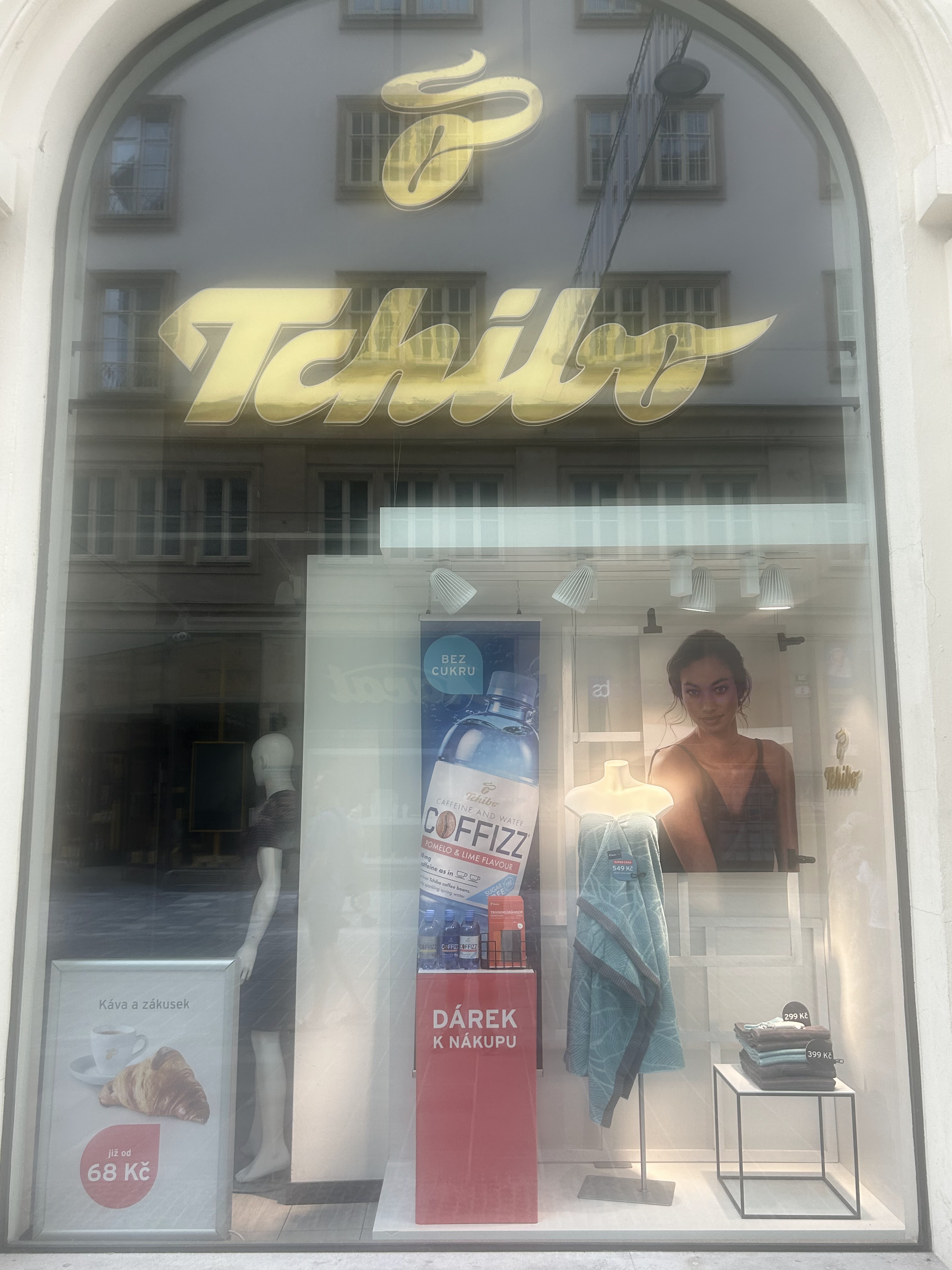
Tchibo, pronounced CHEE BO, is one of Germany's largest retail chains.  The stores are interesting.  It's a café where you can get a good cup of coffee and something sweet.  Of course, you can also purchase coffee beans and accessories.  


Then there is everything else that you can buy there such as clothing, household items, electronics, appliances, and sometimes even furniture.  You never know just quite what they will have when you go there because the non-coffee products change weekly.  In Germany, the company's slogan is Jede Woche eine neue Welt, "Every week a new world".  In Czecland, it's každý týden nový svět

Today is the 70th anniversary of the Tchibo Coffee Company.  It was founded in 19149 in Hamburg where it still maintains its headquarters.  The company founders were Max Herz and Carl Tchilinghiryan and the name Tchibo came from the abbreviation of Tchilinghiryan and Bohnen (coffee beans),  The company started off as a mail-order service for roasted coffee beans.

In the early 1990's the company started to expand outside of Germany.  There are about 550 stores in Germany and over 300 stores in Austria, Czechia, Hungary, Poland, Slovakia, Switzerland, and Türkiye.  


The company also operates "depots" in various supermarkets have a Tchibo section of shelves selling its coffee alongside non-food items such as clothing, sporting and household goods.

Tchibo Praha, spol. s.r.o., was established in 1991 and today there are 38 stores in Czechland.  In 2021, the company expanded its distribution facility in Cheb, near the German border.  The new facility is over 102.000 sq.m. (+1 million square feet) and services seven European countries.  

Here are a couple of Czech television commercials from about five years ago that I found out on YouTube.

©Tchibo Česká republika

©Tchibo Česká republika

Here's also a short, three-minute video I found that talks about the history of the company.  It's only in German but it's still pretty easy to follow the story.

©Irgendwas mit ARTE und Kultur

Saturday, February 11, 2023

Datart

Datart is a consumer electronics store with shops across Czechia and Slovakia.  

The company was founded in Prague in 1990 and they opened their first stone in 1992.  In 2019 they opened the 100th store in Czechland.  

This is the place to go for home appliances, computers, cameras, kitchenware, music systems, mobile phones, and accessories.  If there's something that I need though I tend to order online. 

I always had a problem with how to pronounce it.  I first thought it was "Data-Art" but is it actually "Data-rt" or "Dat-art?"

Back in 2017, they were acquired by HP Tronic Group for an undisclosed amount.

Here's a commercial for Datart that I found out on YouTube.  It's at least a couple of years old.

©Datart.cz

Wednesday, August 31, 2022

Starobrno

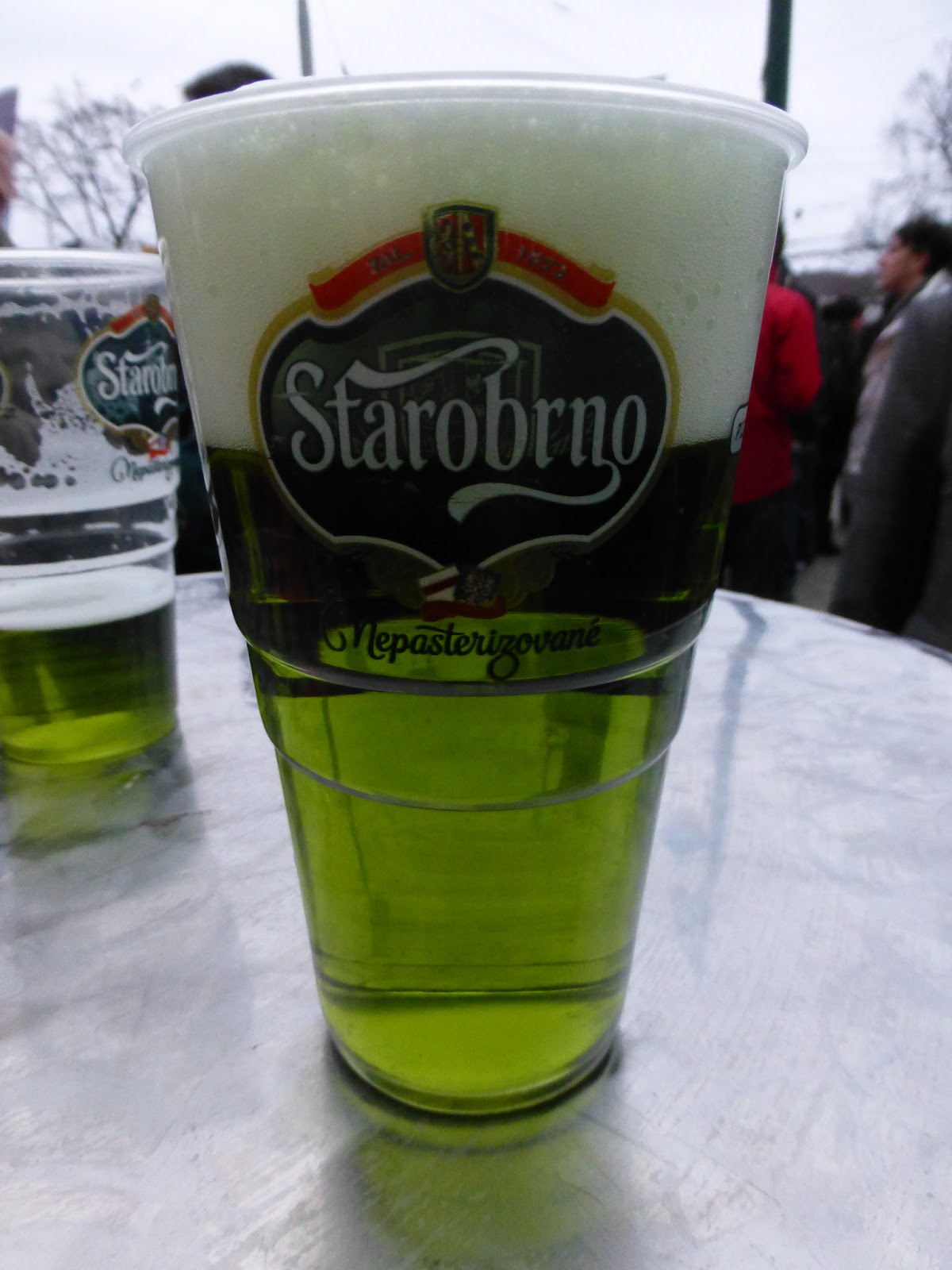
Pivovar Starobrno, the Old Brno Brewery is located in here in Brno.  It was built as a successor to an earlier brewery founded in 1325 as part of a convent.  It didn't take the name of Starobrno Brewery until the second half of the 19th century. 

The date of 1872 is on the beer label which means they are now celebrating their 150th anniversary.

In 2009, Starobrno merged with the Royal Brewery of Krušovice and it is now owned by Heineken.

It's main four beers are:

  • Staré Brno - a pale 10° draught beer with 4% alcohol 
  • Starobrno Medium - a pale 11° lager with 4,7% alcohol
  • Starobrno Drak - a pale 12° lager with 5,3% alcohol
  • Starobrno Unfiltered - an unfiltered. 12° lager with 5% alcohol
Most people don't understand the degree thing with beer.  It doesn't indicate the percentage of alcohol.  Brewers use it as a measurement to track the density of certain ingredients.  10 degree beer is around 3,5% alcohol, 12 degree is usually around 4,2% alcohol and 15 degree beers are dark beers.  So the degrees don't indicate the alcohol percentage but the higher the degree the stronger the beer.

Every year for zelený čtvrtek, the brewery produces a batch of green beer.

In March 2020, the brewery released three new craft style beers.

  • Indian Pale Lager - IPL - a pale lager with 5% alcohol
  • American Pale Ale - APA - a top-fermented beer with 5% alcohol
  • RED - a cherry-flavoured beer with 3,6% alcohol

I haven't tried any of the new craft beers.  My favourite Starobrno is the nefiltrovaný.

Here are a couple of commercials that I found out on YouTube.


Here's a commercial that they ran in Hantec, the local Brno dialect, along with Czech subtitles so that the rest of the country could understand.

Saturday, May 28, 2022

Velorex

Velorex was a company that produced a three-wheeled car in Czechoslovakia from the 1950s to 1971.

After WWII, the Czechoslovak auto industry couldn't keep up with demand so there were quotas and long waiting periods.

It was like a reverse tricycle, so two wheels in the front and one in the back.  The frame was welded steel tubing with vinyl stretched over the cage and attached with turn button fasteners and the whole thing basically ran on a motorcycle engine.

It had a maximum speed of 30 km/h (18,5 MPH) and in Czechland you only needed an A license which is a motorcycle license.  Since 2000, you need a B1 license but I heard that you can drive them at 17 instead of 18.

A little over 15.000 units per produced.  I don't know how much they cost but about half of them were exported to Hungary, Poland, Bulgaria and East Germany.

Veolorex has kind of a cult status and there are a few clubs throughout the country.  I've never seen one.  At least not yet.

Here's a television commercial which was filmed in 1961 but it never aired.

The 1981 Czech comedic film Vrchní, Prchni! featured the main character driving his Velorex and show how awkward the vehicle was.  Here are a few scenes that I found out on YouTube.

Tuesday, November 23, 2021

Nutri-Score

When I first moved here I made a comment at work that I was going to get so fat here with this being the land of beer and potatoes.  A friend sniped back with, "but I thought that all Americans were already fat."  Well not quite right but not wrong either.

In 2016, the World Health Organisation put the USA's obesity rate at 33,8%.  Czech Republic was 24,2%.  Czechs have been getting bigger.

In 2019, the five EU countries with the highest percentage of obesity were Croatia, Malta, Czechland, Hungary, and Slovakia.  France has the lowest obesity levels in the EU, followed by the Netherlands, Italy, Belgium, and Sweden.  Czechs were had the 3rd highest levels of obscenity in the EU.

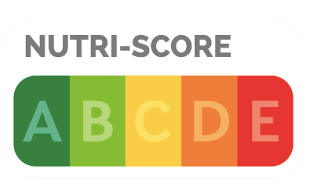
Here's where I think that Nutri-Score would be a good thing.  Nutri-Score is a "traffic light system" that ranks food products on a scale from A to E, where A is the best and E is the worst, and it is clearly visible of the front of the food's packaging.  

Food products get a lower rating if there is:

  • high energy density per 100 g or per 100 ml
  • high sugar content
  • high content of saturated fatty acids
  • high salt content.
There's a higher rating when:
  • contains fruits, vegetables, nuts and legumes
  • contains fiber
  • contains protein
  • contains rapeseed, walnut and olive oil
Nutri-Score was founded in France in 2013 and in 2017 the French Health Ministry officially recommended it.  Since then it has rolled out in Belgium, Spain, Germany, Switzerland, the Netherlands, and Luxembourg.  The system has been recommended by the European Commission and the World Health Organization.

So far it's not mandatory across the EU but I'm sure that it will be eventually.  Some companies such as Nestlé and Danone have announced that they will start using Nutri-Score in Portugal, Slovenia, and Austria even though it's not required in those countries.  

Not all countries are onboard with the system.  Poland, Czechland, Cyprus, Greece, Hungary, Latvia, and Romania all oppose it.  Italy believes that the system puts the traditional Mediterranean diet at a disadvantage.  

The Czech Ministry of Agriculture isn't in favour of the system but it will tolerate international labels with Nutri-Score.  The ministry is not in favour of a mandatory front-of-package label and believes that the Nutri-Score formula is too simplistic because it doesn't consider the size of a portion or how food is prepared. 

Nestlé will start using Nutri-Score in Czechland in 2023.  

Here's an interesting video I found out on YouTube where CNN talks about some of the differences between the US and Czech health care systems.  Not exactly Nutri-Score or Obesity related but still kind of fitting.  While the video is at least 12 years old already it's still pretty accurate.

©CNN

Update:  August 2022.  Here's a short TV commercial for Nestle that shows the Nutri-Score label.

©Nestlé Cereálie CZ

Saturday, February 20, 2021

Czech Gun Rights

Czech law permits gun ownership to those who can pass a gun proficiency test, a medical exam, and who have a clean criminal record.  The majority of gun owners here report having a weapon for self-defence and not for just sport or hunting.  This is one of the safest countries so I don't quite understand the self-defence reason but to each their own.

There are five different types of gun licenses here.

Type A = Firearm collection
Type B = Sport shooting
Type C = Hunting
Type D = Exercise of a profession
Type E = Self-defence 

A application for a gun license is made with the police.  A application fee is 700 Kč ($30) and the license is issued in 30 days.  It is good for 10 years before needing to be renewed.  

For sport and hunting, types B or C, the applicant must be at least 18 years old.  There are special exceptions if the applicant is a member of a sporting club or if hunting is taught as part of a school curriculum then 15 or 16 year olds can get a license.  The minimum age for A, D, or E license types is 21.

Anyone who excessively drinks alcohol, uses illegal drugs, or those found guilty of misdemeanours related to firearms, DUI, or public order in the previous 3 years don't qualify for a gun license.

Ex-convicts who served more than 12 years in prison are not allowed a gun permit.  Convictions for public endangerment, murder, treason, or participation in organised crime are not allowed a permit.

Those who serve less than 2 years in jail are eligible to apply after a 5 years.
Those who serve sentences for 2 to 5 years can apply after 10 years.
Those who serve sentences for 5 to 12 years can apply after 20 years.
For those who server sentences more than 12 years are ineligible from ever getting a gun permit.

There's no limit on the number of guns a person can own.  There are safe storage requirements of owning more than 2 weapons or having more than 500 rounds of ammunition.  There are additional requirements if a person has more than 10 guns and further requirements for having more than 20 guns.

Possessing a firearm without a license carries a penalty of up to 2 years in jail.  In some cases this goes up to 8 years.  Carrying a gun while intoxicated is illegal.  There are heavy fines and forfeiture of one's gun license.  

Across most of the EU, the concealed carry of firearms is not allowed.  Here though it is allowed provided the owner has a concealed carry permit.  I've heard that around 80% of gun owners here also have a concealed carry permit.  It is against Czech law to carry any weapon during a public demonstration.  It is also illegal to carry a weapon with a silencer installed.

During the German Nazi occupation it was illegal to posses firearms.  During communism only those seen as loyal to Communist regime were allowed to possess guns.  Given these historical restrictions the right to posses firearms is viewed as an essential liberty.  But it's not like everyone here owns a gun.  There's something like 12 or 13 guns for every 100 people.  In contrast to the USA where there are about 120 guns for every 100 people.  The USA can't even pass common sense gun legislation.  I feel much safer here in Czechland than I do in the USA.

From 1 January to 31 July 2021, there is an amnesty running where any illegally-held weapons can be turned over to the Czech police, no questions asked.  Or if you have a valid gun license and proof that the weapons wasn't stolen or used to commit a crime then you can legally register the gun.  

The last time this was done was five years ago and most of the weapons turned in dated back to WWII and the Soviet occupation.  The Czech police released a video on YouTube and with typical Czech humour it shows a guy turning over a Soviet tank.  

©Policie ČR

Friday, January 15, 2021

Bankovní Identita

Bankovní Identita is a new banking identification system that is getting rolled out in Q1 of this year.   

The system will allow you to use your bank's electronic banking security methods to verify your identity.  Just use your Internet banking login details and you will be able to access more than 125 services on-line.

The system will allow people to electronically sign documents and automatically pre-fill forms which will reduce the amount of time people need to actually visit government offices.

People will be able to file taxes, deal with driver's licenses and vehicle registrations, get an extract from the criminal registry and deal with health insurance companies.  The census will be online and available in March.  I swear that anything that helps reduce Czech bureaucracy is a good and welcome thing.  

The Czech Banking Association has a commercial about it that I found on YouTube.  The commercial is a bit abstract in my opinion. 

Tuesday, July 14, 2015

Czech National Revival

After the Battle of White Mountain, the Czech lands were basically Germanized by the Hapsburgs.  The Czech language was almost wiped out.  He was no longer used in state administration, schools, university or the upper classes.  Many Czech books were burned and Czech became the spoken language of mostly illiterate peasants.

The Czech National Revival, České národní obrození, was a cultural movement in Czechland during the 18th-19th centuries.  Its goal was to bring the Czech language, culture and a national identity back to life.

Some of the most influential people in the movement were Josef Dobrovský and Josef Jungmann who introduced the Czech language in schools.  Jungmann also wrote the first Czech-German dictionary.

Frantíšek Palacký was another leader in the movement.  He was a historian who wrote History of the Czech People.  Czech literature was championed by novelist Božena Němcová, poet Karel Hynek Mácha, and political columnist Karel Haylíček Borovský.
National Museum in Prague

In Prague, the National Theater opened in 1883 and the National Museum opened in 1890.

One side effect of the National Revival is that it made Czech an even more difficult language to learn.  By trying to make the language as "Czech" as possible many very old Slavic words were incorporated which lasts today.  For example, the word for theater in most Slavic languages today is "teatr".  But in Czech it is "divadlo".

"Music" in most Slavic languages is "muzyka" but in Czech the word is "hudba".


This is also one of the reasons why the names of the months in Czech are so different.

Here's a Pilsner Urquell commercial from 2010 that I found on YouTube.  It shows Josef Jungmann get inspiration for the revival.  But then he slips up and says "danke", thanks, in German.

Monday, December 2, 2013

2013 World AIDS Day

Yesterday was World AIDS Day.

The government launched HIV testing in 1985.  Since then more than 1600 positive people have been registered.  Since not everyone gets tested it's assumed that the infection rate could be at least three times higher.

ČR doesn't spend a lot of money on HIV/AIDS prevention.

One thing that I don't understand, and haven't understood since I moved here, is why so many Czechs don't like to use condoms.

Statistics show that more than 1/3rd of Czechs don't use condoms.  Please wrap your willie before going outside.

Part of the reason may be because the younger generation isn't as afraid of AIDS as before.  Due to people living longer, there is a belief that living with HIV is just as manageable as living with Diabetes.  It's simply not the case.

The Czech AIDS Help Society provides information in Czech and English.  Here's one of their public service commercials I found on YouTube.

©Czech AIS Help Society

Saturday, October 26, 2013

Pilsner Urquell

Before I moved to Czechland, I only knew of one Czech beer in the USA - Pilsner Urquell.  It has always been one of my favorites.  Though I have to admit it does taste better over here.

Plzeňský Prazdroj is better known by its German name Pilsner Urquell.  First brewed in Plzeň, in 1842, this was the world's first pilsner beer.  Ninety percent of the beer produced in the world is a copy of it.  Today the brand is owned by SABMiller and it is the most popular beer in CŘ.

Back in the 1840s, the standard beer in Bohemia was top-fermented with a dark color and inconsistent quality.  Pilsner Urquell is bottom-fermented with a light color.  They say that the secret to the beer is its hops, soft water and fire-brewing.

Some places offer unpasteurized, unfiltered, beer from wooden casks without any added CO
2
.  This is about as close as you can get to how beer tasted back in the 19th century.  Absolutely delicious!!


Here's a 2004 commercial I found out on YouTube.


It's a three day weekend and so I'm off in bit to Plzeň.  I fully plan to visit the brewery.  I have a feeling that I'll be taking my family there when they come visit next year. 

Saturday, November 10, 2012

Colorado Potato Beetle

The Colorado Potato Beetle is a big pest for farmers.  The insect ravages potato, tomato and eggplant crops.  However, I never knew that in the Czech Republic it is known, or at least it was known, as the American bug.

Colorado Potato Beetle
Back in the Cold War days, the communists used to promote propaganda that American planes dropped the bugs over crops in an effort to destabilize socialism.  East Germany also used to report that imperialist planes and secret agents were responsible for poor harvests due to having unleashed the insects.  What the hell ever!

Here's a Czechoslovakian report, with English subtitles, that I found on YouTube about the "American bug".  You can also hear what the Czech language sounds like.

Wednesday, June 9, 2010

Czechoslovak Commercials

I should have been studying my Czech grammar but instead I wound up on YouTube. But I don't feel too guilty because at least I was still practicing my Czech. Here is a video of some random commercials that were shown in Czechoslovakia prior to the 1989 Velvet Revolution.

The commercials have a bad 1980's retro feel to them...but oh well.
  • The plastic egg containers are still around but I've only ever seen them in clear plastic; not pink. And "No", I haven't tried stacking bricks on them.
  • I have had egg on pizza here. It's actually not bad.
  • Climatex sportswear is still alive and kicking.
  • I've seen flavored syrups in the grocery store but I haven't purchased any yet.
  • The "disco" milk commercial at the end is just tragic.

Monday, February 15, 2010

Czech Television

It's Olympic time and I'm not able to watch like I normally would. First of all, there's the 9 hour time difference between Vancouver, Canada and the Czech Republic. And because of international copyright laws, etc., I can't watch U.S. coverage on NBC.com from Europe.

There's also the fact that everything on TV here is in Czech. I still haven't got the full low-down on Czech TV but here's a couple of things. Most of the shows are shown with very few, if any, commercials. It looks like the commercials are shown between shows.

The start times are just odd to me. Granted the times are all listed in military time but that's not the odd part. It's the air times. In the U.S., shows all start on the hour or the 1/2 hour. But not here. It's not uncommon for shows to begin at five or ten minutes past or even twenty minutes till.

I don't quite get the 18:49 start time. Why does a show start at 6:49 PM?

My Czech teacher wants me to start watching more Czech TV to improve my listening skills. Maybe it will also help me understand why some programs have such unusual air times.

Thursday, November 26, 2009

Litovel

There are lots of really good beers in this country. And I'm sure that it will take me forever to try all of them.

The brewery in Litovel, located near Olomouc, has been making beer in Moravia since 1893. But the city's beer making tradition dates back to 1291.

Litovel has a sweet smell with soft aromatic bitterness and a medium fullness. I'm not saying that it's the best beer in the Czech Republic...but I have enjoyed it on draft here a couple of times.

Here's one of the beer's commercials. Again, this way my family back home can hear what spoken Czech sounds like.

Sunday, September 13, 2009

Gambrinus

Czechs love their pivo (beer). It is remarkable to me that really good beer is just over a dollar. Or that it is cheaper to order beer than either water or soda. For example, at lunch today I had a small bottle of multivitamin juice that cost 27 Kč (~$1.54 U.S.). I could have ordered a 1/2 liter of cold Gambrinus on draft for only 30 Kč. I should have ordered a beer but I had things to do today.

Gambrinus is one of the most popular brands and among my favorites. It is produced by the Plzeňský Prazdroj brewery...the same brewery that makes Pilsner Urquell.

I think that you can find out a lot about a culture by taking a look at its TV commercials. Here is one I found that I think aired around 2007. Plus this way, my family will be able to hear what the Czech language sounds like. Enjoy the commercial.