


Since the museum is located in the Abbey, you also get to visit the monastery garden, the abbey's 18th-century Baroque library and the basilica.


We had booked the Best of Ephesus Tour for Monday which was great. We were the only two who had booked so we actually ended up on a private tour with our guide Mehmet.
 Our first stop was at a big statue of the Virgin Mary.

 After that we headed to Meryemana, the House of the Virgin Mary, which is about 6 km (3.7 miles) from Ephesus and 17 km (11 miles) from Şirince. The house is surrounded by pine and olive trees. It's a Catholic shrine and a UNESCO World Heritage Site.

 Two expeditions completed in 1891, discovering the match between the location and the nun's visions. While the Roman Catholic Church has never officially proclaimed the validity of the site, multiple popes have given blessings and visited the house. Each year on 15 August, pilgrims come to celebrate Mary's Assumption. In 2004, Pope John Paul II beatified Anne Catherine Emmerich.
 On the way to the shrine, you pass a key hole-shaped baptismal pool.

Outside of the house is a "wishing wall" where people write their wishes on paper or fabric.
 There is a spring under the house which pilgrims believe to have healing properties. There are fountains that people can drink from.


 Ephesus was built in the 10th century BC. It was one of the 12-member cities of the Ionian League and became part of the Roman Republic in 129 BC. It's believed that the Gospel of St. John may have been written here.
 The city was conquered by numerous empires over the centuries and it was completely abandoned by the 15th century. Ephesus is home to one of the largest Roman archaeological sites in the Eastern Mediterranean and the ruins were designated a UNESCO World Heritage Site in 2015.

 The most impressive ruin has to be the Library of Celsius. It was built in around 125 AD in memory of Tiberius Julius Celsus Polemaeanus who served as governor of Roman Asia. He paid for the library from his own money and he is buried in a sarcophagus beneath it. The library was the third-largest in the Greco-Roman world and was home to 12.000 scrolls.
 The library was no longer in use after 400 AD. The facade was damaged by an earthquake in the 10th or 11th century but archaeologists re-erected it from 1970 to 1978.

 As it was just the two of us, our guide Mehmet used the opportunity to show us everything in great detail. It would never have been possible with a larger group.

 The Basilica of St. John, or rather what's left of it, sits on the slope of Ayasluğ Hill, in Selçuk, about 3,5 km (2.2 miles) from Ephesus. It was built in the 6th century but was damaged when Turks invaded in 1090.


 |
| Temple, mosque, basilica, and fortress |
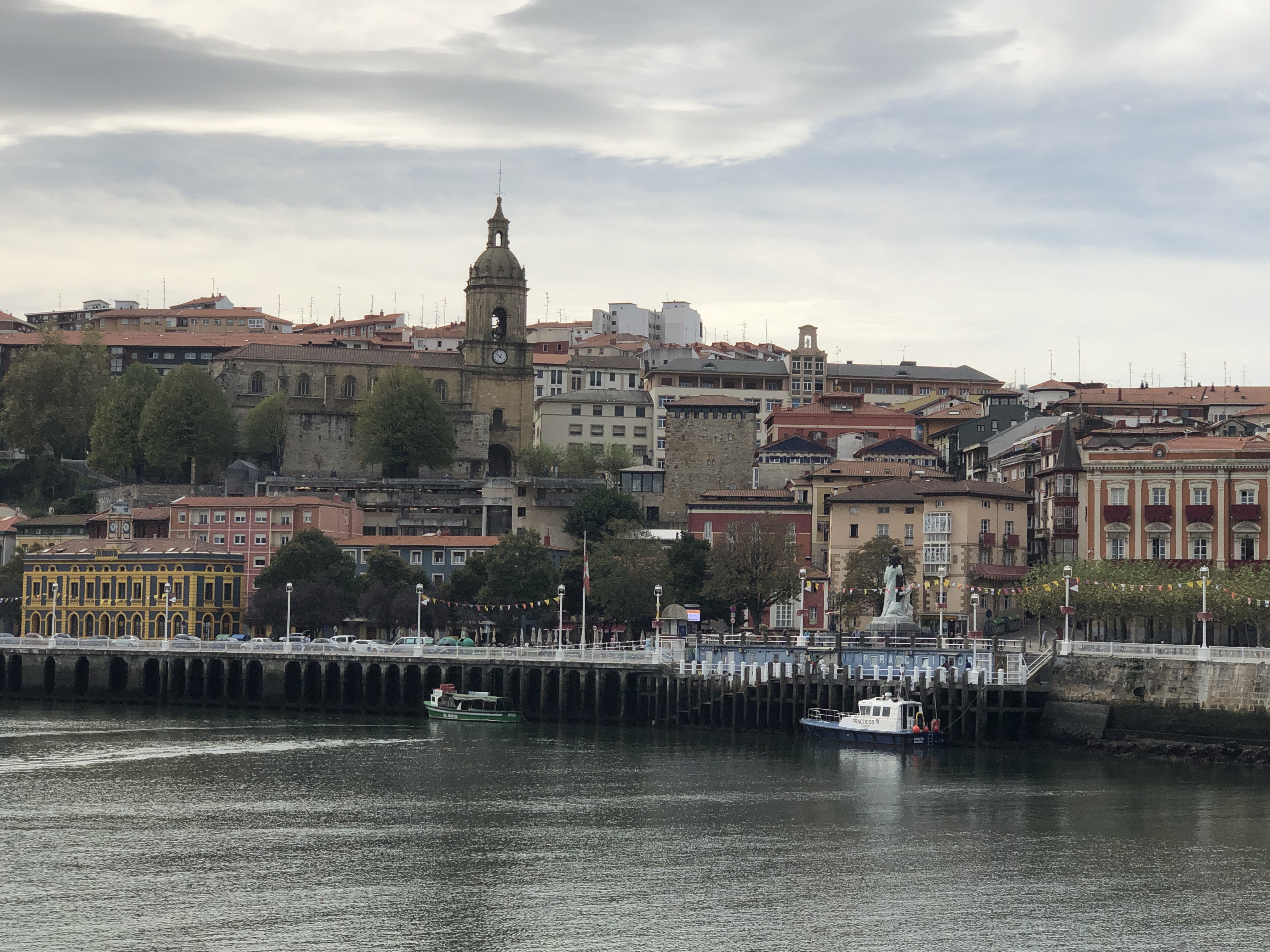 About 14 km (8 miles) north west of Bilbao, across the river from Getxo, is Portugalete. The city is part of the Bilbao greater metropolitan area and it is home to about 46.000 people.

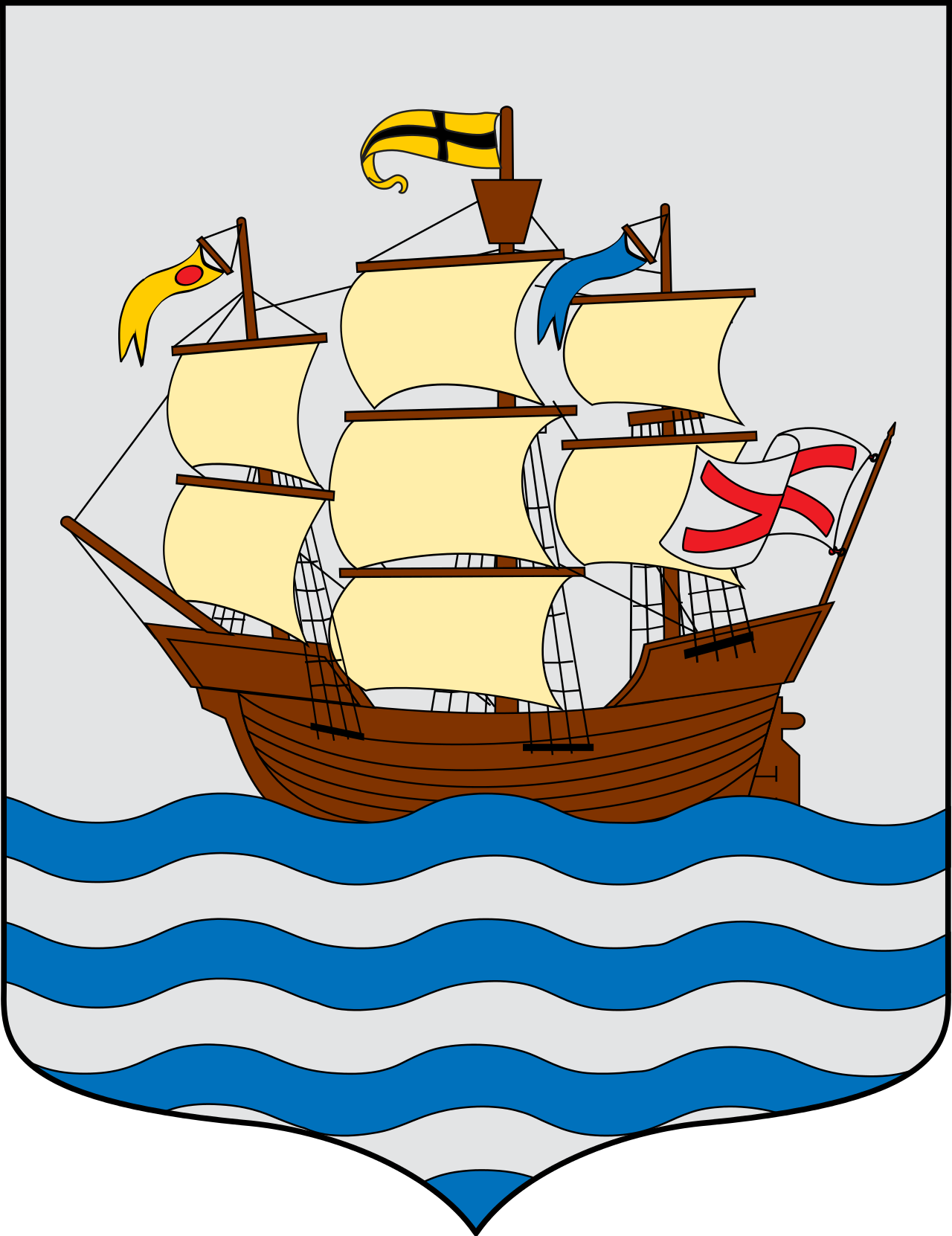 In the 1300's, its port competed with Bilbao but fell behind when Bilbao's port was grated trade privileges in 1511.
In the 19th century it became a summer getaway for England's bourgeoisie.

Like Getxo, the Vizcaya Bridge is a major attraction. The world's first transporter bridge which became a UNESCO World Heritage Site in 2006.
 The Basilica of Santa Maria was built on the site of an existing church. Construction began in 1492 and it was consecrated in 1580.


The town hall, located at Solar Plaza, doubles as the office of the municipal police. The neoclassical building was completed in 1883.
 Torre Salazar is a four-storey tower that was built around 1380. Originally it was a defensive complex, with the first floor serving as a prison and the second floor being a residence. Today there is a town museum and a restaurant.

La Canilla is the old railways station that was built in 1890 on land reclaimed from the sea. Today it is the town tourist office.
 The Convent of Santa Clara was founded in 1614. Over the years it has been destroyed and rebuilt a few times. Today it houses the town's cultural centre.


Portugalete is a pretty town filled with statues and and makes for a nice little day trip from Bilbao.
 Melbourne is the located in the southeastern part of Australia. It is 465 km (289 miles) from Canberra and 713 km (443 miles) from Sydney.
  Melbourne is the capital of Victoria and the great metro area is home to 5 million people making it the second largest city in both Australia and Oceania.
  Melbourne was founded in 1835 and in 1847 Queen Victoria declared it a city. It became one of the world's wealthiest cities due to the 1850s gold rush in Victoria. In 1901 it became the interim capital of Australia until Canberra became the permanent capital in 1927.
 Melbourne Town Hall was completed in 1887.
 St. Paul's Cathedral is the Anglican cathedral. It was completed in 1891.
  The Old Melbourne Gaol opened in 1845 and closed in 1924. The former prison is now a museum.
  The Eight Hour Day Monument was erected in 1903. It champions workers' rights by supporting 8 hours of work, 8 hours of rest, and 8 hours of recreation and education.
 The Victoria State Library opened in 1854. It is the country's oldest public library and one of the first free libraries in the world.
 The Melbourne City Synagogue was consecrated in 1877 making it the oldest in the city.
 The Royal Society of Victoria was formed in 1854.
 The Queen Victoria Market is the largest open air market in the Southern Hemisphere.
  The City Baths were built in 1903. The purpose was to get people to stop bathing in the Yarra River.
 St. James Old Cathedral is an Anglican church and it is the city's oldest church. It was dedicated in 1847 and it is one of only three buildings in the city that predates the 1851 gold rush.
 The Royal Exhibition Building was completed in 1880. In 2004 it became a UNESCO World Heritage site.
 The Regent Theatre opened in 1929. It closed in 1970 but finally reopened in 1996.
 Melbourne Museum opened in 2000 and it is the largest museum in the Southern Hemisphere. It is home to the world's largest IMAX theatre screen.
 Chinatown is in the CBD. It came about during the gold rush and it is the longest continuous Chinese settlement in the Western World.
 The Museum of Chinese Australian History was established in 1985. It was refurbished in 2010 and since then it also acts as the local visitor centre.
 Parliament House opened in 1856 but wasn't completed until 1929. It serves as parliament for Victoria but it was the country's parliament from 1901 to 1927.
 The Block Arcade opened in 1892. It is one of the most popular shopping arcades in the city.
 Great Petition was unveiled in 2008 to commemorate 100 years of women's suffrage in Victoria.











 Posts
All Comments
Posts
All Comments


 Czech Koruna Exchange Rate


