Thursday, January 9, 2020

Czech Citizenship Exam: History of the Czech Republic Since 1989

Here are the 10 study questions for the Czech Citizenship exam from section 28: History of the Czech Republic Since 1989. 


1.  When was the independent Czech Republic established?

1 January 1993.


2.  The Czech Republic has been a member of NATO since 1999.  What is this organisation for?

For military cooperation.


3.  When did the Czech Republic join the European Union?

In 2004.


4.  Which two states emerged after the disintegration of Czechoslovakia in 1993?

The Czech Republic and the Slovak Republic.

5.  When is the Day for the Struggle for Freedom and Democracy celebrated in the Czech Republic?

17 November.

6.  Which of these functions did Václav Havel perform?

The function of the President of the Republic.

7.  Which day is the national holiday for the Day of the Restoration of the Independent Czech State celebrated?

1 January.


8.  Who became the Czech president after Václav Havel in 2003.

Václav Klaus.


9.  Who became the Czech president after Václav Klaus in 2013?

Miloš Zeman.

10.  The Czech Army participates in various foreign missions.  In which country has it been operating in this way since 2002?

In Afghanistan.

Tuesday, January 7, 2020

Czech Citizenship Exam: History of Czechoslovakia From 1948 until 1989

Here are the 10 study questions for the Czech Citizenship exam from section 27: History of Czechoslovakia From 1948 Until 1989. 

1.  Who gained control of Czechoslovakia in February 1948?

The Communists.


2.  What was the name of the student who burned himself in January 1969 in Prague on Wenceslas Square?

Jan Palach.

3.  How long did the totalitarian government of the Communist Party of Czechoslovakia last?

Approximately 40 years.

4.  What was the name of the document by which some citizens protested against the communist regime in 1970s?

Charta 77.

5.  When did the soldiers of the Warsaw Pact countries occupy Czechoslovakia?

21 August 1968.


6.  When did the Velvet Revolution begin in Czechoslovakia? 

17 November 1989.


7.  Who became the Czechoslovak president in December 1989?

Václav Havel.

8.  What was the programme of the anti-communist civic initiative Charta 77?

The protection of human rights.

9.  The Prague Spring was a period of political and cultural relaxation during the reign of the Communist Party of Czechoslovakia.  In what year did this take place?

1968.

10.  What was the name of the Czech politician sentenced to death in 1950 in a political trial?

Milada Horáková.


Sunday, January 5, 2020

First Trip of 2020

Slovakia's Presidential Palace
Today was my first trip of the new year.  Well not a big trip though.  

I just went to Bratislava to meet a friend for lunch.  After a walk around the city, and a coffee to warm up with, it was back to the train station to get home.

My next "real" trip is in a couple of weeks when I go visit Skopje again.  The last time I was there was in 2011 when it was the capital of Macedonia.  Now it's the capital of North Macedonia and I'm looking forward to see how the city has changed in 9 years.

Saturday, January 4, 2020

Czech Citizenship Exam: History of Czechoslovakia Until 1948.

Here are the 10 study questions for the Czech Citizenship exam from section 26: History of Czechoslovakia Until 1948.

1.  What did the Munich Agreement, signed by Germany and three other states in September 1938, mean to Czechoslovakia?

Loss of the border.

2.  What was the name of one of the Czech municipalities that the Germans completely destroyed after the assassination of Reinhard Heydrich in 1942?

Lidice.

3.  What was the name of the Czechoslovak president who lived in Great Britain during World War II?

Edvard Beneš.

4.  Which large armies liberated the territory of Czechoslovakia in 1945?

American and Soviet.

5.  What happened on 17 November 1939 in the Czech lands?

The Nazis closed universities.

6.  Who became the first Czechoslovak president in 1918?

T.G. Masaryk.

7.  What was the name of the deputy imperial protector who was assassinated by Gabčík and Kubiš in Prague in 1942?

Reinhard Heydrich.

8.  On which day does the Czech Republic commemorate the end of the Second World War - Victory Day?

8 May.

9.  Which historical event preceded the establishment of Czechoslovakia in 1918?

World War I.

10.  When was an independent Czechoslovak state created?

28 October 1918.

Friday, January 3, 2020

Czech Citizenship Exam: New Age History

Here are the 10 study questions for the Czech Citizenship exam from section 25: New Age.

1.  At the turn of the 16th and 17th centuries, Prague became the cultural centre of Europe.  What was the name of the monarch who ruled in Bohemia at that time?

Rudolf II.

2.  Which family began to rule the Czech Kingdom in 1526 and ruled until 1918?

The Habsburgs.

3.  In 1618, Czech non-Catholic nobles opposed the emperor.  This event started a war that spread almost throughout Europe.  What is this war called?

Thirty Years' War.

4.  In which city does the legend of the Golem, created by Rabbi Löw, take place?

In Prague.


5.  Jan Amos Komenský was an important Czech philosopher, theologian and writer who lived in the 17th century.  In which field did he become most famous?  

Pedagogy.


6.  What was the name of the famous Empress who ruled in the Czech lands in the 18th century?

Marie Terezie.  

7.  The Czech lands have been part of Austria-Hungary since 1867.  When did Austria-Hungary cease to exist?  

In 1918.

8.  What is the name of the development of Czech Culture in the 19th century?

National Revival.

9.  What is the name of the town where the Battle of White Mountain took place in 1620?

Prague.

10.  Which monarch introduced compulsory school attendance for children in the Czech lands?

Marie Terezie.

Thursday, January 2, 2020

Czech Citizenship Exam: Medieval History

Here are the 10 study questions for the Czech Citizenship exam from section 24: Medieval History. 

1.  According to legend, who climbed Mount Říp?

Praotec Čech - An ancestor of Bohemia.


2.  Which personality do we commemorate on the day of Czech statehood - 28 September?

Svatého Václava - Saint Wenceslas.

3.  Jan Žižka has an equestrian statue on Vítkov Hill in Prague.  Who was Jan Žižka?

A Hussite warrior.

4.  According to legend, what is the name of the princess who foretold the glory of Prague?

Lubuše.


5.  What were the names of the brothers who spread Christianity in Great Moravia?

Cyril a Metoděj.

6.  Which family ruled in Bohemia from the 9th century until 1306?

Přemyslovci - Přemyslids.

7.  Who was Master Jan Hus?

A Czech reformer of the church.

8.  From which family was the famous Czech king and Roman emperor Charles IV?

From the Luxembourg family.


9.  Who founded the first Czech university?

Charles IV.

10.  What was the goal of the Hussites?

To reform the Church.

Wednesday, January 1, 2020

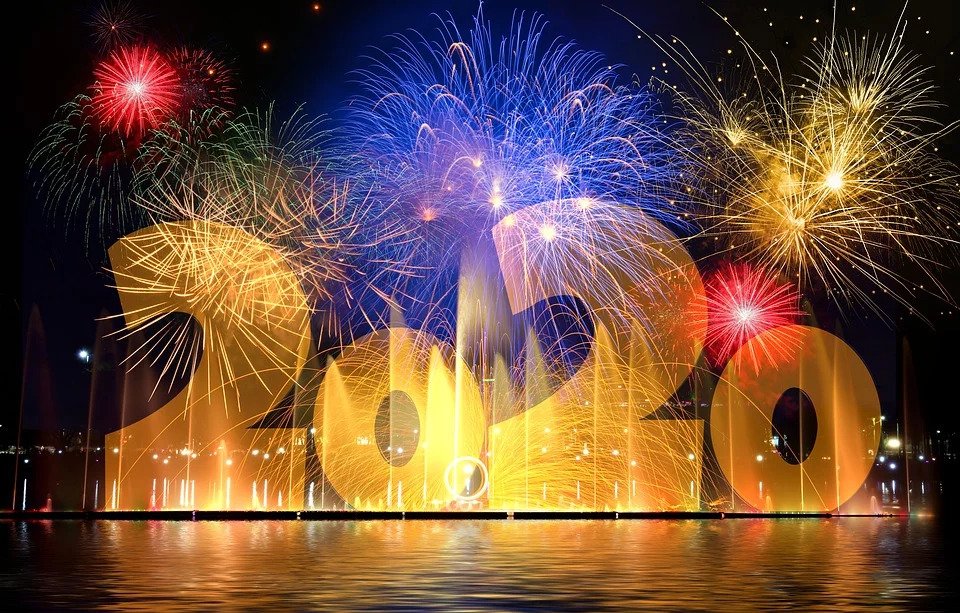
Happy New Year 2020!

Šťastný nova rok!  Happy New Year! 

Last night was New Year's Eve but we kept it pretty low key.  We had sushi for dinner and then hung out in the centre for a bit.  

The Christmas Markets are still open until 5 January and the city put on a videomapping show at náměstí Svobody.


I love this town.  Only in Brno does the town clock wear a "condom" to keep it from getting safe from unwanted fireworks.

Here's a short clip from last night's videomapping show.

Aside from New Year's Day, today is also Czech Independence Day.  It's been 27 years since Czech Republic became an independent country following the Velvet Divorce.


This morning Natalie caught her train back to Switzerland.  It was great to have her back in Brno even if for just a couple of days.  In February, Claudia, Tünde, and I are going to visit her in Geneva.  Yeah for more family travel adventures.

Update:  Here's the complete 10 minute NYE videomapping show that I found on YouTube.

©Spectrum Production

Tuesday, December 31, 2019

Králova řeč

Last night Natalie and I went to see Králova řec, The King's Speech, at the Mahen Theatre.  This is my favourite theatre in Brno.  It's simply gorgeous.

This was a milestone because it was my first actual play in Brno.  Every other show has either been a concert, an opera or a ballet.  

Králova řeč is based on the successful 2010 film about King George VI and his struggle to overcome his stutter.  The performance was excellent.  My first play, entirely in Czech...WOW!  Fortunately we both knew the story and Nat was able to read the English subtitles displayed above the stage.  


I did pretty well with only Czech.  I didn't understand everything but enough that I probably would have done alright even if I wasn't familiar with the theme.

Monday, December 30, 2019

Vila Stiassni

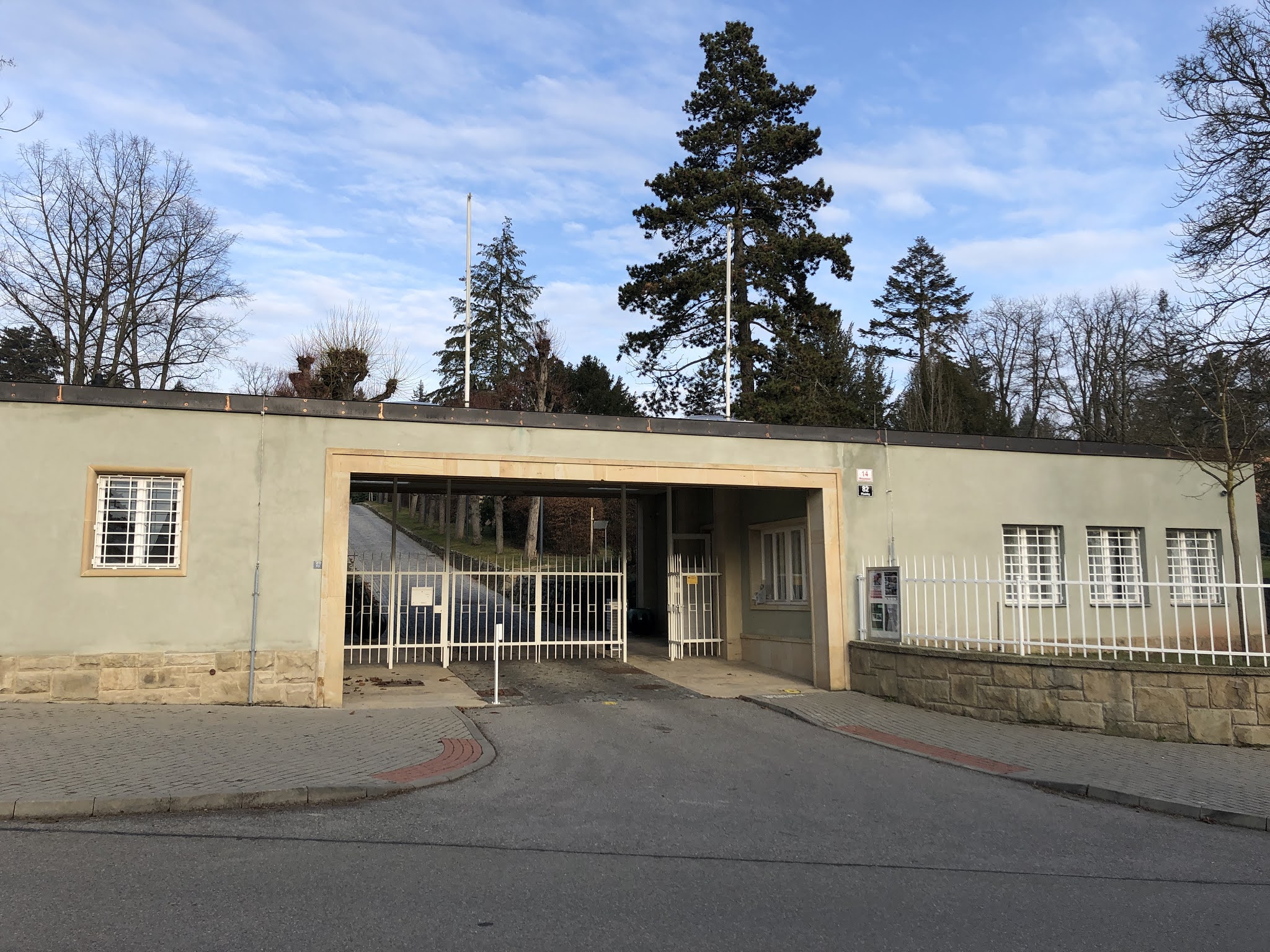
Vila Stiassni is a functionalist villa in Písarky district, about a 10-15 minute walk from my flat.  

Alfred Stiassný

Alfred Stiassný was a prominent textile manufacturer in Brno.  He and his wife, Hermine, owned a number of villas and tenement houses in the city when they commissioned architect Ernst Wiesner to design their new home.  Construction took two years and it was completed in 1929.  


The vila is two floor building in the shape of an L.  The house is divided in that the living area is in the right wing and all of the service facilities are in the left wing.


The vila is quite impressive.  While the outside architecture is functionalist and has a modest charm to it, the inside is much different.  It feels more classic with dark wood paneling and marble fireplaces.

I think that this is my new favourite villa in Brno.  Maybe it's just because that I've been to Vila Tugendhat so many times before.  Tugendat is more modern while this one seems more like someone's actual home.

The family was sporty so the sloping garden had a tennis court and a swimming pool.

Alfred, his wife, and daughter only got to live in the vila for 9 years.  They were Jewish so in 1938 they emigrated to London and then via Brazil to Southern California where they eventually became American citizens.

The Gestapo confiscated the villa on 30 November 1939 and the Nazis used it during the war.  In 1945 the Russians took it over and they destroyed some of the original furniture and tapestries.


In 1952 the villa came under the Regional National Committee.  Until the 1990s it was used as a "government villa" to accommodate high profile visitors to the city.  President Edward Beneš lived here for a short time.  Other notable visitors include Soviet leader Nikita Khrushchev and Cuban President Fidel Castro.

In 1982 the building was listed as a cultural monument.  From 1990 to 2005 it was rented out as a hotel for VIP guests attending conferences or social events.  Since 2009 it is managed by the National Monuments Institute.  The villa was completely renovated in 2014 and is now open to the public.

The 60-minute tour in Czech is 210 Kč ($9) or you can just wander around the gardens outside for 30 kč ($1.50).  The tour is worth it.

I also found out that there is a 2,5 hour walking tour of my neighbourhood, the Masaryk quarter, on the first and last Sunday of the month.  It's only 150 Kč but it is entirely in Czech.  Not sure how much I'll understand on a 2,5 architectural walk but I'll have to eventually give it a try.