Showing posts with label Wales. Show all posts

Tuesday, January 5, 2021

Post-Brexit EU Trade Deal

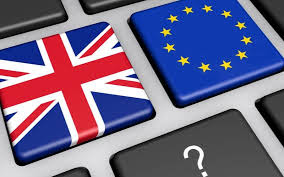
Thanks to Brexit, the UK is no longer part of the single customs union.  The UK and the EU did manage to agree on a last minute trade deal right before Christmas.  The impact of which is already starting to be felt and I believe that more problems will continue to pop up as Brexiters begin to realise the implications of voting to leave the EU.

The deal maintains the Good Friday peace deal so there is no hard border between Ireland and Northern Ireland.  In order to do this, Northern Ireland remains in the EU single market for goods, which means that Northern Ireland has to follow the EU's customs rules.  So now there's a customs border in the Irish Sea which basically separates the UK, between Northern Ireland and England/Scotland/Wales.

All goods moving between Great Britain and Northern Ireland now require a customs declaration, and additional certification on some goods and products, just as it does between the UK and any other EU-member country.

There's no more unlimited freedom to work and live between the UK and the EU.  UK citizens are free to visit Europe but have to follow the Schengen rules which means they can only be in the EU for up to 90 days in a 180-day period.  Any stay over 90 days will require a visa.

Not that there's a whole lot of travel now due to COVID-19 but when arriving in the EU, UK citizens no longer get to use the EU/EEA queues.  They have to use the non-EU citizen queues.
There are now additional customs duties, import fees and VAT when you purchase something online from the UK.  EU consumer protection rules no longer apply to purchases made from the UK.  So I won't be buying anything any longer from Amazon.co.uk.  I need to switch to Amazon in Germany

Mail will be more complicated.  Both from the UK to the EU and vice versa.  All customs fees, duties and taxes need to be paid in order to pick up any packages.  Some shipping companies have already increased their fees to cover the cost of the extra paperwork required.

The UK has set new tax rules where taxes must be collected at the point of sale which means that a business in the EU must collect taxes on sales made to UK customers which means a lot of tax headaches because now the EU firm must establish an account with the UK tax authorities and keep up with ever changing UK tax laws.  There are already cases where EU firms are no longer selling goods to UK customers.

I'm still not sure what's going to happen with surcharge-free roaming.  I have no idea what I'll pay to use my mobile whenever I actually make it back to the UK for a visit.

Booze cruises to the wine shops in Calais, France, were popular because there was an unlimited allowance on alcohol.  That comes to an end because now, there's a limit on the amount of alcohol allowed from the EU for personal consumption.  UK citizens can now only take back home up to 42 litres of beer, 18 litres of wine and 4 litres of spirits, plus up to 200 cigarettes.

On top of all of the this the UK still has to settle a £25 billion ($X) divorce bill by 2057.  It will be interesting to see what other unintended headaches pop up as a result of Brexit

Here are a few short videos already showing up on YouTube showing some of the consequences of the post-Brexit trade deals.

©Al Jazeera

©9 News Australia

©Sky News

There was speculation that with the UK out of the EU, that English would no longer be an official EU language.  Every country gets to put up an official language and Ireland chose Irish and Malta chose Maltese so now there's no EU country with English as its official language.  English is the most widely taught foreign language in the EU.  It appears that English will be kept on as an official EU language.

©Euronews

Update:  Here's a short story on Brexit's impact on the music industry.  I never even thought about this one.  What a mess.
©Euronews

Friday, June 24, 2016

Brexit Results

Wow!  This whole Brexit thing has me absolutely gobsmacked.  I can't believe how the vote went.

The final results were 52% for the United Kingdom to leave the European Union vs 48% to remain.  Again, absolutely gobsmacked.


I've heard arguments that a post-Brexit UK could leave the EU and still retain benefits like the four countries in the European Economic Area.  To me, this just sounds dumb because the UK would then still have all of the obligations it currently does but it would lose its vote.  Staying the same without having a say doesn't seem too bright to me.  Just saying...

The overall vote was close but it wasn't close across the entire UK.  The majority of England and Wales (except for their capitals of London and Cardiff) voted to leave.  The majority of Scotland and Northern Ireland voted to remain.  Could this lead to another independence referendum in Scotland?  Does this mean that the Common Travel Area will be impacted and border checks will have to be reintroduced between Ireland and Northern Ireland?  Could there be a referendum for Northern Ireland to leave the UK and join the Republic?  

Residents of the British Territory of Gibraltar voted overwhelmingly to remain in the EU.  Brexit could have serious political and economic consequences and who knows, perhaps Spain will try to leverage this for control of the Rock.

While older voters wanted to leave, the majority of younger voters all wanted to remain.  This whole referendum thing was basically supposed to be an opinion poll but it hasn't been marketed that way to UK voters.  It will be interesting to see what happens next but it looks like the United Kingdom is less united than ever.

We have elections coming up in November in the USA.  Let's hope that these are the only crazy election results this year.

Update:  Here's another interesting CGP Grey video I found out on YouTube.  It gives a nice, quick overview of last month's Brexit vote.

©CGP Grey

Update:  The UK officially left the EU on 31 January 2020.

Update 2025:  Here's a short video about how the UK originally joined the EU to begin with.

©History Matters

Monday, May 11, 2015

Cardiff, Wales

Cardiff is the capital of Wales.  With a an estimated population of 347,000, but over one million in the greater metro area, it is the largest city in Wales.  It is also the 10th largest city in the United Kingdom.


Archaeological evidence shows that people were living in the area for the last 6,000 years.

Caerdydd, the Welsh word for Cardiff, was just a small town until it became a major port for transporting coal in the early 19th century.  King Edward VII granted Cardiff city status in 1905 and it later became the Welsh capital in 1955.

Cardiff Castle is perhaps the city's best known landmark and it's located directly in the city center.  It was built by Norman invaders in the late 11th century on top of a 3rd century Roman fort.


The Keep is set on an artificial hill that was built by the Norman invaders around 1081.  The present stone version dates back to the 1130s.

In the mid-18th century the castle was passed to the Marquesses of Bute who renovated the grounds.  It took a while as construction and renovation continuted into the 1920s.

During WWII, air raid shelters for up to 1,800 people were built in the medieval castle walls.  In 1947 the castle was given to the people of Cardiff.


The Cardiff Market is a Victorian market in the city center.  It's on the former site of the town gallows.  A farmer's market has been here since the 18th century.
Cardiff city center

Rugby in Bute Park


About 10% of the city is covered by parks and green spaces.

Millennium Stadium is home of the Wales national rugby union team.  It was built to host the 1999 Rugby World Cup.  During the 2012 Summer Olympics it hosted 11 football (soccer) matches.


The city hall is located in Cathays Park.  It opened in 1906.

The park is also home to Welsh National War Memorial.  It was unveiled in 1928 to commemorate the servicemen who died in WWI.  A plague was added in 1949 to honor those who died in WWII.

The docks had been the largest coal-exporting port in the world.  However, due to a decline in demand, the docks began to decline between the two world wars.  By the 1980s the area had become derelict.  During the 1990s the area went through a huge transformation and is now Cardiff Bay.

The Senedd is the Welsh National Assembly building.  It was opened in 2006 at a cost of £69.6 million.

The Pierhead Building was built in 1897 as the Bute Dock Company headquarters.  In 2010 it re-opened as a Welsh history museum and exhibition hall.  The clock is the Welsh "Baby Big Ben".

The Norwegian Church was consecrated in 1868 to serve the city's Norwegian Lutheran community.  It closed in 1974.  Today it is the Norwegian Church Arts Centre and home to a cafe and an art gallery.

The Antarctic 100 Memorial was unveiled in 2003.  It overlooks the point from which the SS Terra Nova left Cardiff for scientific research from 1910 - 1913.

The Wales Millennium Centre is home to the national orchestra and opera, dance and theater companies.  It has a large theater, two smaller halls plus shops, bars and restaurants and the Cardiff bay Visitor Centre.  The first part opened in 2004 and the second bit opened in 2009.

The inscription above the main entrance is actually in Welsh and English.  The Welsh is Creu Gwir Fel Gwydr O Ffwrnais Awen which translates to "Creating truth like glass from the furnace of inspiration" and the much smaller English part references a poem In These Stones Horizons Sing.

St. Fagans National History Museum is an open-air museum of more than 40 re-erected buildings from across Wales.

The museum opened in 1948 and it includes various homes and cottages, a chapel, school house, community center, and even a tannery and pigsty.

The museum is located on the grounds of St. Fagans Castle which is an Elizabethan manor house.

The house was built in 1580 on the ruins of an old Norman castle which is why the estate is called a "castle" today.  In 1946 the owner gave the residence and park to the the country as a gift.

Thursday, May 7, 2015

UK Outlets

I wrote before about the different electrical plugs used over here in Euroland.  I've learned a bit more since then so here's the update.

In the UK and Ireland, they use the three prong plug.  The thing to note is that all of the outlets have an on/off toggle.  The switch is a safety feature.  Just remember to check the switch otherwise you'll get a surprise when you discover that mobile phone hasn't been charged.

The British Isles seem to take electrical safety quite seriously.  In addition to the safety switch thing, there are no electrical sockets in the bathroom.  So you need to go in to another room if you want to use a hair dryer.  Although there are (5 amps maximum) sockets for electric razors.

In Czechland the washing machine is usually in the bathroom.  Since there are no electrical sockets in the bathrooms on the islands, the washing machine usually ends up in the kitchen.

The UK/Irish building codes also mandate that all of the bathroom light switches are outside of the bathroom, or in the ceiling with a pull string.  No one wants to risk an electric shock.  Perhaps it's because over here the electric current is 240 volts which will kill you way more quicker than the 120 volts we have in the USA.

Update:  Cyprus has the UK outlets with toggle switches too.

Update:  SingaporeHong Kong and Macau have the UK sockets and toggle switches as well.

Update:  New Zealand has the toggle switches too,  Maybe the whole world except North America has them?

Update:  South Africa has the on/off toggle too.

Monday, February 3, 2014

Wales

Wales is one of the four countries that make up the United Kingdom.  It is on the island of Great Britain, west of England.  Wales is a little smaller than New Jersey and is home to over 3 million people.  Cardiff is the capital and the largest city.


After the Norman invasion of England in 1066, Wales began to fall under English control.  The country was officially annexed by England in 1535.


Wales is partially devolved so some governing takes place in Cardiff while some things are decided in Westminster.  The Welsh do have representatives at the European Parliament.

Unlike Scotland and Northern Ireland, Wales does not issue its own banknotes.  Bank of England notes are used. 

Welsh Alphabet
Everyone in Cmyru speaks English.  However, Wales is officially bilingual.  More than 560,000, about 19% of the population speaks Cymraeg.  Two-thirds of the population live in south Wales but the majority of Welsh speakers reside in north Wales.

In a couple of weeks, Krasimir and I are going to visit Natalie.  We so miss our favorite Kiwi and we will be her first Brno guests since she moved back to London.  Cardiff is only a couple of hours from London so we plan to take a little day trip.

Some day I want to head up north to the island of Anglesey.  There's a village there with the longest place name in Europe.  The village is called... LlanfairpwllgwyngyllgogerychwyrndrobwllllantysiliogogogochAnd I though that Czech had some tongue twisters.  Here's a video I found on YouTube that tells you how to pronounce it.

Update:  Due to the weather, and our little adventure at Robin Hood airport, we weren't able to make it to Wales.  The floods were so bad in Wales and east England that we opted to visit Cardiff some other time.

Wednesday, February 13, 2013

United Kingdom of Great Britain and Northern Ireland

On my way to Iceland, I'll have a couple of nights in the UK.  Officially, it is the United Kingdom of Great Britain and Northern Ireland.

The United Kingdom is made up of four countries – England, Scotland, Wales and Northern Ireland.  Accordingly, the nation doesn't celebrate one particular national holiday.

The UK is between the North Atlantic Ocean and the North Sea; about 50 km (35 miles) northwest of France.  

The country is a little smaller than Oregon and is home to just over 63 million.  London is the capital city.

The country is a constitutional monarchy with a parliamentary system.  Queen Elizabeth II has been the chief of state since 1952.  The head of the government is the prime minister who is the leader of the majority party or majority coalition in parliament.


The UK was a founding member of NATO and the Commonwealth of Nations.  It is also one of the five permanent members of the UN Security Council.  While the UK is a member of the EU, it has opted out of joining the Euro in favor of keeping the Pound (£).  The UK is not a Schengen member.  Instead it shares a common travel area with the Republic of Ireland.  So, for me, travel between the UK and continental Europe requires a passport stamp.

It was the world's first industrialized country and has the world's 6th largest economy; the 3rd largest in Europe after Germany and France.  The UK is the USA's 6th largest trading partner.  It is the Czech Republic's 5th largest export market.

At the height of the British Empire

They used to say that the sun never set on the British Empire.  During its height in the 19th century, the British Empire was the largest empire in history and covered 1/4 of the world.

The Union Jack is made of the crosses of three patron saints – Saint George (for England), Saint Andrew (for Scotland) and Saint Patrick (for Ireland).


The UK maintains sovereignty over 17 territories which are not part of the United Kingdom.  Three are Crown Dependencies – the Bailiwick of Jersey, the Bailiwick of Guernsey, and the Isle of Man.  They are not part of the country but the UK is responsible for defense and foreign affairs.

Then there are 14 British Overseas Territories.  They are Anguilla, Bermuda, the British Indian Ocean Territory, the British Virgin Islands, the Cayman Islands, the Falkland Islands, Gibraltar, Montserrat, the Pitcairn Islands, South Georgia and the South Sandwich Islands, Turks and Caicos, the Sovereign Base Areas of Cyprus and Saint Helena, Ascension and Tristan da Cunha.  There's also the British Antarctic Territory but it is not universally recognized.

Almost all of these British territories take their cue from the UK and drive on the left hand side of the road.

Measurements tend to mess me up in the UK.  They are not fully on the metric system so some things are metric and some things are still imperial.  So I never know which one to use.  For example, distance is in miles; not kilometers.  Gas, milk and most other liquids are in liters.  Yet, draft beer must be sold in pints.  UK pints are 20 oz where in the USA a pint is 16 oz.  Weight is in pounds, except for body weight which is in stones.  And one stone is 14 pounds.  Confusing.

Update:  The UK has voted to leave the EU.  Once, and if, the country invokes Article 50 then it will have two years to negotiate its exit from EU.

Update:  The UK have issued new £1 coins and are updating the banknotes.

Update:  The UK officially left the EU on 31 January 2020.

Update 2025:  Here's a short video on how the UK became a nuclear power.

©History Matters