Wednesday, October 13, 2021

VAT on all Packages Now

Within the EU, the price of all goods that are shipped between EU-member states includes VAT.  VAT is value-added tax.  For Americans this is the sales tax.  By including the VAT, countries know that the correct amount of tax has been collected which allows goods to ship without having to go through customs.

This isn't the case for goods shipped in from outside the EU.  Things have to go through customs in order to calculate the VAT and usually some processing fees.  Prior to this month goods valued below 560 Kč (€22) were exempt from VAT.  Well as of 1 October 2021, that exemption is now gone.

This is a good news / bad news sort of thing.  The good news is that the Czech government has somewhat simplified the customs procedure.  The bad news is that now you have to pay the VAT on everything coming in from outside the EU and currently the VAT in Czechland is 21%.  Remember that due to Brexit, the UK is now out of the EU so this applies here too.

This was supposed to rollout across the EU on 1 January 2021 but it was pushed to 1 July to give EU countries time to get ready for it.  The Czechs needed a little longer so it didn't take effect until this month.

If you haven't paid VAT at the point-of-sale then you will need to deal with customs but you can always authorise the delivery provider to handle this for you for a fee.
So now all items under 3800 Kč (€150) are subject to VAT.  Items above 3800 Kč have to go through a separate customs procedure because you have to pay the VAT and you have to pay a separate duty tax which is dependent on the type of product.
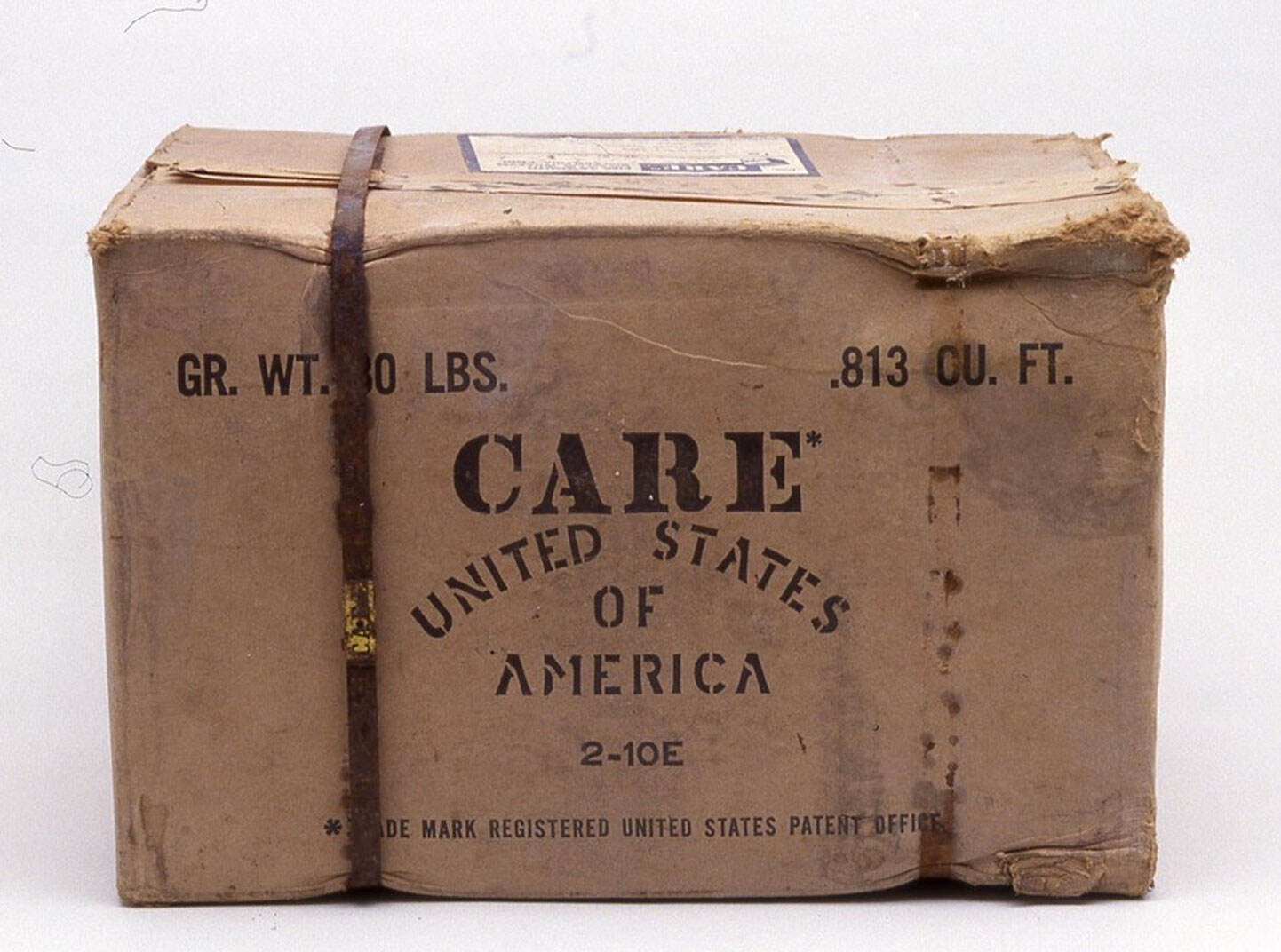
This will also impact care packages.  I believe that many people would receive things from outside the EU and no matter what was sent would just declare the value as less than €22 so that they would not have to pay any VAT.  This takes care of that and ensures that the government will get its share of tax revenue.  Česká pošta processed 28 million VAT-exempt packages from outside the EU in 2019 and the Czech government expects this change to generate an additional 182 billion Kč (€7 billion) of revenue each year.

It's been a while since I've even received a care package from back home.  Mainly because the cost of shipping increased so much in the USA.  In 2013, the cost jumped up from $55 to $77.  Who knows what it costs now in 2021?  Plus, I'd much rather receive hand-delivered care packages.

Update:  In November 2022, the postage cost of a 20 lb (9 kg) care package from the USA to Czechland is $115.70, from the USA.

Tuesday, October 12, 2021

Czech Economic Update

Here's a few updates on what's going on lately with the Czech economy.

  • In August, inflation rose 4,1% compared to last year.  This was the biggest jump since November 2008.  The record inflation level was driven by higher prices for goods, services and housing.
  • In 2022 the average pension will increase by 800 Kč (~$33) to more than 16.000 Kč ($652)
  • Over the past 10 years, the minimum hourly wage has risen 54% and is now 139 Kč ($6.30).  
  • Over the past 10 years, the cost of living has rose by 20,2%.

Sunday, October 10, 2021

Olomouc Weekend

Thanks to Covid I haven't been able to travel at all like I normally do.  I decided that this weekend I was going to at least get out of Brno for the weekend so I decided to spend it up in Olomouc.

It's been a while.  The last time I was here was back in 2014 with my parents.  I still think of Olomouc as a little tiny Prague but without all of the tourists.

Not much has changed.  There's still the plague column, all of the fountains, the astronomical clock, and the cathedral.


It does look like St. Michal's church, where the bells are, is having some serious internal work being done.

There was no stinky cheese on this trip though.  The city has renovated the main tourist information office and for some reason they no longer have the tvarůžky vending machine which was a bit of a let down. 


Other then this slight disappointment it was a nice little weekend away.

I need to make sure that it's not another seven years before my next visit back.

Thursday, October 7, 2021

Recyclable Art

I swear there is almost always something going on at náměstí Svobody.  I went to DM today to pick up a few things and saw this big "number one" filled with plastic recyclables.  


I didn't see a sign or anything that gave any details about it so I guess it either (a) isn't finished yet or (b) it's up to the individual to figure it out.  I wonder how long it will be up for?

Update:  It was gone sometime the next week.

Wednesday, October 6, 2021

My New Driver's License

My new driver's licenseI applied to renew my driver's license in August, coincidentally, on the very same day that my my old license expired.  It was surprisingly easy.  I had an appointment, showed my old license, signed some documents, and that was it.  I didn't need to take a new photo and it didn't cost anything.  I was given a piece of paper that said I applied for my renewal on 17.8., and I was told that my new license might be ready for pickup in two weeks but definitely within four weeks.  I would just need to make an appointment to pick it up.  

I wasn't really worried about how long it would take to get my new license.  It's not like I need it to ride the tram.  Since I knew that I'd be in Germany last week I had scheduled an appointment for yesterday.  

Again, it was very easy.  When I made my appointment online I was given a four-digit PIN that I entered today when I arrived.  I waited to be called up to the window where the clerk took my old license and gave me my new one.  I didn't need to pay anything and I was in and out of the place in ten minutes.  Awesome!

My old driver's license
I did like my old license better.  Well, at least the photo was better.  For my new license they automatically used the photo they had in the system from the last time I was here to renew my ID, when I had my good experience at the Foreign Police.  The old license also had a second photo in the bottom right corner but my new license doesn't have it.

With my new license I'm legal to drive here for another ten years.

Tuesday, October 5, 2021

Knocking Out The List

Another great week in Friedrichshagen.  I knew that it was going to be a busy week and I was right.  First of all, there's always a list of things to do and no matter how full the list is to start with, additional things always some to get added.  

A few things were added to the side and even to the back of the list. In the end I think there were some 20 things that we checked off.  Not too shabby.


On Friday night we went out for sushi.  Tünde still uses the training chopsticks that I got her during my first trip to Singapore.  
On Saturday, we over to Oma and Opa's house for lunch.  Oma cooked up a feast as usual.

I normally try to catch the non-stop train that runs from Hamburg to either Vienna or Budapest which means that when I hop on the train in Berlin, it's a direct trip all the way to Brno.  Right now though, there's only one such train per day and it leaves just after 6 am.  If I don't catch the direct train then I have to change trains in Prague.  

Well my reward on Sunday morning for being at the Berlin main station before 6 am was to find out that the train had a last minute configuration change which meant that the first class cabin where I had a seat reservation wasn't there.  


So I got to take a business class seat instead.  This was my first time ever riding business business class on a train.  It was nice.  Very private with plenty of space.  I may have to do try this again.

Monday, October 4, 2021

EC Cards

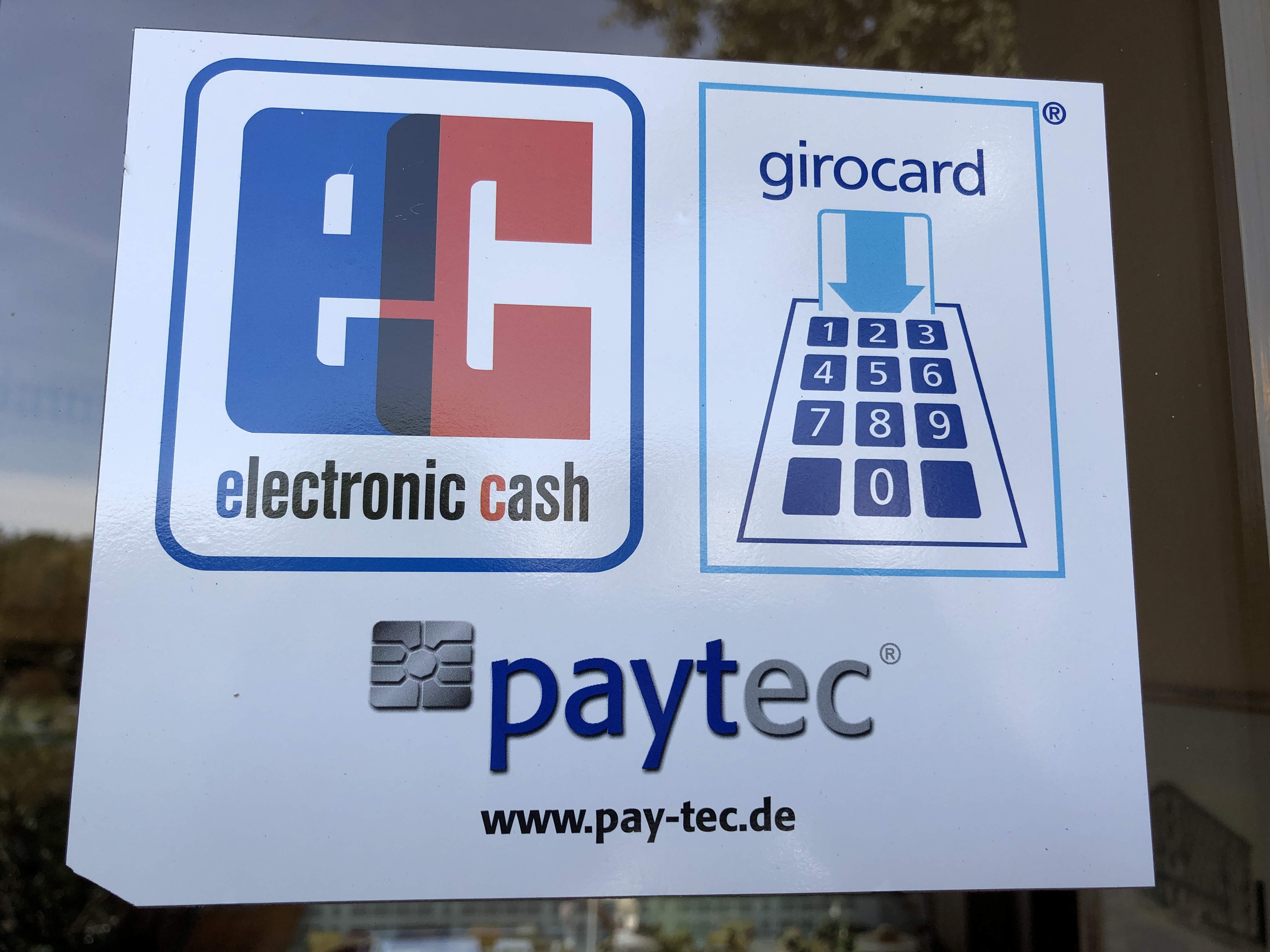
EC Cards are a German thing and they absolutely drive me crazy.  An EC (electronic cash) card is basically a debit card that is linked up to a German bank account.  An EC card gets swiped, just like a debit or credit card would, and the money is deducted from your current account.  A "current account" is the same thing as an American checking account but just like Czechs, Germans don't write checks.

Most EC cards are also Maestro cards which means that they are accepted as debit cards in most places abroad.  

What drives me mental is that when you go someplace and try to pay with a foreign debit or credit card and your card doesn't work.  That's because the the business only accepts either cash or EC cards.  This has happened to me so many times over the years.  Your card doesn't work so you have to either have cash or go to the ATM and pull out cash.  This is because businesses don't want to pay the higher fees that are associated with Visa, MasterCard or American Express.  

What annoys me is that I'm not trying to pay by credit card.  I want to use my Czech debit card but it doesn't work in a shop that only takes EC cards because EC cards only work if you have have German bank account.  

Germans, in general, are frugal and usually prefer to pay with cash or debit card.  Buying things on credit is uncomfortable for most people in Germany.  

I don't know what the going rate is today but about 15 years ago, Visa and Mastercard used to charge businesses about 1,5% for transactions while Amex charged around 3%.  This is often why more shops in the the USA accept Visa and Mastercard than they accept American Express.  In the USA, this is just viewed as the cost of doing business.  

When I'm in Germany I just make sure to carry extra Euros on me.  When I go to the register and ask if I can pay by card, I always ask if they take all cards or only EC cards.

One thing I did notice this past week is that some shops which I know only used to accept EC cards are now accepting credit cards.  I asked Claudia about this and our theory is that Covid really changed things.  Many people had to put things on credit during the toughest times and so more places started accepting credit cards.  

Here's a short video I found out on YouTube that takes about Germans and their reluctance to use cards.

©Deutsche Welle

Sunday, October 3, 2021

Currywurst

Currywurst is an iconic German fast-food dish and I try to have it at least once every time I visit Germany.  Probably not the healthiest of things to eat but it doesn't really matter when it tastes so dang good.  Currywurst is a fried pork sausage, either with or without the sausage skin, that is served sliced with either curry sauce or curry ketchup.  It is then topped with curry powder.  It is normally eaten with a bun or fries.

Like the Döner kebab, Currywurst is a Berlin creation.  It is credited to Herta Heuwer.  The story goes that back in 1949, she obtained either ketchup or Worcestershire sauce and curry powder from British soldiers.  After mixing them together and adding other spices she then poured it over pork sausages and this became Currywurst.  In 1951 she patented the sauce as "Chillup."

There are hundreds of snack stands in Berlin where you can get a good Currywurst.  However, you'll find it available all across the country.  You can buy Curryketcup in any grocery store.

There's even a Currywurst museum that opened in Berlin back in 2009.  I've never been but perhaps one day.  

Here are a couple of short videos I found out on YouTube about Currywurst.

©DW News

©Deutsche Welle

Saturday, October 2, 2021

Buchstabenmuseum, Berlin

After our visit to Teufelsberg, Claudia and I we went to check out the Buchstabenmuseum.  Who knew that Berlin had a museum basically dedicated to letters?  Not letters one sends by post but actual letters as in the ABC's.


The Buchstabenmuseum is a private museum that was founded in 2005 and is run by volunteers.  It's official goal is "preserving, restoring and exhibiting signage from Berlin and around the world."


In 2016 the museum moved to its current location, in a former East German supermarket, in Hansaviertel across from Jannowitzbrücke.  The museum has a very industrial feel and has more than 1.000 examples of letters, logos, and signs.

In my opinion the highlight of the collection was "The Boxed Letter G."  Back in 2014, two-time former heavyweight world champion boxer Wladimir Klitschko produced 26 oversized letters in blue acrylic paint on canvas.  This was part of a charity project to fight against illiteracy, especially amongst children.  The letters were auctioned off and raised €136.500.  Last year, in 2020, the museum received an offer to add the "G" to its collection.

Coincidentally, his brother Vitali Klitschko, also a former champion boxer, is the Mayor of Kyiv and I was able to say hello to him for less than a minute the last time I was in Ukraine on a free walking tour.

The museum isn't very big.  It's only open Thursday - Sunday, from 1pm to 5pm and at €12 the entrance is a bit pricey.  

Here's a short video about the museum that I found out on YouTube.

©CITY iLIKE

Friday, October 1, 2021

Teufelsberg Tour, Berlin

Teufelsberg, "Devil's Mountain", is a man-made hill in Berlin and it's named after the nearby Teufelssee, "Devil's Lake", which today is a favourite spot for Berliners to visit for nude sunbathing.  The site was supposed to be a Nazi military-technical college but it was never finished.  Following the war, about 26 million cubic metres of rubble of debris was brought here and in 20 years, and at 120,1 metres (394 feet) tall, it became the highest point in what used to be West Berlin.  During the Cold War, this was the perfect spot for a listening post.  It's even mentioned at the German Spy Museum.  

©Phil Jeren 1979During the 1950s, SIGINT (signals intelligence) operations were conducted from the top floor of Templehof Airport.  There used to be four intelligence operations sites in West Berlin, with mobile operations units at Teufelsberg in 1961, but they were eventually consolidated at Teufelsberg once the permanent facility was built in the British sector at in late 1963.  

Officially Field Station Berlin, also known as FSB, Teufelsberg, Devil's Mountain, T-berg, the Hill, USM 620-Kilo, and das große Ohr (the big ear), was a radar station but people knew it was really a listening post.  The white tower and geodesic domes were visible for miles.  This allowed roughly 1500 American, and some British, military intelligence personal to listen 24x7 to communications traffic within a 500 km (310 mile) radius.  

With morse and non-morse code intercept operators, signals intelligence analysts, plus German and Russian crypto-linguists, Teufelsberg was one of the NSA's most important sites during the Cold War listening to and monitoring Soviet, East German, and other Warsaw Pact command and control systems.

Following the end of the Cold War, the site was closed.  Today it is abandoned, the antennas are gone and the insides of the buildings have been stripped.  Just like Iraklion Air Station, walking around there feels like a scene out of a zombie apocalypse movie.  Artists have come in there's some impressive graffiti all around.  

Here's a five minute video I found out on YouTube about Teufelsberg.

©Deutsche Welle

No one really knows what to do with the place.  Developers have come and gone.  In 2018 it was given protected status for its historical importance as a Cold War site which makes future development even more difficult.  

It's possible to visit the site on your own but I booked us a tour which allowed us to visit the site before other people were let in.  This added to the eerie vibe.  You can make your way up to the top for some pretty impressive views of the city.  We had a tour guide and she could tell us the basic history of the site and the current status.  But she had no real understanding of what type of work went on here when this was an active listening post.