Showing posts with label Denmark. Show all posts

Saturday, June 10, 2023

2023 Global Peace Index

The 17th edition of the Global Peace Index was released.  The Institute for Economics and Peace (IEP) uses 23 qualitative and quantitative indicators across three different domains: Societal Safety and Security, Ongoing Domestic and International Conflict, and Militarisation.

For the 17th year in a row, Iceland maintains the top spot.  Here are the top 15 countries and the variance from last year's results.

  1. Iceland
  2. Denmark +1
  3. Ireland -1
  4. New Zealand +2
  5. Austria -1
  6. Singapore +4
  7. Portugal +1
  8. Slovenia -4
  9. Japan
  10. Switzerland +1
  11. Candada +2
  12. Czechia -5
  13. Finland +3
  14. Croatia +1
  15. Germany +2
Europe continues to be the most peaceful region, with 7 of top 10 countries.  Although Europe did go down in all three domains over the past year.  Mainly due to the Russian invasion of Ukraine, Europe is now less peaceful than it was 15 years ago.

I'm not sure what happened here in Czechland, with the five spot drop and falling out of the top 10.  But even in 12th place I feel much safer living in Euroland than anywhere else.

The USA remains at 131st place.  Behind Haiti and South Africa, but ahead of Brazil, Eritrea, and Palestine.

The USA recorded the 4th largest overall increase in its homicide rate, which is more than 6 per 100.000 people.  This is more than six times higher than most Western European countries.

The Middle East and North Africa is the world's least peaceful region.  

Ukraine dropped 14 places to 157, just ahead of Russia at 158.  Followed by the five least peaceful countries, with no change from last year.

159. Democratic Republic of the Congo
160. South Sudan
161. Syria
162. Yemen
163. Afghanistan

Я за Україну. Я за Україною. Слава Україні  Stojím za Ukrajinou!  I stand with Ukraine. 🇺🇦

Wednesday, November 30, 2022

2022 Global Peace Index

The Global Peace Index ranks the level of peacefulness and this year was the 16th edition.  Iceland continues to come in first place which it has been since 2008.  New Zealand came in second place again.   

  1. Iceland 
  2. New Zealand
  3. Ireland +3
  4. Denmark -1
  5. Austria +2
  6. Portugal -1
  7. Slovenia -3
  8. Czechland +1
  9. Singapore +1
  10. Japan +1
Europe continues to be the most peaceful area with seven of the top ten spots and 14 of the top 20.

No surprise that Russia and Ukraine are two of the five countries with the biggest drop in peacefulness.

The USA dropped one spot to #129, behind Azerbaijan and ahead of Brazil.

The Middle East and North Africa are the least peaceful regions.

For the fifth year in a row, Afghanistan came in last place, ahead of Yemen, Syria, Russia, and South Sudan.

Я за Україну. Я за Україною. Слава Україні  Stojím za Ukrajinou!  I stand with Ukraine. 🇺🇦

Tuesday, November 29, 2022

2022 World Happiness Report

This year is the 10th anniversary of the World Happiness Report. by the Sustainable Development Solutions Network of the United Nations.  The report factors in things like gross domestic product per capita, healthy life expectancy, freedom to make choices, perceived corruption and social support from friends and family. 


For the fifth year in a row, Finland came in first place.

Scandinavia did well as usual with the five countries all placing in the top eight places.  Finland #1, Denmark #2, Iceland #3, Sweden #7 and Norway #8.

Switzerland placed #4.

The BeNeLux countries did well too with the Netherlands #5, Luxembourg #6, and Belgium #19.

Europe is the happiest region with the eight of the top ten spots.  The only non-European countries to crack the top ten are Israel #9 and New Zealand #10.

The USA placed #16 and Czechland placed #18.

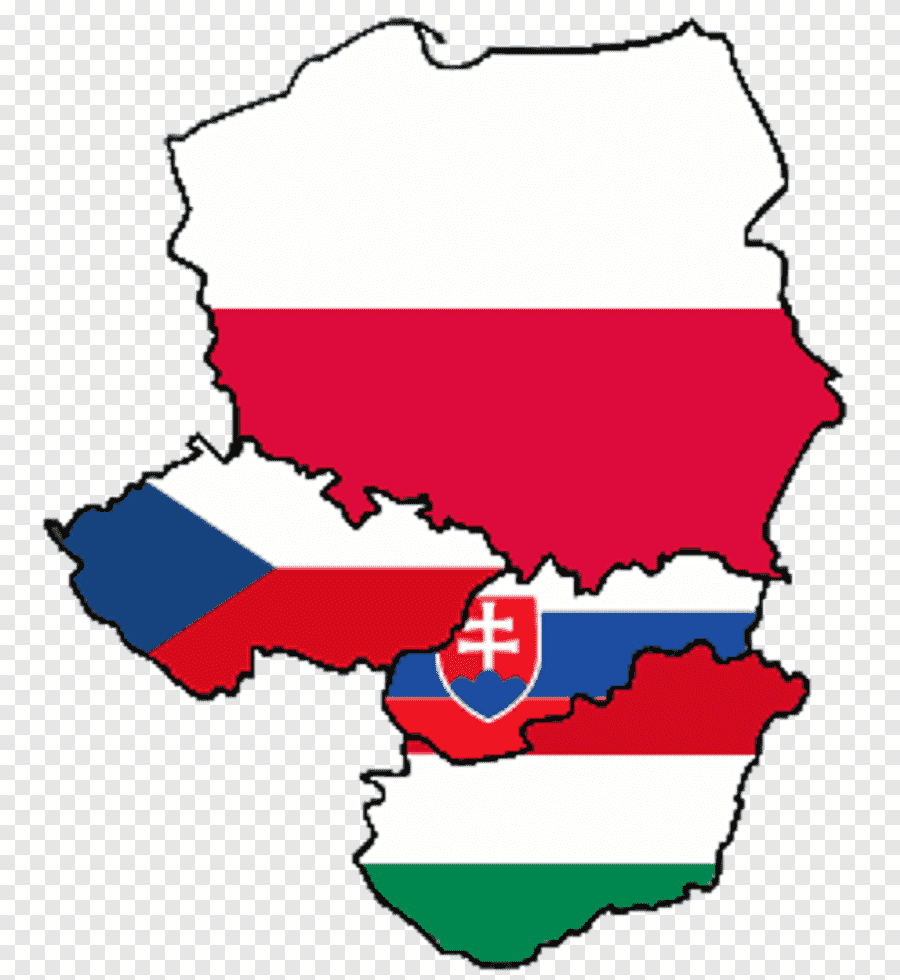
Czechland continues to be the happiest of the Visegrád Four with Slovakia #35, Poland #48, and Hungary #51.

Last place goes to Afghanistan, behind Botswana, Rwanda, Zimbabwe, and Lebanon.

Saturday, August 27, 2022

English in Czechland

English is the most common spoken language across the EU.  About 44% of people in the EU can speak English.  And that's post-Brexit, as now only 1% of the EU are native English speakers.  However, Czechs rank among the worst in Europe at foreign languages.

Czechs are among the least likely Europeans to know a foreign language.  While about 45% can communicate at some level of English, only one in 10 Czechs have minimal English-language skills.  Just 7% speak English proficiently.

The only countries worse at English than Czechia are France, Italy, and Spain.  The top five countries with the best English foreign language skills are the Netherlands, Austria, Norway, Denmark, and Belgium.

One of the primary staffing agencies here has confirmed that English is required for four of to 10 job offers here.  English is demanded five times more than all other foreign languages combined.  After English, the top requested languages by employers are German, French, Italian, and Dutch.

The Czech Statistical Office, ČSÚ,  states that only a minimum of Czechs speak English at a professional level.  30% can't speak a foreign language.  

English is most frequently taught foreign language in EU secondary schools, followed by Spanish, French, German, and Italian.  

In Czechland, by law, students are taught two foreign languages.  English is the most popular, followed by German.  

There has been some controversy in the press about the new government's ability to speak English.  Five of 18 cabinet ministers have admitted to only being able to speak "tourist level" English only.  This is a big deal now that Czechland currently holds the rotating presidency of the EU.  

The new prime minister, Petr Fiala, speaks both English and German fluently.

Jana Černochová, the defence minister, and Zbyněk Stanjura, the finance minister have admitted to having weak English skills but both have at least passive Russian and Polish.

Thursday, January 27, 2022

2021 Social Risk Index

Euler Hermes is an insurance company that in 2020 created the Social Risk Index.  This was to measure business climates across the globe, at the beginning of the Covid-19 pandemic, during one of the worst recessions since WWII. 

There are 12 factors and each country gets a score from 1-100 for each of the 12, the scores are combined for an overall score.  The 12 factors that are evaluated include trends in real GDP per capita growth, labour force participation, income inequality, public social spending on education, health and social protection, political stability, government effectiveness, corruption perception, trust in government levels of vulnerable employment, imports as a percentage of GDP, currency depreciation, and fiscal revenue as a percentage of GDP.  

All of this boils down to ranking countries according to potential economic and political instability during rapid change.

Last year, the USA came in at #23 and Czechland ranked #28. This year, Czechia came in at #19, while the USA is at #35.  The reason that Czechia jumped up nine places was the countries response to the Covid-19 pandemic and the stability of the labour market here despite Covid. 

Scandinavia topped the rankings as the countries usually do when it comes to any type of social score.  Europe did well with 16 countries in the top 20, and 13 of them are EU member countries.  New Zealand was the top placed country outside of Europe.  Most advanced economies saw improvements from last year but the USA, France, Portugal, and Greece all saw large declines.

Here are the 2021 rankings...

  1. Denmark
  2. Norway
  3. Sweden
  4. Switzerland
  5. Finland
  6. New Zealand
  7. Germany
  8. Austria
  9. Luxembourg
  10. Iceland
  11. Canada
  12. Ireland
  13. Japan
  14. Australia
  15. Netherlands
  16. Estonia
  17. France
  18. Portugal
  19. Czechia
  20. Slovenia
26. Slovakia

35. USA

The five lowest rankings belong to #181 Zimbabwe, #182 Nigeria, #183 Afghanistan, #184 Sudan, and #185 Democratic Republic of the Congo.

Friday, December 31, 2021

Dinner For One

Dinner for One, or Der 90. Gerburtstag (The 90th Birthday), is a black-and-white television comedy sketch that was released in 1963.  It was adapted from a British stage skit that was performed by Freddie Frinton and May Warden.

It enjoys cult status in Germany and is shown every year for New Year's.  Since 1995, it is the most frequently repeated television programme in Germany ever.  It is also very popular in Austria and Switzerland, plus in Scandinavia - Denmark, Sweden, Norway, and Finland.  Despite coming from the UK, it wasn't broadcast there until 2018.  

What's remarkable about the show is that despite it being broadcast in English, and without subtitles, it is still tremendously popular.  Even Germans who can't speak English will still usually be able to quote lines from the comedy in English. 

The basic premise is that Miss Sophie is celebrating her 90th birthday and, as in every other year, invited her four closest friends.  Unfortunately, she has outlived everyone so her butler, Mr. Winterbottom, gives a toast by proxy.  He gets tipsy and there's a bit of physical comedy.  All in good fun.

Here's a short Meet the Germans video that talks about this cult classic.

©DW Euromaxx

Here's the show which is out on YouTube.

Retro TV

Thursday, December 16, 2021

Brno City Break in 2022

A couple of weeks ago, Time Out magazine published their list of "The 16 best city breaks in Europe for 2022."  Brno came in second place.  While it's great for Brno to get the recognition I kind of hope that it retains its status as a hidden gem.  They even mentioned my favourite cafe for breakfast.


Here's what the article said about Brno.

Although sandwiched between Prague and Vienna, self-confident Brno is no middle Child.  Once a powerhouse dubbed the "Moravian Manchester", the laidback Czech second city has repositioned itself as a post-industrial science and tech hub.  But you'll find plenty of clues to Brno's layered past at a clutch of offbeat underground attractions, including the mysterious brick cisterns at. Žlutý Kopec, communist-era nuclear bunker 10-Z, and the "Denis" bomb shelter under the cathedral.  The food and drink scene is reinventing itself to, from contemporary international at Element to Výčep na Stojáka, a modern take on a trad pub.

The perfect day:  After breakfast at Café Momenta, head up to Špilberk Castle and grab lunch at Cafe Placzek.  Explore the historical centre before dinner at Atelier Bar &Bistro and a nightcap at Rotor Bar.

Plan your trip:  The Industrial project celebrates Brno's manufacturing tradition, with several former industrial buildings opening to the public for the first time in 2022.  Káznice, a Habsburg-era prison, is also being redeveloped and will host events in the summer. --David Creighton

Here are the rankings.

  1. Arles, France
  2. Brno, Czech Republic
  3. Kaunas, Lithuania
  4. Odense, Denmark
  5. Bihać, Bosnia and Herzegovina
  6. Ljubljana, Slovenia
  7. Turku, Finland
  8. Inverness, Scotland
  9. Valencia, Spain
  10. Sheffield, England
  11. Trikala, Greece
  12. Oslo, Norway
  13. Rotterdam, Netherlands
  14. Liverpool, England
  15. Milan, Italy
  16. Freiburg, Germany

A few of these spots have already been on my list of places to visit.  Hopefully I'll get a chance to do a bit more travel in 2022.

Update: 2023 rankings.

Saturday, March 20, 2021

2020 World Happiness Report

Today is the International Day of Happiness.  The United Nations started this back in 2013 to promote the idea that feeling happy is a global human right.  Clearly 2020 was a challenging year due to COVID-19 so this year's theme is "Keep Calm.  Stay Wise.  Be Kind."

The 2020 World Happiness Report was released today.  Czechland came in at #18 and the USA came in at #19.  This is the first time that Czechland outranked the USA.  

Like last year, Finland came in #1 again and 14 of the 20 world's happiest countries are in Europe.  At #9, New Zealand is the only non-European country to crack the top 10.

Scandinavia is the happiest region in Europe with #1 Finland, #2 Denmark, #4 Iceland, #6 Norway, and #7 Sweden.

BeNeLux did well with #5 Netherlands, #8 Luxembourg, and #20 Belgium.

The only Middle Eastern country to make the top 20 was #12 Israel.  Even with Brexit the UK came in at #17.

At #18 Czechland was the clear happiness leader of the Visegrad countries with #34 Slovakia, #44 Poland, and #53 Hungary.

Many of the most unhappiest counties are in East and Southern Africa including #137 Zambia, #140 Burundi, #142 Tanzania, #144 Malawi, #145 Lesotho, #146 Botswana, #147 Rwanda, and #148 Zimbabwe.

The world's most unhappiest country is #149 Afghanistan.  

The rankings are based on the combined scores for the last three years.  

Not much changes overall if you only go by the 2020 scores instead of the three year average.  Although then the USA would have been #14 and Czechland #16.

Wednesday, January 27, 2021

New Integration Course Requirement

There's now a new requirement in Czechland for foreigners who have been issued long-term residence permits, since 1 January 2021, to complete a four-hour integration course.  

The course covers the rights and obligations that come with residency here as well as Czech culture and values.  The class is conducted in Czech, with interpretation into English, French, Spanish, Arabic, Mongolian, Russian, Serbian, Ukrainian or Vietnamese.  There's no exam but participants receive a certificate when they complete the entire course.  It costs 1500 Kč ($70) and is available at 18 centres across the country.  You have up to one year from receiving your residency permit to complete the course.  The fine for not completing it in time is up to 10.000 Kč ($467).

This is only for third-country nationals as EU citizens are exempt.  It's not required if you are under 15 or over 61 years of age.  Those here on study or investment visas are also exempt.

Aside from this, the education minister has submitted draft legislation that will increase the Czech language requirement for permanent residency from A1 to A2.  When I received my permanent residency back in 2015 I only had to prove A1 level Czech.  This isn't official yet but I think it's for sure coming as there's been talk of raising the level of Czech required for at least the past eight years.  I don't know if they will raise it this year with COVID-19 but for sure by next year.

I was surprised to find out that Czechland and France are the only two EU countries that only require A1 for permanent residency.  I would have thought that the level of language proficiency would have been more unified across Europe but each has its own requirements.

In Czechland, A2 will be required for permanent residency while B1 is required for citizenship.

Germany requires B1 level for either permanent residency or citizenship.

Austria requires B1 for permanent residency and B2 for citizenship.  This means that for Austrian citizenship you need to speak better German than a German citizen.  Albeit Austrian German.

France requires A1 for permanent residency and B1 for citizenship.

Poland requires B1 for both permanent residency and citizenship.

I don't know about permanent residency but Italy requires B1 for citizenship.  The Netherlands, Portugal, and Spain only require A2 for citizenship in Dutch, Portuguese, or Spanish respectively.  Denmark requires B2 for citizenship.

For countries with multiple official langues the rules seem to vary more.  For citizenship in Finland, B1 is required but it can be in either Finnish or Swedish since both are official languages.

Belgium has three official languages so for citizenship you only have to prove A2 in either French, Dutch, or German.

Luxembourg has three official languages - French, German, and Luxembourgish.  But if you want citizenship than only Luxembourgish counts.  You need A2 level speaking and B1 level listening.

Switzerland has four official languages - German, French, Italian, and Romansh.  For permanent residency you need A1 writing and A2 speaking in any one of the four languages.  For citizenship, A2 writing and B1 speaking are required.

I'm still waiting to find out when I get to take my B1 Czech exam.

Saturday, December 12, 2020

No Euro Yet

When I was deciding to make the move to Czechland many years ago, it looked like the country would change its currency from the Koruna to the Euro around 2015.  This was a selling point for me because I thought it would be a once in a lifetime experience to go through a currency switch.  Well I've been here 11,5 years and there's no outlook in sight for ever actually making the move.

When Czech Republic joined the EU in 2004 it became legally obligated to adopt the Euro once it fulfilled the necessary requirements for joining the Eurozone.  There's a lot to be gained by adopting the Euro.  Three of the four countries bordering Czechland all use the Euro.  More than 57% of the country's foreign trade is with countries using the Euro, almost one-third just with Germany.  If Czechia was on the Euro then it would be easier for businesses to conduct trade because no one would have to factor in foreign exchange rates.  

Czechs are reluctant to give up the Czech Crown because they know that while it would be better for the country overall, it means that things will become more expensive as prices get rounded up but salaries won't.  The country could join the Eurozone whenever it wanted to but every time it gets close to meeting all of the requirements it seems to purposefully flub things up so that can just keep kicking the can down the road.

The government has just said that due to economic conditions resulting from COVID-19 and this year's budget deficit that the country will not set a date yet to adopt the Euro because the prerequisites for joining will not be met.

There are 19 countries on the Euro.  When it was first introduced Denmark and the UK opted out.  Now that the UK has left the EU after Brexit, only Denmark doesn't have to make the switch.  Besides Czechland, Bulgaria, Croatia, Hungary, Poland, Romania, and Sweden all still need to give up their national currencies for the Euro.

Here's a short video I found on YouTube about Slovakia, from 2008, right before it was to adopt the Euro. in 2009.  It could be about Czechia today.     

©DW News

Tuesday, August 18, 2020

2019 Global Peace Index

The results of the 13th annual Global Peace Index are in. Europe maintained its position as the world's most peaceful region for the 13th year in a row.

Iceland and New Zealand kept the first two spots again.

  1. Iceland
  2. New Zealand
  3. Portugal
  4. Austria
  5. Denmark
  6. Canada
  7. Singapore
  8. Slovenia
  9. Japan
  10. Czech Republic
The USA came in at #128, out of 163 countries, behind South Africa but ahead of Saudi Arabia.  

Afghanistan and Syria swapped positions as the least peaceful countries.  The bottom five are:
159.  Iraq
160.  Yemen
161.  South Sudan
162.  Syria
163.  Afghanistan

Thursday, July 18, 2019

2019 Sustainable Development Report

The results of the 2019 Sustainable Development Report are in and Czechland is ranked as the world's 7th most developed country.

This is a UN initiative, in its fourth year, that looks at 17 key criteria for sustainable development.  Some of the criteria include eliminating poverty and hunger, establishing quality education, access to clean water and sanitation, and promoting responsible consumption and production.

The report ranked 162 countries and the top 10 are all in Europe, with Scandinavian countries ranked the highest.

  1. Denmark
  2. Sweden
  3. Finland
  4. France
  5. Austria
  6. Germany
  7. Czech Republic
  8. Norway
  9. Netherlands
  10. Estonia
New Zealand came in 11th and is the highest ranked non-European country.  The USA came in 35th.

Wednesday, April 10, 2019

A Day in Copenhagen, Denmark

After our day trip to Lund on Friday, Natalie and I hoped on the train across the Øresund Bridge for a day in Copenhagen.  It's been seven years since my last visit to here and this was Nat's first time in Denmark.


We did a free city walking tour.  Our guide, Magnus, was very entertaining and it didn't feel like we had been going for three hours.  Highly recommended.

After covering most of the city's highlights we went exploring on our own.  Our first destination was to check out the Little Mermaid.


Thanks to Atlas Obscura we made our way one kilometre past the Little Mermaid to check out "The Genetically Modified Little Mermaid."

Nat spotted the Hey Captain canal tour boat and the next thing I knew we were exploring the city by boat with a glass of wine in hand.

It was a nice time and, again, highly recommended.


Then it was time for some nibbles.
We came upon a nice area by the water with some open faced sandwiches (and schnapps).  Not quite chlebíčky but very tasty.


And no visit to Copenhagen is complete without a walk through Christiana.

Sunday, March 24, 2019

2019 World Happiness Report

The 7th World Happiness Report was released by the Sustainable Development Solutions Network of the United Nations and Czechland was ranked at the 20th happiest out of 156 countries.

The report factors in things like gross domestic product per capita, healthy life expectancy, freedom to make choices, perceived corruption and social support from friends and family.

No surprise that the Scandinavian countries ranked so high.  For the second year in a row, Finland come in 1st, followed by Denmark, Norway, and Iceland.  The Netherlands came in 5th place.  Of the 20 happiest countries in the world, 14 of them are in Europe.

The USA came in 19th.  At 20th, Czechland scored the best of the Visegrád Group with Slovakia at 38th, Poland at 40th, and Hungary at 62nd.

Czechs continue to rank higher each year.  In 2015 they were 31st, in 2016 they were 27th, in 2017 they were 23rd, and last year they were 21st.

The most unhappiest countries are South Sudan, the Central African Republic, Afghanistan, Tanzania, Rwanda, and Yemen.


2019 Top 30 Happiest Countries

Saturday, January 26, 2019

2018 Good Country Index

The Good Country Index is a United Nations measure of "what country on earth contributes to the good of humanity."  The index is made up of 35 different data points which gives a ranking in seven categories and an overall ranking.

The seven categories are: Science and Technology, Culture, International Peace and Security, World Order, Planet and Climate, Prosperity and Equality, and Health and Well-being.

For 2018, the top 10 countries were...

  1.  Finland 
  2.  Netherlands
  3.  Ireland
  4.  Sweden
  5.  Germany
  6.  Denmark
  7.   Switzerland
  8.  Norway
  9.  France
  10.  Spain

Scandinavia scored really well.  It's interesting that all of the top 10 countries are in the European Union or the European Economic Area.

Czech Republic moved up two spots this year to #32.
Czechland was actually #2 for Science and Technology.  Wow!
The USA fell 15 spots from #25 in 2017 to #40 in 2018.

The bottom three countries were #161 Mauritania, #162 Libya, and #163 Iraq.