Showing posts with label Africa. Show all posts

Saturday, June 10, 2023

2023 Global Peace Index

The 17th edition of the Global Peace Index was released.  The Institute for Economics and Peace (IEP) uses 23 qualitative and quantitative indicators across three different domains: Societal Safety and Security, Ongoing Domestic and International Conflict, and Militarisation.

For the 17th year in a row, Iceland maintains the top spot.  Here are the top 15 countries and the variance from last year's results.

  1. Iceland
  2. Denmark +1
  3. Ireland -1
  4. New Zealand +2
  5. Austria -1
  6. Singapore +4
  7. Portugal +1
  8. Slovenia -4
  9. Japan
  10. Switzerland +1
  11. Candada +2
  12. Czechia -5
  13. Finland +3
  14. Croatia +1
  15. Germany +2
Europe continues to be the most peaceful region, with 7 of top 10 countries.  Although Europe did go down in all three domains over the past year.  Mainly due to the Russian invasion of Ukraine, Europe is now less peaceful than it was 15 years ago.

I'm not sure what happened here in Czechland, with the five spot drop and falling out of the top 10.  But even in 12th place I feel much safer living in Euroland than anywhere else.

The USA remains at 131st place.  Behind Haiti and South Africa, but ahead of Brazil, Eritrea, and Palestine.

The USA recorded the 4th largest overall increase in its homicide rate, which is more than 6 per 100.000 people.  This is more than six times higher than most Western European countries.

The Middle East and North Africa is the world's least peaceful region.  

Ukraine dropped 14 places to 157, just ahead of Russia at 158.  Followed by the five least peaceful countries, with no change from last year.

159. Democratic Republic of the Congo
160. South Sudan
161. Syria
162. Yemen
163. Afghanistan

Я за Україну. Я за Україною. Слава Україні  Stojím za Ukrajinou!  I stand with Ukraine. 🇺🇦

Saturday, November 5, 2022

Commonwealth of Nations

Today is the 5th of November which is Guy Fawkes night.  So Happy Bonfire night to all of my Commonwealth peeps.  

Here's a bit about the Commonwealth of Nations.

The Commonwealth of Nations is a political association of 56 countries, most of which, 52 of them, were once part of the British Empire either as colonies or dependencies.

With the passing of Queen Elizabeth II's passing, Charles III immediately succeeded his mother as monarch of the Commonwealth realm even though he has not yet be crowned king.

Once Charles III will be king, he will be both monarch and head of state, of the 15 countries of the Commonwealth realm.

These 15 countries are the United Kingdom, Antigua and Barbuda, Australia, the Bahamas, Belize, Canada, Grenada, Jamaica, New Zealand, Papua New Guinea, Saint Kitts and Nevis, Saint Lucia, Saint Vincent and the Grenadines, the Solomon Islands, and Tuvalu.

There are five countries that have other monarchs but are still a part of the Commonwealth.  These five are Brunei, Eswatini, Lesotho, Malaysia, and Tonga.

The remaining 36 members of the Commonwealth are all republics.  They include Bangladesh, Barbados,  Botswana, Cameroon, Cyprus, Dominica, Fiji, Gabon, The Gambia, Ghana, Guyana, India, Kenya, Kiribati, Malawi, Maldives, Malta, Mauritius, Mozambique, Namibia, Nauru, Nigeria, Pakistan, Rwanda, Samoa, Seychelles, Sierra Leone, Singapore, South Africa, Sri Lanka, Tanzania, Togo, Trinidad and Tobago, Uganda, Vanuatu, and Zambia.

The Commonwealth consists of 31,5 million km² (12.2 million square miles) which is about 21% of the world's total land area.  The Commonwealth countries are home to 2,4 billion people which is about ⅓ of the world's population with 94% living in Asia and Africa.

There's no requirement that a member has to have been a British colony.  Mozambique, Rwanda, and Gabon never were.  The Commonwealth Charter states that members have shared values of democracy, human rights and the rule of law.

The human rights thing is a bit funny to me.  The UK left a legacy of anti-homosexuality laws, particularly during the 19th century, at the height of the British Empire.  Being gay is still a criminal offence in more than 30 Commonwealth countries.  There's a direct link between anti-gay law and increased rates of HIV.  While the Commonwealth accounts for about a ⅓ of the world's population it has more than 60% of the world's HIV cases.    

Membership in the Commonwealth isn't forever.  Ireland was the first country to leave.  It left when the country became a republic.  Prior to India becoming a republic the rules were changed so that India could remain a member.  Zimbabwe left in 2003 but it is now trying to rejoin.  Other potential members currently include Somaliland, South Sudan, Suriname, and Burundi.

The three Crown dependencies of Jersey, Guernsey, and the Isle of Man aren't happy with only being represented by the UK.  All three want to have direct representation with the Commonwealth.

The Commonwealth Games are held every four years.  They began in 1930 as the Empire Games.  They contain the usual Summer Olympic events plus "British" sports like bowls, netball and rugby sevens.  The next games take place in 2026 in Victoria, Australia.

Update August 2023:  Looks like it's getting too expensive for cities to host the Commonwealth Games.  Two cities have withdrawn their bids for upcoming games.  Here's a BBC report about it.

©BBC News

Saturday, March 20, 2021

2020 World Happiness Report

Today is the International Day of Happiness.  The United Nations started this back in 2013 to promote the idea that feeling happy is a global human right.  Clearly 2020 was a challenging year due to COVID-19 so this year's theme is "Keep Calm.  Stay Wise.  Be Kind."

The 2020 World Happiness Report was released today.  Czechland came in at #18 and the USA came in at #19.  This is the first time that Czechland outranked the USA.  

Like last year, Finland came in #1 again and 14 of the 20 world's happiest countries are in Europe.  At #9, New Zealand is the only non-European country to crack the top 10.

Scandinavia is the happiest region in Europe with #1 Finland, #2 Denmark, #4 Iceland, #6 Norway, and #7 Sweden.

BeNeLux did well with #5 Netherlands, #8 Luxembourg, and #20 Belgium.

The only Middle Eastern country to make the top 20 was #12 Israel.  Even with Brexit the UK came in at #17.

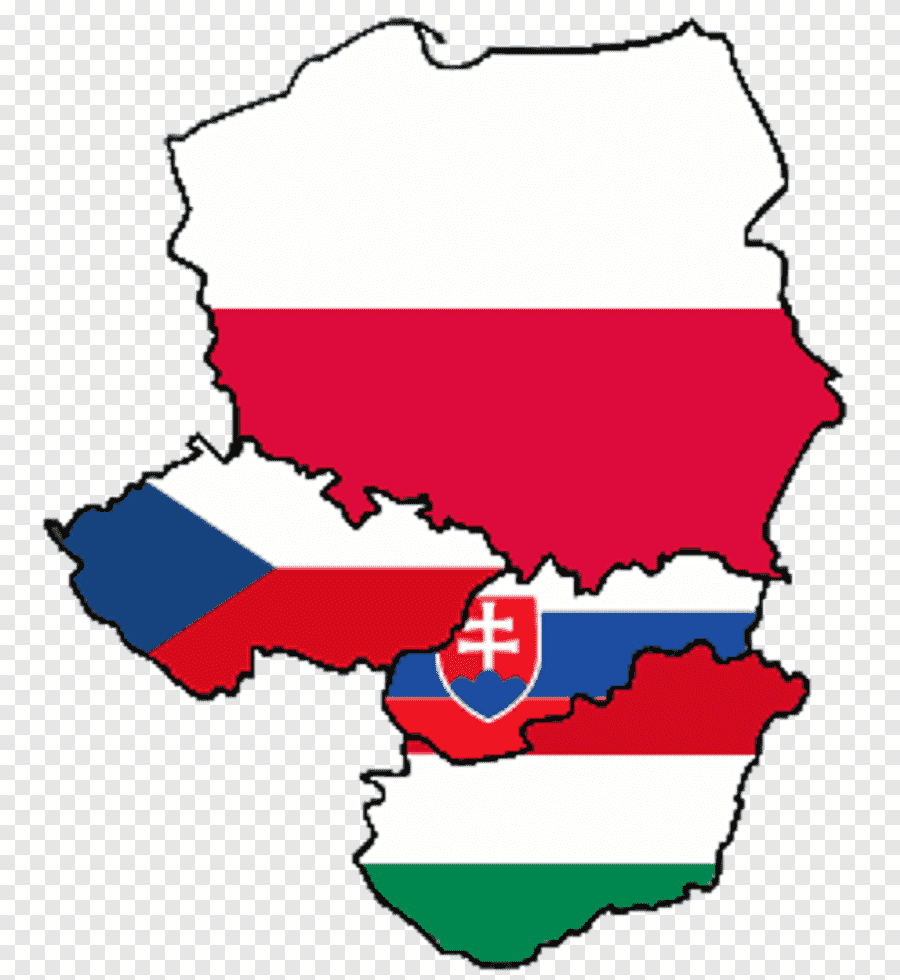
At #18 Czechland was the clear happiness leader of the Visegrad countries with #34 Slovakia, #44 Poland, and #53 Hungary.

Many of the most unhappiest counties are in East and Southern Africa including #137 Zambia, #140 Burundi, #142 Tanzania, #144 Malawi, #145 Lesotho, #146 Botswana, #147 Rwanda, and #148 Zimbabwe.

The world's most unhappiest country is #149 Afghanistan.  

The rankings are based on the combined scores for the last three years.  

Not much changes overall if you only go by the 2020 scores instead of the three year average.  Although then the USA would have been #14 and Czechland #16.

Tuesday, December 18, 2018

The Canary Islands, Spain

I'm already need some warm weather and in March it's off to Gran Canaria for a week.  Over the past almost ten years I've wanted to visit but it's just never worked out.  So I'm excited to finally go.  Here's a bit of geography about where I'm headed.

There are four archipelagos in the North Atlantic Ocean between Europe and North Africa.  Collectively they are called Macaronesia.  They are the Azores, Madeira including the Selvagens Islands, the Canary Islands, and Cape Verde.

Cape Verde is an independent country and is part of Africa.  The Azores and Madeira belong to Portugal and the Canary Islands are part of Spain.

The Canary Islands, Las Islas Canarias, are an autonomous part of Spain.  The islands are actually closer to Africa than they are to Europe.  They are only 100 km (62 miles) off the coast of Morocco.  Since the Canary Islands are a part of Spain they are in the EU and a part of Schengen.

There are seven main islands and each has its own capital.
They are Tenerife, Fuerteventura, Gran Canaria, Lanzarote, La Palma, La Gomera and El Hierro.
There are also several smaller islands including La Graciosa, Alegranza, Isla de Lobos, Montaña Clara, Roque del Oeste and Roque del Este.

The Canary Islands are a little bigger than Delaware and home to almost 2.13 million people.  Most people live on Tenerife and Gran Canaria which are home to the two capital cities - Santa Cruz de Tenerife and Las Palmas de Gran Canaria.

The islands were discovered by Ancient Greek and Roman sailors.  In 1495 they came under Spanish rule.  During the Spanish Empire, the islands were the main stopover for Spanish ships on their way to the Americas.  They gained autonomy in 1982.

The Canary Islands have long hot summers and relatively warm winters making them a major tourist destination.  They get almost 12 million tourists a year which is about 32% of its GDP.  I can't wait to be one of those tourists because I'm in serious need of some beach time.  Let's see how my Spanish holds up but with so many German and British tourists I'm sure that I'll get by.

Thursday, July 12, 2018

South Africa Trip Summary

South Africa has to have been one of my more interesting trips since moving to Euroland.
Technically I've been to Africa before.  There was the day trip to Morocco.
However, this was my first real taste of Africa proper.

My adventure started off with an 11 hour overnight BA flight from London to Johannesburg.

Johannesburg is the biggest city in South Africa.

There's plenty to see and do so I kept busy.  The best parts for me were my visits to the Lion Park and Soweto.

Being in the Southern Hemisphere, July is the start of winter here.  Many people were complaining about how cold it was. It did drop down to 2℃ (35,6℉) but having lived in Czechland I kept thinking that these people don't know what cold is.

"Christmas in July" is a popular Southern Hemisphere thing.  Every so often the radio would play Jingle Bells or Feliz Navidad.

Normally when I travel I'm game to just go out and explore.  I'll take a random street just to see what I can find.  Not this time!  South Africa's crime rate is out of control.  Except for walking to the local mall in Rosebank, I took an Uber anytime I wanted to go somewhere.  Every sightseeing thing I did was through a booked tour.  The nice thing was that since this wasn't a busy time, I was the only person on all but one of my tours.  So I had private tours for the price of group tours.  Sweet.

I had a half-day tour to Pretoria.  The Voortrekker Monument was definitely worth seeing.  But given my limited time I probably should have skipped it and gone to see the Cradle of Humankind.


The flight from Johannesburg to Cape Town is just over two hours.


While on the airplane I had a look through the inflight magazine.  There was a full page story on why Brno is the place to go visit.

Whilst I'm glad that Brno gets the recognition as a great place to be I kind of hope it that it retains its status as a hidden gem.

Cape Town was a bit warmer.  Fortunately, they had a few days of rain before I arrived which actually got their reservoir up to around 70%.  Water restrictions were still in place.  My hotel removed the plugs from the all of the bathtubs and asked people to keep showers to a maximum of 90 seconds.  This was rough considering it took over a minute for the water to warm up.

I enjoyed Cape Town much more than Joburg.
Especially the day trips out to Robben Island and the Cape of Good Hope.

As a mentioned, security is an important thing to be aware of in South Africa.  Way more so than in Euroland.  In South Africa, all of the nice houses are hidden behind high walls and electric fences. In poorer areas the electric fences are replaced with razor wire.  It gets exhausting always being on guard.  I don't get how people live here full time.

I'm very glad that I came to South Africa.  It was educational.  The scenery is absolutely spectacular.

There is so much potential here but people are squandering it.
There is so much fraud.  I think Nelson Mandela is turning in his grave over how things are playing out in the country.


I still want to visit Durban and Port Elizabeth.  I would for sure return to Cape Town but I don't feel a burning need to go back to Joburg.

Wednesday, July 11, 2018

Cape of Good Hope, Cape Point and Stellenbosch Tour, South Africa

On Friday, I went on an all day tour from Cape Town to the Cape of Good Hope, Cape Point, and Stellenbosch.

Cape Point is the mountainous stretch that runs about 30 km (19 miles) at the southwestern tip of Africa.


Our first stop was at Maiden's Cove for a view of the Twelve Apostles which is a scenic stretch of mountain on the back side of Table Mountain.


Then we stopped at Hout Bay which is about 20 km (12,5 miles) from Cape Town.  The town is home to about 18,000 people.  It's a lovely spot surrounded by mountains with a view of the Atlantic Ocean.

Panoramic view of Hout Bay

On the way to Cape Point we passed an ostrich farm.


We also saw plenty of baboons by the farm.

Cape Point is beautiful.  Again, great views of the coast and the Atlantic Ocean.


About 2 km away is the Cape of Good Hope.  The Cape of Good Hope is the most south-western point on the African Continent.  It's a popular spot for photos.


Boulders Beach is near Simon's Town.  This is home to the African Penguin, previously known as the Jackass Penguin.  This is the only penguin that breeds in Africa.


Back in 1910 there were around 1,5 million penguins and today it is considered an endangered species.  There are give or take 3000 birds in this colony.


On the way to Stellenbosch we drove past Khayelitsha.  Khayelitsha means "Our New Home" in Xhosa.


It is home to over 390,000 people.  It is South Africa's largest and fastest growing township.


Stellenbosch is about 50 km (31 miles) from Cape Town.  It was founded in 1679.

Today it is a university town with a population of around 20,000.  Unfortunately we only had about an hour to walk around so I didn't get to see much of the town.

We then stopped off at Zevenwacht Winery for a short tour and wine tasting.  The winery dates back about 300 years.

Tuesday, July 10, 2018

Robben Island, South Africa

Robben Island is 10 km (6 miles) from Cape Town.  The small island is 3,3 km (2,1 miles) long and 1,9 km (1,2 miles) wide.

Dutch settlers first used the island as a prison in the mid-17th century.

In 1845 it became a leper colony and it eventually became an animal quarantine station.

In 1961, South Africa's Apartheid government used the island as a prison for both convicted criminals and political prisoners.

This is where Nelson Mandela served 18 of 27 years before the end of Apartheid.  He, along with Kgalema Motlanthe and Jacob Zuma, are former prisoners who became President of South Africa.

Nelson Mandela's cell 


In 1991, the maximum security prison for political prisoners closed.  Then in 1996 the medium security prison was closed.

In 1999, Robben Island was declared a UNESCO World Heritage Site.

There are three tours a day from Cape Town.  The 3,5 hour tours start with a ferry ride from the V&A Waterfront.  The tour guides are former prisoners who are able to share their personal experiences.