Showing posts with label BBC. Show all posts

Tuesday, April 11, 2023

25th Anniversary of the Good Friday Agreement

Yesterday was the 675th anniversary of Charles University and it was also the 25th anniversary of the Good Friday Agreement.

The Good Friday Agreement, known also as the Belfast Agreement, signed on 10 April 1998, brought peace to Ireland.

The agreement was signed by the UK and Irish governments and was confirmed by referendums in both Ireland and Northern Ireland.  It allowed for devolved government in Belfast but more importantly, it brought an end to The Troubles which was the 30 years of violence between nationalists and unionists.

The Troubles began in the late 1960s as violent conflicts between Catholic Unionists and Protestant Loyalists.  During this time more than 3,500 people were killed and more than 50,000 injured.

The agreement acknowledged that the majority of people in Northern Ireland wanted to remain a part of the UK.  It also acknowledged that many people in Northern Ireland, and the majority in the Republic of Ireland want a united Ireland.  If and when a day comes that the majority of people in Northern Ireland want to be united with Ireland, then both the Irish and British governments must comply.

Everyone in Northern Ireland has the right to UK or Irish citizenship, or may have both passports.

Paramilitary gourds had to decommission weapons and the British and Irish governments committed to the early release of about 400 prisoners.  The British had to normalise security arrangements at the border.

One of the biggest problems of Brexit is that there's now a land border in Ireland between the UK and the EU.  Many people have been concerned that putting a hard border between Ireland and Northern Ireland could bring back the Troubles.

Here are a few videos I found on YouTube.

BBC News

RTÉ News

RTÉ News

Saturday, November 5, 2022

Commonwealth of Nations

Today is the 5th of November which is Guy Fawkes night.  So Happy Bonfire night to all of my Commonwealth peeps.  

Here's a bit about the Commonwealth of Nations.

The Commonwealth of Nations is a political association of 56 countries, most of which, 52 of them, were once part of the British Empire either as colonies or dependencies.

With the passing of Queen Elizabeth II's passing, Charles III immediately succeeded his mother as monarch of the Commonwealth realm even though he has not yet be crowned king.

Once Charles III will be king, he will be both monarch and head of state, of the 15 countries of the Commonwealth realm.

These 15 countries are the United Kingdom, Antigua and Barbuda, Australia, the Bahamas, Belize, Canada, Grenada, Jamaica, New Zealand, Papua New Guinea, Saint Kitts and Nevis, Saint Lucia, Saint Vincent and the Grenadines, the Solomon Islands, and Tuvalu.

There are five countries that have other monarchs but are still a part of the Commonwealth.  These five are Brunei, Eswatini, Lesotho, Malaysia, and Tonga.

The remaining 36 members of the Commonwealth are all republics.  They include Bangladesh, Barbados,  Botswana, Cameroon, Cyprus, Dominica, Fiji, Gabon, The Gambia, Ghana, Guyana, India, Kenya, Kiribati, Malawi, Maldives, Malta, Mauritius, Mozambique, Namibia, Nauru, Nigeria, Pakistan, Rwanda, Samoa, Seychelles, Sierra Leone, Singapore, South Africa, Sri Lanka, Tanzania, Togo, Trinidad and Tobago, Uganda, Vanuatu, and Zambia.

The Commonwealth consists of 31,5 million km² (12.2 million square miles) which is about 21% of the world's total land area.  The Commonwealth countries are home to 2,4 billion people which is about ⅓ of the world's population with 94% living in Asia and Africa.

There's no requirement that a member has to have been a British colony.  Mozambique, Rwanda, and Gabon never were.  The Commonwealth Charter states that members have shared values of democracy, human rights and the rule of law.

The human rights thing is a bit funny to me.  The UK left a legacy of anti-homosexuality laws, particularly during the 19th century, at the height of the British Empire.  Being gay is still a criminal offence in more than 30 Commonwealth countries.  There's a direct link between anti-gay law and increased rates of HIV.  While the Commonwealth accounts for about a ⅓ of the world's population it has more than 60% of the world's HIV cases.    

Membership in the Commonwealth isn't forever.  Ireland was the first country to leave.  It left when the country became a republic.  Prior to India becoming a republic the rules were changed so that India could remain a member.  Zimbabwe left in 2003 but it is now trying to rejoin.  Other potential members currently include Somaliland, South Sudan, Suriname, and Burundi.

The three Crown dependencies of Jersey, Guernsey, and the Isle of Man aren't happy with only being represented by the UK.  All three want to have direct representation with the Commonwealth.

The Commonwealth Games are held every four years.  They began in 1930 as the Empire Games.  They contain the usual Summer Olympic events plus "British" sports like bowls, netball and rugby sevens.  The next games take place in 2026 in Victoria, Australia.

Update August 2023:  Looks like it's getting too expensive for cities to host the Commonwealth Games.  Two cities have withdrawn their bids for upcoming games.  Here's a BBC report about it.

©BBC News

Tuesday, November 1, 2022

Vizcaya Bridge, Urdaibai, San Juan de Gaztelugatxe, Bermeo And Gernika Tour, Spain

On Saturday we did a half-day tour to see Vizcaya Bridge, San Juan De Gaztelugatxe, Bermeo and Gernika.  We got to see several Basque Country sights.  It was a long trip but well worth it.  

Our first stop was in Getxo for a 20-minute stop to take a look at the UNESCO transporter bridge.  Twenty minutes didn't leave people with enough time take a ride across the river and back but we were fine since we already did the bridge thing the day before when we went to Portugalete.

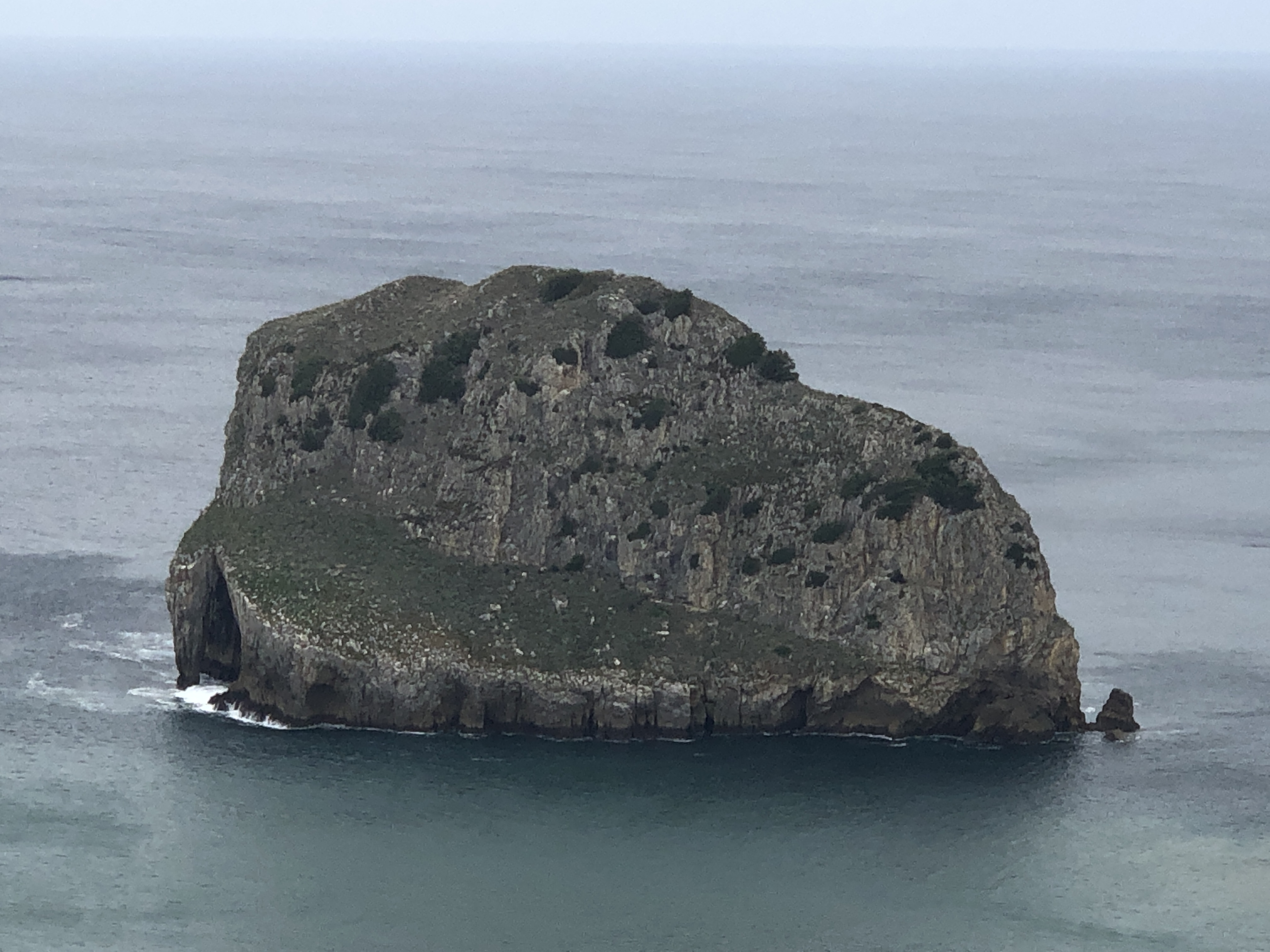
San Juan de Gaztelugatxe is an islet off the coast of the Bay of Biscay, about 35 km (22 miles) east of Bilbao.  There is a man-made stone bridge to the island with a 10th century hermitage on top dating back to 1051.

Many people take two hours to hike to the hermitage and ring a bell there three times to make a wish.  We only stopped at an overlook for 20 minutes to take some photos.


Akatz Island is a neighbouring island that is home to nesting birds.

San Juan de Gaztelugatxe has become even more popular when HBO digitally created a castle on top of the islet and created Dragonstone for the seventh season of Game of Thrones.

The Urdaibai Biosphere Reserve was declared a UNESCO Biosphere Reserve in 1984.  

It covers an area of 220 km² (85 square miles) on the Bay of Biscay coast.  It is home to about 45.000 people and 80% of them around towns of Bermeo and Gernika.

Our next stop was the small fishing town of Bermeo about 11 km (7 miles) away.  Bermeo was founded in 1236 and is home to almost 17.000 people.

Bermeo was the provincial capital from 1476 to 1602.  However, once Bilbao was founded in 1300, Bermeo's importance started declining.  


We stayed here for about 40 minutes and even got to sample a local fish pintxo which is the Basque version of Spanish tapas.

Then it was on to Gernika, the Basque name for Guernica, about 40 km (25 miles) east of Bilbao, where we stayed for about an hour.

Guernica was founded in 1366 and is home to 17.000 people.  It is a small market town but it is very important to Basque culture and identity.

Our first stop here was at the Assembly House which is the Basque House of Parliament.  

The hall was built from 1826 - 1833.  The Assembly House is also part museum because there's the Hall of Stained Glass, the Library and the former office of the President.

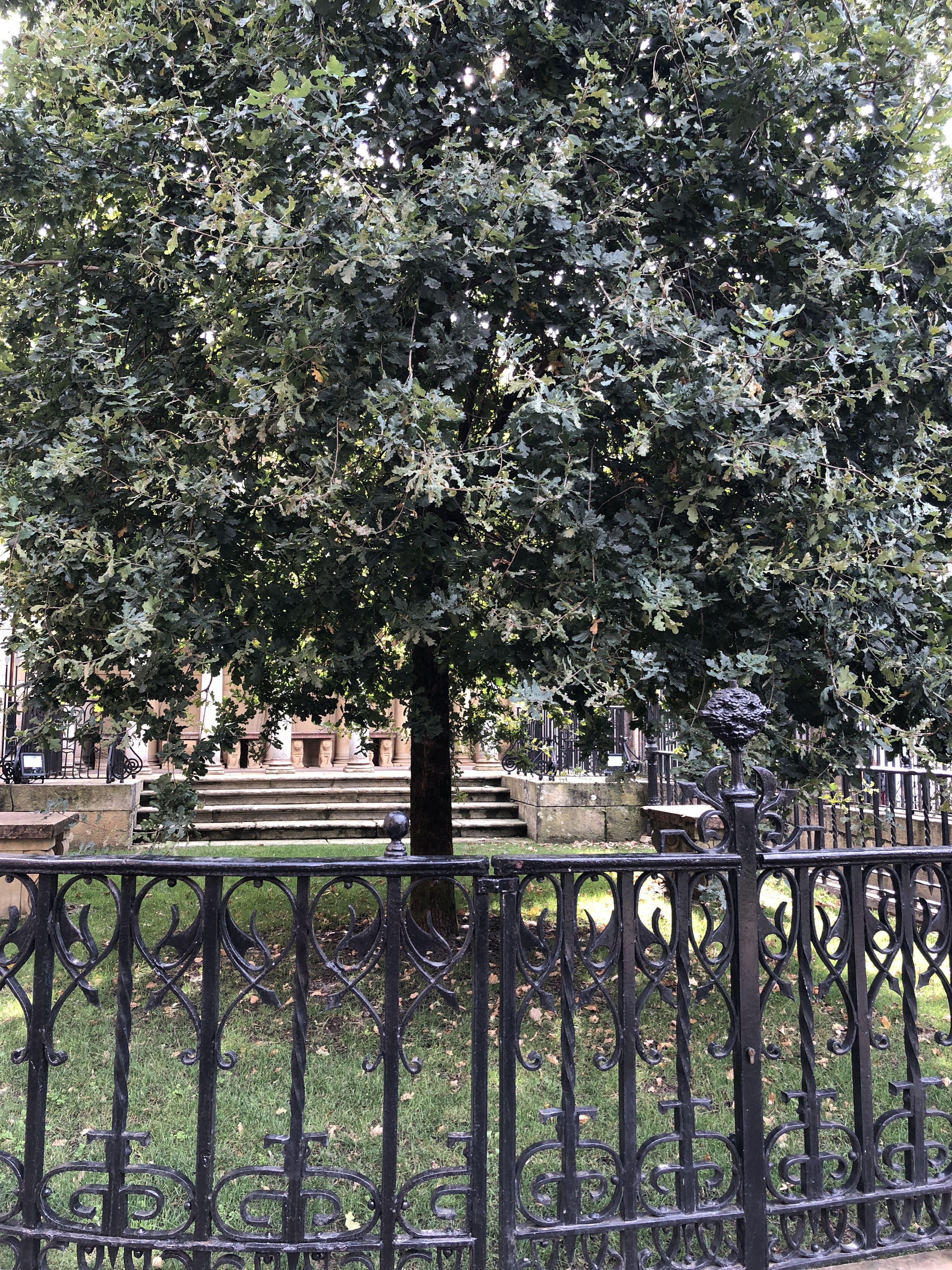
The Tree of Gernika is a symbol of Basque independence and democratic ideals from The current oak tree was planted in 2015 and it replaced the tree that had been planted in 2004.  It was descended from the "Old Tree" (1792-1860) and from the "Father Tree" which died in 1792.

The Church of Santa Maria is the oldest building in the town dating back to the 15th century.

Guernica is most know for being bombed on 26 April 1937.  During the Spanish Civil War, General Francisco Franco requested the Germans and Italians to help him overthrow the Basque Government and the Spanish Republic government.  The German Luftwaffe used it as an opportunity to experiment with its blitzkrieg tactics which it later unleashed on Europe in WWII.

The city was bombed for three hours and more than 1500 people were killed.

It's what inspired Picasso's Guernica which is on display at Madrid's Reina Sofía Museum.  A life-size reproduction of the piece was installed in 1997 to commemorate the 60th anniversary of the bombing.

Here's a short video I found on YouTube that helps interpret Picasso's masterpiece.

©BBC News

Saturday, April 23, 2022

Bosnia, Serbia, Russia, and Z

So while in Banja Luka, I wasn't really thrilled about the Russian Z's I saw throughout the city.  They weren't everywhere but they were visible.

First of all, what's the Z?  The letter Z doesn't even exit in the Cyrillic alphabet. 

©BBC

I had to do a double-take when I saw people standing in a queue to use the ATM at a Sberbank.  That's because Sberbank, which is Russia's largest state-owned bank, is shut down in Czechland due to EU sanctions.  

My housekeeper mentioned that she had an account with Sberbank but she received a letter that her account would be closed because Sberbank is no longer allowed to operate in the EU and that she would could transfer all of her money to a new bank.  

So why hasn't Bosnia and Herzegovina sanctioned Russia like most every other country over its invasion of Ukraine?  Well, that's because of Republika Srpska and Serbia.  

Serbia and Russia are allies.  For example, because Serbia claims Kosovo as part of Serbia, Russia keeps blocking recognition of Kosovo in the United Nations.    

©DW News

Serbia hasn't closed its airspace to Russia.  Russian flights still can't get to Serbia because the planes would have to cross EU airspace to get to Serbia.  But, AirSerbia is still flying to Russia which means that many Russians are flying to Serbia and then flying onward from there.  Serbia was bombed by NATO in the 1990s and there's distrust for NATO which is good for Putin.  It's funny that Serbia isn't following EU sanctions when it is trying to join the EU.

Bosnia isn't able to pass sanctions on Russia because Republika Srpska vetos the resolutions in support of Serbia.  

©EuroNews

I still don't see how anything gets done in Bosia when everything needs to be done by consensus between three parties that were all fighting each other for years only a short time ago.  I wonder how long before this breaks up Bosnia and Herzegovina.

©BBC


Germany looks like it will ban the Z.  It seems that under German law this falls under forbidding public approval of illegal acts, or something along those lines.


In Prague, the local officials are changing the name of the street in front of the Russian Embassy.  Its new name will be "Ukrainian Heroes" street.  I bet the Russian embassy loves that one.  

Я за Україну. Я за Україною. Слава Україні  Stojím za Ukrajinou!  I stand with Ukraine. 🇺🇦

Wednesday, April 24, 2019

Brunei

Brunei Darussalam, officially the Nation of Brunei, the Abode of Peace is in Southeast Asia on the northern coast of the island of Borneo.  The country has two territories on the South China Sea and bordered by Malaysia.


Brunei is a small country, a little smaller than Delaware, with just over 442,000 people.  The capital and largest city is Bandar Seri Begawan.

The Bruneian Empire reigned from 1485 - 1528 extending across northwest Borneo and the southern Philippines.  The empire declined during the 19th century and in 1888 Brunei became a British protectorate.  It gained independence from from the UK in 1984.

Brunei is a sultanate, an absolute Islamic monarchy with the same family ruling the country for more than 600 years.  About  of the country are Muslim.

Brunei has extensive petroleum and natural gas fields making it the world's 5th richest country by GDP.  Brunei is a member of ASEAN.  The Brunei dollar is the official currency.

Malay is the official language and both the Latin and Arabic alphabets are used.

Sultan Hassanal Bolkiah has been on the throne for 52 years.  In 2013 he announced his intention to impose Sharia law into its penal code with phased implementation.  Those convicted of theft will lose a hand or a foot.  Adulterers are to be stoned to death.

Homosexuality is already illegal and punishable by up to 10 years in prison.  Under the new laws those convicted of gay sex will be stoned to death.  Lesbians will receive 40 strokes of the cane and/or up to 10 years in jail.  The law stipulates that to be convicted of gay sex requires that the act be witnessed by four Muslim witnesses.

Many nations and organisations have condemned this and Hollywood celebrities are calling for boycotts of hotels owned by the Sultan.  Here's a BBC video I found out on YouTube about this.

©BBC News

Update:  As of 6 May 2019, the Sultan of Brunei declared that it will not impose Sharia law into the penal code.  

Tuesday, November 15, 2016

The Earthquake

On Monday morning, at 00:22, there was a massive earthquake in New Zealand.  It was a huge 7,8 magnitude quake on the south island but we felt it in Wellington.

There were actually two quakes, one right after the other, and they lasted for almost two minutes.  It definitely woke us up.

There have been lots of aftershocks.  Lots!  Well over +400 of them.  But some of them have been over 5,5 which isn't an aftershock.  Those are actual earthquakes!  I can now say that I've experienced more earthquakes in my life, in New Zealand, and I grew up in California.

There was a Tsunami warning and many people experienced power outages.  There's a lot of broken glass in the Central Business District and areas have been roped off by the authorities.

We were very lucky to be staying with Nat's parents who took such great care of us.  They've been very sweet; apologising that the earthquake impacted our Wellington sightseeing.  Honestly, we feel like we got the full New Zealand earthquake experience.  Here's a BBC newscast that I found out on YouTube.  

©BBC

Sunday, December 7, 2014

Couchsurfing

A couple of weeks ago I hosted my first couchsurfer.  Couchsurfing is hospitality exchange and social networking website.

Couchsurfing is a great way to meet people and save a bit of money when traveling.  It's free and the only thing you have to do is register online.  You can search for people who are willing to host travelers in specific cities.  Profiles indicate the sleeping situation, i.e., if you can sleep on a couch, if there is a spare bed, or even a sleeping bag on the floor.  There's also information such as language proficiency, gender, age, smoking preference, etc.  Guests then send a request to the potential host to sort out the details.

Again, you don't pay anything to stay with someone.  But you should not look at it as just a free hostel or hotel.  The point of couchsurfing is to meet other open minded people, to learn a bit about other cultures and to get a more local experience.  The travelers leave feedback online about the hosts and the hosts do the same for the travelers.  So if you get a bad review then other people will be less willing either host you or to stay with you.

There are many couchsurfing groups that meet up locally for monthly social events.  I've never surfed, but several times during my travels I've met up with locals via couchsurfing for coffee, advice on things to see and do, and even to have a local show me around.

I've received other requests over the years to stay at my flat in Brno but it has always been when I'm unavailable.  At least until a couple of weeks ago.  Glenn, from Australia, was passing through Brno on his way to Vyškov and asked if he could spend one night with me.  We arranged a time for us to meet up in the center after work and we then came back to my flat.  I cooked dinner, he offered to do the dishes, and we swapped travel stories for a few hours.  The next morning he caught his train and I went in to the office.  

The thought of staying with a complete stranger can be rather daunting.  And I'm sure that many people would never want to invite a total stranger in to their home but I know many people who have surfed and hosted before and everyone has had nothing but good experiences.  Glenn was a great guest to host and I'm looking forward to hosting again.

Here's a BBC story I found on YouTube about couchsurfing.  
©BBC

Friday, October 4, 2013

Tatra Technical Museum

Tatra is the world's third oldest car maker after Daimler and Peugeot.  The company was founded in 1850 as a wagon and carriage manufacturer.

It's name comes from the nearby Tatra mountains in Slovakia.

The Tatra Technical Museum is located in Kopřivnice, a small town of 25,000 people, located in the north east part of the country.  It is about 35 km (22 miles) from Ostrava.  It's about 2,5 hours from Brno by train.


The museum does a great job showing the more than 160 years of the company.  If you're an old car lover then this is the place for you.

The Präsident


In 1897, the Präsident was the first motor car produced in Central Europe.  Of course back then it was Austria-HungaryCzechoslovakia didn't become a country until 1918.

T-57

The T-57 sport convertible was known as the Hadimrška.  It was produced from 1931 to 1936.  Notice the right-hand drive?  Czechoslovakia drove on the the left side of the road until 1938.  The Nazis forced the change when the land was under the Protectorate of Bohemia and Moravia.

The company stopped producing passenger cars in 1999.  What a shame because from a design perspective they were producing some very stylish rides.  At least until the Nazis and communists took things over.

Tatra still produces all-wheel-drive trucks.

The 815 GTC 6x6 expedition vehicle traveled around the world from 1987 to 1990.  In 37 months it traveled almost 150.000km (93,206 miles), through 68 countries, on five continents.

Here's a bit about Tatra from a 1993 episode of the BBC's show Top Gear that I found on YouTube.

Copyright BBC Worldwide Ltd

Monday, August 12, 2013

International Red Cross Museum

The International Committee of the Red Cross (ICRC) was founded in 1863, in Geneva, Switzerland.  It is a private institution that works worldwide to provide humanitarian assistance to people affected by international and internal armed conflict.


The ICRC is an independent organization and remains neutral.  It receives funding through voluntary donations by both governments and ordinary people.


For his role in founding the ICRC, Henry Dunant was awarded the first Nobel Peace Prize in 1901.  The ICRC is the only organization to have won the Nobel Peace Prize three times - in 1917, 1944 and 1963.

Display about Srebrenica


Following a 22 month renovation, the museum reopened on May 18, 2013. 

Here’s a BBC clip I found on YouTube that talks about the museum.


©BBC

Update:  In 2019 the Czech Red Cross celebrates its 100th anniversary.