Showing posts with label Bridge. Show all posts

Tuesday, November 1, 2022

Vizcaya Bridge, Urdaibai, San Juan de Gaztelugatxe, Bermeo And Gernika Tour, Spain

On Saturday we did a half-day tour to see Vizcaya Bridge, San Juan De Gaztelugatxe, Bermeo and Gernika.  We got to see several Basque Country sights.  It was a long trip but well worth it.  

Our first stop was in Getxo for a 20-minute stop to take a look at the UNESCO transporter bridge.  Twenty minutes didn't leave people with enough time take a ride across the river and back but we were fine since we already did the bridge thing the day before when we went to Portugalete.

San Juan de Gaztelugatxe is an islet off the coast of the Bay of Biscay, about 35 km (22 miles) east of Bilbao.  There is a man-made stone bridge to the island with a 10th century hermitage on top dating back to 1051.

Many people take two hours to hike to the hermitage and ring a bell there three times to make a wish.  We only stopped at an overlook for 20 minutes to take some photos.
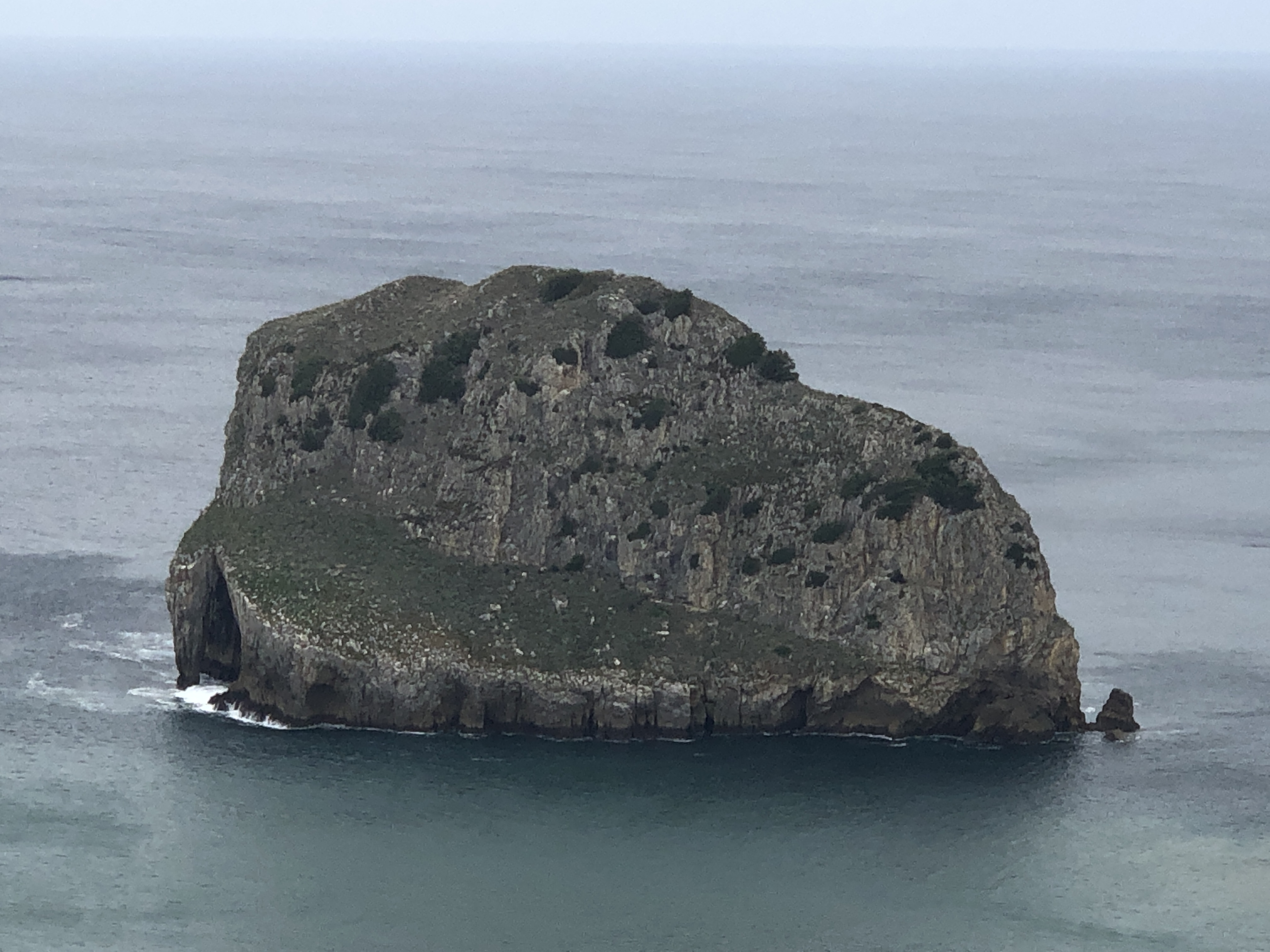

Akatz Island is a neighbouring island that is home to nesting birds.

San Juan de Gaztelugatxe has become even more popular when HBO digitally created a castle on top of the islet and created Dragonstone for the seventh season of Game of Thrones.

The Urdaibai Biosphere Reserve was declared a UNESCO Biosphere Reserve in 1984.  

It covers an area of 220 km² (85 square miles) on the Bay of Biscay coast.  It is home to about 45.000 people and 80% of them around towns of Bermeo and Gernika.

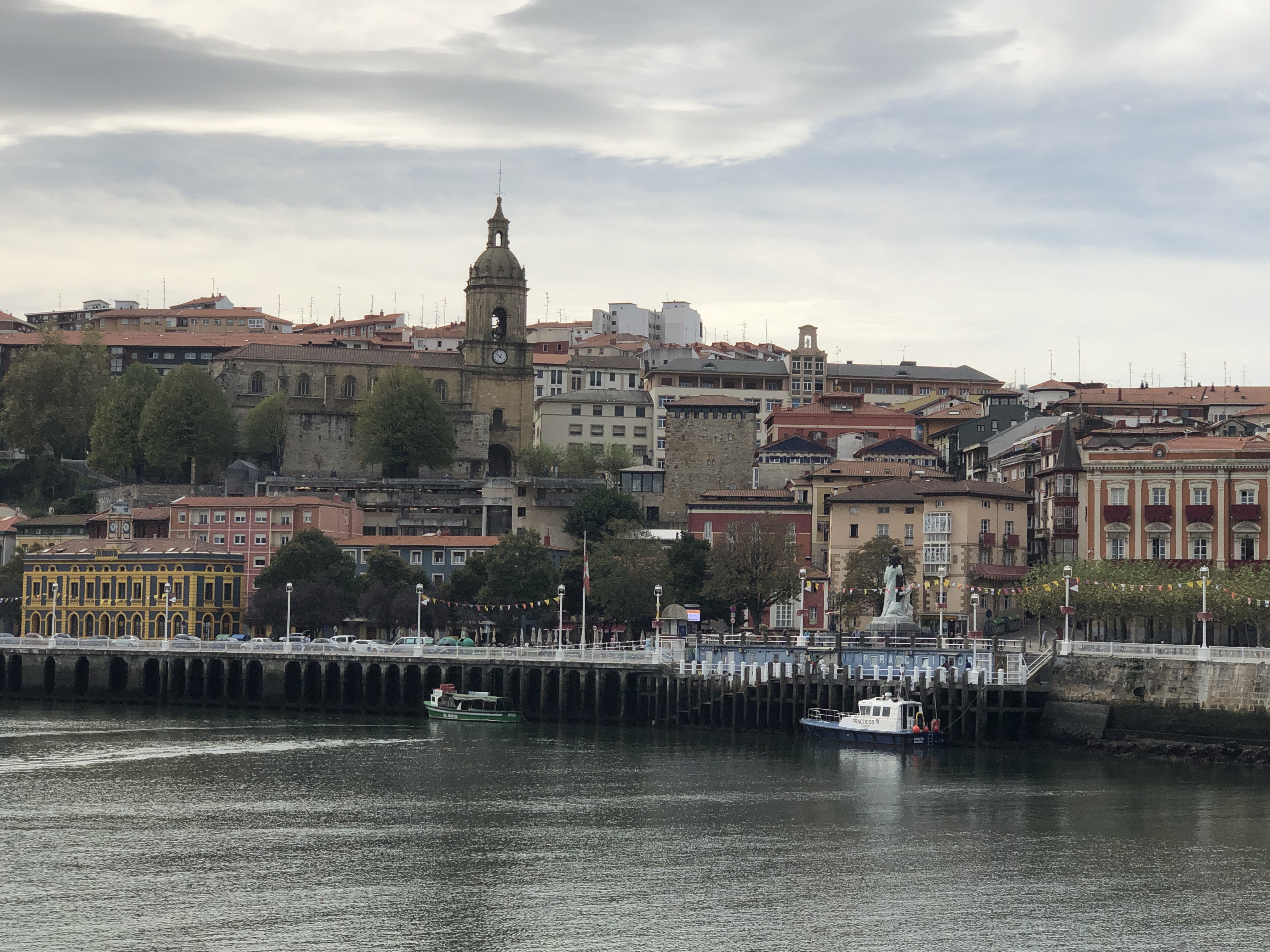
Our next stop was the small fishing town of Bermeo about 11 km (7 miles) away.  Bermeo was founded in 1236 and is home to almost 17.000 people.

Bermeo was the provincial capital from 1476 to 1602.  However, once Bilbao was founded in 1300, Bermeo's importance started declining.  


We stayed here for about 40 minutes and even got to sample a local fish pintxo which is the Basque version of Spanish tapas.

Then it was on to Gernika, the Basque name for Guernica, about 40 km (25 miles) east of Bilbao, where we stayed for about an hour.

Guernica was founded in 1366 and is home to 17.000 people.  It is a small market town but it is very important to Basque culture and identity.

Our first stop here was at the Assembly House which is the Basque House of Parliament.  

The hall was built from 1826 - 1833.  The Assembly House is also part museum because there's the Hall of Stained Glass, the Library and the former office of the President.
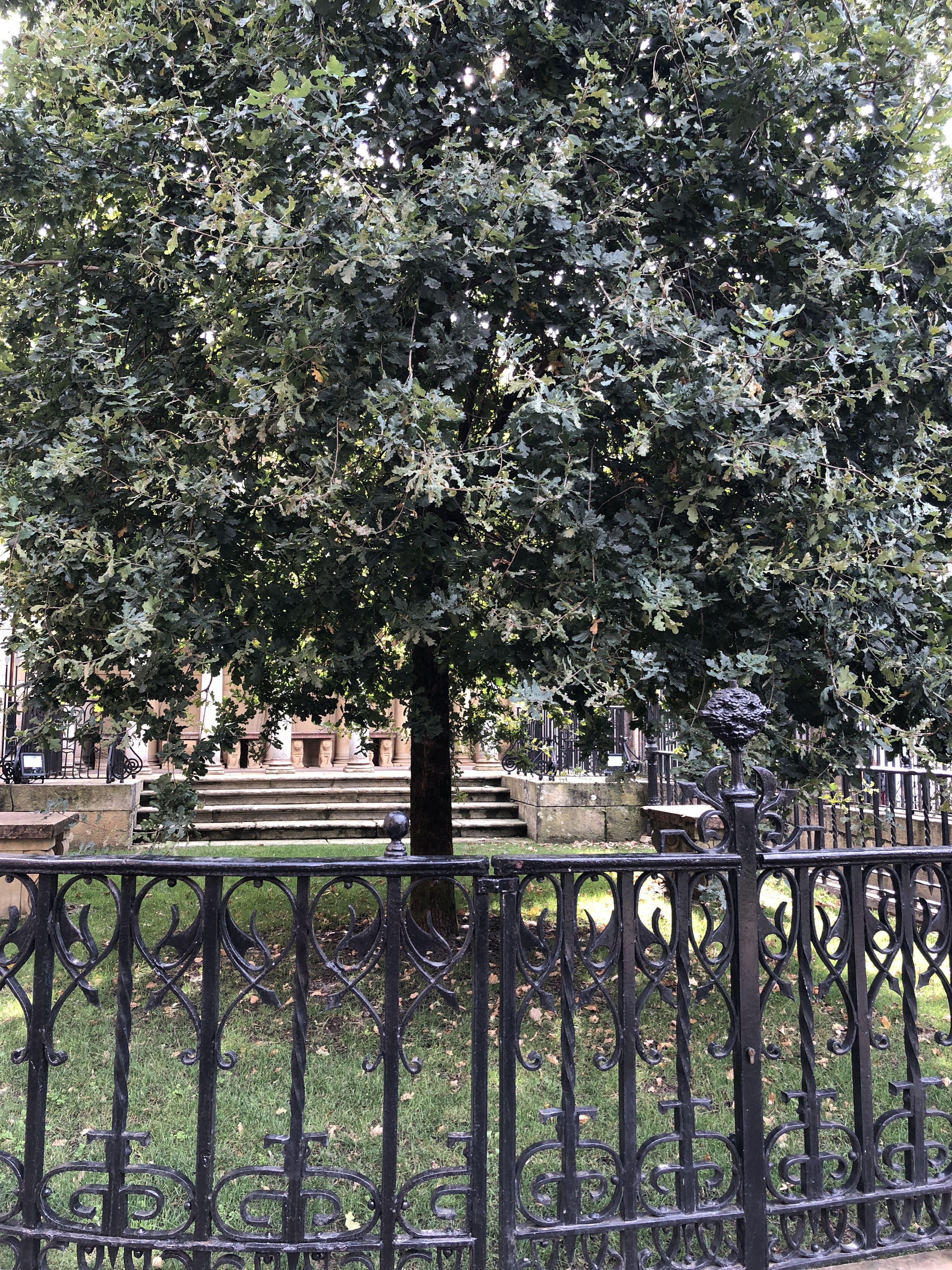
The Tree of Gernika is a symbol of Basque independence and democratic ideals from The current oak tree was planted in 2015 and it replaced the tree that had been planted in 2004.  It was descended from the "Old Tree" (1792-1860) and from the "Father Tree" which died in 1792.

The Church of Santa Maria is the oldest building in the town dating back to the 15th century.

Guernica is most know for being bombed on 26 April 1937.  During the Spanish Civil War, General Francisco Franco requested the Germans and Italians to help him overthrow the Basque Government and the Spanish Republic government.  The German Luftwaffe used it as an opportunity to experiment with its blitzkrieg tactics which it later unleashed on Europe in WWII.

The city was bombed for three hours and more than 1500 people were killed.

It's what inspired Picasso's Guernica which is on display at Madrid's Reina Sofía Museum.  A life-size reproduction of the piece was installed in 1997 to commemorate the 60th anniversary of the bombing.

Here's a short video I found on YouTube that helps interpret Picasso's masterpiece.

©BBC News

Monday, October 31, 2022

Portugalete, Spain

About 14 km (8 miles) north west of Bilbao, across the river from Getxo, is Portugalete.  The city is part of the Bilbao greater metropolitan area and it is home to about 46.000 people.


Portugalete was founded in 1322 so this year it celebrates its 700th anniversary.  

In the 1300's, its port competed with Bilbao but fell behind when Bilbao's port was grated trade privileges in 1511.  

In the 19th century it became a summer getaway for England's bourgeoisie.


Like Getxo, the Vizcaya Bridge is a major attraction.  The world's first transporter bridge which became a UNESCO World Heritage Site in 2006.

The Basilica of Santa Maria was built on the site of an existing church.  Construction began in 1492 and it was consecrated in 1580.  


The Gothic church became a minor basilica in 1951 and in 1984 it was declared a national asset of cultural interest.


The town hall, located at Solar Plaza, doubles as the office of the municipal police.  The neoclassical building was completed in 1883.

Torre Salazar is a four-storey tower that was built around 1380.  Originally it was a defensive complex, with the first floor serving as a prison and the second floor being a residence.  Today there is a town museum and a restaurant.


La Canilla is the old railways station that was built in 1890 on land reclaimed from the sea.  Today it is the town tourist office.

The Convent of Santa Clara was founded in 1614.  Over the years it has been destroyed and rebuilt a few times.  Today it houses the town's cultural centre.


Museo Rialia is the museum of industry and it is located on the Old Dock.


A widow willed money and land to be used to provide free education for all children, workers and the poor.  So in 1902, Augustinian monks set up a convent and a school.  It was rebuilt in the early 1950s.


Portugalete is a pretty town filled with statues and and makes for a nice little day trip from Bilbao.

Getxo, Spain

Getxo is a town of 78.000 people about 14 km (8 miles) north west of Bilbao.  It's only a 30 minute subway ride away so it's easy to get to.

The city was founded in 1075.  It is an affluent area of the greater Bilbao area.

The Las Arenas neighbourhood sits on the right side of the Nervion river directly across from Portugalete.  The two towns are connected by the Vizcaya Bridge, or the "hanging bridge", which was the world's first transporter bridge.

The bridge took three years to build and it was completed in 1893.  It is referred to as the Arc de Triumph of the Industrial Revolution.  In 2006 it became a UNESCO World Heritage Site.


The gondola runs 24 hours a day.  It takes 90 seconds to cross the river.  Up to 6 cars, 6 motorcycles, bicycles and 200 passengers can cross at a time.  I don't know about cars bit it is one €0,50 per person to cross.

Here's 20 seconds of a 90 second trip.

Near the bridge is the Church of the Mercedes.  It was destroyed in 1937 during the Spanish Civil War and it was rebuilt in 1939.  It doesn't look like your typical Catholic Church from the outside.  Unfortunately it was closed when we arrived so we didn't get the chance to see the inside.


This building was used as a social centre for decades before 1986 when it became the Andrés Isasi Music School.

This is all we saw during a quick stroll around as we spent most of the day on the other side of the river checking out Portugalete.

Sunday, October 30, 2022

Bilbao, Spain

Bilbao (Bizkaia in Basque) is located in north-central Spain; about an hour's flight from Madrid.  With about 347.000 inhabitants it is the country's tenth largest city.  Although the greater metro area is home to more than a million people.  Bilbao is also the largest city in the Basque Country. 


It was founded in 1300 by Diego López V de Haro.  It thrived as a port city for Basque wool and iron.   


Heavy industrialisation took place in the 19th and 20th centuries.

During the Spanish Civil War, Bilbao was bombed heavily by Spanish and German planes and then the city was besieged.  

Today, the city is an architectural mishmash of Gothic, Art Deco, Art Nouveau, Neo-Gothic and contemporary styles with 17 bridges and 18 public parks providing 200 ha (490 acres) of green space.  In 2014, Bilbao became a UNESCO City of Design.

Most of Old Town is a pedestrian zone.  In the middle is the Fountain of Dogs which dates back to the 1800s.  The water spouts used to resemble Egyptian-style lions but over the years they have faded and today look more like dogs.  


The Plaza Nueva was built in 1821.  There's a government building and the Royal Academy of the Basque Language. 

Santiago Cathedral was built in the 14th to 15th centuries and it was the city's main parish church.  It was declared a Roman Catholic cathedral in 1950.  In 1993 it was designated a UNESCO World Heritage Site. 

The Teatro Arriaga is the opera house built in 1890.  It was destroyed in a flood in 1983 and rebuilt in 1985.

The Church of San Antón is a Catholic Church that was built in 1510.  Since 1984 is has been a Spanish National Historic-Artistic Monument.


Next to the church is the San Antón Bridge.  It is the city's oldest bridge dating back to 1318.  It has been rebuilt several times following floods and in 1937 it was rebuilt following damage during the Spanish Civil War.

The Ribera Market sits on the right bank of the Nervion River.  It is 10.000 square metres (110,000 sq feet), making it the biggest covered market in Europe.  There are more than 60 merchants selling meat, shellfish, produce, and cheeses.

The Bilbao City Hall building was completed in 1892.  


The Church of San Nicolás took 13 years to build and it opened in 1756.


The Zubizuri, "white bridge", was built in 1997.  The bridge has a curved walkway and the deck is made of translucent glass bricks.


Moyúa, "Elliptic Square", was built in 1876 and refurbished in the 1940s with French and English style gardens. It was rebuilt in  1997 following six years of construction of the city's subway.

The Iberdrola Tower opened in 2012.  It is 165 metres (541 feet) tall and is the tallest building in the Basque Country and the eighth-tallest in Spain.

The church of the Incarnation was consecrated in 1526. It is run by Dominican nuns and it also contains the Diocesan Museum of Sacred Art.

The Princes of Spain Bridge, also called the La Salve Bridge, was built in the 1970s.  


Mount Artxanda is one of the city's two small mountain ranges.  The funicular to the top opened in 1915.  

It only takes 3 minutes to go to the top where there is a park and great views of the city.


Maman is a bronze mama spider sculpture that was made in 1999.  It is almost 9 meters (about 30 feet) tall.  The original debuted at the Tate Museum in London and this is one of six on permanent display.

Puppy is a 12,4 metre (40.7 feet) tall still sculpture of a West Highland terrier carpeted with 38.000 plants.  The petunias, impatiens, marigolds and begonias get replaced twice a year.  It first exhibited in Germany in 1992 and in 1997 it was purchased for the opening of Guggenheim Museum.

The Guggenheim Museum was designed by Canadian architect Frank Gehry and it opened on 19 October 1997.  It cost $89 million to build and it is one of the biggest museums in Spain.  Its permanent collection focuses on visual arts of the second half of the 20th century and the present.

Here's a three minute video I found on YouTube about it.

©Rick Steves

Bilbao is a great town.  There's plenty to see and do.