Wednesday, February 17, 2021

New Exam Date

This morning I was able to register online for a new exam date.  Exam dates were offered in a few cities across the country for 13.3. and 10.4.  Unfortunately, no exams were offered in Brno.  Or in Olomouc either.  Ugh!

If I want to take my exam in Brno then I have to wait until May, at the earliest, and there's no guarantee that I'll get a spot.  So I decided to take the exam in Prague.  Given the constant changing restrictions I feel that the March date may get cancelled so I'm registered for 10.4.  Thanks to Covid-19 my exams have been delayed almost a year.  This is the 3rd time that I'm scheduled to take the Czech citizenship test and B1 language exam.  Fingers crossed that get to take my exams this time.  Third time is a charm, right?

I paid 4900 Kč ($226) for my exams in 2019.  The prices increased this year to 5500 Kč ($254).  When I registered I wrote in the comment field what I paid in 2019 and that my 2020 exams on 25.4. and 5.12. were both cancelled due to Covid.  I received an e-mail about an hour later thanking me for the information and that my exams are covered with no extra cost.

In order to take my exams I have to present a negative Covid-19 test result, PCR or antigenic, no older than 48 hours.  There will be a temperature check at the entrance and anyone with a temperature above 37,5℃ (99.5℉) will not be allowed to take the exams.  Masks must be worn the entire time.

We still have a curfew from 9 pm - 5 am.  So my plan is to get my Covid test on Thursday or Friday and then go to Prague on Friday.  I expect that hotels will still be closed so I'll rent an airbnb, take my exam on Saturday and return to Brno on Sunday morning.

Update:  I'm glad that I didn't choose 13.3.  Due to the newest restrictions, all of the tests scheduled for 13.3., have been moved to 24.4.  But let's hope that my 10.4., exam doesn't get moved.

Monday, February 15, 2021

Visegrád Group Turns 30

Today is the 30th anniversary of the Visegrád Group.  This is the partnership between the V4 countries of Czech Republic, Slovakia, Poland, and Hungary. 

Czechland even issued a commemorative stamp.  Though to be fair I think the other three countries did as well.  

Currently Poland holds the rotating presidency of the group so to commemorate the 30th anniversary the Polish Ministry of Foreign Affairs post a short video out on YouTube.

©Ministry of Foreign Affairs of the Republic of Poland

Saturday, February 6, 2021

Suchej únor

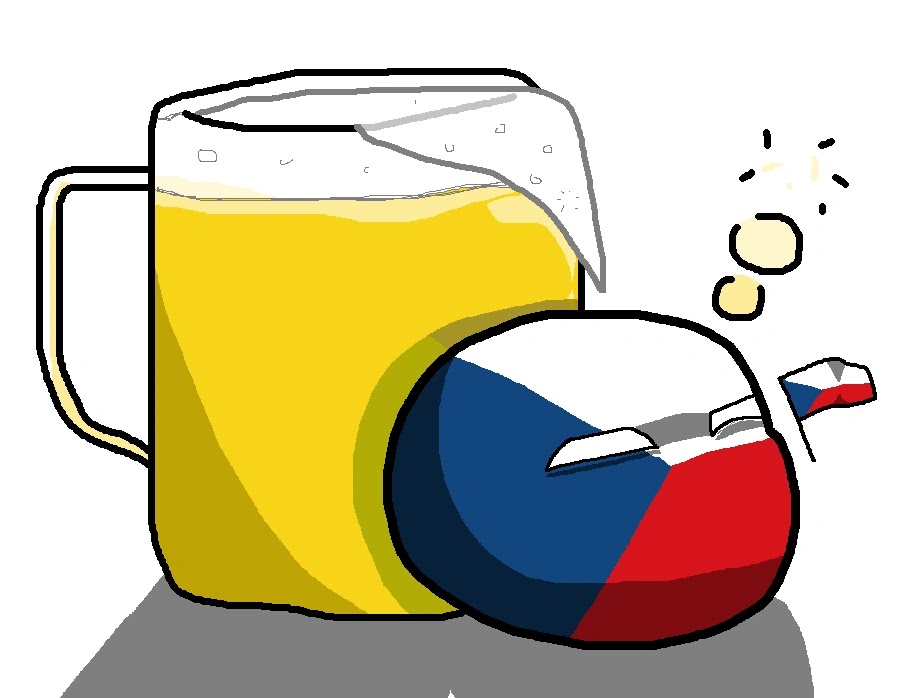
Czechland ranks third in the world for alcohol consumption.  The Czech Statistical Office, ČSÚ, reported that in a year the average Czech consumes 292 beers, 100 glasses of wine and 175 shots of hard spirits.  According to the World Health Organization the average Czech drinks 14,4 litres (38 gallons) of pure alcohol every year.

There's a cost to all of this drinking.  The 292 beers alone cost about 8.800 Kč ($405).  The government spends more than 56 billion Kč (~$2,58 billion) on alcohol-related health care.  Heavy drinking kills about 7.000 people each year here.

The National Institute of Mental Health, NÚDZ, reported that men drink 4 times more than women.  Due to COVID-19 it looks like Czechs are drinking about 60% more than before.

I'm actually drinking less.  Way less.  Our last virtual pub night was back in November.  I had wine with my virtual Thanksgiving and Christmas dinners but I haven't had a drink since.  It's not like I'm trying to become a teetotaller it's just I don't really see a point to drinking alone during a global pandemic.  

This year is the 9th annual Suchej únor challenge.  I don't expect that the Dry February challenge will be too difficult since I haven't had a drink since December.

But full disclosure...I'm for sure looking forward to the next lad's night at the pub.  Hopefully sometime this Spring.

Plastics Ban

Last year the EU agreed on enacting new restrictions on single use plastics items like straws, cutlery, plastic plates, and cotton swabs that are polluting the oceans.  Czechland followed through and is banning specific disposable plastic products.


The Ministry of the Environment estimates that each year about 300 million plastic straws, 20 million plates, 60 million cutlery, 40 million food containers, and 40 million polystyrene cups are sold here.  That's a lot for a relatively small country.

Effective July 2024, beverage containers that have plastic lids and caps will be banned unless they remain attached to the container.

The EU has agreed that by 2025 all plastic bottles have to be made of at least 25% recycled content.  By 2029 that goes up to at least 90%.

The EU generates 25 million tonnes of plastic waste but only about 30% is recycled.

In 2018, before Brexit and leaving the EU, the UK was by far the biggest contributor of discarded straws.

Update October 2022:  The ban went into effect on 1 October.

Friday, February 5, 2021

Vyprávěj

The Wonder Years premiered 33 years ago and depicted events from 20 years earlier.  A similar show today would be set way back in 2001.  I feel old. 

This American TV show ran on ABC for six seasons from 1988 to 1993. It is considered by many to the one of the top 20 best shows of the 1980s.

©ABC

The Czech equivalent is Vyprávěj, which translates to "Tell" and it aired on ČT1 from 2009 to 2013.  I'm told that it is one of the most successful shows on Czech television.  I'm currently watching series 1 online.

The show takes place in Czechoslovakia, and latter on in Czech Republic, and centres on the Dvořák family.  In each episode there are actual excerpts of the news and film from the time. 
©ČT1

The show ran for five series and there are 106 episodes.  Series one starts off in 1964 and series five ends in 2005.  The box set has 34 DVDs and is around 99 hours of content.  Let's see how far I get through series one considering there are no subtitles.
Side note:  In the USA, a TV show is referred to as a "series" but in Euroland it is a "serial" while an American "season" is called a "series."  So "season 1" in the USA is called "series 1" over here.  This took me a little bit of time to get used to.

Thursday, February 4, 2021

Day of Czechs Abroad

The Czech Ministry of Foreign Affairs has added a 16th significant day.  Den Čechů v zahraničí, the Day of Czechs Abroad, is mean to honour Czechs who emigrated.   

The ministry selected five historic dates and ran an online poll last year for people to pick the new significant day.  If only a significant day equaled a public holiday but people still have to work.

With 42% of the vote, 4 February was selected as the winner.  This is the day that the philosopher Jan Amos Komenský left Bohemia.  Komenský is considered the father of modern education.

In second place, with 21% of the vote, was 23 December.  On this day in 1989, the foreign ministers at the time for Czechoslovakia and Germany, Jiří Dienstbier and Hans-Dietrich Genscher cut the barbed wire at the Rozvadov-Waidhaus border crossing.


In third place, with 18% of the vote, was 7 March which was the birthday of T.G. Masaryk in 1850.  He was the first president of Czechoslovakia.  Apparently there used to be a Masaryk Day of Czechs and Slovaks Abroad that was first celebrated in 1934.  It lasted until 1938.  It returned in 1947 but 1948 was its last year.

In fourth place, with 15%, was 1 July.  In 1932, this was the first congress of Czechs and Slovaks abroad.

In fifth place, with only 4% of the vote, was 17 April (1826).  This date commemorates Vojtěch Náprstek who is considered the spiritual father of Czech journalism in the USA.

The whole point of the Day of Czechs Abroad is to highlight the role of Czechs living outside of the country and for them to forge stronger bonds with Czechland.

Wednesday, January 27, 2021

New Integration Course Requirement

There's now a new requirement in Czechland for foreigners who have been issued long-term residence permits, since 1 January 2021, to complete a four-hour integration course.  

The course covers the rights and obligations that come with residency here as well as Czech culture and values.  The class is conducted in Czech, with interpretation into English, French, Spanish, Arabic, Mongolian, Russian, Serbian, Ukrainian or Vietnamese.  There's no exam but participants receive a certificate when they complete the entire course.  It costs 1500 Kč ($70) and is available at 18 centres across the country.  You have up to one year from receiving your residency permit to complete the course.  The fine for not completing it in time is up to 10.000 Kč ($467).

This is only for third-country nationals as EU citizens are exempt.  It's not required if you are under 15 or over 61 years of age.  Those here on study or investment visas are also exempt.

Aside from this, the education minister has submitted draft legislation that will increase the Czech language requirement for permanent residency from A1 to A2.  When I received my permanent residency back in 2015 I only had to prove A1 level Czech.  This isn't official yet but I think it's for sure coming as there's been talk of raising the level of Czech required for at least the past eight years.  I don't know if they will raise it this year with COVID-19 but for sure by next year.

I was surprised to find out that Czechland and France are the only two EU countries that only require A1 for permanent residency.  I would have thought that the level of language proficiency would have been more unified across Europe but each has its own requirements.

In Czechland, A2 will be required for permanent residency while B1 is required for citizenship.

Germany requires B1 level for either permanent residency or citizenship.

Austria requires B1 for permanent residency and B2 for citizenship.  This means that for Austrian citizenship you need to speak better German than a German citizen.  Albeit Austrian German.

France requires A1 for permanent residency and B1 for citizenship.

Poland requires B1 for both permanent residency and citizenship.

I don't know about permanent residency but Italy requires B1 for citizenship.  The Netherlands, Portugal, and Spain only require A2 for citizenship in Dutch, Portuguese, or Spanish respectively.  Denmark requires B2 for citizenship.

For countries with multiple official langues the rules seem to vary more.  For citizenship in Finland, B1 is required but it can be in either Finnish or Swedish since both are official languages.

Belgium has three official languages so for citizenship you only have to prove A2 in either French, Dutch, or German.

Luxembourg has three official languages - French, German, and Luxembourgish.  But if you want citizenship than only Luxembourgish counts.  You need A2 level speaking and B1 level listening.

Switzerland has four official languages - German, French, Italian, and Romansh.  For permanent residency you need A1 writing and A2 speaking in any one of the four languages.  For citizenship, A2 writing and B1 speaking are required.

I'm still waiting to find out when I get to take my B1 Czech exam.

Saturday, January 23, 2021

2020 Global Peace Index

The 2020 Global Peace Index results are in.  This is the 14th year of the index ranking peacefulness in 163 countries.  This year's index included analysis COVID-19's impact on peace.

This report also looked at the trends of civil unrest over the past ten years.  I was surprised the Europe had the largest number of protests, riots and strikes with almost 1.600 events between 2011 and 2018.  The civil unrest events in Europe were nonviolent 65% of the time.

Overall, Europe maintains its status as the most world's most peaceful region, with 13 of the 20 most peaceful countries.  The Middle East and North Africa was the least peaceful region.

No surprise that Iceland is the world's most peaceful country again since it's been number 1 since 2008.

  1. Iceland
  2. New Zealand
  3. Portugal
  4. Austria
  5. Denmark
  6. Canada
  7. Singapore
  8. Czechland
  9. Japan
  10. Switzerland
It's interesting that except for Iceland, 9 of the 10 most peaceful countries all have some of the most powerful passports.

The USA is ranked #122, behind Azerbaijan and ahead of Burkina Faso.

Afghanistan is still the world's least peaceful country, just behind Syria.

Thursday, January 21, 2021

21 January 2021

In just a little bit it will be...

The 21st second...of the 21st minute...of the 21st hour...of the 21st day...of the 21st year...of the 21st century.

The next time this happens is on the 22nd...in 101 years.

Monday, January 18, 2021

Charter 77

A couple of weeks ago, on 6 January, was the 44th anniversary of Charta 77 (Charter 77).  Following the arrest and sentencing of members of the Plastic People of the Universe, a group of artists, writers and intellectuals produced a document that was signed by +240 people.  

Charter 77 criticised the government for failing to provide for human rights provisions which the Czechoslovak government had signed up to including the country's constitution, the Helsinki Accords and UN covenants.   

Charter 77 emphasised that it was an informal open association of people because if it was an organisation for political activity then it would have been against the law as organised opposition was illegal in Czechoslovakia.  

On 6 January, Václav Havel, Ludvík Vaculík, and Pavel Landovský were detained for trying to deliver the charter to the Federal Assembly.  The original document was confiscated by the authorities.  However, it had been smuggled out of the country and on 7 January it was published in the Frankfurter Allgemeine Zeitung, Le Monde, Corriere della Sera, the Times of London and the New York Times.  It was also broadcast to the country by Radio Free Europe.

The communists considered distributing the document as a political crime.  People who had signed the charter were targeted by the StB, the Czechoslovak secret police.  Many were fired from their jobs, their children were not allowed to attend university, some had their drivers' licenses suspended, while others were detained, put on trial and imprisoned.

The government never published the Charter 77 text but described it as anti-state propaganda written by traitors and imperialist agents.  On 28 January the government released its "anti-charter" arguing the government's support of human rights.  The anti-charter was endorsed by the executive committees of the Czechoslovak Writers' Union, Union of Visual Artists, the Composers' Union, the Union of Dramatic Artists, the Federal Union of Architects.  The communists required artists to sign up to the anti-charter, without ever showing them the Charter 77.  Many artists including singer Karel Gott and actor Jan Werich later claimed that they had no idea of what they were signing to, just that they were required to sign it.

People continued to sign Charter 77 and by the Velvet Revolution there were almost 2000 signatures.  The first post communist Czechoslovak parliament were among the original signers including the new president Václav Havel and foreign minister Jiří Dienstbier.   

Here are a few relatively short videos I found on YouTube about Charter 77 and the government's anti-charter.

©Roy Rosenzweig Center for History and New Media

©Roy Rosenzweig Center for History and New Media

©Roy Rosenzweig Center for History and New Media

©Roy Rosenzweig Center for History and New Media