Showing posts with label South Korea. Show all posts

Sunday, April 24, 2022

Organization for Security and Co-operation in Europe (OSCE)

The Organisation for Security and Co-operation in Europe (OSCE) is the world's largest regional security-oriented intergovernmental organisation.  It even has observer status as the United Nations.  It began in 1973 as a forum between the west and the east during the Cold War.  The OSCE focuses on arms control, promotion of human rights, freedom of the press, and free and fair elections.  

Its headquarters are in Vienna and today the OSCE consists of 57 participating countries plus 11 observer/partner countries.  The six official languages are English, French, German, Italian, Spanish, and Russian. 

It's basically every country in Europe plus the USA and Canada.  The 11 partner countries are Afghanistan, Australia, Algeria, Egypt, Israel, Japan, Jordan, Morocco, South Korea, Thailand, and Tunisia. 

Each year a different country assumes the chairmanship for a calendar year and that country's minister of foreign affairs is the Chairperson-in-Office.  Czechoslovakia held the chairmanship in 1992.  An independent Czechland hasn't held the chairmanship yet but Slovakia held it in 2019.  

The chairmanship is with Poland this year.  North Macedonia has it next year followed by Estonia in 2024 and Finland in 2025.

Here's a short video I found out on YouTube about the OSCE.

©The Organisation for Security and Co-operation in Europe

Wednesday, January 19, 2022

2022 Passport Power

The Henley Passport Index is out and once again, Japan has the world's most powerful passport.  Since 2018, it has held the #1 spot.  Having a Japanese passport allows one to travel to 193 countries either visa-free or visa on arrival.  Only 34 destinations require a visa or an e-visa.  Last year, a Japanese passport "only" got you to 191 countries and 35 countries required a visa.  

There's no such thing as an EU passport.  There are just passports issued by EU member countries and they tend to dominate the rankings.  22 EU countries rank amongst the 11 most powerful passports.  

  1. Japan (193)
  2. Singapore, South Korea (192)
  3. Germany, Spain (190)
  4. Finland, Italy, Luxembourg (189)
  5. Austria, Denmark, Netherlands, Sweden (188)
  6. France, Ireland, Portugal, UK (187)
  7. Belgium, New Zealand, Norway, Switzerland, USA (186)
  8. Australia, Canada, Czechia, Greece, Malta (185)
  9. Hungary (183)
  10. Lithuania, Poland, Slovakia (182)
  11. Estonia, Latvia, Slovenia (181)

The three weakest EU member passports belong to the three most recent joiners.  Romania ranks at #16 with 174 countries while Bulgaria and Croatia both come in at #17 with 173 countries.

My American passport is still ranked in 7th place with only 41 countries requiring a visa to visit.  In 2006 and 2014, the U.S. passport was ranked #1.

A U.S. passport gets you in to Australia, Central African Republic, Equatorial Guinea, Guyana, Mongolia, and Pakistan.  Czechs need a visa to visit these countries.  Americans are still eligible for a 3-year visa for Russia which isn't available to Czechs.

A Czech passport will still ranked in 8th place with only 42 countries requiring a visa to visit.  In 2006, a Czech passport was ranked #21.  In 2014, it cracked the top 10 and has stayed there since.  Czechs are able to visit Belarus, Iran, Turkey, Myanmar, and Venezuela while Americans need a visa to visit them.

I need to get on the ball and submit my paperwork for Czech citizenship so that I can get my Czech passport.

Update:  Here's a 10½ minute video from Faultline that I found out on YouTube that talks about passports, visas, and travel.

©Faultline

Update: 2023 passport power rankings.

Friday, January 14, 2022

Korean BBQ (and More)

After Lucie's birthday last week, a few of us made plans to go for some Korean BBQ.  Mộc BBQ, is a Vietnamese restaurant in Slatina is the only place Brno for Korean BBQ. 

We had quite the feast for five of us and surprisingly it wasn't tragically expensive.  If only it was in the city centre and not way out in Slatina.

Oh how I miss Korean food.  While Korean food isn't easy to come by there is one saving grace and that's the Korean grocery store, Shin K-Food, in the city centre which is where I can get kimchi and gochujang (chill pepper paste).

It seems that there's more history between Czechland and the Korean Peninsula that I previously thought.  Here's a video I found out on YouTube that talks about Czechoslovak Legionnaires supporting Korean independence from the Japanese.   

©Arirang News

Back in the days of socialism, Czechoslovakia was one of the first countries to recognise North Korea.  Diplomatic relations were established in 1948.  After the Soviet Union and China, Czechoslovakia was the third-largest provider of economic aid to Pyongyang.  The North Korean embassy in Prague serves both Czechia and Slovakia.

Diplomatic relations weren't established between Czech Republic and South Korea until 1990.  Today, more than 70 Korean-owned companies operate here in Czechland employing over 16.000 people.  

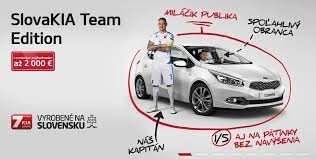
There are more than 90 Korean companies operating next door in Slovakia.  Kia Motors produces around 200.000 cars a year in Slovakia and I still love the marketing of SlovaKIA.  

In Prague, there's the Czech-Korean Society which is a non-governmental non-profit organisation connecting people and institutions between Czechland and Korea.  They have educational and cultural events but I need to see if they ever do anything in Moravia.

Sunday, February 2, 2020

02/02/2020

Today's date is written the same forwards and backwards, for everyone in the world.  The last time that this happened was 909 years ago.

In the USA, the date is written Month/Day/Year.  In most of the rest of the world the date is written Day.Month.Year.

In China, Japan, Korea, and Iran the date is written as Year-Month-Day.

Today's palindrome date of 02 02 2020 works for the USA, Asia, and the rest of the world.  The last time this happened was 909 years ago on 11/11/1111.  

This won't happen again for another 909 years on 03/03/3030 and then another 1.010 years later on 04/04/4040.

Tuesday, May 21, 2019

No More Registered Traveller

Two years ago I became a registered traveller for the UK and it has been awesome.  Year one cost me £70 ($92) but last year's renewal was on £50 ($62).  It's so worth it to be able to no longer fill out landing cards and to be able to us the ePassport gates.  No more filling up my passport with UK entry stamps.  Yeah!

As of yesterday I won't need to renew my registered traveller status anymore.  Now all Americans get to use the ePassport gates.  The gates have also been opened to travellers from Australia, Canada, Japan, New Zealand, Singapore, and South Korea.  So much for being in an exclusive club but at least I'll now save £50 a year.

As I understand it, if and when Brexit happens, EU citizens will still be able to use the gates.

Here's short video I found out on YouTube about how to use the gates.
©UK Home Office

Tuesday, May 7, 2019

7th Least Miserable Economy

The Bloomberg Misery Index sums a country's inflation and unemployment to determine how happy or miserable its people are.  With Czechland's record low unemployment it's not wonder that they finally cracked the Top 10 of the least miserable economies.

1.  Thailand
2.  Switzerland
3.  Japan / Singapore
5.  Taiwan
6.  Malaysia
7.  Czech Republic
8.  Hong Kong
9.  Israel / South Korea

The USA jumped six spots to the 13th least miserable economy.

Having low unemployment too low can be a bad thing.  Employers may not let people move to new roles because they will be unable to find a backfill.  If prices are too low it could mean that demand is low.

Venezuela is the most miserable as inflation is expected to hit 8 million percent this year.  8 million %!!    

Coming in behind Venezuela is Argentina, South Africa, Turkey, Greece, and Ukraine.

Tuesday, October 24, 2017

China & South Korea Trip Summary

What a great trip!  It started off with an overnight in Helsinki before meeting up at the airport for our flight to China.  For the past few years, Finnair has positioned itself as the gateway between Europe and Asia.  The flight to Beijing was only 7,5 hours.  It was almost too short because by the time I fell asleep it wasn't too long before we landed.  Not a complaint mind you, just an observation.

Plus, I really enjoy flying on Finnair.  Their planes are built for tall Scandinavians so even the economy seats are comfortable.  Plus they are apart of the Oneworld alliance so I get British Airways points.

For an American citizen a Chinese tourist visa is $140.  But if you are flying to/from another country then you can stay in Beijing for up to 72 hours visa-free.  Beijing is huge!

My favourite parts were visiting Tiananmen Square and finally getting to the Great Wall of China.  We probably shouldn't have gone on National Day which made it super crowded but live and learn.  Another day or two in Beijing would have been perfect.

Then it was on to South Korea.  Our 3 AM flight on Korean Airlines to Busan took under 2,5 hours.


I didn't really know what to expect of Busan but it was well worth a visit.  There was plenty to see and very easy to get around.  Highly recommended.

Then it was on to Jeju Island which is pretty much the Korean honeymoon destination.  Jeju City was fine but the best part was the black pig bbq.

Then it was on to Seoul.  I kind of thought that I would like Seoul.  No, I loved it!!


I thought NYC was an around-the-clock city but really it's Seoul.  There is always something going on.  For example, the shopping malls open at 9 or 10 AM but they don't close until 4 AM!  It's not like the stores are just open but they are open and packed.


The DMZ tour was definitely worth it but I'm still disappointed that we weren't able to visit Panmunjom due to the current tensions between North Korea and the USA.  We saw the rhetoric on the morning news everyday but that was it.  We never felt any tension the entire time we were in Korea.

One thing that stood out was that in every subway station there are gas masks at the ready in case tensions break out.  

The food was a definite highlight of the trip.  I'm already missing my daily dose of kimchi.


I was glad that I took the time to learn a little Korean.  While you can certainly get by without knowing any Korean most people really appreciated the fact that I was able to say a few words.

What a phenomenal time we had and neither of us were ready to leave but it was time to get back to work.  It only there was unlimited holiday time because we could have spent another couple of weeks in Seoul. 

Wednesday, October 18, 2017

Seoul, South Korea

Seoul, 서울, is the capital of South Korea.  Officially it is the Seoul Special Metropolitan City and home to over 10 million people.

The Seoul metro area has 25,6 million people.  About twice the entire Czech population lives just in Seoul!  It's the largest city on the Korean Peninsula.

Seoul sits on the Han River and was founded over 2,000 years ago in 18 BC.  The city eventually became the capital during the Joseon Dynasty in 1897.  When Korea was annexed by Japan in 1910 the city was renamed Gyeongseong until following the city's liberation at the end of WWII.

Seoul was destroyed after the Korean War.  Efforts were put in to building a modern city and today Seoul is home to around 20% of the population.


The Seoul Olympic Stadium opened in 1984.  It was the main stadium used for the 1986 Asian Games and the '88 Olympics.

Sangam Stadium is the Seoul World Cup Stadium and opened in 2001.  The stadium was designed to resemble a traditional Korean kite.  It is the second largest stadium in Korea after the Olympic Stadium but it is the largest football-only stadium in Asia.

Seoul Olympic Park is the city's largest park and it too was built for the '88 Olympics.  It was interesting to see flags flying for countries which participated in the '88 games but no longer exist like Czechoslovakia, East Germany, Yugoslavia, and the Soviet Union.  The World Peace Gate celebrates the spirit of the Olympic Games and under the gate is an eternal flame.

The old city hall building was built in 1925.  In 2008 it became the Seoul Metropolitan Library when the new city hall building was built behind it.

Myeongdong Cathedral, officially the Cathedral of the Virgin Mary of the Immaculate Conception, was completed in 1898.  It is the largest Catholic church in the country.

Lotte World is the world's largest indoor amusement park.

Lotte World Tower opened in April 2017. At 554,4 metres (1,819 feet) it is the 5th tallest building in the world.  There are great views of the city on the 117th and 118th floors.

DDP is the Dongdaemun Design Plaza and it is located in the fashion district.  It opened in 2014.


The Dongdaemun Gate, officially the Heunginjimun Gate, was built in 1396, remodelled in 1453 and rebuilt in 1869.


The Namdaemun Gate, officially the Sungnyemun Gate, is the largest of the eight stone castle gates in the city.  It was first built in 1398 and rebuilt in 1447.  The gate was destroyed in a fire in 2008 and was reopened in 2013.  The gate is listed as Korea's National Treasure #1.

Namdaemun Market is open 24-hours and it is the oldest and largest traditional market in the city.  It dates back to 1414.

Mt. Namsan is 262 metres (860 feet) tall and is home to Namsan Park which has nice views of the city.  On top is the N Seoul Tower.  It was built in 1971 as the country's first general radio wave tower.  It is 236 metres (774 feet) tall.

The National Theatre of Korea was the first nationally managed theatre in Asia.  It opened in 1950 and hosts the National Drama Company, the National Dance Company, the National Orchestra Company, and the National Youth Theatre.

The Blue House is the executive office and the official residence of the South Korean president.

The 12.23 Fountain honours Admiral Yi Sunshin and the 23 battles he fought using 12 warships.

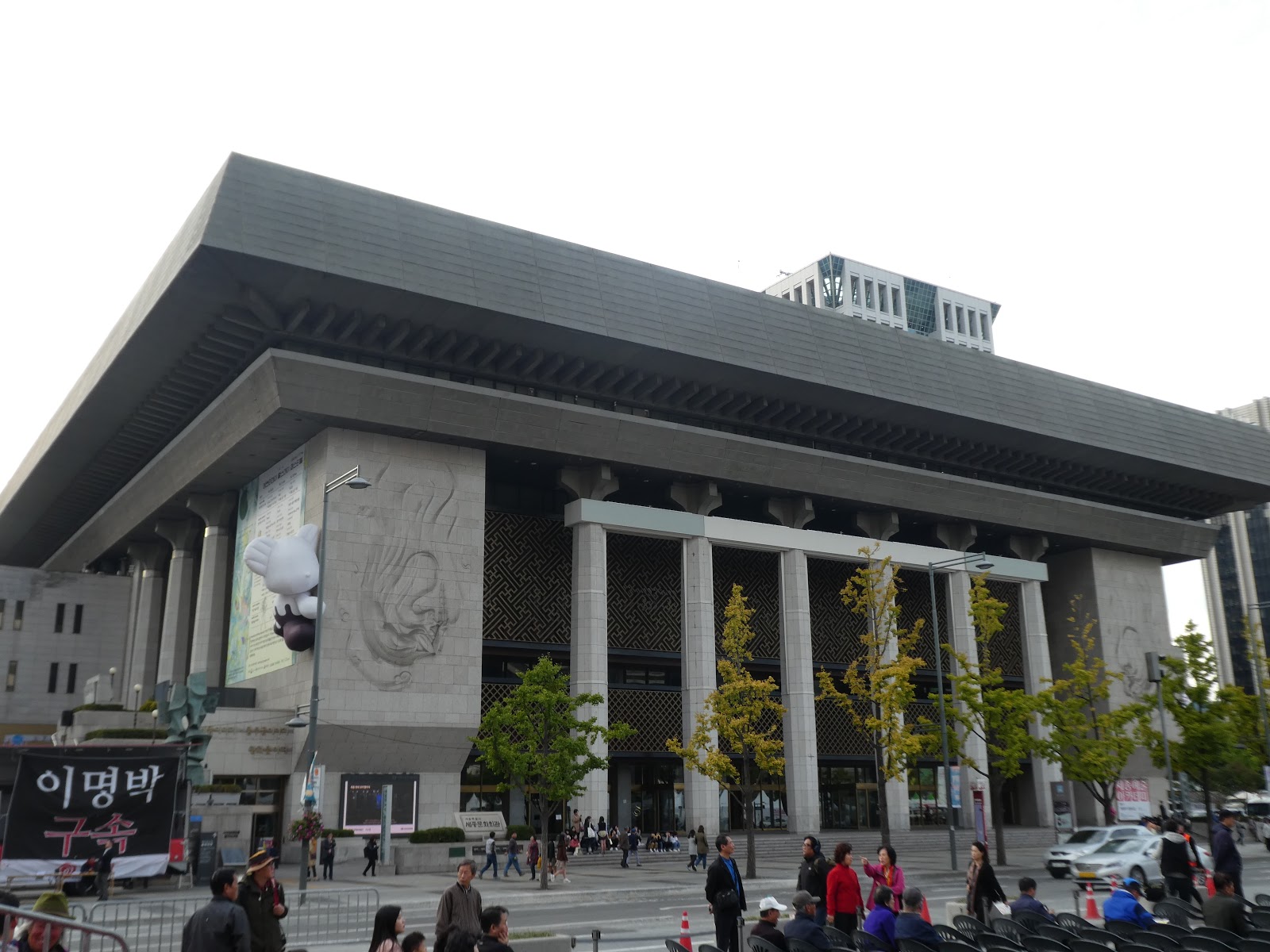
The Sejong Centre for the Performing Arts opened in 1978.  It is the largest arts and cultural complex in Seoul and is home to the biggest pipe organ in Asia.

King Sejong was the fourth king of the Joseon Dynasty who reigned from 1418 to 1450 and the man who created the Korean alphabet.

There are 115 museums in Seoul.  The National Hangeul Museum opened in 2014.  The museum is dedicated to Korean orthography and takes up four floors.

The National Museum of Korean Contemporary History opened in 2012.  There are four permanent exhibition halls, plus a children's museum covering the 19th century to the present.


Seoul's Gangnam District is the third largest and fourth most populated.  This is the posh part of town and is considered the Beverly Hills of Korea.

The War Memorial of Korea was opened in 1994.  The museum used to be the South Korean Infantry Headquarters and has over 10,000 items on display.

Gyeongbokgug Palace was built in 1395.  It is the largest of the city's five grand palaces and was the main royal palace of the Joseon Dynasty.  People wearing traditional Korean costumes get free entry to the palace but the kicker is that the rental fee is more expensive than the entry ticket.

However, there were still lots of people in national dress and many kids wanted to take photos with us and try to speak English. I felt like a K-pop star with groupies.

There is so much to see and do here that in a few days we were only able to scratch the surface.  I can't wait to come back.