Showing posts with label Malaysia. Show all posts

Tuesday, July 16, 2019

SE Asia Trip Report

Well my trip to Southeast Asia was fun. A bit of a whirlwind for a 10 day trip but still a good time.  Malaysia, specifically Kuala Lumpur, had been on my bucket list for about 20 years.


I enjoyed KL, even with a bit of rain.  However, the best part of my KL adventure was getting a chance to meet up with Jessica, Dharma, Kartik, and LikMin.

The Bantu Caves were a great little day trip.  Plus I got to see the monkeys there.


I enjoy Malaysian food but honestly the best thing I found was brown sugar bubble tea.  I miss proper bubble tea with the tapioca balls.  The bubble tea I've found in Czechland just sucks.  Anyway, this was proper bubble tea with rich brown sugar tapioca pearls.  So yummy.

After a few short days in KL I headed to Brunei which all of my friends thought I was insane to go visit given the recent uproar about imposing the death penalty for homosexuals.  However, it was kind of ironic that I when I got to Bandar Seri Begawan that there was a big gay rainbow.

Natalie was "in the area" so she flew in and we met up in Bandar.  You've got to love random godparent meet-up adventures.  It's always so awesome getting some Nat time.  The last time I saw her was in March when we went to Malmö and Copenhagen.  

Bandar was interesting.  One day was definitely enough to get the feel for the place.  Honestly the company made this a way better visit.  Then we flew to Singapore which I think might be the 9th or 10th country we've visited together.

One thing to note about Brunei and Singapore is that both countries are tough on illegal drugs.  On the arrival cards for both countries there are warnings that drug trafficking will result in the death penalty.


From Singapore, Nat and I caught the train to Johor Bahru for day trip.  On Tuesday night Nat caught her flight back home to Wellington.


On Wednesday I did a bit of sightseeing down at the marina and in Chinatown.  I also finally got to try chilli crab.


On Thursday I caught a high-speed ferry and went to Batam for the day.  My first time in Indonesia.  It was interesting and the highlight of the day was visiting the former Vietnamese refugee centre.  I swear that sometimes I visit some of the most random sights but it's always an adventure.

Although it was a fast trip I managed to pack in quite a lot.  I definitely want to go back to Malaysia and Indonesia.  If only it wasn't a 13ish hour flight from Euroland.

Thursday, July 11, 2019

Johor Bahru, Malaysia

On Tuesday evening, Nat and I flew from Bandar Seri Begawan to Singapore.  On Wednesday morning we got up early for a day trip to Johor Bahru.

Johor Bahru sits on the Straits of Johor and it is the southernmost city in the Malay Peninsula.  It was originally founded as Tanjung Puteri in 1855, gaining city status in 1994.  With 497 000 people it is the 9th biggest city in Malaysia.  There are more than 1,6 million people in the greater metro area making it the country's second-largest metropolitan area behind Kuala Lumpur.

The causeway between Singapore and Johor Bahru was completed in 1923.  The train ride between the two cities only takes five minutes.

What can take a while is going through customs and immigration leaving one country and entering the other.

The JB Sentral train station is connected via an overhead bridge to the City Square Mall.  Our first stop was a Din Tai Fung for an early lunch.  The Michelin-star awarded Taiwanese-based restaurant chain is famous for it's Xiao Long Bao - soup dumplings.

The first step is to pour 1 part soy sauce and 3 parts vinegar in a dish with fresh ginger.  Using chopsticks, dip a dumpling into the mixture and then place it in a soup spoon.  Poke a small hole in the dumpling to release the broth inside.  Then enjoy.  Absolutely delicious!

Then it was off to explore the city.


The Arulmigu Rajamariamman Devasthanam temple is one of the oldest Hindu temples in the city.  It was built in 1911.  The temple honours the Goddess Mariamman, the deity of fertility and rain.


The Gurdwara Sahib Sikh temple was built in 1921.


Masjid India is the main place of worship for the city's Indian Muslim population.

The four-storey Tiong Hua Chinese Heritage Museum was recently renovated.  Chinese first came to this area in the 14th century.  

The Old Chinese Temple was built in the 19th century.  The temple symbolises unity as it hosts five deities from five different Chinese dialect groups - Hokkien, Cantonese, Hainan, Teochew, and Hakka.


The Sultan Ibrahim Building was built in 1940 as the secretariat building for the British colonial government.


The Old Railway Station was built in 1932 but closed in 2010 when the Sentral station was built.  The old station is supposed to be used as a museum in the future.


The Kilometre Zero marker is located in front of the General Post Office.  It is one of the few markers in the world where the national zero marker isn't found in the national capital.

Tuesday, July 9, 2019

Batu Caves, Malaysia

The Batu Caves are about 13 km (8 miles) from Kuala Lumpur.  It's basically a limestone hill with caves and temples inside.  The caves are one of the most popular Hindu shrines outside of India.


It is home to the world's tallest statue of the Hindu deity Mungan.
The statue is 42,7 metres (140 feet) tall.

The limestone forming the caves is supposed to be around 400 million years old.

Besides the caves, the other popular attraction are the monkeys.  Long-tailed Macaques hang out along the steps leading up to the caves.  Everyone wants a selfie with the monkeys.

It's a hike up the stairs to the caves but it's worth it.  The caves and temples are interesting.  This is an easy half-day trip from the city.

Plus...there are monkeys.  Here's me and the monkey.  Sounds like the best cop-buddy-mystery-crime-solving TV show ever!

Monday, July 8, 2019

Putrajaya, Malaysia

Putrajaya, officially the Federal Territory of Putrajaya, is about 35 km (22 miles) from Kuala Lumpur.  It's near Cyberjaya which is the Malaysian version of Silicon Valley where most of the IT companies are.

Kuala Lumpur is the capital of Malaysia but Putrajaya is the seat of the government with most federal ministries located here.

Putrajaya was established in 1995 and it became a federal territory in 2001.


It was a planned city with lots of parks and eight bridges.  Putrajaya is home to almost 92.000 people.  I believe that federal employees receive free housing here.  If I'm not mistaken they have to leave when they retire but I never got a straight answer on this one.

The Putrajaya International Convention Centre overlooks the city.  Construction was completed in 2003.

The Perdana Putra is the Prime Minister's office complex.

The Putra Mosque, next to Putrajaya Lake, was completed in 1999.  It can accommodate up to 15.000 worshipers.

The Seri Gemilang Bridge is the ceremonial bridge.


The Seri Saujana Bridge is a futuristic cable stayed Arch bridge.


The Wawasan Bridge is the other main futuristic bridge made to resemble the sails of schooner.


At night the bridges are lit up in different colours which makes for a nice sightseeing trek around the city.

Sunday, July 7, 2019

Kuala Lumpur, Malaysia

Kuala Lumpur is officially the Federal Territory of Kuala Lumpur and it's the capital of Malaysia.  KL is in the west-central Peninsular part of the country.  It's the country's biggest city with around 1,7 million people.  The greater metro area is home to 7,2 million.

KL was established is 1859.  It received city status in 1972 and it became a federal territory in 1974.  It is among the top ten most visited cities in the world.  It might have something to do with also having three of the top ten biggest shopping malls in the world.

The Sultan Abdul Samad Jamek Mosque is at the confluence of the Klang and Gombak Rivers.  The mosque was built in 1909 and is one of the oldest in the city.

The Exchange 106 is the city's newest skyscraper.  Construction began in 2016 and finished this year.  The 95-floor building is topped with a 12-story crown making it come in at 445 metres (1460 feet) tall.

St. Andrew's Presbyterian Church was consecrated in 1902.  The "Scottish Church" was built during the British occupation.


Petaling Street is home to the main Chinatown.  Lots of restaurants and food stalls serving Chinese and Malay food.


Stadium Negara, built in 1962, was the country's first indoor stadium.  The 10.000 seat stadium was renovated in 2015.


The Central Market was founded in 1888 by the British.  The Art Deco building was completed in 1937.

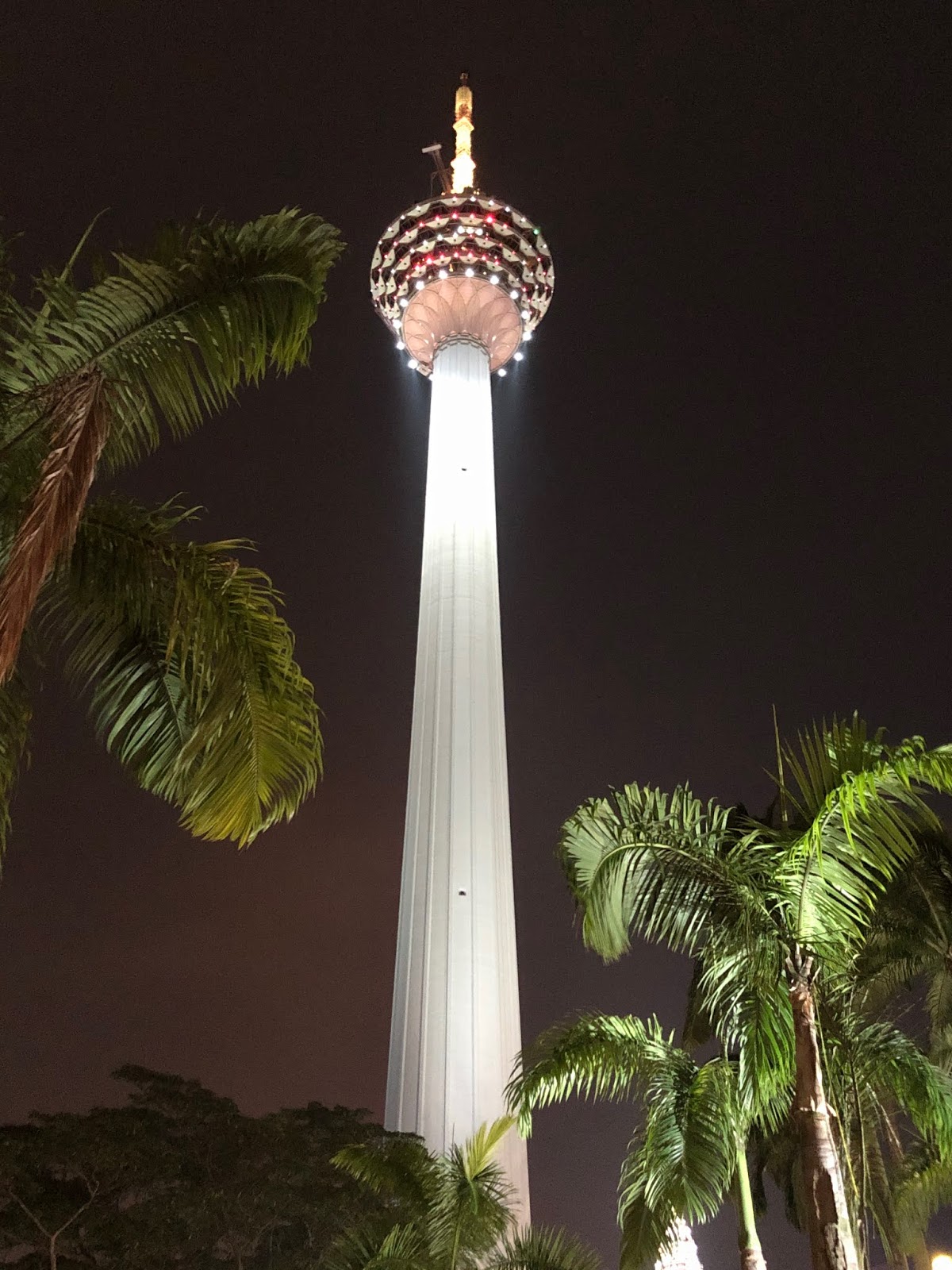
The KL Tower opened in 1996.  At 421 metres (1.381 feet) tall it is the world's seventh tallest telecommunications tower.  At night it is lit up in different colours.

The Kuala Lumpur Convention Centre was built in 2005 for the 11th ASEAN Summit.


The Upside Down House opened in 2016.  Everything in the 2-story house is upside down with the furniture arranged on the ceiling.


TV Al-Hijrah began operating in 2010.  It was the country's first free-to-air Islamic TV broadcast.


The National Textile Museum opened in 2010.  The building was completed in 1905 as the headquarters fo the Federal Malay States Railways.


The Telecommunications Museum opened in 2005.  The 1928 building used to be the old exchange building.


The National Museum opened in 1963.

The Petronas Towers is the city's main landmark.  The 88-floor towers were completed in 1996 at a cost of $1,6 billion.


At 451,9 metres (1.483 feet), it was the tallest building in the world until 2004 when Taipei 101 opened.
Today it's 19th tallest in the world but it is still the world's largest twin tower.

The National Palace opened in 2011.  It is the Malaysian monarch's official residence.


The National Mosque of Malaysia was completed in 1965.  It can accommodate  15.000 people.

Little India is cool little area with Hindu temples and delicious Indian food.

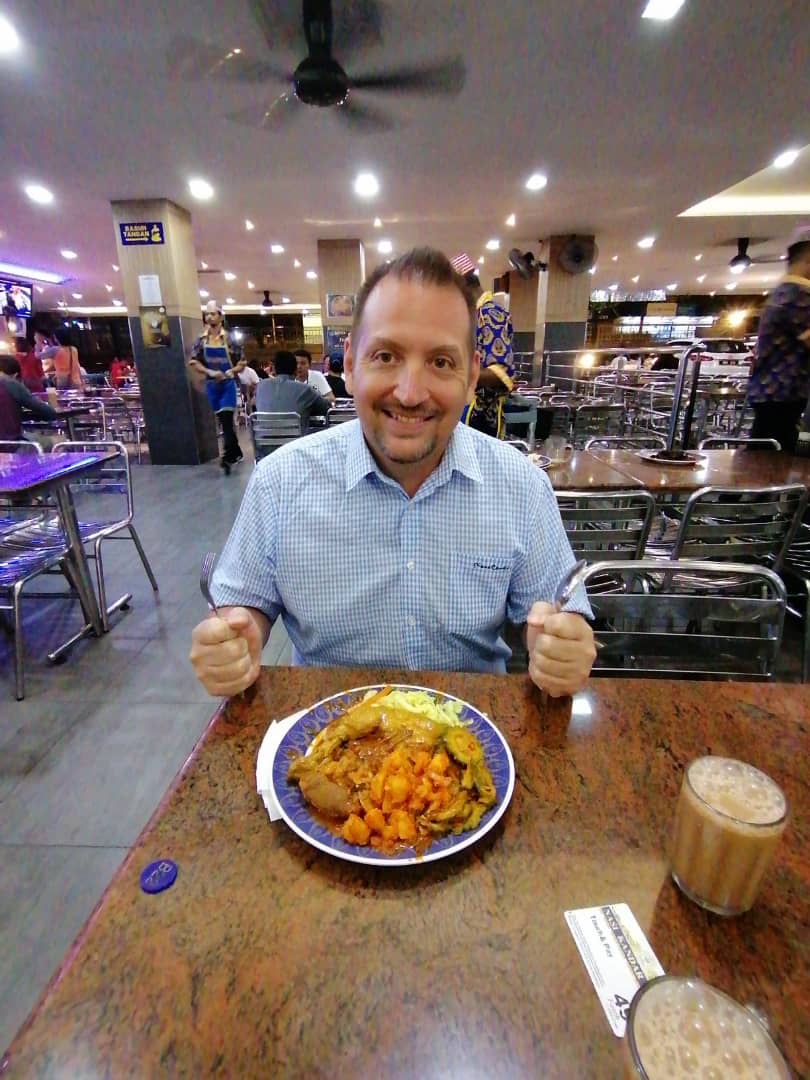
The food courts throughout the city are the best places to eat.  Delicious and cheap eats.

Putrajaya is the federal administrative centre of the capital.  The planned city was established in 1995 and is home to about 92.000 people.


The Batu Caves are about 13 km (8 miles) from the city.  It is one of the most popular Hindu shrines outside of India and is home to the world's tallest Murugan statue.