Thursday, September 1, 2022

2022-2023 Academic Calendar

The annual school calendar in Czechland is determined by the Ministry of Education, Youth, and Sports.  

The dates are the same for all schools throughout the country except for the spring holidays which depend on the county, municipality or city district.

School principles have the ability to declare extra days off due to "serious organisational or technical reasons."  They usually do this to bridge public holidays with the weekend.

Teachers start the last week in August.  This is a preparation week for the teachers and school administrators.  Parents can make appointments to speak with teachers.  During this week, any students who failed any compulsory subjects are re-examined to determine their advancement in the upcoming school year.

Today, 1 September, is the start of the school year.  The first day of school pretty much lasts an hour.  

First grade students and their parents are officially welcomed and there is a meet-the-teacher ceremony.  Students in other grades have a 45-minute with their teacher and they have registration forms to fill out.  In the USA, the first day of school is a full day.

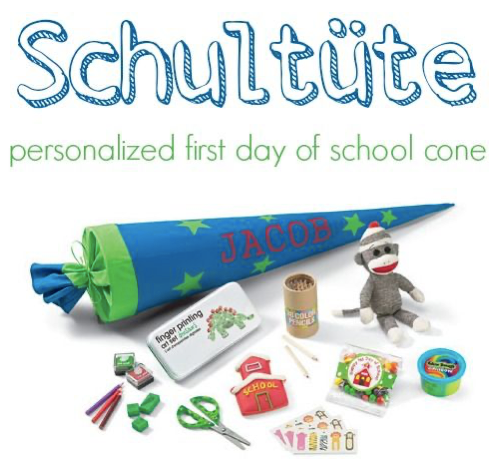
In Germany, all first-graders get a Schultüte, a personalised cone filled with school supplies.  I remember Claudia spending so much time putting Tünde's cone together.  I think that they do it in Austria too but I'm pretty sure that the tradition doesn't exist here in Czechland.


During the first two weeks of school, there is a meeting for parents and the classroom teacher.  The teacher explains how the school year is organised.  These meetings usually take place after school once the parents are off from work.  For the first six weeks, from September to mid-October, students are able to join after-school activities and clubs.  Many of the clubs are sponsored by organisations outside the school.

28 September is a public holiday for St. Wenceslas Day and Statehood Day.

This year, 26-27 October is the Autumn break for all public schools.  This break with the 28 October holiday for Independent Czechoslovak State Day, and the weekend, gives students a 5 day break.

Schools have open-door days from November to January.  These are for students, and their parents, to help decide which gymnázium, conservatories, or vocational school they will apply to.

17 November is the public holiday for Freedom and Democracy Day.

30 November is the deadline for students to submit their applications to schools that that specialise in art, drama, dance, music, language, or sports.

23 December - 2 January is the Winter/Christmas holiday.  Students return to school on 3 January.

By 1 January, schools have to list the criteria for secondary school applications on their websites.  

31 January marks the end of the first semester.  Students receive report cards.

3 February is a one-day school holiday to mark completion of the first semester.

1 March is the final day for students to submit applications to gymnáziums, specialised high schools, or vocational schools.  

Spring break is determined by region so not every student is off the same week across the country.  In Brno, Spring break will be 13-19 March.

6 - 10 April is the Easter holiday.  Students get Thursday off, plus Good Friday and Easter Monday.

In April, parents have to register their children for 1st grade and preschool (kindergarten).

1 May and 8 May are public holidays.

1 June is Children's Day.  It isn't a public holiday but many schools celebrate the day with cultural activities or field trips.

30 June is the last day of school and students receive their report cards.

Summer holiday runs from 1 July to 3 September.  The first day of school for the 2023-2024 year will be 4 September.

Wednesday, August 31, 2022

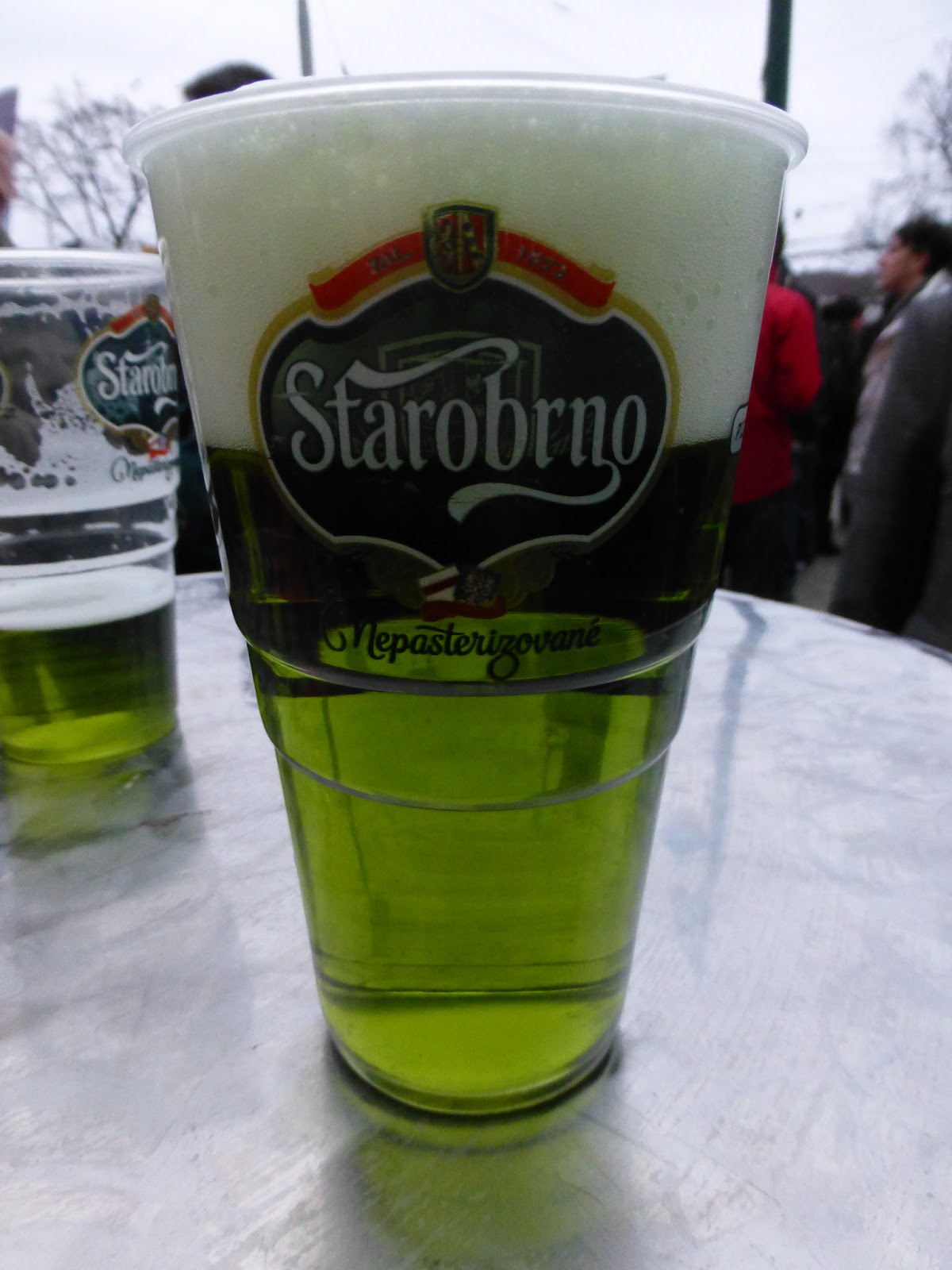
Starobrno

Pivovar Starobrno, the Old Brno Brewery is located in here in Brno.  It was built as a successor to an earlier brewery founded in 1325 as part of a convent.  It didn't take the name of Starobrno Brewery until the second half of the 19th century. 

The date of 1872 is on the beer label which means they are now celebrating their 150th anniversary.

In 2009, Starobrno merged with the Royal Brewery of Krušovice and it is now owned by Heineken.

It's main four beers are:

  • Staré Brno - a pale 10° draught beer with 4% alcohol 
  • Starobrno Medium - a pale 11° lager with 4,7% alcohol
  • Starobrno Drak - a pale 12° lager with 5,3% alcohol
  • Starobrno Unfiltered - an unfiltered. 12° lager with 5% alcohol
Most people don't understand the degree thing with beer.  It doesn't indicate the percentage of alcohol.  Brewers use it as a measurement to track the density of certain ingredients.  10 degree beer is around 3,5% alcohol, 12 degree is usually around 4,2% alcohol and 15 degree beers are dark beers.  So the degrees don't indicate the alcohol percentage but the higher the degree the stronger the beer.

Every year for zelený čtvrtek, the brewery produces a batch of green beer.

In March 2020, the brewery released three new craft style beers.

  • Indian Pale Lager - IPL - a pale lager with 5% alcohol
  • American Pale Ale - APA - a top-fermented beer with 5% alcohol
  • RED - a cherry-flavoured beer with 3,6% alcohol

I haven't tried any of the new craft beers.  My favourite Starobrno is the nefiltrovaný.

Here are a couple of commercials that I found out on YouTube.


Here's a commercial that they ran in Hantec, the local Brno dialect, along with Czech subtitles so that the rest of the country could understand.

Tuesday, August 30, 2022

2028 European Capital of Culture Nominations

In 2028, Czechland and France will each host a European Capital of Culture.  A third city will come from outside of the EU, either an EEA country or from an EU-candidate country.  

Czech cities have to submit applications by 1.9.2022.  

The winning cities will be announced in December 2023.

Yesterday, a group of three cyclists left Brno to ride 230 km (143 miles) to deliver Brno's application to the Ministry of Culture in Prague.  They should arrive tomorrow afternoon.  There's a a lot on the line.  Being selected as a European Capital of Culture comes with a €1,5 million prize.

The four Czech cities in the running are Brno, Broumov, České Budějovice, and Liberec.

The Frech cities in contention are Nice, Clermont-Ferrand, Reims, Rouen, Bourges, Saint-Denis, Amiens, and Bastia.

The non-EU cities up for consideration are Budva, Montenegro and Skopje, North Macedonia.

Good luck Brno!  Fingers crossed!

Update October 2022:  Well that didn't take long.  Brno is out of contention.  There was a 12-member panel of experts that narrowed the Czech application list down to Broumov and České Budějovice.  

The Frech cities now on the short list are Rouen, Bourges, Clermont-Ferrand, and Montpellier.

Monday, August 29, 2022

Electricity in Czechland

Since the Russian invasion of Ukraine, prices have soared across Euroland.  

Looking at the cost of electricity in capital cities across Euroland, Prague comes in as having the 5th most expensive electricity at €0,41 per kilowatt-hour.  The top 4 are London, Copenhagen, Rome, and Amsterdam

However, when you account for purchasing power parity then Prague has the most expensive electricity in Europe.  Followed by Rome, Berlin, Dublin, and London.  One of the reasons for electricity being so expensive is that the Czech government taxes it at 24% while the average across Europe is 18%.


What's odd is that Czechland is one of Europe's biggest exporters of electricity.  This year, the country has exported more than 5 million megawatt-hours more than was consumed.  Only Sweden, Germany, France, and Spain have exported more electricity than Czechland.  I wasn't aware than in 2020, Czechland was the 9th-largest exporter of electricity in the world.

In order to cut the country's dependency on gas from Russia by one-third, the government and ČEZ, a Czech energy company, have secured storage capacity for LNG, liquefied natural gas, in the Netherlands.  Construction of the space is underway and it should be complete in September.  This is just for the storage space which should cost tens of millions of Czech Crowns per year.  The Czech government still needs to secure the LNG to be stored there.  
Here's a video I found on YouTube that talks about the high cost of energy right now in Europe, especially in neighbouring Germany.

©NBC

Я за Україну. Я за Україною. Слава Україні  Stojím za Ukrajinou!  I stand with Ukraine. 🇺🇦

Update: Here's an interesting Al Jazeera story I found on YouTube that talks about the high cost of electricity and its impact on the Czech glass industry.

©Al Jazeera

Saturday, August 27, 2022

English in Czechland

English is the most common spoken language across the EU.  About 44% of people in the EU can speak English.  And that's post-Brexit, as now only 1% of the EU are native English speakers.  However, Czechs rank among the worst in Europe at foreign languages.

Czechs are among the least likely Europeans to know a foreign language.  While about 45% can communicate at some level of English, only one in 10 Czechs have minimal English-language skills.  Just 7% speak English proficiently.

The only countries worse at English than Czechia are France, Italy, and Spain.  The top five countries with the best English foreign language skills are the Netherlands, Austria, Norway, Denmark, and Belgium.

One of the primary staffing agencies here has confirmed that English is required for four of to 10 job offers here.  English is demanded five times more than all other foreign languages combined.  After English, the top requested languages by employers are German, French, Italian, and Dutch.

The Czech Statistical Office, ČSÚ,  states that only a minimum of Czechs speak English at a professional level.  30% can't speak a foreign language.  

English is most frequently taught foreign language in EU secondary schools, followed by Spanish, French, German, and Italian.  

In Czechland, by law, students are taught two foreign languages.  English is the most popular, followed by German.  

There has been some controversy in the press about the new government's ability to speak English.  Five of 18 cabinet ministers have admitted to only being able to speak "tourist level" English only.  This is a big deal now that Czechland currently holds the rotating presidency of the EU.  

The new prime minister, Petr Fiala, speaks both English and German fluently.

Jana Černochová, the defence minister, and Zbyněk Stanjura, the finance minister have admitted to having weak English skills but both have at least passive Russian and Polish.

Thursday, August 25, 2022

Ukrainians in Czechland

Even prior to the Russian invasion of Ukraine, there has always been a large Ukrainian population here in Czechland.  Ukrainians are the largest foreign minority, making up over 30% foreigners living in Czechland.  I hear that labour migration from Ukraine to Czechoslovakia began in the early 1990s.  Ukrainians are also the largest minority group in Slovakia.  

I've joked before that with so many Ukrainians here, I should call it Czechkraine instead of Czechland.  It's been a term of endearment but given the war it doesn't seem right to say.

Russia's invasion has caused the largest refugee crisis in Europe since WWII, the largest since the Yugoslav Wars during the 1990s, and the 4th largest refugee crisis in history.  Most Ukrainian refugees fled to neighbouring countries - Poland, Slovakia, Hungary, Romania, Moldova, and even Russia.

While more refugees are in Poland and Germany, Czechland has taken in the highest number of refugees per capita of any country, more than 400,000, mostly women and children.

Recently, the Interior Ministry hung a banner of Putin in a casket, flanked by Czech and Ukrainian flags.  It's pretty obvious on which side the Czechs stand.

The European Union has removed many of the barriers that refugees usually face.  For Ukrainians fleeing the war, there are residency rights, work permits, access to health care, schools, housing and banking services.

Я за Україну. Я за Україною. Слава Україні  Stojím za Ukrajinou!  I stand with Ukraine. 🇺🇦

Update:  As of January 2023, more than 475,000 Ukrainian refugees have sought asylum in Czechland.  The Senate has extended temporary protection for Ukrainian refugees until 31 March 2024.

Tuesday, August 23, 2022

One-Off Payment for Children

On Wednesday, the Czech government will start paying out a one-off payment to low and middle-income families with children.  It's intended to help families cope with the higher food an energy prices resulting from the Russian invasion of Ukraine

For households with an annual income under 1 million Czech Crowns ($45,275), a one-time payment of 5000 Kč ($226) will be given for each child under 18 years of age.   

There's an online system that people where people need to register for the payment.  There are about 1,6 million children that should be entitled to the payment.  This should end up costing the government about 10,5 billion Crowns (+$475 million).  It's nice to see the government doing something to help with the higher cost of living.

Я за Україну. Я за Україною. Слава Україні  Stojím za Ukrajinou!  I stand with Ukraine. 🇺🇦

Monday, August 22, 2022

Brno Functionalism Tour

Yesterday we went on a functionalist tour of Brno that was organised by the Brno Tourist Information Centre.  The tour was entirely in Czech so I didn't understand everything but I kept up pretty well.  The tickets were 350 Kč ($16) each.  


We started off boarding a minibus at náměstí Svobody and headed over to the convention centre. 


We had stops at Vila Stiassni, Vila Tugendhat, and Vila Löw-Beer.  

We didn't go inside of the three villas but we walked around and through the gardens.  

There was a stop at the St. Augustine church at námeští Míru.


We also stopped by a local house not far from my flat.  It wasn't on the original itinerary but we added it as a bonus stop.  

One of the women on the tour rents a room there so we stopped by and looked at the garden.  

The whole tour lasted almost three hours.  It was nice and my Czech got a workout with some new vocabulary.

Sunday, August 21, 2022

Old City Prison Tour

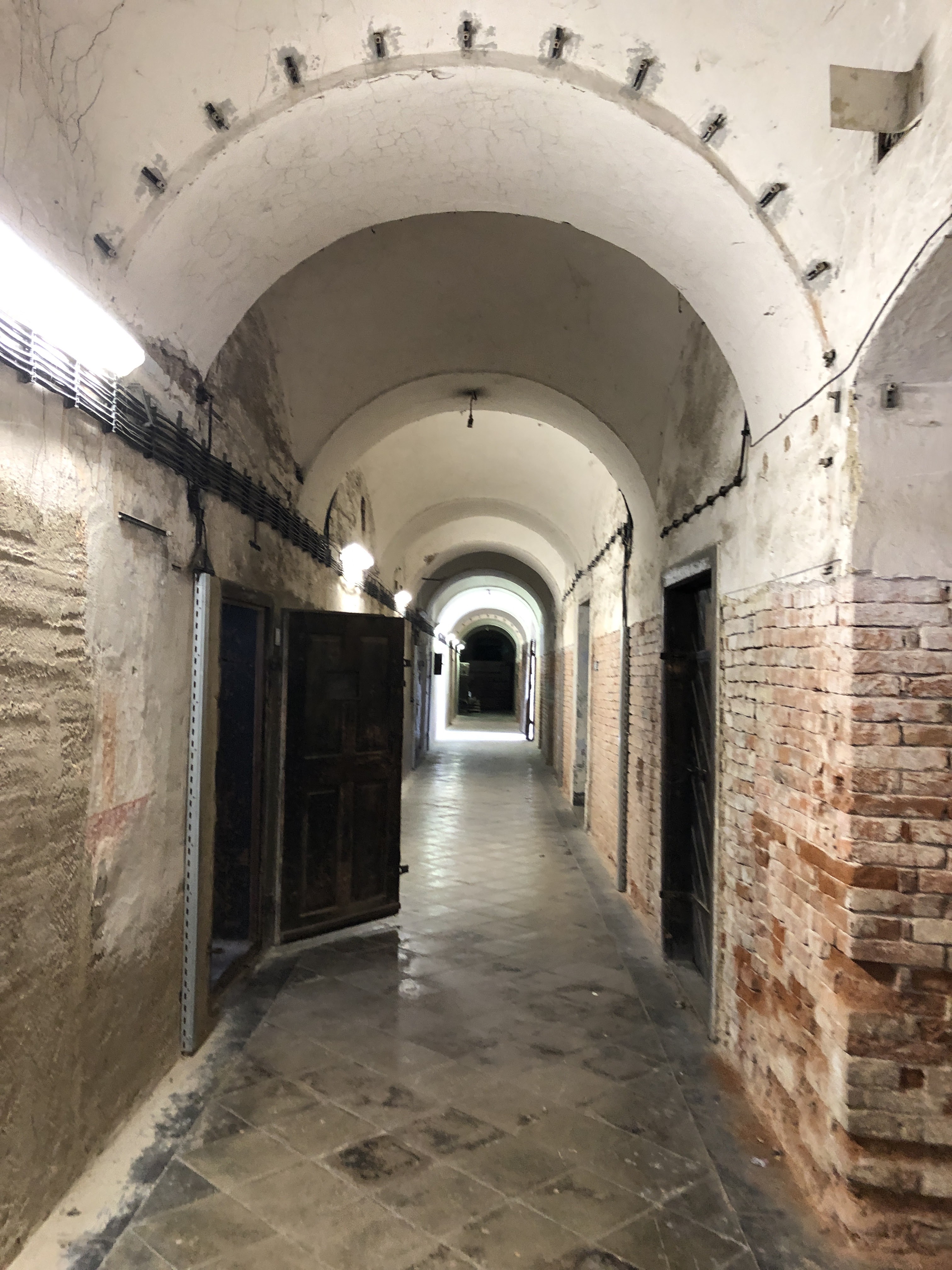
Yesterday we went on a guided tour of the old city prison.  We were the only people who showed up so we ended up with a private tour.  The tour was entirely in Czech but I managed.


The prison is on Cejl street which is the part of Brno that locals call the Bronx.  


In 1770, there was a royal decree issued to establish a prison for all of Moravia.  

The prison opened in 1778.  However, it also housed 147 orphans form the Brno Jesuit college.  The orphanage portion of the building only lasted until 1784 when Emperor Joseph II closed it and the complex became just a prison.

During WWII, the four wings of the prison were used by the Nazis when when Brno was under the Protectorate of Bohemia and Moravia.  After 1948, the communists used the prison for numerous political prisoners and many people were executed here. 

Among those who served time here include Petr Bezruč, who was a well known poet and short story writer, and Zdeněk Rotrekl, Catholic poet and writer, who was persecuted for his beliefs and imprisoned for an alleged conspiracy against the state.

The prison continued to operate until 1956.  The Moravian Regional Archive used the buildings until 2006.

The city wants to revive the complex and space can be rented for exhibitions, workshops, concerts and theatre performances. 

Saturday, August 20, 2022

Church Exhibit at Petrov

Yesterday afternoon, Kája and I visited Petrov where they currently have an exhibit called "Under the protection of St. Václav - 400 years of distinguished collegiate chapters in Mikulov."

We hadn't planned to go check out this exhibit.  We were just talking a walk through the city and when we walked by the cathedral we noticed the sign for the exhibit which is running from 16.6. - 2.9.  

The displays were interesting and there was a woman who gave us about a 20 minute tour in Czech.  All of the exhibits were in Czech and German; but no English.  Adult admission to the exhibit is only 40 Kč (€1,80).

The exhibit was worth checking out.  It's always interesting to see religion in Czechland which prides itself on being the most atheist country in the world.