 Las Palmas de Gran Canaria
 is located on the northeastern part of Gran Canaria. At about 150 km (93 miles) off the coast of
Morocco, the city is actually closer to
Africa than it is to Europe. Along with Santa Cruz on Tenerife, Las Palmas is the co-capital of the
Canary Islands.

With +383,000 people, it is the largest city in the Canary Islands and the 10th largest metro area in
Spain. Almost half of everyone on
Gran Canaria, and about 18% of everyone on the Canary Islands live in Las Palmas.
Las Palmas was founded in 1478. It was the de facto capital of the Canary Islands until the 17th century when it was made official.

In 1492, Christopher Columbus spent time here at the beginning of his first trip to the Americas.
The city centre is on the tentative list of
UNESCO World Heritage sites.

The Pérez Galdós Theatre is one of the most modern theatres in Spain. It reopened in 2007 following extensive renovation.

The Guiniguada Theatre closed in 2000. It reopened in 2011 following renovations.

The Vegueta Market opened in 1863. It's the place to go for fresh seafood, meat, fruit and cheese.

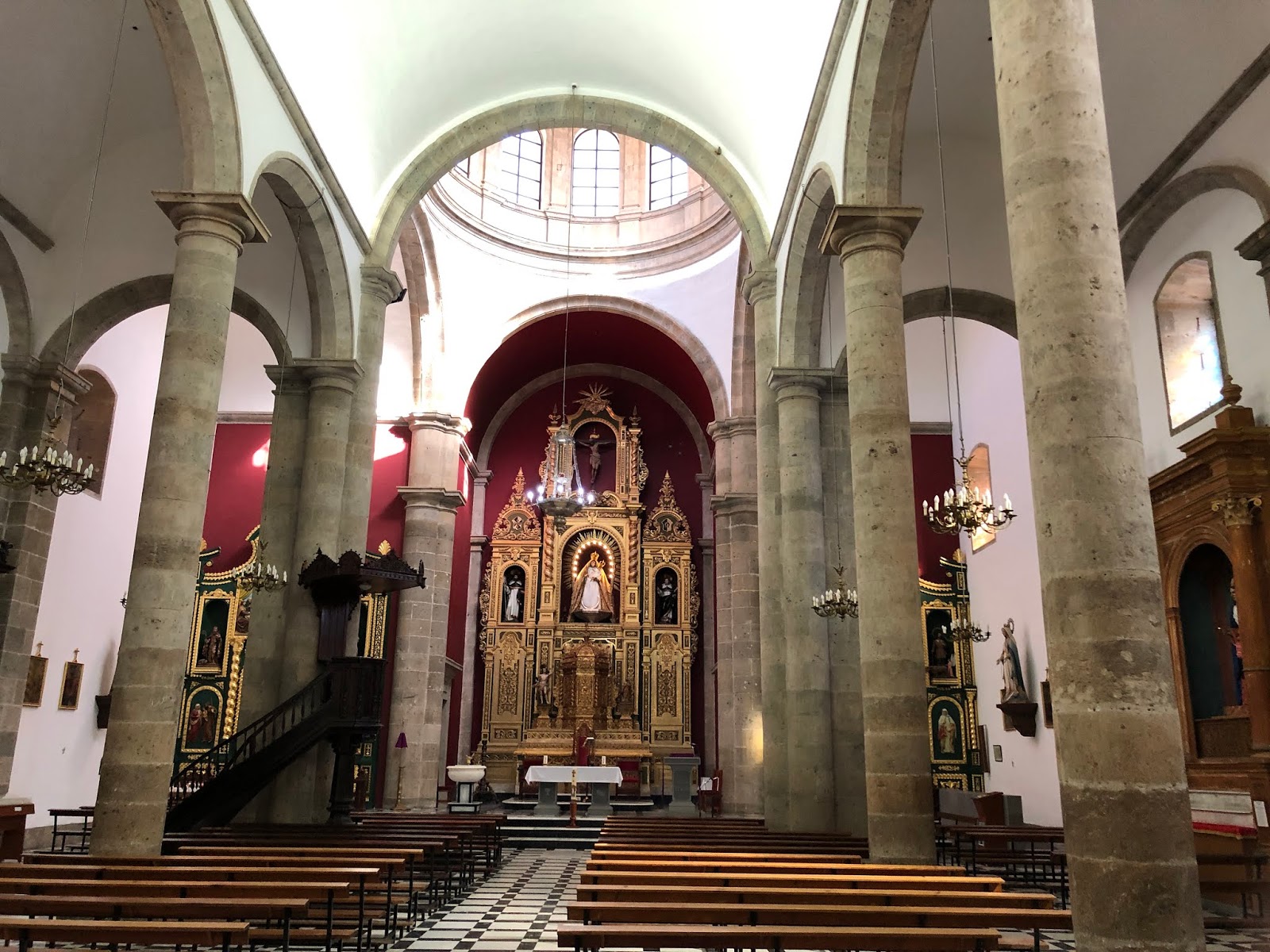
The Santa Ana Cathedral was built in the 1500s. Until 1819 it was the only Roman Catholic cathedral on the Canary Islands.

From the top of the cathedral you can get a view of the entire city.

The 19th century building across from the cathedral is the town hall.

El Museo Canario was established in 1879. The museum is dedicated to the island's pre-colonial history.

In the centre of the 16th century Plaza del Espíritu Santo is a fountain that was designed by Manuel Ponce de León in 1869.

The Ermita del Espíritu Santo chapel dates back to 1615.

The Santo Domingo de Guzmán church was established in 1841. It is connected to a Dominican convent founded back in 1522.

There is an interesting museum about Juan Negrín López. He was a local who led the Spanish Socialist Workers' Party (PSOE) and served as the last Loyalist premier of Spain from 1937 to 1939. He died in exile in 1956.

St. Augustine Church was built in 1786 and is one of the city's oldest churches.

José de Viera y Clavijo was a Spanish historian and professor who was best known for his
History of the Canary Islands. He was born on Tenerife but hied in Las Palmas in 1813.

The Church of Santa Maria del Pino was consecrated in 1917.

The Gabinete Literario focuses on the literary, cultural and scientific development of the city and the Canary Islands.

San Telmo Park is in the north part of the city near the city's first harbour.

The park's art-deco cafe dates back to 1923.

The Government of the Canary Islands holds executive power and is shared with Santa Cruz.
 The Gate by Máximo Rial Dimas was unveiled in 2001. It honours St. Antonia Maria Claret, the Apostle of the Canaries.
 Playa del l
as Alcaravaneras is a sandy beach in the middle of the port by the marina. The beach is around 800 metres (½ mile) long. It just seems odd to me to swim in one of Europe's biggest ports but it's a popular spot.

The Royal Gran Canaria Yacht Club is a private club that was established in 1908. The club has produced 18 olympic sailors and six gold medals.

The Elder Museum of Science and Technology opened in 1999.
 So after almost 10 years of living in Euroland I finally went to the Canary Islands. What the hell had I been thinking? Gran Canaria was awesome! I definitely need to come back sometime soon. I just don't know if I should do Maspalomas again or if maybe next time I check out Tenerife or Fuerteventura or Lanzarote. Decisions, decisions...I know...first world problems.
 My Spanglish worked fine here but I really didn't need to worry about it, like I do in Spain, because there are so many British and German tourists here that English and German would have been enough to get by.
 The day trip to Las Palmas was fun. But I really enjoyed the day tour around the island, especially the chance to do a bit of hiking to see Roque Nublo.
 I honestly had no idea of just how gay friendly it would be. There's quite a number of gay bars and clubs. I even got to see my first European drag show. I hadn't seen a cabaret act since I left the U.S.








 Czech Koruna Exchange Rate



 Posts
Posts


