Thursday, April 14, 2011

Srebrenica, Bosnia and Herzegovina

Yesterday I made the 2.5 hour drive to Srebrenica, in the Republika Srpska; about 10 miles from the Serbian border. The city will forever be remembered for the Srebrenica massacre where, in 1995, over 8,000 Bosniaks were killed in the largest mass murder in Europe since WWII. The region around Srebrenica was predominantly Muslim but the area was strategically important to the Bosnian Serbs for the territorial integrity of their Republika Srpska. Starting in 1992, Serb forces began overrunning Muslim villages. People began pouring in to the small town and its population swelled to 50 – 60,000 people. By 1993, the overcrowded town relied on makeshift generators for electricity and Bosnian Serbs had destroyed the water supply. There was little in the way of food or medicine. In April 1993, the UN declared the town a "safe area" under UN protection. The first UN "safe area" ever. There were 400 Dutch peacekeepers stationed at a battery factory in nearby Potočari. By 11 July 1995, 20 – 25,000 people swarmed the compound thinking that the Dutch soldiers would protect them. Bosnian Serbs said that Muslims would be relocated to Bosniak territory. The Dutch troops helped the Serbs load everyone on to buses. However, boys and men were separated from the women and the men never made it. Over the next three days, over 8,000 Muslim boys and men were murdered. The remains were placed in mass graves which continue to be discovered. To date, 4,524 remains have been identified through DNA. The white headstones are for Muslims. The green markers are for newly identified remains and are given the while headstones every July 11th. In 2011, ~500 additional bodies will be laid to rest. There is only one non-Muslim grave in the cemetery. The memorial center is across the street from the former barracks. Kravica is a small Bosnian Serb village that is 15 km from Srebrenica. Earlier in the war the village was overrun by Bosniak soldiers. On 12 July 1995, more than 1,000 Muslim men and boys were killed in Kravica. They were executed with machine guns and finished off with hand grenades. Yet, this is where the Bosnian Serbs have erected a monument to the Serb victims of the civil war. This was a tough day but just like Auschwitz, I think that it is something that everyone needs to see.

Wednesday, April 13, 2011

Sarajevo Siege

After Bosnia and Herzegovina declared independence from Yugoslavia, Bosnian Serbs declared the Republika Srpska and, along with the Serb-controlled Yugoslav People's Army, blockaded the city. From 5 April 1992, until 29 February 1996, Sarajevo underwent the longest siege in modern history.

Serb General Ratko Mladić had 18,000 troops stationed in the surrounding hills. He had the soldiers shell the civilian population and gave the order to "bomb them, and continue to bomb them until they are on the edge of madness". Bosnia's capital city was totally cut off and those inside were left without power, clean water or enough food. To dare going outside in search of food, water or firewood meant to risk getting shot by a Serb sniper.

In July 1992, the UN took control of the airport from the Serbs to airlift in food. However, the UN refused to get involved to halt the fighting. Without weapons the city could not defend itself from constant attack. I still don't get this one. The UN allowed food but no weapons. So it's OK to be killed as long as you don't die hungry?

On the other side if the airport were mountains in the Bosnian free territory. Around 800 Muslims, and Serbs who stayed to defend Sarajevo, were killed by snipers trying to cross the airport to the free territory. So in January 1993, Bosnian volunteers starting building a tunnel that run under the airport and linked up with the free area in Butmir.

The tunnel was 1.5 meters (~4.9 feet) high, about 1 meter (~3 feet) wide and 960 meters (~3,150 feet) long. The tunnel was dug in a wide L-shape to prevent the Serb shells from caving it in. Luckily, the Serbs never found the tunnel's entry and exit points.

At first everything had to be carried by hand or on one's back. Later on, rails were installed and carts were used to help move food, water, medicine, oil, weapons and the wounded. Bosnian president Alija Izetbegović even had to use the tunnel, in his wheel chair, in order to make it back and forth from the capital city. Quite often people had to make their way through knee-deep water. Twice the tunnel was completely flooded, once for 2 days and later for 5 days. Water pumps were later installed, as well as, an oil pipeline.

In the free territory, the entry point was a family's house. The Kolar family gave up their home to the Bosnian army for the good of the country. Since then, they have turned it in to a small museum that is a must-see. I even got to meet the grandmother, Šida, who at one point was the only woman left in the whole area.

During the siege, 10,000 people were killed including over 1,500 children. Another 56,000 people were wounded including 15,000 children. I can't imagine what it must have been like to live in constant fear of snipers from the surrounding hills. I don't see how Sarajevo could have held on without the tunnel. Here's part of an Al Jazeera report I found out on YouTube.


©Al Jazeera

Tuesday, April 12, 2011

Sarajevo, Bosnia and Herzegovina

Sarajevo is the capital of Bosnia and Herzegovina, as well as, the Bosniak/Croat Federation that along with the Republika Srbska, makes up the country. This is a great place to visit if you like history. The city was part of the Ottoman Empire and then part of the Austro-Hungarian Empire before becoming part of Yugoslavia. The city hosted the 1984 Winter Olympics and was subject to the longest siege in modern history.

There is tremendous religious diversity. Orthodox and Catholic churches, Jewish synagogues and Islamic mosques all over the city give the city a unique feel. Due to the city's history of religious diversity it has been called Europe's Jerusalem.

Beščaršija is the center of the old town. It has a very Turkish feel to it with all of the minarets, cafes and bazaar.

The Yellow Bastion and White Bastion were built during Ottoman rule. They offer great views of the city.

Sarajevo was industrialized by Austria-Hungary. The Austrians didn't want to experiment in Vienna so Sarajevo was the first city in the empire to get electric lights. Sarajevo was the second city in the world, after San Francisco, to have a full-time electric tram running through the city.

Kozija Ćuprija, the Goat's Bridge, was first mentioned in 1550 and is 3 km from town. It is almost the same as Mostar's Old Bridge but I'll let you know on Thursday when I go to Mostar. This was an important caravan road that used to link Sarajevo with the Ottoman Empire. The story goes that two brothers used to keep livestock near the bridge and one day a goat dug up hidden treasure.

Across from the Latin Bridge is the spot where Archduke Franz Ferdinand was assassinated by Gavrilo Princip in 1914. This was what triggered the outbreak of WWI.


The Jewish Cemetery was opened in 1630. Like many parts of the city it was heavily damaged during the siege. Serb shooters were placed here which targeted civilians on Sniper Alley for almost 4 years.

They city still has a lot of damage from the siege. The Tunnel Museum is very interesting and helps you understand what life must have been like during the Balkan War. A Sarajevo Rose is where a mortar shell detonated in the city and was later filled in with red resin. There are several monuments in the city commemorating the siege, including the children's memorial for the +1,500 children that were killed. Another unmistakable reminder is all of the city's cemeteries. It is very depressing to see that so many people were killed from 1992 - 1996. All of the white gravestones are Muslim while the dark tombstones belong to Serb or Croat Christians. Don't get me wrong, there is more to the city than the siege but it's hard to not think about all of the suffering that happened here 16 years ago.

The weather has been really nice yesterday and today. For some reason, people keep saying that there's going to be snow tomorrow. Hopefully that won't happen because I didn't pack for snow.

Monday, April 11, 2011

Belgrade, Serbia

Belgrade, (Београд = white city), has about 1.6 million people and is Serbia's capital city. It is one of the oldest cities in Europe and over the centuries it has been demolished 40 times. The city has been leveled so many times that no building is over 250 years old which is pretty unusual for a European capital. The city is pretty compact so you can see most everything on foot in a couple of days. Belgrade is well-known for its nightlife which goes in to the early morning almost every day of the week. I only have a couple of days in Belgrade so I'm electing to skip the nightlife. Otherwise I'll be too exhausted to check out the sights.

The Belgrade Fortress and St. Sava Temple are the city's best known sites. The Belgrade Fortress sits on a hill that overlooks where the Danube and Sava Rivers meet up. It was built at the end of the 1st Century as a permanent Roman Legion camp. It is made up of Upper Town, Lower Town and Kalemegdan Park. The Upper Town has most of the preserved gates and the Military Museum. This is also where the Victory Monument is.

The Lower Town was the main city center during the Middle Ages. Kalemegdan Park has random sculptures, a zoo, souvenir vendors and plenty of people playing chess. The Monument to France was built in 1930 as recognition of France's help during WWI.

St. Sava Temple is dedicated to St. Sava (1169-1236) who founded the Serbian Orthodox Church. It is built, or rather is being built, on the site that is believed to where his remains were burned by the Ottoman Turks in 1594.


Construction started in 1935 but was interrupted during WWII. Construction resumed in 1985 and the exterior was completed in 2004. The interior is still underway. It is massive and the dome can be seen from most parts of the city. It is one of the largest Orthodox cathedrals in the world.


Republic Square is one of the city's main squares. This is where the National Museum is and a monument to Prince Mihailo. On Sunday the square was used to host a "Belgrade to Japan" Red Cross blood drive.

Palace Albanija is in the city center. In 1939 it was the first skyscraper in Southeast Europe. From this landmark all distances in Serbia are measured.


The city's main church, dedicated to St. Michael the Archangel, was built in 1845 on the site of the former Cathedral Church. Across the street is the seat of the Patriarch of the Serbian Orthodox Church. On the other side of the street is a tavern named ?. It opened in 1823 and is the oldest restaurant in Belgrade. It was originally named the Cathedral Tavern but the church objected to the name so the owner changed it to ? because he didn't see what the big deal was.

Since the city has been destroyed so many times there is a wide variety in the architectural styles of the buildings. Unfortunately, not everything has been rebuilt. There is still visible damage from the NATO bombings during the Kosovo War in 1999.

Serbian uses the Cyrillic script so its alphabet is similar to Russian but with a few extra letters. A lot of things are also written with the Latin alphabet. However, all of the street signs are in Cyrillic. I remember enough Russian that reading the signs was not a problem. Serbian is related to Czech so I just speak Czech, with a few Serbo-Croatian words thrown in, and I'm able to get by. Most people ask if I'm Slovenian or Polish. But oddly enough they never ask if I'm Czech.

Today's agenda has a +9 hour train ride to Sarajevo, Bosnia and Herzegovina. Then I'll be back for more of Belgrade on Friday night.

Saturday, April 9, 2011

Interior Ministry

There have been some changes this year when it comes to visas. The Czech Interior Ministry has taken over, from the Foreign Police, the administration of long-term residence permits (green cards).

Brno used to have two foreign police branches. The smaller office was for EU citizens. But you also got to use this office if you were an American, Canadian or Croatian. Then there was the large office when everyone else had to go to. The smaller office was so much better.

This year I had to submit all of my documents to the regional Interior Ministry office. Fortunately, the lady in charge of visas at IBM made an appointment for me so I didn't have to wait in a massive queue. It seems that not many people know you can actually make an appointment.

Beginning in May 2011, non-EU citizens will be issued biometric residence permit cards. I would much rather have a biometric permit card than have to carry my passport around with me all of the time. Unfortunately, I miss the May date because I had to submit my application in April. So I'll get the card the next time I renew my visa...in another two years.

The Interior Ministry has taken over visa processing as of January 1st and they are still working out some of the kinks in the system. I'm told that it now takes 3 to 5 weeks to receive the new visa. They will send me a text message when my visa is ready. They will not give you the current status over the telephone.

My current visa expires at the end of April. If I'm stopped by the police after my visa expires then I'm still OK because they will call to verify that my application is pending. If something comes up and I need to leave the ČR then the Interior Ministry will issue me a 2-month visa as a hold over until my 2-year visa is ready. After my trip to the Balkans I don't have anything planned until Paris in May so I shouldn't need a temporary visa.

Friday, April 8, 2011

CzechPoint

Since my work permit was renewed for two years it's now time to apply for an extension to my visa (long-term residency permit).

Since I'm not an EU citizen I have to jump through all of the same hoops I did last year in order to get my Schengen visa renewed. But this year it was a bit easier to get the required documents. The chica that handles the visas at IBM told me to visit a CzechPoint office. What a great time-saver! I wish someone had told me about this last year. But then I might not have the same appreciation for just how much bureaucracy I got to skip this year.

CzechPoint is basically a one-stop shop for various government documents. They have locations all over the city, mostly in municipal buildings. I only had to go to one office to get my land registry statement and the business registry license for my apartment building. They were even able to make the notarized copies of all of my other documents.

Thursday, April 7, 2011

Schengen

Schengen is a small town in Luxembourg near the French and Dutch borders. Back in 1985, Luxembourg, the Netherlands, France, Belgium and West Germany signed the Schengen Agreement which called for the gradual removal or checks at their common borders.

Since then 25 countries have joined the Schengen zone. They are Austria, Belgium, Czech Republic, Denmark, Estonia, Finland, France, Germany, Greece, Hungary, Iceland, Italy, Latvia, Lithuania, Luxembourg, Malta, Netherlands, Norway, Poland, Portugal, Slovakia, Slovenia, Spain, Sweden and Switzerland. Romania and Bulgaria hope to join later in 2011.  San Marino, Vatican City and Monaco are all de facto members.

Schengen is different from the EU. Iceland, Norway and Switzerland are not members of the EU but are part of the Schengen zone. Ireland and the United Kingdom are EU members but are not Schengen members.  They have their own Common Travel Agreement.

There are no passport checks when traveling between Schengen countries. I don't get a passport stamp when I travel from Czech Republic to Germany. However, I do get stamped coming and going between Germany and the UK because the UK isn't a Schengen country.

USA citizens don't need a visa to enter the Schengen zone. But there is a maximum stay of up to 90 days in a six-month period. Overstaying the 90 days is a big deal. There is a very hefty fine, you get deported and are banned from entering any Schengen country from 1 to 5 years. They don't play around with this over here.

One of the reasons my long-term visa (green card) is so complicated is because the Czech Republic is now part of Schengen. The visa allows me to reside full-time (for 1 or 2 years) in the Czech Republic and allows me to travel within all of the other Schengen countries without border checks.

Update: In December 2011, Switzerland and Liechtenstein both joined Schengen.  
Update: As of January 2016, Bulgaria and Romania are still not yet members.  No word yet either on when Cyprus will join.
Update: Croatia joined the EU in 2013 and should have joined Schengen by 2015.  It is on track now to join in 2020.
Update 2023:  Croatia joined Schengen but Bulgaria and Romania still haven't joined.

Wednesday, April 6, 2011

U.S. Taxes

All U.S. citizens are required to file taxes. This applies to expats as well. However, expats get to exclude up to $91,500 of foreign earned income. Yeah, I wish I made at least that.

In order to exclude foreign income you have to use the Foreign Income Exclusion Form 2555 or 2555-EZ which gets submitted with your 1040 or 1040-EZ.

In order to qualify, you have to pass the tax home test and meet the bona fide residence test.

To pass the tax home test, your tax home must be in a foreign country throughout the period of bona fide residence. You basically have to reside overseas for 330 days of the tax year.

When you file your taxes you have to express your foreign salary to the IRS in U.S. dollars.

The U.S. has bilateral Social Security agreements with certain countries, including the Czech Republic. These agreements prevent expats from paying taxes on the same income twice - once in the foreign country and again in the U.S. Since I paid taxes in the Czech Republic and passed the income exclusion criteria I didn't have to pay taxes in the U.S. However, I still had to file my taxes by April 15th. Luckily, I can fill out the forms online, scan them, e-mail them to Mom and she will mail off my Federal taxes. She is also going to mail in my Georgia state forms too. Thanks again Mom!!!

Tuesday, April 5, 2011

Židlochovice, Czech Republic

This past weekend I was supposed to go to Wrocław, Poland, but it didn't work out. Which is just as well because it gave me the chance to get some things done around here such as completing my U.S. taxes and Czech census.

On Sunday I went with some other expats to Židlochovice. It is a small town in Moravia, about 18 km (11 miles) south of Brno.


It is really small.
The whole town covers just under 6 sq km (~2.3 sq miles) and has a population of 3,075. A one-way bus ticket is only 30 Kč ($1.80).

The most well-known attractions in town are the chateau and the Church of the Elevation of the Holy Cross.

We specifically went to Židlochovice to do a little bit of hiking. About 1 km east of town is the Acacia lookout tower on Výhon Hill.

The tower was opened on August 1, 2009. The viewing platform is 14.5 meters (~47.5 feet) and gives some great views of the countryside.

Monday, April 4, 2011

Bosnia and Herzegovina

Bosnia and Herzegovina (BiH) is slightly smaller than West Virginia and has a population of 3,2 million people.  The official languages are Bosnian, Serbian, and Croatian which are all pretty much the same thing with Serbian using Cyrillic and Bosnian and Croatian using the Latin alphabet.    

Located in the Balkans, the country's name comes from two different geographic regions; not ethnic ones. Herzegovina is about 1/5th of the country and is located in the south.

After declaring independence from Yugoslavia, the country was involved in the biggest European war since WWII. Bosnian Serbs wanted their own country and to become part of a Greater Serbia. With backing from Serbia, the country's capital, Sarajevo, underwent the longest siege in modern history. There was also extended fighting with Croatia.

Following the 1995 Dayton Peace Accords, BiH has a multi-ethnic government. The country is divided in to two areas. The Bosniak/Croat Federation has about 51% of the territory and about 49% belongs to the Republika Srpska. The total population is 48% Bosniak (Bosnian Muslim), 37% Serb (Orthodox) and 14% Croat (Catholic).

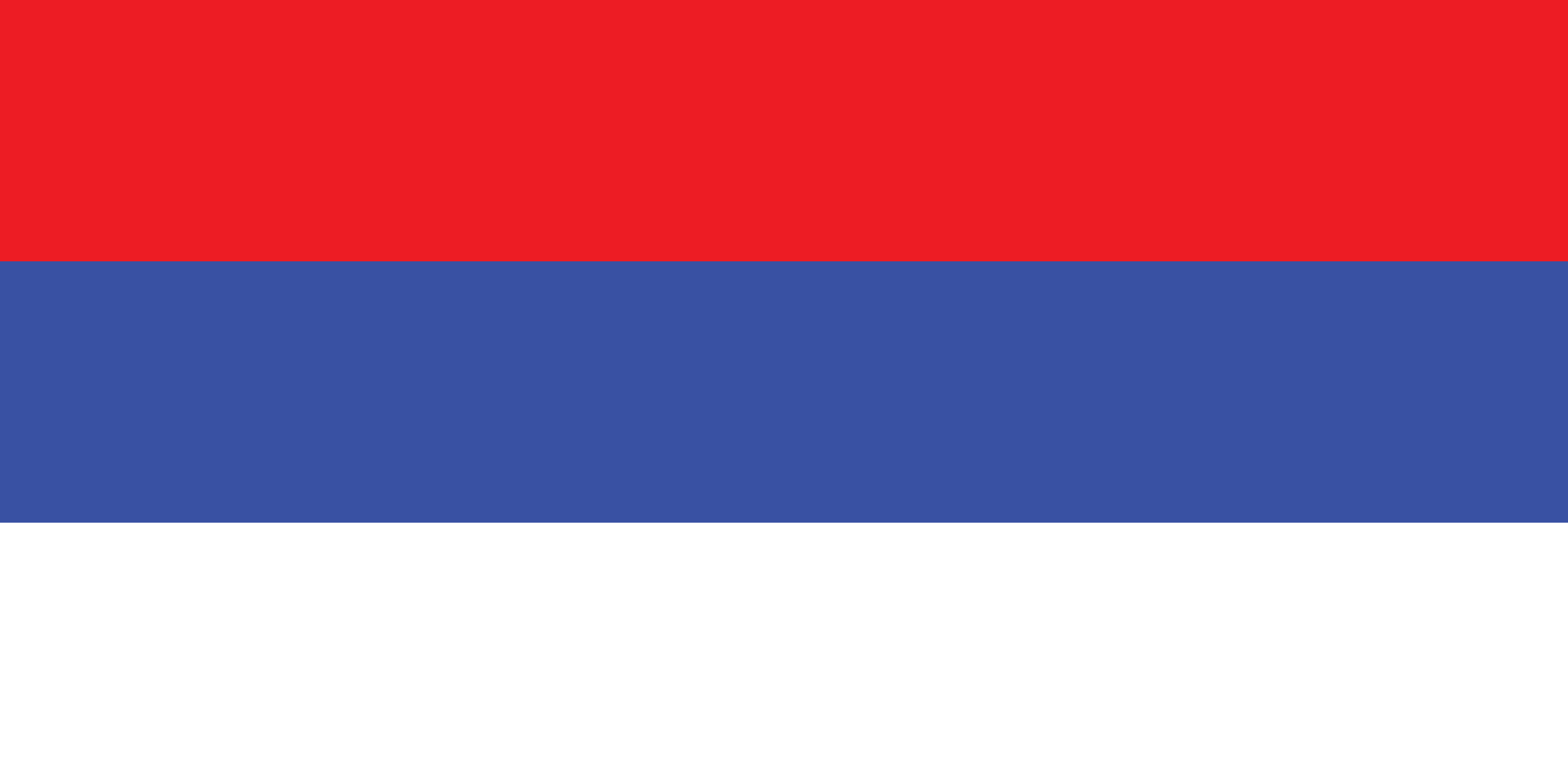
Republika Srpska, the Bosnian Serb Republic, has it's own flag and official seal.

I'm not quite sure how anything gets done here. For example, there are three presidents. One Bosniak, one Serb and one Croat are all elected to a four-year term. They then rotate the presidency every eight months.

The country is likely to join NATO in the near future. Eventually, it will apply for EU membership as well. I was in Međugorje last year and found that no one really wanted the currency. I heard that not long after that a law was passed that prevented people form accepting Euros as payment - meaning that shops have to accept Bosnian Marks. So I guess I'll get to see if the money is still worthless or not.

I'm really looking forward to visiting Sarajevo. I also plan to visit Srebrenica, Mostar and maybe Počitelj. I just need to make it through the next couple of weeks until my vacation starts.

Update: FIFA and UEFA have suspended Bosnia and Herzegovina from all international football (soccer) competitions. These organizations require that each national football federation have a single president. Just like the country itself, the BiH football federation has 3 presidents - 1 Bosniak, 1 Croat and 1 Serb. FIFA and UEFA do not agree to rotating the presidents either. Unless this is worked out, BiH won't be able to qualify for next year's European Championships.