Tuesday, September 6, 2022

Slovak National Uprising

The Slovak National Uprising, Slovenské národné povstanie, usually just abbreviated as SNP, was a revolt organised by the Slovak resistance during WWII.  It lasted from 29 August to 28 October 1944.  Here's what happened...

Romania had been an Axis ally of Nazi Germany and the Slovak puppet state but on 23 August 1944, it switched sides and joined the Allies.  On 28 August, in Martin, a group of partisans killed 24 German soldiers that were returning from Romania.  So the next day, Germany essentially invaded and took over Slovakia.

The next day, on 29 August, an uprising started in Banská Bystrica to resist the Germany occupation and to overthrow the puppet state and to re-establish Czechoslovakia.

The uprising's headquarters were in Banská Bystrica which is about halfway between the country's cities.  It's 208 km (129 miles) from Bratislava and 217 km (135 miles) from Košice.


On 5 September, Ján Golian was given the rank of General and became commander of all of the rebel forces in Slovakia.


Many groups fought in the uprising - units of the Slovak Army, democratic resistance, communist partisans, and some international forces.  However, it the end it wasn't able to overthrow the government due to bad timing of the uprising and a lack of support from the Soviet Union.  

On 3 November 1944, General Golian was captured and sent to the Flossenbürg concentration camp in Bavaria.  He was officially listed as missing for two years after the war but it is believed that he was tortured and murdered in Flossenbürg.

While the uprising was put down by the Germans, resistance continued until the Red Army, Czechoslovak Army and Romanian Army occupied Slovakia in 1945.

SNP Square in Bratislava

In Slovakia, 29 August is a public holiday to commemorate the Anniversary of the Slovak National Uprising.  There are many streets and parks across the country that are named after SNP.

In 1955, the SNP Museum opened in Banská Bystrica.  Here's a video I found on YouTube about it.

©Govisty & Tipnatrip

Banská Bystrica has actually been on my list of places to visit.  I've heard that it's a lovely small town in central Slovakia and worth a weekend visit.  Now I need to make sure that check out the museum whenever I eventually go check it out.

Monday, September 5, 2022

First Slovak Republic

The First Slovak Republic existed from 14 March 1939 until 4 April 1945.  As a result of the 1938 Munich Conference which resulted in Germany annexing the Sudetenland, other parts of Czechoslovakia were taken over by Poland and Hungary.

Jozef Tiso

On 13 March 1939, Monsignor Jozef Tiso was invited to Berlin by Adolf Hitler.  Tiso was told by Hitler that Nazi Germany would support an independent Slovakia.  If Slovakia didn't declare independence from the Second Czechoslovak Republic then Slovak land would be divided up between Hungary, Poland and the rest of Czechoslovakia.

On 14 March 1939, Slovakia declared independence.  The next day, Czechoslovakia was wiped off the map as Germany established the Protectorate of Bohemia and Moravia.  This was the first time in history that there was an independent Slovakia.

Fight for the nation and the state!

Under Czechoslovakia, Tito was the Slovak prime minister.  When Slovakia declared independence, he became president.  This independent Slovakia was a one-party state that was a Nazi puppet state.  Slovakia sent troops to participate in Germany's invasions of Poland in September 1939 and the Soviet Union in 1941.

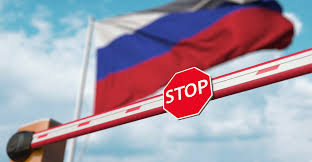
The white, blue, red tricolour flag was the official flag of Slovakia during during the Second Czechoslovak Republic.  It became the official flag of the First Slovak Republic.  In 1969, it became the flag of Czechoslovakia's Slovak Socialist Republic and in 1990 it was the flag of the Slovak Republic during the Czech and Slovak Federative Republic.  What's interesting is that this is the flag of the Russian Federation.

The were 2,6 million people in Slovakia and 85% were Slovaks.  It was home to about 5% Germans, almost 3% Czechs, 2% Hungarians and just over 1% Jews.  Roughly 77% of the pre-war Jewish population was either killed directly or deported to Auschwitz.

Following an increase in anti-Nazi activity by Slovak partisans, German invaded Slovakia which triggered the Slovak National Uprising.  

In 1945, Slovak independence ended and it again became part of Czechoslovakia.  Tiso was arrested by the Americans in June 1945, who found him hiding out at a monastery in Bavaria.  He was extradited to Czechoslovakia in October 1945.  In 1947 he was found guilty by the National Court for "state treason, betrayal of the antifascist partisan insurrection and collaboration with Nazism."  On 18 April 1947, he was hanged in Bratislava.    

Slovakia became independent on 1 January 1993 following the Velvet Divorce.  Most Slovaks don't consider today's Slovakia to be a successor of the WW2-era state, but trace its lineage via the Czechoslovak government-in-exile.  Although there are some ultra-right wing nationalists that celebrate 14 March as Independence Day to commemorate the First Slovak Republic.

Sunday, September 4, 2022

Czechoslovak Government-in-Exile

The second President of Czechoslovakia was Edvard Beneš.  Following the 1938 Munich Agreement, he resigned from office bringing an end to the First Republic.  He went to the USA and became a visiting professor at the University of Chicago.  After a few months he returned to Europe to organise a government-in-exile.


While in Paris he formed the Czechoslovak National Liberation Committee, Výbor Československého Národního Osvobození, in October 1939.  Since Slovakia split from Czechoslovakia to become a Nazi puppet state, France had a problem with the committee representing all of Czechoslovakia.  The impending Nazi occupation of France probably didn't help so the committee moved to London in 1940.

The committee gained British recognition as the Provisional Government of Czechoslovakia, Prozatímní vláda Československa, which was basically the Czechoslovak Government-in-Exile, and it gained international recognition by other Allied governments. 

While all of this was going on, following the annexation of the Sudetenland, Emil Hácha was President of the Second Czechoslovak Republic which what was left of Czechoslovakia after it was carved up.  This lasted until 15 March 1939 and then he became the state president of the Protectorate of Bohemia and Moravia.

Jan Šrámek

With Beneš as the President and Jan Šrámek as Prime Minister, the worked to return Czechoslovakia to its 1937 borders which was a big goal considering the country had been basically wiped from the map.  The. government-in-exile also tried to assist Czechoslovak Jews.

In 1941, there was pressure from the Allies for the Czechs to play a greater role in the resistance, especially in the Protectorate.  In late September 1941, Reinhard Heydrich launched a major crackdown on the resistance when he took over as Reichsprotektor.   

After almost six months of planning, Operation Anthropoid went into action.  Jan Kubiš and Jozef Gabčík went to Prague and assassinated Heydrich.

Jan Kubiš and Jozef Gabčík

At Porchester Gate in London, there's a plaque marking where the Czech government-in-exile was based in the UK, and this is where the assassination was planned.  I guess I need to go find the plaque the next time I'm back in London.

Saturday, September 3, 2022

Protectorate of Bohemia and Moravia

The Protectorate of Bohemia and Moravia, Protektorát Čechy a Morava, was established on 16 March 1939 and lasted until the surrender of Nazi Germany on 8 May 1945.

From 1933, Czechoslovakia was Central Europe's only functioning democracy.  The First Republic ended following the 1938 Munich Agreement, where the UK and France sold out the country in hopes of preserving peace in Europe, which enabled Nazi Germany to occupy the Sudetenland.

What was left of Czechoslovakia become the Second Czechoslovak Republic.  This lasted from 30 September 1938 to 15 March 1939.  On 14 March 1939, Slovakia broke off as an "independent" Nazi puppet state.  What was left became the Protectorate of Bohemia and Moravia.

There were about 7,38 million people and 3,3% of them were ethnic Germans who were given German citizenship.  

Emil Hácha


There was a dual system of government with Prague as the capital.  German law applied to ethnic Germans.  Everyone else was a Protectorate subject governed by a Czech puppet administration, led by Státní Prezident Emil Hácha, who had been the President of the Second Czechoslovak Republic since November 1938.

The Protectorate of Bohemia and Moravia within the Third Reich

The common languages were Germany and Czech.  The Czechoslovak crown was replaced by the Protectorate crown at a rate of 1 German Reichsmark to 10 crowns.  

The workforce was well-trained so people living in the protectorate were used as labour for the German war effort.  Czechs were drafted to work in coal mines, in the iron and steel industries, and to produce armaments.  It became a major production hub for manufacturing aircraft, tanks, and artillery.  This was good for the Nazis because the Protectorate was just beyond the reach of Allied bombers. 

Perhaps because of the need to keep the population nourished enough to carry out the vital arms production work in the factories, but the Nazis had a plan to Germanise the area.  It was believed that about 50% of the population was capable of being Aryanisation.  The other 50% were too Slavic, too intellectual, or too Jewish.  


While there was a Czech President, the ultimate authority was the Reich Protector who was the senior Nazi administrator who represented the interests of the German state. 

On 29 September 1941, Reinhard Heydrich took over as acting Reichsprotektor.  In 1942, the Czechoslovak government-in-exile, led by Edvard Beneš, from the UK, initiated Operation Anthropoid - the assassination of Reinhard Heydrich.  One Czech, Jan Kubiš, and one Slovak, Jozef Gabčík, went to Prague to carry out the assassination.  On 27 May 1942, Heydrich was wounded in the attack and he later died of his wounds on 4 June 1942.  Operation Anthropoid was the only verified government-sponsored assassination of a senior Nazi leader during WWII.

Here's the movie trailer for the 2016 film Anthropoid.

Following his death, Hitler was so enraged that he ordered his troops to "wade through blood" to find the killers.  What proceeded was martial law, mass arrests, and the exceptions and obliterations of the the villages of Lidice and Ležáky.

Here's an eight-minute video I found on YouTube about the execution of Reinhard Heydrich - "the Butcher of Prague."

©World History

Next to the Reich Protector, was the State Minister who was in charge of most of the internal security.  From 1939 to 1945, it was Karl Hermann Frank who ran the Gestapo, security service and the police for the Protectorate.  He was involved in the massacres at Lidice and Ležáky and after the war he was executed.

©World History

It's estimated that of the 92,199 Jews living in the Protectorate in 1939, 85% were murdered.

Here's a short, interesting YouTube video on how Czechoslovakia went from an independent, functioning democracy to being carved up during WW2.  

©History Matters

Most Czechs sympathise with Ukraine because they see Hitler's annexation of the Sudetenland as the same as Russia's annexation of Crimea.  

Я за Україну. Я за Україною. Слава Україні  Stojím za Ukrajinou!  I stand with Ukraine. 🇺🇦

Friday, September 2, 2022

Sanctions Against Russia

When Russia annexed Crimea from Ukraine, it triggered a show of support from Czechs for two reasons.  One because the annexation was very similar to Hitler's annexation of the Sudetenland, and two because Czechs, and Slovaks, still remember the Soviet-ed, Warsaw Pact 1968 invasion of Czechoslovakia following the Prague Spring.

When Russia invaded Ukraine, the Czech government introduced a number of unilateral sanctions against Russia, plus the sanctions introduced by the EU.

Czechland was the first EU country to stop issuing visas to Russian citizens except for humanitarian cases.  Plus the government started to review already-issued residency permits for Russians living here.

The Ministry of Finance began inspecting Russian companies, and companies with Russian owners, to make sure none were receiving public funds.

The government sped up the process of withdrawing from two Russian banks - the International Bank for Economic Cooperation and the International Investment Bank.

In addition, the cabinet approved the potential deployment of up to 580 Czech troops to NATO's Rapid Reaction Force. The  government also earmarked 300 million Kč (~$13,8 million) for emergency humanitarian aid in Ukraine.

It's important to note that the EU has had sanctions against Russia going back to 2014 when it first illegally annexed Crimea.  But with the invasion, additional sanctions have been levied.

The first package of EU sanctions against Russia came on 23 February when Russia recognised the separatist regions of Donetsk and Luhansk as independent countries as an excuse to send in Russian troops.
  • There were targeted sanctions against the 351 members of Russia's Duma, plus another 27 individuals
  • The restriction of economic relations with the separatist regions of Donetsk and Luhansk
  • The restriction of Russia's access to the EU's capital and financial markets
When Russia invaded the rest of Ukraine on 24 February, the EU stepped up its sanctions to include:

  • the financial sector
  • the energy and transport sectors
  • dual-use goods
  • export control and export financing
  • visa policy
  • additional sanctions against Russian individuals
  • new listing criteria
The second package of sanctions were initiated on 25 February.
  • Vladimir Putin's assets were frozen
  • Sergey Lavrov, the Russian Minister for Foreign Affairs, had his assets frozen
  • restrictive measures were imposed on members of Russia's National Security Council and members of the Duma who supported recognition of Donetsk and Luhansk as independent countries
  • an additional package of individual and economic measures were introduced covering finance, energy, transport and technology sectors plus visa policy
The third package of sanctions came on 28 February.
  • a ban on transactions with the Russian Central Bank
  • €500 million support package to finance military equipment and supplies for Ukraine's armed forces
  • closure of EU airspace and no access to EU airports by Russian carriers
  • new sanctions on another 26 people and one entity
On 2 March, the EU excluded seven Russian banks from SWIFT preventing them to operate globally.
The second package of sanctions were initiated on 25 February.  The EU also banned:
  • investing, participating, or continuing to future projects co-financed by the Russian Direct Investment Fund
  • selling, supplying, transferring or exporting Euros to Russia or to any person or entity in Russia
  • broadcasting of Russia Today and Sputnik
Here's an Al Jazeera video I found on YouTube that talks about some of the sanctions and explains more about SWIFT.

©Al Jazeera

On 3 March, the existing asset freezes of those people identified as responsible for the misappropriation of Ukrainian state funds was extended for another year.

On 9 March, restrictions were put in place halting the export of maritime navigation goods and radio communication technology to Russia.  Plus restrictions on an additional 160 people including:
  • 14 Russian oligarchs
  • 146 members of the Russian Federation Council
In total, at this point the EU had measures in place on 862 individuals and 53 entities.  

Also on 9 March, the EU put sanctions in place against Belarus to include:
  • restrict three Belarusian banks from SWIFT
  • prohibit transactions with the Central Bank of Belarus
  • prohibit transactions by Belarusian state-owned entities in EU trading venues
  • significantly limit the financial inflows from Belarus to the EU
  • prohibit the provision of Euros to Belarus
The fourth package of sanctions were initiated on 15 March on an additional 15 people and 9 entities plus a ban on:
  • all transactions with certain state-owned enterprises
  • the provision of credit rating services to any Russian person or entity
  • new investments in the Russian energy sector
  • trade involving iron, steel or luxury goods
The fifth package of sanctions were initiated on 8 April.  This package included a ban on:
  • imports from Russia of coal and other solid fossil fuels
  • all Russian vessels from accessing EU ports
  • Russian and Belarusian road transport operators from entering the EU
  • imports of other goods such as wood, cement, seafood and liquor
  • exports to Russia of jet fuel and other goods
  • deposits to crypto-wallets
On 21 April, the EU sanctioned two more businesspeople.

The sixth package of sanctions were initiated on 3 June.  The sixth package includes:
  • a ban on imports from Russia of crude oil and refined petroleum products, with limited exceptions
  • a SWIFT ban for another three Russian banks and one Belarusian bank
  • suspension of broadcasting in the EU by three more Russian state-owned outlets
  • sanctions against an additional 65 people and 18 entities including those responsible for atrocities committed in Bucha and Mariupol
On 21 July, the seventh package of sanctions were put in place to prohibit the purchase, import or transfer of Russian-origin gold, including jewellery.  The ban on port access was extended to include locks, with sanctions against another 54 individuals and 10 entities including Sberbank.

On 4 August, sanctions were placed on Viktor Yanukovych, the former pro-Russian President of Ukraine, and his son Oleksandr.

It probably won't be that long until an eighth package of sanctions is announced by the EU.

Я за Україну. Я за Україною. Слава Україні  Stojím za Ukrajinou!  I stand with Ukraine. 🇺🇦

Update:  On 6 October, came the EU's eighth package of sanctions which included:
  • a price cap related to the maritime transport of Russian oil for third countries
  • additions to the list of restricted items prohibited for Russia's military and technological enhancement
  • additional restrictions on trade and services with Russia
  • sanctions on an additional 30 individuals and 7 entities.

Thursday, September 1, 2022

2022-2023 Academic Calendar

The annual school calendar in Czechland is determined by the Ministry of Education, Youth, and Sports.  

The dates are the same for all schools throughout the country except for the spring holidays which depend on the county, municipality or city district.

School principles have the ability to declare extra days off due to "serious organisational or technical reasons."  They usually do this to bridge public holidays with the weekend.

Teachers start the last week in August.  This is a preparation week for the teachers and school administrators.  Parents can make appointments to speak with teachers.  During this week, any students who failed any compulsory subjects are re-examined to determine their advancement in the upcoming school year.

Today, 1 September, is the start of the school year.  The first day of school pretty much lasts an hour.  

First grade students and their parents are officially welcomed and there is a meet-the-teacher ceremony.  Students in other grades have a 45-minute with their teacher and they have registration forms to fill out.  In the USA, the first day of school is a full day.

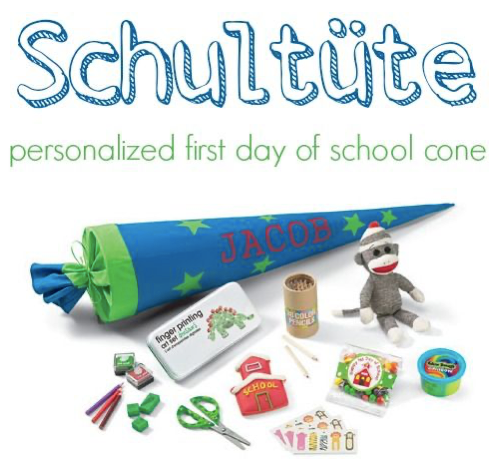
In Germany, all first-graders get a Schultüte, a personalised cone filled with school supplies.  I remember Claudia spending so much time putting Tünde's cone together.  I think that they do it in Austria too but I'm pretty sure that the tradition doesn't exist here in Czechland.


During the first two weeks of school, there is a meeting for parents and the classroom teacher.  The teacher explains how the school year is organised.  These meetings usually take place after school once the parents are off from work.  For the first six weeks, from September to mid-October, students are able to join after-school activities and clubs.  Many of the clubs are sponsored by organisations outside the school.

28 September is a public holiday for St. Wenceslas Day and Statehood Day.

This year, 26-27 October is the Autumn break for all public schools.  This break with the 28 October holiday for Independent Czechoslovak State Day, and the weekend, gives students a 5 day break.

Schools have open-door days from November to January.  These are for students, and their parents, to help decide which gymnázium, conservatories, or vocational school they will apply to.

17 November is the public holiday for Freedom and Democracy Day.

30 November is the deadline for students to submit their applications to schools that that specialise in art, drama, dance, music, language, or sports.

23 December - 2 January is the Winter/Christmas holiday.  Students return to school on 3 January.

By 1 January, schools have to list the criteria for secondary school applications on their websites.  

31 January marks the end of the first semester.  Students receive report cards.

3 February is a one-day school holiday to mark completion of the first semester.

1 March is the final day for students to submit applications to gymnáziums, specialised high schools, or vocational schools.  

Spring break is determined by region so not every student is off the same week across the country.  In Brno, Spring break will be 13-19 March.

6 - 10 April is the Easter holiday.  Students get Thursday off, plus Good Friday and Easter Monday.

In April, parents have to register their children for 1st grade and preschool (kindergarten).

1 May and 8 May are public holidays.

1 June is Children's Day.  It isn't a public holiday but many schools celebrate the day with cultural activities or field trips.

30 June is the last day of school and students receive their report cards.

Summer holiday runs from 1 July to 3 September.  The first day of school for the 2023-2024 year will be 4 September.

Wednesday, August 31, 2022

Starobrno

Pivovar Starobrno, the Old Brno Brewery is located in here in Brno.  It was built as a successor to an earlier brewery founded in 1325 as part of a convent.  It didn't take the name of Starobrno Brewery until the second half of the 19th century. 

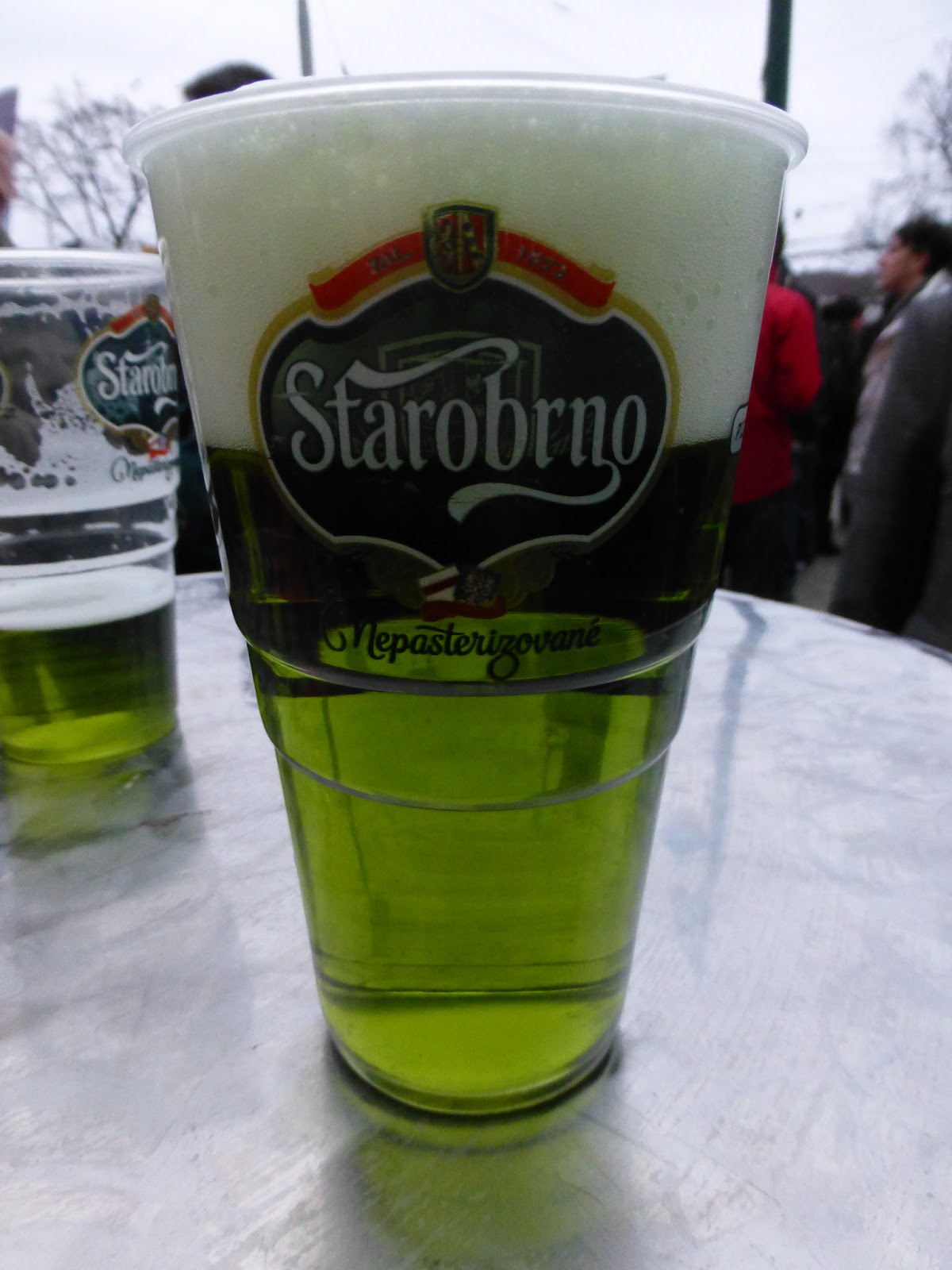
The date of 1872 is on the beer label which means they are now celebrating their 150th anniversary.

In 2009, Starobrno merged with the Royal Brewery of Krušovice and it is now owned by Heineken.

It's main four beers are:

  • Staré Brno - a pale 10° draught beer with 4% alcohol 
  • Starobrno Medium - a pale 11° lager with 4,7% alcohol
  • Starobrno Drak - a pale 12° lager with 5,3% alcohol
  • Starobrno Unfiltered - an unfiltered. 12° lager with 5% alcohol
Most people don't understand the degree thing with beer.  It doesn't indicate the percentage of alcohol.  Brewers use it as a measurement to track the density of certain ingredients.  10 degree beer is around 3,5% alcohol, 12 degree is usually around 4,2% alcohol and 15 degree beers are dark beers.  So the degrees don't indicate the alcohol percentage but the higher the degree the stronger the beer.

Every year for zelený čtvrtek, the brewery produces a batch of green beer.

In March 2020, the brewery released three new craft style beers.

  • Indian Pale Lager - IPL - a pale lager with 5% alcohol
  • American Pale Ale - APA - a top-fermented beer with 5% alcohol
  • RED - a cherry-flavoured beer with 3,6% alcohol

I haven't tried any of the new craft beers.  My favourite Starobrno is the nefiltrovaný.

Here are a couple of commercials that I found out on YouTube.


Here's a commercial that they ran in Hantec, the local Brno dialect, along with Czech subtitles so that the rest of the country could understand.

Tuesday, August 30, 2022

2028 European Capital of Culture Nominations

In 2028, Czechland and France will each host a European Capital of Culture.  A third city will come from outside of the EU, either an EEA country or from an EU-candidate country.  

Czech cities have to submit applications by 1.9.2022.  

The winning cities will be announced in December 2023.

Yesterday, a group of three cyclists left Brno to ride 230 km (143 miles) to deliver Brno's application to the Ministry of Culture in Prague.  They should arrive tomorrow afternoon.  There's a a lot on the line.  Being selected as a European Capital of Culture comes with a €1,5 million prize.

The four Czech cities in the running are Brno, Broumov, České Budějovice, and Liberec.

The Frech cities in contention are Nice, Clermont-Ferrand, Reims, Rouen, Bourges, Saint-Denis, Amiens, and Bastia.

The non-EU cities up for consideration are Budva, Montenegro and Skopje, North Macedonia.

Good luck Brno!  Fingers crossed!

Update October 2022:  Well that didn't take long.  Brno is out of contention.  There was a 12-member panel of experts that narrowed the Czech application list down to Broumov and České Budějovice.  

The Frech cities now on the short list are Rouen, Bourges, Clermont-Ferrand, and Montpellier.