Friday, November 18, 2016

Macau, China

Today we had a day tour of Macau.  From Hong Kong the easiest way to get to Macau is by ferry.  The TurboJet takes about an hour to cover the 64 km (40 miles).

As a Special Administrative Region of China, Macau (and Hong Kong) have their own immigration policies, so passport checks are required when travelling between the two former colonies.  We had to exit through Hong Kong immigration before boarding the ferry.  Once in Macau we went through immigration again.  

There are no passport stamps because both issue paper tickets that you have to hold on to instead.

Macau澳門, is home to about 651,000 people, all of them in about an area of 30,5 km² (11,8 miles²) making it the most densely populated place in the world.  Unlike Hong Kong, in Macau there are height restrictions on the buildings so there's not a sea of skyscrapers.
Macau's currency is the pataca.  Fortunately, almost everyplace accepts Hong Kong dollars (or debit cards) so we didn't need to exchange money.

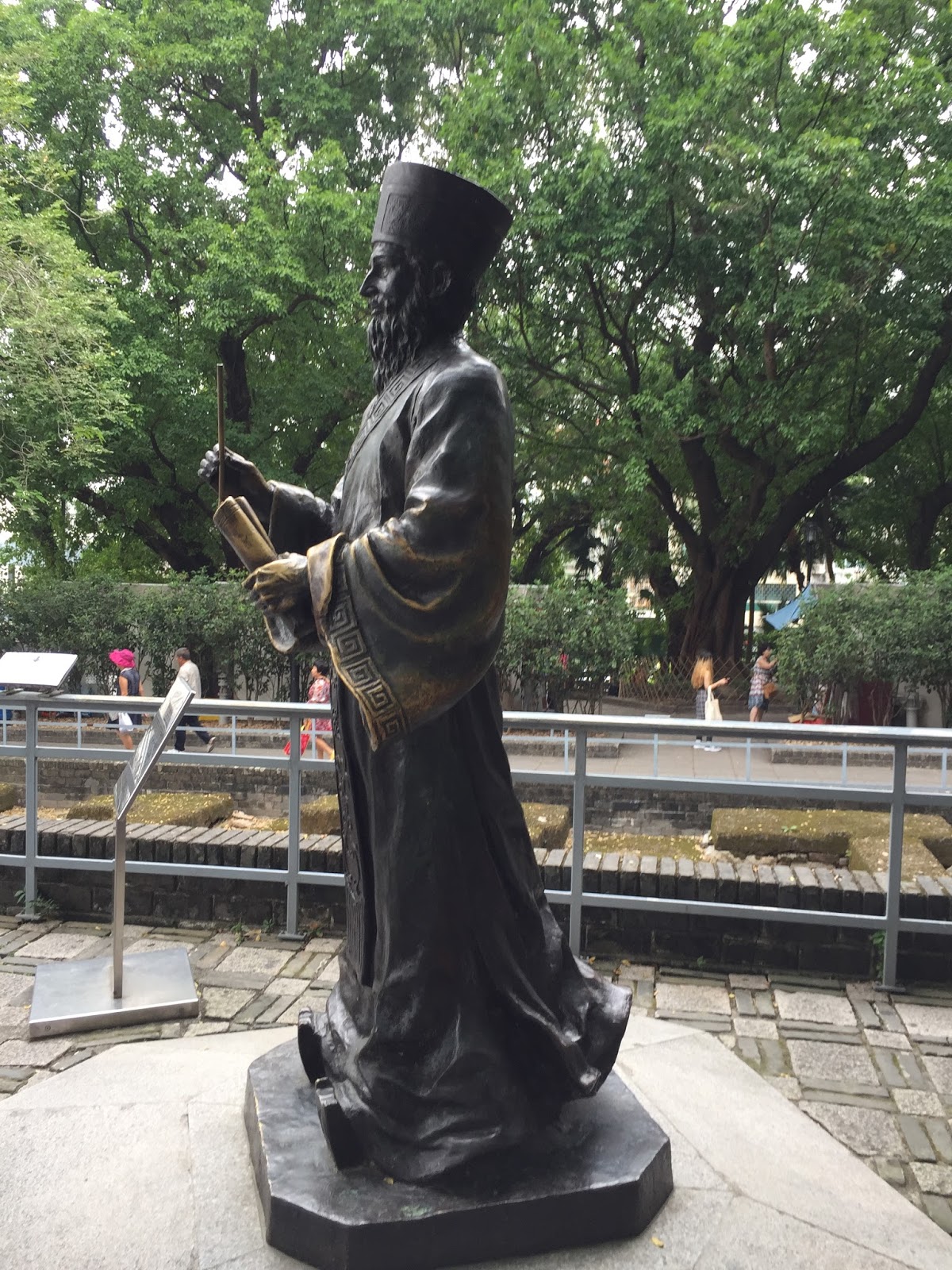
The Historic Centre, which includes around 25 sites which were collectively declared a UNESCO World Heritage Site in 2005.

The Ruins of St. Paul's is what's left of a 17th-century complex.  The Jesuits built it from 1602 to 1640.  At the time it was one of the largest Catholic churches in Asia.  It was destroyed by a fire in 1835 and only the façade remains.

The Fotaleza do Monte was a fort built from 1617 to 1626 to protect the Jesuits from pirates.  From the top of the fort are great views of Macau.
The Macau Museum opened in 1998 and covers the city's history as a former Portuguese colony.  The museum is on the hill of the Fortaleza do Monte.


The Na Tcha Temple was built in 1888.  It was built for the child god of war and people believed that it ended a plague which was effecting the region back then.

The Cathedral of the Nativity of Our Lady, known as the Sé Cathedral, was rebuilt in 1937.

St. Dominic's Church was completed in 1587.  The current building dates back to the early 17th century.

The A-Ma Temple was built in 1488 and is one of the oldest in Macau.

Gambling is huge in Macau.  Lots of Chinese millionaires come over here to gamble.

It's the Asian version of Las Vegas but I believe that Macau is even more profitiable.  One of the major casinos is Casino Lisboa.

The Maritime Museum opened in 1987 and the current building, which opened in 1990, is built on the site where the Portuguese explorers first landed here back in 1553.


Santa Sancha, also called Macau Government House, was built in 1846.  It is the home of the Chief Executive of Macau.

Macau Tower opened in 2001.  It is 338 meters (1,109 feet) tall making it the 10th tallest freestanding tower in the world.  It was based on the Sky Tower in Auckland.

Senate Square is located in the old town.  The wave-patterned stones definitely has a Lisbon feel to it.  Many tourists really seemed to like the area because it feels like Europe in Asia.  While it's a nice area, I already get to see the real Europe in Europe.


The Macau Grand Prix takes place every November and it is the biggest event of the year. 

Wednesday, November 16, 2016

Made it to Hong Kong

We made it to Hong Kong.  We left Wellington yesterday afternoon on a Quantas flight to Sydney.  It's hard to imagine that it's almost a four hour flight between New Zealand and Australia.

Due to the earthquake I wasn't able to buy any post cards in Wellington.  Fortunately I was able to pick some up at the airport, along with stamps, and managed to get them in the post.  We had a couple of big aftershocks while waiting in the lounge.  But obviously nothing that prevented us from flying out.

Australia has been on the list of travel destinations for a while but I have to admit that it hasn't been at the top of the list.  Well I managed to get a photo of the Sydney Opera House as we flew in and it's sparked more desire to go.  Maybe in 2018.

After an almost four hour layover we boarded our +9½ hour Cathay Pacific flight to Hong Kong.


We arrived just after 5 AM.

Thank goodness we had an early morning checkin at our hotel.

After long hot showers and a change of clothes we immediately headed out to explore the city.

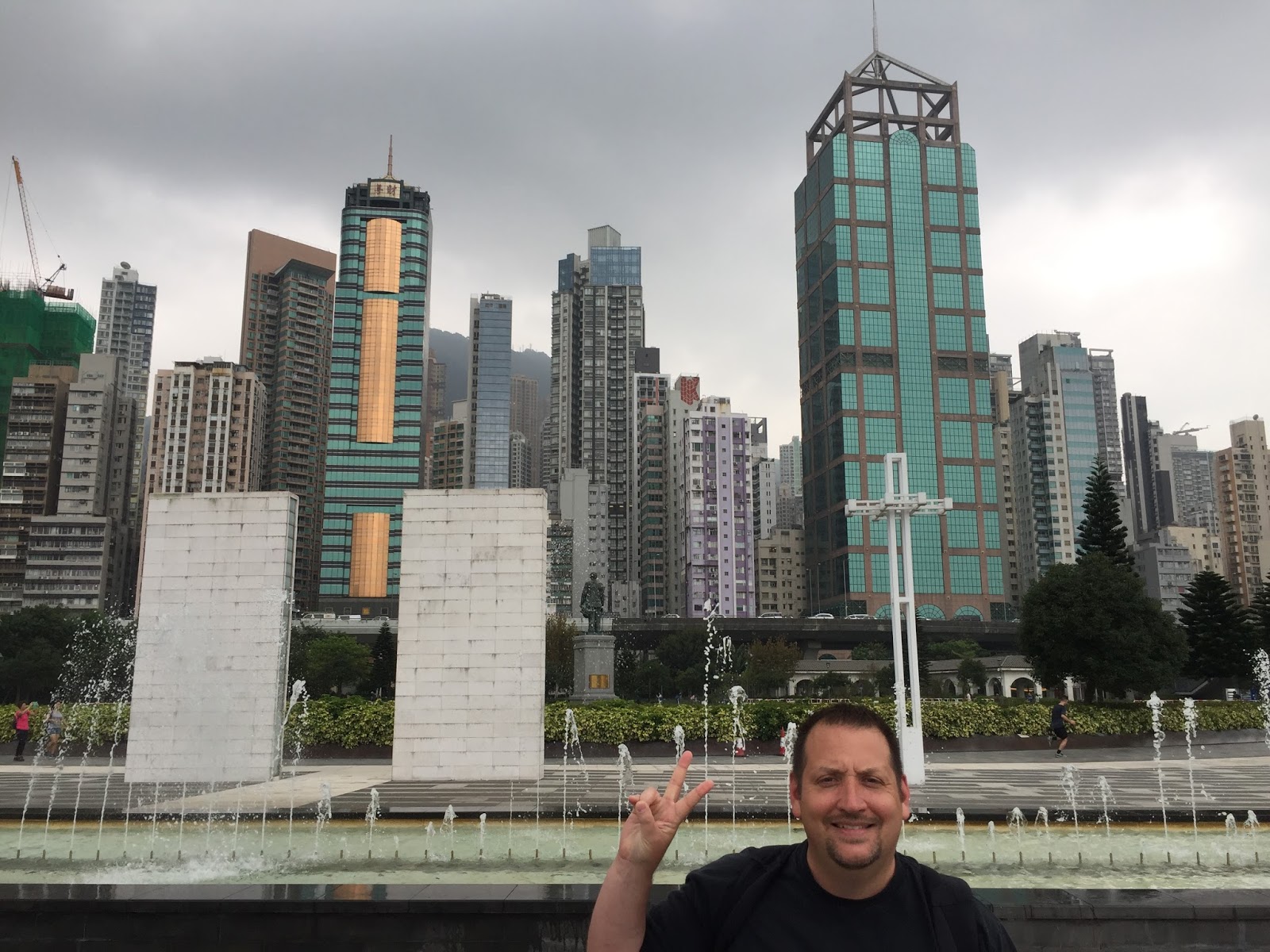
It's a great city but it will make you feel quite small and insignificant.  Land is at a premium here so all of the buildings are built tall.


We have three full days to explore the city and we have a day trip planned for Macau.  Now to get out and explore and, of course, to enjoy the Cantonese food.

Tuesday, November 15, 2016

The Earthquake

On Monday morning, at 00:22, there was a massive earthquake in New Zealand.  It was a huge 7,8 magnitude quake on the south island but we felt it in Wellington.

There were actually two quakes, one right after the other, and they lasted for almost two minutes.  It definitely woke us up.

There have been lots of aftershocks.  Lots!  Well over +400 of them.  But some of them have been over 5,5 which isn't an aftershock.  Those are actual earthquakes!  I can now say that I've experienced more earthquakes in my life, in New Zealand, and I grew up in California.

There was a Tsunami warning and many people experienced power outages.  There's a lot of broken glass in the Central Business District and areas have been roped off by the authorities.

We were very lucky to be staying with Nat's parents who took such great care of us.  They've been very sweet; apologising that the earthquake impacted our Wellington sightseeing.  Honestly, we feel like we got the full New Zealand earthquake experience.  Here's a BBC newscast that I found out on YouTube.  

©BBC

Sunday, November 13, 2016

Wellington, New Zealand

Wellington is the capital of New Zealand and, after Auckland, the second largest city with 405,000 people.  It is the world's most southernmost capital city.


Wellington is located on the southwestern tip of the North Island near the Cook Strait which causes the average wind speed to be more than 26 km/hour (16 mph) making it the world's windiest city.

There is evidence that the Māori were living in New Zealand around 1280.  The British settled the Wellington area in 1839.  In 1865, Wellington became the capital.

In Māori the city is Te Whanganui-a-Tara.

The Beehive is the executive wing of parliament.  The building is ten storeys high and there are another four underground.  Construction was completed in 1981 and it is next to Parliament House which was built in 1922.

The St. Paul Cathedral serves the Anglican Diocese of Wellington.  It was consecrated in 2001.


The Supreme Court of New Zealand is fairly new.  It was created in 2004.  Prior to that I think that final legal rulings were made in the UK probably a hold over from colonialism.


The National Library was established in 1965.


Wellington Town Hall is at Civic Square.  It doubles as a municipal building an as a concert hall.  Construction completed in 1904.


The National War Memorial was dedicated in 1932 on Anzac Day.  There is a memorial for an unknown soldier.


Next to it is the New Zealand Dominion Museum.  Currently there is a major exhibition on WWI.

Cuba Street is pretty much the bohemian area of town.  There are some very groovy shops, galleries, and cafes.


It's also home of the Bucket Fountain which was completed in 1969.


The Wellington Cable Car is a funicular railway running from the Central Business District up to the Botanic Garden.

The Botanic Garden was established in 1868 and covers 25 hectares (62 acres).

Victory Medal has been on display at the garden until tomorrow when it will move to France.  The 36 pairs of feet, representing a small platoon, honours the more than 7000 New Zealanders who died fighting in WWI.


Kiwis are pretty progressive.  In 1893, New Zealand became the first country in the world to give women the right to vote.  At some of the crosswalks near parliament are Kate Sheppard signals honouring the country's most famous suffragette.


Four of the lights at Cuba Street have a silhouette of Carmen Rupe who was a drag queen and activist.  The lights mark the 30th anniversary of the Homosexual Law Reform celebrating diversity in the country.

Te Papa Tongarewa is the national museum.  The museum focuses on New Zealand history, Māori culture, and the environment.  The current building opened in 1998.  The museum is excellent!


Gallipoli: The Scale of Our War is currently on display marking the centenary of WWI.  Gallipoli was the first campaign for New Zealand in WWI.


Te Papa has a giant ammonite on permanent display.  It weighs over 1200 kg (2,646 lbs) and is over 140 million years old.  Natalie's grandmother discovered the thing in 1977 and it was fully excavated in 1978.

Update:  Here's a YouTube video I found about the ammonite the Natalie's grandmother found.

©Museum of New Zealand Te Papa Tongarewa

Saturday, November 12, 2016

Made it to Wellington

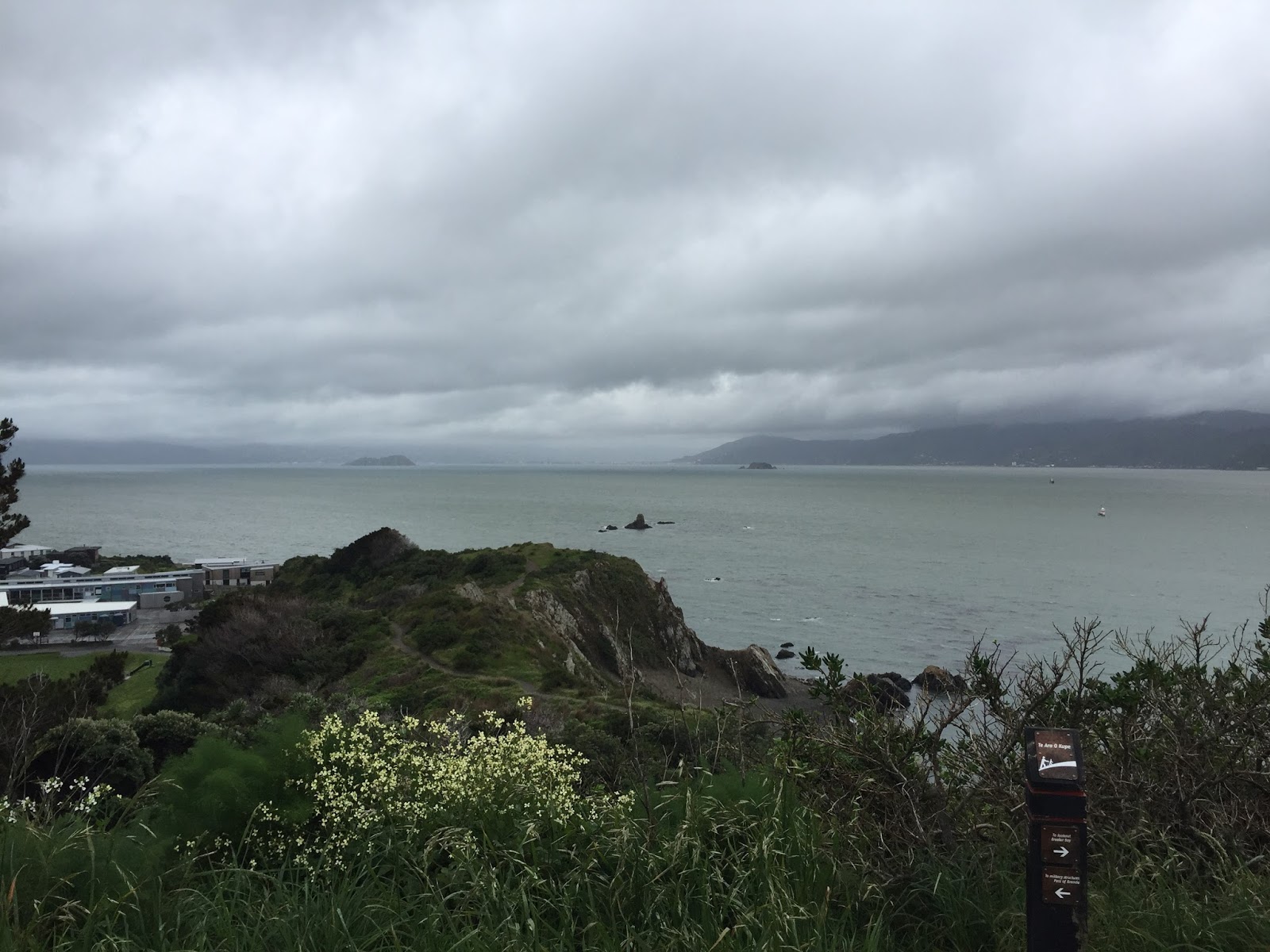
Wellington Harbour
We made it to Wellington!  Home of our Nat.  Yeah!  As she is currently tied up in a training course her lovely parents, Roger and Robyn, welcomed us at the airport and have been just wonderful hosts.
Robyn and the evacuation sign


They took us for a drive to see a few of the sights around the harbour before heading to their home.


I got a kick out of the new tsunami evacuation signs.  I just don't know how those little penguins know how to read the signs or will make it up the stairs.

Wahine Memorial Park honours the 53 people of the 733 passengers and crew that perished in 1968 when Tropical Cyclone Giselle capsized and sank a ferry in the harbour.

Victoria University of Wellington has a research programme on the captive breeding of tuatara and there's a viewing station open on campus.  Tuatara are reptiles native to New Zealand and are one of the four types of reptiles.  The species dates back about 230 million years.  It's estimated the population is between 60,000 to 100,000.


Today, they took us out on the inaugural Horowhenua Taste Trail and we got to see a lot of beautiful scenery along the way.


We didn't stop at all nine stops but we did a few.  At RJs Licorice I picked up some all sorts for my niece and nephew.


The Levin Eel farm was interesting.  Apparently New Zealand smoked eels are popular in Europe and Asia.


The most interesting stop for me was at Tendertips Asparagus where we learned about all things asparagus and an up close view of the assembly lines.


This was my first time ever seeing purple asparagus.  Who knew that there was such a thing as purple asparagus?  It's good; just a bit sweeter than "normal" green asparagus.