Showing posts with label Red Cross. Show all posts

Sunday, June 5, 2022

A Natalie Visit

I got to see Natalie!!  Claudia and Tünde must be jealous that I got a visit from our favourite Kiwi.  

Nat has been back in Euroland since April as part of the Red Cross deployment to help with the flood of refugees from Russia's invasion of Ukraine.  She's been headquartered in Budapest but she's been helping in Hungary, Poland, Slovakia, Romania, and Moldova.  We are so proud of her!

She arrived in Brno on Friday evening.  On Saturday we went to to breakfast and had a walk through the city and some cafe time.  On Saturday afternoon she headed to Vienna for a visit on her way back to Budapest.  It was a short visit but I'm so glad that I got to see her.

Я за Україну. Я за Україною. Слава Україні  Stojím za Ukrajinou!  I stand with Ukraine. 🇺🇦

Wednesday, April 13, 2022

Nat's Coming to Help

Well Natalie is on her way back to Europe but it's not for something good.  Well, she will do some good but the reason for her coming isn't good.  Natalie is part of the New Zealand Red Cross and they are sending her as part of the International Federation of Red Cross and Red Crescent Societies (IFRC) team supporting people affected by Russia's invasion of Ukraine.

I know that the IFRC has to be politically neutral so their stance is that they are helping people affected by the conflict in Ukraine.  I still say that they are helping people affected by Putin's invasion of a sovereign country.

So Natalie is headed to Budapest, Hungary to start her assignment.  I'm sure that she will end up in Poland, Slovakia, Romania, and maybe even Moldova.  Not so sure that she'll go to Ukraine but who knows?  I don't know how long she will be here because thanks to Brexit, her UK passport no longer gives her unlimited time in Schengen so I guess the max is 180 days.

Here's the New Zealand press release about her deployment.

Our second international delegate is on her way to join the International Federation of Red Cross and Red Crescent Societies (IFRC) team supporting people affected by the conflict in Ukraine.

Natalie is travelling to Budapest where she'll be focusing on the distribution of multipurpose cash support to the most vulnerable people.  Cash assistance provides funds for displaced people to buy the essentials they need, which could include rent assistance for housing.  Natalie will be working for the IFRC and Red Crescent Societies as part of the New Zealand Red Cross International Delegate Programme.

She will be travelling around the countries bordering Ukraine to help Red Cross teams assist people who have fled the conflict zones.

"I'll be focused on the data and systems side of the cash and voucher programme - helping ensure the cash support is going to where it's needed most," says Natalie.

Natalie has a background in information management.  She's part of the New Zealand Red Cross IT and Telecommunications Emergency Response Unit and has previously deployed to Indonesia and the Pacific. Recently, she has worked for the IFRC in Switzerland on the global COVID-19 response.

International Delegates are trained technical experts who provide humanitarian assistance and contribute to saving lives, alleviating suffering and maintaining human dignity in conflict and disaster zones.

We are so proud of our favourite Kiwi!!  Stay safe Nat!!

Я за Україну. Я за Україною. Слава Україні  Stojím za Ukrajinou!  I stand with Ukraine. 🇺🇦

Friday, March 1, 2019

Czech Red Cross

Last month the Czech Red Cross celebrated its 100th year.  Well at least 100 years since the founding of its predecessor.

PhDr. Alice Masaryková, the daughter of Tomáš Garrigue Masaryk, the first president of Czechoslovakia, founded and chaired the Czechoslovak Red Cross (ČSČK) on 6 February 1919.

Following the Velvet Divorce, the Český Červený Kříž, the Czech Red Cross, was established on 5 June 1993.

The Czech Red Cross (ČČK) is based in Prague.  Like other branches of the International Red Cross, the Czech Red Cross provides emergency response, humanitarian aid, and coordinates blood donation.

The Czech Red Cross awards the Janský medal for multiple blood donations.  I believe that if you donate blood in Czechland then you can deduct 2000 Kč per donation from your tax base.

Thursday, February 28, 2019

Jan Janský

Prof. MUDr. Jan Janský (3 April 1873 - 8 September 1921) discovered blood types.  He was born in Černošice and studied medicine in Prague at Charles University.  During WWI he served as a doctor on the front.  After the war he worked at a military hospital as a neuropsychiatrist.


As a researcher he tried to find a connection between mental diseases and blood diseases but he couldn't find any correlation between the two.  He published a study where he classified blood into four types (I, II, III. IV).  His work went more or less unnoticed but it went on to become the ABO Blood Group System.

In 1930, American Karl Landsteiner won the Nobel Prize for classifying blood into three groups.  But in 1921, the American Medical Commission acknowledged Janský's four-group classification over Landsteiner's.  I don't know why Landsteiner won the Nobel Prize but Janský's classification is still in use today except that now the groups are A, B, AB, and O.

Bronze, Silver, and Gold Janský Medals
Dr. Janský was a proponent of voluntary blood donation.  The Janský Medal is awarded to people for donating blood.  In Czechland, the Bronze medal is awarded for 10 donations, the Silver medal for 20 donations and the Gold medal for 40 donations.  Higher numbers of donations are awarded with eh Golden Cross of the Czech Red Cross (ČČK).

In Slovakia, the Slovak Red Cross awards plaques.  Women earn a Gold Plaque after 30 donations.  Nothing for men.  The Diamond Plaque is awarded to women after 60 donations and to men after 80 donations.

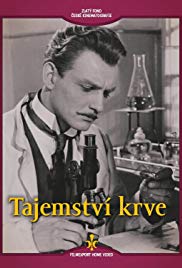
Tajemství krve, The Secret of Blood, is a 1953 Czechoslovak film about Janský's discovery.  Here's the movie trailer that I found out on YouTube.

©ČeskoslovenskoHD

Monday, August 12, 2013

International Red Cross Museum

The International Committee of the Red Cross (ICRC) was founded in 1863, in Geneva, Switzerland.  It is a private institution that works worldwide to provide humanitarian assistance to people affected by international and internal armed conflict.


The ICRC is an independent organization and remains neutral.  It receives funding through voluntary donations by both governments and ordinary people.


For his role in founding the ICRC, Henry Dunant was awarded the first Nobel Peace Prize in 1901.  The ICRC is the only organization to have won the Nobel Peace Prize three times - in 1917, 1944 and 1963.

Display about Srebrenica


Following a 22 month renovation, the museum reopened on May 18, 2013. 

Here’s a BBC clip I found on YouTube that talks about the museum.


©BBC

Update:  In 2019 the Czech Red Cross celebrates its 100th anniversary.

Geneva, Switzerland

Genève, in the French-speaking part of Switzerland, is the second largest city after Zürich.  The populaiton is only around 194,500 but the larger metro area is home to about 780,000 people.

It is a global city and hosts the world's largest number of international organizations including the United Nations, Red Cross, World Health Organization, World Trade Organization, and World Meteorological Organization.

Geneva used to be an independent republic from the 16th century until the end of the Napoleonic Wars when in 1815 it became part of Switzerland.

The most well known landmark is the Jet d'Eau.  This 140 meter (~460 foot) high water fountain was originally an occasional pressure release for a nearby hydraulic plant.  It was so popular that in 1891 the city made it a permanent fountain.

The flower clock was created in 1955 as a nod to the city's clock makers.  Until 2005, it was the world's largest flower clock.  Around 6500 flowers are used and the decorations are changed with the changing of each season.

The Brunswick Monument was built in the 1873.  It is a mausoleum for the Duke of Brunswick who left his fortune to the city in exchange for a monument to be named after him.


The Russian Orthodox church was built on the remains of a 16th century Benedictine priory.  Construction began in 1863 and it was consecrated in 1866.  Today it serves Orthodox Russians, Bulgarians and Serbs.

The Smurfs Buildings were built between 1982 and 1984.  Three architects were inspired by Gaudi's work in Barcelona and came up with the apartment buildings here.

The St. Pierre Cathedral is in the Old Town.  The main structure dates back to the 12th century.  The claim to fame is that this was the adopted home church of John Calvin, one of the leaders of the Protestant Reformation.


There are three distinct styles as the two square towers don't match and there's also a bright green spire.


The Reformation Wall is the International Monument to the Reformation.  It was built in 1909 to commemorate the 400th anniversary of John Calvin's birth.


The Reformation Wall
Broken Chair is 12 meters (39 feet) high and made out of 5.5 tons of wood.  It symbolizes opposition to land mines and cluster bombs.  Originally it was meant to be a 3-month display in support of the 1997 Ottawa Treaty.  The piece is across the street from the UN so that visiting politicians who failed to sign the treaty are reminded of it.

Geneva is a really lovely city with lots of great parks.  Like the rest of Switzerland it is extremely clean.  If only it weren't so dang pricey.  Geneva regularly ranks among the top five most expensive cities in the world.

I'm not a big fan of McDonald's.  But Krasimir wanted it for lunch one day.  Two McBaguette value meals with medium fries and medium drinks was CHF 26.20 ($28.39).  Ouch!


One place where you can save money is on transportation.  The public transit system is awesome.  And as of 2008, Swiss law requires all city hotels and hostels to provide a free transit pass for every day of your visit.  The city even provides for free transportation between the airport and the city center.

Overall we had an awesome weekend away.

Monday, April 11, 2011

Belgrade, Serbia

Belgrade, (Београд = white city), has about 1.6 million people and is Serbia's capital city. It is one of the oldest cities in Europe and over the centuries it has been demolished 40 times. The city has been leveled so many times that no building is over 250 years old which is pretty unusual for a European capital. The city is pretty compact so you can see most everything on foot in a couple of days. Belgrade is well-known for its nightlife which goes in to the early morning almost every day of the week. I only have a couple of days in Belgrade so I'm electing to skip the nightlife. Otherwise I'll be too exhausted to check out the sights.

The Belgrade Fortress and St. Sava Temple are the city's best known sites. The Belgrade Fortress sits on a hill that overlooks where the Danube and Sava Rivers meet up. It was built at the end of the 1st Century as a permanent Roman Legion camp. It is made up of Upper Town, Lower Town and Kalemegdan Park. The Upper Town has most of the preserved gates and the Military Museum. This is also where the Victory Monument is.

The Lower Town was the main city center during the Middle Ages. Kalemegdan Park has random sculptures, a zoo, souvenir vendors and plenty of people playing chess. The Monument to France was built in 1930 as recognition of France's help during WWI.

St. Sava Temple is dedicated to St. Sava (1169-1236) who founded the Serbian Orthodox Church. It is built, or rather is being built, on the site that is believed to where his remains were burned by the Ottoman Turks in 1594.


Construction started in 1935 but was interrupted during WWII. Construction resumed in 1985 and the exterior was completed in 2004. The interior is still underway. It is massive and the dome can be seen from most parts of the city. It is one of the largest Orthodox cathedrals in the world.


Republic Square is one of the city's main squares. This is where the National Museum is and a monument to Prince Mihailo. On Sunday the square was used to host a "Belgrade to Japan" Red Cross blood drive.

Palace Albanija is in the city center. In 1939 it was the first skyscraper in Southeast Europe. From this landmark all distances in Serbia are measured.


The city's main church, dedicated to St. Michael the Archangel, was built in 1845 on the site of the former Cathedral Church. Across the street is the seat of the Patriarch of the Serbian Orthodox Church. On the other side of the street is a tavern named ?. It opened in 1823 and is the oldest restaurant in Belgrade. It was originally named the Cathedral Tavern but the church objected to the name so the owner changed it to ? because he didn't see what the big deal was.

Since the city has been destroyed so many times there is a wide variety in the architectural styles of the buildings. Unfortunately, not everything has been rebuilt. There is still visible damage from the NATO bombings during the Kosovo War in 1999.

Serbian uses the Cyrillic script so its alphabet is similar to Russian but with a few extra letters. A lot of things are also written with the Latin alphabet. However, all of the street signs are in Cyrillic. I remember enough Russian that reading the signs was not a problem. Serbian is related to Czech so I just speak Czech, with a few Serbo-Croatian words thrown in, and I'm able to get by. Most people ask if I'm Slovenian or Polish. But oddly enough they never ask if I'm Czech.

Today's agenda has a +9 hour train ride to Sarajevo, Bosnia and Herzegovina. Then I'll be back for more of Belgrade on Friday night.