Saturday, March 12, 2016

Vienna Museum of Military History

The last time we went to Vienna right before Christmas we said that the next time we would visit the Military History Museum.  So we went on Friday and to meet up with Katka and Steve to see their new baby.


While we were there, there was a Go Modeling exhibition going on by the International Plastic Modellers Society Austria.  This annual event shows off true scale models of historic military vehicles, aircraft and ships.


The museum is quite interesting and done well.  It was established in 1869 during the Austro-Hungarian Empire and shows the history of Austrian military affairs.  There are eight main exhibition halls showing various weapons, uniforms, flags, paintings, medals, photographs, documents and models.  

Hall I - From the Thirty Years' War to Prince Eugene (16th century - 1700)
Hall II - Spanish War of Succession and Maria Theresa Hall (1701 - 1789)
Hall III - Hall of Revolutions (1789 - 1848)
Hall IV - Field Marshal Radetzky and his era (1848 - 1866)
Hall V - Franz Joseph Hall and Sarajevo (1867 - 1914)

Hall V has a separate bay dedicated to the Assassination at Sarajevo which lit the fuse for WWI.  They even have the car on display in which the Archduke and his wife were murdered in on d28 June 1914.

Hall VI - World War I and the end of the Habsburg Monarchy (1914 - 1918)
Hall VII - Republic and Dictatorship (1918 - 1955)
Hall VIII - Austria as a naval power


The train from Brno to Vienna is only 1,5 hours.  Austria is right next door to Czechland.


Though I'm still not sure why CNN confuses Austria and Australia.


There are no kangaroos in Austria.

Friday, March 11, 2016

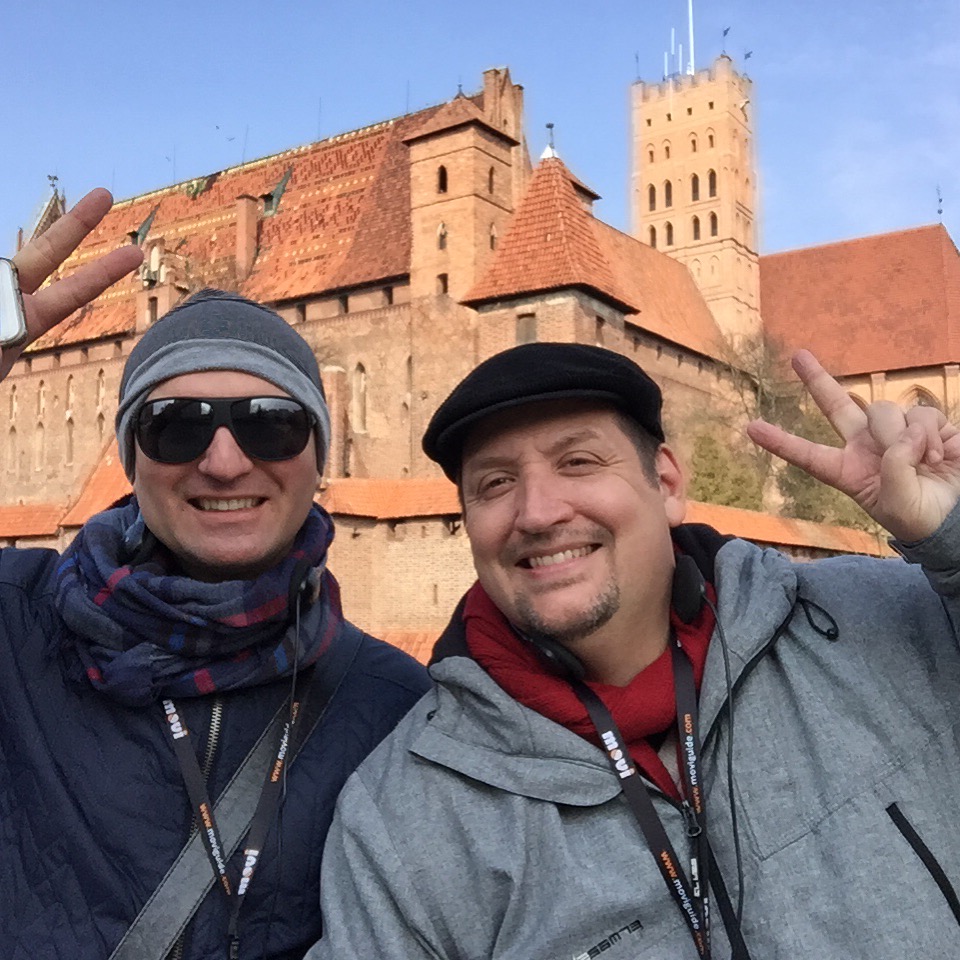
Malbork Castle, Poland

Malbork is a small town in northern Poland with around 39,000 residents.  It is about a 25-minute train ride from Gdańsk.

The town was founded in the 13th century by the Knights of the Teutonic Order.  The city's claim to fame is the castle which was the order's headquarters.


The castle was completed in 1406 and was the largest brick castle in the world.  The Teutonic Knights were a German Roman Catholic religious order of crusaders and they named the castle Marienburg, (Mary's Castle).


The castle was heavily damaged during the war and reconstruction began in 1962.  Further restoration should complete soon.

In 1997, the castle became a UNESCO World Heritage site.  Malbork Castle is still the largest brick building in Europe.

Thursday, March 10, 2016

Gdynia, Poland

Gdynia isn't far from Gdańsk.  It is home to over 248,000 as is the 12th biggest city in Poland.  Along with Sopot it makes up a tri-city area of over a million people.  It was a small fishing village for hundreds of years until it became a seaside resort and eventually became a city in 1926.

Today the port is stopover for luxury cruise ships and hosts the Gdynia Film Festival, the country's main film festival.  In 2013 it was ranked as the best city in the country to live.


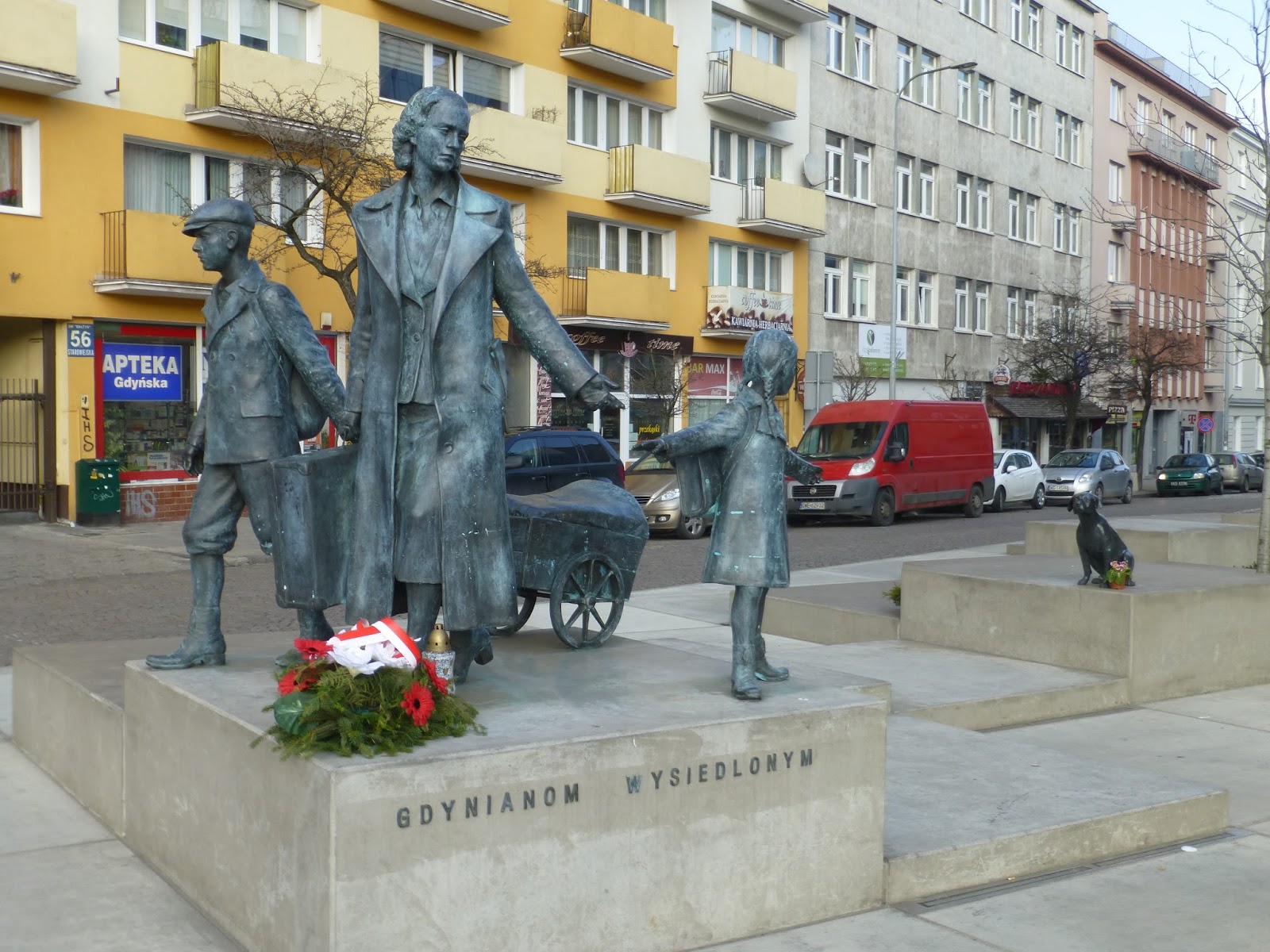
The Displaced Gdynian monument was unveiled in 2014.  It commemorates the 120,000 - 170,000 people who were deported following the Nazi invasion in 1939.

Antoni Abraham was an activist who fought for Pomerania to be included in the Polish state that came out of WWI.


Abraham's House is one of the oldest cottages in Gdynia.  It was his home until he died in 1923.  As a museum it only takes about 10 minutes to see everything.


Dar Pomorza is a three-masted ship built in 1909 and was used as a training ship before WWI.  Today it is a museum ship.


Błyskawica (Lightning) was a launched in 1936 and at the time was the fastest destroyer in the world.  Part of the Polish Navy, it was under the command of the British Royal Navy and saw action in the Mediterranean, Normandy and as an Atlantic convoy escort.  Today it is the oldest preserved destroyer in the world.


The Joseph Conrad monument was unveiled in 1976.  It donors Poland's most famous sea-faring author.


Wednesday, March 9, 2016

Westerplatte

After WWI, the Free City of Danzig (Gdańsk) was a semi-autonomous city-state under the protection of the League of Nations.

Poland was allowed to keep a small garrison on the peninsula at Westerplatte.


There were 180 men stationed here and, in case of war, they were supposed to hold out for up to 12 hours until the Polish Army could send relief.

On 1 September 1939, the battleship Schleswig-Holstein, which was on a courtesy visit to Danzig, opened fire on the Polish garrison at 4:48 AM.  This is considered the beginning of WWII.

Westerplatte was hit with naval and field artillery plus Luftwaffe bombing raids.  The 180 Polish soldiers repelled multiple attacks by 570 German soldiers for a week.

Due to a lack of ammunition and supplies, the Polish commanding officer surrendered on 7 September.  They put up one heck of a fight holding back the German attack.

The monument to the Defenders of the Coast was unveiled in 1966

The barracks and guardhouses are still here, plus a small graveyard.  

Tuesday, March 8, 2016

Gdańsk Friday's Flashbacks

I used to work for T.G.I. Friday's many, many years ago.  The first time I was ever in Poland was back in 1998 when they sent me over for a month to open a new restaurant in Gdańsk.  I remember being so excited as this was my first international opening.  It was a lot of hard work with 12 - 16 hour days, six days a week.  But it was so much fun.  
Setting up the bar

This is how openings worked backed then.  A 14-person team was sent over to set a new site.  Usually we walked in to a construction zone and did PUNCH - physically unbelievable number of cleaning hours.

Gdańsk bar training in 1998
Gdańsk Friday's in 1998
We had to scrub everything from top to bottom, figure out where everything would go, receive all of the deliveries and set things up.  By all deliveries I mean everything...plates, glasses, silverware, tables, chairs, kitchen equipment, plus all of the food and liquor.

Then there was normally over a week of training all of the staff, followed by almost a week of mock service where the new staff got to practice.  There would then be a grand opening and we would stay for another week or two in order to make sure that things all ran smoothly.

Scandic Hotel in 2016

The Gdańsk store was part of a Holiday Inn hotel.  Or it was supposed to be.  When we left they were still building the hotel.  I wanted to stop by a visit the restaurant but unfortunately it closed in 2008.  And that Holiday Inn is now a Scandic Hotel.
The bar today

Here's the kicker...we're staying at the Scandic this trip.  What used to be the main dining room is now where the hotel serves breakfast each morning.

Bar trainees on opening night - 1998

I'm having all of the flashbacks each morning over breakfast.  I was sent over as the bar trainer and now the bar in the lobby looks quite different.

Monday, March 7, 2016

Gdańsk, Poland

Gdańsk is in northern Poland, on the Baltic coast, and it is the country's principal seaport.  With more than 460,000 people it is the 6th-largest largest city but with around 1.4 million people in the metro area it is the 4th-largest metropolitan area in the country.


It dates back to 997 AD and gained city rights in 1263.  In 1997 it celebrated its 1,000 birthday!  Gdańsk was an important seaport and shipbuilding down in the late Middle Ages.  It was a member of the Hanseatic League in the 14th and 15th centuries.  After WWI it became the Free City of Danzig.

A couple of major events began here.  This is where Germany first invaded Poland at the Battle of Westerplatte, just outside of the city, which began WW2.


Solidarity, the first independent trade union, was born at the Lenin Shipyards and played a significant role in opening up the iron curtain.

St. Catherine's Church is the city's oldest church.  From 1545 to 1945 it was a Protestant church and then it became a Catholic church.  It is home to the worlds first pulsar clock.

The Old Arsenal was built between 1602 - 1605.  Today it belongs the the Gdańsk Academy of Fine Arts.


Construction on the historic Main Town Hall began in 1346 and was it was completed in the 15th century.  Today it houses the city History Museum.

The Golden Gate was built in 1612 - 1614 and was part of the old city fortifications.  Destroyed during the war, it was rebuilt in 1957 and restored in the 1990s.

The Basilica of the Assumption of the Blessed Virgin Mary, known as St. Mary's Church, was built during the 15th century.  It is the largest brick church in the world and there is room for 25,000 people.


Neptune's Fountain is one of the city's major landmarks.  It was completed in 1633.


Żuraw on the river Motława is the largest port crane of medieval Europe.

This WW2 monument is to the defenders of Polish sites in Gdaňsk.

This monument at the main train station is to the Jewish children who were sent to Britain in 1939 without their parents in order to escape Nazi persecution.


The SS Sołdek was the first ship built in Poland after the war.  It is part of the National Maritime Museum.

At the former Lenin Shipyard is the Monument to the Fallen Shipyard Workers which commemorates the victims of the December 1970 strikes.


This is also home to the European Solidarity Centre that opened in 2014.  The museum and library is very well done.

Tuesday, March 1, 2016

Brno Airport

Letiště Brno-Tuřany is the Brno-Turany Airport and it is located within the city limits.  It was built in the 1950s and in the 1980s it was used by the Czechoslovak Air Force.  In 1989, the airport returned to civil use and today it is owned by the South-Moravian region.

The airport code is BRQ and it is the country's second busiest.  This is also where we saw the Pope back in 2009.  2011 was its busiest year with 557,952 passengers.

My new landlord was the architect for the new departure hall and it won "Building of the Year" in 2007.

It is really convenient to fly in and out of Brno.  If only there were more destinations.  Ryanair has flights to London Stansted and Wizz Air has flights to London Luton and Eindhoven.  A few years ago Ryanair flew to Alicante (Spain) and Wizz Air used to fly to Rome.  I loved the Rome flight but I guess there wasn't enough demand for these flights.

SmartWings does have seasonal charter flights to Antalya, Burgas, Corfu, Heraklion, Hurghada, Kos, Lamezia Terme, Marsa Alam, Ostrava, Palma de Mallorca, Preveza, Rhodes, Tenerife-South, Tirana, Varna, Zakynthos.

This year BMI Regional is now offering daily flights to Munich.  Well at least six days a week.

Hopefully this is the start of more direct flights so that I don't always have to fly out of Vienna or Prague.  With so many international students here I'm sure there's got to be enough demand for flights to Spain or Italy.  My vote is for a direct flight to Dublin.

Update:  Wizz Air cancelled the Brno-Eindhoven route.  The last flight is October 2017.

Update:  Ryanair will start flying from Brno to Berlin Schönefeld in Spring 2019.  The first problem is that it's Ryanair and Ryanair sucks.  The second problem is that the flights aren't convenient as they only run on Tuesday and Saturday afternoons.  Update: December 2019, the Berlin route will be cancelled by April 2020.

Update:  In February 2019, the British carrier FlyBI collapsed and the route between Brno and Munich has been cancelled.  The reason for the collapse was given as a spike in fuel and carbon costs and uncertainty about Brexit.

Update 2021:  In April, SkyUp is supposed to start flying between Brno and Kyiv.