 Kuşadasi is a beach resort on the west coast of Türkiye, about 95 km (59 miles) south of Izmir. With a population of almost 114.000 people it is the 117th biggest city in the country. However, during the tourist season, which kicks off in about another week, the population reaches almost 2 million people.
 Big cruises ships arrive daily with many tourists opting for a tour of Ephesus. Others come to enjoy the 25 km (15,5 miles) miles of beach along the Aegean.

Kuşadasi is old and many of the locals refer to the town as Ada. The earliest settlements in the area date back to around 3000 BC. Over the centuries it has been part of the Persian Empire, the Roman Empire, and the Byzantine Empire. In 1413, it became part of the Ottoman Empire. After WWI, it was controlled by Greece until it became part of Türkiye in 1922. In 1923, the local Greek population was exchanged for Turks as part of the population exchange under the Lausanne Treaty.

Güvercinada, "Pigeon Island" is an island connected to the city by a 350 metre (1.150 foot) causeway.

The island has a castle which was built back in the 1770s. In 2020 the castle became a tentative
UNESCO World Heritage Site.

Near the harbour is the Öküz Mehmed Pasha Caravanserai that was built from 1615 - 1618. It was a safe place for merchants to stay with their goods and later as a customshouse. In 1968 it opened as a hotel and in 2022 the last hotel owner ceased operations.

Kale Kapisi, the Castel Gate, was part of the city walls built in the 17th century. The upper floor was once used as a police station but there is now some kind of micro miniature art centre.

The Kaleiçi Mosque is the old town mosque, in the middle of the bazaar area that was built back in 1618.

The clock tower was built in 1996.

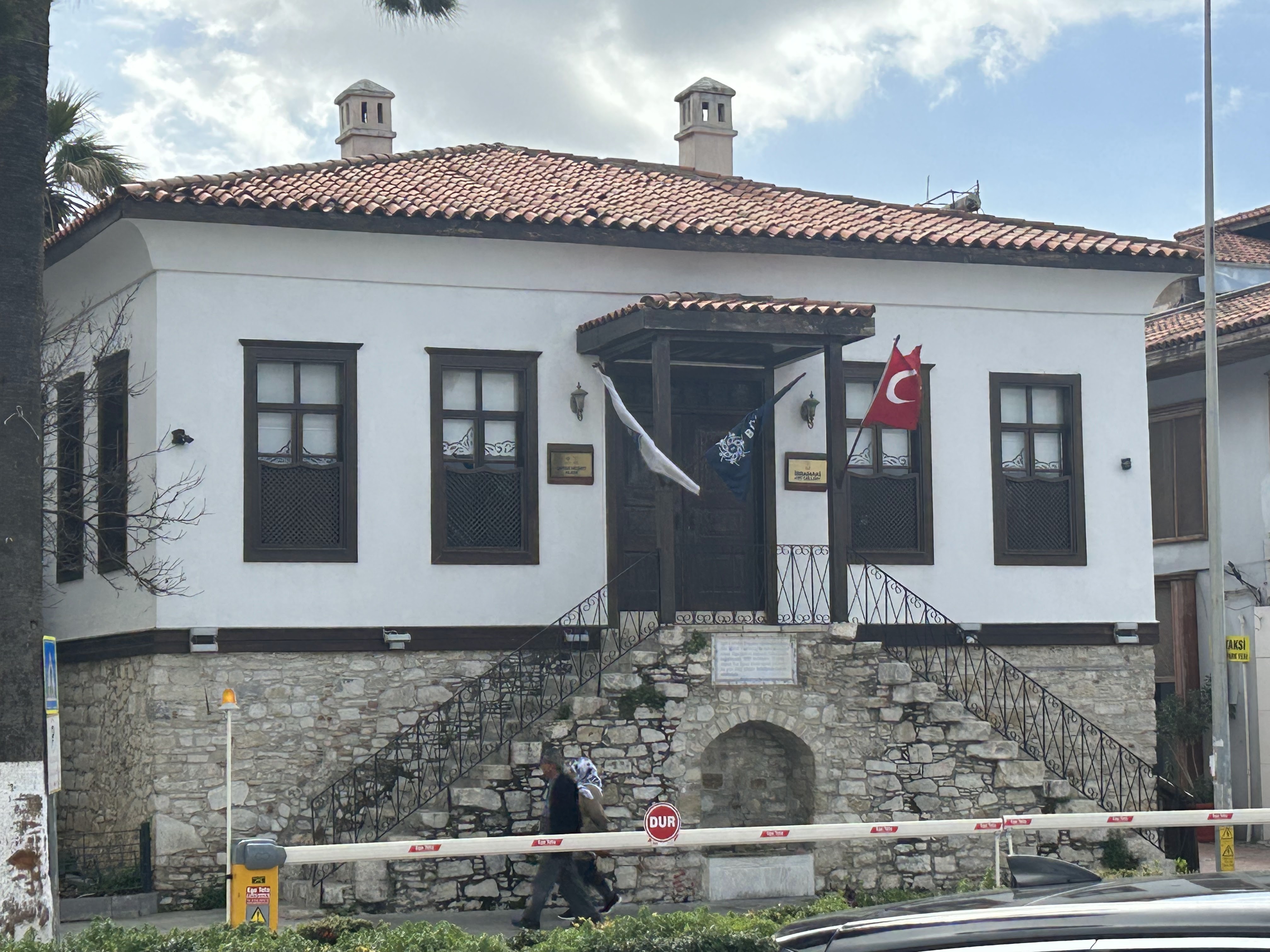
The Ibramaki Art Gallery originally opened as a hospital at the end of the 19th century. In 2009, the local municipality restored the building and turned it into a gallery.

The old cemetery has graves from the 1700-1800's.

More than 400 homes of the Tepe neighbourhood are being revitalised under the city's "Let's Colour" programme with homes pained in various shades of pink, yellow, blue, orange, green and purple.

At the port, there are daily 1,5 hour ferries between Kuşadasi and the Greek island Samos. We wanted to check it out but the ferries only run from April to October.

About 30 km (19 miles) south of the city is the Dilek Peninsula-Büyük Menderes Delta National Park. There are dense forests, hiking trails, and beach, plus wild boars running around.

It was still just a wee bit too cold to lie out on the sand but it felt good to at least be at the beach.
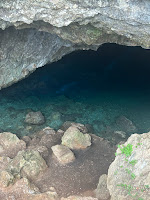 Near the national park is the Cave of Zeus.
There is a 10 metre (33 feet) deep pool that is off limits to swim in. Legend has it that this is where Zeus would take refuge whenever his brother Poseidon would whip up a deadly storm.

Another story goes that Zeus would slip away here, from Mount Olympus and his wife Hera, to swim with local girls.

Yedi Uyurlar Mağarası is the Cave of the Seven Sleepers. The story is that in 250 AD, the Roman Emperor ordered everyone to perform a sacrifice to dedicate themselves to the empire and to the Roman gods, or be executed. Seven Christians refused and hid in the cave. Romans found the young men asleep in the cave and sealed them in.
 One day a farmer opened the cave and found the men asleep. When they awoke, they pooled their money to buy food but when they tried to pay they discovered their money was over 150 years old. The cave, located outside of Ephesus was excited in the 1920s and found a number of Christian games from the 5th and 6th centuries.
 The Çamlik Railway Museum is home to one of the largest largest collection of steam locomotives, with more than 30, from 1891 to 1951. The outdoor museum isn't well known but thanks to Atlas Obscura we went to have a look at it was well worth the visit.
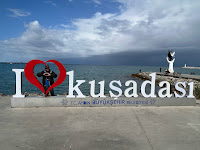 We really enjoyed our week in Kuşadasi. It's definitely worth a visit with lots of places to explore. I wish the weather would have been just a little warmer but I'm quite glad that we managed to visit before all of the tourists rush in.
Here's a short Rick Steves video I found out on YouTube.
©Rick Steves
 Slovenská Ľupča is a village in central Slovakia, about 10 km (6.5 miles) east of Banská Bystrica. It sits on the right bank of the Hron River, between the Low Tatras and the Slovak Ore Mountains.
 The village was once a royal town and dates back to 1250. It's home to about 3300 people.
 The church was just renovated last year.


 On a hill, overlooking the city, is the town castle. It was built prior to 1250 and served as a royal residence.







 Czech Koruna Exchange Rate


 Posts
Posts


