Monday, March 16, 2015

Kyiv, Ukraine

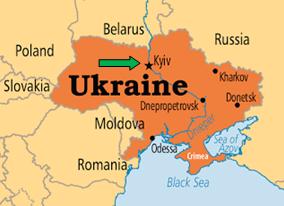
Kyiv is the capital of Ukraine and is located in the north central part of the country on the Dnieper River.  It is home to around 2,9 million people while the greater metro area has about 3,4 million inhabitants.  It is the 8th largest city in Europe.  It is one of the oldest cities in Eastern Europe.  It's thought to have been founded in the 9th century but the official date is 482 A.D.

I grew up spelling the capital city as "Kiev" which is the transliteration of the Russian word "Киев".  The Ukrainian word for the city is Київ and since 1995 the Ukrainian government adopted Kyiv as the official transliteration.  Just in case anyone thought I was spelling it wrong.

Independence Square, known locally as Maidan, has been the place for people to stand up and be noticed since the country's independence movement in 1990.  It was the epicenter of the 2013-2014 Euromaidan protests

Throughout the square are flowers, candles and photos of people who died, or are still missing, from when the previous government cracked down on protesters.


The brothers Kyi, Schek, Khoryv, and their sister Lybid, are said to be the founders of the medieval city of Kyiv.  Again, lots of flowers and candles.


It's pretty clear that Russia's president is not very popular in Kyiv.  The banner on the fountain says "Stop Putin's Terrorism and Hypocrisy". 


St. Andrew's Church was completed in 1767.  The beautiful Baroque church sits on a hill overlooking a historical neighborhood.


The Golden Gate was the main city gate during the 11th century and it was dismantled during the Middle Ages.  It was rebuilt in 1982 although no images of the original gate ever survived.   


St. Michael's is a Ukrainian Orthodox cathedral and a functioning monastery.  Originally built in the 1700s, Soviet authorities demolished it in the 1930s.  It was rebuilt and opened again in 1999. 


The granite monument commemorates the millions of Ukrainians that starved to death in 1932 - 1933 in Holodomor, the Great Famine.

In 1982 the People's Friendship Arch was built to commemorate the 60th anniversary of the Soviet Union and to celebrate Kyiv's 1,500th anniversary.  There's a bronze statue of a Russian and Ukrainian workers holding up the Order of Friendship.  The statue has been given a recent dose of Ukrainian color.

Bohdan Khmelnytsky Memorial
I don't think that I even scratched the surface of everything there is to see in Kyiv.  I only had a few hours to walk around the city before I had to catch my flight back home.  But what I did manage to see just makes me want to go back soon.  I figure a good three or four days would be enough to explore the city properly.  Plus, when I go back I want to go visit Chernobyl.

Saturday, March 14, 2015

Republic of Užupis

No trip to Vilnius is complete without a visit to Užupis.  The self-proclaimed Republic of Užupis is basically an artist commune located in the Old Town, which is a UNESCO World Heritage Site.

The Angel of Užupis

Užupis is small; about 0,62 km² (148 acres) and home to about 7000 people.  Roughly 1000 artists live here.  According to the welcome sign the speed limit is 20 kph and a smile is required to enter.

Užupis translates to "the other side of the river", referring to the Vilnia River that Vilnius gets its name from.  It was once the Jewish Quarter.  During Soviet times the area became quite dodgy.  In the early nineties many creative types took advantage of the cheap prices and started moving in.

Backpacker Jesus Statue
On 1 April 1997, the district declared itself an independent republic.  It's pretty tongue-in-cheek to declare independence on April Fool's Day.  While no country recognizes the republic they do have a president, a flag, a constitution, a 12 man army, and the Dalai Lama is one of four honorary citizens.

The constitution is displayed in 23 languages along a wall on Paupio Street.  It's a very interesting constitution.

  1. Everyone has the right to live by the River Vilnelė, and the River Vilnelė has the right to flow by everyone. 
  2. Everyone has the right to hot water, heating in winter and a tiled roof.
  3. Everyone has the right to die, but this not an obligation.
  4. Everyone has the right to make mistakes.
  5. Everyone has the right to be unique.
  6. Everyone has the right to love.
  7. Everyone has the right not to be loved, but not necessarily.
  8. Everyone has the right to be undistinguished and unknown.
  9. Everyone has the right to be idle.
  10. Everyone has the right to love and take care of a cat. 
  11. Everyone has the right to look after the dog until one of them dies.
  12. A dog has the right to be a dog.
  13. A cat is not obliged to love its owner, but must help in time of need.
  14. Sometimes everyone has the right to be unaware of their duties.
  15. Everyone has the right to be in doubt, but this is not an obligation.
  16. Everyone has the right to be happy.
  17. Everyone has the right to be unhappy.
  18. Everyone has the right to be silent.
  19. Everyone has the right to have faith.
  20. No one has the right to violence.
  21. Everyone has the right to appreciate their unimportance.
  22. No one has the right to have a design on eternity.
  23. Everyone has the right to understand.
  24. Everyone has the right to understand nothing.
  25. Everyone has the right to be of any nationality.
  26. Everyone has the right to celebrate or not celebrate their birthday.
  27. Everyone shall remember their name.
  28. Everyone may share what they possess.
  29. No one can share what they do not possess.
  30. Everyone has the right to have brothers, sisters and parents.
  31. Everyone may be independent.
  32. Everyone is responsible for their freedom.
  33. Everyone has the right to cry.
  34. Everyone has the right to be misunderstood.
  35. No one has the right to make another person guilty.
  36. Everyone has the right to be individual.
  37. Everyone has the right to have no rights.
  38. Everyone has the right to not to be afraid.
  39. Do not defeat.
  40. Do not fight back.
  41. Do not surrender.

Friday, March 13, 2015

Vilnius, Lithuania

Vilnius was granted city status in 1387 and today is the capital of Lithuania.  It's in the southeast part of the country and has a population of almost 543,000 while over 807,000 live in the greater metro area.  Vilnius is the country's largest city and, after Riga, it is the second largest in the Baltics.

Prior to WWII there were more than 100 synagogues in Vilnius.  In 1812, Napoleon called the city "the Jerusalem of the North." However, there's a church everywhere you turn in this city.  There are 65 churches in Vilnius.  The historic old town was listed as a UNESCO World Heritage Site in 1994.

The Gate of Dawn was built between 1503 and 1522.  This is the last remaining city gate which was part of the city's defense system.  The other eight city gates were destroyed by the government back in the 18th century.
Vilnius Town Hall

The Choral Synagogue was built in 1903.  It is the last remaining synagogue in the city.

The Russian Orthodox Church of St. Nicholas is one of the oldest Orthodox churches in the city.  The original church was built in 1340.  The current church was reconsecrated in 1866.


The Russian Orthodox Church of St. Parasceve was built in 1865.


The Cathedral of St. Stanislaus and St. Ladislaus is a Roman Catholic basilica.  The current church dates back to around 1419.  The bell tower is not so common outside of Italy.


The most famous church is probably St. Anne's.  The church was consecrated in 1500 and is made from 33 different styles of brick.

The Gediminas Castle Complex dates back to the 13th century.  During Russian occupation in the mid-1600's its defensive walls and towers were destroyed.  There is one remaining tower and the complex is part of the national museum.

The Green Bridge crosses the Neris River.  The original bridge dated back to the 16th century and it was the oldest in the city.  The present bridge was completed in 1952 and displays Soviet-era socialist statues.


Seimas Palace is the Lithuanian parliament building.  It was completed in 1980.


The Hill of the Three Crosses is a prominent landmark in Kalnai Park.  Legend has it that seven Franciscan friars were beheaded on top of the hill.  In the 17th century wooden crosses were put here until concrete ones were erected in 1916.  The Soviet government tore it down in 1950 but it was replaced in 1989.  A hike up the hill gives a nice view of the city.


Update:  In July 2015, the government removed the statues from the Green Bridge.  The statues were erected in 1952 and are corroded.  They have been removed for repairs but there are no plans for them to be returned.     

Thursday, March 12, 2015

Lithuania's 25th Independence Day

Yesterday, 11 March, was Restoration of Independence Day in Lithuania.  It marks the day, in 1990, that the country once again became an independent state.

Vilnius was quite crowded as people came out to celebrate 25 years of independence from the Soviet Union.

There was a parade, several speeches, and military bands from Lithuania, Latvia and Estonia played for the crowds.

Here's a video I found on YouTube about Lithuania's celebration.

 
©Euronews

Wednesday, March 11, 2015

Pärnu, Estonia

Pärnu is a small city in southwestern Estonia that sits on the Gulf of Riga.  The city is a popular vacation getaway and its beach is a big hit with Estonians, as well as, with Finnish and Russian tourists.

Pärnu was founded in 1251 and it is home to just over 41,000 people.

The city is roughly half way between Tallinn and Riga.  A 2.5 hour trip from either capital city makes for a good day trip.

The Monument to the Proclamation of Independence of the Republic of Estonia was unveiled in 2008.  It's a life size replica of the balcony where Estonia first proclaimed independence in 1918.

The Eliisabet Church was built in 1747 and inaugurated in 1750.  It is reputed to have one of the best organs in the country and the church is popular for concerts.

The Church of Jekaterina is a beautiful Baroque church.  The church was built in 1768 with financing provided by Russian Empress Catherine II.


The Tallinna Gate is the city's last remaining gate.  The Baroque gate was part of the city's medieval fortification system.

The Pärnu Town Hall dates back to 1797.

The August Jakobson Memorial was completed in 1973.  It commemorates the Estonian writer, politician and social activist.

The statue of Johann Voldemar Jannsen was unveiled in 2007.  He was a famous writer and also penned the words of the Estonian national anthem.

The Red Tower was built in the 15th century and served as a prison. 


The beach is what brings people to the town.  March, however, isn't exactly beach weather.


I've never seen frozen waves before.  Absolutely incredible!  There were even signs posted to warn people about walking on the ice.

Tuesday, March 10, 2015

Biķernieki Memorial

Biķernieki Forest is east of Rīga.  During the Holocaust this was the largest mass murder site in Latvia.  In 2001 a memorial opened to honor the more than 30,000 people who died here.


Jews, political prisoners, communists, and those who opposed the Nazis were killed here.  The victims came from Latvia, Germany, Austria, and Czechoslovakia.


In 1943 the Nazis began digging up the graves in an attempt to hide any evidence.  Today there are 55 burial sites that still contain the remains of around 20,000 victims.


The main memorial is a black granite cube with a quote from the Book of Job written in Latvian, Russian, German and Hebrew.

Earth, don't cover my blood.
Let my cry have no place to rest.

There are 4,000 granite stones placed nearby to resemble tombstones.  There are stones with the hometowns of the victims.  Berlin, Dresden, Münster, Leipzig, Bremen, Stuttgart, Düsseldorf, Osnabrück, Hannover, Wien, Terezín, Brno and several others.  

 
I definitely hadn't expected to see a Brno memorial while on holiday in Riga.