Thursday, March 7, 2013

The Golden Circle Tour, Iceland

The most popular tour in Iceland is the Golden Circle.  This eight hour tour covers about a 300 km (~186 mile) loop from Reykjavík.

 
The pole marks the Alþingi

Þingvellir National Park, in Bláskógabyggð, is the first stop.  Alþingi, the world's oldest parliament, was established in 930 AD.  The national park, Iceland's first, was founded in 1930.


On 17 July 1944, this is where Icelanders celebrated their independence from Denmark.  In 2004, it became a UNESCO World Heritage Site.


Þingvellir lays on the mid-Atlantic ridge where the North American and Eurasian tectonic plates separate about 2.5 cm (~1 inch) per year.  The valley is quite beautiful.

 
Gullfoss, the Golden Falls, are in southwest Iceland.  Glacier water from the Hvítá River falls in two spots before making its way into a 32 m (105 feet) gorge.  The first fall is 11 m (36 feet) and the second is 21 m (69 feet).

At one point there were plans to build a dam for a power station.  The story goes that Sigríður Tómasdóttir threatened to throw herself in to the waterfall and ended up saving the falls.  Today, the falls are owned by the state.  The view was great but it was so cold.  With the wind chill it was -16°C (3°F).  My camera lens was freezing up.  As were people's eyeglasses.  Brrrr!!!

Haukadalur Valley is home to Geysir.  The Great Geysir has been active for around 10,000 years and can hurl boiling water up to 70 meters but the eruptions are infrequent and in the past have stopped for years at a time.


Strokkur is the largest and most dynamic hot spring in Iceland today. 


It erupts every 5 to 10 minutes and eruptions can reach heights of 30 meters (98 feet).  There are over 30 other smaller hot springs and mud pots nearby.


The Faxi Waterfall is a small waterfall on the Tungufljót River.  Yeah, it's smaller than Gullfoss but it still seemed pretty big to me.


Skálholtdómkirkja - the Lutheran Cathedral

Skálholt was a major political and cultural center in Iceland throughout the Middle Ages.  It used to be the ancient seat of Icelandic bishops.  Skálholtdómkirkja is the Skálholt Cathedral which was built from 1956 to 1963.

In the distance we could see Eyjafjallajökull.  Many people simply call it E-15 since "E" plus the next 15 letters are so difficult to pronounce.  It's actually pronounced "EYE-ya-fyah-dla-YOE-kudl" and it means "island mountain glacier".  This is the Iceland volcano that erupted in 2010 and brought down air traffic across Europe.

Kerið is a volcanic crater lake in the Western Volcanic Zone.  The red volcanic rock is really colorful especially with the frozen water in the crater.  The crater is 55 m (180 feet) deep, 170 m (560 feet) wide and 270 m (890 feet) across.  Kerið is about 3,000 years old.

Hellisheiði is the second largest geothermal power station in the world.  It became operational in 2006.  It supplies 30% of the country's electricity and 1,100 liters (290 gallons) of hot water, 82-82°C (179-185°F), per second for Reykjavík's heating needs.  You will for sure never run out of hot water in Reykjavík but the water has a definite sulfur smell to it.

Reykjavík, Iceland

Reykjavík is in southwest Iceland.  With around 200,000 people, it is the country's largest city and home to about two-thirds of the entire country.  It is also the world's most northern capital city.  Reykjavík was home to the island's first permanent settlement back around 870 AD but the city wasn't founded until 1786.


It's a really clean city and very easy to walk everywhere.  Even if you have no earthly idea of how to pronounce any of the street names. 

Sólfar, "Sun Voyager", is by the sea, near the center of town.  The stainless steel sculpture was unveiled in 1990 to commemorate the city's 200th anniversary.


Perlan, "The Pearl", was built in 1988 on top of Öskjuhlíð Hill, about 2 km from the city center.  The tanks store hot water for heating the city.  On top is a glass dome with a rotating restaurant.  There is also a viewing platform that gives you a great 360° view of the city.  One of the tanks now houses the Saga Museum which illustrates Icelandic history from the end of the 9th century through the Reformation.

Stjórnarráðið is home to the prime minister's offices.  Iceland's prime minister is Jóhanna Sigurðardóttir.  Not only is she the country's first female prime minister but in 2009 she became the world's first openly gay head of state.

Höfði is a house that was built in 1909.  Over the years it has served as both the French and British consulates.  Legend has it that the house is haunted.  However, the house is best known as the site of the 1986 Reykjavík Summit between Ronald Reagan and Mikhail Gorbachev.

Landakotskirkja is officially the "Basilica of Christ the King", the cathedral of the Catholic Church in Iceland.  When the church was sanctified in 1929, it was the largest in the country.

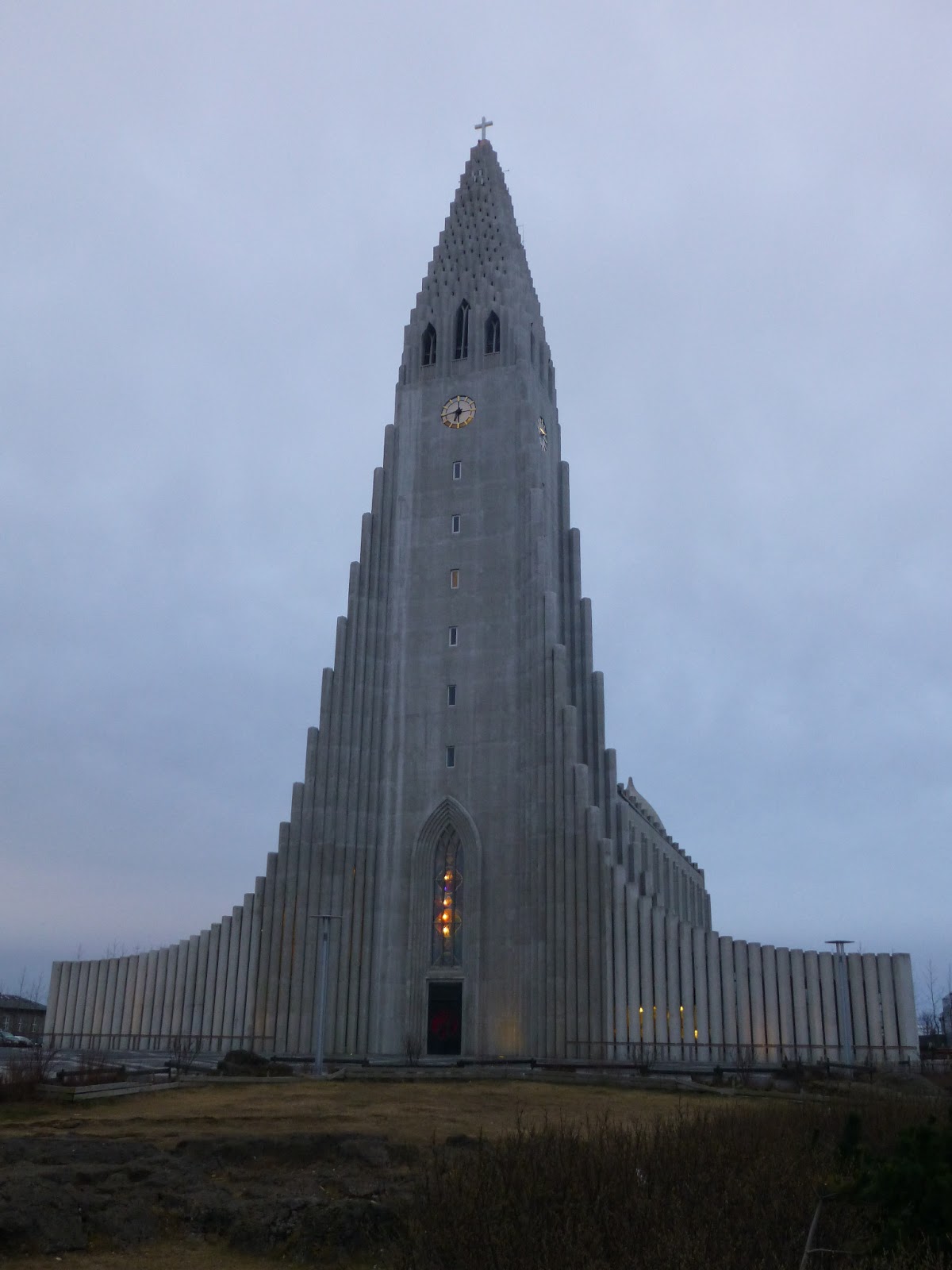
Hallgrímskirkja, the Church of Hallgrímur, is visible from most parts of the city.  Construction on the Lutheran church began in the late 1940s but it wasn't completed until 1986.  Today it is the largest church in Iceland and can accommodate over 1,000 people.  While the Church of Iceland is the official state religion only about 10% of the people regularly attend church services.

In front of the church is a statue of the Viking Leifur Eriksson, the first European said to have discovered North America.  The statue was a gift from the USA, in 1930, to commemorate the 1000th anniversary of the Alþingi. 

The Alþingi is Iceland's parliament.  The first was established in 930 AD in Þingvellir.  The current Alþingi has been in place since 1881.


The Ráðhús is the city hall.  The current building was completed in 1992.  Behind the city hall is the Tjörnin, a small lake in the town center.

 
Dómkirkja is Reykjavík's most cathedral.  The current building was consecrated in 1796 and is the seat of the Lutheran Bishop of Iceland.  It went through restoration in 1879 and 1999.

 
Harpa is the national music and conference center that opened in 2011.  With irregularly shaped glass panels of different colors, the building changes based on the light.  The building was started when the economy was still in full swing but was partially abandoned during the country's financial crisis.  The final price tag is estimated around €164M (~$213M). 

Not far from Reykjavík is Bessastaðir which is the offical residence of the President of Iceland.  It was originally a farm and was built between 1761 and 1766.  It's amazing that there was no visible security around.

Wednesday, March 6, 2013

Hafnarfjörður, Iceland

Hafnarfjörður is a small port town on the southwest coast of Iceland, about 10 km (~6.5  miles) south of Reykjavík

The town was founded in 1908.  With +26,400, it is the country's third-largest town.

The town is built on lava and so houses are built around it.  Hafnarfjörður is supposedly one of the most popular places for Icelandic elves, dwarfs and "hidden folk" to live.  


Each June, there is a Viking festival held in Fjörukráín - the Viking Village.
Me and Thor, the Norse god


This is one of the country's largest fishing centers and is the second largest harbor for import/export shipping.

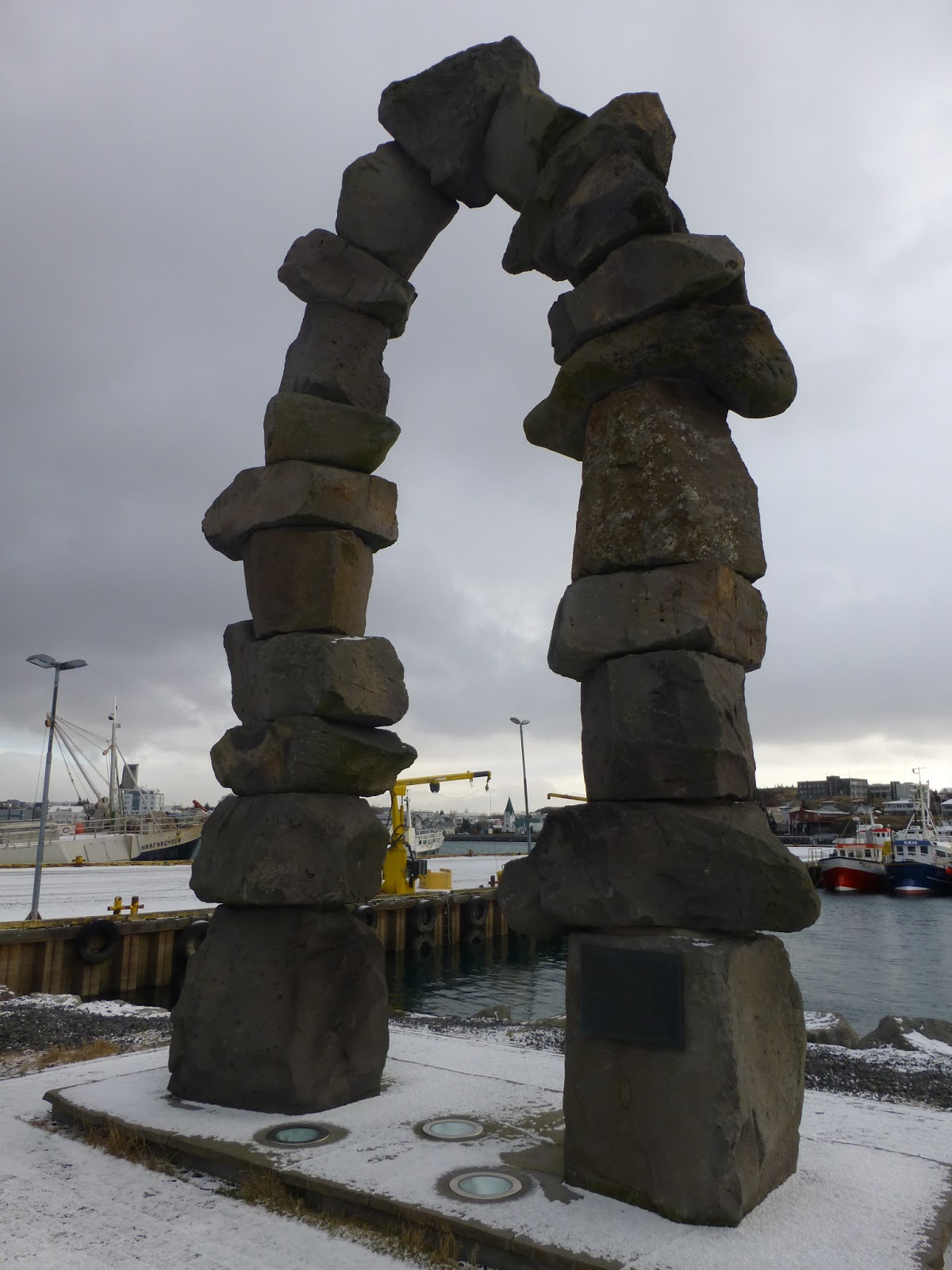
The monumental arch by the harbor is to commemorate Iceland's first Lutheran church, built by Germans, in 1533.  The church was closed in 1603 and finally removed in 1608 by order of the Danish King Christian IV.

Tuesday, March 5, 2013

London, England

Piccadilly Circus in the West End
So I finally made it to London.  It's the capital of both England and the United Kingdom.  With +8 million people, it is home to 12.5% of the UK and it is the largest city in the EU.

Free Walking Tour Group

Liz and James came in from Bristol and we set off to see some of the city's sights.  Getting around on the Tube is quite easy and the London Underground is the world's oldest metro.  We also joined in on one of the city's free walking tours for a 2.5 hour trek through the city.

The Wellington Arch is also known as Constitution Arch.  It is south of Hyde Park which is one of the largest parks in central London.


The Memorial Gates, in Hyde Park, were inaugurated in 2002.  They honor the five million volunteers from the Indian sub-continent, Africa and the Caribbean who fought for Britain in WWI and WWII.

In 1837, Buckingham Palace became the principal residence of the British monarch.  It is over 77,000 m² (830,000 sq ft).  While the Queen lives here, the palace is actually owned by the British government.  It was opened to the public in 1993 but only for 60 days per year.


In front of the palace's main gates is the Victoria Memorial which was erected in 1911.  Queen Victoria was the first monarch to reside in the palace.


St James' Palace is one of the city's oldest palaces.  The Royal Court is still based here but no monarch has lived here in around 200 years.  Currently this is home to Prince Charles and his sons.  This is the place where foreign ambassadors are accredited to.

My favorite spot in London was Trafalgar Square because there was so much going on here.  It is often used for political protests and I'm told that this is a great spot to be at for New Year's Eve.  The square commemorates the Battle of Trafalgar in 1805.  In the center is Nelson's Column, surrounded by four bronze lions, in honor of Admiral Horatio Nelson who was killed in action during the battle against the French.

The National Gallery is on the north side of the square.  It was founded in 1824 and is home to more than 2,300 paintings.  It is the 4th most visited art museum in the world and, best of all, entry to the museum is free.

Westminster Palace is home to Parliament's House of Lords and House of Commons.  It was built during the Middle Ages but was rebuilt in 1870 when it was destroyed by a fire in 1834.  Collectively, Westminster Palace, Westminster Abbey and St Margaret's Church were declared a UNESCO World Heritage Site in 1987.

Westminster Abbey is officially the Collegiate Church of St Peter at Westminster.  The large Gothic church opened in 1090.  This is where English and British kings and queens are crowned and buried.


Big Ben is the nickname of the largest bell in the clock tower in Westminster although most tourists think that it's the name for the clock and the tower.  The tower, completed in 1858, is the 3rd largest free-standing clock tower in the world.  The tower was renamed the Elizabeth Tower to celebrate Queen Elizabeth II's Diamond Jubilee. 
Me, Liz, Parliament and the River Thames

Foreign visitors are not allowed to visit the inside of the tower; only UK residents can, provided they arrange it in advance with their MP (Member of Parliament).  Big Ben had been the largest bell in the UK until 1881 when Great Paul was hung in St Paul's Cathedral.

St Paul's is a Church of England cathedral and the seat of the Bishop of London.  The English Baroque church was consecrated in 1708 and until 1962 it was the tallest building in London.  Americans know it as the place where Prince Charles and Lady Diana got married.

The London Eye is a giant 135 m (443 ft) tall Ferris wheel.  It is the tallest Ferris wheel in Europe and when it was built in 1999 it was the tallest in the world.  With over 3.5 million visitors annually, it is the country's most popular paid tourist attraction.  A 30-minute ride is £37 ($56).  With so much to try to see we decided to save the 30 minutes and kept on walking.

The Shard is the newest thing in London.  It's a 95-storey skyscraper which was completed in 2012 and opened to the public in February 2013.  At 309.6 m (1,016 ft), it replaces Frankfurt's Commerzbank Tower as the tallest building in the EU.  Construction cost ~£435M (+$657M).  Next time, I'll check out the viewing gallery on the 72nd floor.

With only one day I knew that there was no way that I would see everything.  But I did get a good idea of what I want to do next time.  I'll just have to make a few more visits so that I can catch what I missed and be able to have to time to go inside some of these awesome places.

Friday, March 1, 2013

The City of London

On my way to Rejkjavík, I will have one full day in London.  Many people can't believe that, with all of the traveling I've done, I have not yet made it to LondonI've been told that Heathrow Airport doesn't count.  It's not that I haven't wanted to go but let's face it, no matter where you are in the world, you will always be able to get to London.  I could be in an iron lung and still make it to London.  That's probably why I've focused on trekking around some of the off the beaten path kind of places. 

In getting ready for my trip I found out that the London, proper, city limits are quite small.  Here's a couple of videos I found out on YouTube that give some details about the City of London.


At Paddington Station
Liz and her boyfriend will catch a train in from Bristol on Saturday.  I haven't seen her since before she left Bratislava so it will be great to catch up.  Plus, I'll have a couple of English guides to show me the capital.  And I can finally say that I've been to London, instead of just Heathrow.