 My building
 has finally got a new lift (elevator). When I moved in to my flat in August 2009, the landlady said that there would be a new lift within six months. Then in December she said there would be a new lift in six months.
Still no new lift. And not that I'm complaining.
I really didn't want a new lift.
My flat is on the 5th floor (a
U.S. 6th floor). The lift only went to the 4th floor so then it was just up one flight of stairs.
No big deal at all.

Well they started ripping out the old lift at the end of August and I was told it would take six weeks.
What a pain in the ass this was. I thought I was going to die carrying groceries up 5 flights of stairs.

They had to break through the wall right outside my door to make room for the new lift. All of the dust kept going underneath my door and right in to my flat.
Yuck!! There was so much noise that I wasn't able to work from my home office. It took 8 weeks to finish but that's because the workers were there all day,
Saturdays and Sundays too, for the final 3 weeks. But at least they finished.

The new lift is pretty jazzy. When you step in to it, the floor no longer sinks 2 inches. The door is no longer held closed with a magnet. You can now request multiple floors at the same time.

Like many lifts in Europe, you could only select one floor, at a time. When you got to the first floor selected you could then select the next floor. This one has a button to open the doors but not one to close them. Kind of odd but no worries. There is an alarm button but no phone to
call for help. But the old one didn't have a phone either. This one even has a mirror in it.
Pretty snazzy.
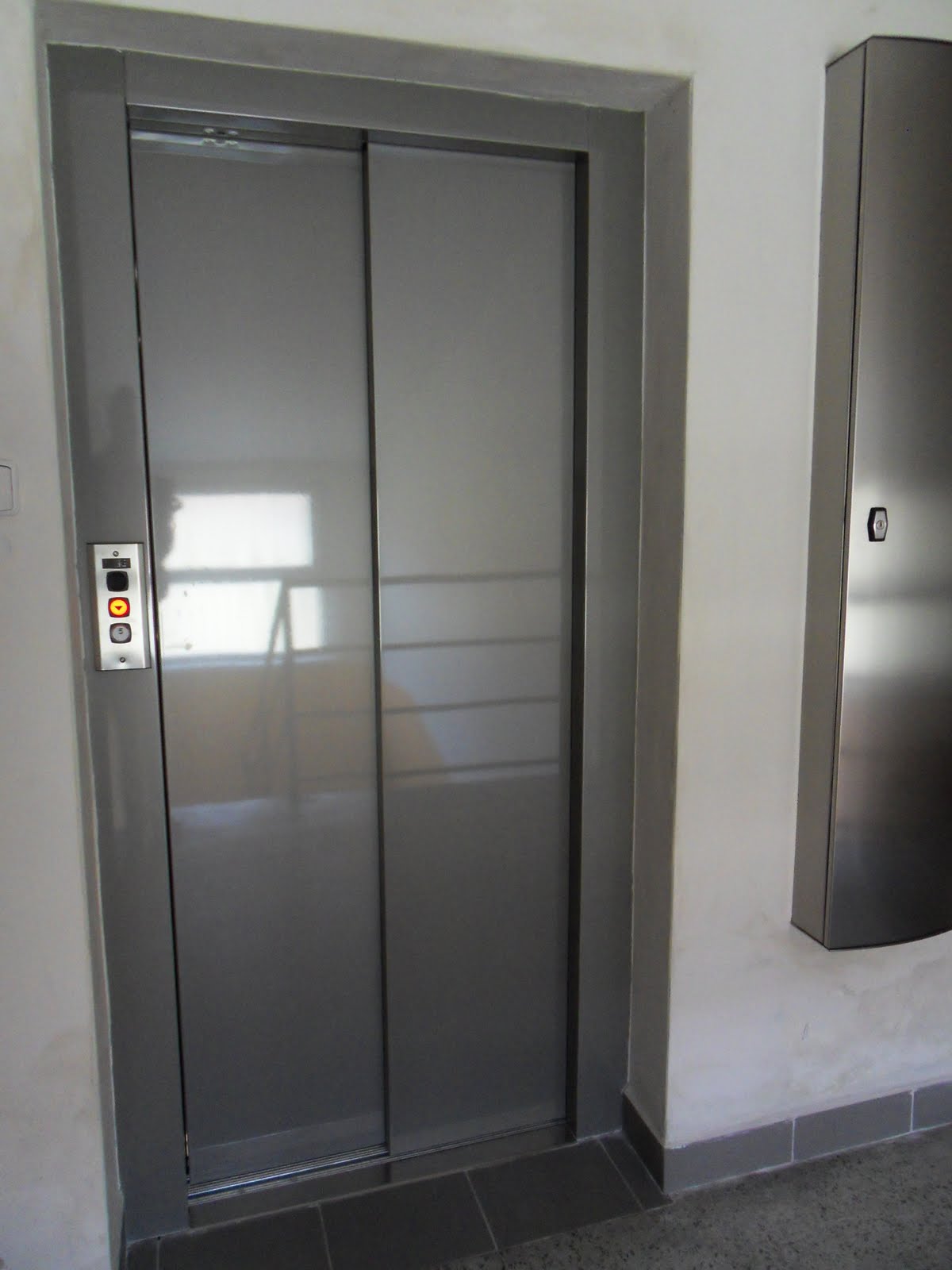 My building has finally got a new lift (elevator). When I moved in to my flat in August 2009, the landlady said that there would be a new lift within six months. Then in December she said there would be a new lift in six months. Still no new lift. And not that I'm complaining. I really didn't want a new lift.
 My flat is on the 5th floor (a U.S. 6th floor). The lift only went to the 4th floor so then it was just up one flight of stairs. No big deal at all.
 Well they started ripping out the old lift at the end of August and I was told it would take six weeks. What a pain in the ass this was. I thought I was going to die carrying groceries up 5 flights of stairs.
  They had to break through the wall right outside my door to make room for the new lift. All of the dust kept going underneath my door and right in to my flat. Yuck!! There was so much noise that I wasn't able to work from my home office. It took 8 weeks to finish but that's because the workers were there all day, Saturdays and Sundays too, for the final 3 weeks. But at least they finished.
 The new lift is pretty jazzy. When you step in to it, the floor no longer sinks 2 inches. The door is no longer held closed with a magnet. You can now request multiple floors at the same time.
  Like many lifts in Europe, you could only select one floor, at a time. When you got to the first floor selected you could then select the next floor. This one has a button to open the doors but not one to close them. Kind of odd but no worries. There is an alarm button but no phone to call for help. But the old one didn't have a phone either. This one even has a mirror in it. Pretty snazzy.





 Czech Koruna Exchange Rate


 Posts
Posts


