Tuesday, March 31, 2020

Rouška

The Czech word for "mask" is rouška.  Masks are mandatory when you leave your home.  If you don't have a mask then you can use a scarf or whatever as long as your mouth and nose are covered.

Czechland is the first country to mandate roušky nationwide.  Police are able to fine you 10.000 Kč ($458) on the spot for not wearing a mask.  The problem is that there aren't any masks available in the pharmacies.

No postage required

Across the country people are making masks.  I actually ordered some 3 cloth masks on line.  


I was surprised when they arrived in my mail box a few days later.  They were mailed in a sheet protector and if you are distributing masks then no postage is required. 

A few weeks ago was the 170th birthday of Tomáš Garrigue Masaryk and people laid flowers at his statue at Masaryk University.  Now even Masaryk is wearing a mask.

Yesterday the government extended the state of emergency until 11 April.

Over the last two weeks healthcare workers were banned from taking vacation time.  People are not allowed to gather in groups of more than 2 people unless they live together.  People are doing their best to social distance.

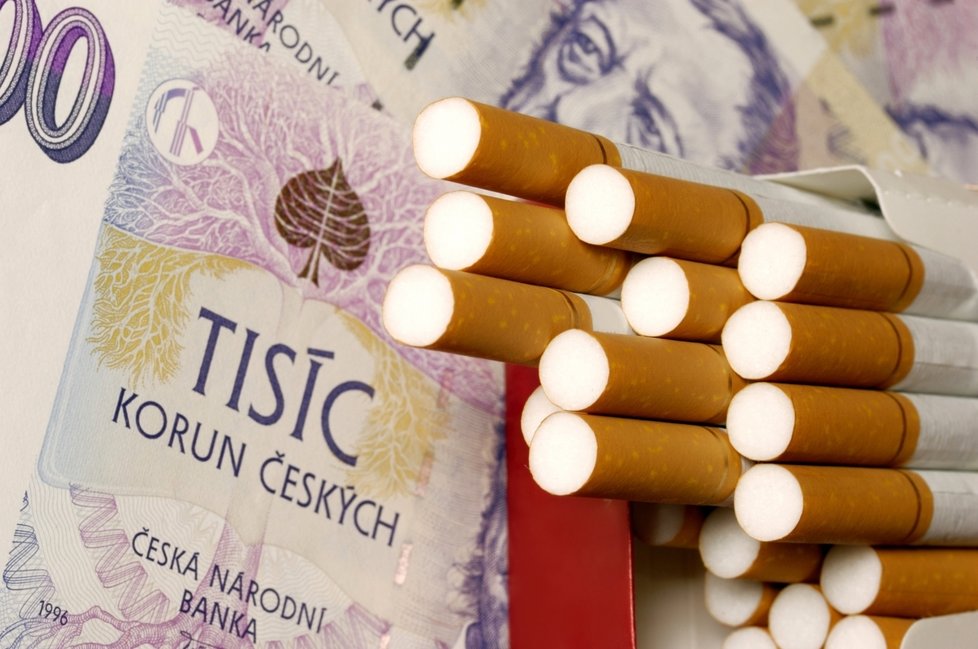
Since you have to wear a mask outside it means that people can't smoke in public places.  So taking your mask off to smoke outside means the 10.000 Kč.  

I haven't really seen any shortages here.  True you can't find masks and hand sanitiser but everything else is available.  My family and friends have told me toilet paper and paper towels are pretty much sold out everywhere.  There isn't a shortage here.  Or at least I haven't experienced any shortages.

Thursday, March 19, 2020

Cancelled Trip and Current Restrictions

I was supposed to head out today on holiday but that's not happening now.  I'd been planning the one for quite some time.  

I was going to visit friends in Bratislava and fly out tomorrow morning to Lviv, the 7th largest city in Ukraine.  

After a few days I was headed on to Debrecen, the 2nd biggest city in Hungary, with a day drip to Oradea, the 10th biggest city in Romania.  

I'm disappointed but I got lucky at the same time.  If I had started by trip last week then I could have gotten stranded somewhere trying to get back.  My next trip to Austria and Bosnia and Herzegovina is also cancelled.

Lots more has happened since last week when the Czech government declared a 30-day state of emergency.  

On 13.3., the law was changed and spreading COVID-19 on purpose is now a felony and punishable by up to 10 years in prison.  On the same day the USA has banned all flights coming from Schengen countries including Czechland.

On 15.3. a hospital in Prague and University Hospital Brno were set up to handle COVID-19 patients.

On 16.3., the government put the entire country in lockdown.  Restaurants, bars, gyms, museums, libraries, and most shops are all closed.  Employees are encouraged to work from home if possible.  With few exceptions, the borders have been closed and the only people allowed in are citizens or permanent residents.  Czechs can't leave either.

On 17.3., it became mandatory to wear a face mask or cover your nose and mouth with a scarf when on public transportation.  

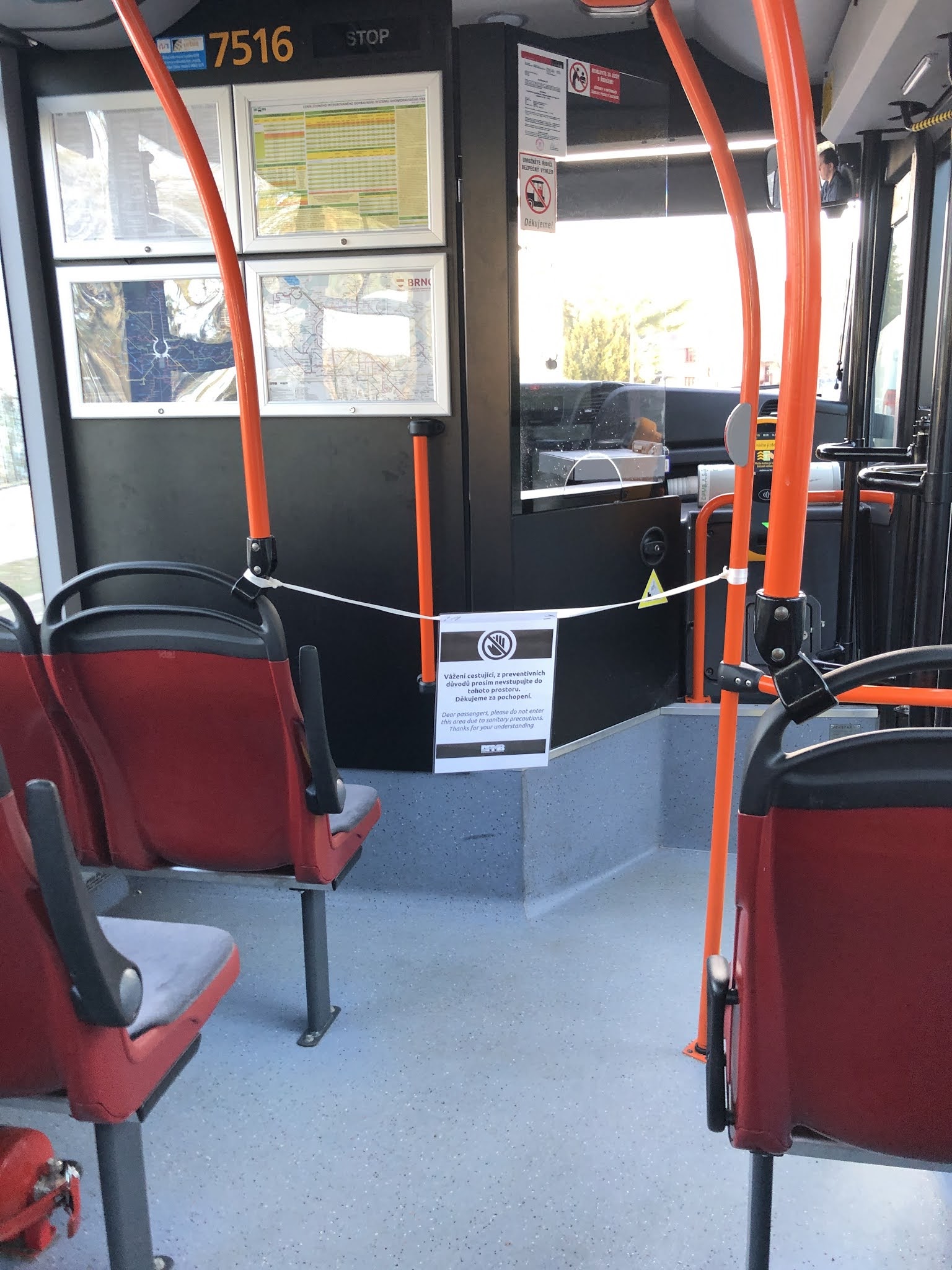
You can no longer enter at the front.  The front section of trams and buses are blocked off.  The doors now open automatically at stops so you don't have to push the button.

The fine for not wearing a mask is 10.000 Kč ($458).

Then yesterday Czech Republic became the first country in the EU to require face masks when you leave your home.

Only seniors over 65 are allowed in grocery stores, pharmacies and drugstores.

Parents of school aged children under ten are able to take nursing care leave for nine days.  If you're a single parent then you can take 16 days of leave.  Parents on nursing care leave receive 60% of their salary.

The government will cover 80% of employee salaries for businesses forced to close during the lockdown.

Thursday, March 12, 2020

Czech State of Emergency

It's been a crazy last couple of weeks.  On 1 March we had the first three confirmed cases of coronavirus here in Czechland.  As of 5 March, all flights are banned to and from Italy, South Korea and Iran.  Flights to and from China were already banned back in February.

It's also not allowed to export respirators and hand sanitiser from Czech Republic.  

On 7 March, there is a strict 14-day quarantine for people coming from Italy.  I know lots of people who were there recently skiing on holiday.  The fine for not following the quarantine is 3m Kč (~$138k).

As of 9 March, it's no longer allowed to visit anyone in the hospital or a nursing home.  On 10 March, the government banned all public events for 100 or more people.

Then yesterday, all of the schools in the country were closed.  Kindergartens are the only schools open but only to working parents.  

Today there was a flyer in my mailbox.  I found out that the same flyer was distributed to every home address across the country.  I love that under the "fact vs. myth" section it says that drinking alcohol isn't preventative.

Now that the World Health Organisation declared the coronavirus a global pandemic yesterday the government has declared a state of emergency for the next 30 days.  I'm pretty sure that this is the first time that Czechland has declared a state of emergency for the entire country.

As of 6 AM tomorrow morning the following restrictions are in place.

  • All events over 30 people are forbidden.
  • Restaurants and pubs must close between 8 PM - 6 AM.
  • All gyms, swimming pools, saunas, libraries, galleries, museums, and entertainment facilities are closed.
  • From midnight Friday there will be border controls with Austria and Germany.
  • Unless you have long-term temporary residence or permanent residence in Czechland, foreigners from China, South Korea, Iran, the UK, Italy, Spain, Austria, Germany, Switzerland, Sweden, Norway, the Netherlands, Belgium, Denmark or France, are not allowed to enter the country.  Czech citizens are not allowed to travel to any of these countries either.
  • Czech citizens and permanent residences coming from any of these countries have to undergo a two-week quarantine. 
I was in Sweden for eight hours two weeks ago when I went to Mariehamn in the Åland Islands, which is Finland.  I've felt fine and the two weeks are almost up so I suppose that I don't have anything to worry about.  

Next Thursday, I'm supposed to fly out of Slovakia for a 10-day trip to Ukraine, Hungary and Romania.  Somehow I think that's not going to happen.

Update:  The State of Emergency ended on 17 May.

Saturday, March 7, 2020

Masaryk's 170th Birthday

Today is the 170th birthday of Tomáš Garrigue Masaryk who is one of the most important figures in Czech history.  

He was the founder and first president of Czechoslovakia.

People laid flowers at his statue today at Masaryk University.

Wednesday, March 4, 2020

Cigarette Tax Increase

From 1 March, the government increased taxes on cigarettes resulting in the biggest price hike in more than a decade.  A pack of cigarettes will increase by 10-13 Kč ($0.46 - $0.60).  For the first time ever, a the average price for a pack of cigarettes in the Czech Republic will be more than 100 Kč ($4.57).

The Ministry of Finance plans to raise taxes on cigarettes by 4 to 5 Kč per year through 2023.  Last year cigarette taxes contributed 56 billion crowns ($2.56 billion) to the state coffers.  The new tax increase should generate an extra 9 billion crowns ($411 million) this year.

The European Union banned flavoured cigarettes back in 2018 due to the appeal to young people.  

Menthol cigarettes fell under the ban on flavoured cigarettes but were given a two-year exemption.  

From 20 May 2020 menthol cigarettes will be banned across the entire EU.

Monday, March 2, 2020

Mariehamn, Åland Islands, Finland

On Friday night I caught a flight to Sweden, spent the night and caught the 7 am ferry to Mariehamn.  From Stockholm it was a 5,5 hour trip.  


Mariehamn is the capital of the Åland Islands.  In Finnish the town is called Maarianhamina but even though the islands belong to Finland, Swedish is the official language so everyone knows it as Mariehamn. 

It is home to 11.000 people which is about 40% of the entire islands population.  

The town was founded in 1861 and is named after the Russian empress Maria Alexandrova from when the territory was part of the Russian Empire.

It's a small town and you can check out everything in a day.  Still well worth a visit.


Södragatan is one of the town's oldest streets.  There are lots of colourful wooden houses dating back to the 19th century.

The Maritime Museum is dedicated to the story of the island's seafaring tradition. 

Pommer, built in 1903, is the world's only four-masted freight sailing ship that is still in its original condition.  It is a museum ship but unfortunately it was closed when I got there.


Tusenskönan, the Daisy Park, was opened in 1993.  The spot was originally designated to be a parking lot before the city made it a park.


The Sittkoff Galleria is the most popular shopping centre and meeting point in town.

St. Göran's Church is the town's main church.  It was consecrated in 1927.

Lagting is Åland's Parliament House.

The town hall was built in 1939.

The Mission Church is the town's oldest church building.  The building has been a church since 1897.


The municipal library was built in 1989.


The Åland Museum is the town's museum of history and ethnography.  The same building houses the art museum as well.


The Mariehamn Museum covers the design and history of the town.  Unfortunately it too was closed this time of year.


The Alandica Culture and Congress Centre is located at the eastern harbour.


Lilla Holmen is an island separated from the town by a narrow sea channel.  It's a nice area to go for a nature walk.  

29.2. Leap Year


After a full day in town I caught the midnight ferry to Helsinki.  Apparently the Åland Islands are not part of the EU customs zone which means that duty-free goods can be purchased on board.  It seems popular but everything still had super high Scandinavian prices.

The ferry to Helsinki was 10,5 hours.  I hadn't seen Tommi and Eiko since their wedding 3,5 years ago.  They have moved from Stockholm to Helsinki now and picked me up at the harbour.


We went for coffee and I got got to meet their son.  He is such a handsome little chap.  After a nice visit they dropped me off at the airport and I got home late Sunday night.

Wednesday, February 26, 2020

Metric

When I first moved here I used to joke around that the metric system was just a fad and that it wouldn't last.  Obviously just a joke but it was my way of coping with having to learn an entirely new system of measurement.  I have to finally admit that I am fully a metric guy now.

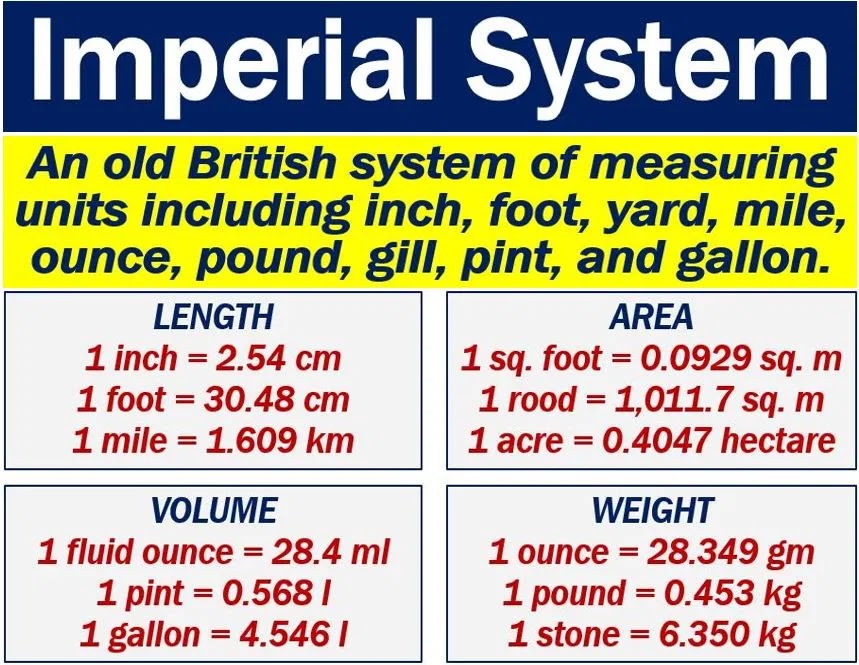
The British brought the imperial system of measurement to the American colonies and we kept them even after the British left.  Today only three countries in the world don't use the metric system - the USA, Liberia, and Myanmar.  And Even Liberia has finally pledged to move to the metric system. 

In 1975 the USA passed the Metric Conversion Act which was meant to transition the country to the metric system.  The problem was that the law was voluntary and so it never took off.  

I don't think that the USA will ever fully switch to metric for three reasons.

1.  Money.  It will cost a ka-jillion dollars to switch.  The USA is huge and all of the road signs would need to be changed which would be expensive.  Plus speed limit signs, gas pumps would need to be relabelled for litres instead of gallons, car odometers would need to count kilometres instead of miles, household ovens and cookbooks would need to be in Celsius instead of in Fahrenheit, etc.  

2.  Time.  It would take a long time to switch and Americans have a short attention span.  The longer something takes the less interest we have in it.  

3.  Arrogance.  Americans in general are a stubborn group.  Even if we see the benefits of switching to the system that the rest of the world uses, we still cling to our ways because the rest of the world should be the ones to change.

Getting used to Celsius for temperature was probably the one that I struggled with the longest.  I knew that 0℃ was freezing and 40℃ was really hot.  My reference point was that 28℃=82℉ (you just switch the numbers).  

Celsius does make much more sense.  Water freezes at 0℃ and boils at 100℃.  Way more user friendly than freezing at 32℉ and boiling at 212℉.

Normal human body temperature is 37℃ but in the USA we know it as 98.6℉.

To convert ℃ to ℉: Divide by 5, then multiply by 9, then add 32.

To convert ℉ to ℃: Subtract 32, then multiply by 5, then divide by 9.

For weather, I never convert.  I just think in Celsius.  Every week my mom tells me what the weather is in Arizona.  I give the Brno update but then we have to figure out what it is in Fahrenheit.  

The only time that I convert is for Thanksgiving because all of my recipes are in Fahrenheit and my oven only understands Celsius.  

Weight was probably the easiest thing to get used to.  1 kg = 2.2 lb.  Heck, I'm skinnier in kilos.

I've had lots of friends over here who have had babies and birth weight was the difficult part for me to wrap my head around.  I understand that the average birth weight is 7.5 lb which is 3,5 kg.  But the numbers just threw me for a while.

Volume was pretty easy as well.  I think that's mainly because in the USA soda does come in 2 litre bottles.  

Czech beer is usually served in 500 ml mugs which is ½ litre.  So four beers equal a 2 litre bottle (and a big night at the pub).

Length had a few challenges for me in the beginning.  I had to think a bit differently about height.  

For distance, my reference for conversion was that 5 km = 3.2 miles.  Long distances took a while to get used to.  I think the biggest quandary was that meters are bigger than feet but a kilometre is smaller than a mile.

To remember how many feet are in a mile you have to think of "5 tomatoes" because five to-m8-oes sounds like 5-2-8-0 so there are 5,280 feet in a mile.

There's no need to remember how many metres are in a kilometre because the entire system is based on 10's so a kilometre is 1000 metres.  This is because apparently the imperial measurement was based on a drunk mathematician rolling dice.

Update 2025:  Here's a short video about why the USA hasn't adopted the metric system.

©History Matters

Saturday, February 22, 2020

Lost in Translation

Ztraceno v překladu is "lost in translation" and that's how I feel at times trying to learn Czech. 


It's not like there is a 100% perfect translation for every word between English and Czech.  I'm not even talking about nejneobhospodařovávatelnějšímu

Here are a few words that take bit of explaining.

Czech use ty and vy as the familiar and formal forms of "you".  So tykat is the verb meaning "to use the informal form of address" while vykat means "to use the polite form of address".

ráčkovat - this is a verb that means "to pronounce one's R's incorrectly at the back of one's mouth"

umilovat se - another Czech verb.  This one means to wearo yourself out having sex

nedovtipa - this is a noun for "somene who can't take a hint"

vybafnout - this verb means to jump out and say boo!  I can't believe that there's a verb for this.  

Vybafnuju = I jump out and say boo!  

otužilec - this noun is "a hardy person, someone who doesn't feel the cold"

otrnout - is a verb meaning "to be naughty again after having already been told off"

ukýchat se - the verb for "to sneeze one's self to death"

lítost was coined by Czech writer Milan Kundera and it is "a state of torment created by the sudden sight of one's own misery.

I'm sure that as I keep working on my Czech that I'll come across more.  However, one of my favourite Czech words is the verb proznovnit.

proznovni - the verb means "to initiate a phone call, let it ring once and hang up so that the recipient knows to call you back so that you don't have to pay for the call" 

In the USA, if you use your mobile phone then it eats in to your phone credit.  It doesn't matter who calls whom.  Over in Euroland, you don't use phone credit when someone calls you.  You only use credit when you are the caller.

Wednesday, February 19, 2020

Reunion Night

My old IBM team, the old behind all of the pranks, at one point had over 70 people.  I left just over a year ago and now that team is only about a dozen people.  I still miss that team a lot.

Well tonight was a little get together and over 30 people showed up.  Most everyone has either moved on to other roles at IBM or gone on to other companies.  But it was so good to catch up with everyone, some of which I haven't seen in at least three years.  Not a bad turnout given it was a cold, rainy night.

Tuesday, February 18, 2020

Quiet Hours

In Germany they have Ruhezeit which is "quiet time".  Germans love their rules but they go a bit crazy with their quiet hours.  The specific hours can vary depending on the municipality or even the building but in general quiet time is Monday to Saturday, 8 pm to 7 am.  Definitely from 10 pm to 6 am.  

All Sundays, and public holidays, are designated as quiet time too.  This means that during quiet time, you can't do anything that could infringe on your neighbour's peace and quiet.  So no loud music or parties.  No loud DIY projects which means that all hammering or drilling is forbidden.  To me, weekends seem like the logical time to get caught up with home projects but it's a no no.

I had no idea that Switzerland is even crazier than Germany when it comes to quiet hours.  Natalie's apartment building in Geneva has some rules which sound absolutely mental to me but are actually normal across the country.

Geneva prohibits excessive noise during quiet hours.  During quiet hours you can't do housework meaning no vacuuming.  No moving furniture around.  No playing music that can be heard through the walls.  No taking baths or showers because your neighbours will hear the water going through the pipes.  There's an urban myth that you're not even allowed to flush the toilet during quiet hours but this one isn't true.  

Not that anyone would the lawn during the night but people aren't allowed to mow their lawns on Sundays or public holidays.  Some people will risk it hoping that they will finish mowing the lawn before the police show up responding to whatever neighbour reported the violation.

Most city apartments have communal washing machines.  Usage of the machines is regulated as each tenant has a specific time slot for when they can use the laundry room.  I believe Natalie gets to use the washing machine during a four-hour time slot once every two weeks.  I absolutely don't understand this.  Oh and to comply with the quiet hours the machines won't work at all on Sundays and they automatically cut off at 10 pm.  Nat pushed her luck once by running a load of laundry.  The cycle had 2 or 3 minutes left to finish but at 10 pm the machine stopped.  Her clothes were locked in the machine and she had to get them the next day.  I'm glad that I don't live in a Swiss flat.

Violating noise ordinances in Switzerland will result in fines ranging from CHF 100 to CHF 10.000 ($110 - $11,000).

In Czechland we have noční klid which is "night quiet".  This is pretty much from 10 pm to 6 am.  I've been lucky that my neighbours are all pretty quiet.  I'm probably the noisy one just because of having so many people in my flat for Thanksgiving.  But hey, it's only once a year and no one has ever said anything.