Thursday, April 12, 2012

Swiss Driving

To drive in Europe, you must purchase a vignette, from each country, in order to drive on their highways.  Except for Germany because they don't require vignettes.  In most countries you can purchase short duration vignettes.  However, in Switzerland they only sell a one-year sticker and it costs 40 Swiss Francs ($41).

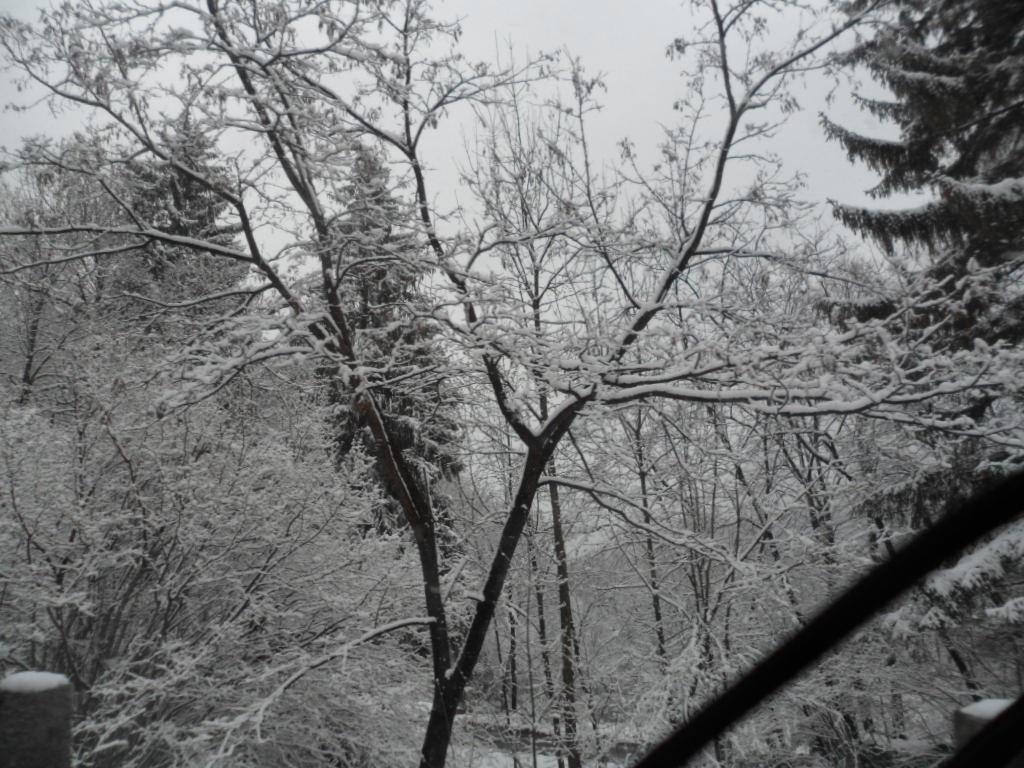
By highway it's around 115 km (+70 miles) to get from Bern to Lucerne.  It should normally take about 1 hour 20 minutes to make the drive.  However, that's when there is not a freak snow storm that limits how fast you can safely drive through the mountains.

OK, so the snow was quite beautiful but not really a lot of fun when in a car.  It's mid-April already!  Where's the spring weather?

Bern, Switzerland

Bern was founded in 1191.  It's the capital city and the 4th largest city in Switzerland.  Bern has a population of 134,000 but the metro area has around 660,000 people.  It seems kind of laid back for a capital city but that's one of the nice things about it.  Of course, it may have been because we were only here for a few hours on a Saturday morning.

The city lies in the Canton of Bern; about 20 km (12 miles) north of the Bernese Alps.  The medieval city center is recognized as a UNESCO World Heritage Site.

From the Rose Garden you get a great view of the city.
 
The Zytglogge is the city's astronomical clock.  It was built in 1530.  No offense to Bern but the clock in Olomouc is way more entertaining.


The city mascot is a bear and there has been a bear pit in the city since 1480.

From 1903 to 1905, Albert Einstein called a flat in this building "home".

Bern has more than 100 public fountains.  Eleven of them are from the 16th century and have Renaissance allegorical statues on top.


Das Berner Münster is the 15th century Gothic cathedral.  It is the tallest church in Switzerland.  Construction began in 1421 and took generations to complete.


The Bundeshaus was built from 1857 to 1902 and is home to both the Swiss Federal Council and its parliament.


The Zentrum Paul Klee is just outside the city.  It is home to the most comprehensive collection by artist Paul Klee.  To be honest, I'm still not too familiar with his work and we didn't bother to stop and visit.

Wednesday, April 11, 2012

Rhein Falls, Switzerland


The Rhine Falls is Europe's largest waterfall.  It's not far from Schaffhausen in northeast Switzerland.  Not quite Niagara Falls but still well worth the visit.


The falls were formed approximately 14,000 to 17,000 years ago, during the last ice age, by erosion-resistant rocks narrowing the riverbed.


The falls are 150 m (450 ft) wide and 23 m (75 ft) high.  In winter, the average water flow is 250 m³/s (~66,000 gallons per second).  In summer, the average water flow is 700 m³/s (~18,500 gallons per second).

The falls even come complete with two small castles.  Well, really more restaurants than castles.  The medieval Schloß Laufen is over 1,000 years old and sits on the top of the north bank overlooking the falls.

 
Schloß Wörth sits on the south bank of the Rhine.  Again, more tourist restaurant than castle.


Stein am Rhein, Switzerland

Stein am Rhein is a charming town with a well-preserved medieval center.


Its name translates to "Stone on the Rhein" and it is located in northern Switzerland in the Schaffhausen canton.


The town is tiny – only 5.8 sq km (2.2 sq miles) and has a population around 3,200 people.

Stein am Rhein is considered the country's best preserved medieval town.  The center contains some very neat buildings, many with beautifully painted frescoes.

Many of the buildings are listed as Swiss heritage sites of national significance.  In 1972, the town received the 1st Walker Prize for the preservation of its architectural heritage.


Balzers, Liechtenstein

Balzers is a small village in the southernmost part of Liechtenstein. 


The whole town only has a population of ~4,500 people.

The main part of the village sits on the east bank of the Rhine River.  Switzerland is on the other side.


The main attraction is the Gutenberg Castle.  It sits above the town on a 70 meter  (230 feet) high hill.


The castle has likely been around since the Bronze Age but its first mention was in 1263.

Schaan, Liechtenstein

Schaan is the largest town in Liechtenstein with ~5,800 people.  It is only 3 km (2.3 miles) north of Vaduz.


Schaan sits near the Swiss border and it's only 80 km (50 miles) from Zürich.

It was originally founded as a Roman port.  Today, it is the country's main industrial area with over 4,000 businesses.


The St. Laurentius New Parish Church is the town's main site.  It was consecrated in 1893.

Tuesday, April 10, 2012

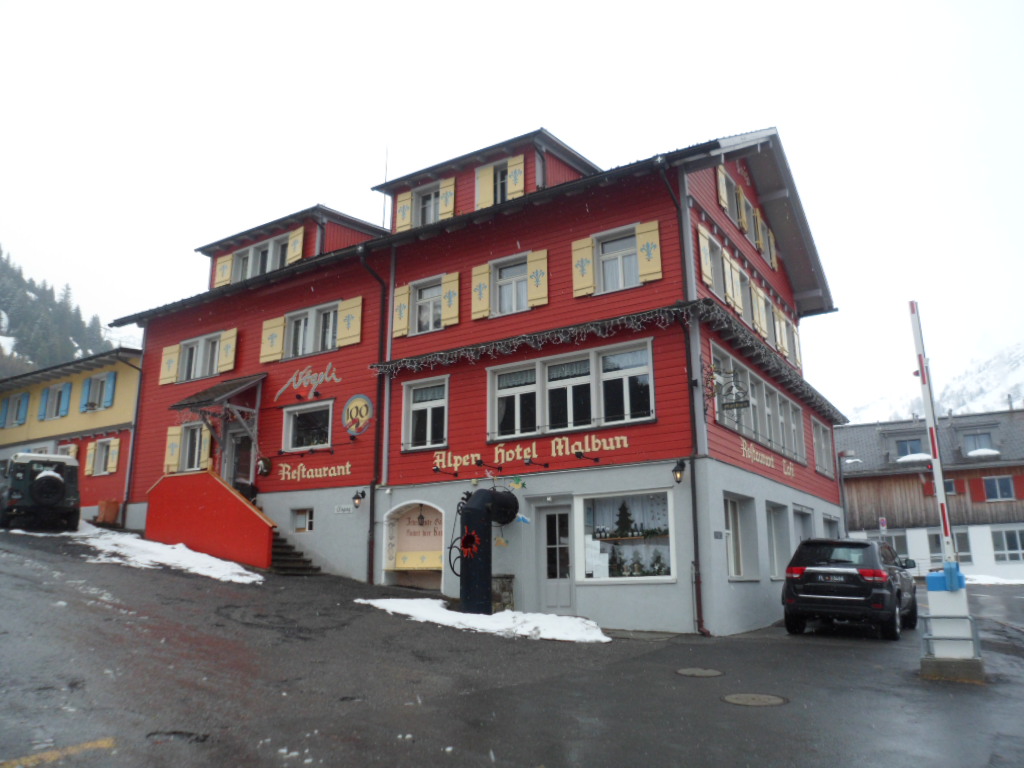
Malbun, Liechtenstein

About 15 km (~9 miles) from Vaduz is the small resort village of Malbun, near the Austrian border.

Malbun, with only about 1,025 people, is located in the municipality of Triesenberg.


The village is surrounded by steep slopes and it is home to the only ski resort in Liechtenstein.

Malbun is high up in the Alps, at 1,600 meters (5,200 feet), which means that it can be great fun getting thereby car, in the snow, with the winding road.


Vaduz, Liechtenstein

Vaduz is the capital city of Liechtenstein.  Or more realistically, the capital town.  It sits on the Rhine river and was founded ~1322.  The population is less than 5,300 people and nearby Schaan is larger.

It's kind of remarkable that for such a small place, there is a healthy tourist industry even though this is one of the few capital cities in the world that doesn't have an airport or train station.

There is only one pedestrian street in the city and pretty much everything worth seeing is here.


The new parliament building was completed in 2008.  It is home to the country's 25 people's representatives.

The National Art Gallery is a museum of modern art.  There is also lots of contemporary sculptures along the street.

The Cathedral of St. Florin was built in 1874.  It was originally a parish church but was given cathedral status in 1997.

Above the city is the town's most impressive feature – the Vaduz Castle.  It was built 700 years ago and can be seen from almost everywhere in town.  Since 1938 it has been the residence of the prince's family which means that it is closed to the public.