Wednesday, April 20, 2022

Banja Luka, Bosnia and Hezegovina

Banja Luka, or Бања Лука in Serbian, is the second largest city in Bosnia and Herzegovia.  It is the largest city and the administrative capital of Republika Srpska.  

The city is in the northwest part of Bosnia, on the Verbs river, just over 3 hours by car, 139 km (86 miles), from Sarajevo.  

Banja Luka is home to just around 140,000 while the greater area totals around 185,000 people.

There's evidence that the Romans were here back in the first centuries.  

Banja Luka was first mentioned in writing in 1494.  In 1527 it fell to the Ottoman Empire before eventually becoming part of the Austro-Hungarian Empire.  


At the end of WWI it became part of the the Kingdom of Yugoslavia.  During WWII, it became part of the Independent State of Croatia which was a Nazi puppet regime.  Yugoslav partisans liberated the city on 22 April 1945 and it rejoined Yugoslavia.

During the war in the 1990s, almost all of the city's Bosniaks and Croats were expelled.  All 16 of the city's mosques were rigged with explosives and destroyed as part of the ethnic cleansing that was going on.

The Ferhat Pasha Mosque was built in 1579 but it was demolished in 1993.  The mosque was rebuilt and opened in 2016.


The Catholic Church of St. Anthony and Franciscan monastery was also destroyed in 1993 by the Bosnian Serb Army.  Reconstruction began in 2003 after Pope John Paul II visited the site.

The Cathedral of Christ the Saviour, is part of the Serbian Orthodox Church, was consecrated in 1939.  It was demolished during WW2 and following the war the Yugoslav communists didn't permit the church to be rebuilt.  During the Bosnian war, in 1993, permission was give to rebuilt the church.

There are four Roman Catholic cathedrals in Bosnia and Herzegovina one of them is in Banja Luka.  The Cathedral of St. Bonaventure was built in the 1970s.  It too was damaged during the Bosnian War but it reopened in 2001 following repairs.  The 42m (138 ft.) tall bell tower is kind of funky.

There's even a Ukrainian church that was built on the site where a Ukrainian Greek church was destroyed during WWII.  Restoration began in 1998.  The exterior is done but the interior is still a work in progress.


The National Theatre of the Republic of Srpska was founded in 1930.


At Memorial Park, there is a memorial to the Yugoslav partisans that died fighting in WWII.


Banski Dvor opened in 1932.  Until 2008 it was the seat of the President of the Republika Srbska.  Today, it is home to the city administration and it is a cultural centre.

The Palace of the Republic is the official residence of the President of Republika Srpska.  It was built as a bank in 1936.  After WWII, the communists used the building as the People's Bank.  During the Bosnian War the building became a place for youth meetings.  After the war it was the home of the National Bank of Republika Srpska and the Ministry of Finance of Republika Srpska.  In 2008 is when the official residence of the President of Republika Srpska moved here from Banski Dvor.

The Office of the Prime Minister of Republika Srpska is a modern building.  I was surprised that the armed guards allowed me to take photos of it.


Gospodska is Gentleman's Street, and it is full of shops with cafes and bars tucked in side streets.  


The Museum of Modern Art of Republika Srpska was established in 1971.

In 1930 the Museum of Verbs Banovina opened.  In 1982 the location was moved to the Worker's Solidarity House, next to the national library.  In 1982 it became the Museum of Republika Srpska.  There's some interesting displays inside but there's this odd taxidermy collection that I didn't really understand how it fit in with the displays.

Next door to the museum is a library.  I assume it's the national library but I could be wrong.


The Arie Livne Jewish Cultural Centre was inaugurated in 2014.  It is the only such facility built in the Balkans since WWII.  It contains one of only two synagogues in Republika Srpska.  Before the Holocaust there were a few hundred Jewish families in Banja Luka but today the number of families is in the tens.


Tržnica is the central market where you can find pretty much everything.  There are plenty of fruits and vegetables plus lots of clothing shops.


The Kastel Fortress is on the left bank of the Vrbas river.  It's medieval but it sits on the site of previous Roman fortifications.  It is one of the city's main sights.


The Vrbas river runs through the town.  The river runs for 250 km (155 miles) and it is a tributary of the Sava river.


At Banj Brno is the monument to fallen Krajina soldiers in the National Liberation War (1941-1945).  It opened in 1961.  It's a good hike up to the the top of the hill.  Thanks to Covid, I'm still not allowed any strenuous exercise for another couple of months so I took my time on the way up the hill.  But on my first post-Covid hike, I'm glad that the 18 km (11,25 miles) didn't do me in.


There are Republika Srpska flags all throughout the city.  On the other hand I think I only saw maybe two Bosnia flags out.


There are also lots of murals for the Vultures which is the local football team.  


I saw a few murals across the city of Ratio Mladić, who led the Bosnian Serbs during the war.  In 2017 he was convicted of committing war crimes, crimes against humanity and genocide.

The Serbian text translates to "Unification has started and it can't be stopped."  I assume this has to do with the desire to merge with Serbia

What I didn't care for was all of the open support for Putin and Russia in the invasion of Ukraine.  I saw more than one Z in the city.  


There were even Z t-shirts for sale.  It wasn't a souvenir that I wanted. 

Я за Україну. Я за Україною. Слава Україні  Stojím za Ukrajinou!  I stand with Ukraine. 🇺🇦

Saturday, April 16, 2022

My Easter Trip

With Good Friday and Easter Monday, always falling on a Friday and a Monday, it means that we are always guaranteed a four-day weekend every year in Czechland.  We never have to worry about either day falling on a weekend which would cause us to loose it.  For example in December we only get one day off this year for Christmas because the 24th and 25th fall on Saturday and Sunday.

The catch is where to travel to during the four day weekend because most things are closed on Friday and Monday.  I had planned to visit Banja Luka in 2020 because (1) it's been on my list of places to visit for several years and (2) because most people there are Orthodox it means that their Easter isn't until 24 April so everything will be open while I'm here.

I even flew on Ryanair to get here.  Well, sort of.  I flew on Lauda which flies on behalf of its parent company which is Ryanair.  Basically it's the red Ryanair.  I'm still not a fan of Ryanair but the flight from Vienna was just an hour and I can deal with a short flight.

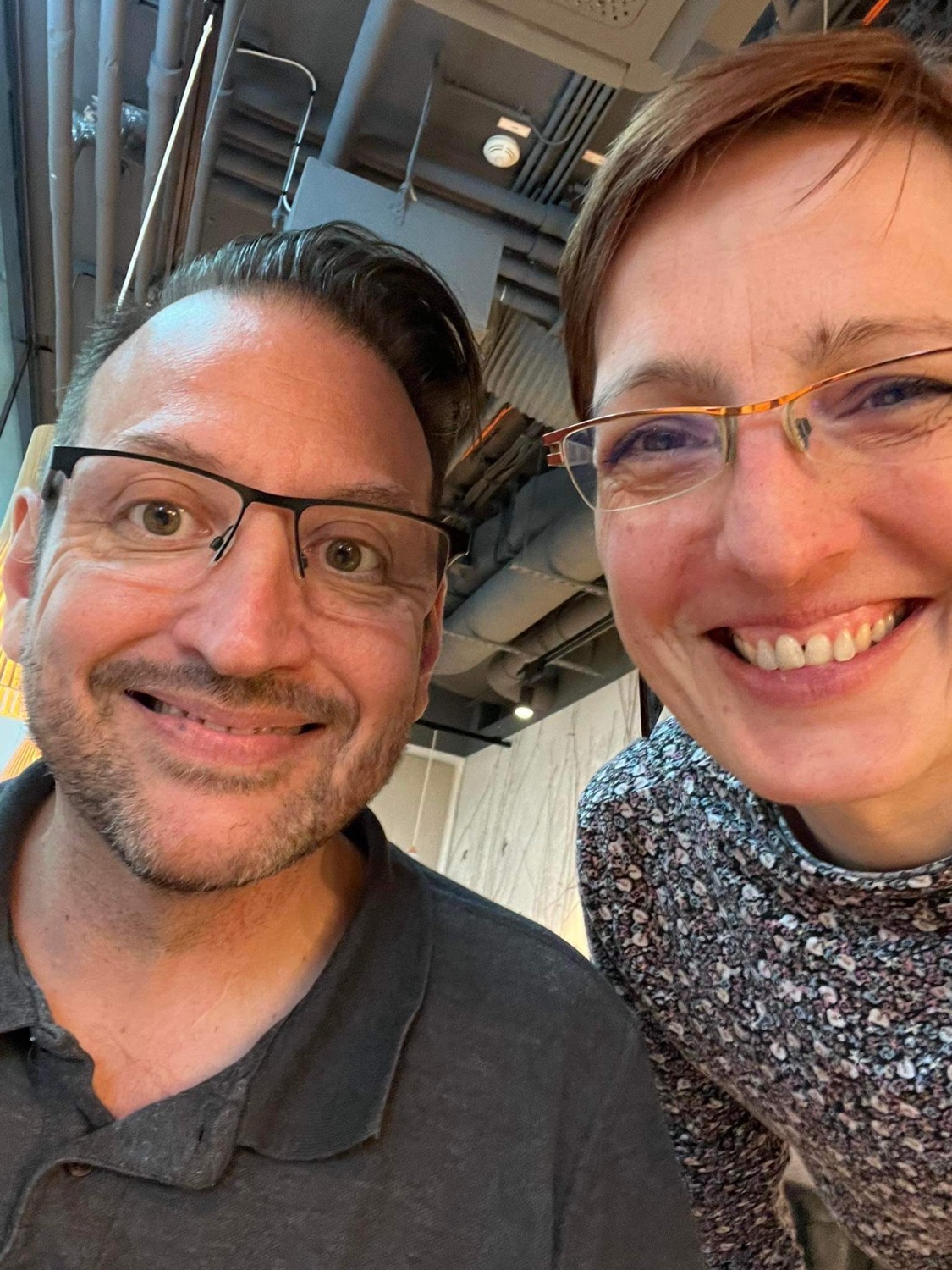
Due to Covid and lockdowns, I haven't seen Katka in about three years.  I caught the train to Vienna and she met me at the main station.  It was so good to see her and to catch up over lunch.  We got caught in some rain on the way back to the station.  It then started to hail which was a surprise.  

Steve and the kids met up with us at the Mitte station.  I can't believe how big they have gotten.  So freaking cute.  Hopefully the whole family will be able to make it to Czechsgiving this year.  

So I'm finally on my Easter trip in Banja Luka.  Just two years later than originally planned.  Now it's time to grab some breakfast and see if the city was worth the wait.

Friday, April 15, 2022

Happy Pesach, Happy Easter and Ramadan Mubarak

Happy Pesach, Happy Easter and Ramadan Mubarak!  This is a pretty rare year because it's the first time in 33 years that Passover, Easter, and Ramadan - celebrated by Jews, Christians, and Muslims - overlap this weekend.

The overlapping of holy days, which are connected to three different calendars, only happens about every 30 years.  This year Ramadan runs from 2 April until 2 May.  Passover starts tonight and lasts until 23 April.  Today is Good Friday with Easter Sunday on 17 April.  In Czechland and Slovakia, it's Easter Monday.

Orthodox Christians use a different calendar so their Easter Sunday isn't until 24 April this year.

Just a review.  Judaism, Christianity, and Islam are considered "Abrahamic," because they all derived from Abraham.

Passover is a 7-day holiday in the Jewish faith that commemorates Hebrews being freed from slavery in Egypt.


Easter is considered the most important day in the Christian faith when we celebrate the resurrection of Jesus Christ.  

Ramadan is a holy month of fasting, introspection, and prayer celebrated by Muslims.

Good Friday and Passover are both tonight.  Here's wishing everyone a blessed season of holy days.  

חג פסח שמח رمضان مبارك 

I'll be celebrating with a bit of travel.  In a few hours I'm headed to Vienna to meet up with Katka before my weekend in Banja Luka.  I planned to go there over Easter weekend in 2020 but the Covid lockdown caused the trip to be cancelled.  It's two years later and I'm finally going. 

Update 2025:  Here's a short video I found on YouTube about how the Orthodox Church reacted to the Protestant Reformation.

©History Matters

Wednesday, April 13, 2022

Nat's Coming to Help

Well Natalie is on her way back to Europe but it's not for something good.  Well, she will do some good but the reason for her coming isn't good.  Natalie is part of the New Zealand Red Cross and they are sending her as part of the International Federation of Red Cross and Red Crescent Societies (IFRC) team supporting people affected by Russia's invasion of Ukraine.

I know that the IFRC has to be politically neutral so their stance is that they are helping people affected by the conflict in Ukraine.  I still say that they are helping people affected by Putin's invasion of a sovereign country.

So Natalie is headed to Budapest, Hungary to start her assignment.  I'm sure that she will end up in Poland, Slovakia, Romania, and maybe even Moldova.  Not so sure that she'll go to Ukraine but who knows?  I don't know how long she will be here because thanks to Brexit, her UK passport no longer gives her unlimited time in Schengen so I guess the max is 180 days.

Here's the New Zealand press release about her deployment.

Our second international delegate is on her way to join the International Federation of Red Cross and Red Crescent Societies (IFRC) team supporting people affected by the conflict in Ukraine.

Natalie is travelling to Budapest where she'll be focusing on the distribution of multipurpose cash support to the most vulnerable people.  Cash assistance provides funds for displaced people to buy the essentials they need, which could include rent assistance for housing.  Natalie will be working for the IFRC and Red Crescent Societies as part of the New Zealand Red Cross International Delegate Programme.

She will be travelling around the countries bordering Ukraine to help Red Cross teams assist people who have fled the conflict zones.

"I'll be focused on the data and systems side of the cash and voucher programme - helping ensure the cash support is going to where it's needed most," says Natalie.

Natalie has a background in information management.  She's part of the New Zealand Red Cross IT and Telecommunications Emergency Response Unit and has previously deployed to Indonesia and the Pacific. Recently, she has worked for the IFRC in Switzerland on the global COVID-19 response.

International Delegates are trained technical experts who provide humanitarian assistance and contribute to saving lives, alleviating suffering and maintaining human dignity in conflict and disaster zones.

We are so proud of our favourite Kiwi!!  Stay safe Nat!!

Я за Україну. Я за Україною. Слава Україні  Stojím za Ukrajinou!  I stand with Ukraine. 🇺🇦

Friday, April 8, 2022

Office for Foreign Relations and Information

Úřad pro zahraniční styky a informace (ÚZSI), the Office for Foreign Relations and Information, is Czechland's primary foreign intelligence service.

It is responsible for collection, analysis, and dissemination of intelligence to the government that is vital to support and protect foreign and economic policy interests.  

The BIS works domestically while the ÚZSI works both domestically and abroad.

The agency is a part of the Ministry of the Interior.  Since 2018 it is overseen by the Permanent Commission for Inspecting the Activity of the Office for Foreign Relations and Information, which was established within the Chamber of Deputies.

Tuesday, April 5, 2022

Europol

Europol is the European Union Agency for Law Enforcement Cooperation.  It was formed in 1998 to handle criminal intelligence and combat serious crime through cooperation with the authorities in each of the EU member countries.  Like Interpol, the agency doesn't have any executive powers so it can't arrest suspects but rather it provides the member country's police force with the intelligence required for local arrests.

In Czechland, Europol works with the Czech Police and the Czech Customs Administration.

While Interpol and Europol have similar names, and work together, they unrelated, independent agencies. Europol falls under the authority of the European Union and has its headquarters in The Hague, Netherlands.

Here's a 6,5 minute video I found out on YouTube which has some interesting information on the history of Europol. 

©Singularitas

Update 2023:  Here's 3-minute video about Europol.

©The EU Made SIMPLE

Sunday, April 3, 2022

Interpol

Interpol is the International Criminal Police Organisation and it is the world's largest police organisation.  It's not actually a law enforcement agency.  Rather facilitates police cooperation worldwide.  Its headquarters are in Lyon, France.  It has seven regional bureaus and a National Central Bureau in all 195 member countries.  The four operating languages are English, French, Spanish, and Arabic.

The only countries that aren't a member of Interpol are Micronesia, North Korea, Palau, and Tuvalu.


Interpol focuses on three major areas which are terrorism, cybercrime, and organised crime.  Under these three areas every possible crime is covered including crimes against humanity, child pornography, drug production and trafficking, political corruption, intellectual property infringement, and white-collar crime.

Its charter mandates that Interpol remain politically neutral so it doesn't get involved with activities that are political, military, religious, or racial in nature.  I wonder how involved it will be with the Russian invasion of Ukraine if Putin gets charged with crimes against humanity.  

The National Central Bureau for Czechia is in Prague.  In 2019, the Czech Police provided Interpol with a new, high-tech database called "Relief".  Relief runs a comparative analysis of the tool-marks, logos, and chemical compositions of drug packages which enables law enforcement to identify the origin and routes of compressed drug deliveries and shipments.  It helps to identify previously unknown links and disrupt the organised criminal networks trafficking illegal drugs.

There's also a Europol but I'm not sure if it is a part of Interpol or something completely different.  Guess I need to look in to it.

Here's a short video I found out on YouTube about Interpol.

©TestTubeNews

Saturday, April 2, 2022

First Kyndryl Business Trip

I was in Germany this past week on my first business trip with Kyndryl.

When I was with IBM in Atlanta, I usually travelled to meet with clients in California, Virginia, and Ohio.  While here in Czechland, I've been lucky enough to visit England, Ireland, Germany, Hungary, Slovenia, Netherlands, India, Poland and Slovakia.  I honestly can't even count how many times I've been to Bratislava and Wrocław.

This week I was in Frankfurt to meet with a client and while there we signed a new mega five-year deal.  It was a great visit but it was a lot of work and now I get to sleep in my own bed.

Sunday, March 27, 2022

Czech Police

Policie České republiky is Czechland's national law enforcement agency.  It was established in 1991 and it falls under the jurisdiction of the Ministry of the Interior.  PČR has the task of protecting the safety of people, property, and public order.  

PČR is the state police and it's different from obecní policie or městská policie, the municipal or city police. Municipal police supervises public order and road safety while only having jurisdiction over misdemeanours.  The state police is responsible for criminal investigations.  Municipal police can't investigate crimes.  The municipal police secure suspects on the scene or take suspects to the nearest state police station where they hand the case to the state police for investigation.

The state police cooperate with intelligence agencies like BIS or ÚZSI on specific crimes such as terrorism.

All police officers in Czechland are armed.  Municipal police officers have civilian status so they all need to obtain the D category gun license in order to openly carry their weapon.


The motto is pomáhat a chránit "to help and to protect".  Occasionally, the police even have to help Santa deliver Christmas presents.

Back in the days of communism there was the Sbor národní bezpečnosti (SNB), the National Security Corps, which was the national police in Czechoslovakia from 1945 to 1991.  In Slovakia it was the ZNB.

The SNB had two parts.  There was Vařejná bezpečnost (VB) which handled public security as the uniformed police force that took care of normal police work.  The other part was the StB which was the undercover secret police that functioned as an investigative agency, an intelligence agency, and a counterintelligence agency.  The StB was responsible for anything that could be considered anti-state.

The PČR took over from the the SNB in 1991.  After the Velvet Revolution, employees had to pass a vetting process by a commission which was used to purge communist ideologues and agents of the StB from the police force.  Former StB agents aren't allowed to be police officers.  

I hear that Prague has a Czech police museum.  I guess I need to check it out the next time I'm there.